
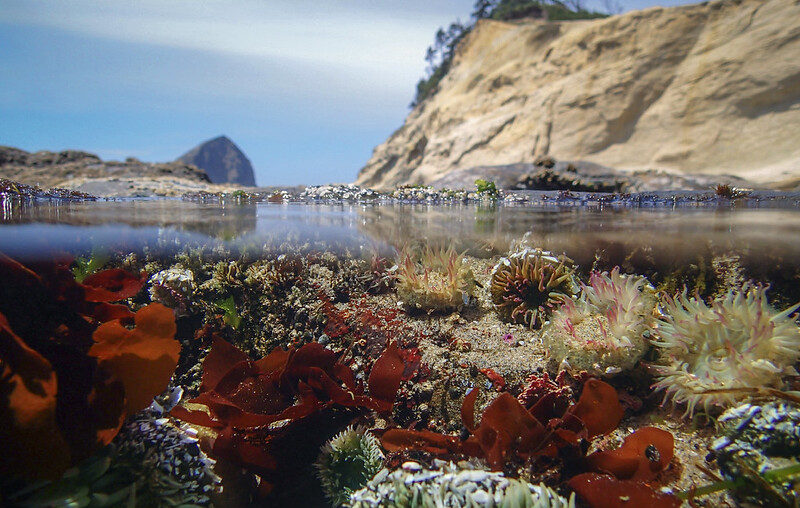
The best tide pools on the Oregon Coast are not all the same. Haystack Rock is the easiest first experience, Yaquina Head combines rich marine life with interpretation, Sunset Bay is a strong family choice, and the Yachats-to-Cape Perpetua corridor rewards careful explorers with several rocky-shore options close together. The real key is timing: choose the right beach, check the local tide prediction, arrive before low tide, and leave yourself an easy route back as the water returns.
I have always spent more time crouched over Oregon’s rocky shoreline than actually walking it. Every pool is a miniature neighborhood: anemones tucked into cracks, hermit crabs rearranging their borrowed homes, mussels clamped against the surf, and sea stars that seem impossibly bright against black basalt. This guide brings our favorite places together with the practical details that decide whether your visit is memorable, frustrating, or unsafe.
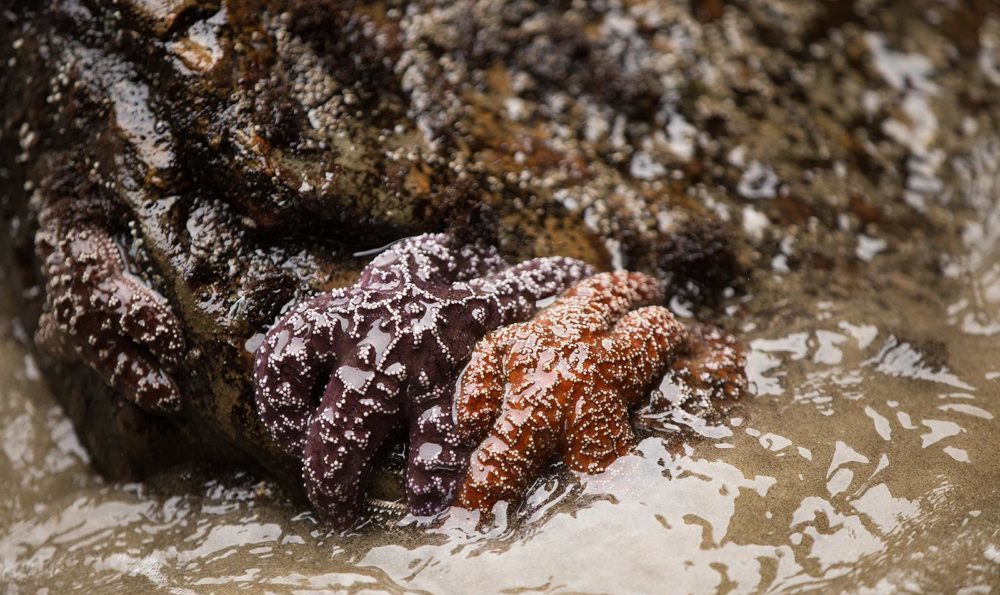
Two sea stars at low tide on the Oregon Coast. Photo by the author / thePDXphotographer.
Quick planning answer: Oregon Tidepools says tides of 0.0 feet and lower are generally best, although some rocky shores can still offer good viewing at tides up to two feet when the ocean is calm. Arrive at least one hour before low tide, begin only where you can safely reach, and work back toward shore as the tide rises. Tide predictions are estimates—not a guarantee that surf, wind, access, or weather will be safe.
Plan Your Tide-Pool Trip
- When to go and how to read the tide
- Best Oregon Coast tide pools at a glance
- North Coast tide pools
- Central Coast tide pools
- South Coast tide pools
- Safety and tide-pool etiquette
- Marine life you may see
- Frequently asked questions
When Is the Best Time to Visit Oregon Coast Tide Pools?
The best visit is built around the height of low tide, not simply the words “low tide.” A lower predicted tide exposes more of the rocky intertidal zone. Oregon State Parks’ Oregon Tidepools guidance recommends 0.0 feet or lower for the best general viewing and arriving at least an hour before low tide. Some protected or gently sloping locations may still be worthwhile at a higher low tide when the ocean is calm.
Use our Oregon Coast tide tables to start planning, then confirm the nearest appropriate station with NOAA Tide Predictions. Predictions differ along the coast, and weather can push observed water levels away from the estimate. Do not use a Newport prediction as if it were exact for every beach in Oregon.
- Choose the beach first. Access routes, headlands, and local hazards matter as much as the number on the tide chart.
- Find the nearest useful prediction station. Confirm the date, time, and predicted height of the low tide.
- Plan to arrive 60–90 minutes early. Longer approaches may require more time. At Haystack Rock, the local awareness program says a tide of one foot or lower is generally needed to reach its tide pools.
- Check surf, weather, daylight, and closures. Our Oregon Coast webcams can help you see current conditions, but a camera never replaces an on-site safety decision.
- Turn back early. Start with the seaward areas only if conditions are safe, then move shoreward as the water returns. Never let the incoming tide cut off your route.
Spring and summer often offer convenient daytime low tides, while winter can bring stronger surf, storms, moving logs, and rapidly changing conditions. Never build a trip around a recycled list of “best dates” from a previous year. Check the prediction for your actual beach and travel date.
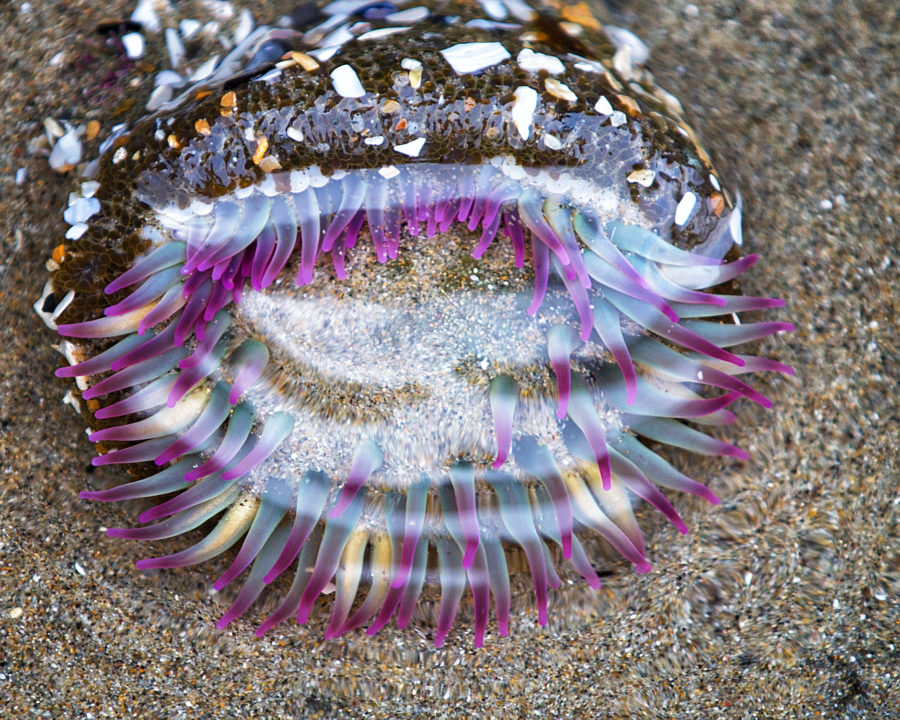
A colorful sea anemone at Seal Rock. Photo by the author / thePDXphotographer.
Best Oregon Coast Tide Pools at a Glance
This table is a decision guide, not a promise of access. Parking rules, wildlife closures, trails, and facilities can change. Check the managing agency before a long drive.
| Location | Nearest base | Best for | Access reality | Facilities and fees |
|---|---|---|---|---|
| Haystack Rock | Cannon Beach | First-timers, families, interpretation | Long, generally level sand approach; exposed pools are still wet and uneven | Use city beach access; parking and restrooms depend on entry point |
| Hug Point | Arch Cape / Cannon Beach | Small pools, waterfall, coastal history | Stairs to beach; points and caves can be cut off by the tide | Compact state wayside; temporary stair solution was reported at the 2026 reopening |
| Indian Beach at Ecola | Cannon Beach | Scenery and a more rugged outing | Uneven shore and seasonal access considerations | State-park parking rules apply; check current park alerts |
| Short Beach / Cape Meares area | Oceanside | A quieter North Coast option | Stairs and an uneven rocky approach | Small access area with limited facilities |
| Cape Kiwanda | Pacific City | Geology and a full beach day | Open-ocean exposure; stay out of fenced and unstable headland areas | Pacific City parking and restrooms nearby; check local parking rules |
| Yaquina Head / Cobble Beach | Newport | Marine life, interpretation, first-time visitors | Cobble Beach has 134 stairs; rocks roll and become slippery | BLM lists restrooms and a $7 passenger-vehicle pass; pets are not allowed in the tide-pool area |
| Seal Rock | Newport / Waldport | Photography and dense rocky habitat | Irregular rock, sand, and surf exposure | Small state recreation area; confirm current facilities |
| Yachats State Recreation Area | Yachats | Convenient town-based exploring | Short approach, then uneven basalt and active surf | Town services are nearby |
| Cape Perpetua corridor | Yachats | Multiple stops and a full-day itinerary | Conditions vary sharply among sites; choose the specific access first | Multiple federal and state sites; passes may apply at some trailheads |
| Sunset Bay | Coos Bay | Families and gentler first experiences | Protected bay offers comparatively approachable intertidal access | Day-use and picnic facilities; seasonal interpretation may be offered |
| Cape Arago South Cove | Coos Bay | Rich South Coast habitat | Trail to a sandy cove; confirm trail and ocean conditions | State-park day-use facilities |
| Coquille Point | Bandon | Wildlife, views, and pairing with a town visit | Stairs from the bluff to the beach; exposed rocks remain slick | Parking and services available in Bandon |
| Harris Beach | Brookings | South Coast scenery and easy trip planning | Shorter approach from the day-use area, followed by uneven rock | State-park parking and restrooms |
Accessibility note: A paved overlook or accessible restroom does not make the tide pools themselves wheelchair accessible. Wet rock, sand, cobbles, steps, and moving water are inherent barriers. Yaquina Head has accessible observation areas and an accessible Quarry Cove platform available with a gate opener, but Cobble Beach itself requires 134 stairs. Haystack Rock’s program points visitors to local beach-wheelchair availability; contact the provider before relying on it.
North Coast Tide Pools
Haystack Rock, Cannon Beach
Best for: families, first-time tide poolers, and anyone who wants help identifying what they see.
Haystack Rock is the most approachable introduction for many visitors because the broad beach does not require scrambling down a headland. The protected Marine Garden around the rock is also supported by the seasonal Haystack Rock Awareness Program, whose educators are typically on the beach during daytime low tides from March through October. Their current beach schedule says a low tide of one foot or lower is needed to access the pools.
Do not climb on Haystack Rock or enter closed habitat. Use our Cannon Beach guide to plan parking, food, and the rest of your day.
Hug Point State Recreation Site
Best for: combining small tide pools with a seasonal waterfall, sandstone formations, and the old stagecoach road.
Hug Point is five miles south of Cannon Beach near Arch Cape. It reopened in September 2026 after storm damage, drainage work, paving, and a temporary stair repair. Read our Hug Point reopening report before going. The sandstone point, caves, and historic road can become inaccessible as the tide rises. Treat the tide chart as a hard turnaround tool, not permission to linger.
Indian Beach and Ecola State Park
Best for: dramatic scenery and visitors comfortable with a less predictable outing.
Ecola’s shoreline can reveal rocky habitat at low tide, but access conditions and closures have changed after storms and landslides. Check the current Oregon State Parks alert before committing. Stay on designated routes, avoid cliffs, and do not assume that a low predicted tide makes every rock shelf safe.
Oswald West State Park
Best for: a forest-to-ocean day near Manzanita.
Oswald West offers rocky-shore opportunities around the Short Sand Beach area when tide and surf cooperate. The walk through the forest adds appeal, but the cove still faces open-ocean waves. It is better as a flexible adventure than a guaranteed tide-pool stop.
Short Beach and the Cape Meares Area
Best for: visitors based around Oceanside or Tillamook who want a quieter alternative.
Short Beach, north of Oceanside, reaches rocky shoreline by a stairway from a small access point. The physical approach is more demanding than Haystack Rock, facilities are limited, and parking can be constrained. Give yourself extra time to return before the incoming tide.
Cape Kiwanda, Pacific City
Best for: geology, photography, and a broader Pacific City beach day.
Low tide can expose rocky areas near Cape Kiwanda, but this is a powerful open-ocean setting with unstable sandstone and long-documented fall hazards. Stay out of fenced areas and away from cliff edges. Our Pacific City guide covers the wider destination.
Central Coast Tide Pools
Devils Punchbowl and Otter Rock
Important: treat Devils Punchbowl primarily as a viewpoint and hazardous wave feature—not as a routine family tide-pool recommendation.
The bowl and surrounding rock can look inviting when water retreats, but incoming surf can trap people quickly. Safer nearby tide-pool choices include managed sites such as Yaquina Head. Never enter the bowl, caves, or exposed rock simply because someone online called it a “giant tide pool.”
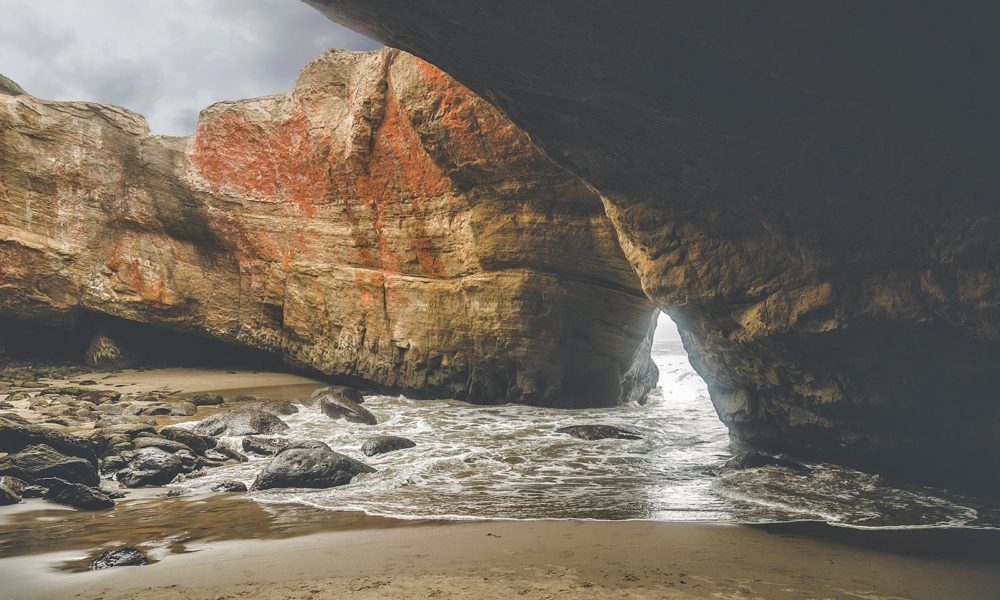
Devils Punchbowl is dramatic, but it is not a casual tide-pool playground. Photo by the author / thePDXphotographer.
Yaquina Head Outstanding Natural Area
Best for: an educational first visit and one of the coast’s most memorable managed tide-pool settings.
Cobble Beach sits below Yaquina Head’s lighthouse and interpretive center. The Bureau of Land Management currently lists a $7 passenger-vehicle fee valid for three days, accessible restrooms and observation decks, and no pets in the Cobble Beach tide-pool area. Reaching the beach requires 134 stairs. Wildlife protection may also limit access during harbor seal pupping and seabird nesting seasons, so check the BLM’s current Yaquina Head information.
For a complete visit, use our Yaquina Head guide and Newport guide.
Seal Rock State Recreation Site
Best for: colorful pools, photography, and visitors comfortable moving carefully across irregular terrain.
Seal Rock’s offshore formations and rocky beach create pockets worth examining on a favorable low tide. The approach can involve loose sand, slanted rock, and algae-coated surfaces. Stay well back from channels where waves continue to surge.
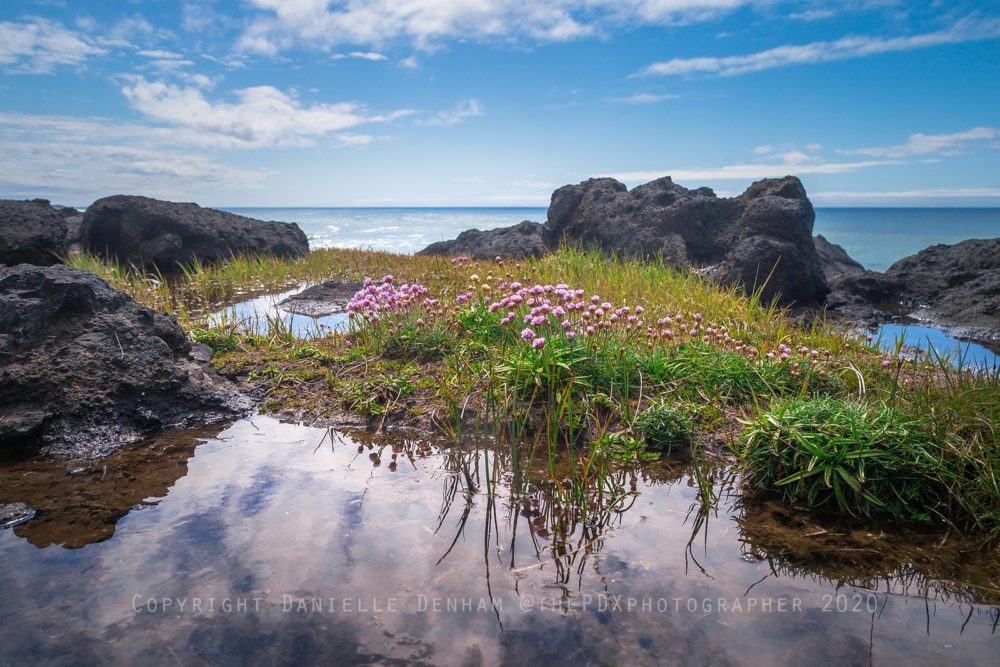
Rocky intertidal habitat at Seal Rock. Photo by the author / thePDXphotographer.
Yachats State Recreation Area
Best for: a tide-pool stop that does not require leaving town.
Yachats’ basalt shoreline puts rocky habitat close to restaurants, lodging, and other services. That convenience should not be confused with gentle terrain: the rock is uneven, waves strike ledges unexpectedly, and channels can refill quickly. Build the rest of your visit with our Yachats guide.
Cape Perpetua, Bob Creek, Neptune and Strawberry Hill
Best for: visitors who want several choices along one exceptionally scenic stretch of Highway 101.
The Cape Perpetua corridor includes multiple rocky-shore access points rather than one interchangeable “tide pool.” Bob Creek, Neptune State Scenic Viewpoint, and Strawberry Hill each have different parking, walking, and surf exposure. Choose one location before checking the nearest tide prediction. Do not combine tide pooling with close approaches to Thor’s Well, the Spouting Horn, or other wave-driven features.
Heceta Head Area
Best for: pairing a lighthouse visit with careful beach exploration.
The beach near Heceta Head can expose rocky habitat at low water, but the lighthouse, trails, and shoreline conditions make this a broader destination rather than a guaranteed tide-pool stop. Check the park page and tide before leaving Florence or Yachats.
South Coast Tide Pools
Sunset Bay State Park
Best for: families and visitors who want a comparatively sheltered introduction.
Oregon State Parks describes Sunset Bay’s protected shoreline as offering easy access to intertidal areas. Day-use and picnic facilities make it simpler to manage a family outing, and seasonal interpreters may offer tide-pool walks. Even inside the bay, keep watching the ocean and the rising tide.
Cape Arago State Park
Best for: South Coast biodiversity and visitors prepared for a trail approach.
The South Cove trail leads toward a sandy beach and rocky intertidal habitat. Trail or cove access can change with weather and maintenance, so verify conditions. Offshore rocks are wildlife habitat and are not places to climb.
Five Mile Point
Best for: experienced explorers prepared for a longer beach approach.
Five Mile Point is reached from the Whiskey Run beach area south of Coos Bay and requires a substantial walk compared with a roadside stop. Go only with a generous falling-tide window, daylight, and a clear return route.
Coquille Point, Bandon
Best for: combining tide pools, sea stacks, birds, and a full Bandon visit.
Stairs descend from the bluff to the beach and rocky habitat. Shoreline Education for Awareness sometimes offers seasonal programming in the area. Respect signed wildlife areas and keep your distance from nesting or resting animals. Our Bandon guide covers parking, nearby beaches, food, and weather alternatives.
Cape Blanco and Port Orford
Best for: travelers already exploring Curry County’s more remote headlands.
Rocky shore can be exposed near Cape Blanco and around Port Orford at low tide, but access is more dispersed than at a managed teaching site. Confirm the exact public access, road condition, daylight, and local forecast before setting out. Do not cross private land or descend unofficial cliff routes.
Rocky Point and Arizona Beach
Best for: flexible South Coast travelers who are comfortable abandoning the plan if conditions look wrong.
These smaller stops can expose rocky habitat, but facilities and safe access are limited compared with Harris Beach or Sunset Bay. Treat them as conditional alternatives, not guaranteed family destinations.
Lone Ranch and Harris Beach
Best for: Brookings-based visitors seeking dramatic rocks and straightforward trip planning.
Lone Ranch offers a quieter beach setting north of Brookings, while Harris Beach State Park provides a more developed day-use base. Both remain exposed to the Pacific. Watch channels between rocks and leave before the incoming tide narrows the beach. Use our Brookings guide to build the rest of the day.
Winchuck Beach
Best for: travelers at Oregon’s far southern edge who have time for a beach walk.
Rocky habitat lies north of the Winchuck River access area. Because the route involves walking away from the parking area, allow more return time than the tide minimum suggests and avoid the river mouth during strong current or surf.
Oregon Coast Tide-Pool Map
Use the map to understand the coastwide spread, then verify the individual beach through its managing agency. A pin does not prove that today’s route is open or safe.
Tide-Pool Safety and Etiquette
Our coast is beautiful because it is alive and powerful. Before going, review the current Oregon Tidepools safety guidance and Oregon State Parks’ beach-safety information.
- Keep one eye on the ocean. Low tide does not eliminate sneaker waves.
- Wear closed-toe shoes with excellent grip. Wet basalt, algae, and loose cobbles are remarkably slippery.
- Keep your hands available. Secure cameras and phones so you can balance with three points of contact when necessary.
- Step on sand or bare rock. Avoid mussel beds, barnacles, anemones, eelgrass, and other living surfaces.
- Do not enter caves, surge channels, bowls, or areas beneath unstable cliffs.
- Keep children within reach. A buddy watches the water while the other person looks into the pool.
- Stay off offshore rocks and islands. Many are protected wildlife habitat and closed to public entry.
- Respect closures and barriers. Wildlife, landslides, nesting birds, seal pups, storms, and maintenance can change access without much warning.
Can You Touch Tide-Pool Animals?
The lowest-impact choice is to observe without touching or handling anything. Oregon Tidepools says that, where touching is allowed, use only one wet finger and never poke or prod. Never pry an animal from rock. Do not remove animals, seaweed, rocks, or shells; something that looks empty may still be habitat. Replace anything you gently move exactly as you found it.
Collection rules vary, and Marine Gardens, reserves, research reserves, habitat refuges, and shellfish preserves can prohibit take. Check the current ODFW shellfish and marine-invertebrate regulations. This guide is for wildlife viewing, not harvesting.
What Lives in Oregon Tide Pools?
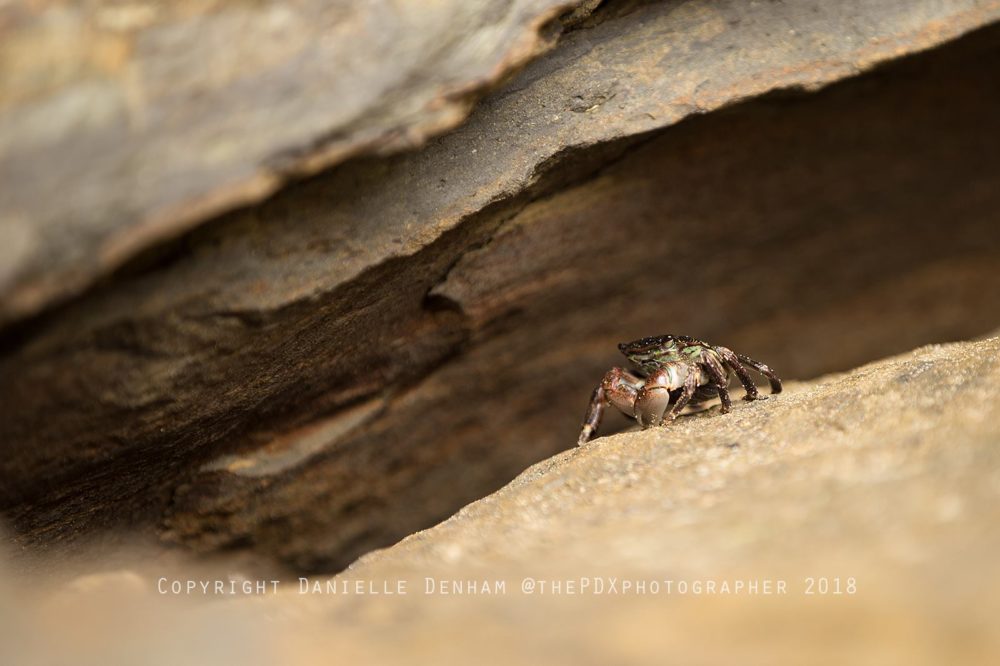
A small crab shelters among the rocks. Photo by the author / thePDXphotographer.
Slow down before assuming a pool is empty. Watch the same patch for a minute and shapes begin to move. Depending on habitat, season, water depth, and luck, you may see:
- Ochre sea stars and, more rarely, other sea-star species
- Giant green and aggregating anemones
- Acorn and gooseneck barnacles
- California mussels
- Black leather and gumboot chitons
- Hermit crabs and purple shore crabs
- Black turban snails, limpets, and other small snails
- Purple sea urchins
- Sea cucumbers and nudibranchs
- Sculpins and other small fish
- Rockweed, sea lettuce, kelp, and sea palms
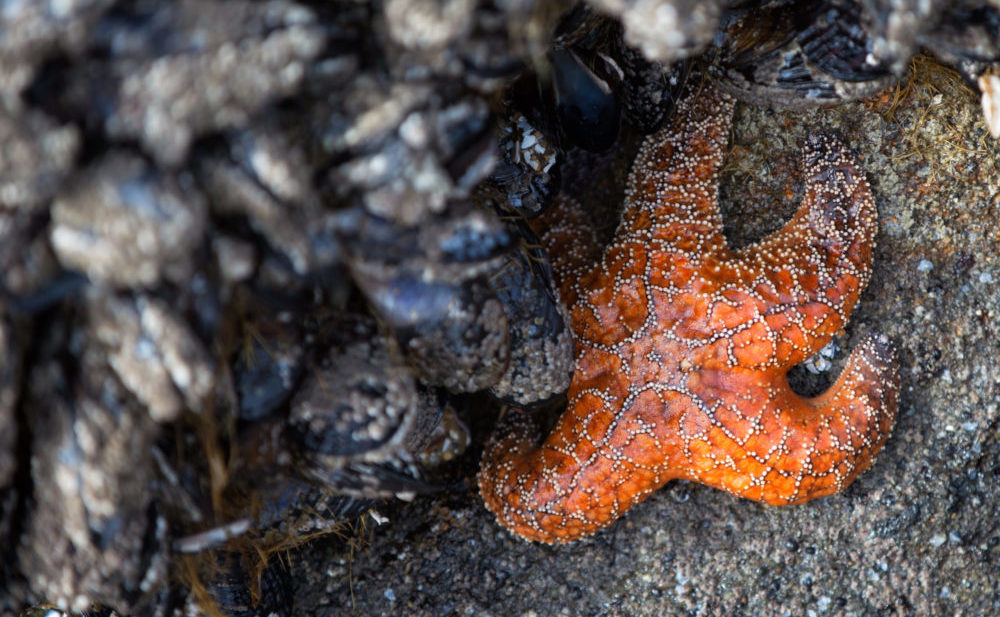
An orange ochre sea star in an Oregon tide pool. Photo by the author / thePDXphotographer.
Seals, sea lions, seabirds, and shorebirds also use the rocky shore. Give them space. A seal pup alone on the beach has usually not been abandoned; its mother may be feeding offshore. Never surround, touch, feed, or push wildlife toward the water.
What to Bring
- Closed-toe shoes with deep tread that can get wet
- Warm layers and a dry change of clothes
- A saved or printed tide prediction for the correct station
- A small first-aid kit
- A secured phone or camera
- Binoculars for wildlife viewing from a respectful distance
- Water and a bag for your own trash
Leave buckets, collecting tools, and loose gear at home. Walking sticks can concentrate damaging force on small organisms; use one only when it is genuinely needed for your safety and place it carefully on bare surfaces.
Frequently Asked Questions About Oregon Coast Tide Pools
Where are the best tide pools on the Oregon Coast?
For most first-time visitors, start with Haystack Rock, Yaquina Head, Sunset Bay, Coquille Point, Seal Rock, or the Yachats–Cape Perpetua corridor. The best choice depends on your base town, mobility, surf conditions, and the time and height of low tide.
Do I need a negative tide?
No, but a tide at 0.0 feet or lower generally exposes more rocky habitat. Some locations remain interesting at tides up to two feet when the ocean is calm. Site shape and surf matter, so a negative prediction is not automatically safer.
How early should I arrive?
Arrive at least one hour before low tide. We prefer a 60–90 minute cushion for simple approaches and more time for a long beach walk. Begin only where you feel safe, then move back toward shore as the tide rises.
Which tide station should I use?
Use the prediction station closest and most applicable to your chosen beach. If a park or local program recommends a particular table, follow that recommendation. Predictions are estimates and can differ from observed water levels because of weather and local conditions.
Which tide pools are best for children?
Haystack Rock is a strong first choice when seasonal educators are present. Sunset Bay offers a comparatively protected setting, and Yaquina Head adds an interpretive center, although Cobble Beach requires 134 stairs and careful footing. Keep children within arm’s reach near the water.
Are any Oregon tide pools wheelchair accessible?
Rocky intertidal surfaces are not reliably wheelchair accessible. Some destinations offer accessible overlooks, restrooms, interpretation, or beach-wheelchair programs. Confirm equipment availability and the exact route before traveling.
Are dogs allowed?
Rules vary. Even where dogs are allowed on the general beach, they may be prohibited in protected tide-pool or wildlife areas. Yaquina Head, for example, does not allow pets in the Cobble Beach tide-pool area. Keep dogs leashed where required and away from wildlife.
What should I do if the ocean looks rough?
Skip the exposed rocks. Visit an overlook, aquarium, interpretive center, town, or another protected activity instead. Our Oregon Coast guide can help you find a safer alternative nearby.
Build a Complete Oregon Coast Day
Tide pooling usually occupies only part of a day because the useful window moves with the ocean. Pair it with a lighthouse, town, scenic drive, meal, or beach walk that does not depend on the same tide. Browse our complete Oregon Coast guide and our roundup of beautiful Oregon state parks for nearby ideas.
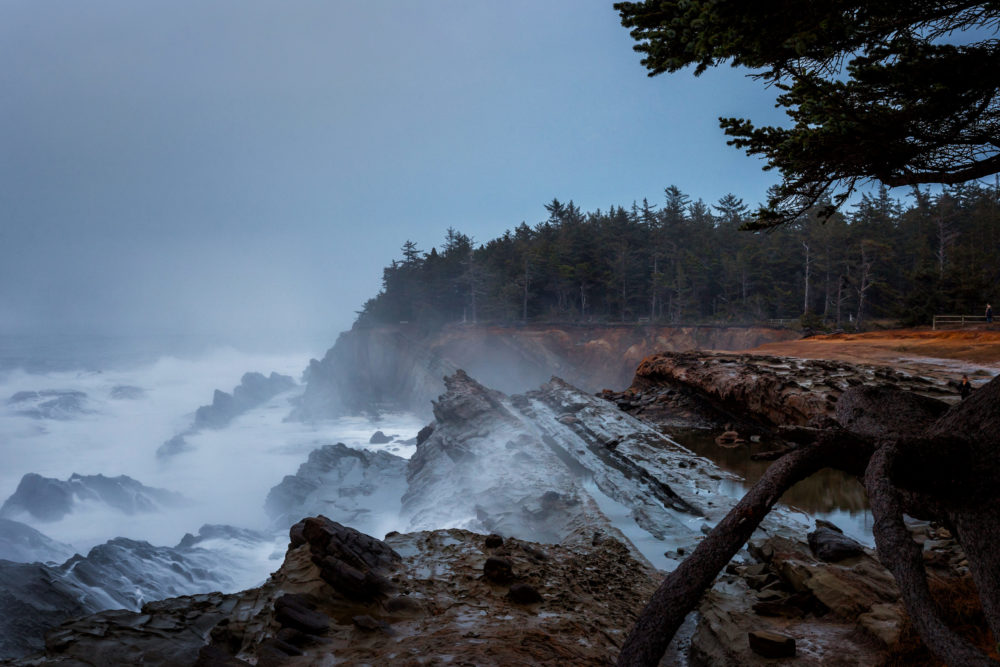
Shore Acres State Park on the South Coast. Photo by the author / thePDXphotographer.
Have a favorite Oregon Coast tide pool or a recent access update? Tell us what you found—but protect fragile places by leaving marine life exactly where it lives.