

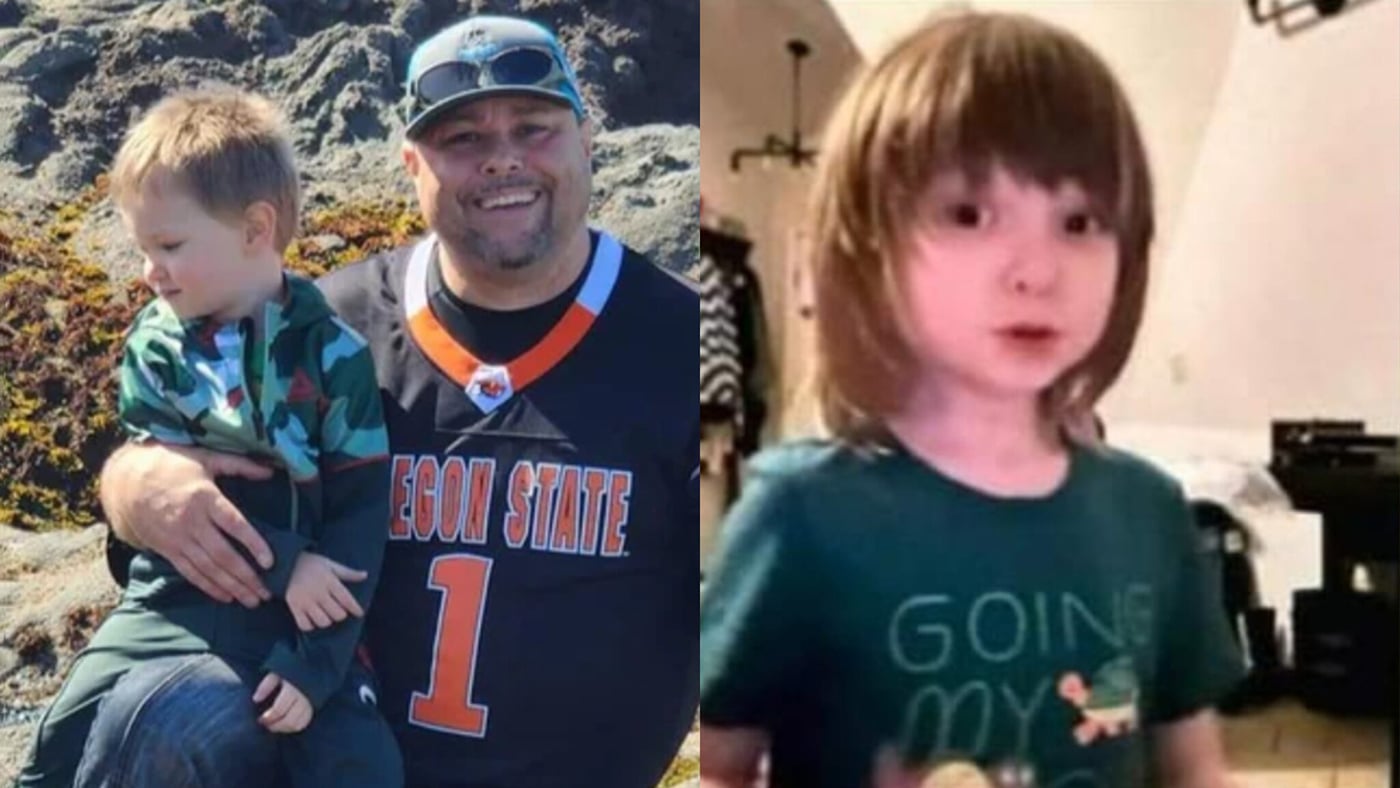
Five-year-old Joshua James McCoy was supposed to celebrate his sixth birthday in November 2024. Instead, just days before that milestone, search crews discovered his body in the woods near his home on the southern Oregon Coast. He was barefoot, without clothing, and approximately 1.6 miles from the house where he lived with his mother.
Nearly two years later, a $17 million lawsuit is bringing renewed attention to the circumstances surrounding his death. The lawsuit, filed Monday, November 2, names the Oregon Department of Human Services (ODHS) and Joshua’s mother, Angela German, alleging that state officials failed to adequately protect the little boy despite months of reports describing troubling conditions inside his home.
As first reported Tuesday by The Oregonian/OregonLive, the civil complaint argues that Joshua’s death came after a series of missed opportunities for intervention. The allegations have not been resolved in court, but an earlier state investigation documented numerous concerns about Joshua’s safety and the decisions made by child welfare officials.
Months Before Joshua Died, People Were Already Asking for Help
Joshua had significant developmental and communication challenges. He was described as autistic and had a limited ability to communicate verbally, although state records indicate he had not completed the diagnostic evaluation recommended by medical professionals.
According to an 18-page child-fatality review released by ODHS, officials received a report on May 14, 2024, describing possible neglect at the home where Joshua lived near North Bend. The person making the report alleged that his mother frequently consumed alcohol, slept for extended periods, and left Joshua without adequate supervision.
The report also described a home with food scattered across floors, alcohol containers within the child’s reach, and unsanitary conditions that allegedly went unaddressed for days. Joshua was reportedly extremely thin, sometimes went long periods without bathing, and ate a limited diet consisting largely of processed foods, sweets, and chocolate milk. The new lawsuit further alleges that child welfare authorities received warnings he was frequently hungry.
State workers began investigating. They attempted several home visits, interviewed people familiar with the family, and eventually met with German and Joshua. Although the caseworker documented significant clutter and poor housekeeping, the worker concluded the conditions did not constitute an immediate safety threat.
Another report arrived on July 12, describing continued concerns about the home and German’s ability to care for her son. Yet, after additional visits and discussions about plans to stay with friends outside Oregon, the agency ultimately closed its assessment in August. The neglect allegation was classified as unfounded at that time.
A Little Boy Disappears, and a Community Begins Searching
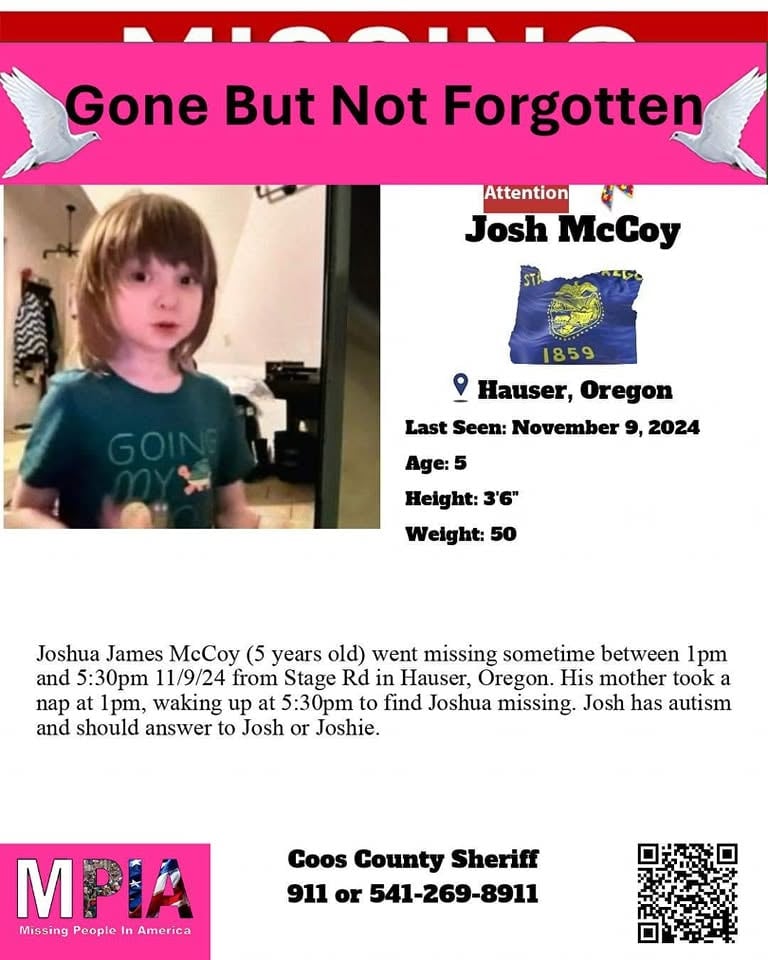
On November 9, 2024, Joshua disappeared from his home in the Hauser area of Coos County. His mother told investigators she had fallen asleep during the day and discovered he was missing when she woke up.
Rather than immediately contacting local police herself, German reportedly called a friend in Utah and asked for assistance. The friend contacted Oregon authorities, setting off a search that eventually involved multiple agencies and search-and-rescue personnel.
Three days later, on November 12, searchers found Joshua’s body in the woods. He was located a short distance from a forest road, approximately 1.6 miles from home. The discovery devastated the local community and raised troubling questions about how he had reached that location.
FOX 12 Oregon reported in December 2024 that investigators had initially examined the possibility of foul play. Court records described the absence of scratches or significant dirt on Joshua’s bare feet, details investigators considered unusual given the rough terrain surrounding the area.
Authorities subsequently reported that hypothermia contributed to Joshua’s death. Although investigators initially considered the circumstances suspicious, Joshua’s mother was not criminally charged in connection with his death.
What Investigators Found Inside the Home
When authorities entered the home during the search, they encountered conditions significantly worse than those previously documented by child welfare workers.
The state’s fatality review describes moldy food, garbage, and duck droppings throughout the residence. Investigators also documented human feces on walls and ceilings, scattered alcohol containers, and damaged belongings across the floors.
The condition of the home was especially concerning given Joshua’s communication difficulties and dependence on adults for his safety. A former babysitter later described seeing his ribs, being concerned about his eating habits, and finding the home filled with waste and alcohol containers. Those accounts were documented in the state’s review.
The newly filed lawsuit includes another disturbing allegation. According to The Oregonian’s reporting on the complaint, a video recovered from German’s phone allegedly showed Joshua alone in the woods, visibly distressed and calling for his mother on the day he disappeared. That description comes from the lawsuit and has not been independently verified by That Oregon Life.
Oregon’s Own Review Identified Failures in the System
Perhaps one of the most significant aspects of this case is that the state’s internal review acknowledges problems in how Joshua’s situation was handled.
In its findings, the Critical Incident Review Team determined that workers had gathered enough information during the May-through-August investigation to develop a plan addressing Joshua’s safety. Nevertheless, ODHS did not intervene with the family, in part because German repeatedly indicated that she intended to move out of state to receive support from friends or relatives.
The review also concluded that the agency needed to investigate more thoroughly how Joshua’s developmental needs, his mother’s reported substance use, and concerns about domestic violence affected his safety. Specialists who could have helped evaluate those issues were not brought into the case.
An additional finding raises questions about how a parent’s professional standing can influence child welfare decisions. Investigators suggested that German’s socioeconomic position and work in the medical profession may have affected how agency staff assessed her ability to care for Joshua without further assistance.
There’s an important distinction in the state’s findings. A separate internal review did not find evidence that the individual caseworker or supervisor had acted negligently. However, the broader fatality review identified missed opportunities for safety planning, insufficient specialist involvement, and a lack of documented referrals for services Joshua needed.
Following Joshua’s death, the agency recommended stronger requirements for connecting children with developmental disabilities to appropriate services. The local office also revised its criteria for identifying high-risk cases, including situations involving children with special needs and families moving across state lines during child protection investigations.
A $17 Million Lawsuit Seeks Accountability
The lawsuit filed this week by Joshua’s estate contends that the warning signs were serious enough to require stronger action by the state before his death.
Salem attorney Jimmy Healy, representing the estate, argues that ODHS had opportunities to intervene but failed to adequately protect Joshua. The complaint names both the state agency and German as defendants and seeks $17 million in damages.
According to The Oregonian, an ODHS spokesperson declined to comment on the pending litigation, and German could not be reached for a response. The newspaper also reported that Oregon’s statutory liability limits could restrict the amount recoverable from the state to just over $5 million, even though the complaint requests substantially more.
The lawsuit is a civil action, separate from the criminal investigation conducted after Joshua’s death. Its allegations must still be evaluated through the legal process, and the filing itself does not establish that either defendant is legally responsible for his death.
The Questions Joshua’s Death Leaves Behind
Joshua’s story is not entirely new. His disappearance and death received coverage from Oregon news organizations and national publications, including People magazine, which interviewed his father in November 2024. His father, Lawson Amos McCoy, spoke publicly at the time about his grief and his desire to understand what had happened.
What makes the new lawsuit significant is the renewed examination of the months before Joshua disappeared. State workers had received reports about the home, investigated concerns about his care, and documented his need for additional support. The central question now before the civil court is whether their response met the agency’s legal responsibilities and whether different decisions could have prevented his death.
The outcome of that question remains to be determined. What is already documented, however, is that Oregon’s child welfare system had opportunities to assess Joshua’s safety and later acknowledged shortcomings in how his case was handled.
Joshua was five years old. He relied on the adults around him for food, supervision, safety, and access to the services he needed. His death deserves careful examination, not only for the answers his family still seeks, but also for what those answers could mean for other vulnerable children in Oregon.
Anyone who suspects a child is experiencing abuse or neglect in Oregon can contact the Oregon Child Abuse Hotline at 855-503-SAFE (7233), available 24 hours a day. Call 911 if a child is in immediate danger.