
The footprints measured about 15 inches long, yet the people investigating them sank deeper into the mud than whatever supposedly left them. That was one of the problems a Forest Service wildlife biologist documented after examining alleged Bigfoot tracks in the Pacific Northwest in June 1982. Investigators photographed the impressions, made plaster casts and considered how a large, two-legged animal would move across uneven ground. Their conclusions were skeptical, even as some details in the prints impressed them.
Those records are now available through the U.S. Forest Service’s online reading room, where three files labeled “Bigfoot/Sasquatch Records” were posted on October 15, 2026. New reporting by The Washington Post has brought attention to the documents, which include the Washington footprint investigation, a Montana resident’s historical recollections and an old newspaper clipping. They preserve some fascinating accounts, along with reasons investigators doubted what they were looking at. None establishes that Bigfoot exists.
Oregon has plenty of reasons to pay attention. There’s a Bigfoot trap near Applegate Lake, a Bigfoot center in Boring and a history of Sasquatch stories stretching from the southern Coast Range to the Blue Mountains. One volunteer organization’s Oregon database currently contains 260 listings, although that number needs more explanation than a headline about “260 sightings” would provide. For a state that once celebrated its birthday with a Sasquatch mascot, a fresh look at the federal paperwork feels appropriate.
A Washington investigation with familiar Oregon geography
The best place to begin is the original 1982 investigation, rather than the speculation surrounding its release. Wildlife biologist Rodney L. Johnson wrote his memorandum on June 18, the day after visiting the Mill Creek Watershed to examine reported tracks in the Low Creek drainage. His report describes three reported locations, although the group inspected only two. Time and the conclusions reached at the second location led them to skip the third.
The Umatilla National Forest name may send Oregon readers straight to our side of the Blue Mountains. The forest spans northeastern Oregon and southeastern Washington, and its headquarters are in Pendleton. The case highlighted in the newly posted records concerns the Washington portion of that forest, near Walla Walla. The Oregon connection is regional and historical, rather than a reason to move the investigation across the state line.
The Post’s reporting identifies part-time forest patrolman Paul Freeman as the person whose account set the investigation in motion. He reported seeing what he believed was Bigfoot and later finding tracks. His name became associated with disputed Northwest Bigfoot evidence, and believers and skeptics interpreted the material differently. The government file records the investigators’ assessments; it does not establish who made the impressions.
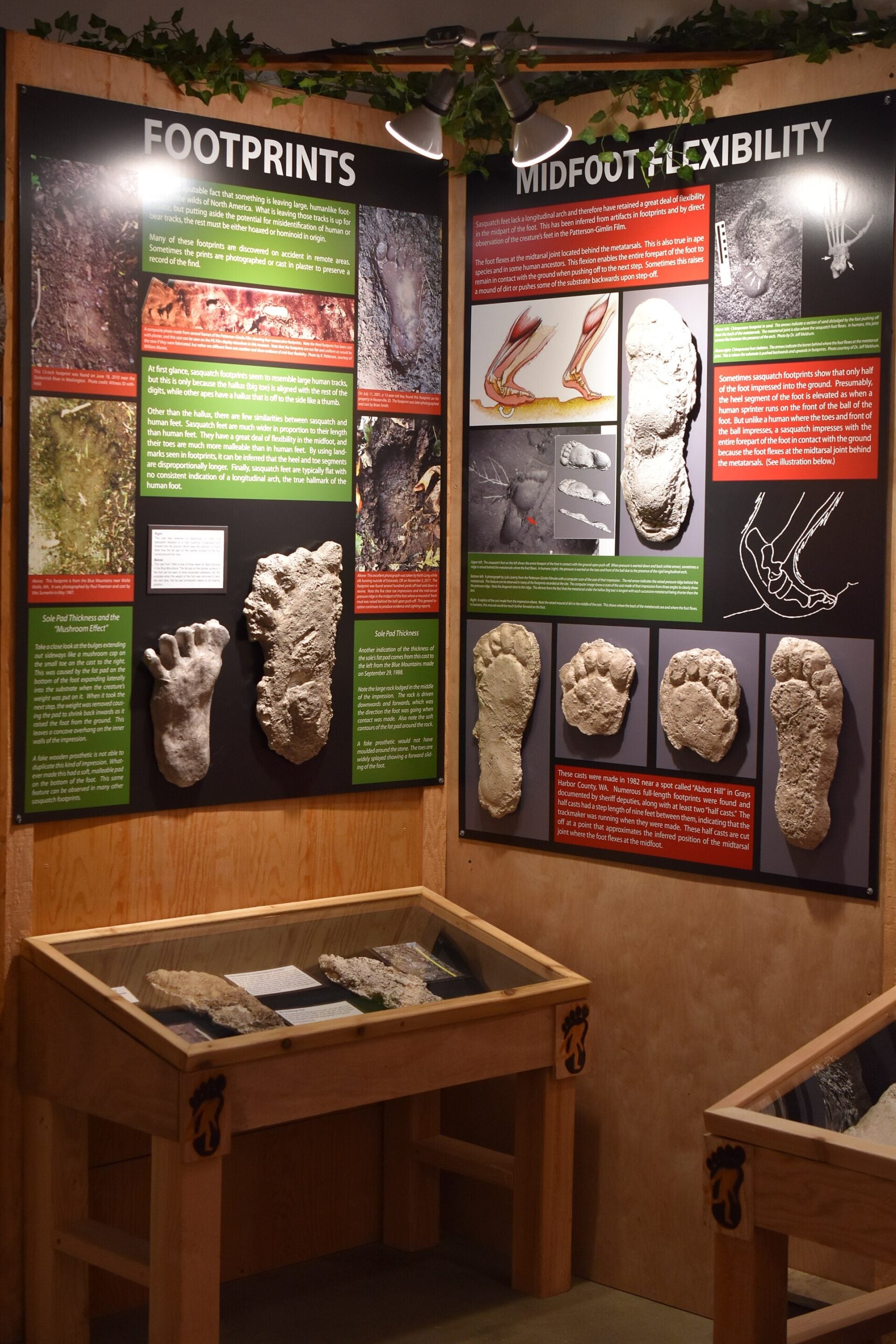
At the first location, Johnson described six identifiable tracks extending roughly 25 feet along a muddy trail. One right-foot impression measured about 15 inches long and seven inches wide. An elk had damaged its heel portion overnight, so investigators cast the front half. Another impression, from a left foot, measured roughly 15 inches by 6.5 inches.
The second location had approximately 18 prints extending about 40 feet near a bog. The route went over a small rise and into vegetation, where Johnson noted additional disturbance. Investigators made two casts there, adding to the two from the first location, and took photographs before casting. The report describes the original photographs as color images, although the publicly posted scan reproduces them in black and white.
The footprints looked impressive until investigators examined the walk
Johnson’s objections went well beyond whether a print looked like a large human foot. The spacing stayed about four feet as the tracks crossed different slopes. He expected a walking animal’s stride to change as it climbed or descended. He also questioned why the impressions were comparatively shallow in soft mud, even where the people examining them sank farther in with their boots.
The tracks had definite beginnings and endings, with no continuous trail connecting them to the surrounding forest. Johnson contrasted that with bear trails the group could follow. At one location, fine forest litter appeared to have been brushed sideways before an impression was made. He also described pressure patterns suggesting that a foot might have been rocked from side to side.
Other details concerned the toes and the way a foot should push off. Johnson expected signs of pressure, toe pads and some slipping on steep, wet ground. The impressions did not behave as he thought the tracks of a very heavy biped should. Taken together, those observations led him to doubt that a creature weighing more than 300 pounds had made them.
He still acknowledged workmanship that would have been difficult to dismiss at a glance. “If the tracks were faked, someone went to a great deal of trouble and detail,” Johnson wrote. He thought some fine print markings appeared natural and considered whether a cast of an actual foot might have been involved. That passage has intrigue of its own, but it appears within a report whose overall conclusion was skeptical.
An appended memorandum from U.S. Border Patrol tracker Joel Hardin was more direct. Writing on July 28 about the same June field examination, Hardin said he believed the tracks were human-made, possibly using a soft-plaster or rubber-coated artificial foot. He cited their fixed spacing, pressure patterns and lack of tracks leading into or away from the sites. In his assessment, involving a government agency could help lend a hoax credibility.
Other researchers disagreed. The Post reported that Washington State University anthropologist Grover Krantz studied the casts and considered them authentic, arguing that the fine ridges would have been impossible to fake. Johnson had also noticed natural-looking details, but reached a different conclusion after considering the whole trail. The disagreement concerned how to interpret the impressions, rather than a documented encounter with their maker.
How often do people report Bigfoot in Oregon?
The Bigfoot Field Researchers Organization’s Oregon index displayed 260 total listings when checked on November 21, 2026. Among its county totals were 29 for Clackamas, 21 for Josephine, 18 for Douglas, 17 each for Lane and Umatilla, and 16 for Deschutes. Those numbers show how widely Bigfoot-related accounts have been collected around Oregon. They cover a long span of time and several kinds of material.
“Listings” is the useful word here. The database includes accounts of alleged sightings, unusual tracks and unexplained sounds, and some county pages also contain newspaper articles. Jackson County’s ten listings, for example, include a 1997 newspaper item about a Bigfoot exhibit. Treating every listing as a separate eyewitness encounter would inflate what the database says.
BFRO says volunteers investigate modern reports before publishing them, with work ranging from interviews to more extensive inquiries. That screening reflects the organization’s judgment about an account, not scientific confirmation of its explanation. Its classification system also distinguishes clear observations from less conclusive circumstances. Sound-only accounts fall into Class B.
The Oregon index’s highlighted recent entries illustrate that distinction. One concerns a deer hunter near Hyatt Lake on October 20, 2025, who reported crashing sounds and loud wood knocks. In his account, he explicitly said he saw nothing. Another describes knocking near Butte Falls in February 2025, while an August 2023 Mount Hood entry concerns backpackers hearing repeated knocks near the Timberline Trail.
These are accounts of experiences people found unusual, with interpretations attached to them. A sound in the woods does not identify the animal or person that made it. The database also separates an incident’s date from the date somebody submitted it or an investigator posted it. An older encounter can become a new online entry months or years later.
So how often do Oregonians see Bigfoot? There is no reliable statewide sighting rate established by these records. The evidence supports saying that people continue reporting Bigfoot-related experiences in Oregon and that the collected accounts extend across decades. It does not support a claim that Bigfoot appears every few days, that every listing involves a visible creature or that the database counts every report made in the state.
Oregon’s Bigfoot history predates the latest document release
The Oregon Encyclopedia traces historical reports in the Oregon country to 1904 accounts of a hairy “wild man” around the Sixes River in the Coast Range. That is a date in the historical record of settler accounts, rather than the beginning of the region’s older Indigenous traditions. The encyclopedia discusses Nehalem Tillamook and Plateau traditions separately, with their own cultural settings. Folding them all into a single modern monster story would lose that context.
By the late 1950s and afterward, logging workers’ stories and discoveries of purported tracks helped spread Bigfoot’s name. The legend entered the working culture of the woods through serious accounts, jokes, sculptures and fabricated prints. That mix helps explain why Oregon’s Bigfoot history can be earnest and playful at the same time. A roadside Sasquatch and a witness convinced something crossed a logging road belong to different parts of that history.
By the 1970s, researcher Peter Byrne had established the Bigfoot Information Center in The Dalles, collecting testimony and purported footprint evidence. Decades later, Oregon used Seski the Sasquatch to help celebrate its 2009 sesquicentennial. The distance between a research center and a birthday mascot shows how many roles the creature has taken on here. Oregonians do not have to agree about its existence to recognize it.
A few famous Northwest stories also need their locations kept straight. The 1924 miners’ account associated with Mount St. Helens belongs to Washington, even though Oregon newspapers covered it. The famous 1967 Bigfoot film was recorded in northern California. Oregon has enough of its own Bigfoot history without borrowing its neighbors’ locations.
Oregon’s Bigfoot evidence once reached the FBI, too
The Forest Service posting is separate from another federal Bigfoot file with a direct Oregon connection. In 1976, Byrne sought help from the FBI in examining unidentified hair associated with his research organization. The material included about 15 hairs attached to a small fragment of skin. Correspondence later made public documented the bureau’s examination and its findings.
As reported by CNBC and other outlets when the records became public in 2019, the FBI’s 1977 conclusion identified the hairs as coming from the deer family. That resolved the submitted sample’s identity without answering every Bigfoot claim anyone had ever made. The laboratory work concerned a particular piece of material. It was never confirmation that an unknown creature lived in Oregon’s forests.
That Oregon Life previously covered the Oregon-linked FBI hair examination. It is worth keeping the two episodes separate: one involved a laboratory sample submitted through an Oregon organization, while the other involved impressions examined in a Washington watershed. Neither belongs in a tally of confirmed Sasquatch discoveries. Both show what can happen when an unusual claim reaches somebody willing to examine it.
A real trap near Applegate Lake caught the wrong animals
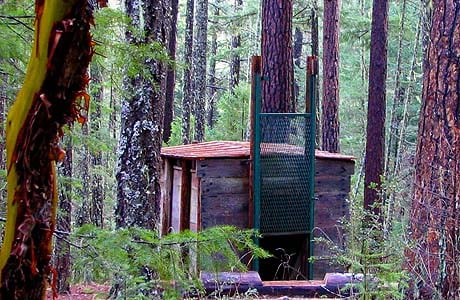
Southern Oregon’s Bigfoot trap is a physical reminder of how seriously some people pursued the search. The Forest Service’s Collings Mountain Trail history says the North American Wildlife Research Team built it in 1974 near Applegate Lake. The project followed a miner’s claim about enormous, humanlike tracks near the Applegate River. It was built by that research group, rather than by the Forest Service itself.
The trap was baited with carcasses for six years. The agency’s account says it caught bears, a less mysterious result than its builders wanted. It was restored in 2006 and remains part of the history described on the official trail page. That is a substantial Oregon Bigfoot artifact even without a successful Bigfoot capture.
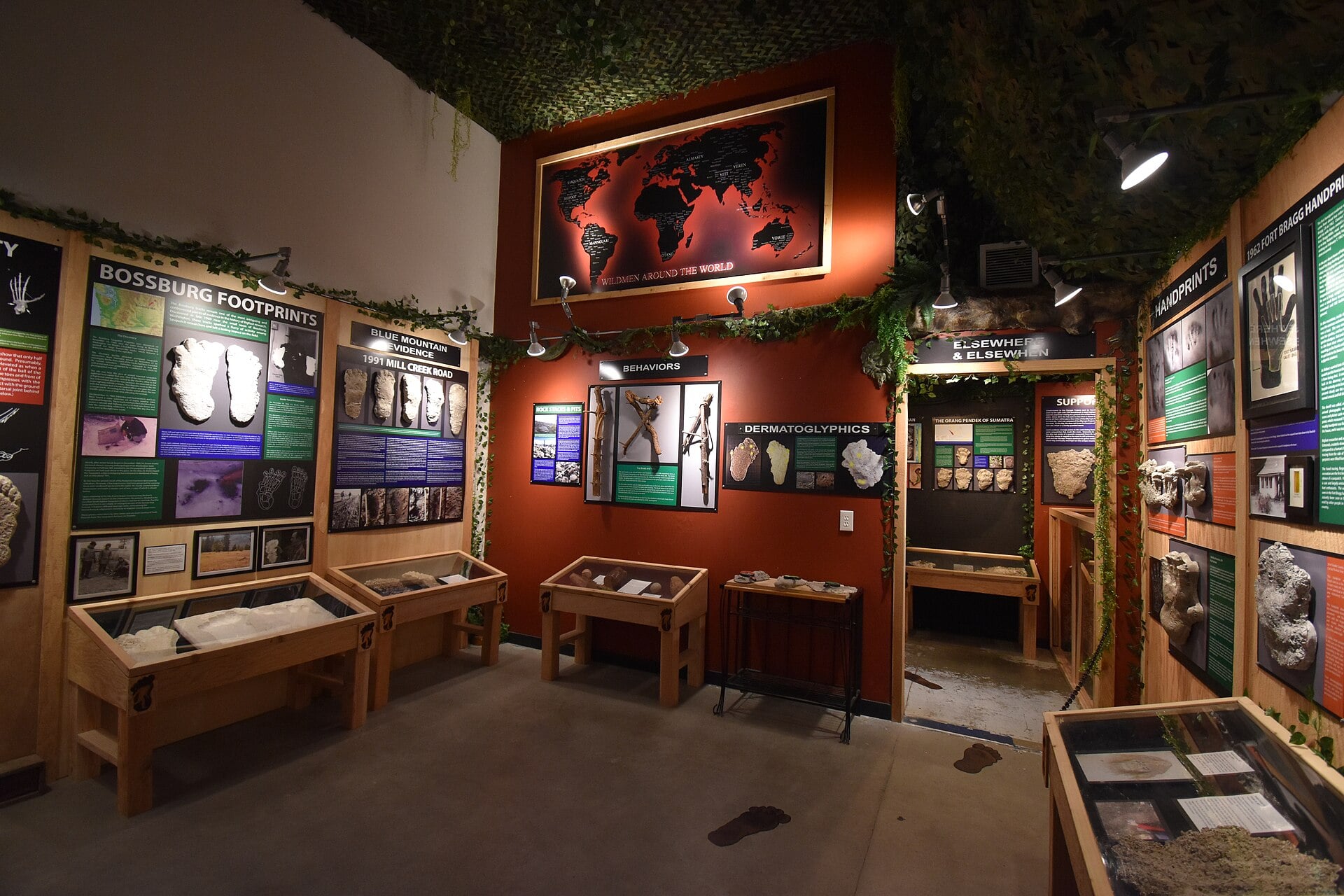
At the other end of western Oregon, the North American Bigfoot Center has an address in Boring. Its official site places the center at 31297 SE Highway 26, while its Sandy address is for mail. Readers interested in the museum can find current visitor information through the center’s own website. For the trap, consult the Forest Service’s current trail information before planning a trip rather than treating historical descriptions as an access guarantee.
The other federal files preserve stories, not new field discoveries
One of the October downloads is a six-page local-history account titled “What Do You Know About Petty Creek? Leo T. Kinney’s Version.” It ranges through Montana history, wildlife and personal recollections, with a reference to the landscape as it looked in 1980. Its Bigfoot-related passage concerns an episode Kinney placed in 1944. Four hunters returned to retrieve an elk and encountered large tracks, then followed them before deciding to stop.
Kinney described the group’s uneasiness and what they inferred from the tracks and the missing elk. He did not describe seeing a Bigfoot during that episode. A later passage recalls another hunter’s account of tracks, odor and a grunting sound the following year. The document preserves those recollections; it is not a contemporaneous federal investigation of a creature observed in 1944.
The third download is a 2003 Clark Fork Valley Press newspaper story about large tracks near River Road West in Sanders County, Montana. Neighbors examined the impressions in snow and offered their ideas about what might have made them. A newspaper clipping in a government archive remains a newspaper clipping, with witness claims that need to be read as claims. Its presence beside an investigator’s memorandum does not give both documents the same evidentiary weight.
You can read the records yourself
The Forest Service’s Freedom of Information Act reading room lists all three downloads under “Bigfoot/Sasquatch Records.” The listing establishes when these files were posted online. It does not establish a presidentially ordered Bigfoot disclosure program or show that previously classified proof has been revealed. The documents themselves are narrower, older and more interesting in their particulars than that framing suggests.
For Oregon readers, the 1982 file offers a close look at how investigators tested a claim from the same broader region that has sustained our own Sasquatch stories. Their questions concerned mud, stride, pressure and whether tracks continued beyond the obvious impressions. Start with Johnson’s observations, then read Hardin’s appended memo. Both are available in the same seven-page download.