There are restaurants you remember because the food was good, and then there are restaurants you remember because a guy with an accordion might appear while you were halfway through a plate of schnitzel and suddenly the whole room was singing.
Der Rheinlander was definitely the second kind.
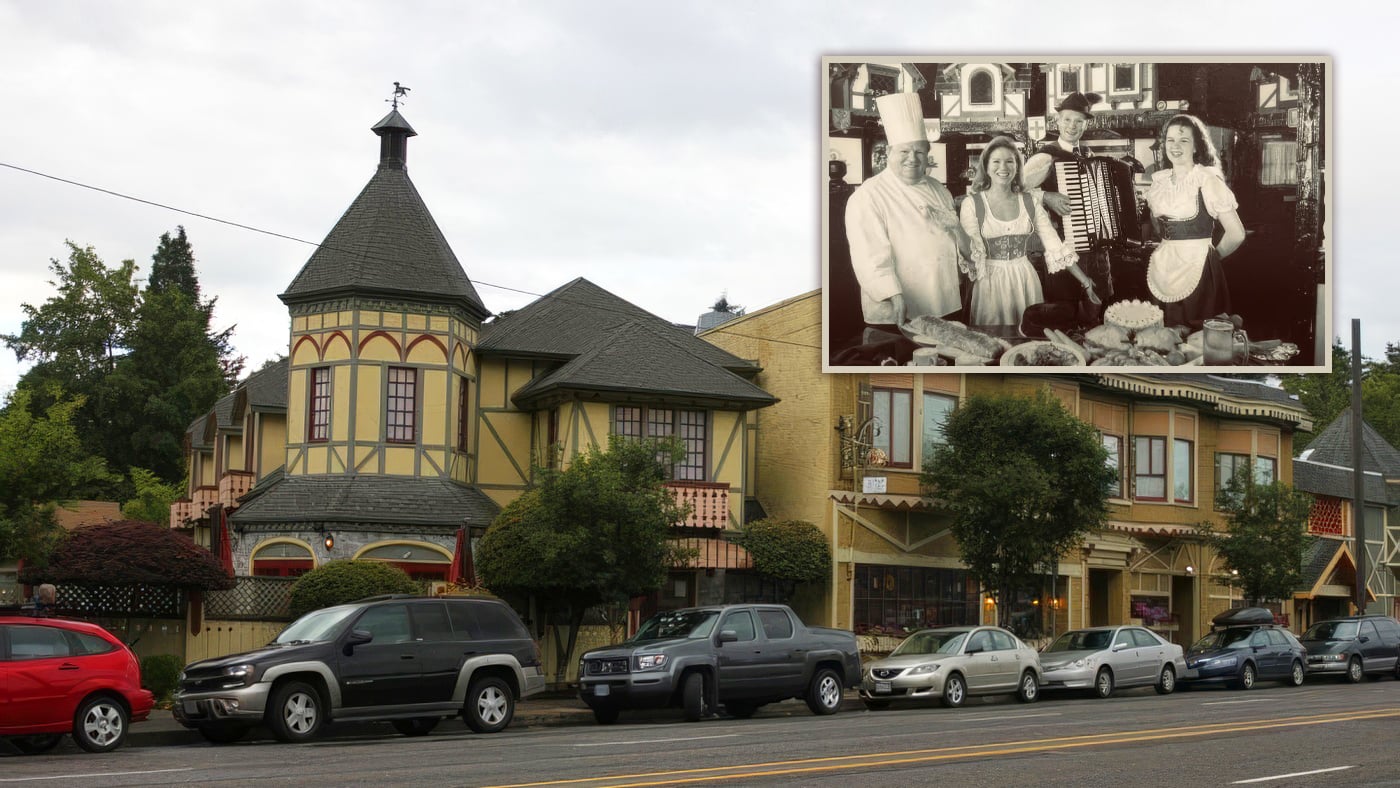
For more than half a century, the sprawling German restaurant on Northeast Sandy Boulevard was one of Portland’s great dining experiences. It had cuckoo clocks, stained glass, Old World decorations, waitstaff in Bavarian-inspired clothing, wandering musicians, sausages, schnitzel, fondue, sauerbraten, spaetzle, red cabbage and, yes, actual yodeling. It closed down in early 2017, and Portland lost an old icon, although after business, menu, and management changes over the years, many didn't mourn. But still...
If you grew up anywhere near Portland during Der Rheinlander’s heyday, there’s a decent chance somebody in your family has a story about this place.
I certainly do.
And every once in a while, usually when I stumble across an old photograph or start thinking about German food, I find myself missing it all over again.
Der Rheinlander Wasn't Just Dinner. It Was An Experience.
Long before Portland became nationally known for food carts, tattooed chefs and restaurants where the menu requires a brief explanation from your server, chef Horst Mager was already turning dining into entertainment.
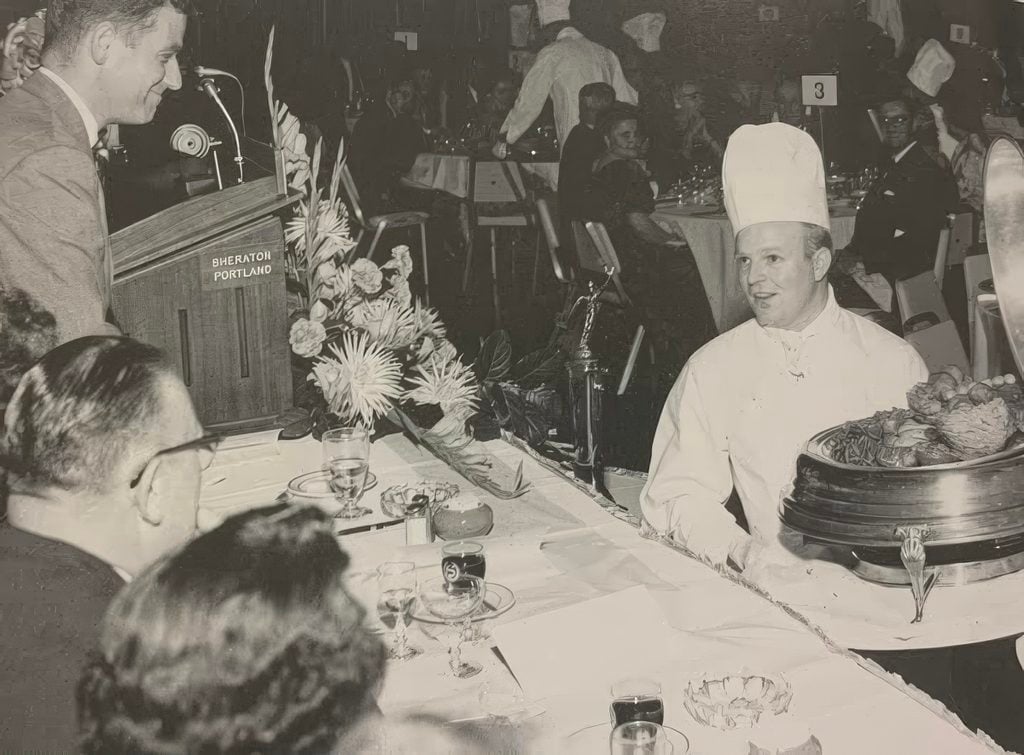
Mager, a third-generation chef from Wiesbaden, Germany, opened Der Rheinlander in Portland in 1963. Portland Monthly later described him as the city's pioneering celebrity-chef type, decades before that phrase became commonplace. He appeared on local cooking shows and eventually opened several other restaurants around Portland, including L'Omelette, Tivoli Garden and the Couch Street Fish House.
If you're interested in more of Mager's story, PDXeater wrote a fabulous deep dive into his life, including his TV personality, and even appearances with Julia Child.
Der Rheinlander, though, became his landmark.
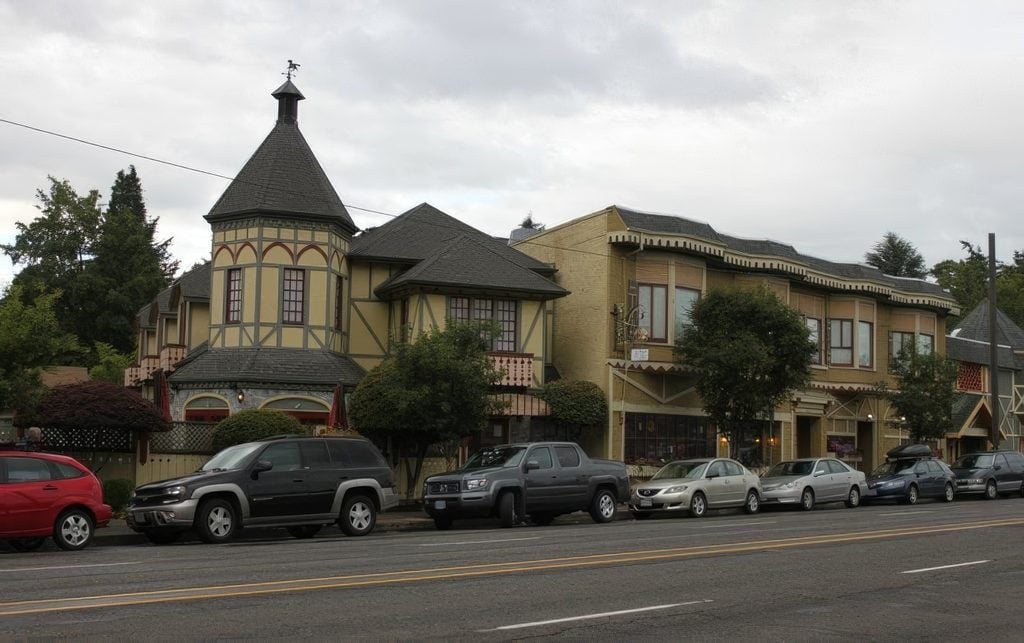
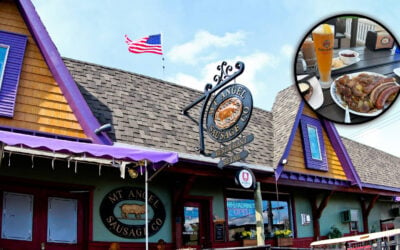
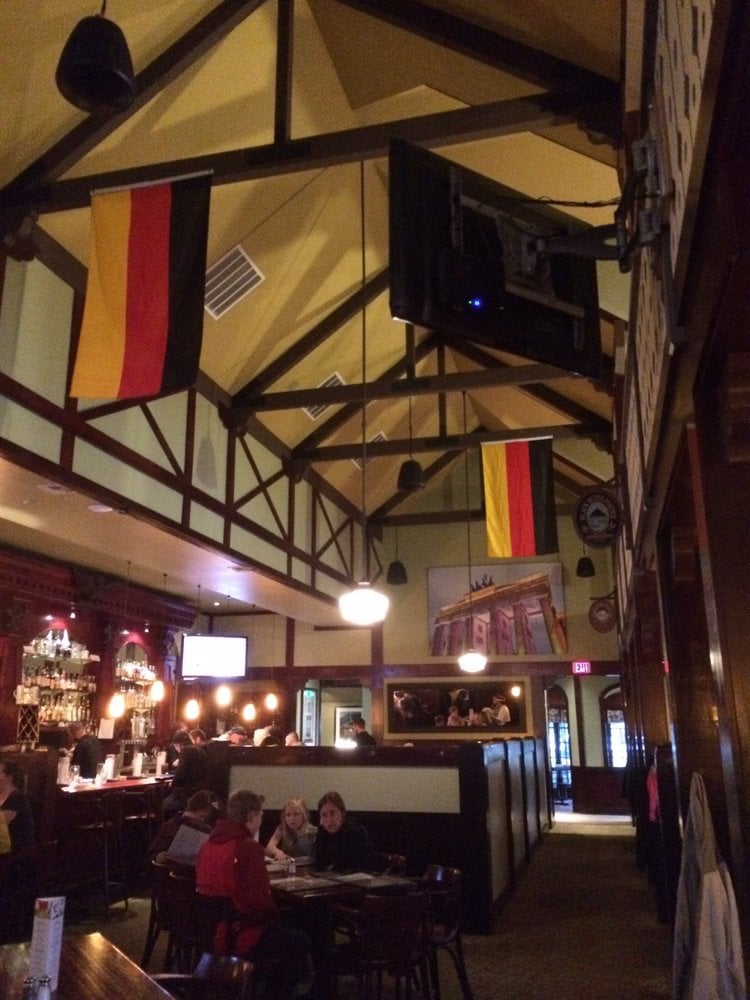
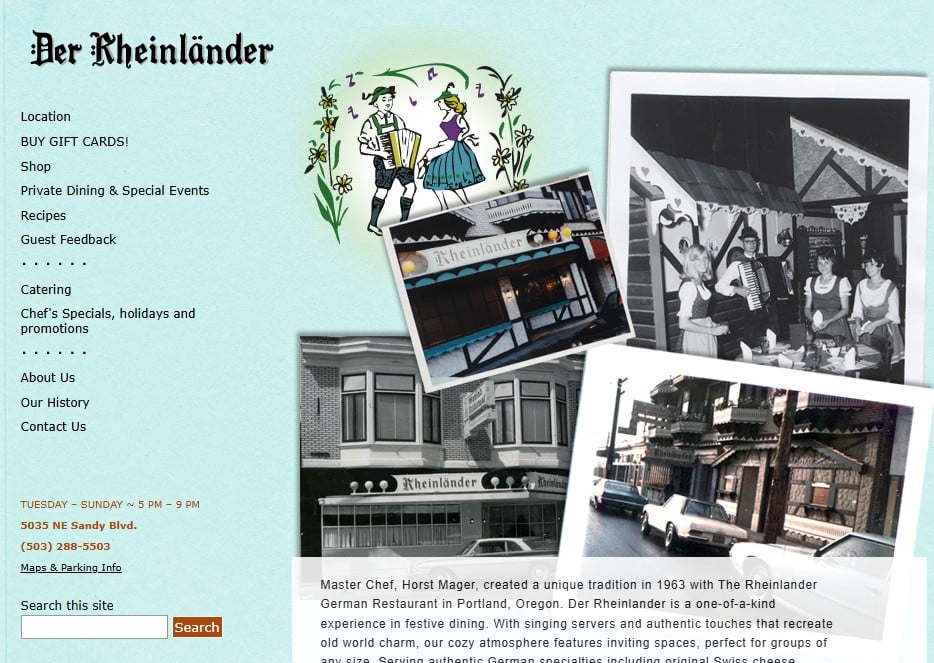
The restaurant at 5035 NE Sandy Boulevard wasn't subtle. The facade stood out like a Bavarian fantasy building that simply got air-dropped and plunked down into Stumptown. Walking inside felt less like entering a conventional restaurant and more like stumbling into somebody's wonderfully over-enthusiastic interpretation of an Alpine village.
As of this writing, there's a review page still maintained on Yelp, complete with photos of the the restaurant that, appropriately, look like they were taken with a 2010s-flip phone. Probably because they were.
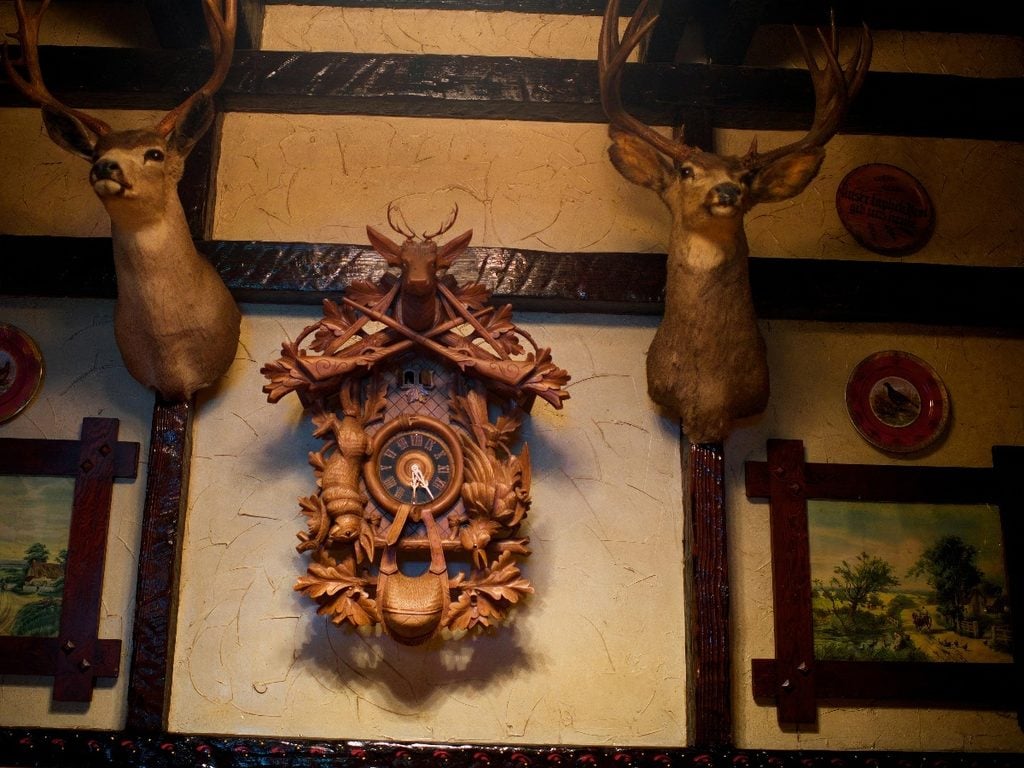
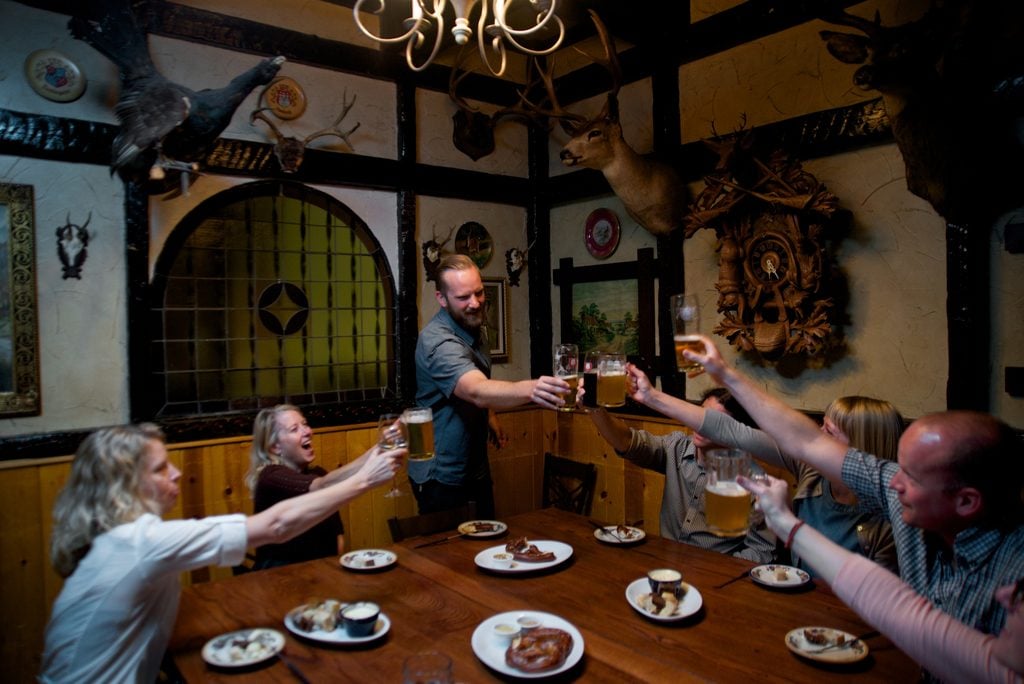
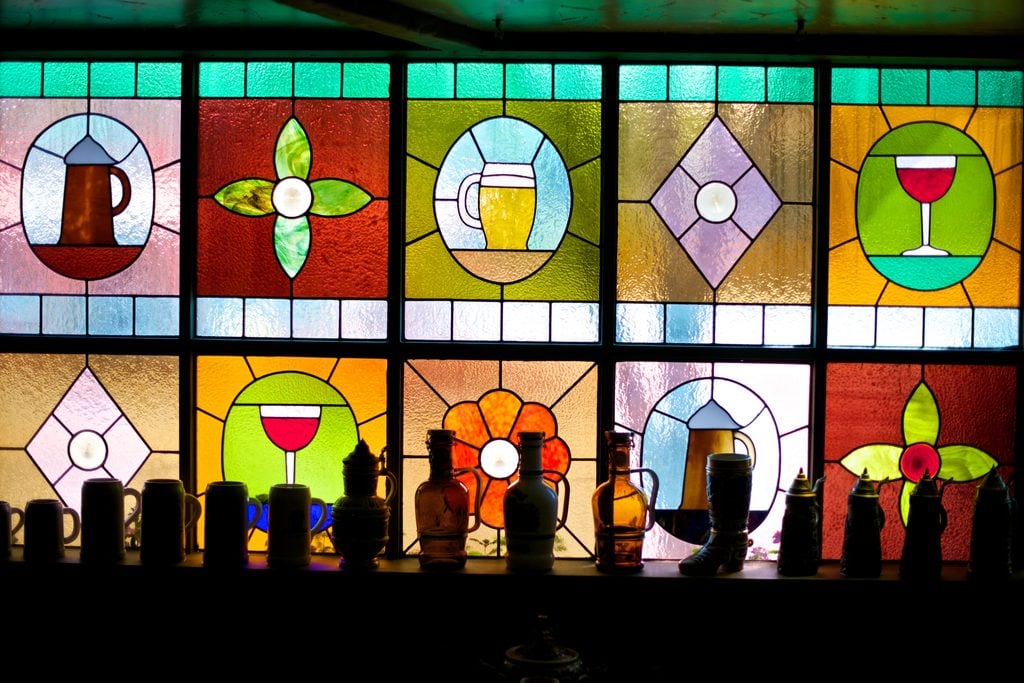
There were German cuckoo clocks, stained glass, hunting memorabilia, forest-like decorations and an assortment of themed dining areas. Over the years it became an elaborate maze of little rooms and visual oddities where there always seemed to be something else to look at.
And then there was the music.
Yeah, those memories are real.
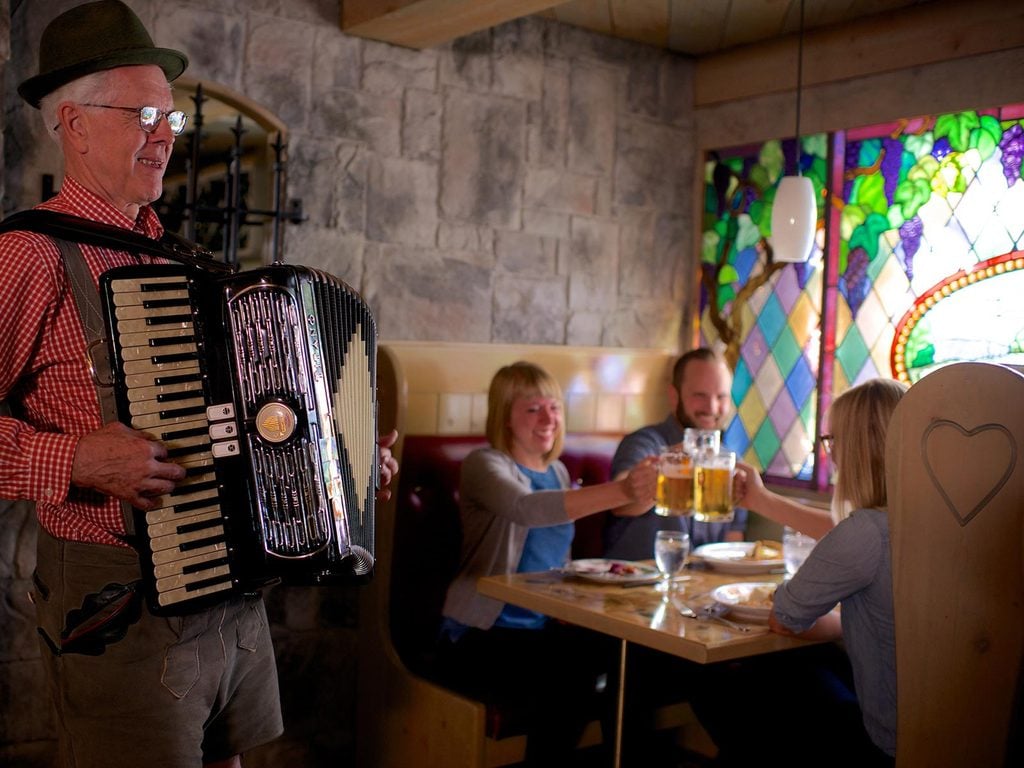
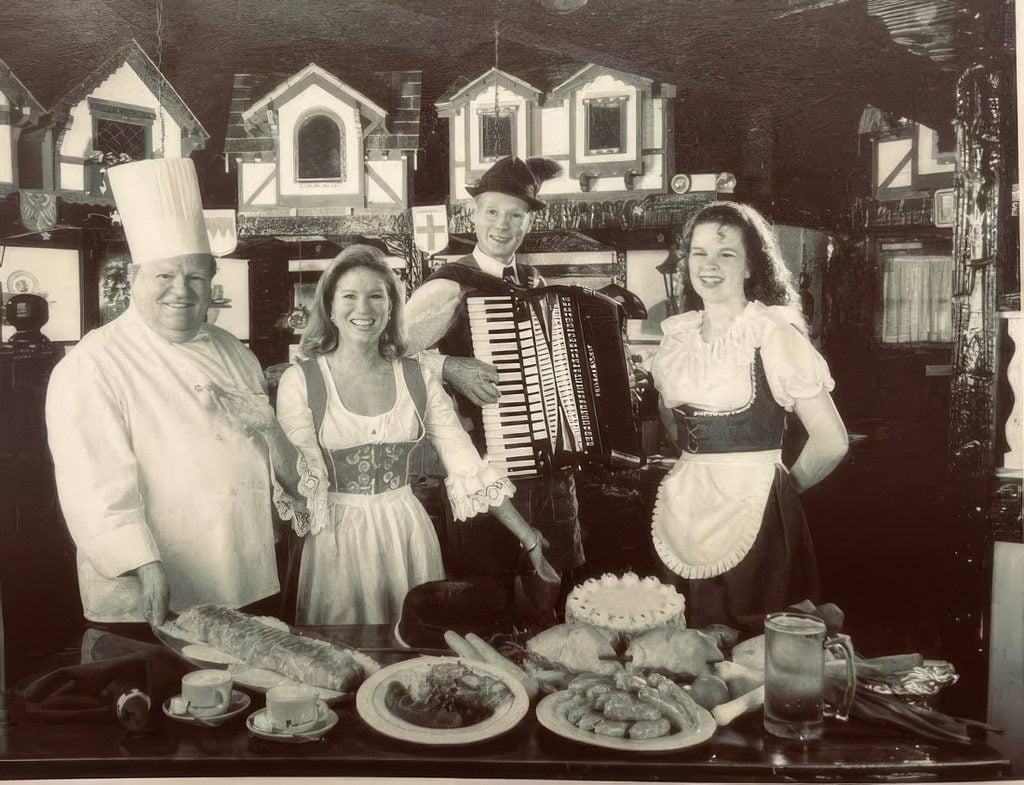
Der Rheinlander really did have strolling accordion players, singing servers and yodeling. Accounts of the restaurant's early years describe servers singing German songs and taking requests from diners. A somewhat contemporary article from 2017 gives a description of what once was:
"Rheinlander’s interior was a maze of separate dining rooms. Each had a theme: medieval church, small German gasthaus inn, cramped Bavarian closet. People packed every one. Inside the loud, reddish, main dining room, the same band now crowded a table of eleven, singing “Stille Nacht.” Three diners were in full Oktoberfest dirndl dress. Servers rushed past with trays of beer, and customers waiting for tables out front had migrated back in to film the festivities. One told her friend, “Okay, I have to find a bathroom in this place. Where are we?” The accordion player yelled, “Now in English!”" --Aaron Gilbreath, The Awl
Try opening a restaurant like that today.
Actually, yes, please do.
If You Remember The Food, You REALLY Remember The Food
For all the theatrics, Der Rheinlander wouldn't have survived for more than 50 years if people didn't genuinely love eating there.
And I did.
My favorite meal was the sausages that came with an assortment of different mustards, and that incredible sauerkraut on the side. The schnitzel was fantastic too, but honestly, I could write an entire paragraph about the kraut alone.
So I will.
This was not the aggressively sour stuff that sometimes arrives next to a bratwurst tasting like somebody soaked shredded cabbage in battery acid. The old Rheinlander sauerkraut was mellow, savory and beautifully seasoned, with caraway seeds running through it. There was still enough tang to remind you what you were eating, but it didn't attack your tongue.
It was the BEST DAMN SAUERKRAUT.
There. I said it.
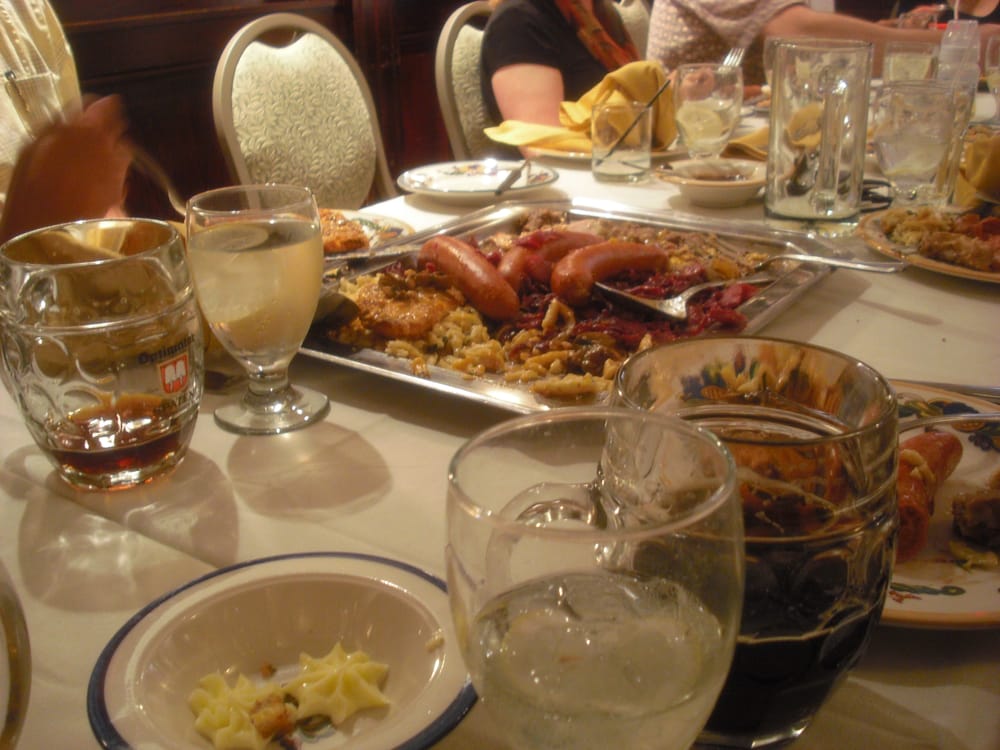
Pair that with a plate of German sausages and those different mustards and I was perfectly, absolutely happy. It was a simple, hearty meal, easily washed down with a good beer. Not that IPA stuff. A nice Bavarian brew, frosty glass, heady and delicious.
Other people have their own Rheinlander foods permanently stored in the memory bank. The Swiss cheese fondue might be the most famous. People still trade versions of the recipe online, and years after the restaurant disappeared, Portlanders continue reminiscing about birthdays and holiday dinners built around bubbling pots of cheese and bread.
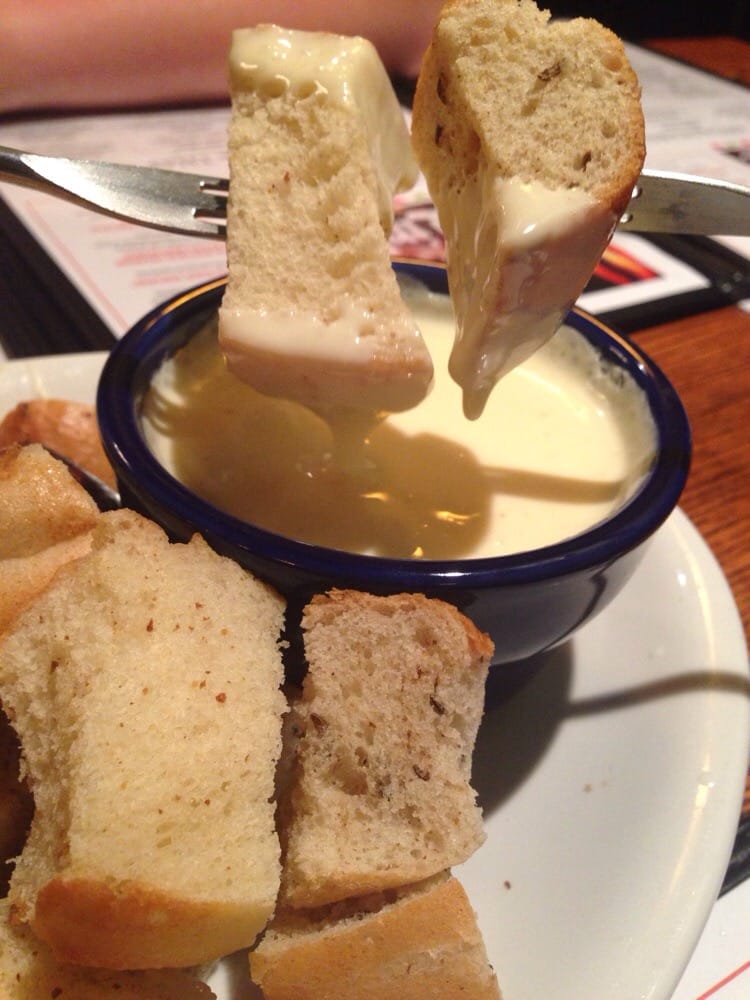
If my memories are correct, you could even buy the cheese itself in local grocery stores, packaged up with a Rheinlander label, and sold as "fondue" with easy directions on how to cook it up at home.
One recent Portland discussion about Der Rheinlander immediately turned into a reunion of sorts. A former busboy remembered having essentially unlimited access to fondue, spaetzle and red cabbage while working there in the 1990s. Another person remembered first dates, a wedding rehearsal dinner, Easter buffet meals and German relatives gathering around the table. Someone else remembered birthday dinners accompanied by staff singing and an accordion, followed by apple strudel.
A separate discussion about the old fondue recipe brought out even more stories. One person said Der Rheinlander had been a family holiday tradition. Another remembered going there for a birthday every year as a child. Someone else chimed in because their grandmother had actually worked there as a waitress.
People STILL post Rheinlander copycat recipes online, mostly for the fondue, but also for other favorites like the lentil soup.
That's when you realize we're not really talking about a restaurant anymore.
We're talking about people's childhoods.
Everybody Seems To Have A Rheinlander Story
The funny thing about old restaurants is that the building disappears long before the memories do.
Mention Der Rheinlander around longtime Portlanders and you'll hear about birthdays, anniversaries, dates, grandparents, holiday meals and parents packing everyone into the car for the drive into town.
For some families, it wasn't someplace you casually stopped on Tuesday because nobody felt like cooking. It was the destination.
Going to Rheinlander meant something was happening.
Maybe Grandma was visiting. Maybe somebody graduated. Maybe there was a birthday. Maybe Dad got a bonus. Maybe your German relatives wanted to see whether Portland could actually pull off German food.
Whatever the occasion, you walked through those doors and suddenly there were clocks and stained glass and waitresses singing and an accordion coming around the corner.
Those kinds of restaurants have become rare.
Portland once had quite a few places where entertainment and dinner collided. We've written before about the wonderfully bizarre Organ Grinder Restaurant, where families ate pizza beneath an enormous pipe organ while silent movies played and an animatronic monkey crashed cymbals.
The details were completely different, but the emotional effect was remarkably similar.
You didn't simply eat there.
You remembered being there.
We've collected quite a few of these vanished Oregon landmarks over the years in our look back at beloved Oregon businesses that disappeared, and Der Rheinlander belongs squarely in that strange category of places whose names can instantly send thousands of Oregonians backward in time.
Horst Mager Built Something Portland Hadn't Seen Before
Part of Der Rheinlander's personality came directly from Horst Mager himself.
Mager came from a family of chefs and arrived in Portland from Germany before opening Rheinlander in 1963. He eventually became far more than a restaurateur. He appeared regularly on local cooking television, published cookbooks and built a collection of restaurants at a time when Portland's modern celebrity-chef culture didn't yet exist.
The Rheinlander also helped spawn Gustav's, a more casual, modern German pub concept operated by the same Mager family company. By the mid-2000s, Horst's daughter Suzeanne Mager was running the business, which included Der Rheinlander and several Gustav's locations. Contemporary coverage described Gustav's as an offshoot of Rheinlander that offered similar food without the singing waitresses and elaborate Old World environment.
And this is where my own memories of the restaurant get a little bittersweet, to put it mildly.
Because at some point, the food changed.
And Then Something Happened To That Sauerkraut
I vividly remember making the drive to Der Rheinlander one day already thinking about that sauerkraut. It was likely my birthday, or some other special evening. Maybe date-night, but those details don't matter.
You know when you've had something at a restaurant enough times that you can practically taste it before you arrive? The smells wafting in from the kitchen are making your mouth water. You've already devoured the entire bread basket. Your entree's on the way.
In that moment, that's where I was.
Then the food came.
Something was wrong.
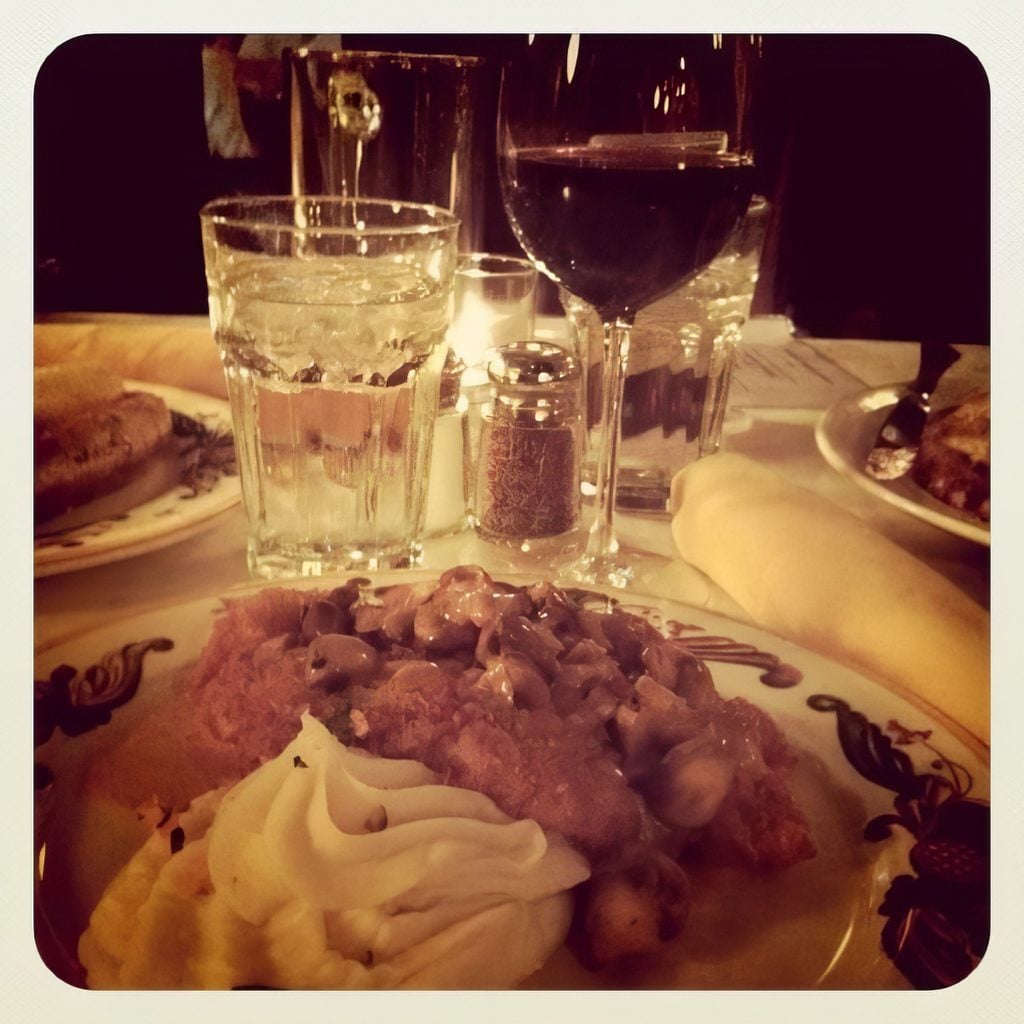
The kraut I'd remembered as mellow and savory wasn't the same anymore. It was one of those moments where you wonder whether your memory's playing tricks on you, the head chef called in sick that evening, or whether somebody back in the kitchen really did change something fundamental.
I left...sad. Over sauerkraut.
Not long afterward, my ex-husband happened to be working for the produce company supplying Gustav's. One day he noticed an unusual amount of pineapple being ordered and asked one of the sous chefs what they were doing with all of it.
The answer?
Sauerkraut.
Pineapple.
In the sauerkraut.
That explanation has lived rent-free in my head ever since.
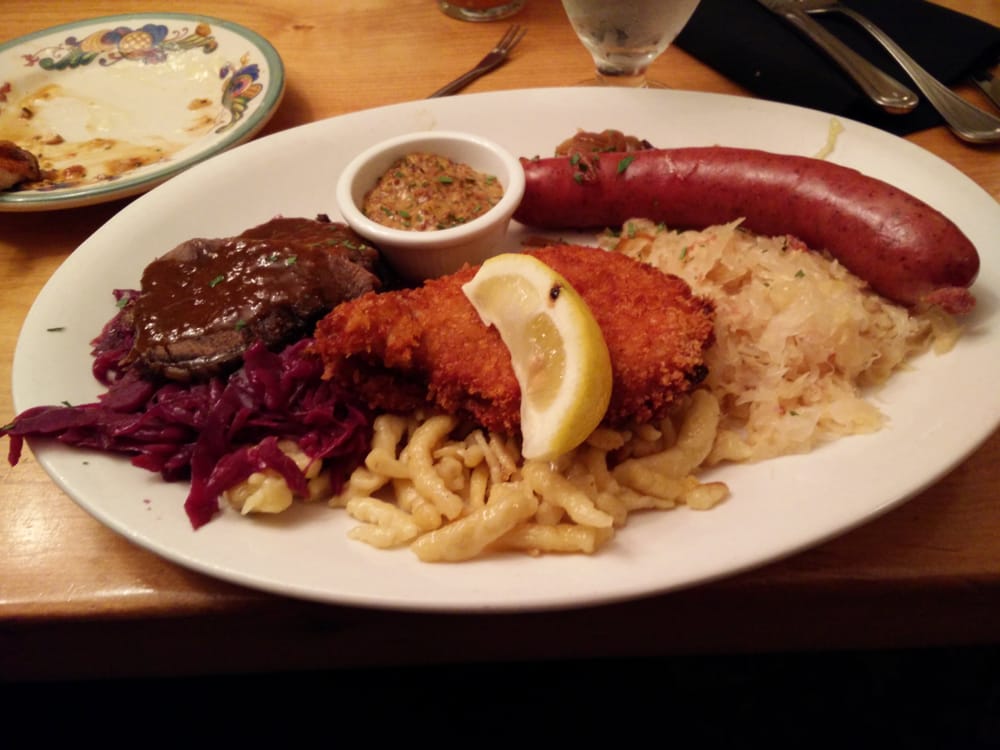
And years later, old Rheinlander menus provide a wonderfully weird bit of confirmation: pineapple sauerkraut really did become part of the menu. Late versions advertised sausage plates with pineapple sauerkraut, a Reuben made with homemade pineapple sauerkraut and even a pineapple-habanero-travesty version as a side.
Somebody in that kitchen was absolutely putting pineapple in the kraut.
Mystery solved, but the question still remains: "Dear gawd, WHY?"
Did pineapple single-handedly destroy Der Rheinlander? Of course not. Restaurants evolve, tastes change and businesses make hundreds of decisions over decades. But for someone who remembered the earlier recipe, it became one of those little signals that the place so many people loved was changing.
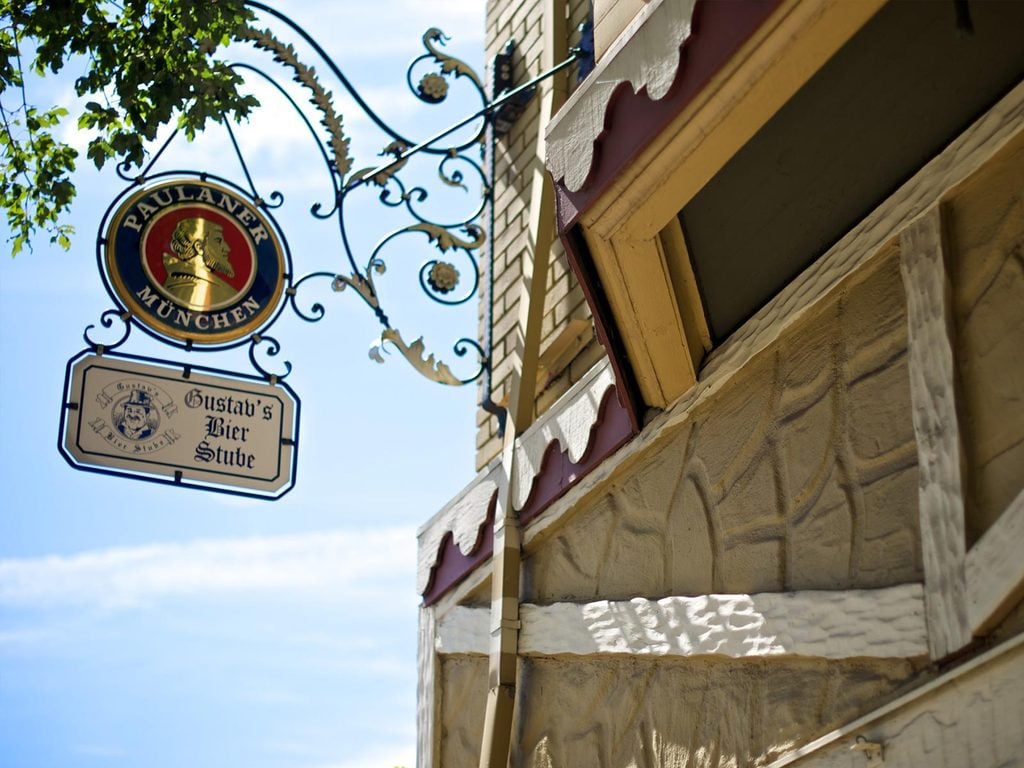
As Gustav's expanded and the old restaurant shared more of the larger company's menu and identity, Der Rheinlander increasingly felt different from the place lodged in my memory.
That's a story anyone who loves old restaurants has probably experienced.
A beloved restaurant changes generations. A company expands. Recipes get modified. Menus become easier to reproduce across locations. Costs matter more. Someone decides an old recipe needs updating. Little things that seemed insignificant on a spreadsheet turn out to be exactly the things customers loved.
Sometimes those restaurants survive the transformation.
Sometimes they don't.
Portland's German Restaurant Finally Said Auf Wiedersehen
By 2016, rumors were spreading that the end was near.
They turned out to be true.
Guten Foods, the Mager family company that owned Der Rheinlander and Gustav's, announced in September 2016 that the Sandy Boulevard property had been sold and the restaurant would close. Suzeanne Mager described the decision as bittersweet, while explaining that Portland's food scene had evolved and the company needed to evolve with it. Employees in good standing were offered positions at the company's other restaurants.
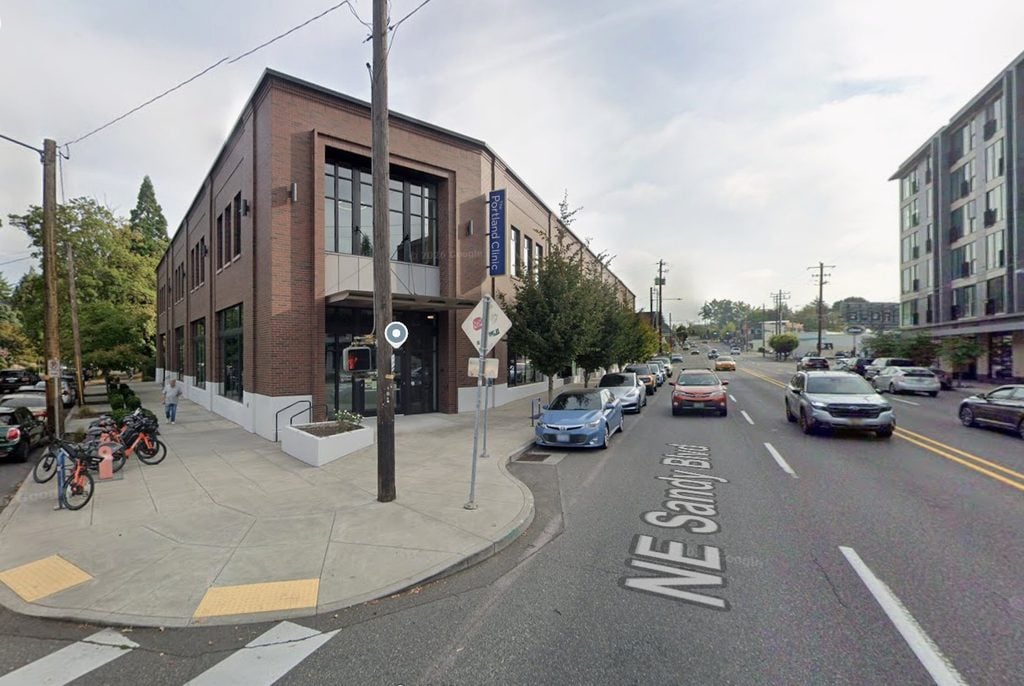
After more than five decades, the weird little German world on Sandy Boulevard disappeared.
The building eventually came down too.
And Portland gained another one of those invisible landmarks where you can drive past the location and know that, once upon a time, something much more interesting happened there.
What We Lost Was More Than Schnitzel
Nostalgia has a way of improving things around the edges.
The booths become cozier. The food becomes tastier. Childhood restaurants somehow get larger every year they're gone.
But I don't think that's entirely what's happening with Der Rheinlander.
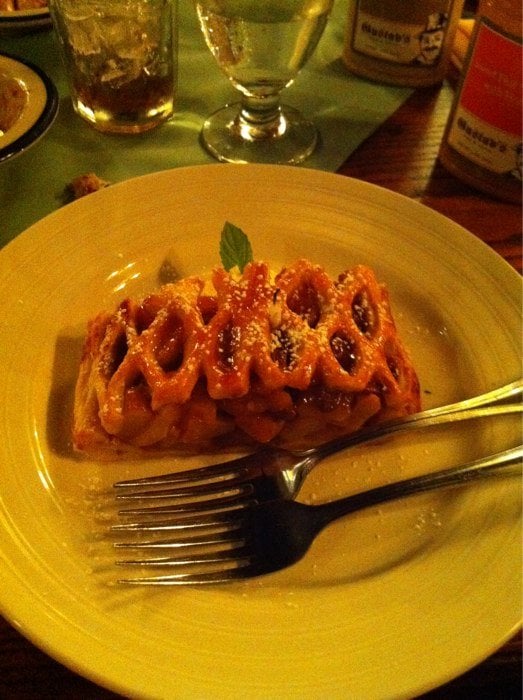
horrific white-balance.
Places like this genuinely were different.
Restaurants today can serve extraordinary food, and Portland certainly isn't hurting for creative chefs. But there's something wonderfully unrestrained about a place that decided dinner needed cuckoo clocks, stained glass, Bavarian costumes, themed rooms, accordion players, group singing, fondue and occasional yodeling.
Nobody seemed worried about whether the concept was too much.
Too much was the concept.
That's part of why Der Rheinlander still inspires such affection nearly a decade after it disappeared. (And let's be honest here. 50-odd years for a restaurant is a damn good run.) Even people who debate how authentic the food was, or whether its later years lived up to the glory days, seem to agree on one thing.
There was only one Rheinlander.
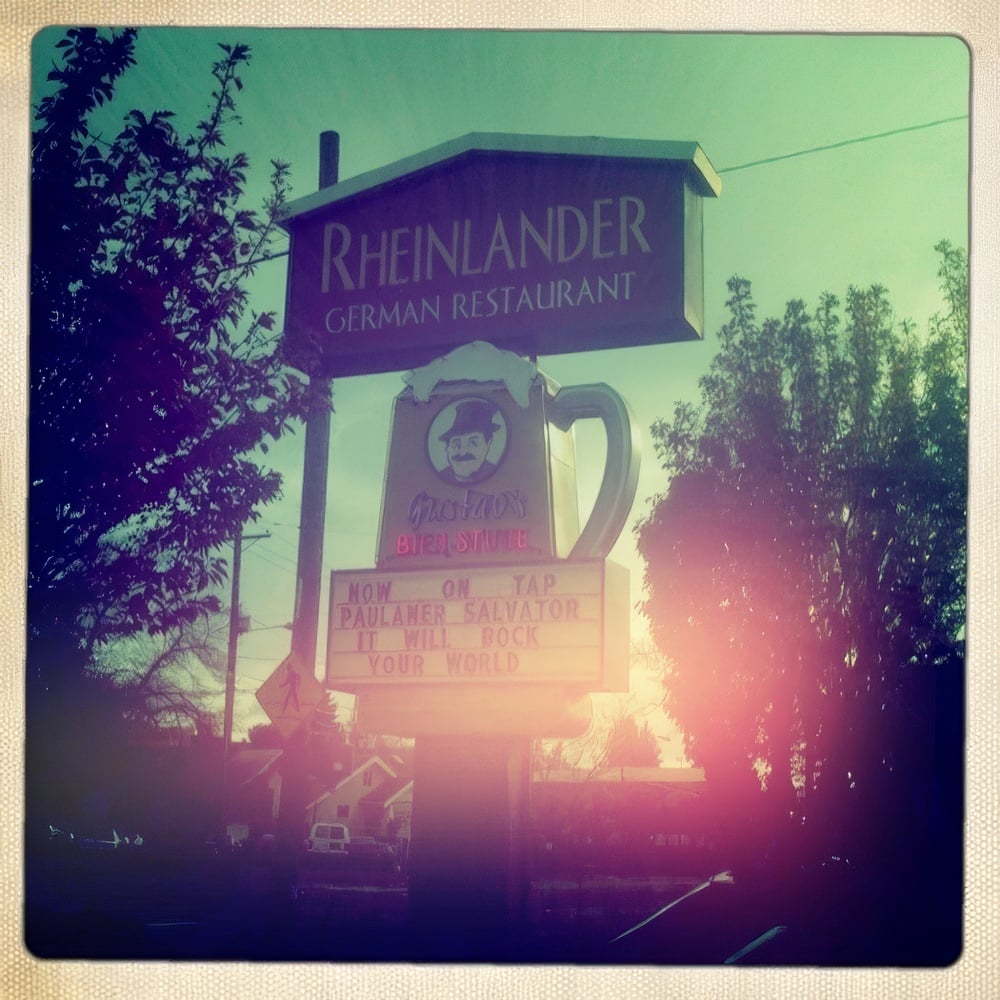
Maybe that's why the stories keep coming.
Someone remembers eating there with grandparents who aren't around anymore. Somebody else remembers a first date. Another remembers being embarrassed when the accordion player arrived at their birthday table. Former employees remember the kitchen, the singing and sneaking bites of food. Kids who once stared at all those decorations are now adults trying to explain the place to people who never saw it.
And me?
Give me the old sausage plate, the mustard sampler, and that original mellow caraway sauerkraut.
No pineapple, please.
Then send the accordion player over.
I'd give just about anything to have that dinner one more time.
Do you remember Der Rheinlander? What was your favorite thing on the menu, and what do you remember about the restaurant itself? Tell us your Rheinlander memories. We have a feeling Oregon has a lot of them.