
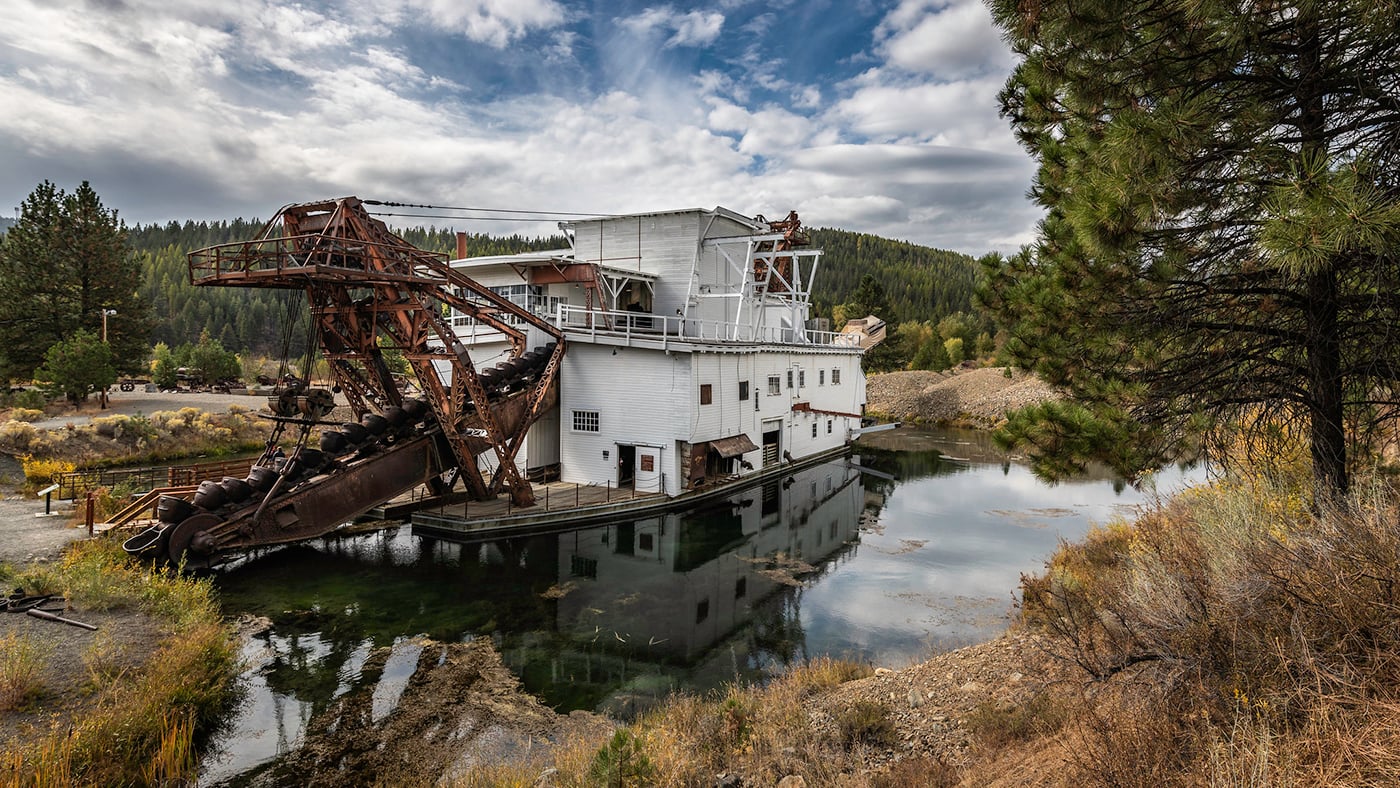
The buckets are still lined up at the front of Sumpter Valley Gold Dredge No. 3. They no longer bite into the Powder River valley, but the machine has not been moved to a tidy museum hall. It rests near the place where its operators stopped it in 1954, with water, trails and immense banks of discarded stone around it. That setting gives visitors something a display case cannot: the machine and the ground it changed are still part of the same view.
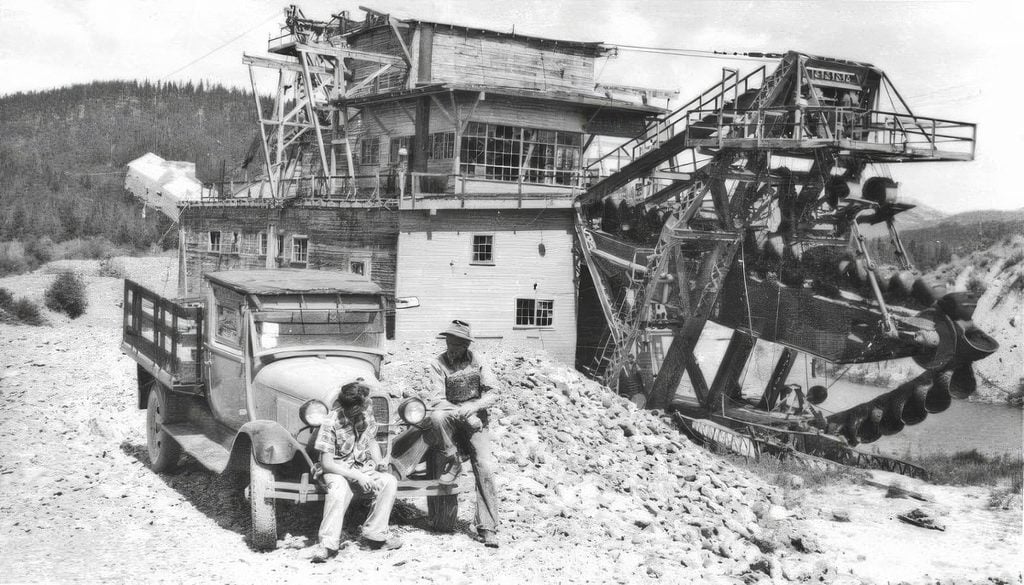
For much of its working life, this was a round-the-clock industrial site, not a quiet stop on a road trip. The dredge carried a chain of 72 buckets, machinery to sort gold from gravel, and a long conveyor that cast unwanted rock behind it. Today Oregon State Parks invites visitors aboard from May through October, with ranger-led tours on weekends. The season is nearing its end, making late October a timely moment to see the machine while the decks are still open, provided current conditions allow access.
At a Glance: Sumpter Valley Gold Dredge
- Location: Sumpter, Oregon, approximately 30 miles from Baker City
- Built: 1935
- Operated: 1935–1954, nearly 24 hours a day
- Gold Recovered: More than $4 million worth during its operation
- Admission: Free
- Best Time to Visit: May through October, when visitors can explore the dredge’s interior
- Guided Tours: Ranger-led tours available on weekends during the season
- What to See: Massive mining machinery, historic gold dredge, interpretive displays, and 1.5 miles of walking trails
- Nearby Attractions: Historic Sumpter Valley Railroad, Elkhorn Scenic Byway, and Baker City
- Official Website: Oregon State Parks
A ship built to travel through a valley
At first glance, a gold dredge on dry land can be difficult to understand. No. 3 was built as a floating industrial plant. It moved through shallow water while digging the ground ahead of itself and depositing the heavier waste behind. The pond was part of its working system: as the bucket line opened a new cut, water could move into that cut and keep the hull afloat. The dredge did not need to follow the Powder River in a straight line, and the turns it made are still written across the valley in gravel.
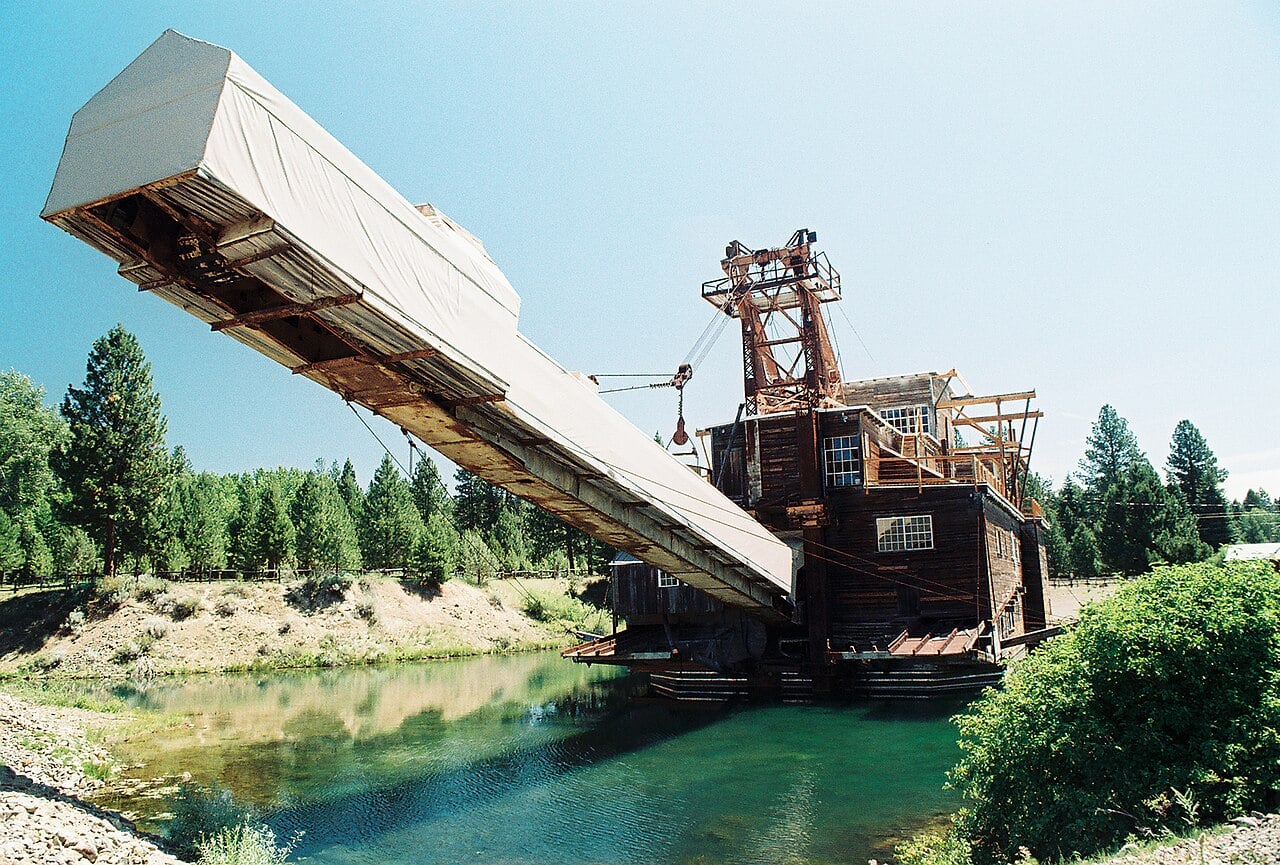
Oregon’s state park history describes three dredges in the Sumpter Valley, built in 1912, 1915 and 1935. The first two were dismantled in the 1920s. No. 3 was the last, and the only one visitors can board here today. A 1971 National Register nomination records a hull about 120 feet long and 52 feet wide, a 96-foot gravel stacker and a bucket line driven by an electric motor. Those figures are worth holding in mind when the surviving machinery first comes into view.
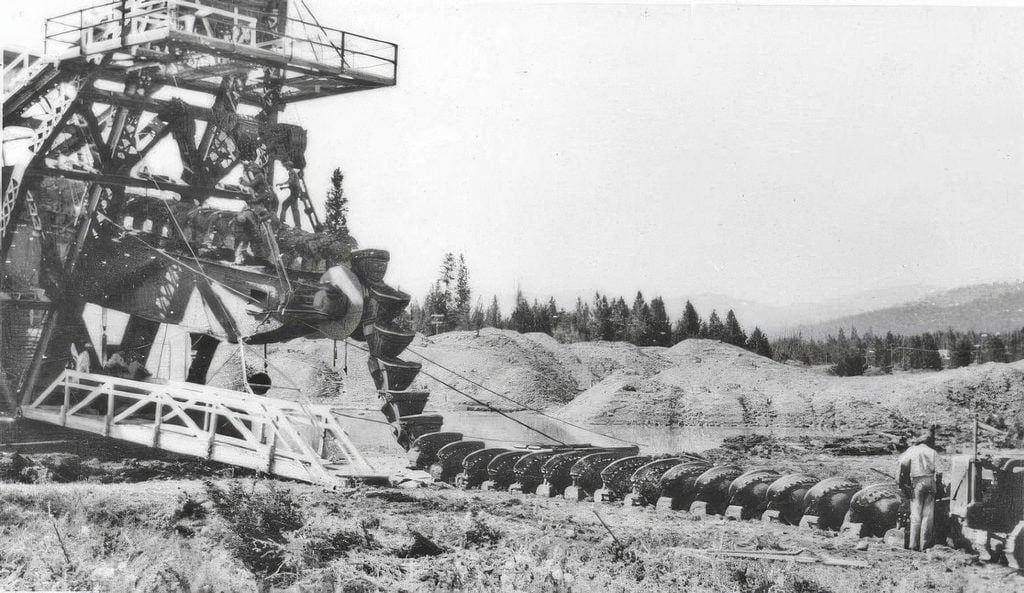
The structure looks something like a boat fitted with a factory and a digging arm. The bucket line lifted material from the valley floor. Inside, water and revolving screens separated smaller particles from larger rock, and the gold-bearing material passed through recovery equipment. The conveyor took the material the company did not want and dropped it behind the hull. A visitor looking from the machine toward the rocky valley can see both sides of the process without having to imagine the work from a diagram.
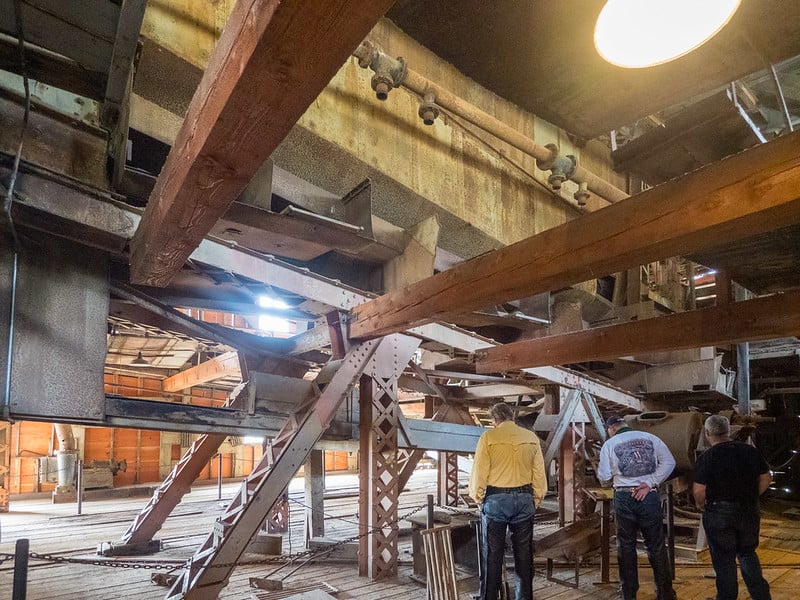
The boat comparison is more than just a figure of speech. The National Register nomination names engineer W. H. Cullers, whose background was in shipbuilding, and says the 1935 dredge was assembled on the bank and launched into water. Earlier dredges had been built in pits that were then flooded. That difference is a reminder that the hull was never meant to be a decorative shell around mining gear; it had to support the weight and movement of an operating plant. The pumps, bucket line and stacker were parts of one system, and a failure in any of them could halt the work of the rest.
That doesn’t mean every part of the original operation survives intact. The National Register account, written while the dredge was already deteriorating, listed an office, machine shops, tractors and trucks that were once part of the full operation but were gone by then. What remains is substantial enough to show the scale and logic of the work, while the missing pieces remind us that this was an active workplace spread beyond the hull. It took crews on the machine and on shore to keep a moving plant supplied, repaired and pointed toward the next patch of ground.
The gold that brought machinery to Sumpter
Gold drew prospectors to the Blue Mountains and the upper Powder River country in the 1860s. Early miners worked deposits they could reach with the tools and money available to them. By the early twentieth century, the easier finds had dwindled, but fine gold remained in river gravels that were expensive to work by hand. A dredge offered a way to process enormous amounts of material for a comparatively small quantity of metal. The economics depended on volume as much as on the richness of any one scoop.
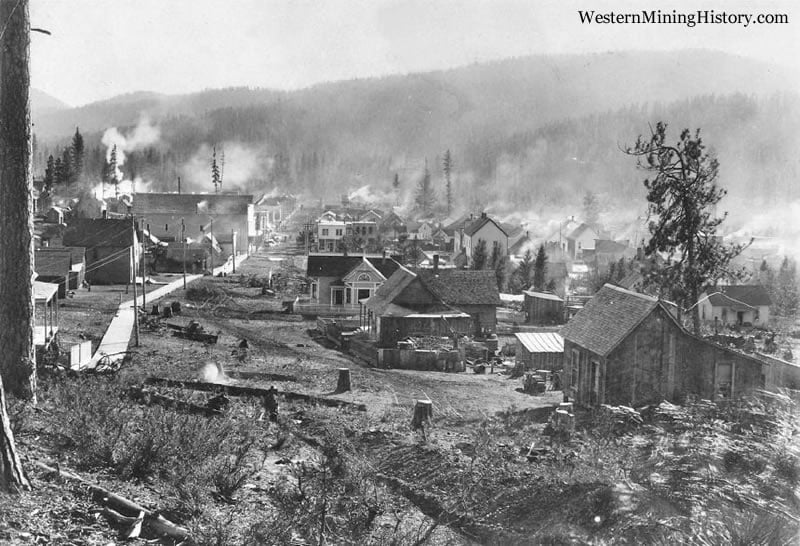
Sumpter already had a longer mining story before No. 3 arrived. The National Register nomination places the first discoveries in the Powder River district in 1862 and describes later hard-rock mining after a major find near Bourne and the railroad’s arrival in the 1890s. The town boomed, then declined as easily worked resources, investment and demand changed. Dredging was another chapter in that history rather than a single moment of sudden discovery. The No. 3 machine represents a later, heavily mechanized attempt to extract gold that earlier methods had left behind.
The community history maintained by Historic Sumpter traces the first two dredges in detail. Its account says the earlier machines worked different stretches of the valley before shutting down in the 1920s. It also connects the decision to build No. 3 with the higher official gold price of the 1930s. The 1971 nomination makes the same broad economic point: a gold price near $35 an ounce made another large machine look more promising. That context helps explain why a dredge appeared in 1935, long after the familiar nineteenth-century rush.
The buckets give the most direct sense of how much earth was involved. The National Register form says the line carried 72 buckets and could cycle roughly 20 to 25 of them each minute. That is a historical equipment description, not a claim that the preserved machine can run now. Standing beside the idle chain, it is easier to understand why the valley floor changed so dramatically. Every bucket was one small action in a repeated sequence that continued through long shifts, month after month.
The people inside the machine
A machine this large can push its workers out of the story. The National Register account says the actual digging shift required three people, while as many as twenty additional employees worked across the broader operation. The Historic Sumpter history describes roles including a superintendent, electricians, machinists, oilers, a winch operator and shore crew. Their tasks were different, but each depended on the plant continuing to move, wash gravel and keep its heavy equipment in repair. The dredge was an employer as well as an instrument of extraction.
The working schedule was relentless. Oregon State Parks says No. 3 ran almost continuously from 1935 to 1954, seven days a week and 24 hours a day, though the National Register notes a shutdown during World War II. The local history gives more detail on that wartime pause and the later restart. These accounts together make the broad chronology clear without pretending every day in those two decades looked the same. Machinery could stop, ownership could change and repairs were part of the job, even when the company’s ambition was continuous production.
Wartime interruption puts that ambition in perspective. Historic Sumpter dates the suspension to 1942 and says mining resumed in July 1945. The National Register form, prepared more than two decades later, describes repairs and improvements during the idle period but does not give the same restart day. Rather than folding the years into one uninterrupted production claim, it is more accurate to picture an operation shaped by national policy as well as local geology and labor. The gold under the valley had not vanished, but the conditions for digging it were determined far beyond Baker County.
The design also shaped the workers’ relationship with the landscape. Their workplace inched forward, carrying its own pond and leaving a new terrain behind it. The narrow distinction between river, worksite and waste ground must have been especially clear to people who maintained the pumps, buckets and stacker. Today’s quiet walk through the park is a chance to consider that labor alongside the striking form of the surviving machine.
What the dredge left behind
The machine’s value to its owners and the physical cost to the valley are both part of the record. Oregon State Parks estimates that No. 3 recovered more than $4 million in gold during its working life. The 1971 nomination gives a figure of about $4.5 million for the machine and roughly $10 million for the combined dredging operations. Those are historical dollar values from different records, not present-day equivalents. They help explain the investment, but they cannot be understood apart from the acres of ground turned over in pursuit of the gold.
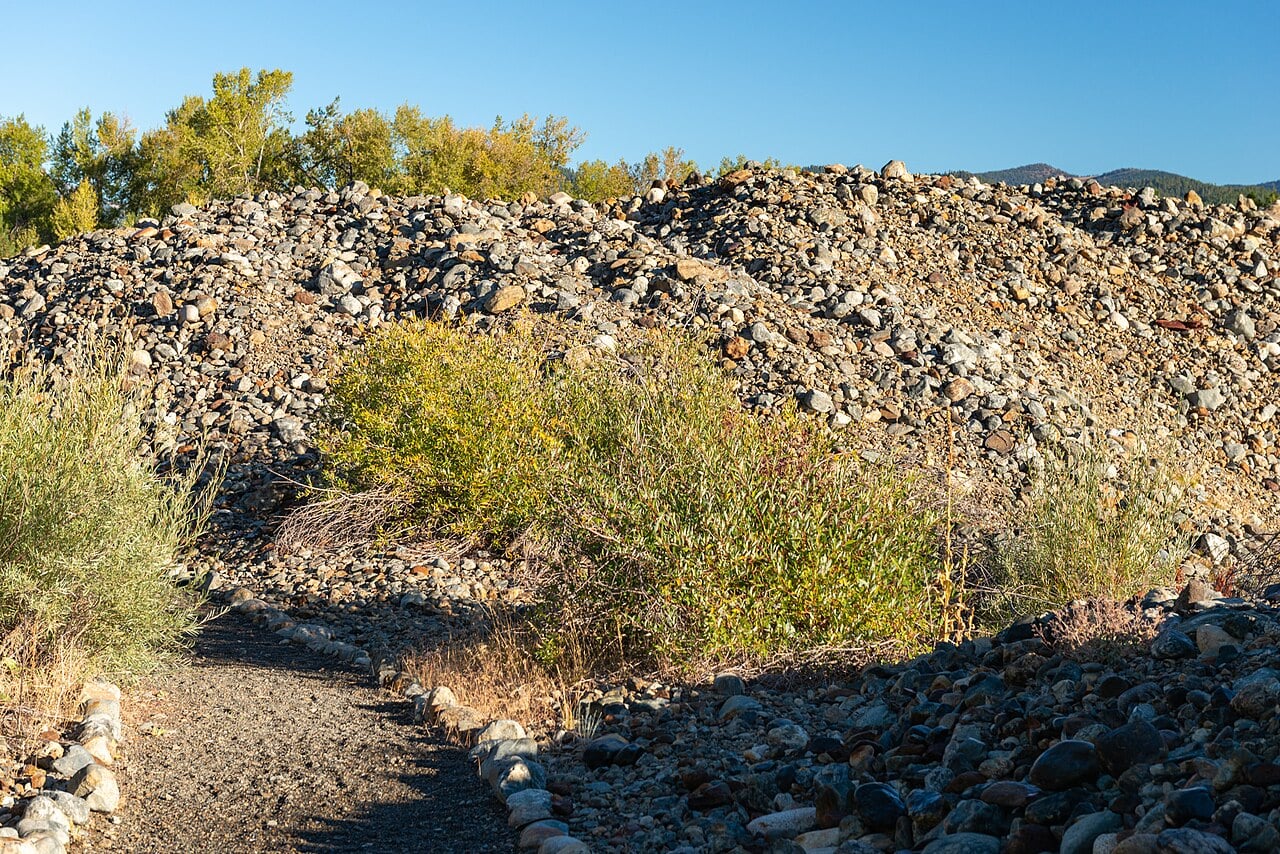
Tailings are the most visible part of that cost. After the plant separated what it wanted, the stacker left banks of rock behind. They stretch through the Sumpter Valley and along waterways associated with the old operations. The National Register form estimated that dredging across the valley affected about 2,500 acres, a figure from 1971 that refers to the broader activity rather than only the footprint of the park. The landscape cannot be described as untouched wilderness with an interesting antique parked in it; the altered ground is one of the central artifacts.
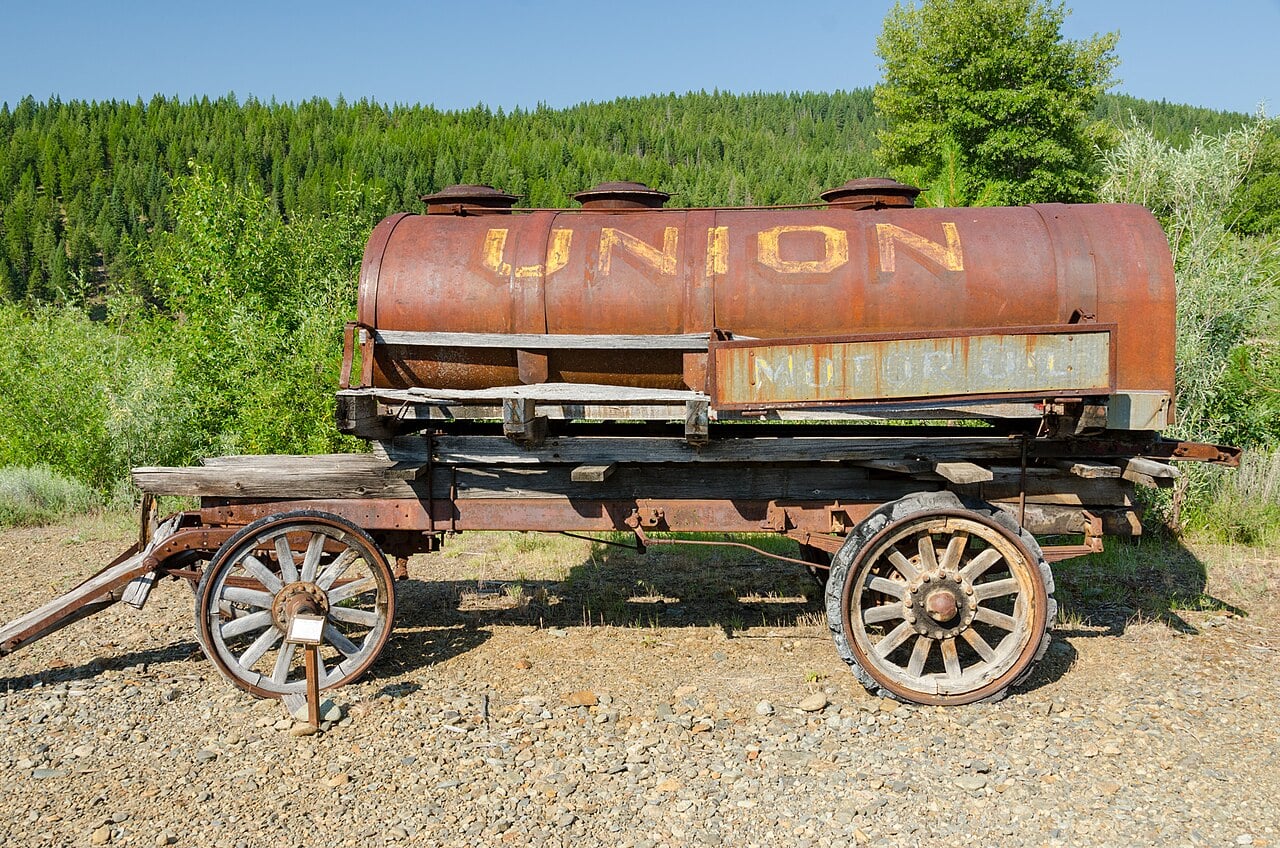
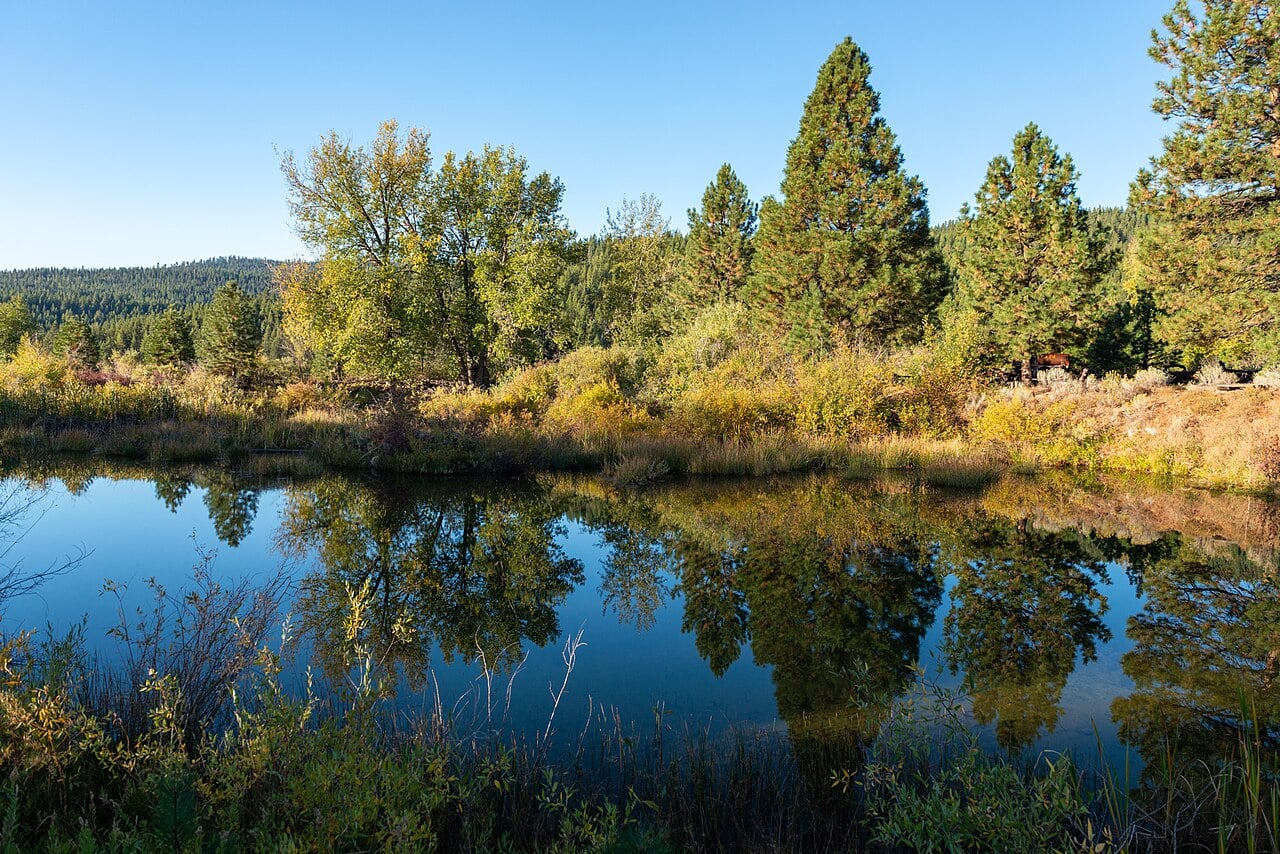
The state park also describes wetlands and about a mile and a half of trails around the site. Viewing platforms provide a way to see where vegetation and water have returned among the tailings. That recovery does not erase the piles of stone, and the piles do not mean the land is lifeless. Both observations belong together when describing the park now. The place is compelling because the results of mining and the slow changes since mining stopped are visible at once.
In August 1954, dredging ended. Oregon State Parks points to rising operating costs and pressure from local people, while the 1971 nomination records a final effort to rework old tailings and a plan near the townsite that did not come together. That last detail is presented in the nomination as a reported plan, not a proven explanation for every decision that led to closure. The broader end is not in dispute: the machinery stopped, and decades of exposure followed. The dredge remained in the valley it had worked rather than being immediately scrapped.
From abandoned equipment to a state heritage area
The survival of No. 3 was not inevitable. The National Register nomination described deterioration from harsh winter exposure when the dredge was listed in 1971. Oregon Parks and Recreation later acquired the dredge, surrounding tailings and nearby land in 1992 and 1993. It opened the machine to the public in 1994 and began restoration the following year. The park today is the result of preservation choices made after the industrial operation was already history.
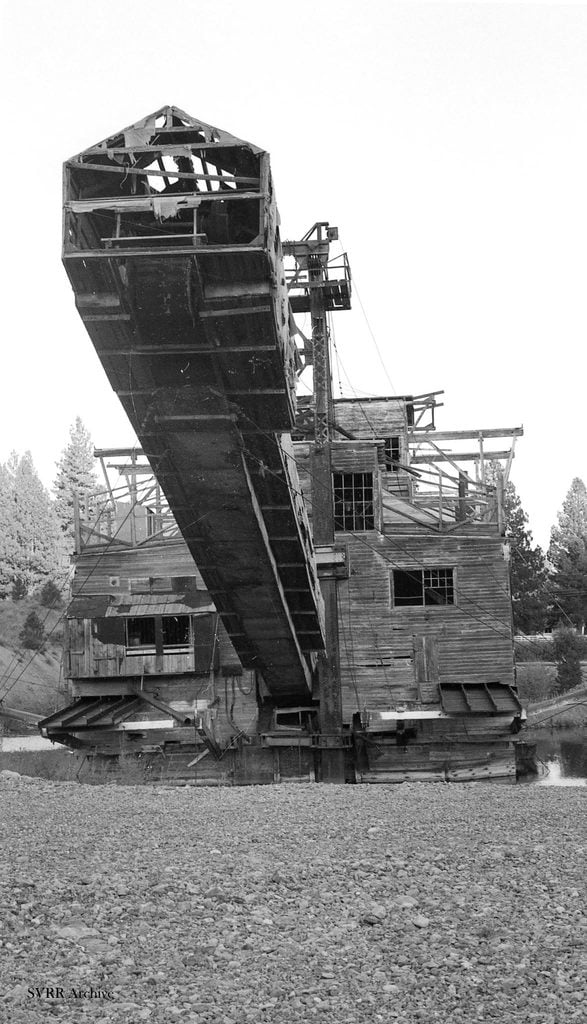
Preservation gives visitors a close look at an unusual kind of Oregon workplace. The decks and bucket line explain how the machine functioned more clearly than a roadside sign could. The surrounding trail keeps the interpretation from ending at the hull. A visitor can compare the equipment with the stone banks it produced, then walk far enough to see the valley as more than a single object in a photograph. That physical connection is the strongest reason to make the trip.
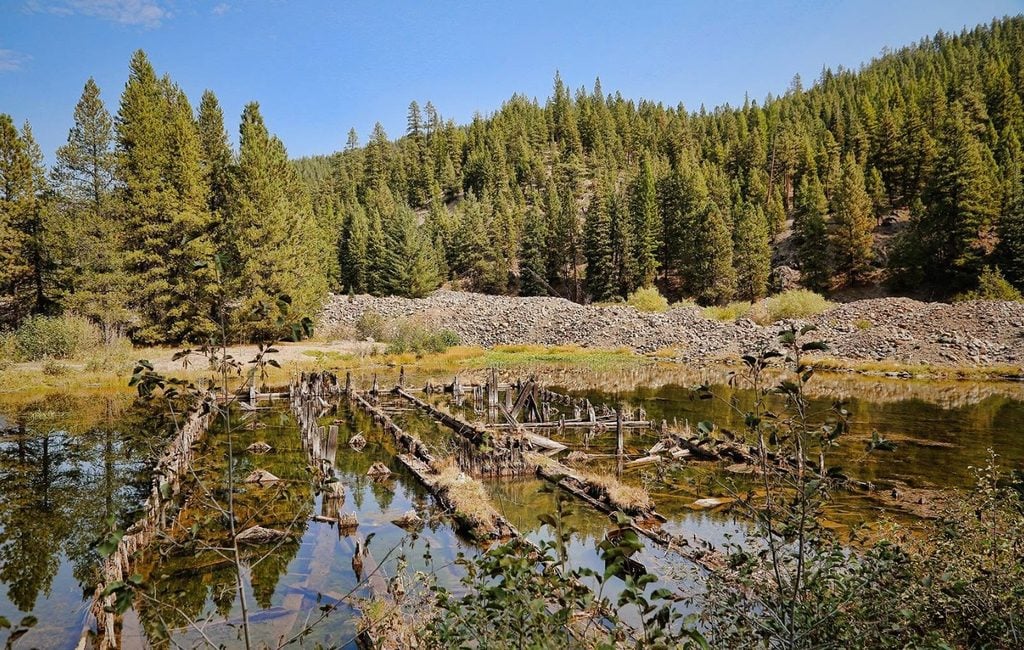
It is also worth separating the preserved dredge from the nearby railroad. The Sumpter Valley Railway tells a related history of moving people, timber and mining supplies through this part of Baker County. Its train schedule is separate from park access, so a dredge visit does not automatically include a ride. Readers planning both can use our Sumpter Valley Railroad story for a starting point, then check the railroad’s current calendar before traveling. The two places work well as companions because one shows the machinery of extraction and the other recalls the transport network around it.
Planning an October visit
Oregon State Parks says visitors may board the dredge from May through October and that ranger-led tours take place on weekends only. The park also has about 1.5 miles of trails through the wetlands and viewing areas. Its current page does not give a firm daily boarding schedule for the final days of October, so check the official park page and confirm conditions directly before making a long drive. Access to the decks, tours and trails can be affected by weather or maintenance, especially near the seasonal change.
Explore More of Oregon’s Gold Rush Country
The Sumpter Valley Gold Dredge is only one chapter in the fascinating history of Eastern Oregon’s gold rush. If you’re planning a visit, our complete Baker City travel guide is a great place to start, with more historic attractions, local restaurants, and places worth exploring nearby. For those who love forgotten places and stories from Oregon’s past, our Eastern Oregon ghost town road trip takes you through old mining communities, including Sumpter, Granite, and Bourne. You can also follow our Elkhorn Scenic Byway guide for a spectacular journey through the mountains and mining country, or experience another piece of the region’s history aboard the historic Sumpter Valley Railroad. Together, these destinations offer a remarkable glimpse into the Oregon that existed long before modern highways and tourist attractions.
There’s a particular force in seeing No. 3 as October winds down. The same machine that once moved through a valley day and night now stands still long enough for visitors to study each stage of its work. It produced valuable gold, provided jobs and helped reshape Sumpter’s economy. It also remade the river valley in ways that remain visible more than seventy years after the digging stopped. The park lets Oregon readers take in those facts together, from the front buckets to the farthest stone piles they can see.