
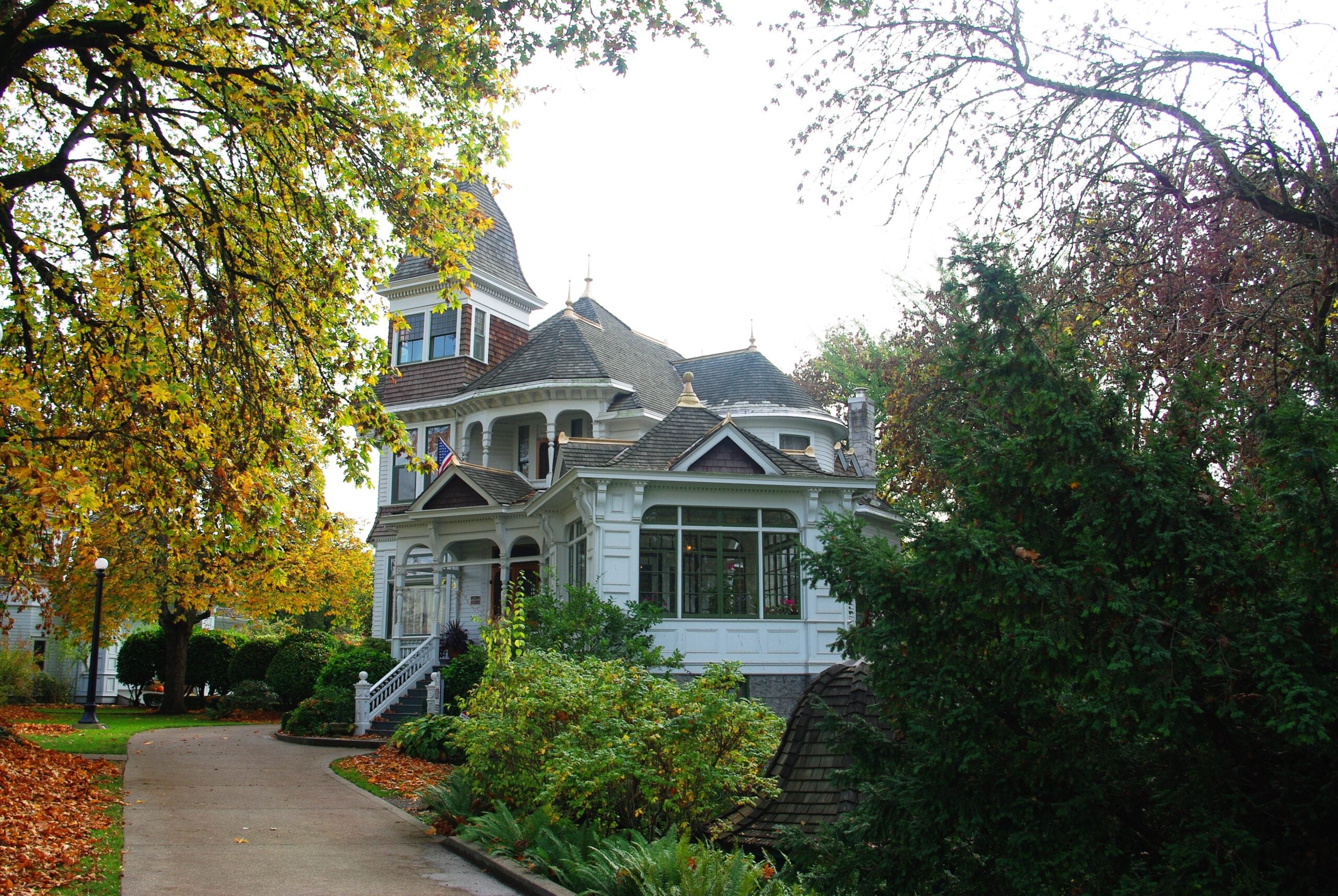
Salem’s Deepwood Museum pairs extraordinary Victorian windows with gardens shaped by two pioneering Oregon women.
There was a time when Salem could have lost the whole thing: the turret, the wraparound porch, the golden woodwork, and the stained glass that makes even a small window worth stopping for. Deepwood faced demolition after its last private owners left in 1968. Instead, residents fought to keep it, and the city bought the property in 1971. Today, that beautiful old house is a museum, and its gardens belong to everyone.
Deepwood Museum & Gardens sits less than a mile from the Oregon State Capitol, close enough to add to a day in Salem without turning the visit into a road trip of its own. Inside is an 1894 home with elaborate windows made in Portland. Outside are formal garden rooms, a carriage house, and a wooded trail leading toward Pringle Creek. You can tour the house for a modest admission charge or enjoy the grounds for free.
For a fall outing, that combination has a lot going for it. A museum tour gives the day an indoor destination, while a break in the weather leaves room for a garden walk. There is no need to gamble the entire plan on sunshine or chase a promised afternoon of peak foliage. The architecture, glass, and history are the reasons to come, and they hold up beautifully beyond the flower season.
A house that gives you plenty to look at
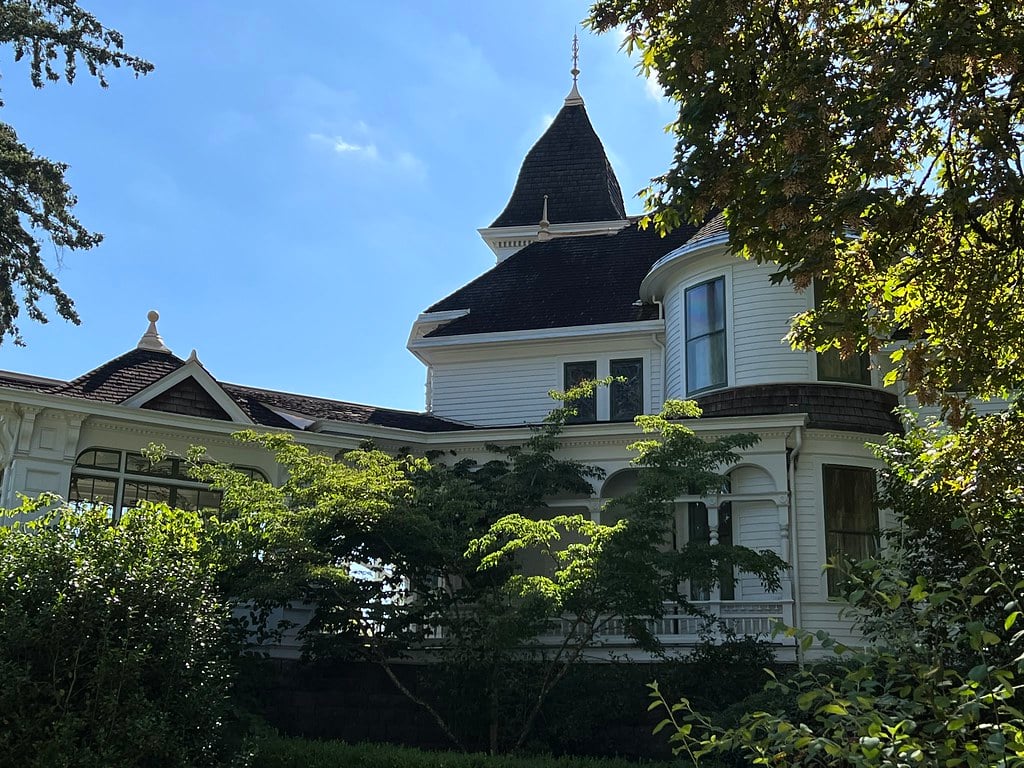
Deepwood is a Queen Anne Victorian, and restraint was never the point of that style. Rooflines change direction, surfaces mix textures, and the porch wraps around a building that seems to offer another detail wherever you stand. Long windows draw the eye upward, while the turret gives the house its unmistakable profile. An observatory occupies that turret, though visitors should follow the rooms included on their guided tour rather than assume every part of the building is open.
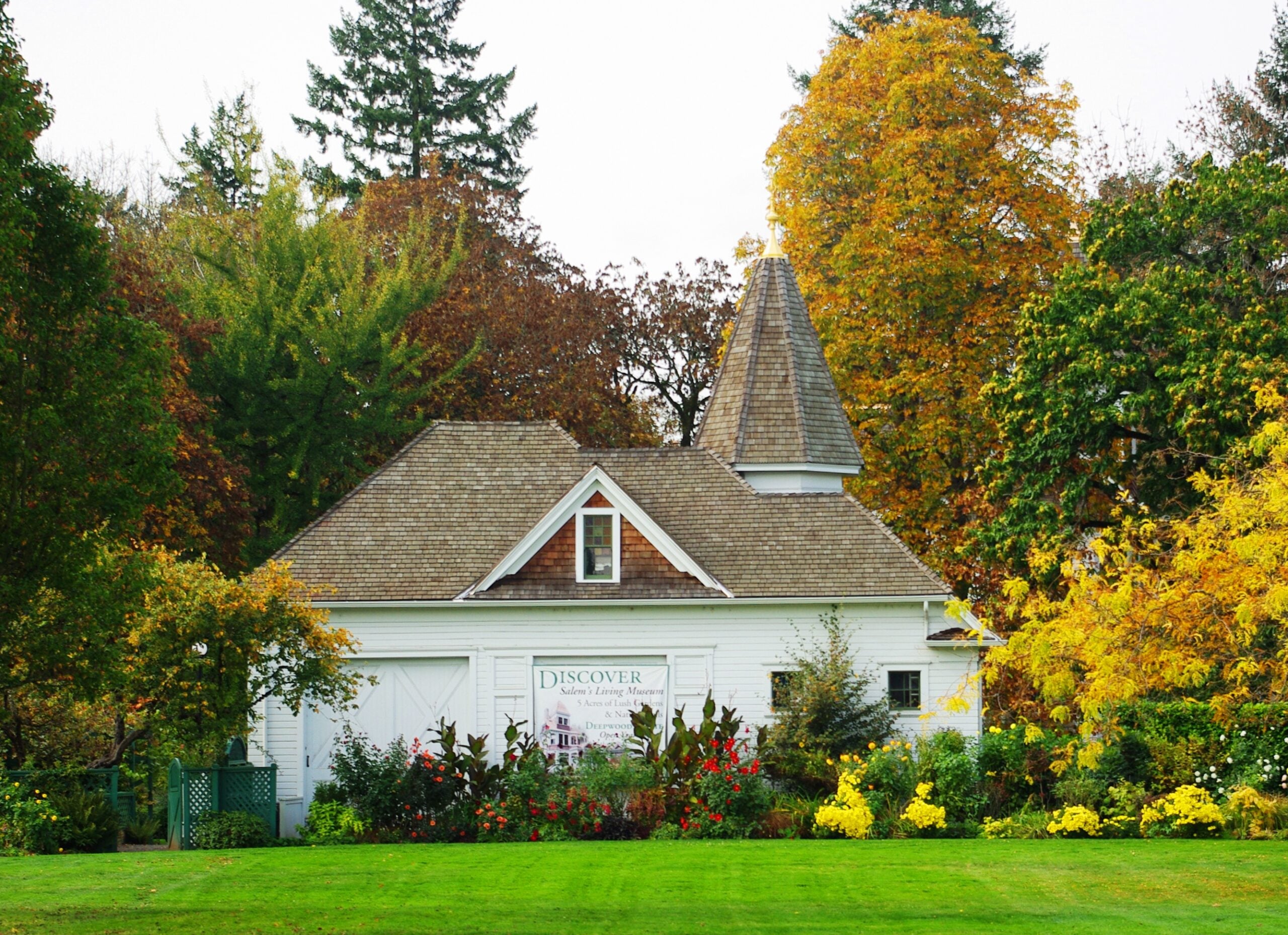
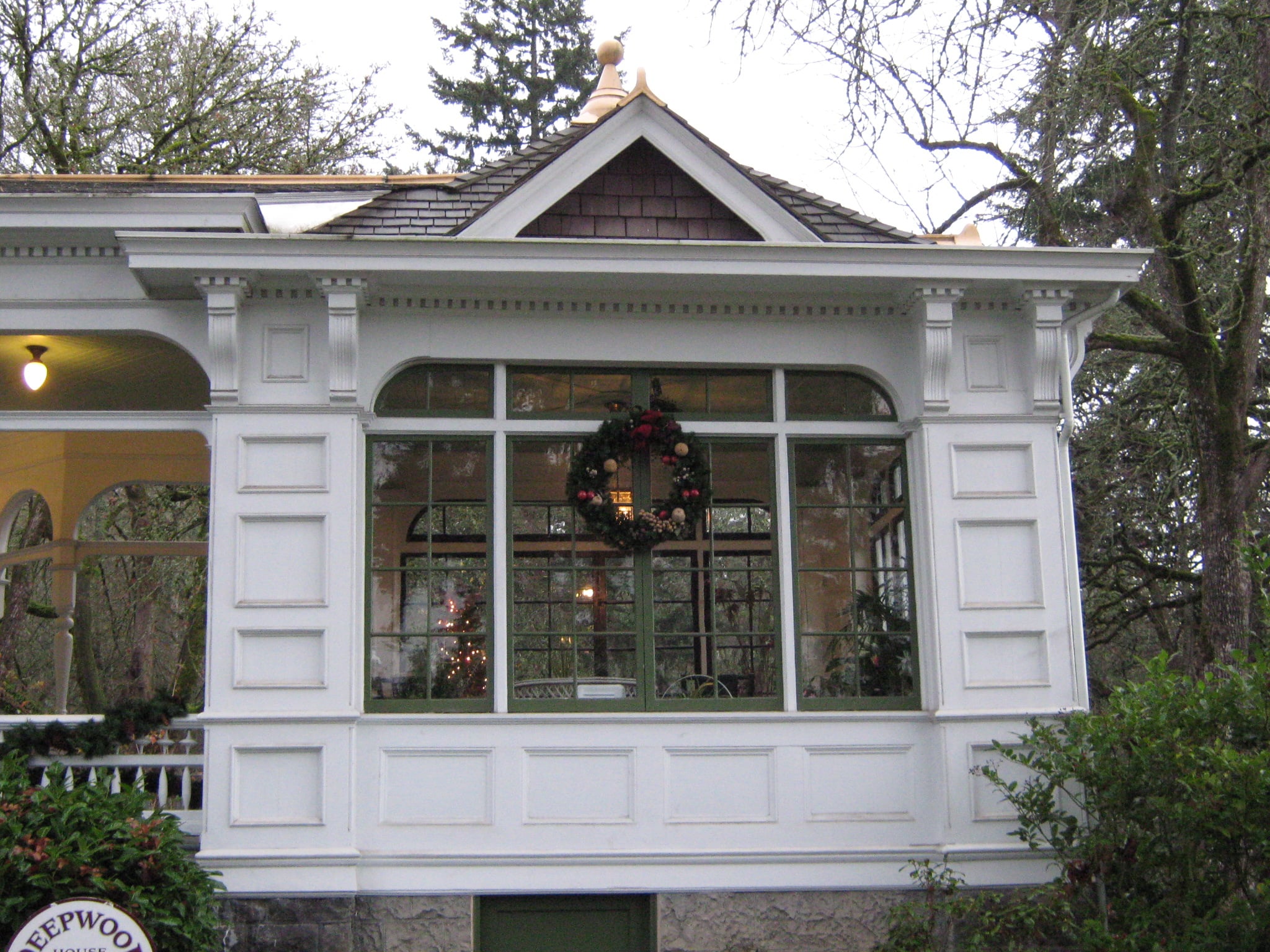
Architect William Christmas Knighton designed both the house and its carriage house. Deepwood was an early Oregon commission for a man whose later work included the Oregon Supreme Court building in Salem and Portland’s Seward Hotel, now the Sentinel. The scale is different here, but the attention to a building’s appearance is easy to appreciate. Even the carriage house received a design that belongs with the main residence.
It is worth looking at the exterior before heading inside. From the street, an ornate house can register as one impressive shape, especially if you are trying to take a quick photograph. Pause for the porch supports, the changing siding, and the relationship between the windows and roof. Those smaller decisions explain much more about the house than its age alone.
The stained glass deserves its own visit
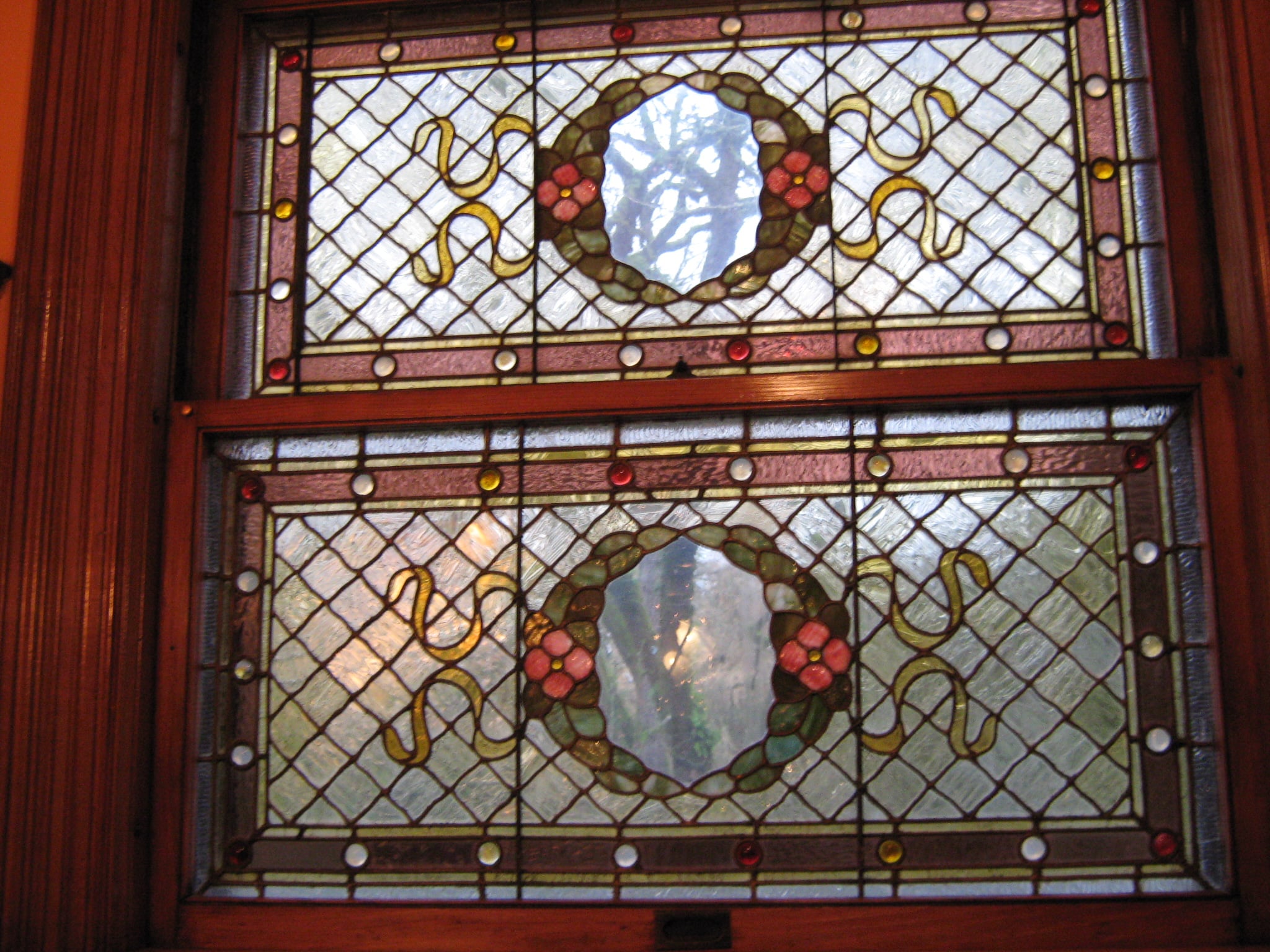
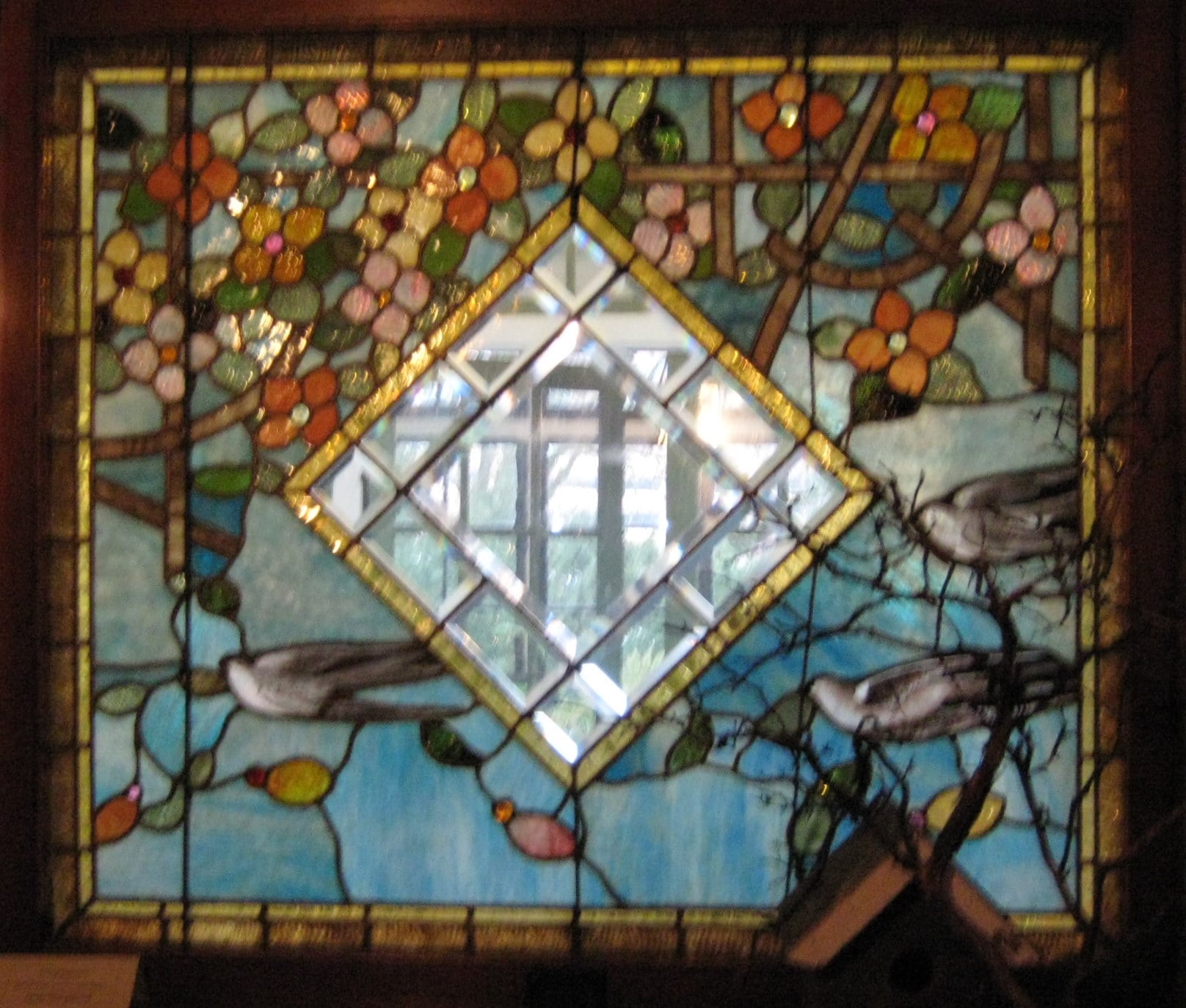
The Povey Brothers windows are among Deepwood’s great pleasures. These are original features, made by a Portland studio whose work survives in historic Northwest buildings. Some panels use bright flowers and curling stems; others make their impression through clear glass, geometry, and small touches of color. Against the house’s warm wood trim, they have enough detail to reward a much closer look than a photograph of the whole room can give you.
One window on the stair landing brings together birds, foliage, and an angular central pane. A downstairs window arranges small colored details around a larger clear field. The differences are part of the fun: you do not finish with one window and simply find the same design repeated in the next room. Look at how each composition uses its particular opening, and at the way the surrounding woodwork frames it.
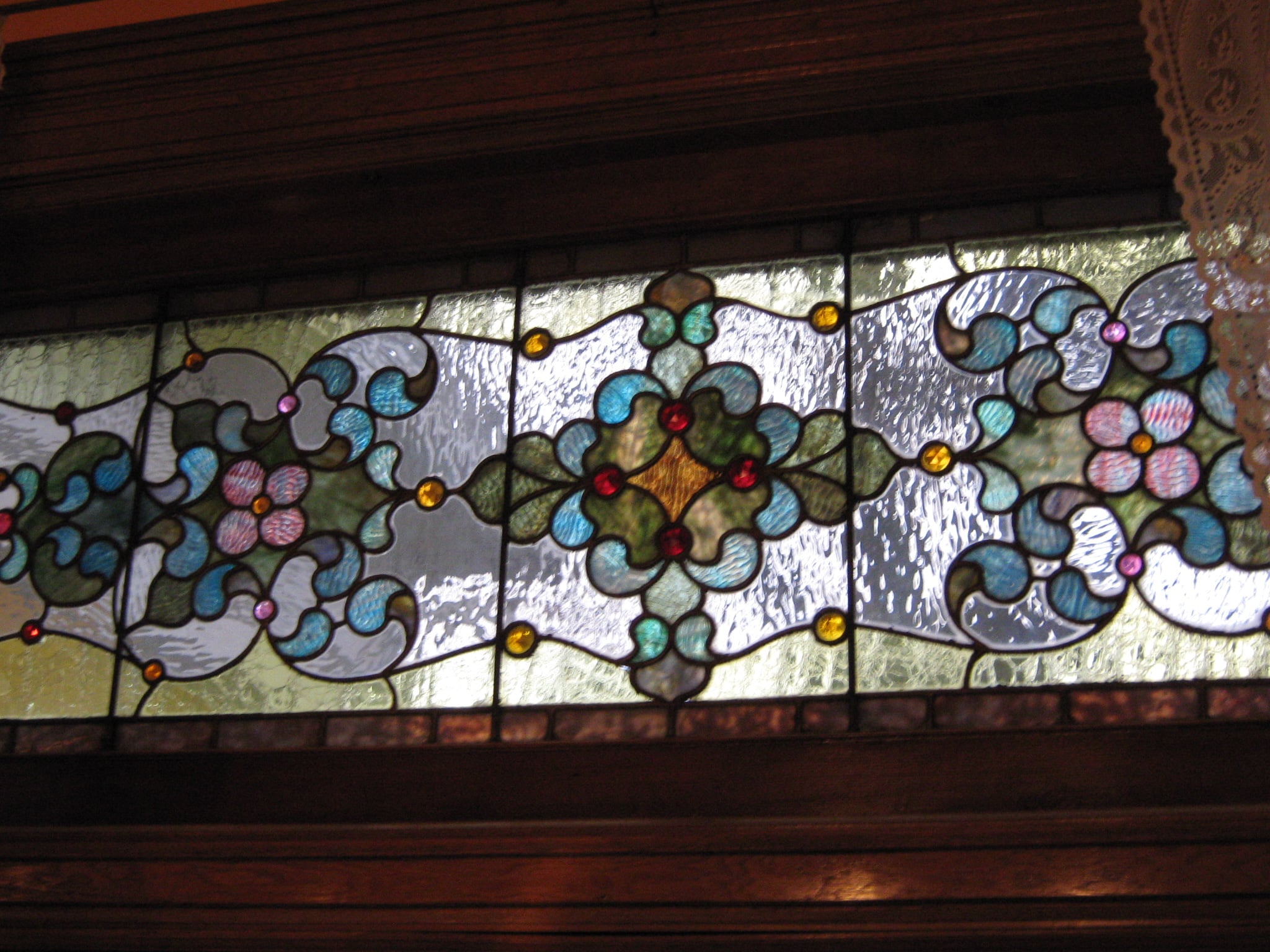
There is also a more personal story attached to the flower window near the fireplace. In an interview published by Travel Salem, Deepwood’s executive director described a family interpretation of its roses: three open blooms for Luke Port, his wife Lizzie, and their daughter Alpha, with a bud representing their son Omega, who died before the house was built. That is a meaningful interpretation to ask about on the tour, rather than something to reduce to a decorative flourish. A window can be beautiful and still hold a family’s grief.
The floral designs and bird panels bring some of the garden indoors, but the glass is interesting even where it has very little color. Clear panes, shaped borders, and small geometric divisions give the eye just as much to follow. For anyone who enjoys old houses, having a chance to see this much original glass in one residence is a strong reason to go inside. The museum’s exterior is lovely, but it cannot tell you everything waiting on the other side of the front door.
Three families changed the same address
Dr. Luke and Lizzie Port had the house built in 1894, yet their time living in it was surprisingly short. The museum puts their residence at about sixteen months. George and Willie Bingham bought the property in 1895, and it became their family home for decades. George was an attorney, a longtime Willamette University professor, and a judge, giving the house a direct connection to Salem’s legal and educational life.
The grounds were useful as well as attractive during the Bingham years. George grew fruit and vegetables, with a particular enthusiasm for onions, according to the museum’s garden history. A grape arbor and an orchard were part of that landscape. It is a welcome detail in a place with so much ornament: behind the handsome house was a gardener who cared about what he could grow for the table.
Clifford and Alice Brown purchased Deepwood in 1924 and renovated the residence before moving in with their sons. Clifford died in 1927, but Alice remained for many years and became especially important to the gardens. She later married Keith Powell, who had previously been married to the Binghams’ daughter, also named Alice. The history of the property winds through families who knew one another, rather than a succession of entirely unrelated owners.
Alice Brown Powell gave Deepwood its name, drawing on a favorite Albert Bigelow Paine children’s book about a hollow tree and deep woods. She stayed connected to the property until 1968, long enough to see her garden plans mature and to host gatherings across several decades. That helps explain why the grounds feel like more than landscaping installed to flatter a façade. They were spaces she intended to use.
Two Salem women made the gardens something special
Elizabeth Lord and Edith Schryver established their landscape architecture practice in Salem in 1929. The Oregon Historical Society identifies it as the Pacific Northwest’s first firm of women landscape architects. Their work extended well beyond this address, eventually including more than 250 gardens. Deepwood was an early commission, close to their own home and office, and became a particularly important public example of their work.
Their partnership brought together different skills. Schryver concentrated on design and construction, while Lord focused on plants and the business. They had met while studying gardens in Europe and shared an interest in carefully organized outdoor spaces that could feel relaxed and livable. At Deepwood, that meant thinking about where a person would walk, sit, look, or gather, as well as what would bloom.
They also inherited a challenge. The house was already decades old, standing on a rise with an exposed basement, and its setting had not been planned alongside its architecture. The Lord & Schryver Conservancy’s account explains that the pair worked on the gardens over years rather than delivering one finished landscape all at once. Their individual garden spaces helped give the established house a more considered setting. It is a good reminder that beloved old gardens often took patience, revisions, and many growing seasons.
Walk through the outdoor rooms
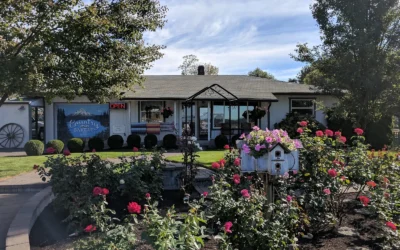
The formal gardens use hedges, paths, and changes in enclosure to divide the property into smaller spaces. In the Great Room, a long lawn leads the eye toward a metal gazebo associated with Portland’s 1905 Lewis and Clark Exposition. The Tea House Garden has a more enclosed arrangement of flower beds and geometric walks. In the Scroll Garden, curled ironwork and shaped boxwood relate to one another, making the boundary part of the design.
That layout gives visitors something to enjoy even when a particular bed is between displays. A garden is also its proportions, the way a path approaches an entrance, and the view from one space into the next. Deepwood is especially rewarding if you take the walk at that scale. Rather than looking only for the biggest patch of flowers, notice what comes into view as you turn a corner.
The grounds extend beyond the formal plantings. More than half the property is a nature area, and the Rita Steiner Fry Nature Trail leads toward Pringle Creek, which separates Deepwood from neighboring Bush’s Pasture Park. Yew Park, near the parking area, offers picnic tables and an open setting for a simpler stop. A greenhouse beside the public restroom adds another place to look, with its own hours distinct from the wider grounds.
The greenhouse is generally open from 9 a.m. to 4:30 p.m., according to the museum, so an evening garden visit may miss it. It sits close to the parking area, making it easy to include before setting off on a longer walk. Check posted access information when you arrive.
You do not need to treat all of these spaces as a checklist. On a clear day, the trail and gardens might be the main outing, with the house providing the backdrop. On a wet morning, an interior tour may be the priority and the outdoor walk a shorter addition. That flexibility is useful in the Willamette Valley in October, when a good plan leaves some room for the weather.
A furnished museum with more than one era inside
Deepwood’s rooms display furniture, books, silver, artwork, and other decorative objects spanning the late nineteenth century into the early twentieth. The museum also holds special collections of clothing, hats, wedding items, and archival material. Temporary exhibits bring different parts of those holdings into view throughout the year. The particular objects on display can change, so a return visit need not be a repeat of an earlier one.
Much of the furnishing came through donations after the house entered public ownership. The families who lived here had taken their possessions when they moved, and the museum was not handed a fully furnished residence untouched since 1894. Some family belongings have since returned through descendants, alongside period objects contributed by the wider community. That makes the distinction between original architecture and later museum furnishing useful, particularly for visitors who enjoy the details of preservation.
The kitchen offers another example of a house continuing to change. Restoration specialist Karla Pearlstein’s project account describes a decision to preserve its 1940s character instead of attempting an expensive reconstruction of the original Victorian kitchen. The later kitchen could also serve the museum’s events, giving preservation work a practical purpose. A historic house has more than one legitimate chapter, and keeping that room helps explain the years when people were still cooking and living here.
Salem had to choose to keep it
When Deepwood went on the market, its survival was far from guaranteed. The preservation effort began in 1968, followed by the city’s purchase in 1971 and National Register recognition in 1973. Friends of Deepwood formed in 1974 and continues to help care for the museum. The gardens also depend on volunteers and the Lord & Schryver Conservancy, alongside the city’s involvement.
Those dates can look tidy when they are lined up in a history, but the work has continued for decades. Rooms have needed restoration, collections require care, and a garden never reaches a point where it can simply be left alone. The kitchen and Alice Brown Suite are among the documented projects completed over the years. A visit supports a place that still needs people to show up for it, just as it did when demolition was a possibility.
Planning a fall visit to Deepwood
Deepwood Museum & Gardens is at 1116 Mission Street SE in Salem. Drivers should use 849 12th Street SE for the public parking lot at 12th and Lee, rather than the original driveway on Mission Street. The museum is also within walking distance of Salem’s Amtrak station, and nearby bus stops serve the area. Its location makes it an easy addition to a longer Willamette Valley visit.
Guided house tours run Wednesday through Saturday at 9 a.m., 10 a.m., 11 a.m., and noon. Admission is $8 for adults, $6 for seniors 62 and older, and $4 for students and youths, with children five and younger admitted free. Tours are limited to eight people, and groups of four or more need advance reservations. Use the museum’s tour page to reserve and confirm availability before making a special trip.
The grounds are generally free to visit from sunrise to sunset, including days when house tours are closed. Private rentals can temporarily affect access, so check the museum’s calendar as well. The historic house has nine steps at its entrance, tours use both the main and second floors, and it does not meet wheelchair accessibility standards. The museum identifies the gardens and grounds as wheelchair accessible and provides an accessible restroom; visitors with specific needs should review its access information when planning.
Make the house reservation first if the windows are what brought you to Deepwood. A Sunday garden walk, for example, will not include one of the regularly scheduled interior tours. For a Wednesday-through-Saturday visit, the last listed tour begins at noon, leaving the afternoon free for the grounds or another Salem stop. Bring a jacket for the garden paths, use the public lot on 12th Street, and keep the tour confirmation handy.