
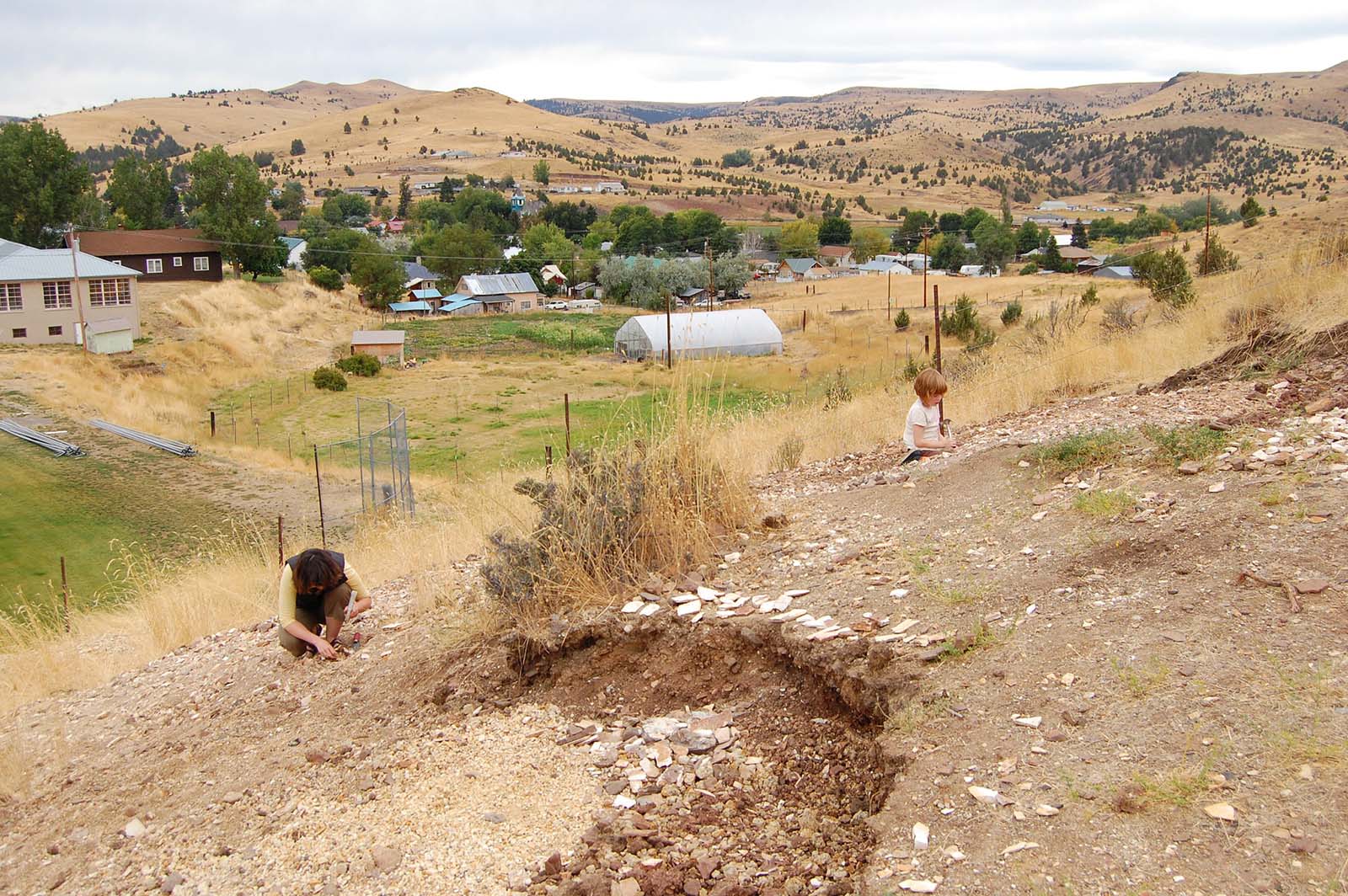
In the little Wheeler County town of Fossil, Oregon, one of the state’s most unusual hands-on history lessons sits behind an active public school. The Wheeler High School Fossil Beds preserve the floor of a lake that existed about 33 million years ago, and visitors are allowed to split the soft shale, look for plant impressions, and keep permitted finds from the designated digging area. It is a rare Oregon experience where the name of the town, the landscape, and the activity all line up perfectly.
Quick answer: The fossil beds remain listed as open to the public in 2026 for a modest fee. A current public map listing shows 24-hour access, but the City of Fossil visitor page does not publish official daily hours. Because the beds are on an active school campus, plan to visit during daylight and call ahead for a group, a winter visit, or any trip that requires a long drive.
Wheeler High School Fossil Beds at a Glance
- What you can find: Mostly leaf, needle, twig, and branch impressions from the Oligocene Epoch.
- Can you keep fossils? Yes, collecting is allowed within the designated school fossil beds. Follow every posted rule and limit at the site.
- 2026 hours guidance: The current public map listing says open 24 hours, but no daily schedule is posted by the City of Fossil. Daylight visits and a call ahead are the safest plan.
- Most recently published fees: $5 per person; $15 for a family of four; $3 for each additional child; $25 for an organized group of 20 or fewer.
- Group visits: The City of Fossil lists (541) 763-4303 for arrangements. The school district lists the Wheeler High School office at (541) 763-4146.
- Best time to go: Spring and fall usually bring gentler temperatures. Summer afternoons can be hot, and winter weather can make the shale slope slick or difficult.
Details were checked on September 15, 2026. Fees, access, and campus procedures can change, so confirm directly with the school before making a special trip.

The official That Oregon Life store
The Oregon you bring home.
Start the day with Oregon-roasted coffee, then find original gear inspired by the places, stories, and oddities that make this state ours.
Shop Oregon gear
A 33-Million-Year-Old Oregon Lakebed
Long before juniper and sagebrush defined this part of Oregon, a shallow lake occupied the ground beneath present-day Fossil. The climate was milder and wetter, and the nearby stream banks and wetlands supported forests whose leaves settled into fine lake-bottom mud. Over millions of years, those layers hardened into thin beds of shale that still separate along their ancient seams.
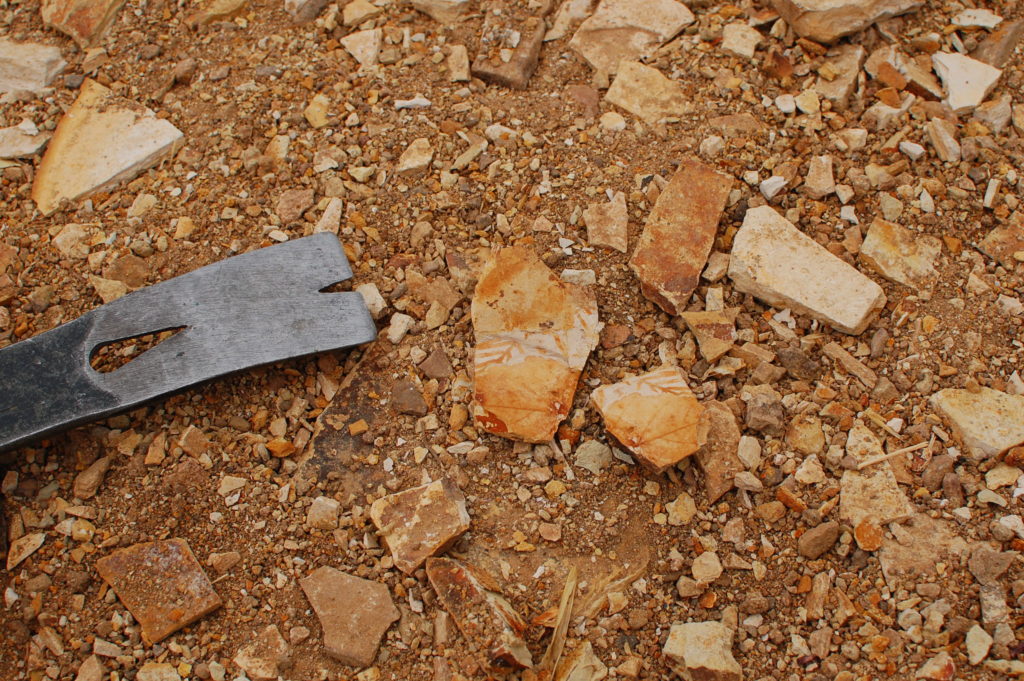
The plant community preserved here is known as the Bridge Creek Flora. Visitors commonly uncover impressions related to sycamore, maple, oak, alder, rose, and metasequoia, a deciduous conifer that dropped its needles each fall. The fossils are often delicate and paper-thin, but the veins in a leaf can remain startlingly clear, as if it fell last season rather than millions of years before people arrived in Oregon.

Small fish and salamander fossils have occasionally been found in the formation, although most casual visitors should expect plants rather than animals. The large prehistoric mammals associated with the broader John Day region are not found at this school site. To see those specimens and the environments they inhabited, add the National Park Service’s Thomas Condon Visitor Center at the Sheep Rock Unit to your route.
How to Search Without Damaging Your Find
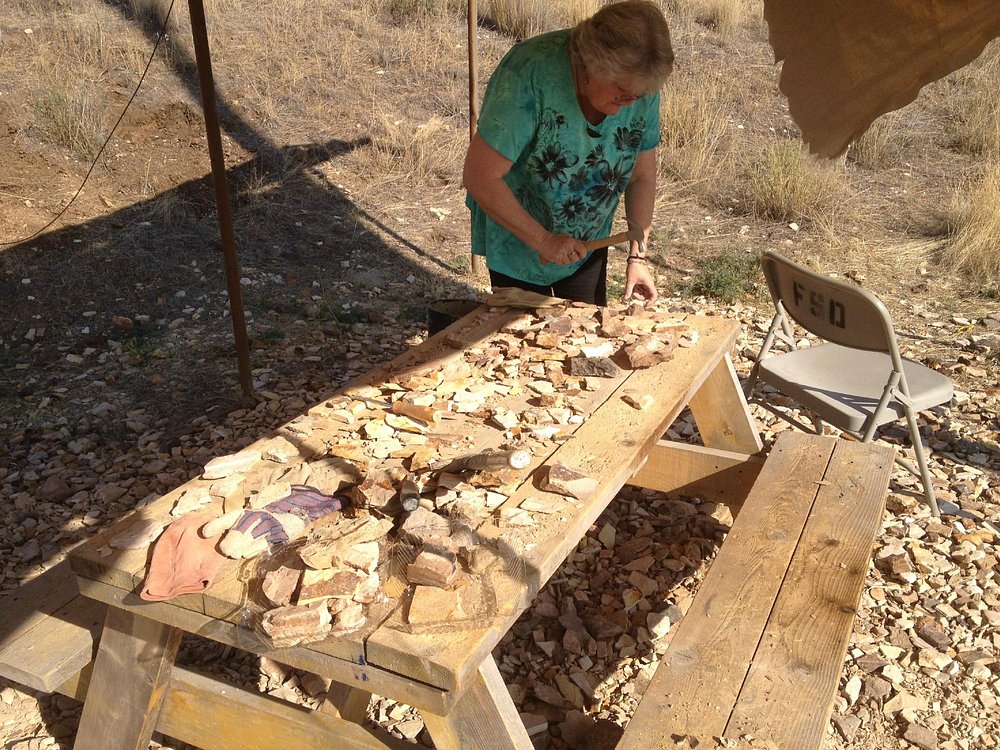
The experience is less like swinging a pick through solid rock and more like opening a stone book. Look for loose pieces of thin shale in the designated area, then gently separate them along their natural layers. A small rock hammer, flat chisel, sturdy screwdriver, or putty knife can help, but patience usually matters more than force. Safety glasses and gloves are wise whenever rock chips may fly.
Bring a kneeling pad, closed-toe shoes, drinking water, sunscreen, and a small container or newspaper for fragile specimens. The exposed slope has loose, uneven ground and is not a polished museum attraction, so visitors with mobility concerns should call the school for current access details. Keep children close, avoid undercutting the bank, fill any permitted holes, pack out every scrap, and use only the area marked for public collecting.
There is an important boundary to remember when building a larger fossil-country road trip. Collecting is allowed at this designated school site, but fossil collecting is prohibited inside John Day Fossil Beds National Monument. The National Park Service fossil FAQ specifically directs would-be collectors to Wheeler High School instead. At the monument, enjoy fossils in place or in museum exhibits and leave every natural object where it belongs.
2026 Hours, Fees, Directions, and Contacts
The beds are behind Wheeler High School in Fossil. The school district gives the campus address as 600 B Street, Fossil, OR 97830, while the City of Fossil visitor page lists the attraction behind the school at 404 Main Street. For the clearest navigation, search for “Wheeler High School Fossil Beds” in your map app and follow the signs at the campus rather than relying on only a street number.
The most recently published fee schedule is $5 for an individual, $15 for a family of four, $3 for each additional child, and $25 for an organized group of 20 or fewer. Bring a small amount of cash in case the self-service payment setup is in use, and check posted instructions when you arrive. The fee schedule has remained consistent across current visitor references, but calling ahead is still smart because procedures at a rural school property can change.
The current public map listing shows the fossil beds as open 24 hours, but that should not be read as a promise of staffed access at every hour. The City of Fossil does not publish a formal daily schedule for the dig site, and the school campus has its own weekday routines. Visit during daylight, respect school activities, and call (541) 763-4303 for a group arrangement or (541) 763-4146 for the current school office before traveling in winter or from outside the region.
The Former Paleo Lands Center Is Closed
Older travel guides often tell visitors to stop at the Oregon Paleo Lands Center & Gallery on Fourth Street for fossil identification and local advice. That information is now outdated. The organization’s own website says the center is closed, is going through dissolution, and is no longer accepting donations. Do not plan your 2026 visit around the former gallery or its old operating hours.
The fossil beds themselves are still promoted by the City of Fossil, and the National Park Service continues to identify Wheeler High School as the place where visitors may legally collect fossils near the monument. For interpretation, exhibits, and hundreds of scientifically curated specimens, use the Thomas Condon Visitor Center in the Sheep Rock Unit. Check the NPS page and current alerts before leaving, since facility schedules and wildfire or road conditions may change.
Turn the Dig Into an Eastern Oregon Road Trip
Fossil sits in the wide-open country of north-central Oregon, where mileage on a map rarely tells the whole story. Fuel, meals, shade, and cell service can be limited, and NPS advises visitors to save offline information because reception around the monument is unreliable. Check TripCheck and the Oregon wildfire map before setting out, especially during summer and early fall.
The Clarno Unit of John Day Fossil Beds National Monument is the closest park unit to Fossil, while the Painted Hills lie farther south near Mitchell. The Sheep Rock Unit and Thomas Condon Visitor Center are farther east near Kimberly. If you want more context before choosing a route, our guide to the John Day Fossil Beds Sheep Rock Unit explains why those layered hills are such an extraordinary record of Oregon’s past.
Travelers making a weekend of it can browse our Eastern Oregon travel guide, compare legal collecting destinations in our Oregon rockhounding guide, or stay nearby at Wilson Ranches Retreat near Fossil. Build in more time than you think you need. Out here, the road winding through rimrock, ranch country, and juniper hills is part of the pleasure.
Frequently Asked Questions
Can you really keep fossils from Wheeler High School?
Yes. Visitors may collect fossils from the designated Wheeler High School Fossil Beds, subject to posted rules and any current limits. This permission does not extend to John Day Fossil Beds National Monument, where fossil collecting is prohibited.
What fossils are found in Fossil, Oregon?
Most finds are impressions of leaves, needles, twigs, and branches from the roughly 33-million-year-old Bridge Creek Flora. Small fish and salamander fossils have been found, but casual visitors should expect plant material rather than large animal fossils.
What are the Wheeler High School Fossil Beds hours in 2026?
The current public map listing shows 24-hour access, but the City of Fossil does not post formal daily hours. Since the site is on an active school campus, visit during daylight and confirm with the school before a winter trip, group visit, or long drive.
How much does fossil digging cost?
The most recently published rates are $5 per person, $15 for a family of four, $3 for each additional child, and $25 for an organized group of 20 or fewer. Bring cash and follow the payment instructions posted at the site.
Do I need to bring fossil-digging tools?
Bring small hand tools such as a rock hammer, flat chisel, sturdy screwdriver, or putty knife, plus gloves and safety glasses. A kneeling pad, water, sun protection, closed-toe shoes, and wrapping material for delicate finds will make the visit more comfortable.
Is the Oregon Paleo Lands Center open?
No. Its website states that the center is closed, the organization is going through dissolution, and donations are no longer being accepted. For museum exhibits and ranger information, plan a separate visit to the Thomas Condon Visitor Center at the Sheep Rock Unit.
There is something wonderfully Oregon about sitting on a shale slope behind a tiny-town school and finding the outline of a leaf that fell before the Cascades looked the way they do today. Come prepared, respect the campus and the rock layer, and leave enough of the story for the next curious traveler to discover.