
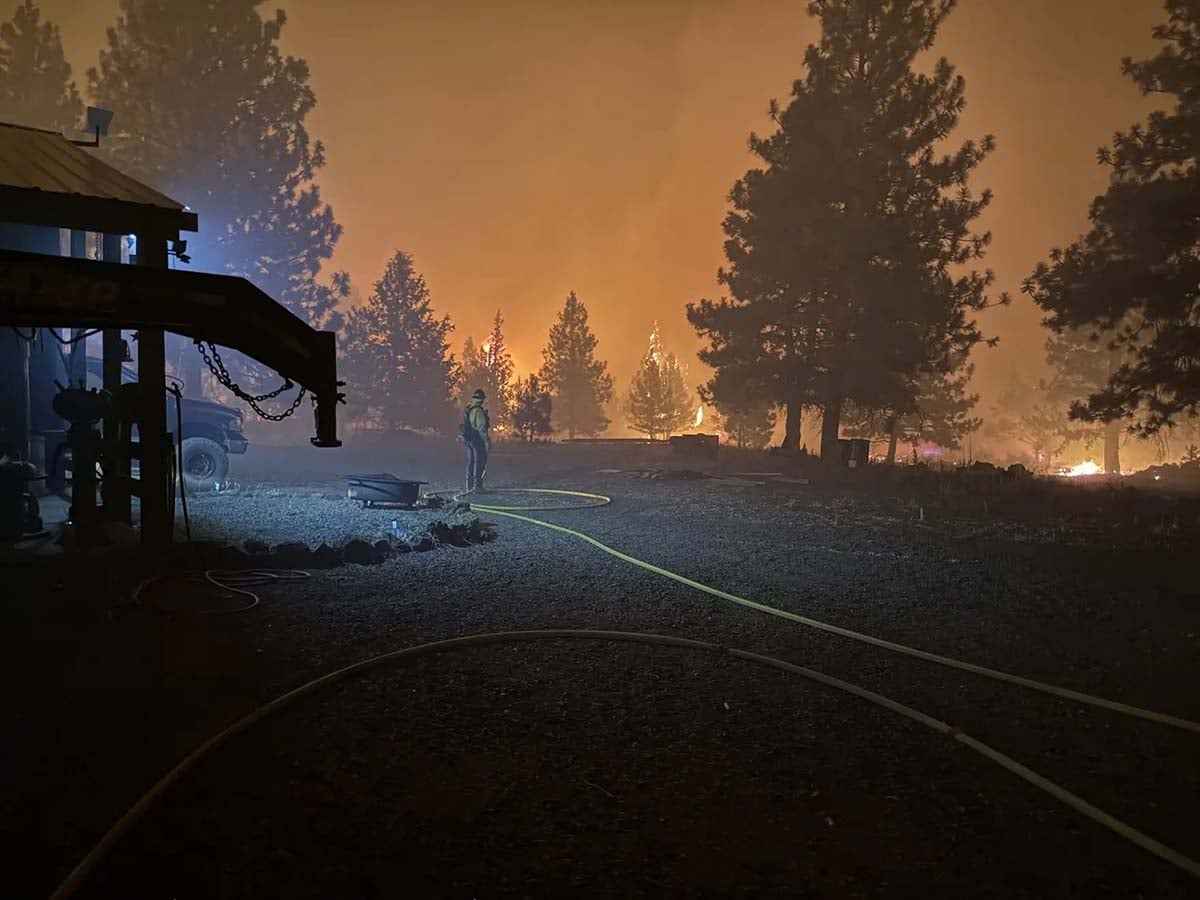
The Forest Service is proposing to log about 5,000 acres of the Deschutes National Forest near Sisters under the Trump administration’s effort to accelerate post-fire recovery work. According to KLCC’s reporting, timber representatives support the proposal, while Oregon Wild has raised objections. The Forest Service’s project summary identifies commercial salvage logging, roadside danger-tree removal and reforestation within the Akawa Butte Fire footprint.
The proposal follows a summer fire that disrupted households and businesses throughout the Sisters area. In our July 24 coverage of the Akawa Butte Fire, we reported that the blaze had exceeded 26,000 acres across Deschutes and Jefferson counties. Residents were under evacuation notices, and Sisters High School was serving as a shelter and a gathering place for community updates. By September, KTVZ reported approximately 27,500 acres burned, including about 12,000 acres within the national forest.
The proposal to log the Akawa Butte Fire burn area includes approximately 1,340 acres along 37 miles of roads, with no requirement to retain standing dead trees, known as snags. Another approximately 3,580 acres would be available for commercial logging, with at least three to four snags retained per acre, KLCC reported. The project uses a new policy for post-fire work.
Supporters emphasize safety and recovering usable timber before it deteriorates. Deschutes National Forest spokesperson Kaitlyn Webb told KLCC that removing dead and dying trees would reduce future wildfire risk near communities and improve firefighter safety. American Forest Resource Council spokesperson Nick Smith supported timely hazard removal, timber recovery and replanting.
The Forest Service’s January national planning notice provides additional context for that position. The agency identifies damaged trees near roads, trails and facilities as potential hazards and seeks to recover timber before it loses economic value. It also says salvage revenue can support reforestation, while recovery work can provide employment and help recreation and other permitted activities resume. These are potential benefits the agency describes for post-fire projects generally, rather than measured outcomes from the Akawa Butte proposal.
The concerns about logging focus on habitat retention and public review. Oregon Wild’s Erik Fernandez told KLCC that the proposed number of remaining snags was insufficient and that exposed trees could fall after surrounding trees were removed. He also criticized the limited public process.
Standing dead trees have documented uses for wildlife. A Forest Service research review of ponderosa pine forests describes how snags provide feeding, nesting and roosting habitat, including cavities excavated by woodpeckers. OPB has also examined Northwest plants and animals that depend on wildfire. Those findings explain the ecological reasons for retaining dead trees, but they do not establish the habitat effects of this particular project.
The national planning notice describes how local conditions are supposed to inform recovery decisions. It says the nationwide environmental assessment would not itself authorize individual projects and calls for project-specific documentation, with supplemental analysis or mitigation where necessary. The listed considerations include wildlife, soils, water, public safety and Tribal rights and interests. The agency’s stated approach allows design changes or additional protections to address conditions at individual sites.
The designated comment period ended September 21, according to The Nugget Newspaper in Sisters. Residents can still weigh in through the Forest Service’s project page, although the agency says late submissions may not receive full consideration. Comments, including names and contact information, become part of the public record.