
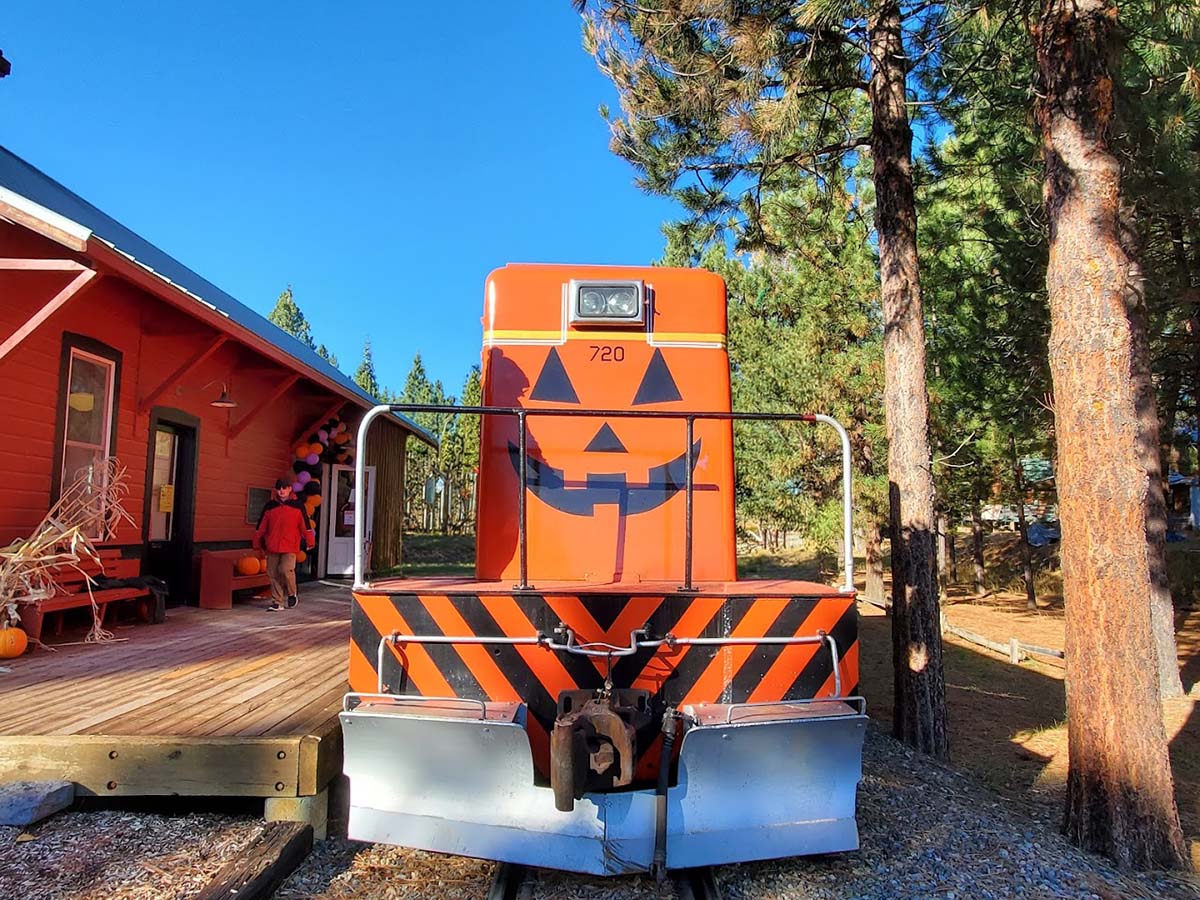
There is something about fall in Northeast Oregon that feels a little different from autumn anywhere else in the state. The mornings arrive colder, the mountains seem sharper against the sky, and pockets of brilliant yellow begin appearing along rivers, old roads, and forgotten corners of the Blue Mountains. By October, the landscape surrounding Sumpter can feel like it has slipped into another era entirely.
And then you hear the train whistle.
The official That Oregon Life store
The Oregon you bring home.
Start the day with Oregon-roasted coffee, then find original gear inspired by the places, stories, and oddities that make this state ours.
Shop Oregon gear


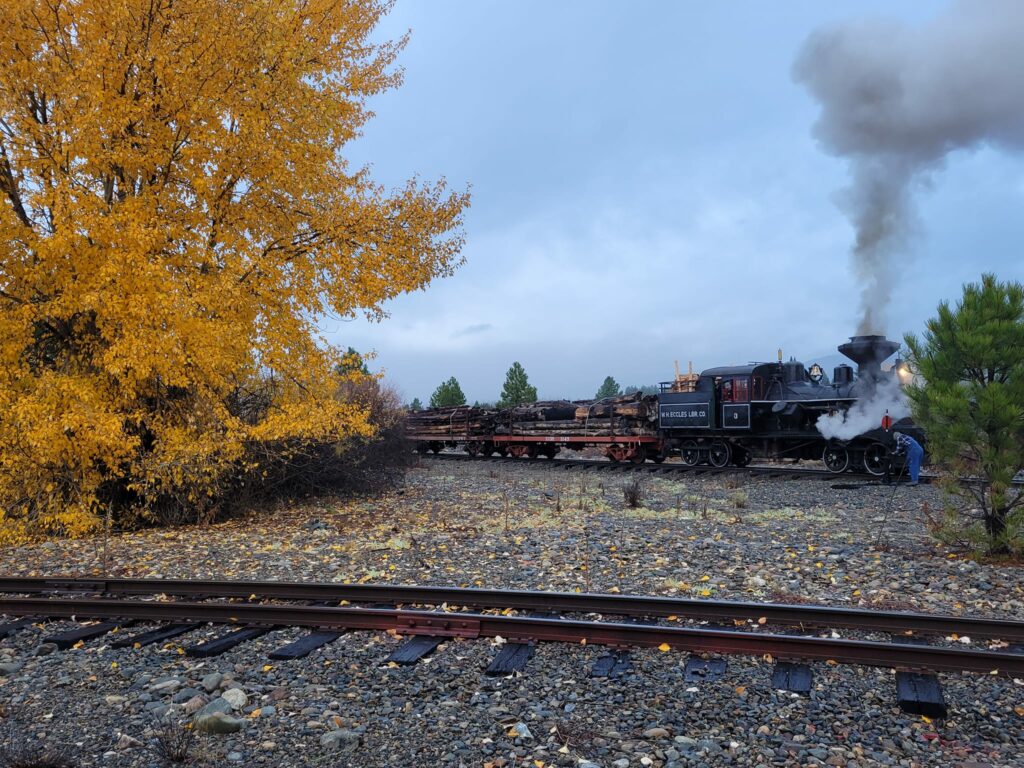
For a few weekends each year, one of Oregon’s most unusual historic railroads carries passengers through this old gold country aboard vintage equipment, following a narrow gauge route with roots stretching back more than a century. In October, when the trees along the valley are turning yellow and gold, the experience becomes especially memorable.
The Sumpter Valley Railroad’s annual Fall Foliage excursions return October 16 through October 18, 2026, offering passengers a chance to ride between McEwen and the historic mining country around Sumpter during one of the prettiest times of year in this corner of Oregon. The railroad’s current 2026 calendar lists departures from McEwen at 10 a.m. and 1 p.m. on all three days.
This isn’t a polished modern sightseeing train designed to imitate the past.
Much of the magic here comes from the fact that the Sumpter Valley Railroad is itself a piece of Oregon history, reconstructed and operated largely through decades of volunteer work. The route passes through a landscape shaped by timber, mining, railroads, gold fever, boomtown fortunes, and the enormous machines that once tore through the river valley looking for treasure.
In 2026, the experience carries another layer of significance. This year marks 50 years since restored passenger excursions officially began on the railroad on July 4, 1976.
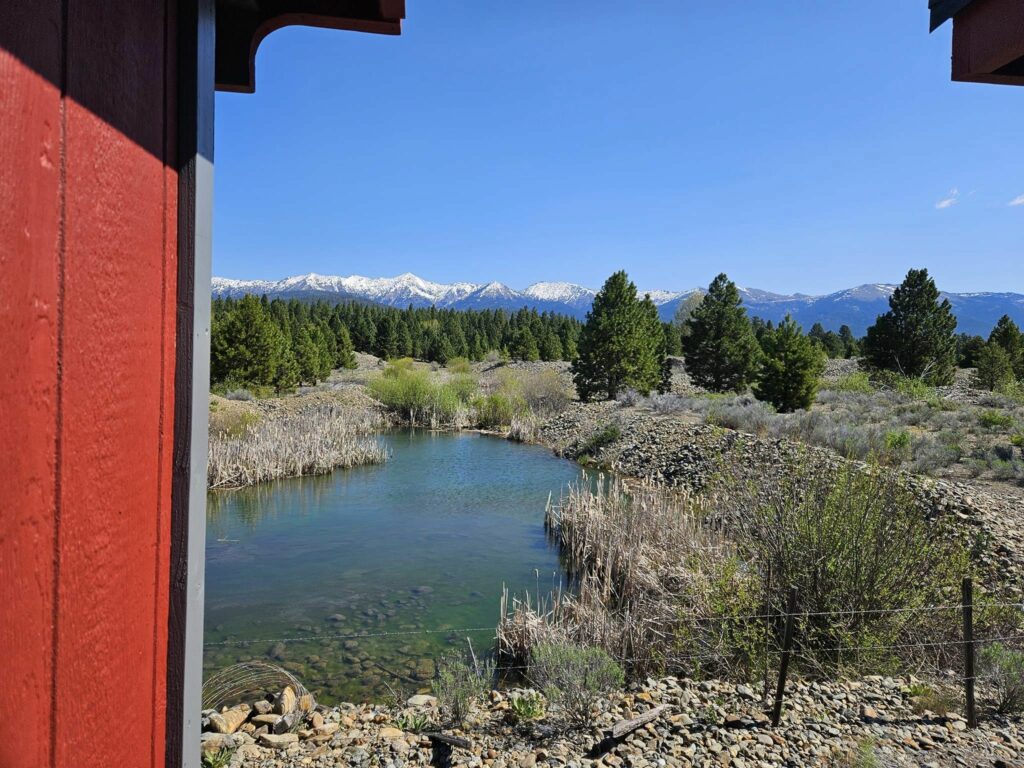
For an Oregon fall road trip, it is hard to imagine a more fitting combination: an old train, a nearly forgotten mining town, mountain scenery, chilly October air, and a valley glowing with autumn color.
A Railroad Built For Oregon’s Timber Country
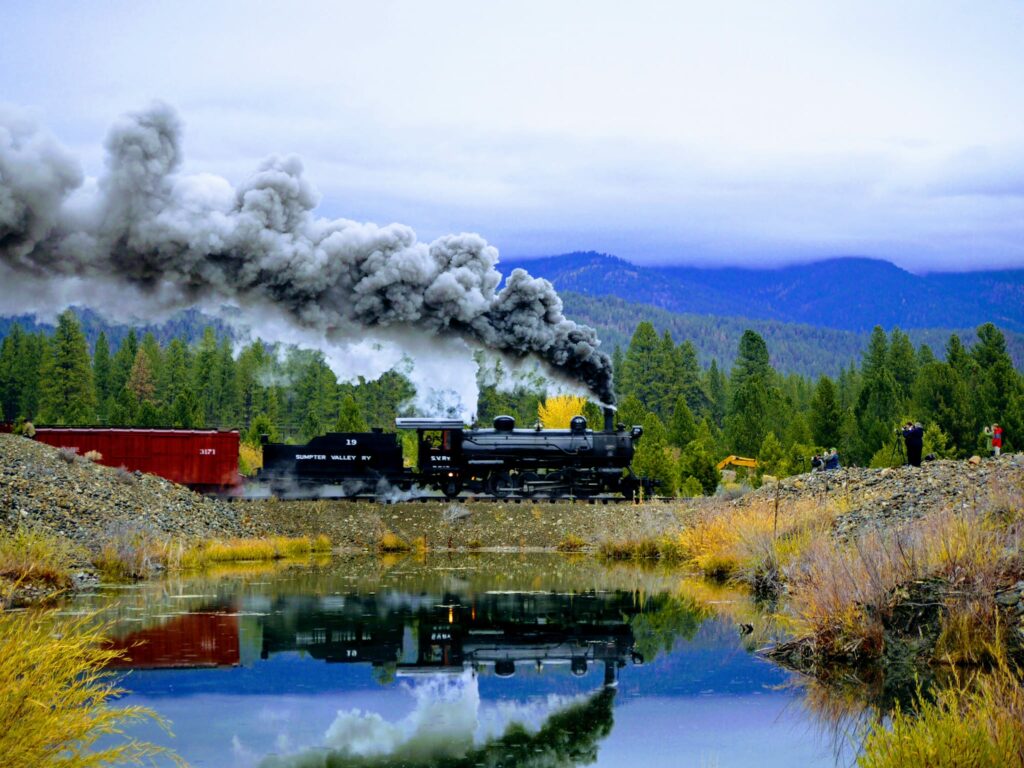
Long before travelers climbed aboard with cameras and coffee, the Sumpter Valley Railway was built for work.
Construction began in Baker City in 1890. The narrow gauge line was developed primarily to move timber and related products out of the mountains, reaching McEwen by 1892 and the booming mining community of Sumpter in 1896. Eventually, the railroad pushed deeper into Eastern Oregon until the system stretched more than 80 miles to Prairie City.
At the time, that railroad represented something much larger than transportation.
Eastern Oregon communities were separated by long distances and difficult terrain. Roads were primitive compared with what travelers know today. Rail connections could determine whether a lumber operation expanded, whether supplies reached an isolated community efficiently, and whether businesses had access to outside markets.
Sumpter was booming with another kind of industry.
Gold had been discovered in the Blue Mountains and Sumpter Valley area in the 1860s, drawing prospectors into the region and eventually helping transform the little mountain settlement into one of Oregon’s best-known mining communities. Around the turn of the 20th century, Sumpter was a lively place filled with miners, businesses, hotels and saloons. Travel Oregon notes that the town once had 16 saloons, three newspapers and even an opera house before a devastating 1917 fire destroyed much of its business district.
The railroad became part of that story, carrying freight and passengers through a region where timber and gold were creating fortunes.
Eventually, those days faded.
Business declined during the 1930s, and much of the original railway was abandoned by 1947. The rails disappeared, sections of the old roadbed eroded, and what had once been a transportation lifeline across Eastern Oregon seemed destined to become another chapter preserved mostly in old photographs.
But people in Baker County weren’t quite ready to let the railroad disappear.
Volunteers Brought The Railroad Back From The Dead
In January 1971, a group of volunteers formally organized Sumpter Valley Railroad Restoration Inc. with an ambitious goal: bring the old narrow gauge railroad back to life.
That was far easier said than done.
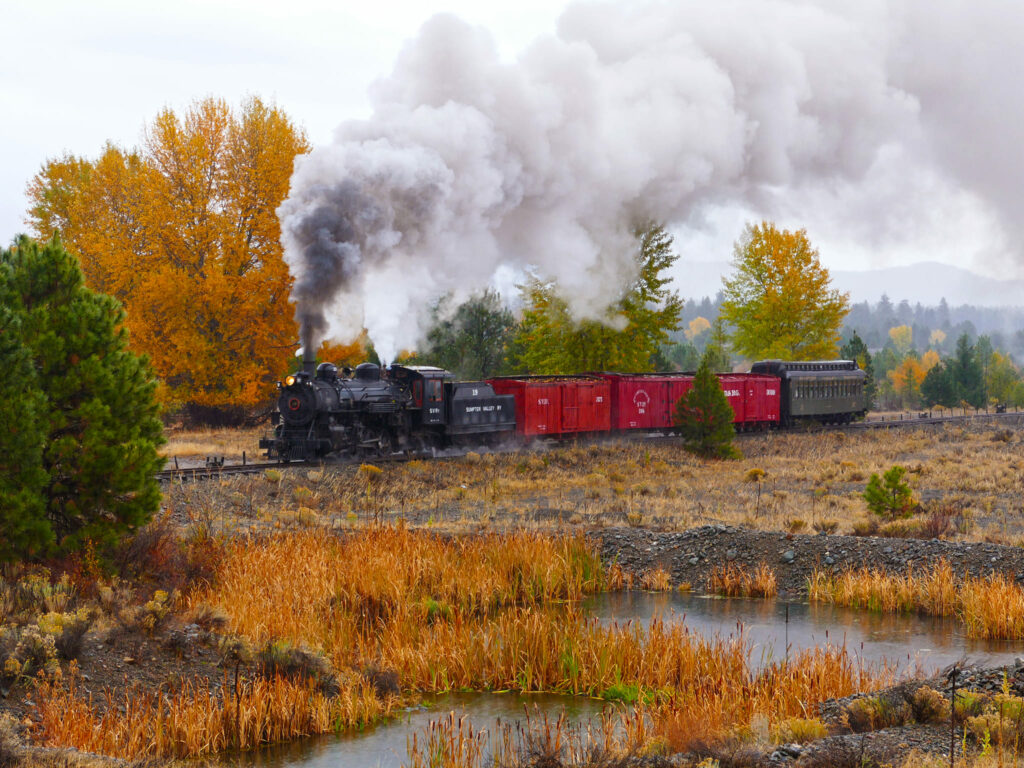
Unlike a heritage railroad that simply inherits an abandoned stretch of intact track, the volunteers faced the enormous job of rebuilding much of what had disappeared. According to the organization, most of the original track had been scrapped in 1947, while sections of the roadbed had deteriorated badly. Over the decades, volunteers rebuilt miles of track, recovered historic equipment, restored locomotives and reconstructed the infrastructure required to operate a functioning railroad.
One of the early breakthroughs involved Heisler locomotive No. 3, originally purchased by the W.H. Eccles Lumber Company in 1915 and used as a logging engine connected with the Sumpter Valley system.
The locomotive was eventually acquired from Boise Cascade and returned to Eastern Oregon. Restoring it took years of work. Volunteers had limited experience rebuilding steam locomotives, but they persisted, learning along the way and gradually returning the old engine to operating condition.
Rail, ties and other materials were donated or recovered from locations around the region. Old railroad equipment was rescued from places where it had been sitting for decades. Sections of track slowly crept farther toward Sumpter.
Then, on July 4, 1976, passengers once again rode behind a locomotive on the restored Sumpter Valley Railroad.
Fifty years later, that restoration effort is still alive.
The railroad celebrated the 50th anniversary of those restored steam excursions in June 2026 with special events, train rides, live music, vendors, shop tours and other activities.
It’s worth thinking about that while sitting in one of the cars today. The railroad exists because generations of people decided that this particular piece of Oregon history was worth saving.
Every section of track represents work someone volunteered to do. Every vintage locomotive requires expertise, money and constant care. Running a century-old piece of machinery isn’t the same thing as turning the key in a modern tourist attraction each morning.
That history makes the experience feel authentic in a way that would be difficult to manufacture.
What The Sumpter Valley Railroad Ride Is Like Today
oday, the railroad operates between its McEwen and Sumpter locations southwest of Baker City.
The standard excursion is known as the Long Run. It departs from McEwen Depot and covers approximately 12 miles round trip, taking about two and a half hours. The shorter Sumpter excursion covers approximately six miles round trip and lasts around 45 minutes. According to the railroad, those shorter runs are offered only during certain holiday and special event weekends, including Halloween.
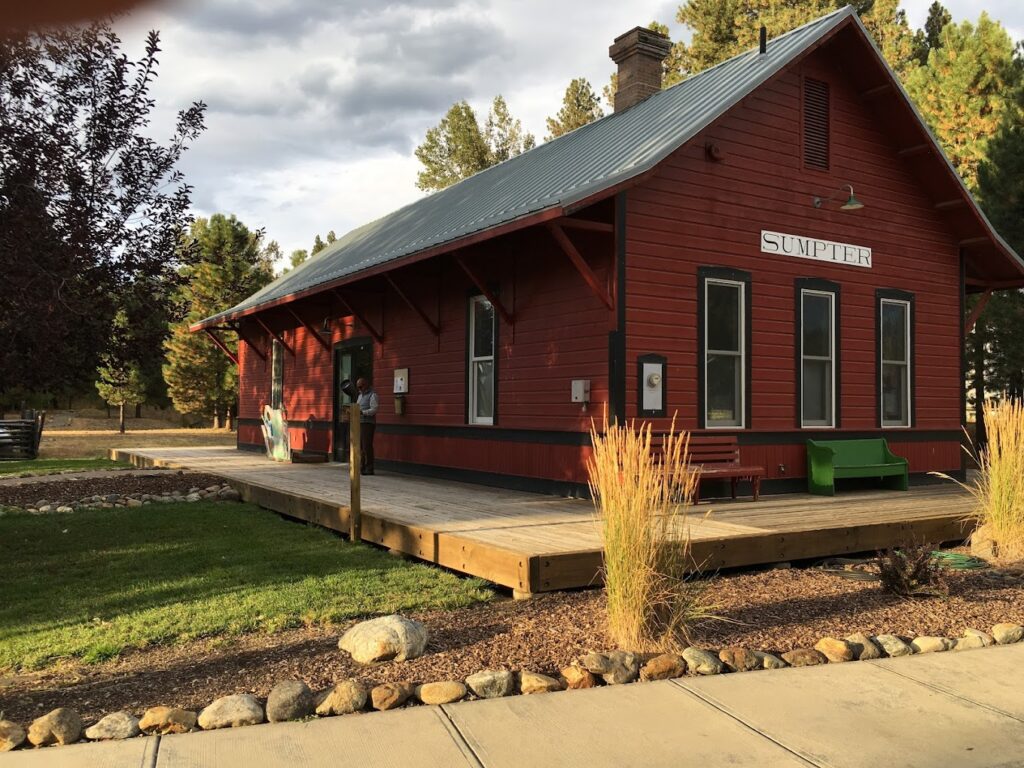
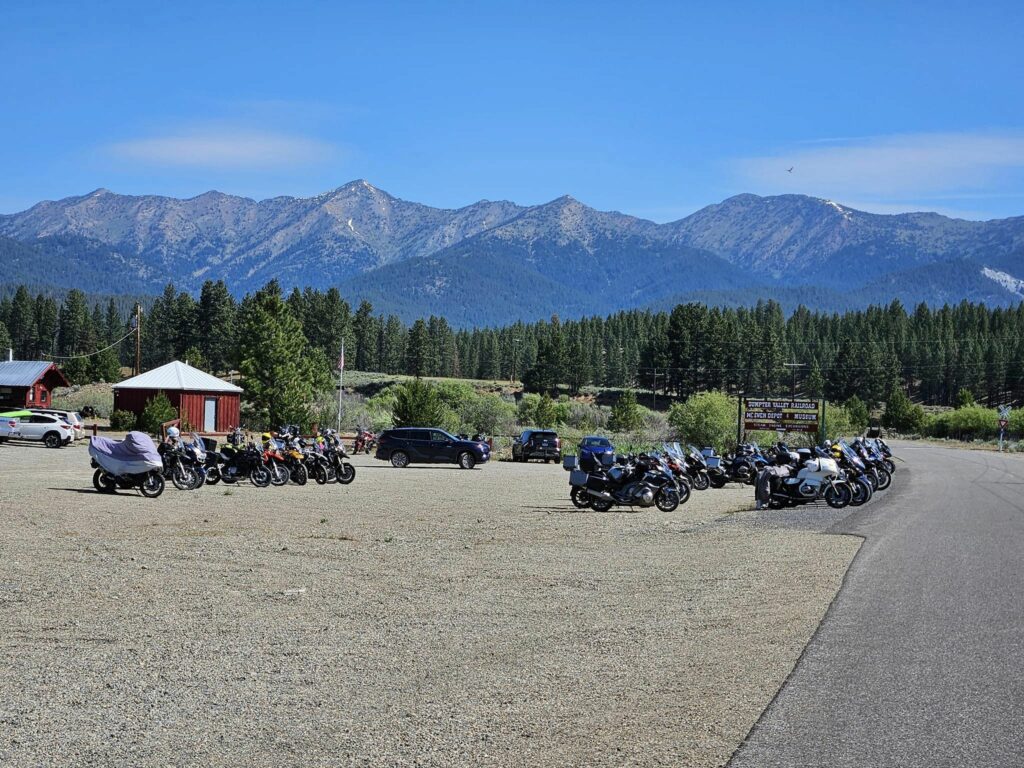
McEwen Depot sits about 23 miles southwest of Baker City along Highway 7. This is also where the railroad’s yards, shops and much of its equipment are located. The Sumpter station is roughly 5.5 miles farther west, near the entrance to Sumpter Valley Dredge State Heritage Area.
That relatively short distance doesn’t tell the whole story.
The fun is in how you travel it.
Rather than watching the valley pass through a windshield at highway speed, passengers move through it slowly enough to notice the details. Mountains rise in the distance. The Powder River country unfolds around you. Patches of forest give way to open ground. Remnants of the region’s mining history appear in the landscape.
Then there are the sounds.
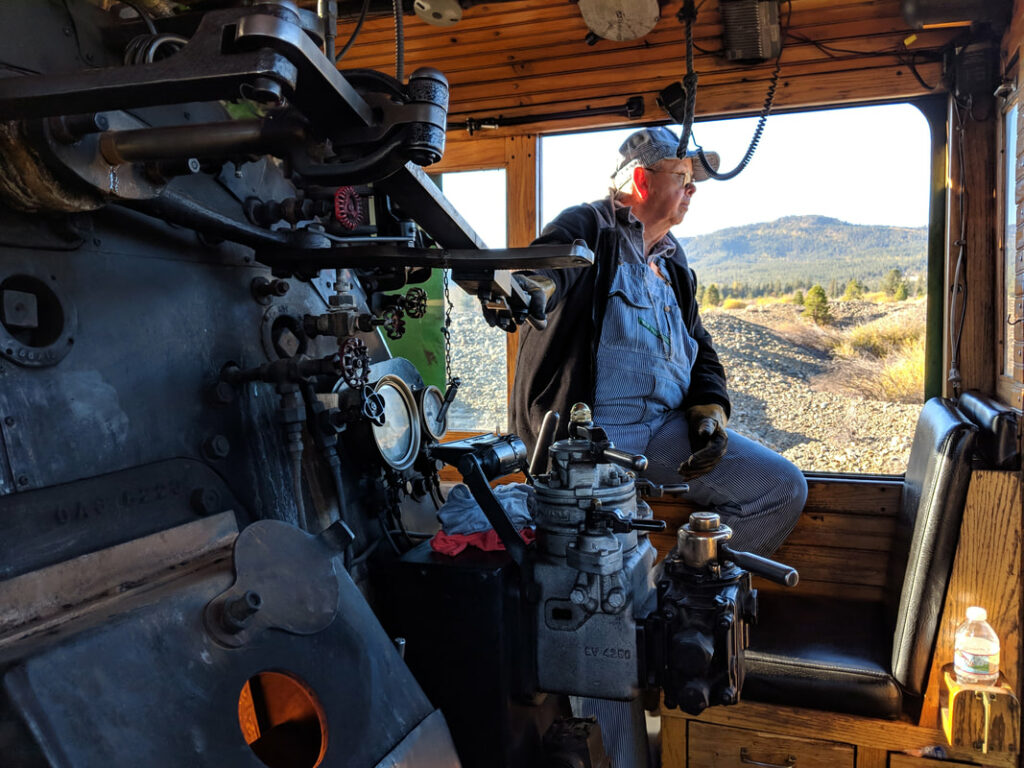
Anyone who loves old machinery knows that a steam locomotive is an experience for more than the eyes. There is the rhythmic mechanical movement, the whistle carrying across the valley and the unmistakable presence of a machine built during an era when moving something this large required fire, water, steel and an extraordinary amount of engineering.
The railroad describes itself as Oregon’s only narrow gauge, steam-powered railroad. Its operating roster includes historic steam locomotives along with diesel equipment. Locomotive No. 3 is a Heisler, while No. 19 is an ALCO Mikado. The railroad also maintains additional locomotives and historic passenger equipment.
There is one important thing visitors should understand before booking specifically because they want steam.
The railroad cannot guarantee that a steam locomotive will operate on every trip. These locomotives are more than a century old, and mechanical conditions can affect what equipment is available. Fire conditions can also change operations. During periods of moderate to high fire danger, the railroad may use a diesel locomotive instead of steam for safety reasons.
By October, wildfire conditions often look much different than they do during the heat of August, but visitors should still arrive with the understanding that the railroad chooses its locomotive based on safety and equipment availability.
Honestly, that unpredictability is another reminder that this is a working historic railroad rather than a theme park imitation.
Fall May Be The Best Time To Ride
Summer gets most of the attention when people plan Eastern Oregon road trips, but October has a character all its own.
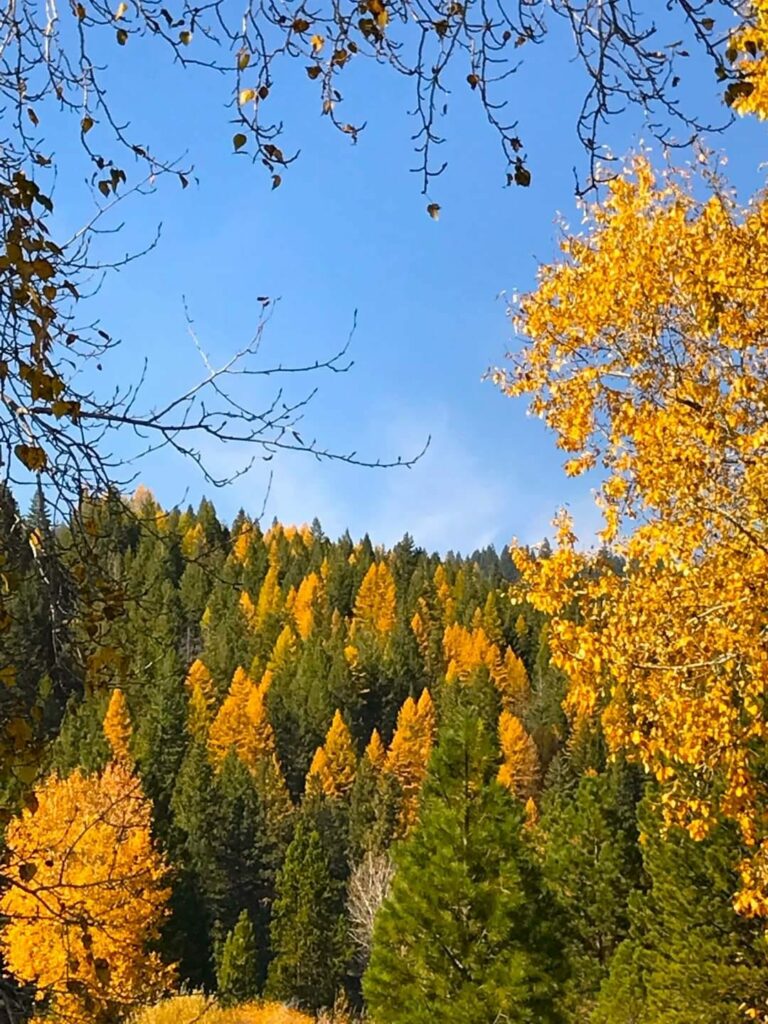
The crowds of midsummer are gone. Mornings can be downright cold. The high country begins hinting that winter isn’t far away. Cottonwoods and other deciduous trees scattered through the valley turn brilliant shades of yellow, creating bright ribbons of color against darker evergreen forests and the muted grasses of the surrounding country.
The granite peaks of the Elkhorn Mountains rise above this landscape, giving the Sumpter area the kind of mountain backdrop that seems made for autumn photographs. Travel Oregon describes the Sumpter Valley Dredge as sitting near the base of the Elkhorns, with the Powder River flowing down through the valley before eventually reaching Phillips Reservoir.
It is also a landscape that tells its history openly.
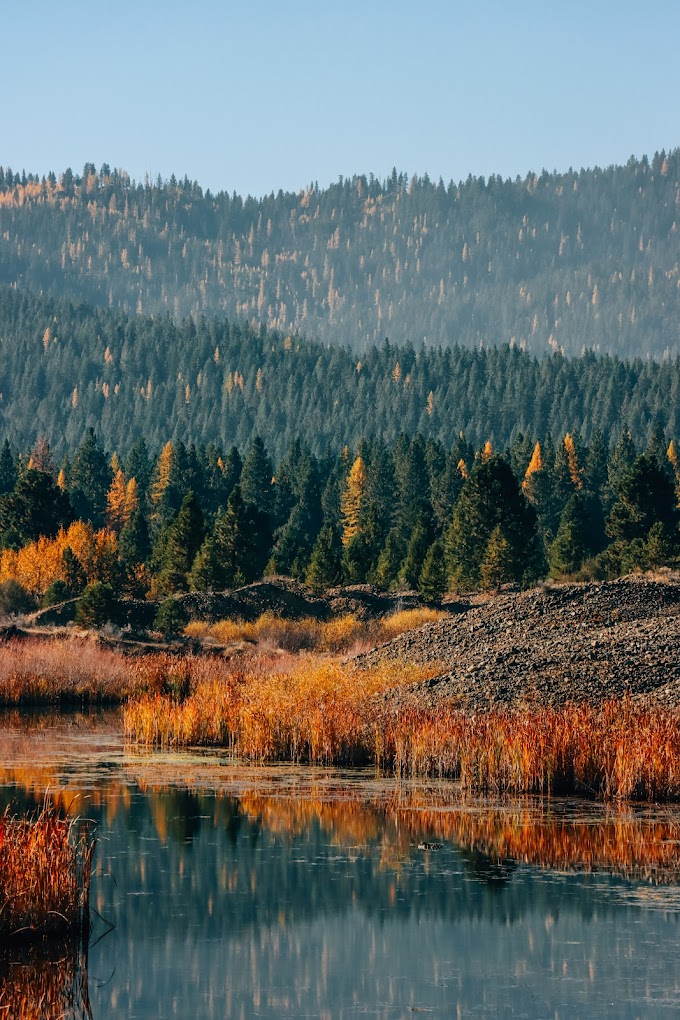
Long rows of rock and gravel remain along portions of the valley, the tailings left behind by enormous dredging operations that worked the Powder River country for gold.
They can look strange if you don’t know what you’re seeing.
Once you understand where they came from, they become part of the story.
The valley wasn’t simply the backdrop for Oregon’s gold rush. In places, it was physically rearranged by it.
And in fall, with yellow leaves glowing along the river and an old locomotive moving through the scene, the layers of history seem to fit together particularly well.
The 2026 Fall Foliage Trains Run October 16 Through 18
For travelers hoping to catch the railroad during peak autumn atmosphere, the big dates to circle this year are Friday, October 16 through Sunday, October 18, 2026.
The railroad’s current calendar lists two Fall Foliage departures from McEwen on each of those three days, scheduled for 10 a.m. and 1 p.m.
Of course, fall color never follows a reservation system.
Weather, elevation and temperatures can push autumn foliage earlier or later from one season to another. There is no way to promise that every tree will be glowing at precisely the same moment. What you can count on is the setting itself: mountain country, historic railroad equipment and one of Oregon’s most interesting old mining valleys during the heart of October.
Photographers may especially appreciate the contrast.
Steam, black locomotives, weathered railcars and bright autumn leaves are a combination that doesn’t need much help looking dramatic.
Even if you’re simply taking pictures with your phone, bring it fully charged. This is the sort of trip where people start photographing the train before they’ve even climbed aboard.
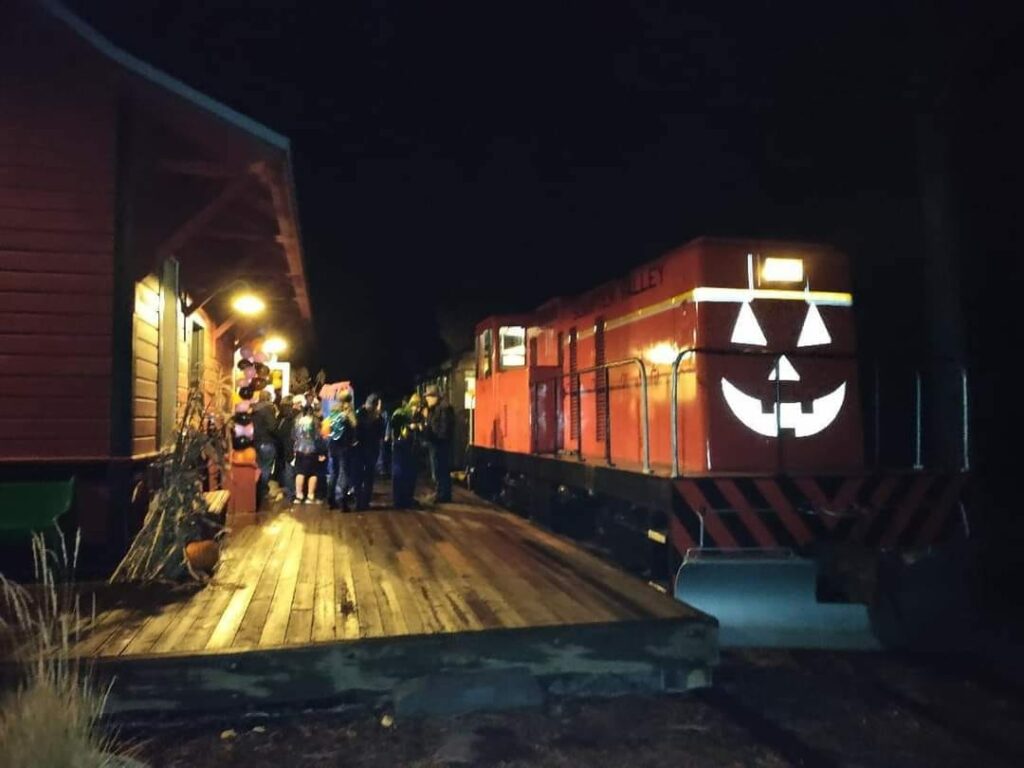
Halloween Brings Another Chance To Ride
Families who miss the Fall Foliage weekend have another excuse to head for Sumpter at the end of October.
The Halloween Express returns October 31 and November 1, 2026, with shorter excursions departing from the Sumpter side of the railroad. The railroad’s downloadable 2026 calendar currently lists two Halloween runs on both days, at 10 a.m. and 1 p.m. Because special event schedules can change, travelers should confirm departure times when purchasing tickets.
The Halloween trips use the shorter approximately six-mile round-trip route, which takes about 45 minutes according to the railroad’s FAQ.
That makes this one particularly appealing for younger kids who want the fun of riding an old train without committing to the longer excursion.
And Sumpter in late October is already well suited for a little spooky atmosphere.
This is an old mining community tucked into the mountains, after all. Once the sun starts disappearing and the cold settles into the valley, you don’t need much imagination to picture miners, railroad workers and long-gone residents walking the streets more than a century ago.
Don’t Miss The Giant Gold Dredge
The train is only part of the reason this makes such a good fall day trip.
Sumpter Station sits near the entrance to the Sumpter Valley Dredge State Heritage Area, home to one of the most fascinating pieces of industrial history in Oregon.
If you’ve never seen the Sumpter Valley Dredge, prepare for something much larger than the word “dredge” might suggest.
The enormous machine was built in 1935 and operated until 1954. Seventy-two massive buckets, each weighing about a ton, were mounted along its digging boom. Those buckets chewed into the riverbank and fed material through the dredge, where rocks and sediment were processed in an effort to separate out gold. The machine extracted millions of dollars worth of gold during its working years.
The landscape around it still bears the evidence.
Those tremendous piles of rounded rock visible around the Sumpter Valley weren’t deposited naturally. They are remnants of a mining operation that essentially processed portions of the valley floor searching for tiny amounts of precious metal.
Today, the dredge sits silent.
Seeing it immediately after riding the railroad creates an interesting contrast. One machine was built to move people, lumber and freight through the region. The other was created to tear through earth and stone in pursuit of gold. Both represent an era when enormous mechanical systems were transforming this remote corner of Oregon.
Together, they turn a pleasant train ride into something closer to a living history lesson.
Make The Drive Part Of The Adventure
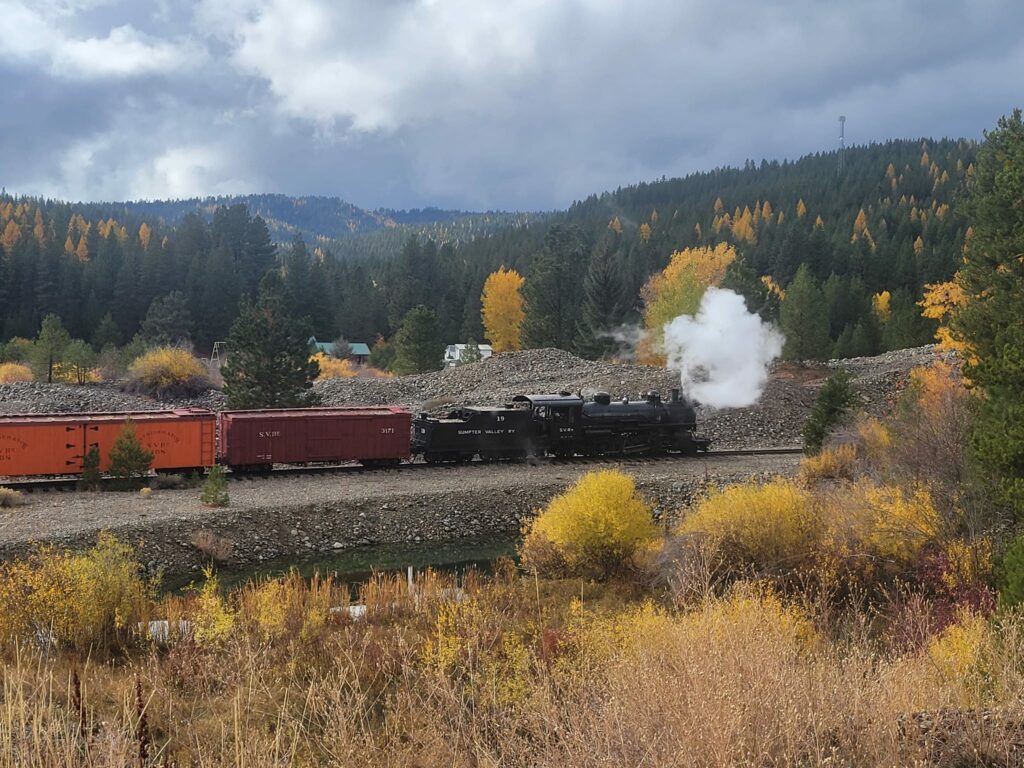
One of the easiest ways to underestimate Northeast Oregon is to focus entirely on the destination.
The drive deserves some attention too.
Sumpter and McEwen lie along the Elkhorn Drive Scenic Byway, a 106-mile loop through the mountains west of Baker City. Travel Oregon recommends summer and fall for driving the route, which winds through a landscape filled with mountain views, mining history, lakes and remnants of communities shaped by the region’s gold rush.
You don’t need to complete the entire loop to enjoy it.
Driving from Baker City toward McEwen and Sumpter gives travelers a beautiful introduction to this part of Oregon, especially once autumn begins coloring the valleys and cooling the mountains.
Baker City itself makes a natural home base for the trip. The city grew wealthy during the mining era as an important regional center supplying the communities and prospectors scattered throughout the surrounding mountains. Its historic downtown still contains impressive architecture from those earlier days.
That makes the whole journey feel connected.
You can begin the morning in Baker City, drive into the mountains, board a railroad created during the region’s timber and mining boom, step off near an enormous gold dredge, explore what remains of an old mining town, then return through the same country that once drew thousands of people hoping to make their fortune.
For anyone interested in Oregon history, that’s a remarkably full day.
A Few Things To Know Before You Go
This is a historic excursion railroad, so visiting is a little different from arriving at an attraction that operates every day.
The Sumpter Valley Railroad runs on selected weekends and special event dates rather than maintaining daily service. For 2026, its schedule includes regular excursions, themed train robbery weekends, the October Fall Foliage trips, Halloween excursions and Christmas trains later in the year.
The railroad recommends arriving about 30 minutes before departure so there is enough time for parking, tickets and boarding.
There are no restrooms aboard the train, although restrooms are available at or near the depots. That’s especially worth remembering before settling in for the approximately two-and-a-half-hour Long Run.
Food isn’t sold aboard the train either. Passengers may bring their own food and drinks, and snacks and beverages are available for purchase at both depots before boarding.
For visitors with limited mobility, the railroad says assistance is available during boarding and that a lift is available for wheelchair access. Seating aboard the train is open rather than assigned.
And because this is Northeast Oregon in October, dress for the season rather than the forecast you saw three days earlier.
Fall days can be beautiful and sunny, but mornings and shaded portions of the valley can feel surprisingly cold. Layers are your friend. A jacket, warm hat and gloves aren’t unreasonable, particularly for children or anyone planning to spend time outside around the depot and dredge.
If you’re hoping to photograph the train, consider arriving early enough to wander around before boarding instead of rushing from your car directly into a passenger coach.
Most importantly, check the official railroad website shortly before leaving home. Historic equipment, weather conditions and special events can result in schedule changes.
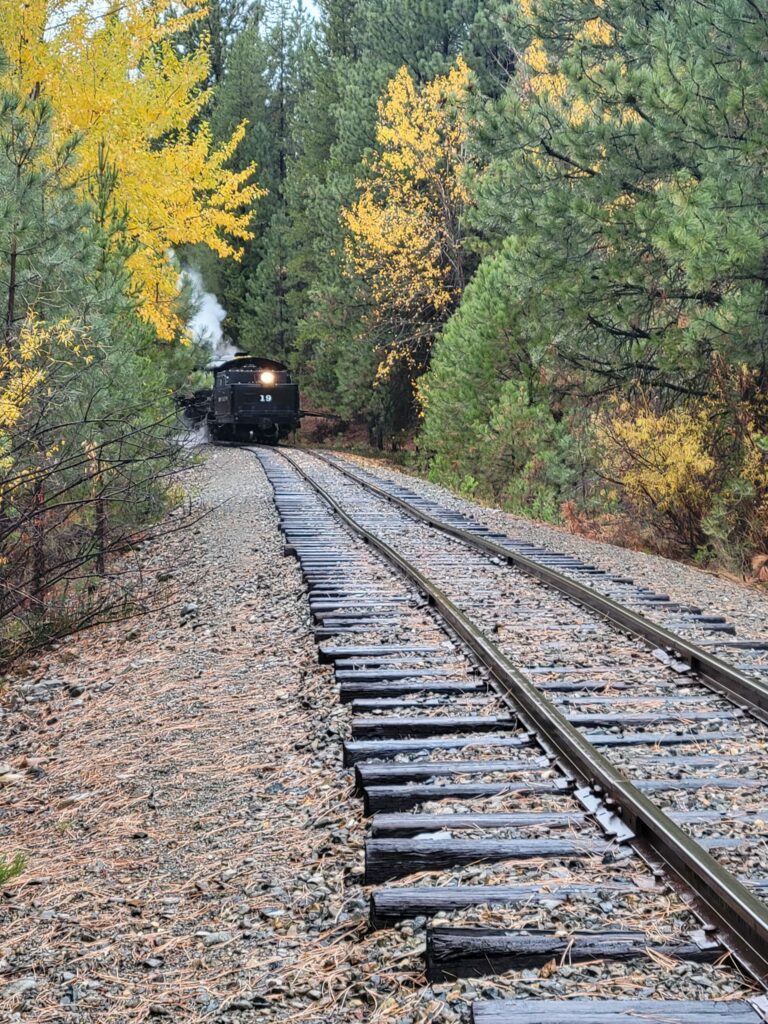
Where To Board
For most longer excursions, including the 2026 Fall Foliage trains, passengers board at:
McEwen Depot
12259 Huckleberry Loop
Baker City, Oregon 97814
The depot and railroad yard are approximately 23 miles southwest of Baker City along Highway 7.
Short excursions, including the Halloween runs, depart from:
Sumpter Station
211 Austin Street
Sumpter, Oregon 97877
The Sumpter station sits near the entrance to the Sumpter Valley Dredge State Heritage Area, approximately 5.5 miles west of McEwen.
Current schedules, ticket availability and prices should be confirmed directly through the Sumpter Valley Railroad before making the drive. The railroad also provides booking assistance by phone at 541-894-2268.
Some Oregon Experiences Are Better When They Move Slowly
We spend a lot of time racing through Oregon.
We drive Highway 101 trying to reach the next viewpoint before sunset. We hurry over mountain passes. We rush toward trailheads, waterfalls and campgrounds with an itinerary waiting on our phones.
The Sumpter Valley Railroad asks you to do something different.
Sit down.
Listen to the wheels.
Watch the landscape go by.
Think about the people who traveled through this same valley when getting from one Oregon community to another wasn’t measured by Google Maps and estimated arrival times. Think about the timber crews in the mountains, miners chasing gold, railroad workers maintaining the line through brutal winters, and families who depended on trains connecting these isolated places to the outside world.
Then consider the people who showed up decades later after the original railroad had vanished and decided to build it again.
That might be the most remarkable part of the Sumpter Valley Railroad.
It isn’t simply old.
It survived because people cared enough to bring it back.
In 2026, fifty years after passengers first boarded the restored railroad, those trains are still rolling through the Sumpter Valley. The locomotives are still being maintained. Volunteers are still giving their time. Kids are still climbing aboard. Train whistles are still echoing through a corner of Oregon where gold seekers and lumber crews once heard them generations ago.
Come October, the mountains cool down, the leaves begin turning and autumn settles over the valley.
Then the whistle sounds again.
And for a couple of hours, one of the prettiest fall drives in Oregon becomes something even better.
You get to leave the car behind and ride the rails.
Get up to date hours, dates and prices, as well as train tickets at the Sumpter Valley Railroad website.
For a longer Eastern Oregon autumn itinerary, start with the Fall in Oregon guide and build the railroad into a route that leaves room for weather and road conditions.