

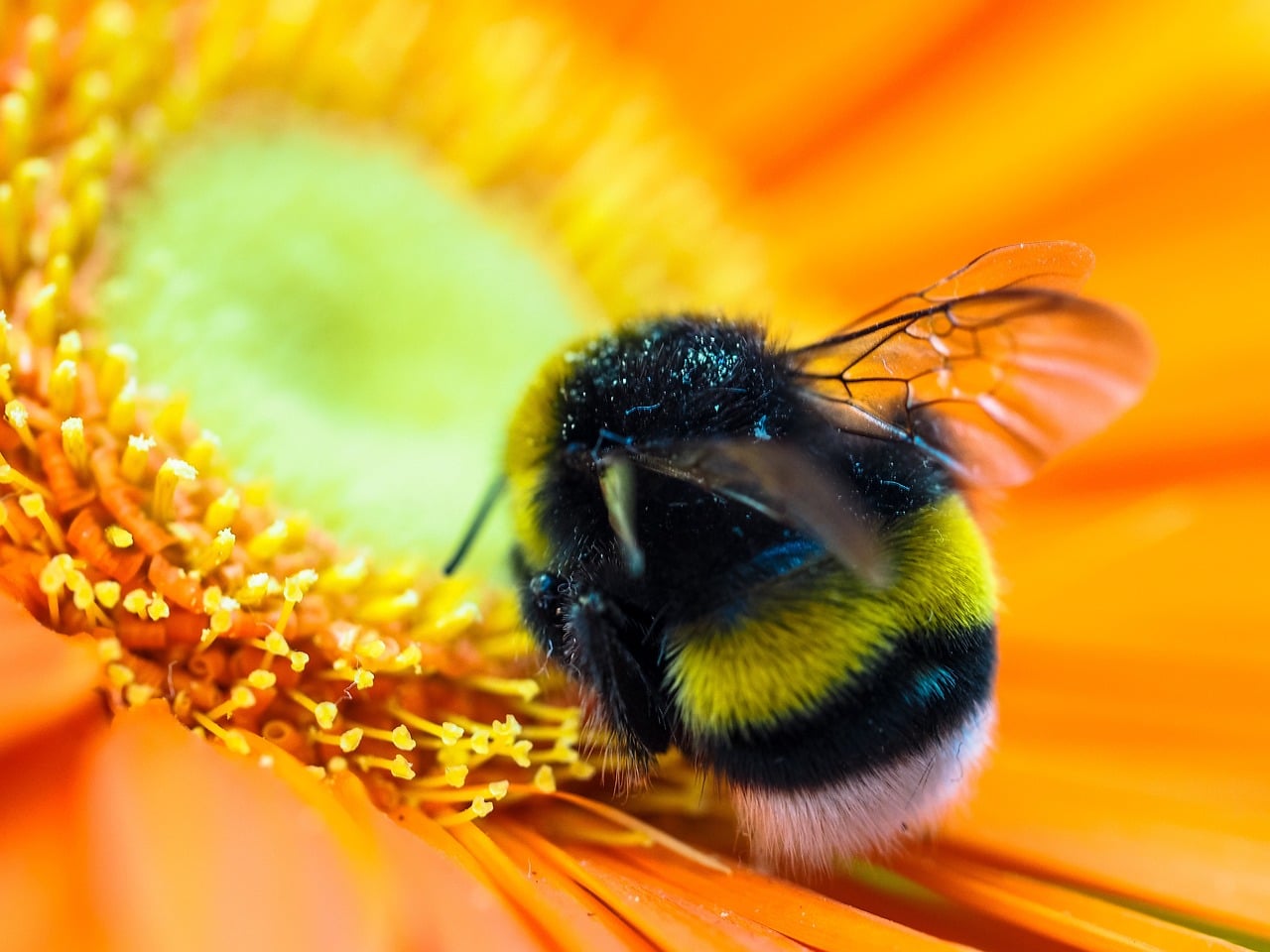
There are two kinds of folks.
There are the people who look at an insect hovering over the lavender and say something useful like, “Oh, that appears to be Bombus vosnesenskii, the yellow-faced bumblebee.”
And then there are the rest of us: “Look! A chunky fuzzy stripey guy!”
To be fair, both approaches have merit. There’s even a third sub-group who may be reacting like Nic Cage here.

But we’re going to set the record straight. Most of this list are friends, going about their little lives, pollinating your flowers without a single passing thought to the large human-shaped object hanging around nearby. Operative word: MOST. Because some just really want your ham sandwich, and others can actually just be a real jerks if provoked.
Bottom line is, the Pacific Northwest is crawling, buzzing and occasionally dive-bombing us with an incredible assortment of bees, wasps and other flying insects, and identifying them can get confusing very quickly. Some are yellow. Some aren’t. Some are fuzzy. Some are shiny metallic green. Some live in colonies with thousands of roommates, while others quietly move into a hole in your fence and spend the summer minding their own business.
Oregon alone is home to more than 600 species of native bees, according to Oregon State University researchers. Some are so small they could easily be mistaken for gnats. Others are big enough that you’ll hear them coming before you see them.
So, instead of pretending we’re all carrying dichotomous identification keys around while gardening, here’s our considerably less scientific guide to some of Oregon and the Pacific Northwest’s most recognizable flying pollinator things.
The Chunky Fuzzy One: Bumblebees
Scientific classification: Bombus
Unofficial classification: Bumblebutt
Friendliness: Generally chill
Fuzz level: Maximum
This is the bee people want to pet.
Please don’t actually go around poking wild bees. Female bumblebees can actually sting (although, frankly, most of the time they can’t be bothered with that), and even the world’s cutest airborne pom-pom deserves some personal space.
But we understand the temptation.
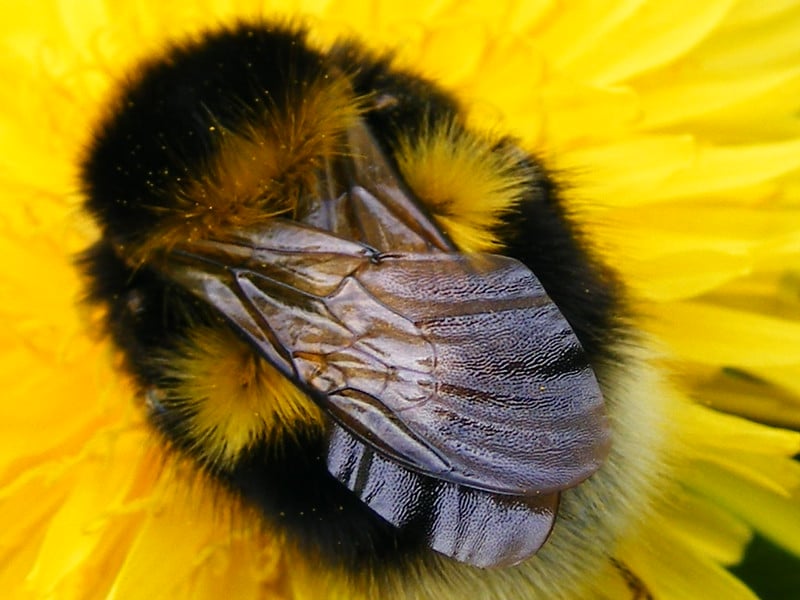
Bumblebees are the big, plush-looking bees lumbering between flowers like somebody gave a teddy bear wings and slightly too much coffee. Some are so large that they appear aerodynamically impossible. (Like, how did this one even get off the ground?) They’re important native pollinators, and Oregon has about 25 species of them.
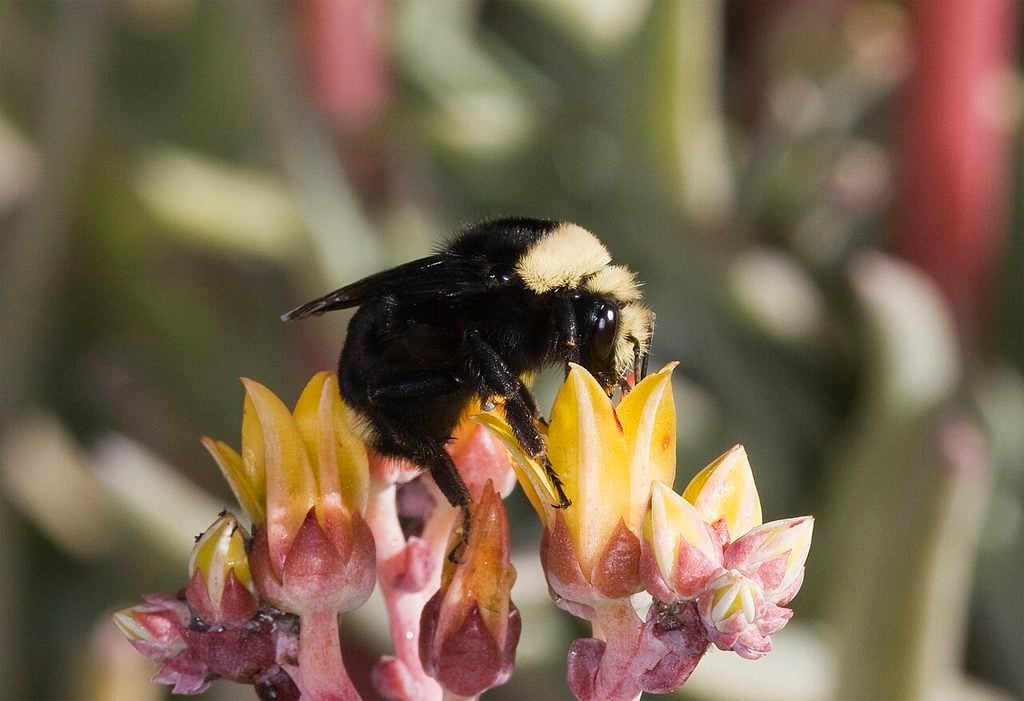
If you’re in western Oregon, one you’re particularly likely to encounter is the yellow-faced bumblebee, Bombus vosnesenskii. It’s one of the most common bumblebees in the Willamette Valley and can be recognized by yellow fuzz on its face and another yellow band toward the rear of its abdomen.
Then there’s the western bumblebee, Bombus occidentalis, a native species whose populations have declined significantly in portions of its historic range. Oregon Bee Atlas volunteers have continued documenting them in the state, making every confirmed sighting a little more interesting than your average backyard bee encounter.
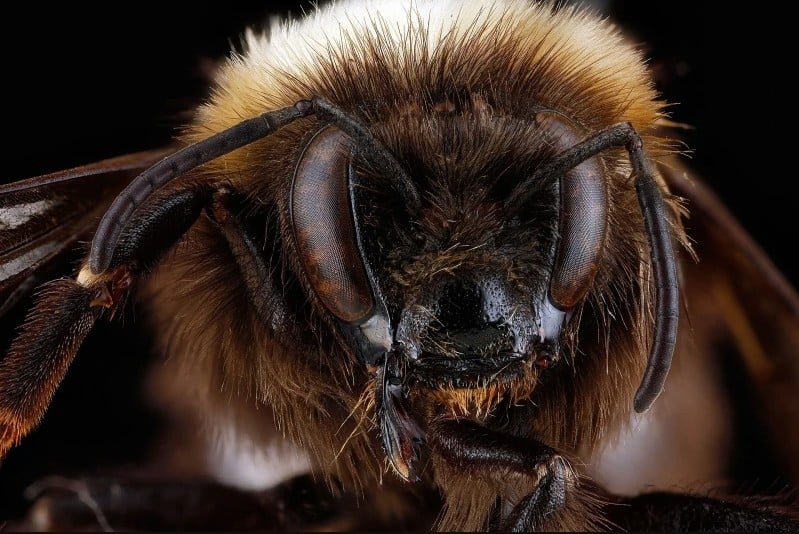
Bumblebees are also capable of something called buzz pollination. They grab onto certain flowers and vibrate their flight muscles, shaking pollen loose like they’re trying to win a microscopic maraca competition.
Tomatoes especially appreciate this behavior.
So yes, chunky fuzzy one is friend.
Admire respectfully.
The Tiny One Living in Your Fence: Mason Bees
Scientific group: Osmia
Unofficial classification: Mini construction worker
Friendliness: Extremely chill
Property damage: Basically none
You may have seen little dark bees disappearing into holes in wood, hollow stems or those adorable bee houses people hang in their gardens.
Congratulations. You may have tiny tenants. Ones that you want to actually encourage to move in.
Mason bees are solitary bees, meaning there’s no queen commanding an enormous hive. Each female essentially runs her own tiny studio apartment and nursery.
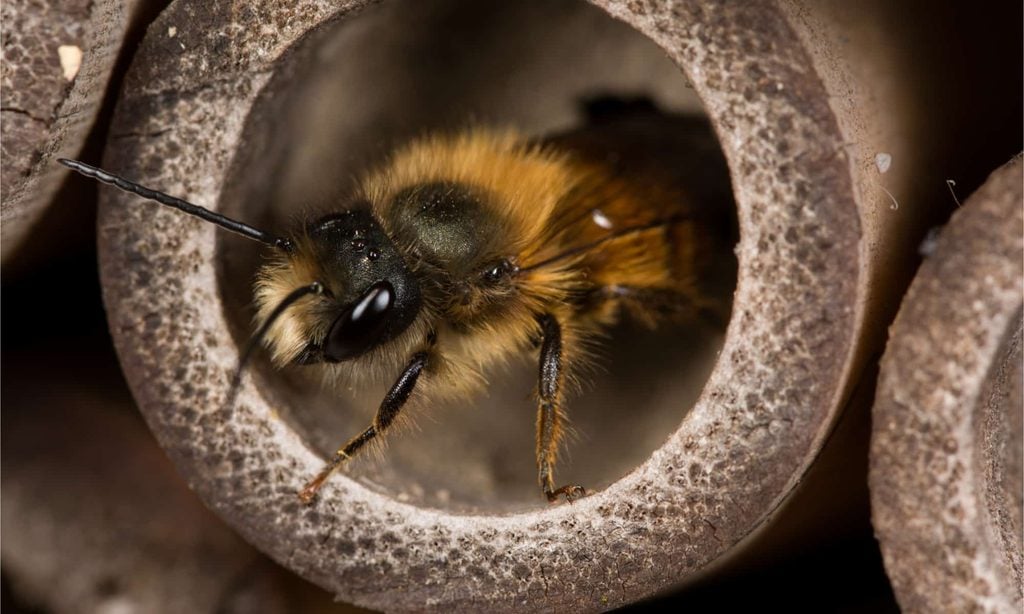
Many species use existing holes because they don’t actually excavate the holes themselves. Instead, females collect mud and use it to divide the tunnel into individual chambers. Inside each chamber goes pollen, nectar and an egg. Then she puts up another mud wall.
Tiny bee drywall.
Oregon’s native blue orchard mason bee, Osmia lignaria, is especially valuable because it’s active early in spring and is an excellent pollinator of fruit trees including apples, cherries and pears. Mason bees are also notably nonaggressive, generally stinging only if they’re handled roughly or trapped against the body.
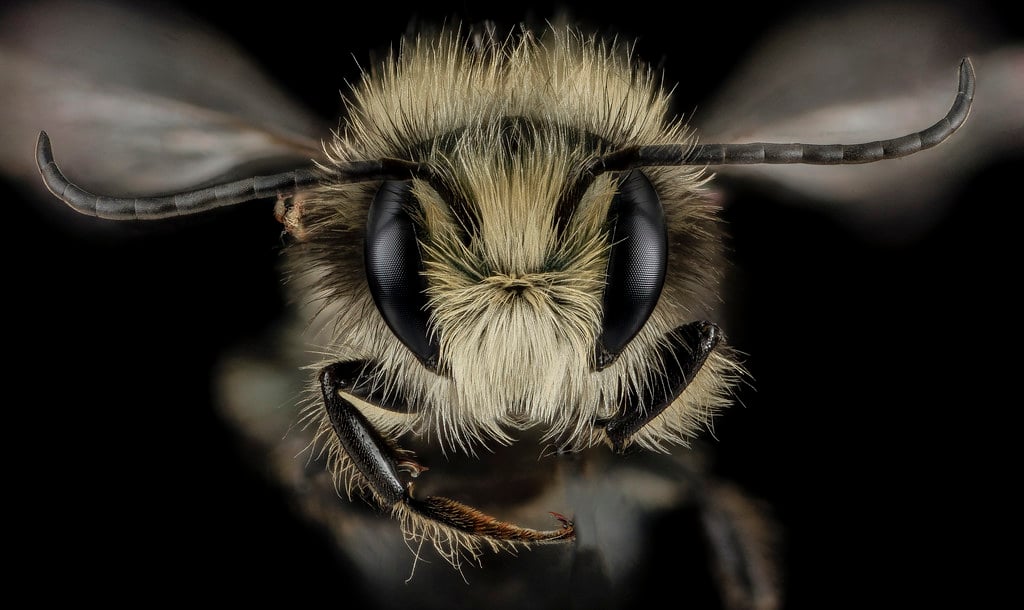
And they’re not necessarily yellow or stripey at all.
Many mason bees are gorgeous metallic blue, greenish or nearly black.
Basically tiny flying gemstones with jobs.
The One Cutting Perfect Circles Out of Your Roses: Leafcutter Bees
Scientific group: Megachile
Unofficial classification: Craft bee
Friendliness: Chill
Crime: Stealing tiny pieces of your hydrangea
You’ve probably seen this before.
A rose leaf looks perfectly normal except somebody has removed an almost impossibly neat circle from the edge.
You inspect it.
No caterpillar.
No deer.
No explanation.
Enter the leafcutter bee.
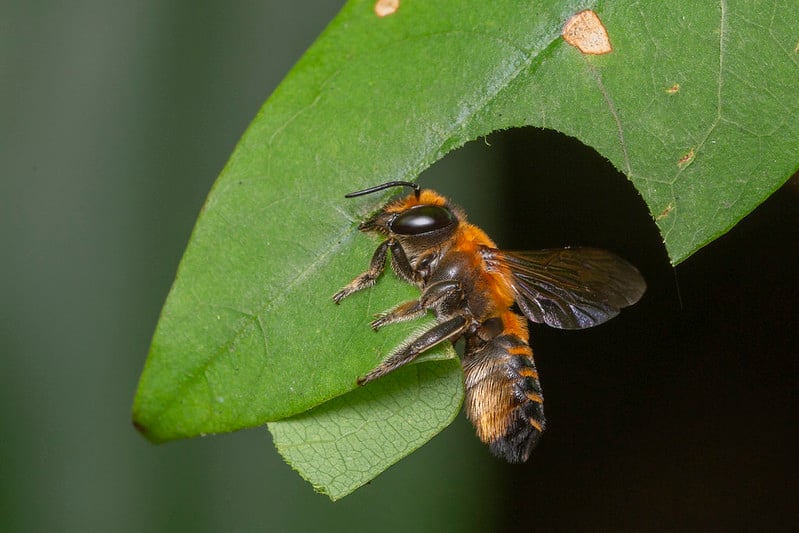
Leafcutter bees use pieces of leaves to construct nest cells. Unlike a caterpillar chewing randomly through your landscaping, the female leafcutter neatly slices off a section, rolls it up and flies away carrying it beneath her body like she just left Joann Fabric with supplies for a craft project.
Most leafcutters are solitary and roughly honey-bee sized. They’re efficient pollinators and generally aren’t aggressive.
So if you find perfect little half-moons carved from the leaves in your garden, don’t panic.
You’re probably providing building materials.
The Metallic Green One: Sweat Bees
Scientific family: Halictidae
Unofficial classification: Flying emerald
Friendliness: Mostly chill
Why is it called that?: Unfortunately, exactly what you think
Here’s where the entire “bees are yellow and black” concept falls apart.
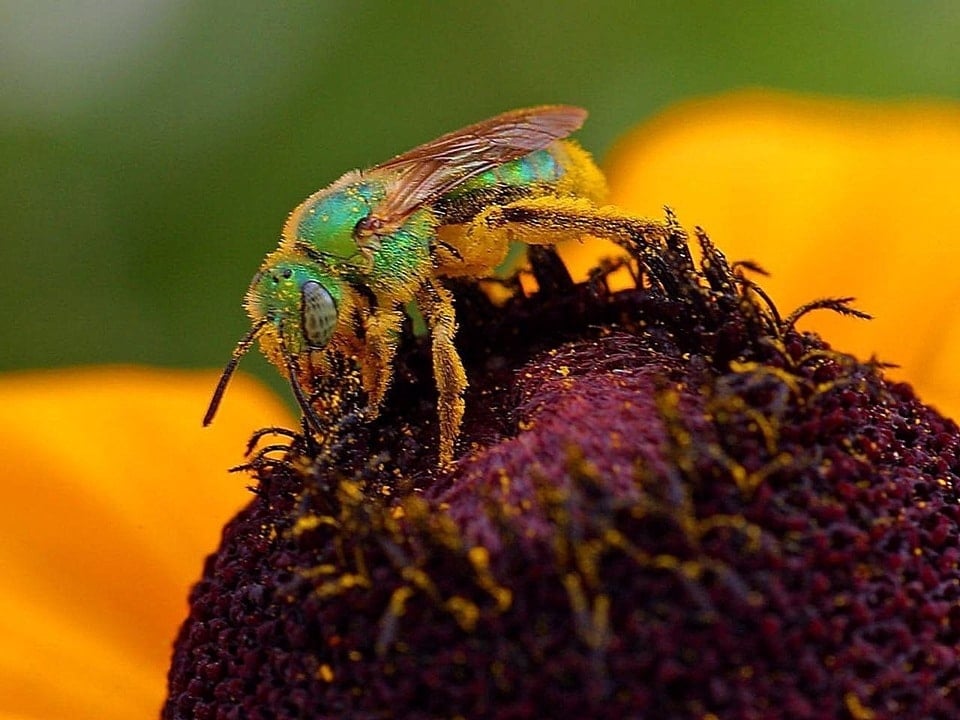
Some sweat bees look like somebody dipped a bee in metallic automotive paint.
Brilliant green. Blue-green. Sometimes even purplish.
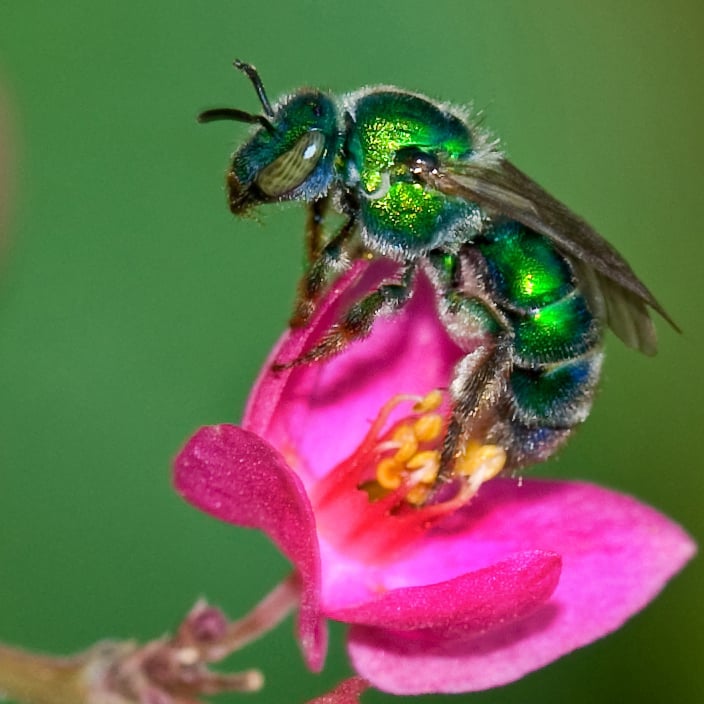
Species of Agapostemon, for example, can display spectacular emerald coloration, and they’re found right here in Oregon. One species documented by OSU, Agapostemon texanus, ranges from metallic green to blue or purple.
They’re called sweat bees because some members of this family are attracted to human perspiration and the salts it contains.
Nothing destroys the magical feeling of discovering a shimmering emerald pollinator quite like learning:
“Oh. It wants my sweat.”
Still cool.
Slightly less romantic.
The Tiny One You Didn’t Even Realize Was a Bee
Scientific possibilities: Many
Unofficial classification: Bee crumb
Friendliness: You probably won’t even notice it
Oregon’s bee diversity becomes genuinely mind-boggling when you realize how many native bees look absolutely nothing like the cartoon version of a bee.
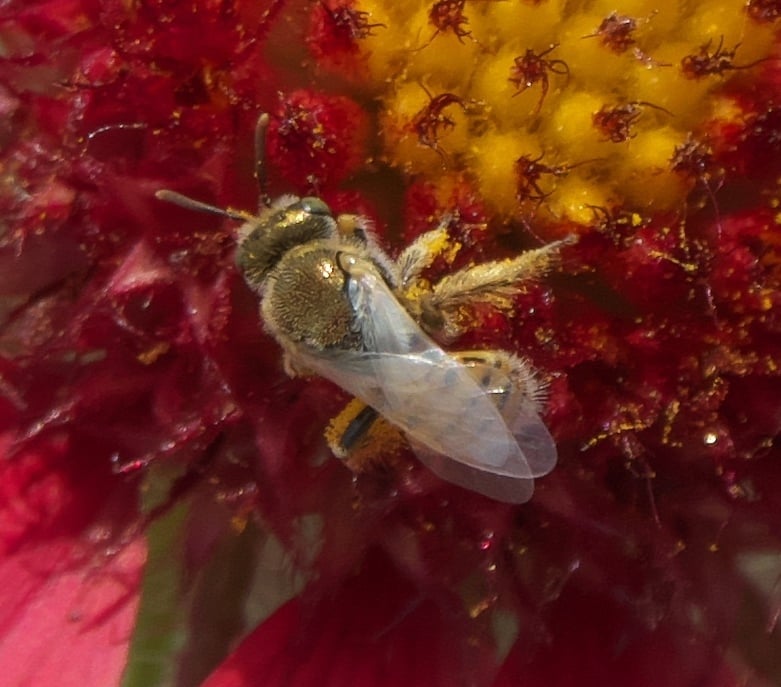
Some are tiny.
Really tiny.
The genus Perdita, for example, includes diminutive native bees, many of which specialize on certain flowers or groups of flowers. OSU notes that some Oregon bees are small enough to be mistaken for gnats.
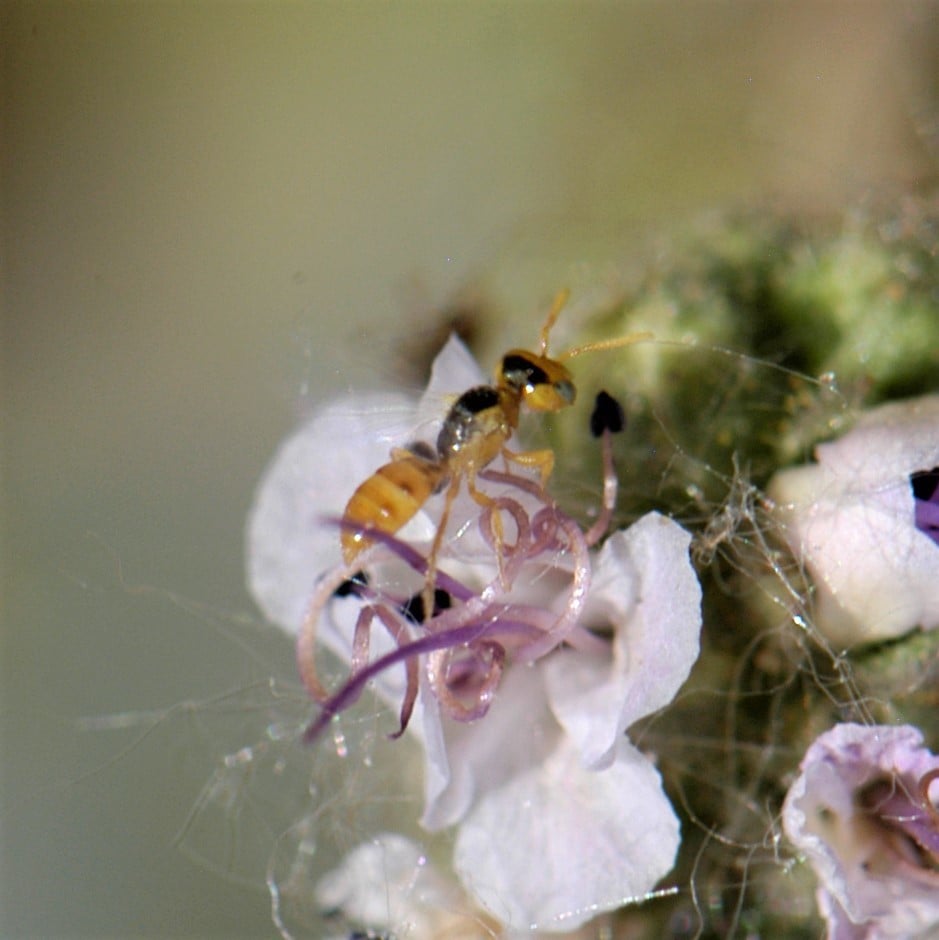
This means you may have watched native bees pollinating flowers in your own yard for years without realizing you were looking at bees.
You’ve been surrounded.
They’ve simply chosen not to make a big thing about it.
The One Digging Holes in the Ground: Mining Bees
Scientific group: Often Andrena
Unofficial classification: Dirt bee
Friendliness: Generally peaceful
HOA approval: Pending
See several little holes appearing in bare soil with bees flying around them?
Before declaring that your backyard has been occupied by a hostile insect nation, take a closer look.
Many native bees nest underground.
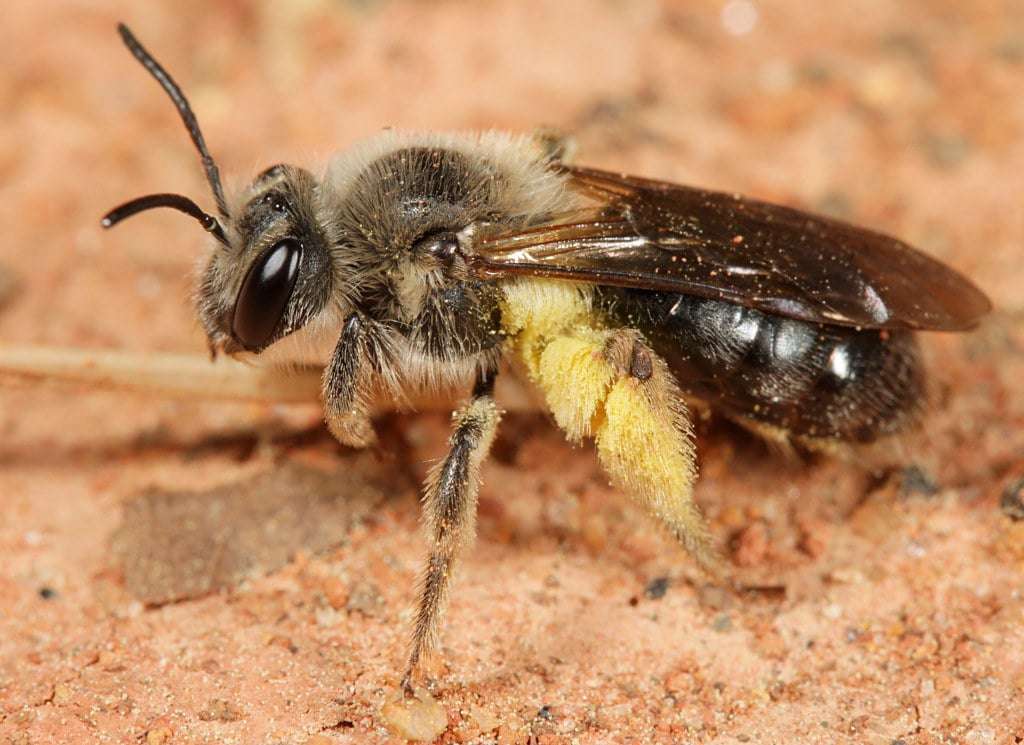
Mining bees, including species in the large genus Andrena, usually live solitary lives, although many females may nest close together when conditions are good. In spring they can appear in surprisingly large numbers around flowering fruit trees while gathering nectar and pollen and looking for mates.
It can look alarming.
It usually isn’t.
Think less “swarm preparing an attack” and more “suburban development where every bee owns its own townhouse.”
In fact, most of Oregon’s wild bee species don’t live in traditional hives at all. Many nest underground, a fact worth remembering before covering every square inch of your yard with landscape fabric, gravel and concrete.
The Regular Bee: European Honey Bees
Scientific name: Apis mellifera
Unofficial classification: The one that makes the delicious liquid gold
Friendliness: I’m busy. No touchy.
Native to Oregon: Nope
This is the bee everybody recognizes.
Golden-brown body. Dark bands. Lives in enormous colonies. Produces honey. Has an elaborate society involving workers, drones and a queen who has absolutely no time for your nonsense.
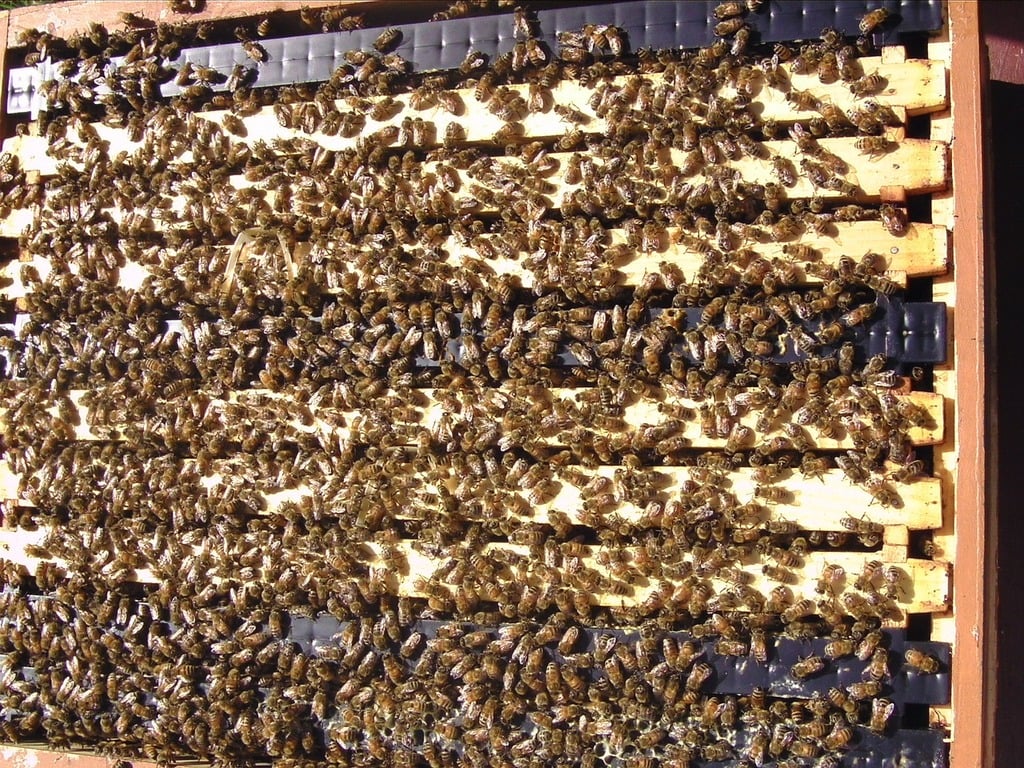
Here’s the twist.
Honey bees aren’t native to Oregon or North America. They’re domesticated livestock originally brought here from Europe.
They’re tremendously important agricultural pollinators, of course, but Oregon’s wild pollinator world existed long before honey bees arrived. Hundreds of native species continue doing essential work in forests, meadows, sagebrush country, farms, gardens and backyards.
So honey bees deserve appreciation.
They just shouldn’t get credit for being the only bees in town.
The Bee That Is Basically a Freeloading Supervillain: Cuckoo Bees
Scientific classification: Multiple groups
Unofficial classification: Tiny criminal mastermind
Work ethic: Questionable
Some bees gather pollen.
Some construct elaborate nests.
Some spend days hauling mud or perfectly cut leaves around.
And then there are cuckoo bees.
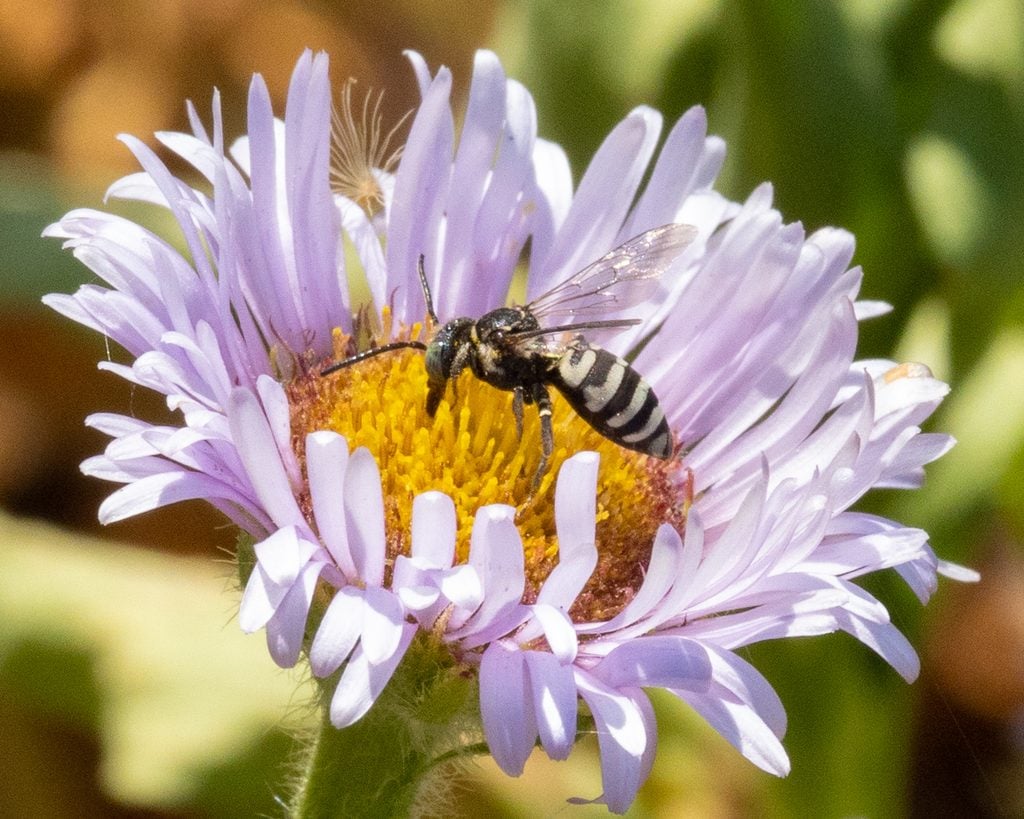
They sneak into the nests of other bees and lay their eggs there, leaving somebody else’s carefully gathered food provisions for their own offspring to eat.
It’s essentially brood parasitism, similar in concept to cuckoo birds.
OSU estimates that roughly one-fifth of Oregon’s bee species are cuckoo bees that parasitize other bees rather than collecting pollen themselves.
Nature is beautiful.
Nature is inspiring.
Nature also contains bees whose entire reproductive strategy is, “Nice nursery. Mine now.”
The Angry Picnic One: Yellowjackets
Scientific classification: Wasps
Unofficial classification: Flying hotdog pirate
Bee?: NO
Friendliness around your soda: Absolutely not
This is perhaps the most important identification lesson in the entire guide.
Not every yellow stripey thing is a bee.
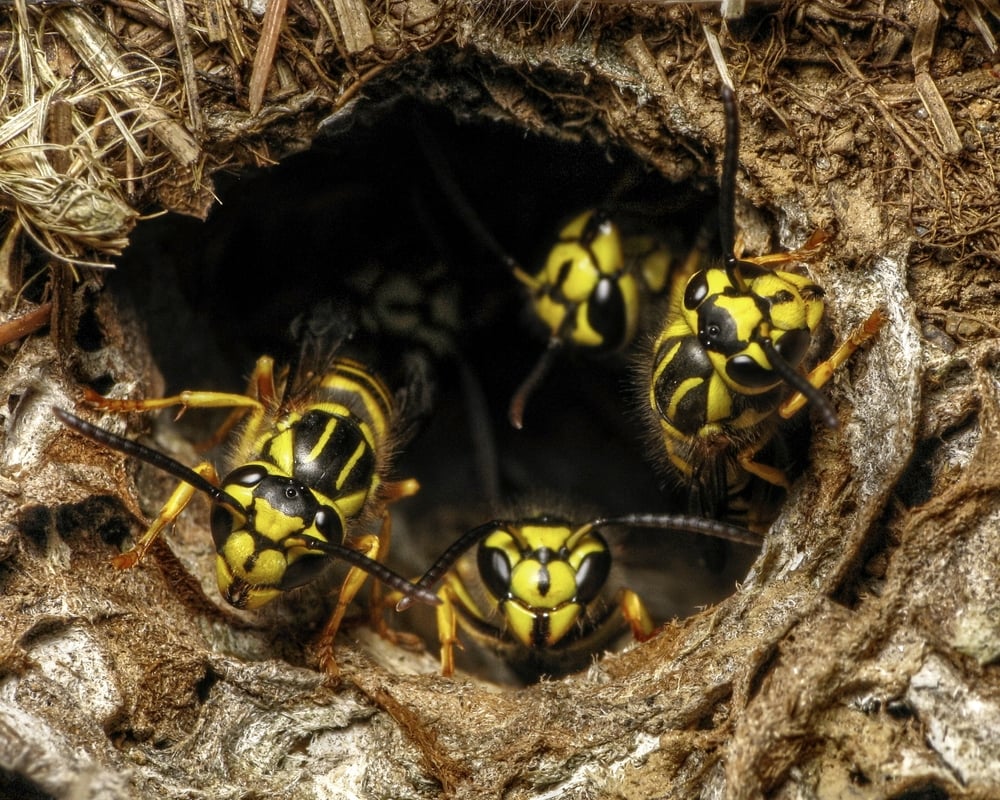
Yellowjackets are wasps.
They’re the sleek, relatively hairless yellow-and-black insects that suddenly become extremely interested in whatever you’re eating outside in August.
Burger?
Yellowjacket.
Watermelon?
Yellowjacket.
Can of soda?
Congratulations, you’ve apparently opened a yellowjacket nightclub.
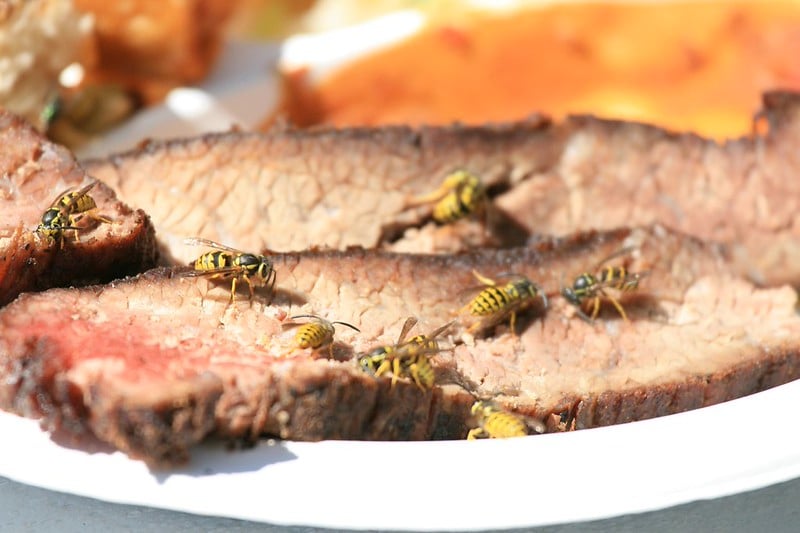
Unlike bees, which primarily gather pollen and nectar, yellowjackets are predators and scavengers. They’re enormously useful in ecosystems because they eat other insects, but that knowledge becomes somewhat difficult to appreciate when one is crawling into your root beer or aggressively trying to steal your lunchmeat.
Give them space, keep food covered, and never deliberately disturb a nest.
The Giant Black-and-White “Hornet”: Bald-Faced Hornet
Scientific name: Dolichovespula maculata
Unofficial classification: Goth yellowjacket
Actual hornet?: Nope
These things look intimidating.
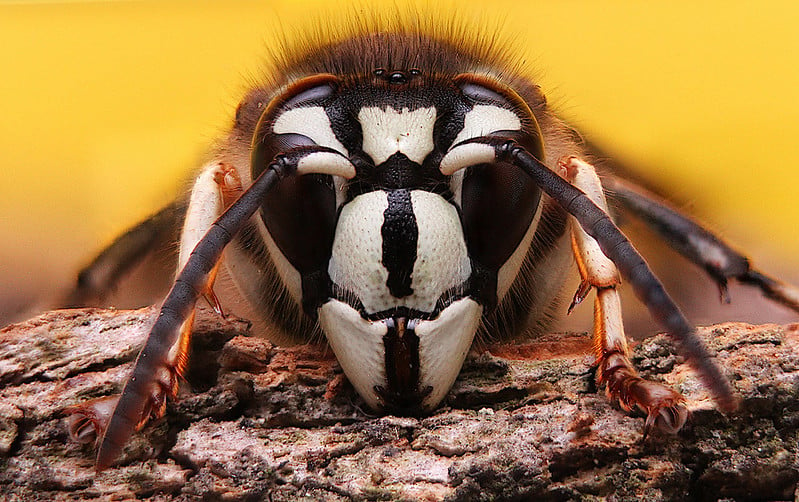
Large.
Black.
White markings.
Paper nests hanging dramatically from trees.
Surely this must be a hornet.
Nope.
The bald-faced hornet is actually a type of yellowjacket.
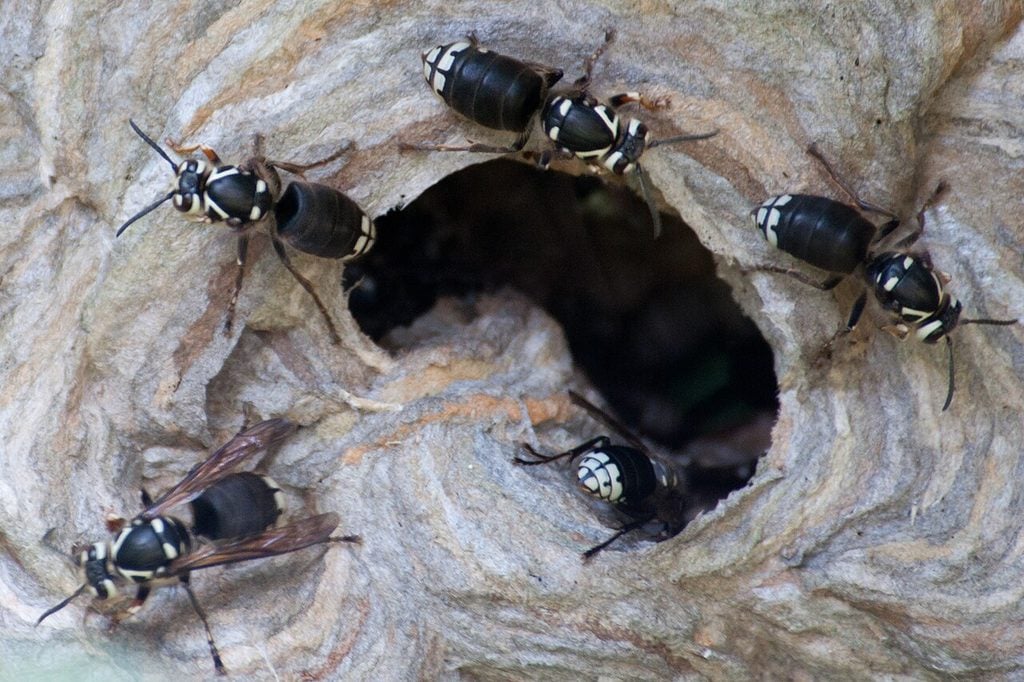
Even government identification materials have to point this out because apparently insect naming conventions were designed specifically to make the public lose confidence in language.
They’re beneficial predators but can (this can’t be stressed enough) vigorously and violently defend their nests, so this is one flying stripey thing best appreciated from a respectable distance.
The Murder Hornet: Northern Giant Hornet
Scientific name: Vespa mandarinia
Unofficial classification: Absolutely not a bumblebee
Currently terrorizing Oregon?: No
And now we arrive at the final boss.
The northern giant hornet, briefly branded by headlines everywhere as the “murder hornet,” is the largest hornet species in the world. It can approach two inches long, has an enormous orange head and can destroy honey bee colonies with startling speed.
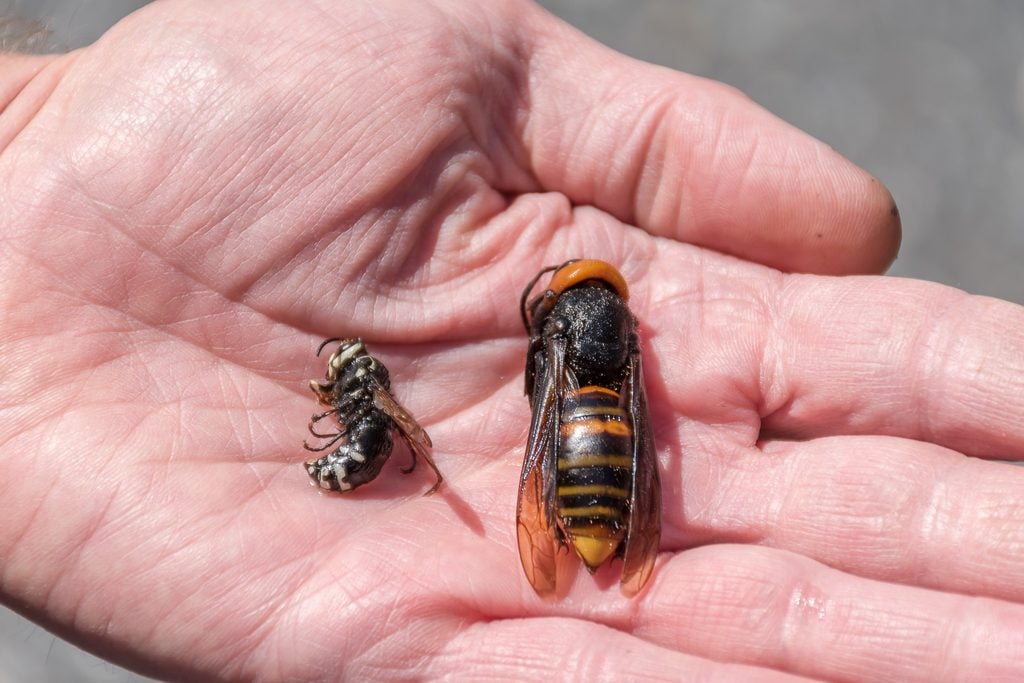
It was detected in northwestern Washington beginning in 2019, triggering a remarkable eradication campaign involving trapping, tracking and even tiny radio transmitters attached to captured hornets.
And here’s the important 2026 update:
They’re gone.
After three consecutive years without a confirmed detection, Washington and federal agriculture officials declared the northern giant hornet eradicated from Washington and the entire United States in December 2024. Four nests had been located and destroyed during the eradication program.
So if an enormous insect flies past you in Oregon, please don’t immediately announce on Facebook that the murder hornets have returned.
There are plenty of large native wasps capable of causing unnecessary neighborhood panic all by themselves.
So What Flying Stripey Thing Are You Looking At?
You could spend years learning Oregon’s native bees and still encounter species you’ve never seen before. That’s part of what makes them fascinating.
The Oregon Bee Atlas, coordinated through Oregon State University Extension, has enlisted trained volunteers to document wild bees across the state, building one of the most comprehensive modern surveys of bee diversity anywhere in the country. Researchers have documented bees that are enormous and fuzzy, others that shimmer metallic green, and still others so ridiculously small that most of us have probably looked directly at one and thought, “Huh. Weird little fly.”
And that’s probably the biggest takeaway.
A bee doesn’t have to be yellow.
It doesn’t have to have stripes.
It doesn’t make honey.
It may not live in a hive.
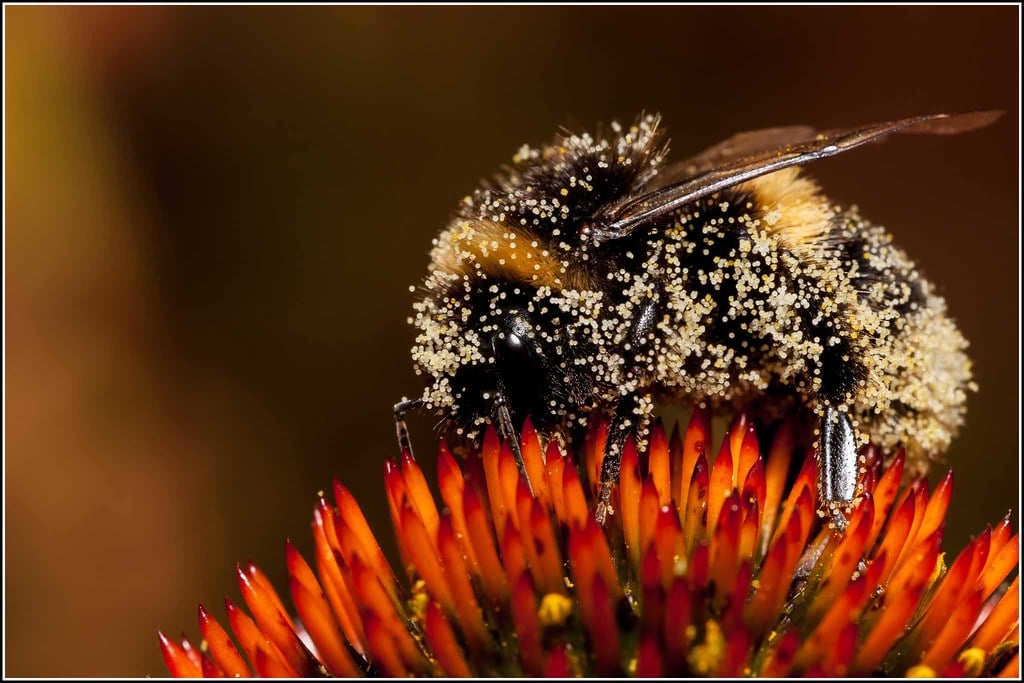
It might live underground, sleep in a flower, build walls out of mud, carry chunks of leaves through the air or quietly raise its babies inside that mysterious little hole in your fence.
The Pacific Northwest is absolutely packed with these tiny creatures, doing enormously important work while most of us barely notice them.
So the next time something goes BZZZZZZ past your head, resist the immediate urge to run.
Take a look. Is it chunky and fuzzy? Tiny and metallic? Carrying part of your rose bush? Trying to steal your hamburger?
Well then, congratulations.
You’re already halfway to becoming an entomologist.
Probably.