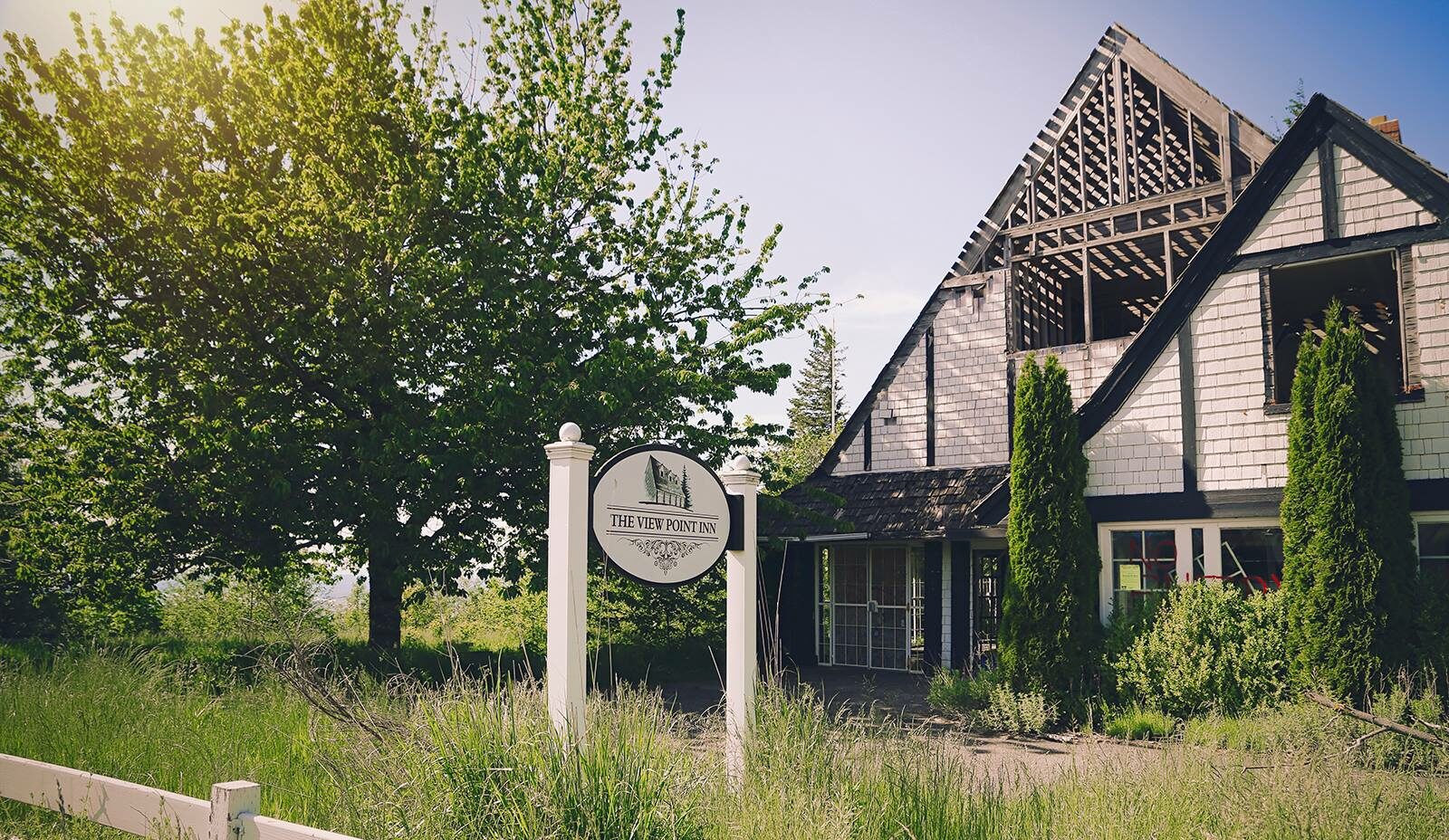

Oregon didn’t wake up one morning and decide to abandon people with serious mental illness. The truth is harder than that.
For generations, this state locked thousands of people inside sprawling institutions. Some residents received care they couldn’t find anywhere else. Others endured overcrowding, forced sterilization, physical restraints, isolation and treatments that would be unthinkable today.
Then Oregon began tearing that system down.
The promise was that people would leave enormous hospitals and receive treatment closer to home. They’d live in ordinary neighborhoods, keep their dignity and remain connected to families and communities. It was a humane idea, and for many people it worked.
But Oregon never fully built the system that was supposed to make it work for everyone.
Decades later, people in profound psychiatric crisis are still cycling between sidewalks, shelters, emergency rooms, county jails and the Oregon State Hospital. Families are still told there’s no bed. Police officers are still sent to situations that should’ve reached a medical professional long before they became emergencies.
This isn’t a simple story about closing hospitals. It’s the story of what Oregon promised to build after closing them—and what never completely arrived.
What the historical record shows
- Oregon’s public psychiatric-hospital population fell from 5,065 to 1,263 in just 16 years.
- Federal investigators warned in 1976 that community treatment, housing and follow-up weren’t keeping pace.
- Today, many of Oregon’s sickest residents reach intensive state care only after entering the criminal-justice system.
When the hospital was a world of its own
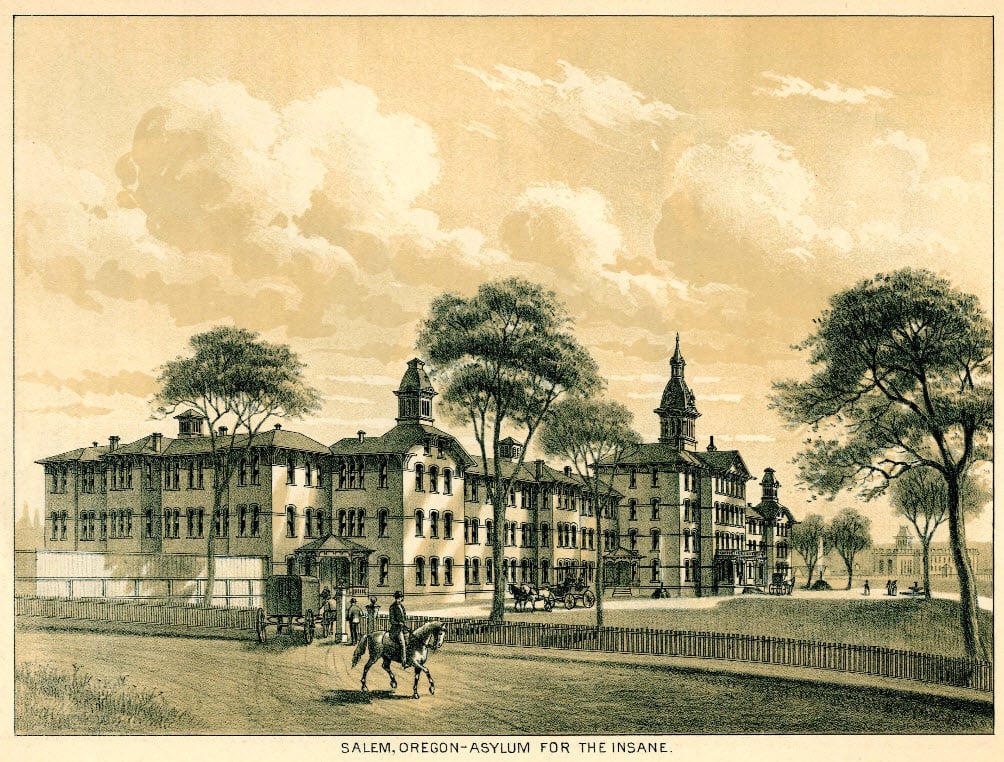
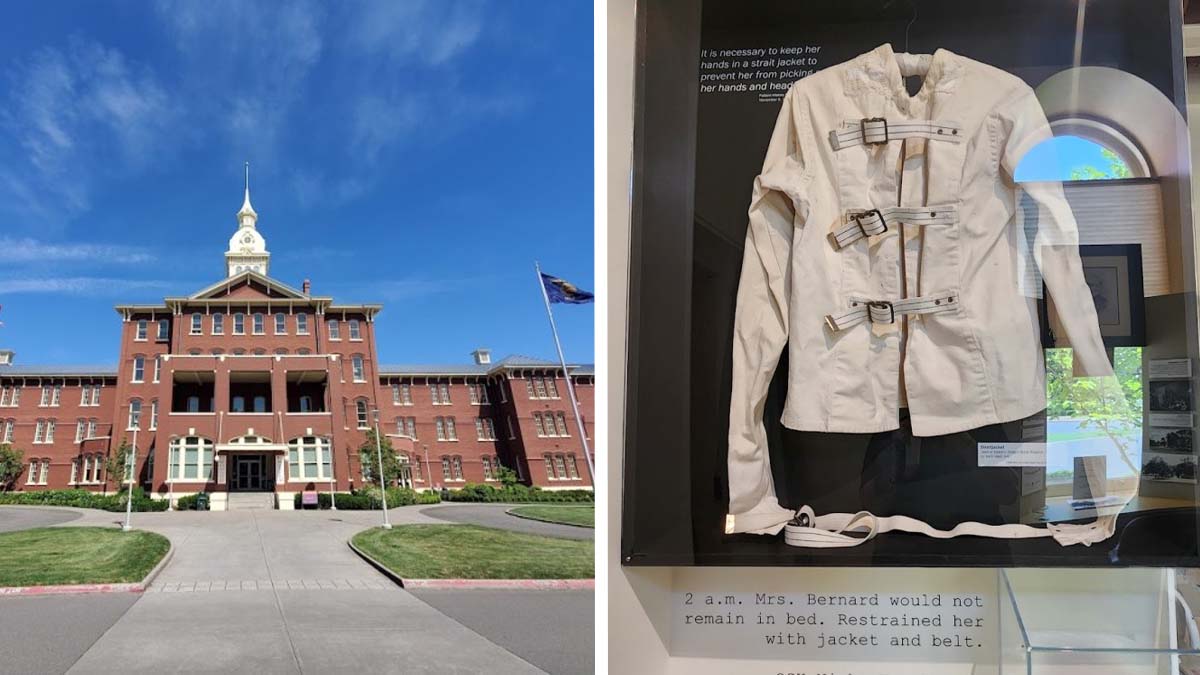
Oregon State Hospital opened in Salem in 1883 as the Oregon State Insane Asylum. It wasn’t simply a hospital in the modern sense. It was a nearly self-contained world, with wards, kitchens, workshops, gardens and farms. Some of that history is preserved today inside the campus’s OSH Museum of Mental Health.
People arrived for reasons that ranged from severe psychosis to epilepsy, dementia, addiction, intellectual disability and conditions medicine barely understood. Some stayed for months. Others remained for decades. A 1961 state report found that nearly one in five Oregon State Hospital patients had already been there for more than 25 years, according to the Oregon Judicial Department’s 2024 history of the commitment system.
By the late 1950s, Oregon’s public psychiatric hospitals held more than 5,000 people on an average day. Oregon State Hospital alone reached 3,545 patients in 1957–58.
Those numbers can sound comforting now, especially when Oregon families are desperate to find an open treatment bed. But a bed inside an institution wasn’t automatically care, safety or dignity.
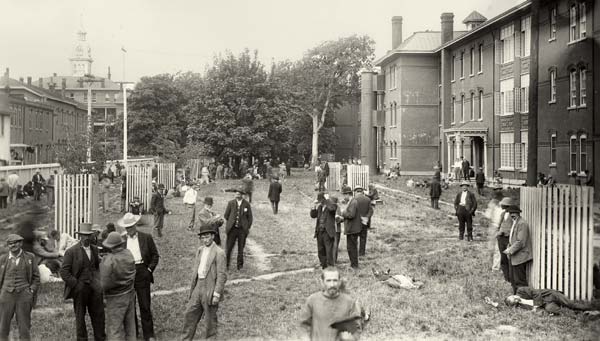
Overcrowding brought disease and neglect. In 1942, a kitchen mistake poisoned hundreds of patients and killed 47. Lobotomies, hydrotherapy, shock treatments and heavy restraints became part of the hospital’s history. Oregon’s eugenics program gave the state power over the reproductive lives of people it labeled unfit.
That history matters because it explains why so many patients, families, doctors and civil-rights advocates demanded something different.
The idea behind deinstitutionalization wasn’t cruel
Beginning in the 1950s, new psychiatric medications made it possible for some people to live outside locked hospitals. At the same time, the public was learning more about conditions inside institutions. Courts and legislatures began recognizing that a diagnosis shouldn’t erase a person’s basic rights.
Oregon followed a national movement toward deinstitutionalization. The goal wasn’t supposed to be dumping people on a sidewalk. It was replacing isolated, lifelong confinement with local clinics, smaller residential homes, hospital psychiatric units, employment assistance and ongoing support.
Oregon’s own planning board called comprehensive community mental-health services the state’s most important mental-health goal. It recommended halfway houses, foster homes, psychiatric units in ordinary hospitals and better coordination among agencies.
On paper, it sounded like a future almost everyone could support.
Then the hospital populations started falling much faster than the new system grew.
Oregon’s psychiatric hospital population collapsed in 16 years
Average daily patients, 1957–58 through 1973–74. Key values are labeled on the graph, and every yearly figure appears in the source-data table below.
View the source data
| Year | Oregon State Hospital | Statewide total |
|---|---|---|
| 1957–58 | 3,545 | 5,065 |
| 1958–59 | 3,541 | 5,040 |
| 1959–60 | 3,389 | 4,975 |
| 1960–61 | 3,105 | 4,710 |
| 1961–62 | 2,724 | 4,454 |
| 1962–63 | 2,449 | 4,063 |
| 1963–64 | 2,044 | 3,515 |
| 1964–65 | 1,824 | 3,078 |
| 1965–66 | 1,640 | 2,694 |
| 1966–67 | 1,518 | 2,484 |
| 1967–68 | 1,375 | 2,293 |
| 1968–69 | 1,236 | 2,130 |
| 1969–70 | 1,090 | 1,945 |
| 1970–71 | 897 | 1,728 |
| 1971–72 | 758 | 1,514 |
| 1972–73 | 702 | 1,424 |
| 1973–74 | 589 | 1,263 |
Source: Appendix I, Deinstitutionalization of the Mentally Ill in Oregon, U.S. General Accounting Office, 1976.
Where Oregon stands now
Today’s numbers can’t honestly be added to the historical line above. That graph measures the average number of patients living in Oregon’s psychiatric hospitals. Modern reports use several different measures—including operating capacity, licensed residential beds and estimates of unmet need—so they’re shown separately here.
Current Oregon State Hospital capacity: 558 people in Salem and 145 in Junction City.
Additional inpatient psychiatric beds Oregon was estimated to need in 2024.
Additional secure residential treatment beds Oregon was estimated to need in 2024.
Oregon also reported in June 2026 that 1,067 new licensed behavioral-health residential beds had opened since 2023, with another 593 planned. That’s real expansion, but those beds span mental-health and addiction treatment and aren’t the same thing as the historic state-hospital population.
Sources: Oregon State Hospital; Oregon Health Authority’s 2024 Behavioral Health Residential+ Facility Study; and the state’s June 2026 capacity announcement.
Oregon knew the safety net was failing
Here’s the part that’s hardest to dismiss: officials didn’t need decades of hindsight to see the problem.
In 1976, the U.S. General Accounting Office released a detailed investigation of Oregon’s deinstitutionalization effort. Its findings read less like ancient history and more like a warning that was never resolved.
Investigators found that only a few Oregon communities had a sound support system. Placements were made based on “what is available,” not necessarily what a person needed. Community clinics said they couldn’t handle their follow-up responsibilities. Fewer than half of Oregon counties offered emergency services, residential care or local inpatient treatment.
The state’s own human-resources director told investigators that hospital populations had fallen faster than communities could develop services.
The report didn’t stop at budgets and policy. Investigators traced 64 people released from Dammasch State Hospital into Multnomah and Washington counties. Eight had already returned to the hospital. Of 49 people referred to mental-health clinics, 13 weren’t receiving services. Among the 36 who were receiving clinic care, most were getting medication follow-up. Only one was listed as receiving a counseling program.
Some former patients landed in nursing homes, room-and-board houses and hotels. At one hotel visited by investigators, 22 of the 100 residents were former mental-hospital patients.
That doesn’t prove every discharged patient became homeless. It proves something more specific: Oregon was moving people out while the agencies expected to catch them were already saying they didn’t have the time, staff, housing or treatment capacity to do it.
Fairview shows why going backward isn’t the answer
Any honest discussion of institutional care in Oregon has to include Fairview.
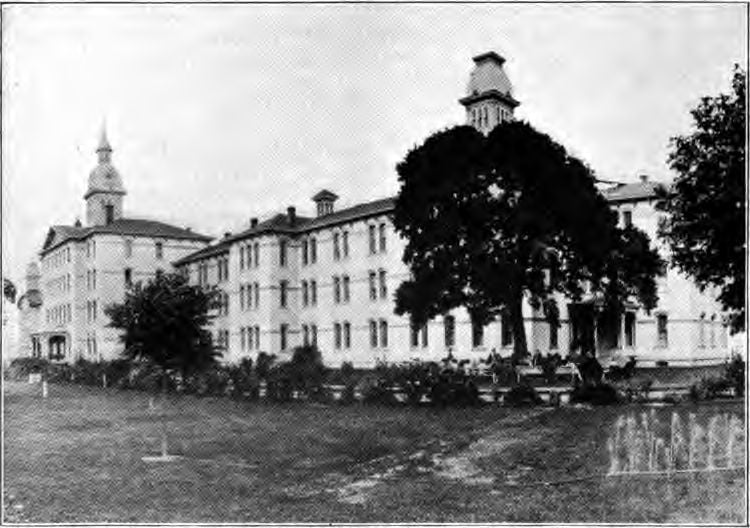
Fairview Training Center wasn’t a psychiatric hospital. It primarily housed people with intellectual and developmental disabilities, so its residents shouldn’t be folded into mental-health statistics as if they were the same population. But Fairview exposes what can happen when vulnerable people disappear behind institutional walls and the state holds nearly unlimited control over their lives.
The Salem facility opened in 1908 under a name that’s painful even to read today: the State Institution for the Feeble-Minded. Former residents later described beatings, isolation, scalding water, leather restraints and lives stripped of basic choice. More than 2,600 Oregonians were forcibly sterilized under the state’s eugenics program.

By 1985, a U.S. Department of Justice investigation found life-threatening conditions at Fairview. Federal litigation pushed Oregon toward reforms and community placements. The last resident left on February 24, 2000.
Closing Fairview was an overdue civil-rights victory. It’s also a reminder that the answer to today’s crisis can’t be rebuilding the old asylum system, stripping people of their rights or warehousing them where the public can’t see.
But ending abusive institutionalization and providing adequate care are two different jobs. Oregon finished the first. It has spent decades struggling with the second.
A timeline of Oregon’s unfinished transition
When the doorway to treatment became a courtroom
Oregon State Hospital still exists, but its role has changed dramatically.
Today, most of its patients aren’t people who voluntarily sought long-term psychiatric care. They’re “aid and assist” patients: defendants a judge has found unable to participate in their own defense because of mental illness. They’re sent to the hospital for competency restoration so their criminal cases can continue.
In her 2025 State of the State address, Gov. Tina Kotek said nearly three out of four aid-and-assist patients had been homeless or living in a shelter when arrested. Six out of ten had schizophrenia or another psychotic disorder.
Think about what that means. For many of Oregon’s sickest residents, the clearest path to intensive state psychiatric care now begins with an arrest.
That’s not a replacement for the old system. It’s a different system of last resort, with police, public defenders, prosecutors, judges and jail staff standing where community treatment should’ve been available earlier.
A 2023 Oregon Health Authority study described providers working under the constraints of a broken system after deinstitutionalization and the missing investment in community mental health. Researchers found that roughly one-quarter to one-third of people moving through competency restoration needed substantial support afterward just to meet basic needs and obtain a safe place to live.
The study also found something astonishing this far into the crisis: Oregon has no unified data system following people across hospital and community settings.
In other words, even now, the state can’t fully see where people go.
Mental illness isn’t the whole homelessness story—but it’s part of it
We need to be careful here. Not every unhoused person has a serious mental illness. Not every person with mental illness is homeless or dangerous. Most aren’t.
Oregon’s shortage of affordable housing remains the largest structural force behind the broader homelessness crisis. As we’ve reported in our broader examination of homelessness in Oregon, treatment gaps exist alongside soaring housing costs and a shortage of permanent places to live. A psychiatric diagnosis doesn’t make rent cheaper, build an apartment or protect someone from eviction.
But it’s equally dishonest to look at people experiencing untreated psychosis in public and pretend the treatment system has nothing to do with what we’re seeing.
Oregon’s own housing plan has estimated that serious mental illness affects about 5 percent of adults but roughly 20 percent of people experiencing homelessness. Those numbers aren’t interchangeable with the entire unhoused population. They do show that people with the most serious psychiatric conditions are dramatically overrepresented.
And housing without treatment won’t meet every person’s needs any more than treatment without housing will. Someone leaving a hospital may need medication management, a caseworker, transportation, income support, help rebuilding daily routines and a stable home where recovery is possible. Remove one piece and the rest can collapse.
Oregon is adding beds, but the gap is still real
A 2024 state-commissioned study estimated Oregon needed 486 more inpatient psychiatric beds and 198 additional secure residential treatment beds. The Columbia Gorge and Eastern Oregon regions had no inpatient psychiatric beds at all when researchers conducted their analysis.
The story isn’t frozen in failure. Oregon has begun making major investments in residential mental-health and addiction treatment. In June 2026, the governor’s office said more than 1,000 new licensed residential beds had opened since 2023, with hundreds more planned.
That progress deserves to be acknowledged. So does the scale of what came before it. The same announcement described a system weakened by decades of underinvestment, workforce shortages and fragmented care.
Beds alone won’t fix everything. Oregon needs trained people to staff them. It needs secure residential treatment for those who require close supervision, lower-level homes for people stepping down from hospitals, crisis services that work outside Portland, and permanent supportive housing that doesn’t vanish when a grant ends.
It also needs a civil-commitment process that can protect both liberty and life. That won’t be solved by pretending forced treatment is always compassionate or always cruel. Severe mental illness can rob a person of the ability to recognize that they’re sick. At the same time, Oregon’s institutional history shows exactly why government power over vulnerable people requires oversight, legal protection and public scrutiny.
The choice was never asylum or abandonment
Oregon was right to confront the cruelty inside its institutions. Fairview should’ve closed. Patients in psychiatric hospitals deserved rights, dignity and a life beyond locked wards.
But freedom without treatment, housing or meaningful support can become another kind of abandonment.
The 1976 investigators saw the gap opening while Oregon’s hospital census was still falling. They found thinly staffed clinics, weak follow-up, inadequate housing and former patients already returning to hospitals. Nearly fifty years later, Oregon researchers are still describing a fragmented system, while people with profound illnesses often reach sustained care only after an arrest.
We don’t need to romanticize the past to admit the present isn’t working.
The real question isn’t whether Oregon should reopen the old asylums. It’s whether this state is finally willing to finish the humane system it promised to build when those doors began closing.
Primary sources and further reading: U.S. General Accounting Office, 1976; Oregon Judicial Department, 2024; OHA competency-restoration study, 2023; OHA residential-capacity study, 2024; 2025 State of the State address; Governor’s Office treatment-capacity update, 2026.