Marlene Gabrielsen named John Ackroyd in 1977 but no charges followed
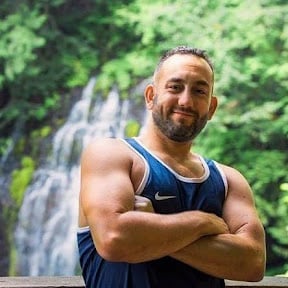
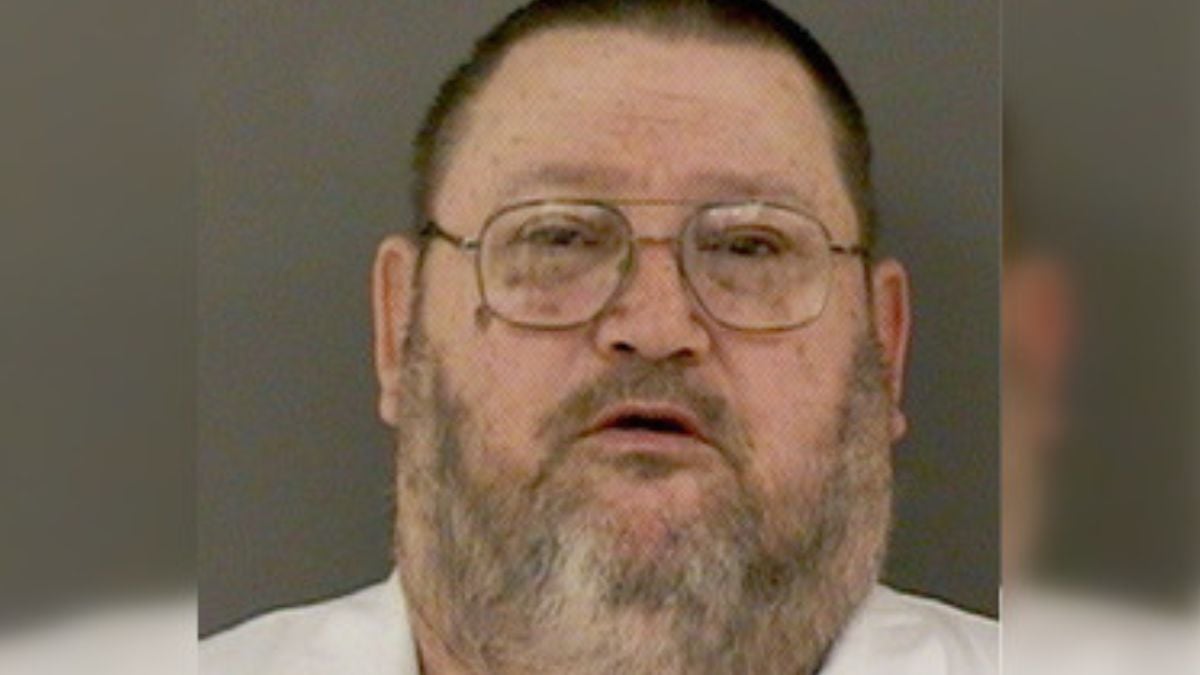
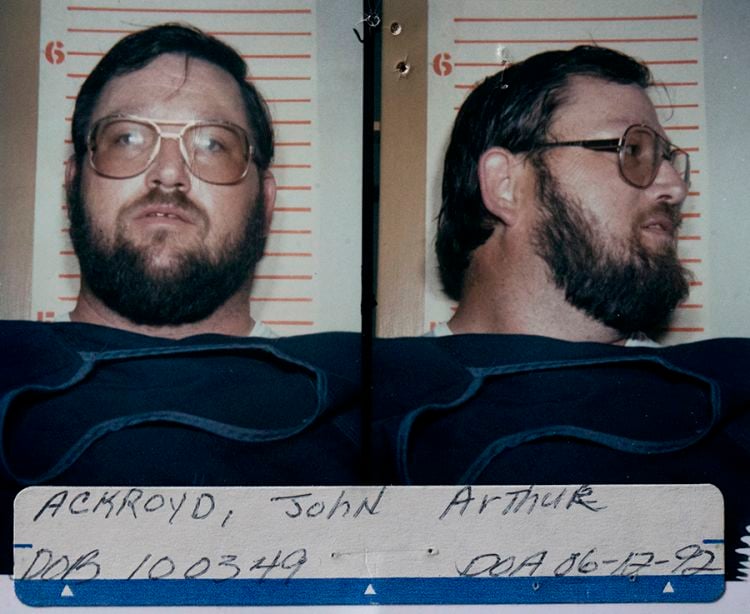
Featured image: John Arthur Ackroyd in an Oregon Department of Corrections photograph. Photo: Oregon Department of Corrections, via We Got This Covered.
When a jury convicted John Arthur Ackroyd of murder in 1993, the verdict answered a question that had followed an Oregon family for nearly fifteen years. Kaye Turner had gone out for a Christmas Eve run near Camp Sherman in 1978 and never returned. Her killer eventually received a life sentence, but the courtroom proceedings could not account for everything investigators suspected about him. Elsewhere along Highway 20, other families were still waiting to learn what had happened to their daughters and sisters.
There was also a woman who had survived an encounter with Ackroyd before Turner disappeared. In 1977, Marlene Gabrielsen reported that he had raped her after offering her a ride home. She identified the man responsible and left police with an opportunity to investigate him. No prosecution followed, a decision that would take on devastating significance as detectives later connected him to other cases.
The story became widely known through The Oregonian/OregonLive’s 2018 investigation, “Ghosts of Highway 20.” Its reporting brought together crimes that had been investigated separately and recovered parts of the court history that the public had never seen. Read together, those records tell a troubling Oregon story about violence, delayed accountability, and the people left to carry the consequences. They also show why a conviction, an investigator’s conclusion, and an unanswered question need to be described carefully.
A familiar-looking man with access to Oregon’s back roads
Ackroyd grew up in Sweet Home, a community whose history and working life were closely tied to timber. He served in the Army as a mechanic before returning to Oregon and taking a job with the state highway department. To someone seeing him around town, his work clothes and outdoor interests would not have looked unusual. Gabrielsen later remembered his resemblance to a man who worked in the woods, but his occupation was highway mechanic rather than logger.
That distinction helps explain the geography of the cases. His job took him along Highway 20, giving him a reason to travel between communities and familiarity with roads leading away from the main route. A maintenance worker’s presence on a rural highway would ordinarily be reassuring, or at least unremarkable. In Ackroyd’s case, the access associated with an ordinary job became part of the larger picture investigators eventually assembled.
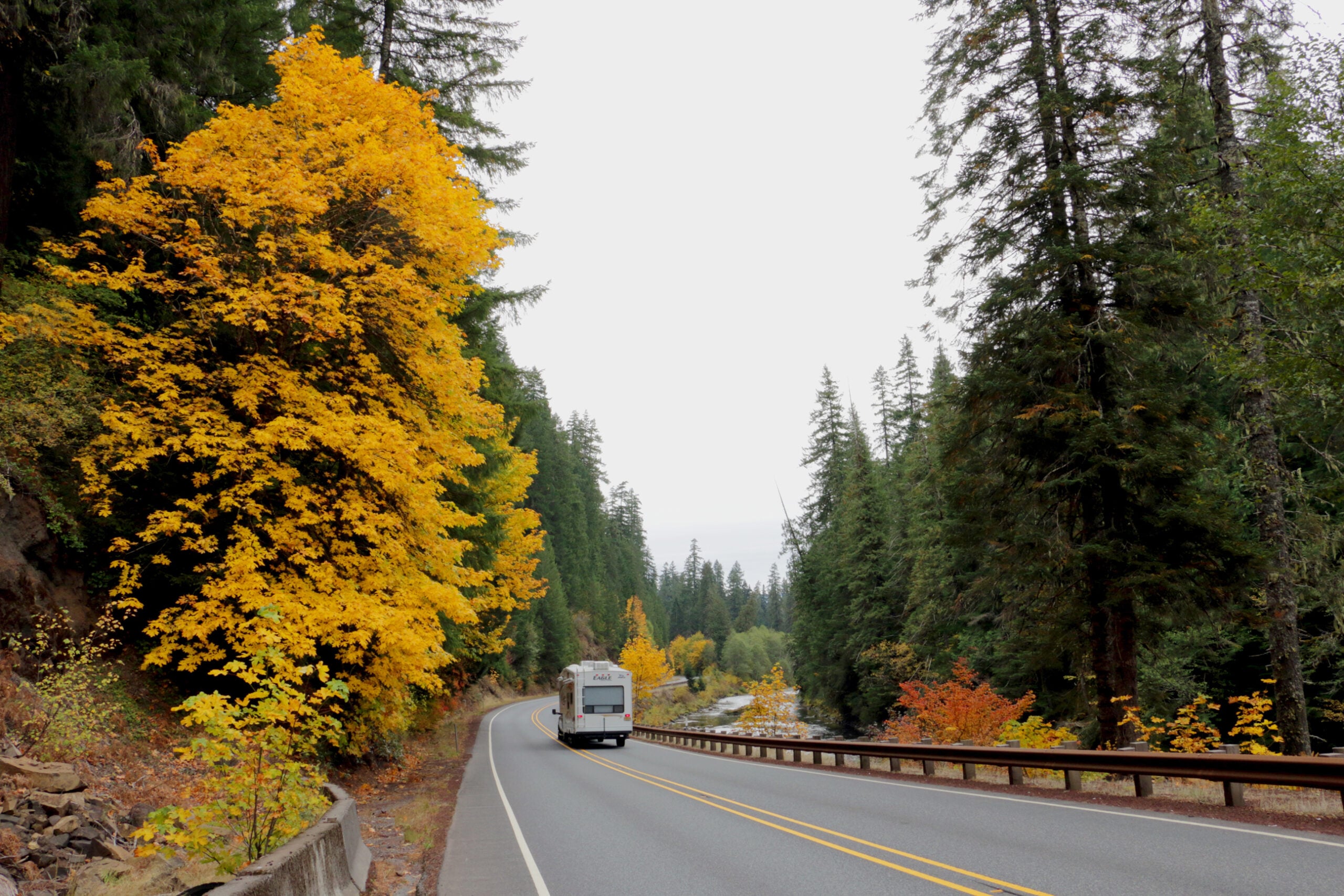
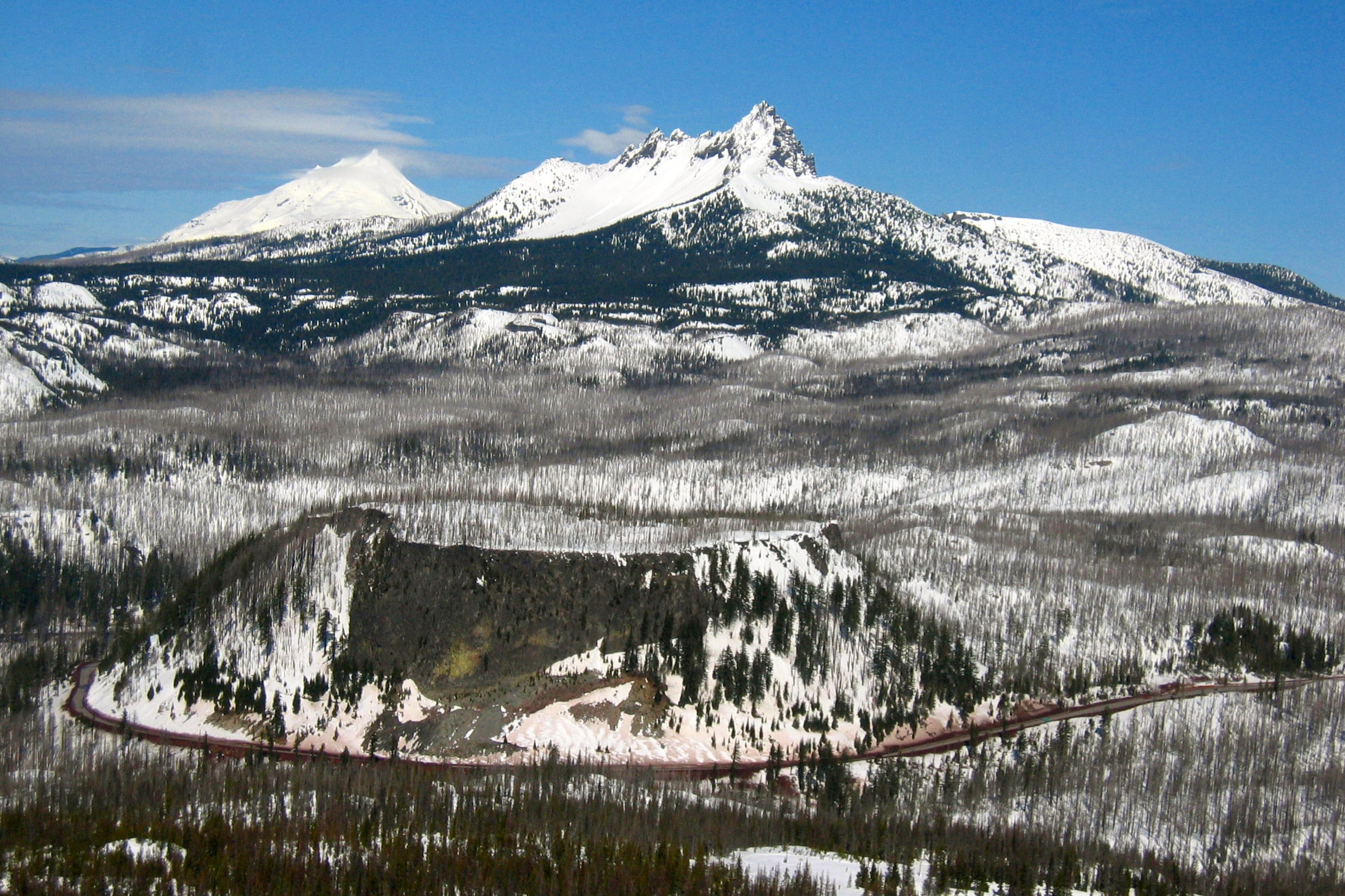
The western part of Highway 20 connects places that can seem like separate worlds on an Oregon road trip: the Cascades, the Willamette Valley, and the coast. Near Camp Sherman, the Metolius basin is a landscape of forest, river, cabins, and campgrounds, as the Forest Service’s watershed analysis describes. Farther west, the highway passes through the timber country associated with Sweet Home and continues toward Newport. The changes in landscape help orient this story, but they should not obscure its central facts: people were harmed, families searched, and investigators struggled to build cases.
The official That Oregon Life store
The Oregon you bring home.
Start the day with Oregon-roasted coffee, then find original gear inspired by the places, stories, and oddities that make this state ours.
Shop Oregon gear

The survivor who gave police his name
Gabrielsen was twenty in 1977 and had a baby daughter at home. She had traveled from Lebanon to the Sisters Rodeo with her husband, then sought a ride home after an argument. Ackroyd offered transportation, and she got into his pickup. According to the account documented by OregonLive, he drove off the highway, pulled her from the truck, and raped her at knifepoint.
She survived by persuading him to take her home. During the trip, she also obtained his telephone number, a detail that could help police identify him. He eventually dropped her at her mother-in-law’s house in Lebanon, where she asked for police to be called. Her account was the report of someone who had just endured violence and was trying to preserve a way to hold her attacker responsible.
The subsequent investigation did not simply lack information. In a first-person account of her reporting for Smith College, journalist Noelle Crombie described records of injuries documented by an emergency-room doctor and damaged clothing that supported Gabrielsen’s account. Ackroyd claimed the encounter had been consensual. Both underwent polygraph examinations, and investigators accepted the conclusion that Gabrielsen was lying while Ackroyd was not.
A polygraph result cannot settle a question of guilt by itself. The National Research Council’s 2003 review of polygraph research explained that the bodily responses measured by the instrument are not exclusive to deception and that accuracy varies with circumstances. The review found that tests concerning a specific event could perform better than chance while remaining far from perfect. That broader scientific context does not reconstruct every decision made in 1977, but it helps explain why a test result should not be treated as a substitute for investigating physical evidence.
For Gabrielsen, the immediate outcome was stark: Ackroyd faced no charges. It is impossible to know exactly how later events would have unfolded if the case had been prosecuted. What can be said is that a woman identified him, reported a violent assault, and was not believed. Looking back through the subsequent cases, that lost opportunity is difficult to separate from the grief that followed.
A Christmas Eve disappearance near the Metolius
Kaye Turner was thirty-five and lived in Eugene, where she worked in social services. She was an experienced runner visiting Camp Sherman with her husband, Noel, and friends for the Christmas holidays. On December 24, 1978, she left for a morning run of roughly eight miles. The ordinary plan was to return to the cabin after exercising, and her failure to come back set a search in motion.
Earlier that year, Turner had completed a marathon and two half-marathons, as well as climbing Mount Washington and Three Fingered Jack. Running was an established part of her life. Her Christmas Eve outing belonged to that active life, making the abrupt end to it especially difficult to comprehend.
Ackroyd acknowledged seeing Turner that morning, and investigators questioned him and Roger Dale Beck, the man he offered as part of his alibi. In August 1979, Ackroyd reported finding remains and led authorities into the woods. Searchers recovered material belonging to Turner, including clothing and a watch. As The Nugget later reported, suspicion alone had not been enough to make an immediate arrest.
Testimony from Beck’s former wife became important to the prosecution. The Nugget’s account of the trials described her statements that he had bragged about the killing and threatened her with a similar fate if she did not lie for him. Her testimony implicated both men. After years of unanswered questions, accounts from people who knew the suspects helped investigators move the case toward a jury.
Investigators revisited the Turner case after Ackroyd’s stepdaughter disappeared in 1990, and new witness testimony helped bring it to trial. Ackroyd was convicted in October 1993; Beck was convicted in a separate trial the following month. Both received life sentences for Turner’s murder. Those were convictions arising from one woman’s death, even though the criminal charges included multiple counts.
That last detail can cause confusion in summaries of the case. KTVZ’s account of Ackroyd’s prison history lists two counts of aggravated murder and three counts of murder from Jefferson County. Those five counts should not be read as five separate victims whose killings were proved against him. The established conviction in that prosecution was for Turner’s death, while the other cases followed different paths.
Rachanda Pickle disappeared from the place she lived
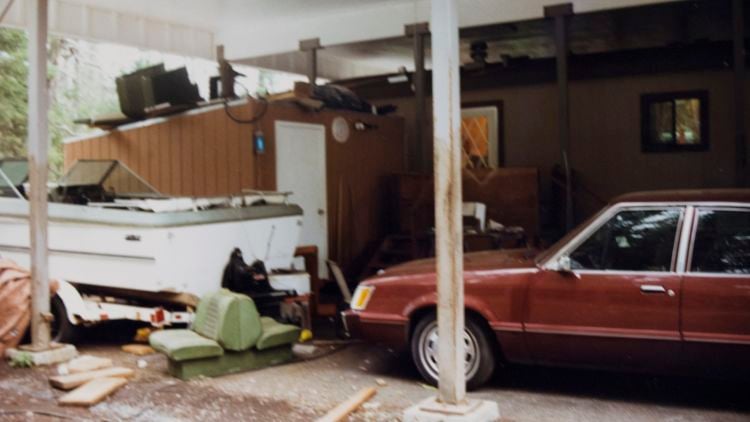
Rachanda Pickle was thirteen when she disappeared on July 10, 1990. She lived with her mother, brother, and Ackroyd at the state highway maintenance compound near Santiam Junction. Unlike Turner or Gabrielsen, she did not first encounter him as a stranger beside a road. He was her stepfather, part of the household where she should have been able to feel secure.
Friends interviewed for OregonLive’s investigation remembered her fear of going home and injuries she attributed to Ackroyd. Friends also told investigators about sexual abuse before she vanished. Her mother, Linda Monville, disputed the accounts that he had beaten her children when interviewed years later. The friends remembered more than the abuse: a child who liked school, playing, and helping around the house, with an older brother who watched out for her.
Contemporary coverage of the later arrest, published by McKenzie River Reflections, outlined Ackroyd’s account of that day. He said he returned home early from work, saw Rachanda inside, left again, and later found her gone. He and her mother did not report her missing until the following morning. His version placed him as the last person known to have seen her.
The initial search covered the maintenance facility’s surroundings and areas near Hoodoo and Big Lake. Teams from neighboring counties participated, and the principal search effort continued for weeks. Later searches also took place, but no discovery brought Rachanda home. The absence of her remains would complicate the prosecution and leave her family without an answer to one of its most basic questions.
The case remained under investigation for more than two decades before a grand jury indicted Ackroyd in March 2013. The New Era’s contemporary report recorded his arraignment on April 3, while McKenzie River Reflections reported that he had been arrested at the penitentiary the preceding day. He was already serving his sentence for Turner’s murder. The new charge concerned Rachanda’s death, a separate case that had remained unresolved through much of his imprisonment.
In the fall of 2013, Ackroyd entered a no-contest plea in Rachanda’s murder case and agreed never to seek parole. OregonLive’s investigation later disclosed the arrangement, which had been hidden in sealed court records. It was an unusual resolution aimed at ensuring he would remain imprisoned. It should be described as that plea agreement, rather than as a second jury verdict or a detailed confession explaining what he did.
For Rachanda’s family, keeping him behind bars did not answer where she was. The Charley Project’s missing-person entry continues to describe her disappearance and the plea agreement. The National Center for Missing & Exploited Children maintains her official missing-person listing. A court outcome can resolve a defendant’s legal position while leaving a family’s loss painfully unfinished. In this case, the missing child and the unanswered question of her whereabouts remained after the proceeding ended.
Two friends vanished after a trip to the coast

Melissa Sanders and Sheila Swanson disappeared in 1992, shortly before Ackroyd’s arrest in the Turner case. Melissa was seventeen, and Sheila was nineteen. Newport Police’s published cold-case chronology places their last known sighting near Beverly Beach State Park at approximately 1 a.m. on May 3. They had gone to the coast together, and both were later found dead.
The same police chronology records that their bodies were discovered on October 10, 1992, in woods near Eddyville. It places their case among other unsolved homicides investigated by agencies in Lincoln County. Those official dates anchor a story sometimes retold with less precision. They also establish the long interval between the young women’s disappearance and the discovery that ended hopes of finding them alive.
OregonLive reported that the friends had been camping with Melissa’s family and had talked about hitchhiking home. They knew Ackroyd through social encounters around a Shari’s restaurant in the Lebanon area. Years later, investigators pursuing their case found witnesses who connected him to the young women. Coworkers also recalled a troubling occasion in 1992 when he returned to a highway shop with blood on his hands and arms and explained that he had dealt with a deer.
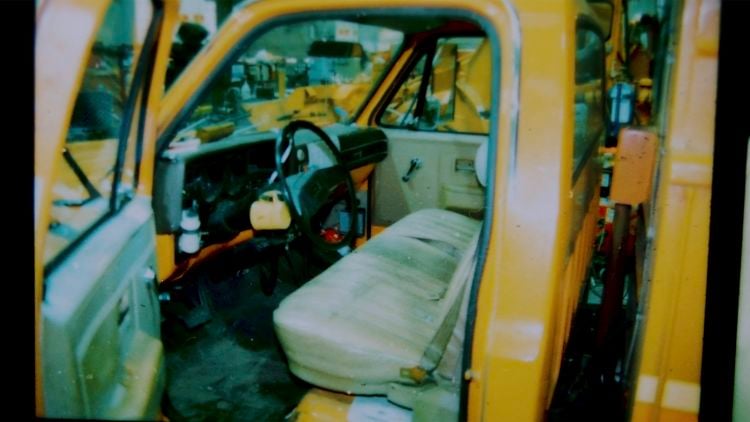
Benson and Snow reopened the coastal case in 2012, reviewing old files and locating former highway workers. Their work eventually brought them to the coworkers who recalled the blood and Ackroyd’s explanation. One could not remember the exact date, a limitation that matters when reconstructing the sequence. The observation became part of a circumstantial case, alongside witness accounts connecting Ackroyd to the friends and the area where their bodies were found.
Ackroyd was not the only man considered in connection with the coastal killings. In 2012, Associated Press reporting quoted Lincoln County District Attorney Rob Bovett identifying Bobby Jack Fowler as a person of interest in Sanders and Swanson’s deaths. Fowler had been linked by DNA to a different killing in Canada. That finding did not establish that he killed the two Oregon friends, but it shows that the investigation had considered another possible suspect.
Later work by Lincoln County investigators Ron Benson and Linda Snow led them to conclude that Ackroyd was responsible. According to OregonLive, prosecutors considered the evidence sufficient to take the case to a grand jury, but did not pursue a new prosecution against a man already serving life. He was never tried for their killings. The investigators’ conclusion belongs in the history of the case, with that distinction intact.
The investigation continued after he was imprisoned
On December 30, 2016, Ackroyd was found unresponsive in his cell at the Oregon State Penitentiary in Salem. He was sixty-seven, and efforts to revive him were unsuccessful. KTVZ’s report, citing the Department of Corrections, described the death as apparently from natural causes and noted that state police would investigate. His death ended any possibility of a future trial in the other cases.
It did not end the work of understanding what had happened. Crombie, photographer Beth Nakamura, and video journalist Dave Killen spent roughly two years developing the newspaper investigation. Poynter’s account of their work describes requests for original case files, extensive travel, interviews, and a fight to unseal records. The published project gave readers a way to see connections that individual news reports across several decades had not fully explained.
The reporting also returned Gabrielsen’s account to public view. For years, her experience had been preserved in a police file without producing a prosecution. Journalism could not retroactively give her the court case she had been denied, but it could document her evidence and let her speak. That difference is central to the project: learning the history of a crime is valuable even when a new conviction is no longer possible.
In a 2019 interview with Nieman Storyboard, Crombie recalled introducing Gabrielsen at a public screening of the documentary. The audience responded with sustained applause. It was a moment of public recognition for a woman whose account had been dismissed decades before. Recognition was not a legal remedy, but the response showed that people were finally listening.
The investigation reached another audience when it became the basis for the 2023 documentary series “Lost Women of Highway 20,” associated with producer and narrator Octavia Spencer. OregonLive also made its original documentary available to watch online and published an annotated version of the written investigation with links to underlying records. For readers who want to go beyond a retelling, those materials offer a fuller view of the evidence and the reporting behind it.
Remembering the people behind the case
Several things can be true at once in this history. Ackroyd was convicted of Turner’s murder, entered the later plea agreement concerning Rachanda, and was identified by investigators as responsible for the deaths of Sanders and Swanson. The coastal killings did not result in a trial against him, and Rachanda’s whereabouts remained unknown. Gabrielsen survived and reported her rape, but never saw him prosecuted for the assault.
Rachanda’s brother, Byron, found a way to keep her close: he had her image tattooed on his arm. When OregonLive interviewed him, his own children knew they had an Aunt Rachanda. A photograph in a case file could not hold all that his sister meant to him. He carried her memory into the family she never got to meet.
For Oregonians, the places in the story are familiar enough to make the history difficult to hold at a distance. Eugene, Sisters, Sweet Home, Santiam Junction, and Newport belong to the geography of everyday life. These were communities where people went to work, visited family, ran, camped, and made plans to get home. Remembering the case means allowing those ordinary lives to remain visible alongside the violence that disrupted them.
The names worth taking away are Marlene Gabrielsen, Kaye Turner, Rachanda Pickle, Melissa Sanders, and Sheila Swanson. Their stories include survival, murder, uncertainty, and years of effort by relatives, investigators, and reporters. The surviving record cannot supply every answer, and an article should not pretend otherwise. It can make sure the people at its center are remembered with the care that was too often missing when they first needed help.
For more reporting on related cases and Oregon’s past, visit That Oregon Life’s crime coverage and Oregon history stories.
Sources and further reading
This article draws on published investigations, contemporary local news reports, official police chronology, and research explaining the limits of polygraph testing. The Oregonian/OregonLive conducted the original interviews and records investigation described here; That Oregon Life did not independently interview the participants.
- The Oregonian/OregonLive: “Ghosts of Highway 20,” Marlene Gabrielsen, Kaye Turner, Rachanda Pickle, Melissa Sanders and Sheila Swanson, and John Ackroyd; annotated reporting and source records.
- The Nugget: “Hearing digs up Camp Sherman murder case” and “Killer of Camp Sherman jogger dies in prison.”
- KTVZ: 2016 report on Ackroyd’s death and Department of Corrections history.
- McKenzie River Reflections: “Santiam murder suspect arrested”; The New Era: “Murderer charged in 22-year-old case.”
- City of Newport Police Department: cold-case chronology; The Charley Project: Rachanda Lea Pickle case entry.
- Associated Press, via Deseret News: 2012 report identifying Fowler as a person of interest in the coastal cases.
- Noelle Crombie, Smith College: “The Haunting Stories of Highway 20.”
- Poynter: account of the Oregonian investigation; Nieman Storyboard: interview with Crombie.
- National Research Council: The Polygraph and Lie Detection, conclusions and recommendations; U.S. Forest Service: Metolius watershed analysis.
- The Oregonian/OregonLive: background on the 2023 documentary and original investigation.