

The regional decision guide
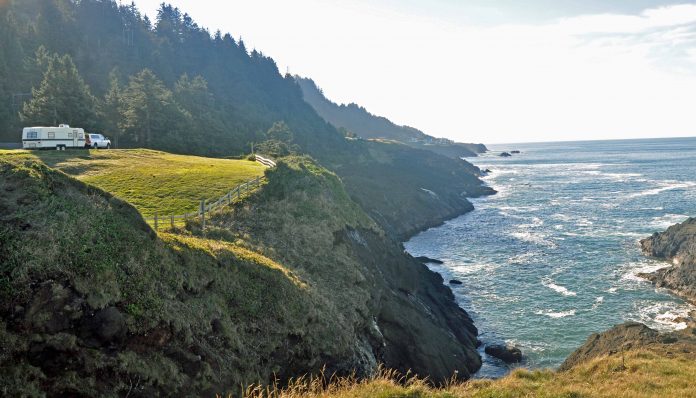
Oregon Coast campgrounds do not offer one single experience. A wooded base near Astoria, a walkable Lincoln City campground, and a dune-side stay near Florence solve completely different trips. Choose the right stretch of coast before you choose a site.
Fact-checked: September 18, 2026. Operating details can change; official manager links below control current fees, closures, and booking.
The honest read
Who this trip is really for
Fort Stevens is the strongest all-around North Coast base; Devil’s Lake wins for town access; Honeyman is the family-and-dunes workhorse; Harris Beach combines South Coast scenery with practical access to Brookings. The famous name is not automatically the best fit.
Compare campgrounds in the Oregon Camping Guide →At a glance
What matters before you book
- Best full North Coast base
- Fort Stevens State Park is the strongest all-around North Coast campground.
- Best walkable town base
- Devil’s Lake is the best fit for campers who want Lincoln City close at hand.
- Best for dunes and lakes
- Jessie M. Honeyman is the strongest family base for dunes and freshwater lakes.
- Best South Coast base
- Harris Beach pairs South Coast scenery with practical Brookings access.
- Price reality
- Rates vary by site, season, and residency; confirm the checkout total
- Reservation reality
- Popular summer weekends can fill as the booking window opens
North Coast: big parks, history, and town add-ons
Fort Stevens State Park is enormous by Oregon standards. That scale brings hookups, cabins, yurts, tent and hike-in sites—but it also means the loop matters. Choose it when bikes, military history, the Peter Iredale shipwreck, lake access, and Astoria are part of the plan.
Nehalem Bay feels more compact and beach-centered. It is the better answer when Manzanita, bay views, bike rides, and repeated walks over the dune are the point. Wind and exposed sand are part of the deal, so study the site map.
Wright’s for Camping is the counterpoint to the giant public parks: wooded, family-run, and useful for visitors who want to walk into Cannon Beach. It is not an RV-resort experience, and that is why many campers choose it.
Central Coast: town convenience, dunes, and lake days
Devil’s Lake State Recreation Area is the rare Oregon Coast campground inside a city. It does not deliver wilderness or lake-view sites. It delivers a practical Lincoln City base, a beach walk, restaurants, freshwater paddling, and a place to return when the weather turns.
Jessie M. Honeyman is the central Coast utility player. Cleawox and Woahink lakes make it more than a beach trip, while its size and site mix work for many families and RV travelers exploring the Oregon Dunes and Florence. The honest drawback is activity noise: Oregon State Parks warns that OHV noise may be noticeable from May through September.
Cape Lookout normally belongs in this conversation, but its August 2026 construction closure is not a footnote. Treat the official park page—not an old roundup—as the deciding source.
South Coast: bigger scenery, longer drives
Sunset Bay works because the campground is only one piece of the trip. Shore Acres, Cape Arago, tidepools, trails, and a protected cove create a strong itinerary. The sites are not oceanfront; book it for the surrounding park corridor.
Harris Beach State Park is an easy South Coast recommendation because it pairs sea-stack scenery and beach access with Brookings nearby. It is developed, popular, and not a secret. That convenience is a feature for families and a mismatch for campers seeking solitude.
Private parks can fill gaps in the public system, especially for RV travelers, but compare the exact site, cancellation terms, and total rate. Different areas of one property can feel like different campgrounds.
How to choose a Coast site without getting fooled by the map
“Near the beach” rarely means “ocean view.” Dunes, vegetation, roads, or long loops often separate the site from the water. Check the route you will actually walk, not the straight-line distance.
Wind exposure, highway noise, loop traffic, wet ground, and bathroom proximity can change the stay more than the park name. RV travelers should verify pad length and hookups for the exact site. Tent campers should look for vegetation and drainage.
Recheck park notices, tides, fire restrictions, and road conditions shortly before leaving. A reservation confirms a site; it does not confirm that every trail, beach access, or amenity is open.
Quick comparison
Which Oregon Coast campground fits your trip?
| Campground | Region | Best for | Town access | Main tradeoff | Keep planning |
|---|---|---|---|---|---|
| Fort Stevens State Park | North Coast | History, bikes, families, RVs | Astoria and Warrenton | Very large; the loop matters | Fort Stevens camping guide |
| Nehalem Bay State Park | North Coast | Beach walks and bay weekends | Manzanita | Wind and exposed sand | Plan Manzanita |
| Devil’s Lake State Recreation Area | Central Coast | Restaurants, paddling, first Coast trips | Inside Lincoln City | Urban rather than remote | Devil’s Lake campground guide |
| Jessie M. Honeyman Memorial State Park | Central Coast | Families, lakes, dunes | Near Florence | Seasonal OHV noise | Plan Florence |
| Sunset Bay State Park | South Coast | Tidepools and the Cape Arago corridor | Near Coos Bay | Sites are not oceanfront | Oregon Coast planning guide |
| Harris Beach State Park | South Coast | Sea stacks and a first South Coast trip | Inside Brookings | Popular and developed | Harris Beach guide |
Make the decision
Compare the useful choices
Fort Stevens State Park
Best for: History, bikes, families, RVs, multi-day trips
Tradeoff: Huge and busy; site loop matters
Official Fort Stevens State Park informationNehalem Bay State Park
Best for: Beach walks, Manzanita, bay-and-ocean weekends
Tradeoff: Wind and sand exposure
Official Nehalem Bay State Park informationDevil’s Lake State Recreation Area
Best for: Lincoln City, paddling, restaurants, shoulder season
Tradeoff: Urban rather than remote
Official Devil’s Lake State Recreation Area informationJessie M. Honeyman Memorial State Park
Best for: Families, lakes, dunes, mixed site needs
Tradeoff: OHV noise can carry in prime season
Official Jessie M. Honeyman Memorial State Park informationSunset Bay State Park
Best for: Tidepools, Shore Acres, scenic South Coast loop
Tradeoff: Book for the area, not an ocean-view site
Official Sunset Bay State Park informationHarris Beach State Park
Best for: Sea stacks, Brookings access, first South Coast trip
Tradeoff: Popular and developed
Official Harris Beach State Park information