
Wildfires are serious. Evacuation notices are serious. And when fire officials tell Oregonians to prepare, people should pay attention.
But serious situations don’t need to be exaggerated to generate clicks.
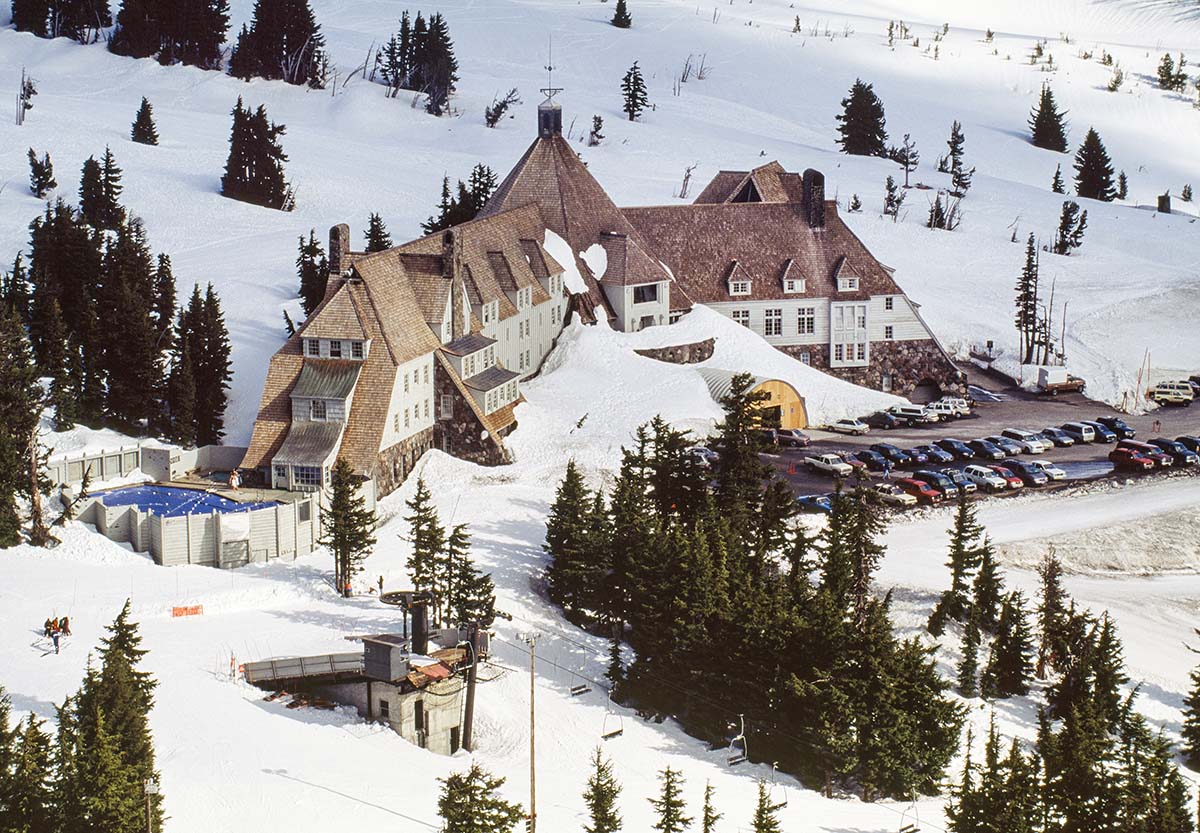
A national news story published by The Independent on Wednesday claimed that Timberline Lodge, the historic Mount Hood landmark featured in Stanley Kubrick’s The Shining, was “at risk of burning down” as the Grasshopper Fire burned east of Mount Hood.
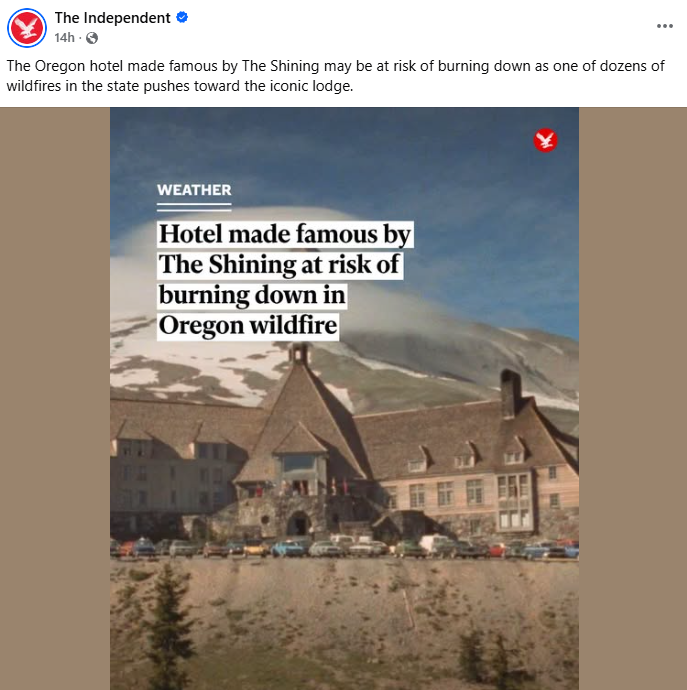
That headline spread a frightening message about one of Oregon’s most recognizable landmarks. The problem is that the article didn’t provide an official statement, fire assessment or evacuation order supporting its central claim.
Timberline Lodge was placed under a Level 1 “Be Ready” evacuation notice. It was not under a Level 2 “Be Set” notice or a Level 3 “Go Now” order.
That distinction matters.
A Level 1 notice means residents, businesses and visitors should be aware of nearby danger, monitor official updates and prepare in case conditions change. It doesn’t mean a structure is about to burn. It doesn’t mean an evacuation is underway. And it certainly doesn’t establish that Timberline Lodge is at risk of burning down.
Clackamas County’s official alert described the affected area as being under Level 1 and directed people to prepare and monitor evacuation information.
Local coverage accurately reported the same situation: Timberline Lodge and parts of the Government Camp area were under a Level 1 notice because of the Grasshopper Fire.
That’s important news. But it isn’t the same story presented by the national headline.
Mt. Hood Meadows Faced the More Immediate Concern
The Grasshopper Fire was burning east of Mount Hood and showed increased activity along its western perimeter. Fire managers were watching its movement toward Highway 35 and the Mt. Hood Meadows area.
Mt. Hood Meadows was placed under a Level 3 “Go Now” evacuation order, a much more urgent status than the Level 1 notice affecting Timberline.
Fire managers said the blaze remained several miles from Mt. Hood Meadows while structural firefighting teams assessed and prepared buildings around the resort.
That’s the crucial geographic context missing from the sensational headline.
Mt. Hood Meadows is east of Timberline Lodge and was closer to the active fire area. Timberline’s Level 1 status reflected the possibility that conditions could change, not an announcement that flames were closing in on the historic lodge.
Timberline temporarily suspended outdoor operations amid the smoke and fire conditions, while Mt. Hood Meadows was evacuated.
Again, those are meaningful developments. They deserve accurate reporting. But none of them proves that Timberline Lodge was facing imminent destruction.
The Article Turned a Precaution Into a Prediction
The story repeatedly suggested that the fire was “creeping closer” to Timberline and that the lodge might eventually burn.
Yet it didn’t quote a fire official saying the lodge was likely to be reached by the fire.
It didn’t cite a fire-behavior projection showing flames moving directly toward the building.
It didn’t provide a distance between the active fire perimeter and Timberline Lodge.
It didn’t report that firefighters were preparing for direct structure defense at the lodge.
Instead, it relied heavily on the existence of a Level 1 notice and expressions of concern from lodge employees.
Those employees had every right to be concerned. Smoke was affecting working conditions, business and visibility around Mount Hood. A large wildfire was burning in the region, and another resort had already been evacuated.
But someone saying they’re worried about what might happen isn’t the same as an official determination that the lodge is at risk of burning down.
The headline presented speculation as though it were an established emergency.
Even the Fire Numbers Were Behind the Official Update
The article reported that the Grasshopper Fire had burned approximately 36,600 acres and was 19 percent contained as of Wednesday morning.
By the official Wednesday update, the fire was listed at 39,439 acres and 20 percent containment, with 1,323 personnel assigned.
Fire acreage and containment can change quickly, and reports are often based on figures available at the time they’re written. But when a story is built around an escalating emergency, readers deserve to know exactly when its figures were last updated.
The broader facts were already alarming enough.
The fire was active. Evacuations were in effect. Smoke was affecting communities across northwest Oregon. Firefighters were protecting developed areas near Highway 35 and Mt. Hood Meadows. People in Level 1 zones needed to prepare in case conditions worsened.
None of that required inventing a scenario in which Timberline Lodge was about to burn.
Timberline Lodge and The Shining
The article was correct about Timberline’s connection to the classic horror movie.
The exterior of Timberline Lodge was used to represent the fictional Overlook Hotel in Stanley Kubrick’s 1980 film adaptation of The Shining. The historic lodge sits on the south side of Mount Hood at an elevation of approximately 6,000 feet.
That famous connection undoubtedly made the story attractive to a national audience.
“The hotel from The Shining may burn down” is a headline likely to travel much farther than “Oregon lodge placed under precautionary Level 1 notice.”
But the more dramatic headline wasn’t supported by the information presented.
It’s also worth clearing up a common point of confusion: Timberline Lodge was used for exterior shots in Kubrick’s film. The Stanley Hotel in Colorado inspired Stephen King’s novel and was later used for the 1997 television adaptation.
Oregon Wildfires Don’t Need Clickbait
Oregonians understand how quickly fire conditions can change.
A Level 1 notice can become Level 2 or Level 3. Winds can shift. Fire behavior can intensify. Evacuation zones can expand with little warning.
That’s exactly why wildfire information needs to be reported responsibly.
People rely on news coverage to understand whether they should prepare, leave or avoid an area. Inflated headlines can create unnecessary panic, confuse visitors and weaken public trust in legitimate evacuation warnings.
It would be irresponsible to claim Timberline Lodge faced no possible danger from a large and active wildfire in the region. Wildfire risk is dynamic, and conditions around Mount Hood could change.
But that isn’t what the headline said.
It said the lodge was “at risk of burning down,” presenting a dramatic conclusion that officials had not publicly reached.
A more accurate headline would have been:
Grasshopper Fire Prompts Level 1 Evacuation Notice at Timberline Lodge
That tells readers what actually happened without minimizing the fire or manufacturing a catastrophe.
Here’s What Oregonians Should Know
As of the reporting available Wednesday, August 5:
Timberline Lodge and surrounding areas were under a Level 1 “Be Ready” notice.
Mt. Hood Meadows was under a Level 3 “Go Now” evacuation order.
The Grasshopper Fire was burning east of Mount Hood and remained active along its western perimeter.
Timberline suspended outdoor operations as smoke and nearby fire activity affected the mountain.
There was no official announcement saying Timberline Lodge was expected to burn, was surrounded by fire or faced imminent destruction.
That could change, which is why people should follow updates from county emergency officials, the U.S. Forest Service and the Grasshopper Fire incident team.
But reporting what could theoretically happen isn’t the same as reporting what officials say is actually happening.
Oregon’s wildfire season is dangerous enough without turning a Level 1 preparation notice into a prediction that one of the state’s most historic landmarks is about to burn down.