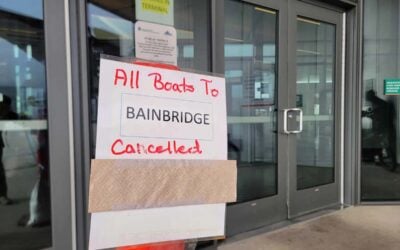

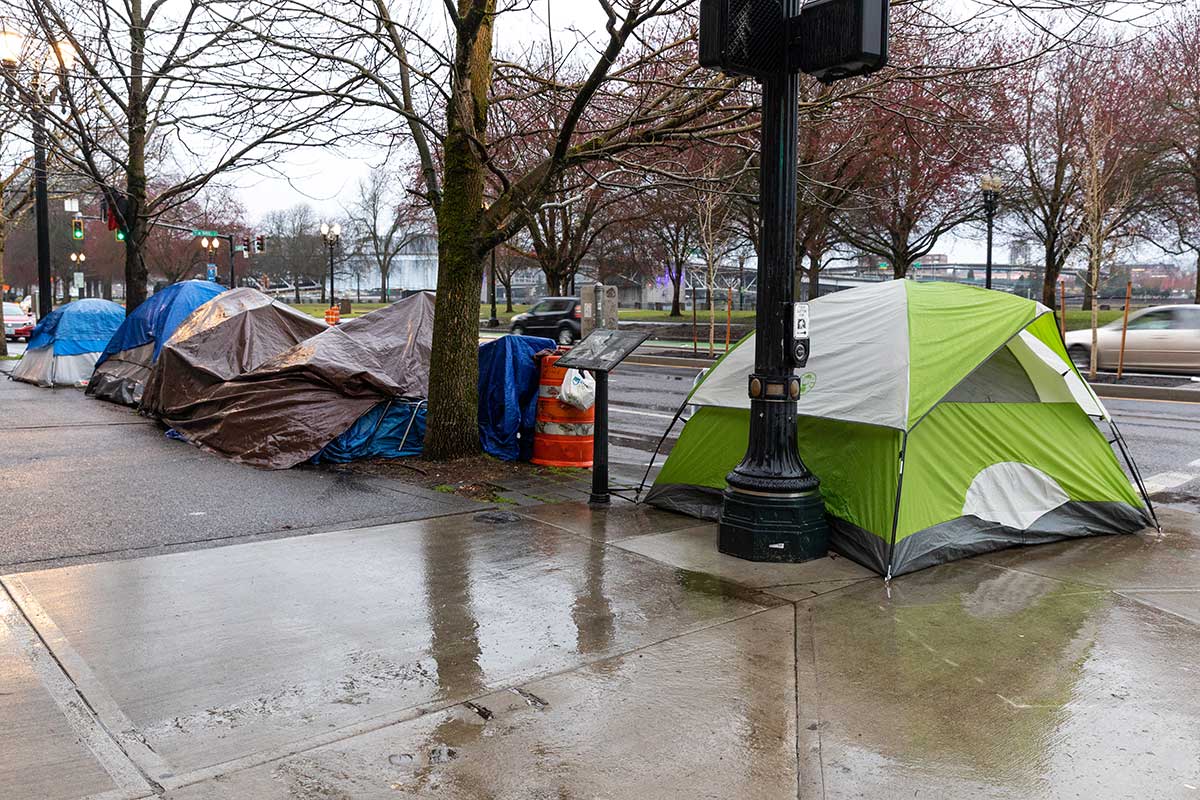
Portland’s largest overnight-only homeless shelter has closed, almost exactly one year after it opened in the Pearl District as a major piece of the city’s effort to get more people sleeping indoors. The Northrup Shelter could hold as many as 200 adults each night, but its last guests left on Friday, September 18, and there is no new 200-bed facility waiting somewhere else to take its place.
The immediate reason for the closure is not especially mysterious. Portland has been dealing with an enormous budget shortfall, Northrup was an expensive shelter to operate, and by this month the building was averaging fewer than 100 guests a night. Those three things made it difficult for the city to justify keeping the doors open while shelter programs and other city services were being cut elsewhere.
Still, the more you look at Northrup, the more it starts to feel like a pretty good example of Portland’s entire homelessness problem. Thousands of people used the shelter during its short life, yet dozens of beds were empty near the end. The city has added shelter, housing programs and outreach over the past several years, while Multnomah County has put more resources into permanent housing and prevention, but the number of people known to be homeless has continued to climb.
There is no shortage of opinions about how Portland should deal with that. What remains much harder to find is one clear answer that works for the family that just lost an apartment, the person who has lived outside for six years, the person struggling with addiction, the senior living in a vehicle, and the neighborhood dealing with a large camp down the street. Those situations are all called homelessness, but they are obviously not the same problem.
That is the bigger story behind Northrup closing.
More Than 2,700 People Used Northrup in One Year
The shelter closure was reported Friday by OPB’s Alex Zielinski, who has been following Northrup and Portland’s rapidly changing shelter system since before the Pearl District facility opened.
The Salvation Army operated Northrup at Northwest Northrup Street and Northwest 15th Avenue. Adults could come inside at 8 p.m., sleep there overnight and leave at 6 the next morning. It was a basic shelter by design, without the round-the-clock living arrangement found at some of Portland’s village or 24-hour shelter sites.
The Salvation Army told OPB that more than 2,700 people used Northrup during the roughly one year it was open. For each of those people, the experience was obviously different, but the basic thing the shelter offered was uncomplicated: a place to get indoors for the night.
That matters in Oregon more than it might sound on paper. Sleeping outside during a dry September evening is one thing. Spending night after night outside when November rain settles over the Willamette Valley, your clothes are wet, your blankets are damp and the temperature barely gets out of the 40s is something else entirely.
An overnight shelter does not end someone’s homelessness, and Northrup never pretended otherwise. Guests were still homeless when they walked back out the door each morning, but having somewhere warm and dry to spend the night can make a very real difference while someone is trying to figure out what comes next.
The Shelter Was Only About Half Full Near the End
By September, Northrup was no longer coming close to its 200-person capacity. City spokesperson Laura Rude told OPB that the shelter was averaging 98 guests per night this month, which put occupancy at less than half of the building’s available beds.
That number is important because Mayor Keith Wilson had already announced in April that Northrup would close as Portland tried to dig out of its budget problem. Wilson described it at the time as the most expensive facility in Portland’s shelter system, and a costly 200-bed building becomes especially difficult to defend when about half of the beds are going unused.
There are fair questions to ask about why that was happening. Was Portland maintaining more overnight capacity than people actually wanted? Was Northrup in the wrong location for some of the people who needed shelter? Did its hours or congregate setup make it a poor fit for some people living outside?
The answer is probably not one thing. Shelter use changes with weather, location, rules, transportation, safety concerns, pets, partners, belongings and the needs of the individual. There is also a big difference between an empty shelter bed in September and an empty shelter bed during a week of freezing rain in January.
The city itself acknowledges that shelter demand changes through the year. On its current shelter changes page, Portland says more beds tend to be used during colder and wetter weather, and officials plan to keep flexible beds available so capacity can increase when demand rises.
Even with those flexible beds, Portland is heading into this winter with fewer regular shelter spaces than it had last year.
Portland Is Losing Nearly 300 Regular Overnight Beds
Northrup has drawn most of the attention because it was Portland’s largest overnight-only shelter, but it is one of several facilities affected by the city’s budget cuts and shelter consolidation.
The Centennial Overnight Emergency Shelter closed in April. Weidler Village closed in May, and the River District Navigation Center followed in August. Reedway Alternative Shelter also closed as Portland began moving usable shelter units from Reedway and Weidler to the North Portland Road site.
That distinction is worth making because closing a shelter does not always mean every bed or pod at that property disappears from the system. Portland has been physically moving some alternative shelter units to another location and increasing capacity there.
Even after those moves, however, the total is going down.
The city expects to have about 580 regular adult overnight emergency shelter beds available this winter, compared with 876 regular beds during the previous year. That is nearly 300 fewer regular overnight beds going into the part of the year when demand usually increases.
Portland is also reducing capacity across its alternative and 24-hour sites. Those facilities had room for 867 people in 2025-26, while the city expects capacity for 718 people this year.
There will still be shelters open across Portland, including traditional overnight facilities, village-style sites and recovery-focused programs. The city is also preparing to use severe-weather shelter space when temperatures and conditions become dangerous, so 580 is not a hard ceiling on the number of people Portland could shelter during an emergency.
The overall picture is nevertheless pretty clear. The regular shelter system is getting smaller.
A $170 Million Budget Hole Changed the Conversation Fast
A year ago, Portland was talking about how quickly it could add shelter beds. This year, city leaders have been trying to figure out which ones they can afford to keep.
That change happened remarkably fast, but so did Portland’s financial situation. The city entered the 2026-27 budget cycle facing a $170 million general fund shortfall, and the final budget required significant reductions across multiple departments.
According to the city’s final 2026-27 budget announcement, shelter services were cut by $18 million, or 31 percent, bringing that budget down to about $40 million. Street outreach funding was also reduced by $1.7 million, while Portland ended a roughly $31 million transfer to Multnomah County for homeless services and said the city would instead provide some of those services directly.
Those numbers help explain why Northrup closed, but they also show how quickly Portland’s homelessness strategy has had to change. The city spent much of 2025 racing to add overnight capacity, including Northrup, only to find itself shrinking that same system roughly a year later.
You can look at Northrup’s 98 guests a night and reasonably ask whether keeping the whole building open was a good use of limited money. You can also look at the number of people sleeping outside in Multnomah County and wonder whether losing another large shelter just before winter makes much sense.
Both questions are legitimate, which is part of the problem.
The Homeless Population Multnomah County Is Tracking Has Reached About 18,500
The 200 beds at Northrup become a much smaller number when you put them beside the overall homeless population.
Multnomah County’s most recent major update estimated that roughly 18,500 people were experiencing homelessness as of March 2026. OPB reported in June that the figure represented an increase of about 29 percent from January 2025 using the county’s own data.
There is an important catch with these numbers, and anyone writing about homelessness in Oregon should be upfront about it. The county has substantially changed the way it counts people, so these figures are not directly comparable with every older homeless count you may have seen.
For years, most public discussion centered around the federal Point-in-Time Count, essentially an attempt to estimate how many people were experiencing homelessness on one January night. Multnomah County now uses a much broader collection of administrative records, including information from shelters, outreach programs and other services, to develop a continuously updated picture of homelessness.
That system can find people who would have been missed by an old-fashioned one-night count, which is a good thing if the goal is to understand the problem better. It also means a larger count does not automatically prove that every person represented in the increase became homeless during that period.
Even with those cautions, county officials have said the trend itself is real. More people are being identified as homeless, and the number of people living unsheltered has continued to increase.
That is something we have been looking at more broadly in our Oregon Homeless Hotspots 2026 guide, because Portland is only one piece of a homelessness problem that now looks very different depending on where you are in the state.
More Than 9,000 People Are Known to Be Unsheltered
By March, Multnomah County was tracking more than 9,100 people experiencing unsheltered homelessness, meaning they were outside shelters and living in places such as tents, vehicles or other locations not intended as permanent housing.
That is what makes an underused facility like Northrup so confusing at first glance. How can a county have more than 9,000 people experiencing unsheltered homelessness while a 200-bed shelter is sitting half empty?
There is no single explanation.
Some people do use shelters. Some avoid them. Others may be unable to use a particular facility because of its rules, location or setup. A person living with a partner may not want to separate for the night, while someone with a dog may have fewer options. Others worry about leaving possessions behind at a camp or simply feel safer in the place they already know.
Portland’s street-services data gives a glimpse of how this works in practice. During the week of July 20 through July 26, 20 people affected by campsite work expressed interest in a shelter referral. Eleven accepted a referral, and eight eventually used a shelter bed for at least one night.
One week should not be treated as a scientific study of everyone experiencing homelessness, but Portland’s longer-term numbers show a similar gap. Since April 2022, the city says it has recorded thousands of shelter referrals through its campsite work, while a much smaller number of people ultimately used beds through that process.
There are all kinds of reasons for that difference, and the numbers can include repeat contacts. Still, it shows why simply building a bed does not automatically mean a person will sleep in it.
That reality can be extremely frustrating for people who live near camps and wonder why someone remains outside when they hear that shelter has been offered. It can be equally frustrating for outreach workers who know that the available bed may not fit the needs of the person they are trying to help.
People Are Getting Housed, but New People Keep Becoming Homeless
One of the more interesting things Multnomah County has started tracking is how many people are entering homelessness compared with how many are getting out of it.
It sounds almost painfully obvious, but it explains a lot.
If 100 people move into housing while 150 other people lose theirs, the homeless population grows by 50 even though the housing program successfully helped 100 people. You can have programs that are genuinely working for thousands of people while the overall problem gets worse.
That appears to be part of what is happening in Multnomah County.
County reporting shows hundreds of people moving from homelessness into permanent housing during an average month. The regional system also continues to support thousands of formerly homeless people who are now living in permanent housing.
At the same time, more people are entering homelessness than leaving it.
In March, county data showed 1,687 people entering homelessness while 1,468 left the system. That is not an enormous difference in one month, but when a similar gap happens month after month, the numbers accumulate.
This gets closer to the real problem than simply asking how many shelters Portland has. The city and county are trying to help people who are already homeless while another group is arriving behind them.
Until those two numbers move in the opposite direction, Portland can open shelters, fill apartments and clear camps without seeing the large decline residents keep hoping for.
Some of the Problem Begins Before Anyone Is Sleeping on a Sidewalk
When most of us think about homelessness in Portland, we think about the visible version of it. Tents along a road, someone sleeping in a doorway, a cluster of RVs, or people gathered near a freeway ramp are hard to miss.
The household that is two missed paychecks away from losing an apartment is much easier to overlook.
A person can move toward homelessness in fairly ordinary ways. A job disappears, rent goes up, a relationship ends, someone gets sick or a roommate who was paying half the bills moves out. None of those situations necessarily leads to the street, but they can put someone who was already barely making it into a position where there is very little room left for another bad month.
Once someone is actually homeless, fixing the problem becomes harder. Maintaining a job is more difficult when you are not sleeping well. Paperwork disappears. Phones die or get stolen. Transportation gets complicated, and a minor health issue can become something much more serious when you are living outside.
That is why eviction prevention and rent assistance have become such a large part of the regional response. Keeping someone in an apartment they already have can be cheaper and easier than trying to get that same person housed six months after everything has fallen apart.
It still does not solve the problem for the thousands of people who are already outside.
For Some People, Housing Is Only Part of What They Need
There is also no honest way to talk about Portland’s homelessness crisis without talking about addiction and mental illness.
That does not mean every person experiencing homelessness is addicted to drugs or has a serious mental illness. They are not. Homelessness includes families, working adults, seniors, people escaping domestic violence, people who lost housing after a financial crisis and many others whose main problem is simply that they do not have an affordable place to live.
There is also a portion of Portland’s homeless population that has much more complicated needs, including people who have spent years living outside while dealing with severe mental illness, fentanyl or methamphetamine addiction, chronic medical problems and other disabilities.
That person may need an apartment, but an apartment alone may not be enough. They may also need treatment, medical care, medication, case management and someone who continues showing up after the lease is signed.
Portland has been shifting some of its shelter system in that direction. The city has opened recovery-oriented overnight shelters and is converting the Multnomah Safe Rest Village into a full-time recovery-focused facility with case managers, peer support, behavioral-health coordination and other services.
That makes sense for the people who need that kind of help.
It will not do much for a family that became homeless because the rent was $600 more than it could afford.
This is where the hunt for one grand solution usually falls apart.
There Is No Single Version of Homelessness
Imagine two people who both show up in Portland’s homelessness statistics.
One is working, recently lost an apartment after a rent increase and has been sleeping in a car for three weeks. The other has spent six years outside while living with schizophrenia and a serious drug addiction.
Calling both of them homeless is accurate, but almost everything else about their situations is different.
The first person might need a deposit, a rental subsidy and enough stability to get back into an apartment. The second may need years of supportive housing, medical treatment, behavioral-health care and regular case management.
Now add families with children, teenagers leaving foster care, people fleeing abusive relationships, seniors trying to live on Social Security, people with physical disabilities and people who simply refuse the shelter options being offered to them.
That is the population Portland is trying to serve.
It is one reason the public conversation around homelessness so often becomes an argument in which everybody is talking past each other. One person is thinking about rent and affordable housing, another is thinking about fentanyl, another is thinking about the camp blocking a sidewalk near their business, and another is thinking about the woman sleeping in her car while working two jobs.
They can all be talking about homelessness while describing completely different problems.
Neighborhoods Feel the Other Side of This
Northrup was controversial in the Pearl District before it even opened.
Some people who lived and worked nearby worried that placing a 200-bed overnight shelter in the neighborhood would bring more camping, trash, public drug use and other problems. Those concerns did not disappear after Northrup began operating.
Earlier this year, the owner of a nearby apartment building sued the City of Portland and the Salvation Army, alleging that the shelter had reduced the value of the property. That is an allegation in a lawsuit rather than an established finding, but it gives you an idea of how contentious the site had become.
There is also a practical issue with overnight-only shelters that people living nearby notice quickly. If a building asks 100 or 200 people to leave at 6 a.m., those people have to spend the day somewhere.
Some go to work or appointments. Some use day centers or transit. Others spend time around the neighborhood.
Pretending that has no impact on the surrounding community is not especially helpful. Residents should be able to expect usable sidewalks, clean parks and reasonably safe neighborhoods, just as someone sleeping outside should be able to expect to be treated like a human being.
The difficult part is that moving the problem from one block to another is not the same thing as solving it.
Three Blocks Away, Another Shelter Has Been Nearly Full
One detail in OPB’s reporting makes the timing of Northrup’s closure especially interesting.
Bethanie’s Room, a privately funded shelter operated by Blanchet House for women and nonbinary people, sits only a few blocks away. Its roughly 70 beds have been nearly full at night, and staff have recently had to turn people away.
The two shelters serve somewhat different populations, so it would be wrong to assume that everyone who used Northrup can simply move over to Bethanie’s Room. What it does show is that demand for shelter has not disappeared just because one large building was running below capacity.
Blanchet House Executive Director Steve Cook told OPB he is concerned about what happens as temperatures drop, since summer is generally the time of year when shelter demand is lower.
That makes sense to anyone who has lived here for long. September can still feel comfortable in Portland. January at 3 a.m. is a very different calculation.
The city says flexible capacity will help absorb increased winter demand, and severe-weather shelters can open when conditions meet emergency thresholds. Whether the smaller regular shelter system will be enough during the months in between is something Portland is about to find out.
Portland Has Tried a Lot of Things
There is a tendency in every homelessness debate to talk as though city leaders have simply failed to discover the obvious thing that everyone else can see.
The reality is more frustrating than that.
Portland and Multnomah County have tried a long list of approaches. There are overnight shelters, tiny-home villages, supportive housing, rental assistance programs, camp removals, outreach teams, recovery shelters, eviction-prevention programs and housing navigators. Nonprofits provide meals, clothing, hygiene services, medical help and temporary shelter, while governments spend money on behavioral health, housing development and permanent supportive housing.
Some programs have clearly helped people. Others have been controversial or expensive, and figuring out what works well enough to justify the cost is part of what government agencies are supposed to do.
The bigger problem is that none of those individual approaches addresses every reason people become homeless.
More emergency shelter can get people inside tonight, but it does not create permanent housing. Permanent housing can give someone a way out, but affordable homes cannot be built overnight. Addiction treatment matters enormously for someone who wants or needs treatment, while it does nothing to fix the rent for a working family facing eviction.
Camp removal can make an area cleaner and safer, but the person living in the camp does not cease to exist when the tent is gone.
You end up needing several approaches at the same time, and then the argument becomes how much money should go to each one.
The Money Question Gets Uncomfortable Pretty Fast
This is where Northrup becomes more interesting than a simple shelter-closure story.
Imagine Portland has another few million dollars available for homelessness. Should it spend that money keeping an expensive overnight shelter open? Would the same money help more people if it paid rent for households facing eviction? Should it be used for permanent supportive housing, addiction treatment or mental-health care instead?
There is no answer that avoids a tradeoff.
A dollar spent keeping a bed available tonight cannot also be spent building housing next year. Money used for prevention does not help someone who is already sleeping outside, while money spent on emergency shelter does nothing to stop the next family from losing its apartment.
When budgets are growing, government can paper over some of those choices by funding a little of everything. Portland does not have that luxury this year.
A $170 million general fund gap forced the city to decide what it was willing to give up, and Northrup was one of those decisions.
Whether it turns out to be a smart one may depend partly on what happens this winter.
Portland Can Help People and Still Lose Ground
This may be the part of the homelessness story that is hardest to get across.
People are being helped.
People leave shelters for apartments. Households receive rent assistance and avoid eviction. People enter treatment. Thousands of formerly homeless residents are now living in permanent housing with assistance from regional programs.
At the same time, Portlanders continue to encounter camps, people sleeping in vehicles and people in obvious crisis on the street.
Those two realities do not cancel each other out. They tell us that the system is moving people out while other people are coming in behind them.
If Portland wants the overall number to fall, eventually the region has to reach a point where more people are leaving homelessness than entering it. Until that happens consistently, individual success stories can be real while the public-facing crisis remains just as visible or becomes worse.
That is also why judging the entire system based on a single number can be misleading. Shelter occupancy tells us something. The total homeless count tells us something else. Housing placements, eviction filings, behavioral-health needs and the number of people living unsheltered all fill in different parts of the picture.
Taken together, they show a system under tremendous pressure.
Northrup’s Short Life Says a Lot About Where Portland Is Right Now
There is something almost strange about how quickly the Northrup story came full circle.
In September 2025, the shelter represented Portland’s push to expand overnight capacity as fast as possible. A year later, Portland is closing the same facility because the city cannot afford to maintain the shelter system it built at that scale.
Northrup served more than 2,700 people during that year. It also ended its run with more than half of its beds unused on an average September night. The city is facing a severe budget problem, while the county is simultaneously tracking thousands more people experiencing homelessness than Portland could possibly shelter in its current system.
All of those things can be true without one of them magically explaining the others.
Northrup may have been too expensive for the number of people using it. Portland may still need more shelter during cold weather. Shelter may be absolutely necessary for thousands of people and still be incapable of solving homelessness by itself.
That is where Portland finds itself now.
There are people who need an apartment. There are people who need treatment. There are people who need an overnight bed tonight, and others who need help paying next month’s rent so they never need that bed at all.
The city and county are trying to deal with those problems at the same time while spending less money than they had before.
Northrup’s doors are closed, but the people who used those beds did not disappear when the lights went out. Neither did the thousands of people already sleeping outside, the households barely hanging onto housing or the arguments Portland has been having for years about what should happen next.
For now, that may be the most honest takeaway from the closure. Portland has tried a lot of things, some of them have helped thousands of people, and there is still no simple answer that makes the larger problem go away.