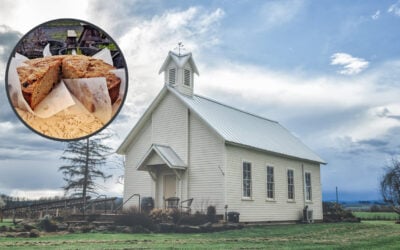

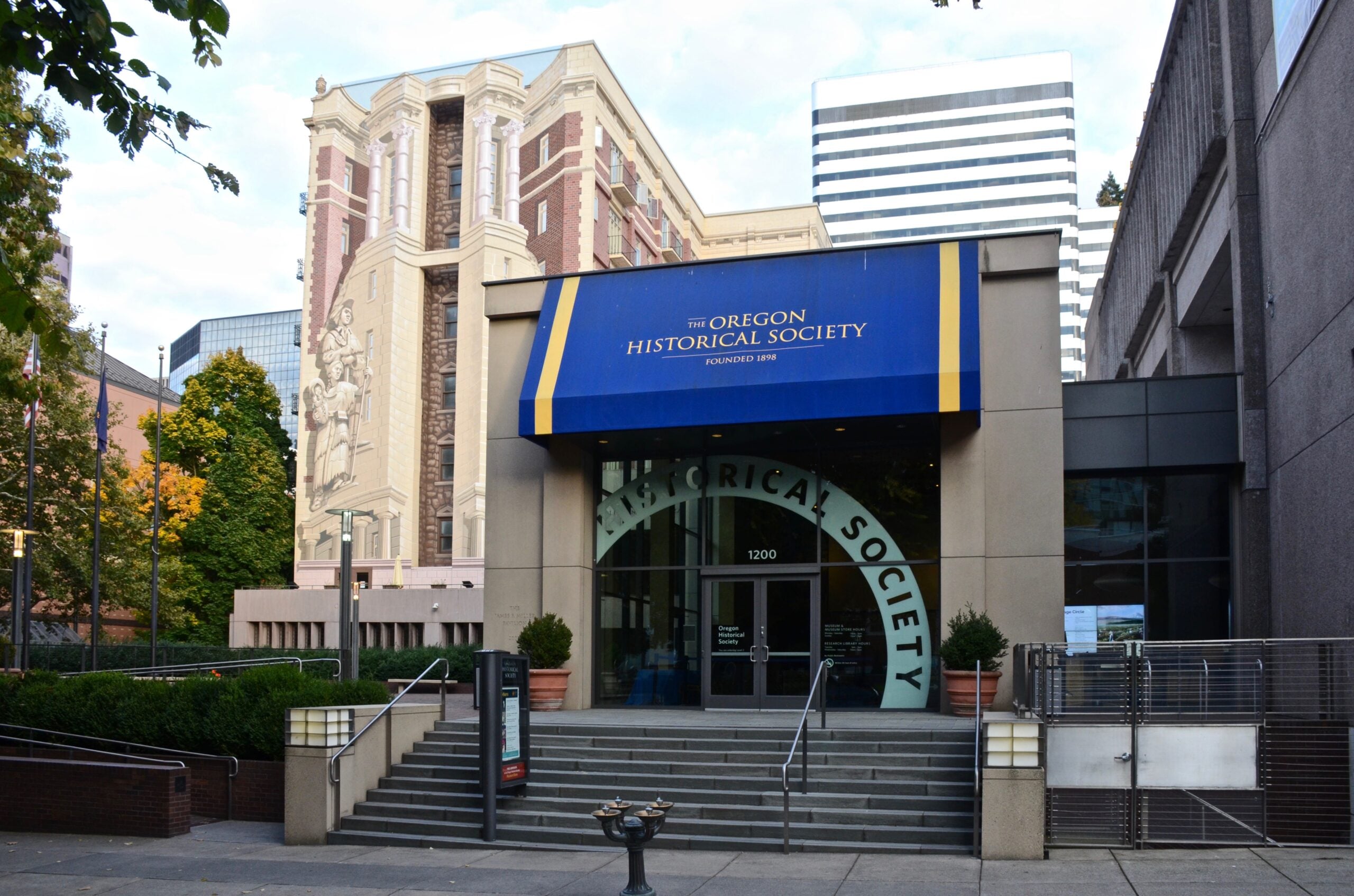
Long before highways carried summer traffic up to Rim Village, most Americans knew Crater Lake only from black-and-white engravings and brief newspaper accounts. A new exhibition at the Oregon Historical Society in downtown Portland brings together 21 original paintings that helped change that, showing how nineteenth-century artists turned a remote southern Oregon caldera into a national obsession. Running from November 20, 2026, through January 9, 2028, along the South Park Blocks in Portland, Creating a Masterpiece: Artists and the Origins of Crater Lake National Park opens ahead of the park’s 125th anniversary in May 2027. For anyone planning a cultural afternoon in the northern Willamette Valley or gearing up for a southern Oregon road trip, it gives Oregon’s only national park a sharper backstory than a scenic overlook plaque can offer.
The show pairs those 21 canvases, many never displayed together before, with historic photographs, correspondence, illustrations, and period expedition gear. One of Grace Russell Fountain’s paintings traveled to Washington, D.C., in 1902 to help sway members of Congress during the final push for national park status. The exhibition also looks squarely at what those painters left off their canvases, examining how romantic landscape art celebrated the lake while erasing the Klamath Tribes, who have known the sacred waters as giiwas for thousands of years. If you’re free on a rainy Portland afternoon, especially if you live in Multnomah County and qualify for free admission, it’s an easy trip into downtown.
Quick Glance
- Place: Oregon Historical Society (Creating a Masterpiece: Artists and the Origins of Crater Lake National Park)
- Location: Downtown Portland, northern Willamette Valley (South Park Blocks)
- Address: 1200 SW Park Ave., Portland, OR 97205 (Google Maps directions)
- Exhibit Dates: November 20, 2026, through January 9, 2028
- Museum Hours: Monday through Saturday, 10 a.m. to 5 p.m.; Sunday, noon to 5 p.m. (closed Thanksgiving, Dec. 24 and 25, and Jan. 1)
- Admission: $14 adults; $12 students, teachers, and seniors 60+; free for youth 17 and under, OHS members, and Multnomah County residents with proof of residency
- What Else Is There: Three floors of exhibits including Experience Oregon, Rivers, Roses, and Rip City, History Hub, a Level 4 research library, and a museum store
- Getting There: No dedicated parking lot; metered street parking and the 10th & Yamhill SmartPark garage nearby, plus TriMet MAX, bus, and Portland Streetcar stops
Why painters did what early cameras couldn’t
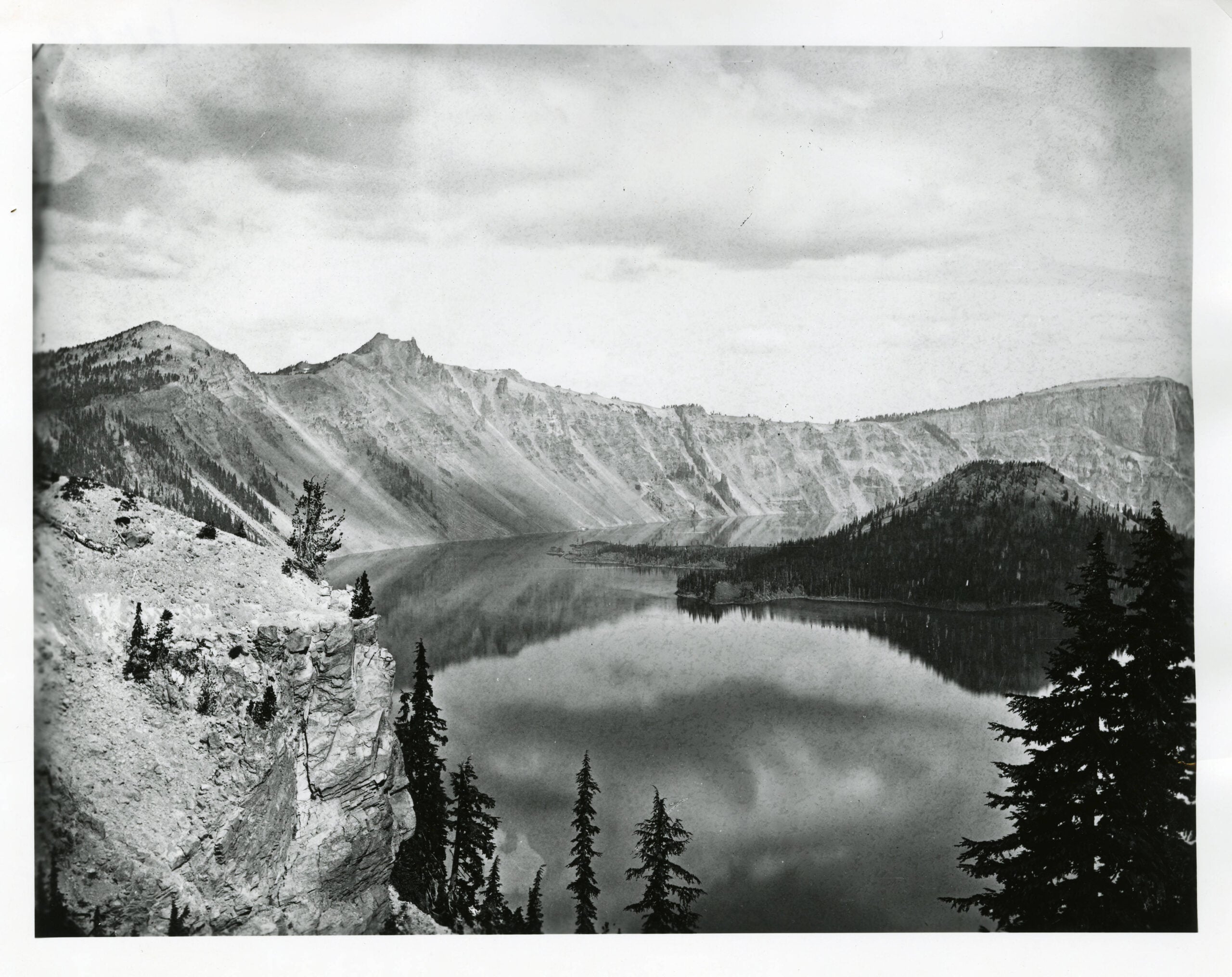
In the 1870s and 1880s, photography could show Crater Lake’s steep walls, not its color. Jacksonville photographer Peter Britt hauled his glass-plate gear up to the rim and made the first known photograph of Crater Lake in 1874. His black-and-white prints circulated in publications for years and set the classic view looking across the water toward Wizard Island that later artists repeated. What monochrome plates couldn’t convey was the shock of the lake’s deep cobalt water, and few outsiders were willing to endure rough wagon roads into the southern Cascades just to verify rumors about the hue.
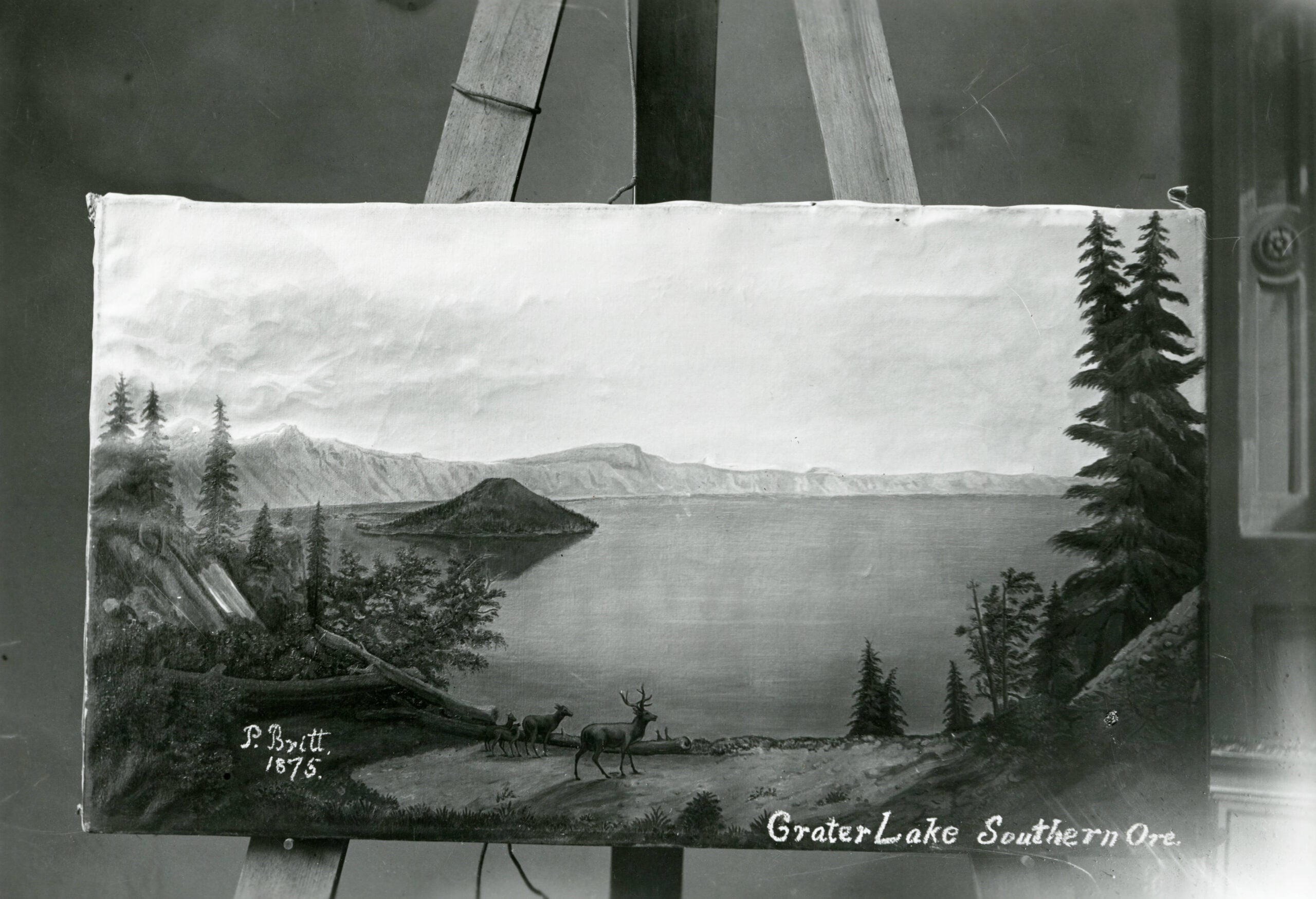
Britt had trained as a portrait painter before turning to daguerreotypes and wet-plate photography, and by 1875 he had produced an early oil painting of Crater Lake with deer standing along the foreground rim. In August 1882, he guided Portland artist James Everett Stuart to the caldera, marking the first known visit by professional painters. Stuart sketched and painted at his easel on the rim while Britt worked his camera, capturing a photograph of Stuart sitting beside his friend Robert A. Miller and Britt’s son Emil. Stuart’s canvases sold widely, introducing gallery visitors far beyond southern Oregon to the lake’s sheer volcanic cliffs and vivid blue water.
Other Pacific Northwest painters picked up the thread through the 1890s, led by William Samuel Parrott. Parrott was a reclusive Oregon painter who built a national reputation on his luminous views of the Cascades and his skill at capturing Crater Lake’s shifting blues. He also taught a younger generation of Oregon painters, including Eliza Barchus, Grace Russell Fountain, and Fountain’s younger sister Mabel Russell. Hanging works by mentor and students in the same OHS gallery makes those studio connections clear, showing how a small circle of regional artists shaped the country’s mental picture of the lake.
Grace Russell Fountain’s work sits near the center of that story. Raised in southern Oregon and trained under Parrott, Fountain painted Crater Lake in rich, atmospheric oils that found a direct political use. Park advocates carried one of her paintings to Washington, D.C., in 1902 so lawmakers debating the national park bill could see the color they were voting to preserve. At a time when women were largely locked out of formal legislative lobbying, Fountain and her sister used landscape painting to claim a real stake in public conservation.
William Gladstone Steel, the Kiser brothers, and the 1902 park campaign
Every painting in the gallery ties back to a persistent campaign led by William Gladstone Steel. As the National Park Service notes, Steel first read about a mysterious Oregon crater lake in 1870 on a newspaper wrapped around his lunch in Kansas, two years before his family moved to Portland. He finally stood on the rim in 1885 and spent the next seventeen years pushing for national park protection. Along the way, he helped Clarence Dutton with the 1886 U.S. Geological Survey depth measurements, founded the Oregon Alpine Club and the Mazamas, and worked with former Oregon Supreme Court Chief Justice John B. Waldo to defend Cascade forest reserves against timber speculators and grazing interests.
Congress stalled on Crater Lake bills for years until Steel secured backing from chief forester Gifford Pinchot, who brought the issue straight to President Theodore Roosevelt. Roosevelt pressured House Speaker Thomas Henderson to allow a floor vote, and on May 22, 1902, Roosevelt signed the legislation creating Crater Lake as the nation’s fifth national park. Steel had also helped organize the Oregon Historical Society itself in 1898, linking the museum’s own early years at 1200 SW Park Ave. to the fight to protect the park.
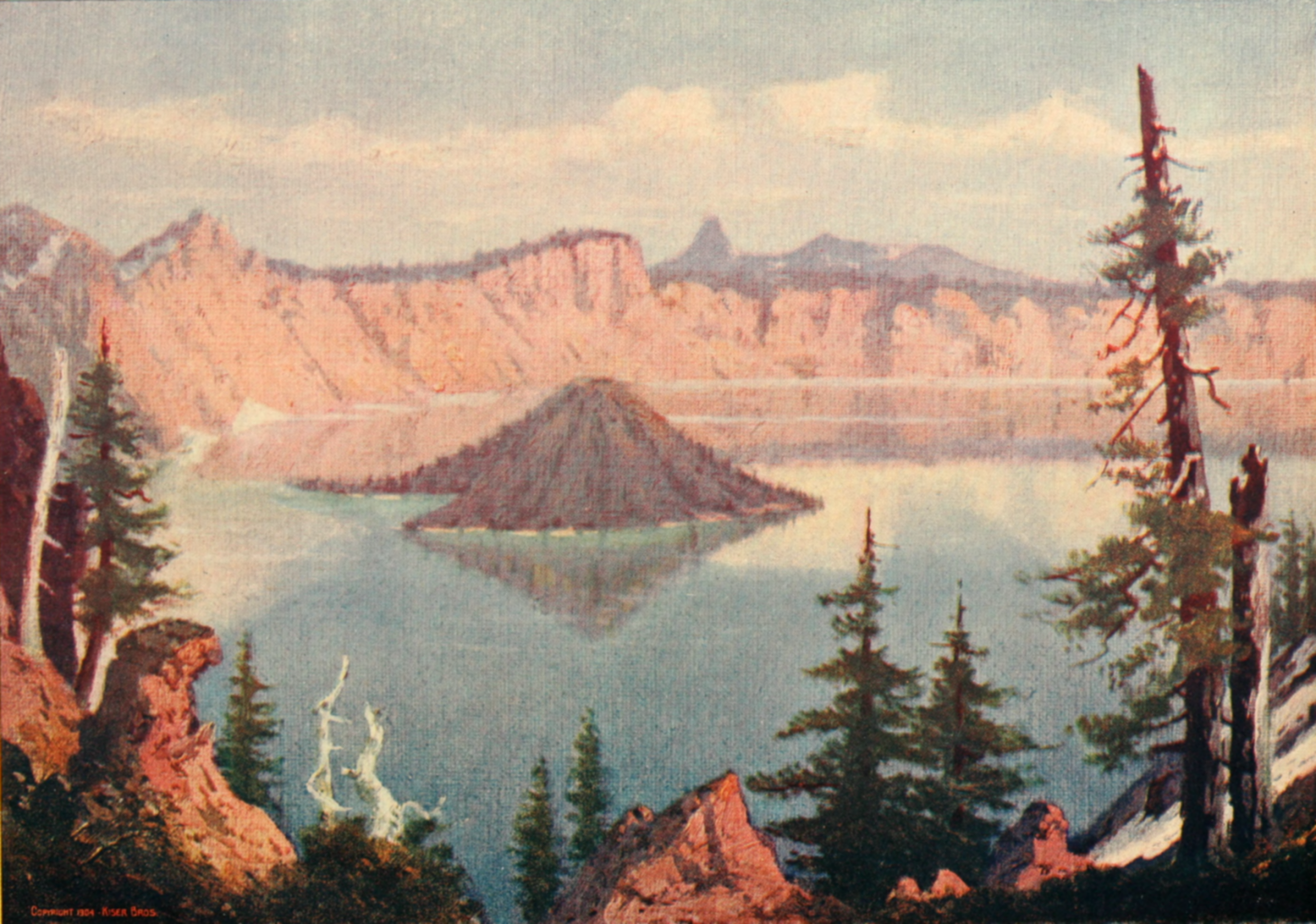
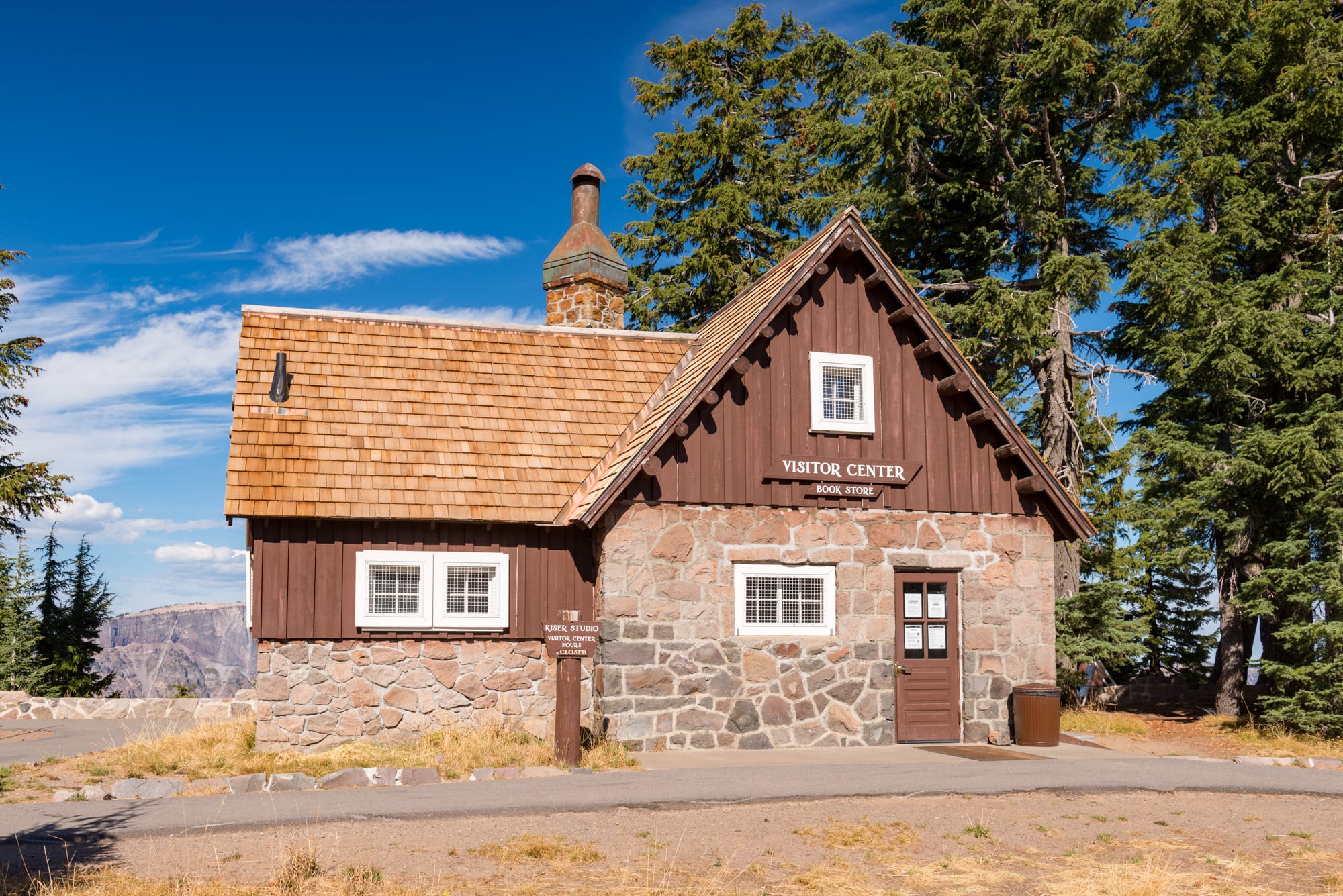
Winning congressional status was only half of Steel’s work; next he needed travelers to visit a park that still lacked paved roads or a modern lodge. In the summer of 1903, Steel led a 27-person excursion to Crater Lake with Southern Pacific Railroad publicists, writer Joaquin Miller, painter Grace Russell Fountain, and rising Portland photographers Fred and Oscar Kiser. Three illustrations based on Fountain’s paintings accompanied Miller’s article “The Sea of Silence” in the September 1904 issue of Southern Pacific’s Sunset magazine. Before color film existed, Fred Kiser earned a national following for his hand-tinted photographs of the lake and eventually opened a stone-and-timber studio at Rim Village, where the Kiser Studio building still stands.
What the canvases left out
Curated by Washington State University historian Dr. Peter Boag, an Oregon native, and OHS Curator of Exhibitions Megan Lallier-Barron, Creating a Masterpiece treats these paintings as historical documents with blind spots. Long before trappers, surveyors, or painters reached the rim, the Klamath, Modoc, and Yahooskin peoples maintained deep cultural and spiritual ties to the caldera. Their ancestors witnessed the eruption and collapse of moy-yaina (big mountain) more than 7,600 years ago, an event that created giiwas, meaning sacred place in the Klamath language.
As federal authorities repeatedly displaced Klamath people and limited their access to ancestral homelands during the late nineteenth century, painters and photographers helped rebrand giiwas as Crater Lake, a wilderness playground for tourists and conservationists. Even when white artists encountered Klamath people camping near the rim during the 1890s, their finished canvases stripped out Indigenous presence. The exhibition and its companion Fall 2026 issue of the Oregon Historical Quarterly confront that erasure directly through peer-reviewed scholarship and a reflection essay by Klamath citizen and scholar Angie Morrill, who notes that the Klamath Tribes’ 2014 Roundhouse in Chiloquin features a wall-to-wall artistic rendering of giiwas on its cork floor.
The exhibit also follows Crater Lake’s visual history into the twentieth century with works by illustrator Paul Clark Rockwood, who painted Mount Mazama’s glacial peak, eruption, and caldera for federal Works Progress Administration park brochures in the late 1930s. Display cases filled with historic photographs, expedition correspondence, and field objects sit alongside the 21 canvases throughout the gallery. Visitors who want to read further can pick up the companion Fall 2026 special issue of the Oregon Historical Quarterly, titled “Crater Lake and Artistic Imagination,” which pairs Boag’s research with reflections by Morrill, Michael Childers, and Lisa Gadinas.
Who should visit this exhibit, and who might skip it
This show fits visitors who enjoy Oregon history, Pacific Northwest landscape painting, national park lore, and honest reckoning with public-lands history. Art fans who usually only see big-name Western painters like Albert Bierstadt or Thomas Moran get a rare look at Oregon painters such as Parrott, Stuart, and the Russell sisters hung side by side. It’s also an easy indoor outing for Portlanders, particularly since Multnomah County residents now get free admission.
If you’re bringing young kids or expecting a high-tech projection room, though, this gallery moves at a quieter pace. Creating a Masterpiece consists of framed nineteenth-century paintings, historic photos, and artifact cases designed for close looking and label reading. Kids who need hands-on activity will have a much better time upstairs in OHS’s interactive History Hub and Experience Oregon galleries, and visitors after a quick photo backdrop won’t find much to rush through here.
Making an afternoon at the Oregon Historical Society and South Park Blocks
Museum admission covers all three floors of the Oregon Historical Society, so give yourself 90 minutes to two hours if you want to explore beyond the Crater Lake gallery. On the third floor, the permanent Experience Oregon exhibition fills the entire level with more than 300 objects and archival pieces, including Indigenous canoes, George Shannon’s Corps of Discovery sewing kit, 1849 Oregon Beaver coins, Abigail Scott Duniway’s 1900 suffrage quilt, and Nils Benson’s early Oregon-built automobile. Elsewhere in the museum, Rivers, Roses, and Rip City traces Portland’s neighborhoods and civic activism, while History Hub gives younger visitors touchscreen games and puzzles.
Four other temporary exhibitions also run alongside the Crater Lake show into 2027, giving repeat visitors plenty of new rooms to check out. DREAMs Deferred examines migration and displacement through portraits, personal stories, and a mural through February 21, 2027. University of Oregon’s 150th-anniversary exhibition Unstoppable runs through March 29, 2027, alongside Portraits from the Society Pages through March 26, 2027, and Our Stadium, Our Story: 100 Years of Portland’s Providence Park through August 1, 2027. On your way out, the OHS Museum Store stocks Oregon history books, prints, and regional gifts whose sales support the society.
Researchers or curious locals can also head up to the renovated fourth-floor OHS Research Library, which is free and open Tuesday through Saturday (most off-site collection items require up to a week’s advance request). Curators are hosting two public talks tied to the Crater Lake exhibition as well: an evening History Pub presentation by Boag and Lallier-Barron on Monday, November 30, 2026, at McMenamins Kennedy School ($5 advance, $6 at the door), and a free afternoon lecture by Boag at the museum on Sunday, February 28, 2027.
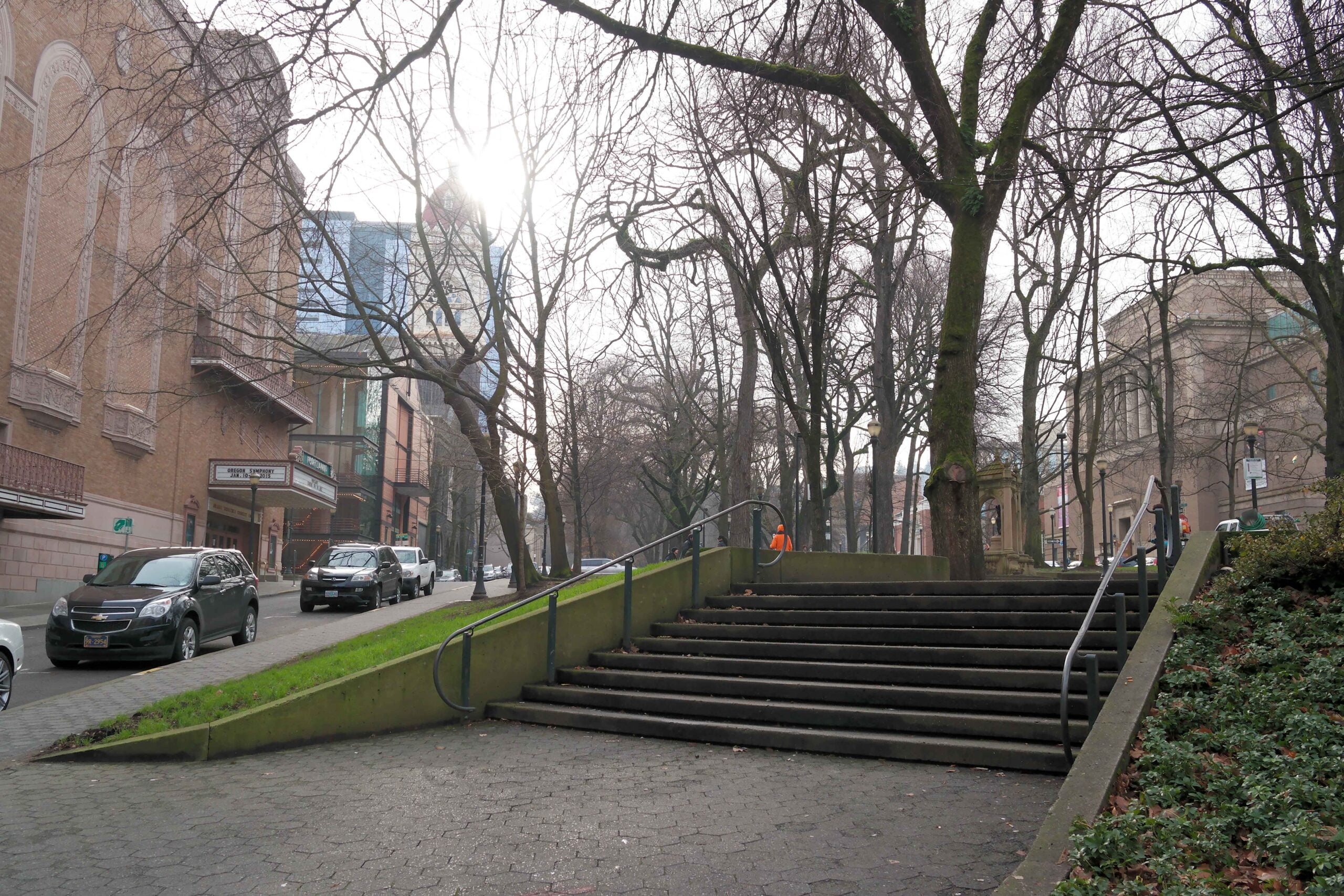
Stepping outside lands you straight onto the South Park Blocks, a shaded stretch of brick walkways and city park blocks running along SW Park Avenue. The Portland Art Museum sits right across the park blocks at 1219 SW Park Ave., making an easy art-and-history pairing Tuesday through Sunday. If you’re visiting from outside Portland and building a broader weekend around downtown, our Portland travel guide covers neighborhood picks, transit, and rainy-day ideas.
Pairing the gallery with a trip to Crater Lake
Looking at early painters wrestling with Crater Lake’s blue tends to make people want to see the rim in person. If you plan to pair the Portland exhibit with a drive south during the park’s 125th anniversary year in 2027, check construction updates before setting your itinerary. As our Crater Lake National Park guide explains, the Cleetwood Cove Trail and marina are closed through 2028 for major rebuilding, which means there are no public boat tours, swimming, or lakeshore access right now.
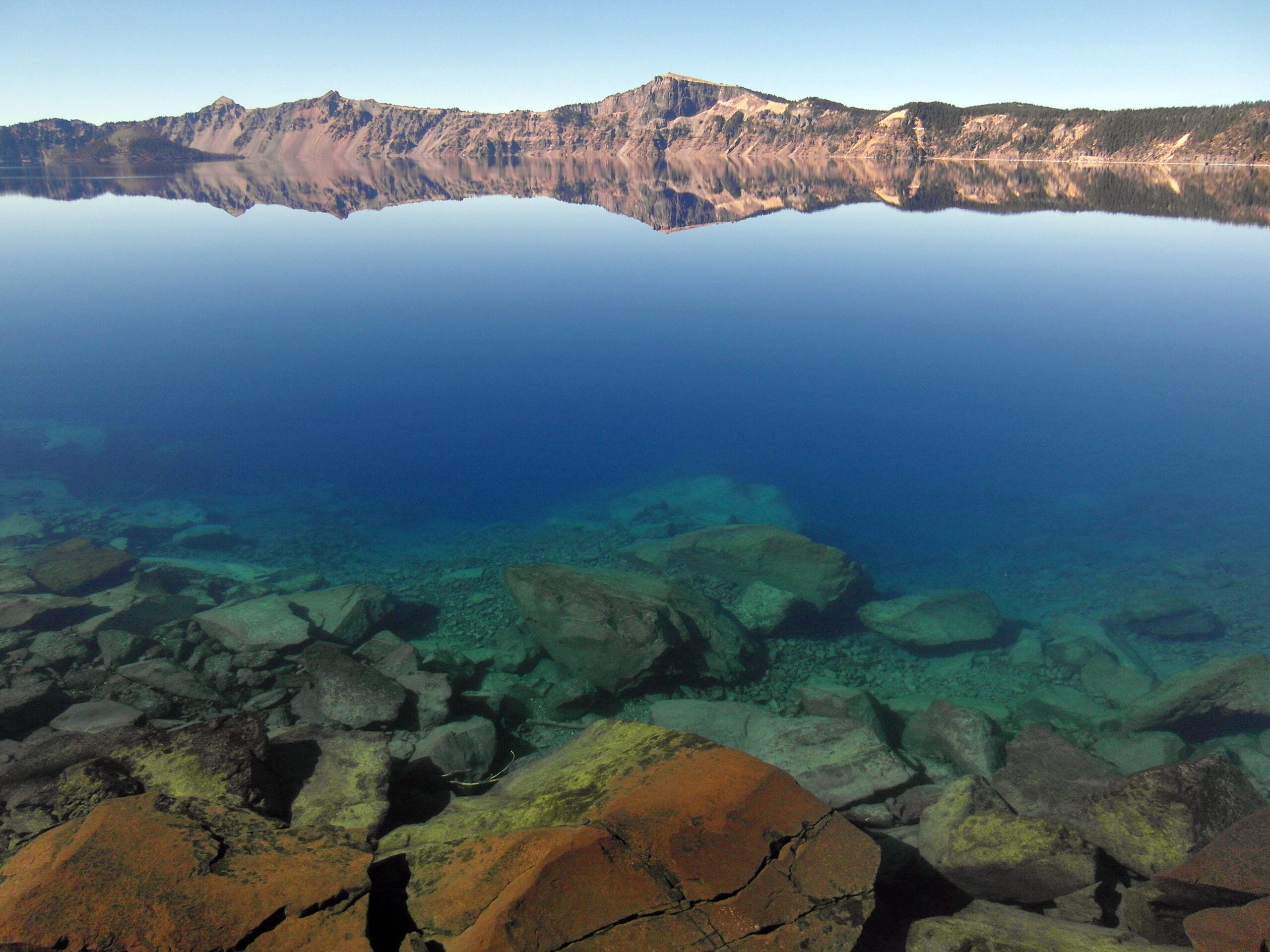
Rim Village and open west-rim overlooks still deliver the dramatic panorama that pulled Britt, Stuart, and Fountain up the mountain more than a century ago. No vehicle reservation is required to enter Crater Lake National Park, and private-vehicle admission runs $30 in summer and $20 in winter (cashless). That makes the Oregon Historical Society show especially handy from late fall through early summer, when heavy Cascade snow closes most of Rim Drive and Portland’s galleries offer the clearest look in Oregon at how those early views won the park its name.
Plan your visit
The Oregon Historical Society is at 1200 SW Park Ave., Portland, OR 97205, facing the South Park Blocks between SW Jefferson and SW Madison streets. You can call the museum at 503-222-1741 or email orhist@ohs.org. Museum galleries are open Monday through Saturday from 10 a.m. to 5 p.m. and Sunday from noon to 5 p.m., while the fourth-floor Research Library is open Tuesday from 1 p.m. to 5 p.m. and Wednesday through Saturday from 10 a.m. to 5 p.m. Both are closed on major holidays, including Thanksgiving (November 26, 2026), Christmas Eve and Christmas Day (December 24 and 25, 2026), and New Year’s Day (January 1, 2027), with an early 4 p.m. closing on December 10, 2026.
Tickets are sold at the admissions desk when you arrive. General admission is $14 for adults and $12 for seniors 60+, students, and teachers with ID, while youth 17 and under and OHS members enter free. Following Multnomah County voters’ approval of Measure 26-261 in May 2026, all Multnomah County residents get free admission with a state ID, driver’s license, or utility bill (library cards and TriMet passes don’t count). SNAP or WIC EBT cardholders receive free admission for up to four people plus a 10 percent Museum Store discount through Museums for All, active-duty military families get free entry from Armed Forces Day through Labor Day under Blue Star Museums, and pre-booked groups pay $11 per person when arranged at least two weeks ahead.
OHS doesn’t have its own parking lot, so drivers use metered street spaces or nearby garages. The closest City of Portland SmartPark garage is at 730 SW 10th Ave. (10th & Yamhill), open 24/7, with weekday rates starting at $2.35 for the first hour and capped at $15 all day, a $7 weekend daily maximum, and a $5 evening maximum after 5 p.m. Transit riders can take the Portland Streetcar to SW 11th & Jefferson (NS and B loops) or the Art Museum stop (A loop), catch TriMet bus lines 6, 38, 45, 55, 58, 68, 92, or 96 to SW 10th & Jefferson, or walk four blocks west from the Pioneer Square MAX Blue and Red line stations.
Food and beverages, including water bottles, aren’t allowed inside the museum or research library, though there’s a drinking fountain on Level 1. Free lockers hold backpacks and coats, larger bags can be checked behind the Level 2 admissions desk, and purses, baby bags, and medical bags are allowed after an open-bag security check. The SW Park Avenue entrance has a wheelchair and stroller ramp, elevators serve every gallery floor and the library, and manual wheelchairs are loaned free first-come at the desk. Accessible restrooms are on Levels 1 and 2, single-occupancy gender-neutral restrooms sit on Level 2 and Level 4, a private lactation room with a changing table is on Level 1, and ADA service dogs are welcome.
Frequently Asked Questions
How long is Creating a Masterpiece open at the Oregon Historical Society?
The exhibition opened November 20, 2026, and runs through January 9, 2028, covering Crater Lake National Park’s entire 125th anniversary year in 2027. You can see it during regular museum hours, Monday through Saturday from 10 a.m. to 5 p.m. and Sunday from noon to 5 p.m.
How much does it cost to visit the Oregon Historical Society?
General admission is $14 for adults and $12 for seniors 60+, students, and teachers with ID, while youth 17 and under and OHS members enter free. Multnomah County residents also get free admission with a state ID, driver’s license, or utility bill, and SNAP or WIC cardholders enter free for up to four guests through Museums for All.
Where is the best place to park for the Oregon Historical Society?
OHS doesn’t have a visitor lot, so drivers use metered street parking or nearby garages. The closest City of Portland SmartPark garage is at 730 SW 10th Ave. (10th & Yamhill), a short walk north of the museum, with weekday rates from $2.35 for the first hour up to $15 all day and a $7 weekend daily maximum.
Can you visit the Oregon Historical Society without a car?
Yes, it’s one of the easiest museums in Portland to reach by transit. Portland Streetcar stops nearby at SW 11th & Jefferson and the Art Museum, eight TriMet bus lines serve SW 10th & Jefferson, and Pioneer Square MAX stations on the Blue and Red lines are four blocks away.
Is the Oregon Historical Society wheelchair and stroller accessible?
Yes, the front entrance at 1200 SW Park Ave. has a ramp for wheelchairs and strollers, and elevators connect every gallery floor and the fourth-floor research library. Free manual wheelchairs are available first-come at the admissions desk, alongside accessible single-occupancy restrooms and a Level 1 lactation room.