
If you’ve looked outside lately and wondered whether hiking in Oregon now requires a complimentary respirator, you’re not alone.
Wildfire smoke continues to affect a large portion of the state this weekend, with smoke from fires across Oregon and the Pacific Northwest creating hazy conditions in many areas. The Oregon Department of Environmental Quality is currently warning of intermittent smoke in portions of Central, Southern, and Eastern Oregon, including Deschutes, eastern Douglas, Hood River, northern Jackson, northern Klamath, Lake, and Sherman counties.
But Oregon is a big state, and not everywhere is buried beneath the haze.
As of Sunday, August 9, portions of western Oregon are enjoying substantially cleaner air. That includes much of the Oregon Coast, but there are also good options farther inland in the Willamette Valley and Coast Range.
Corvallis, for example, was reporting a U.S. AQI of just 22 and air quality in the Good category late Sunday morning. Silverton was also reporting Good conditions, while Banks, northwest of Portland, was reporting low particulate levels and Good air quality.
That gives Oregonians more choices than simply driving straight to the beach.
Conditions can change quickly during wildfire season, so check the Oregon Smoke Information fire and air-quality map immediately before heading out. DEQ specifically warns that smoke levels can shift rapidly depending on weather.
Based on conditions Sunday, here are eight Oregon hikes worth considering if your goal is getting outside without hiking directly into the smoke.
1. Cape Perpetua Scenic Area
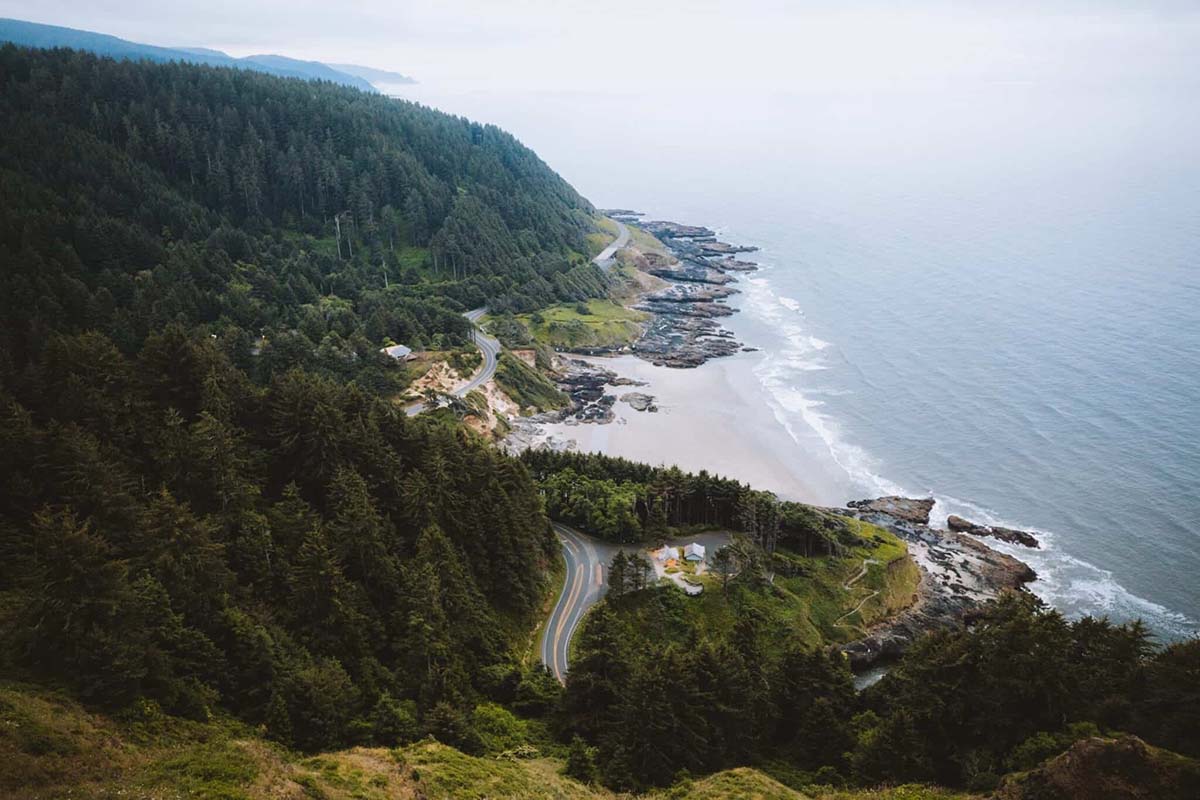
Just south of Yachats, Cape Perpetua might be one of the best places in Oregon to remember what clean air actually smells like.
The massive forested headland rises roughly 800 feet above the Pacific, with trails winding through towering Sitka spruce before emerging at viewpoints overlooking miles of rugged coastline.
You don’t have to commit to one massive hike here, either.
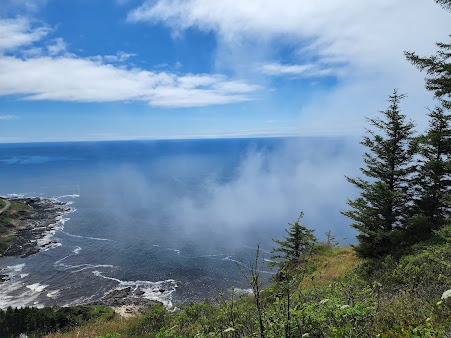
The Cape Perpetua trail system includes several options ranging from short walks to longer combinations through the surrounding forest. The Whispering Spruce Trail, for example, leads toward viewpoints high above the ocean, while other trails wind through thick coastal forest.
One thing to keep in mind: the nearby Cape Cove Trail has been closed because of cliff erosion and unstable trail conditions, so pay attention to posted signs while exploring the area.
With the immediate central coast remaining one of western Oregon’s better bets for escaping inland wildfire smoke, Cape Perpetua is an especially tempting alternative to heading east into the Cascades.
2. Heceta Head and the Hobbit Trail
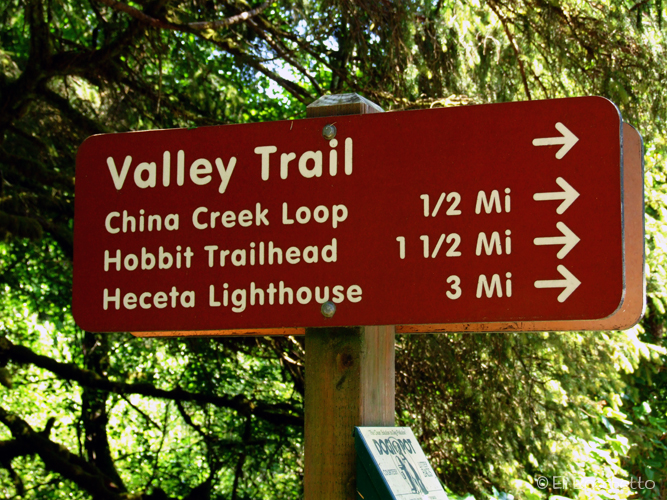
A few miles north of Florence, this stretch of coastline delivers just about everything people picture when they think of hiking the Oregon Coast.
Dense coastal forest.
Hidden beaches.
Cliffs above the Pacific.
And one of Oregon’s most recognizable lighthouses.
The trails around Heceta Head Lighthouse can be combined into a scenic coastal outing, while the nearby Hobbit Trail descends through a twisting tunnel of vegetation before reaching the beach.
If you’re coming from Eugene or Springfield, this is also one of the more practical smoke-escape hikes on the list without turning the trip into an all-day drive.
And if the valley is hazy when you leave home, there’s something especially satisfying about cresting the Coast Range and watching the sky begin to clear as you head toward Florence.
3. Cummins Creek Loop
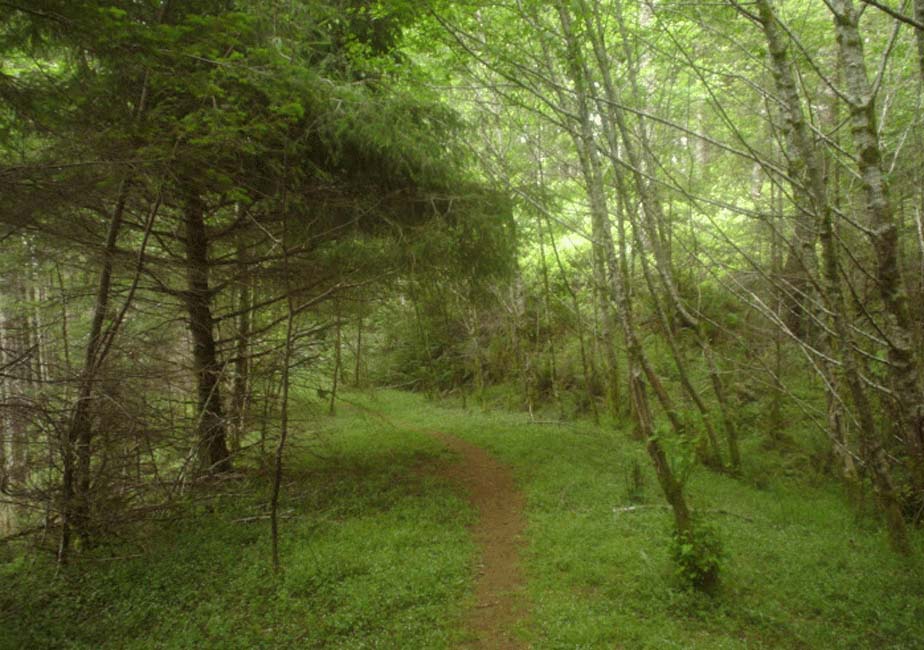
If you want something longer than a quick coastal walk, head back toward Cape Perpetua and consider the Cummins Creek area.
The trail travels deep into the Coast Range forest behind the headland, trading crowded overlooks for towering trees, ferns, creeks, and long stretches of quiet coastal wilderness.
Depending on the route and connecting trails you use, hikers can turn the area into a substantially longer adventure than some of the shorter Cape Perpetua walks.
This is the kind of hike that feels distinctly Oregon: damp earth, enormous trees, moss hanging from branches, and very little indication that other parts of the state are dealing with wildfire smoke.
Just remember that individual trail closures can happen even when the larger recreation area remains accessible, so check current Forest Service conditions before leaving.
4. Drift Creek Falls
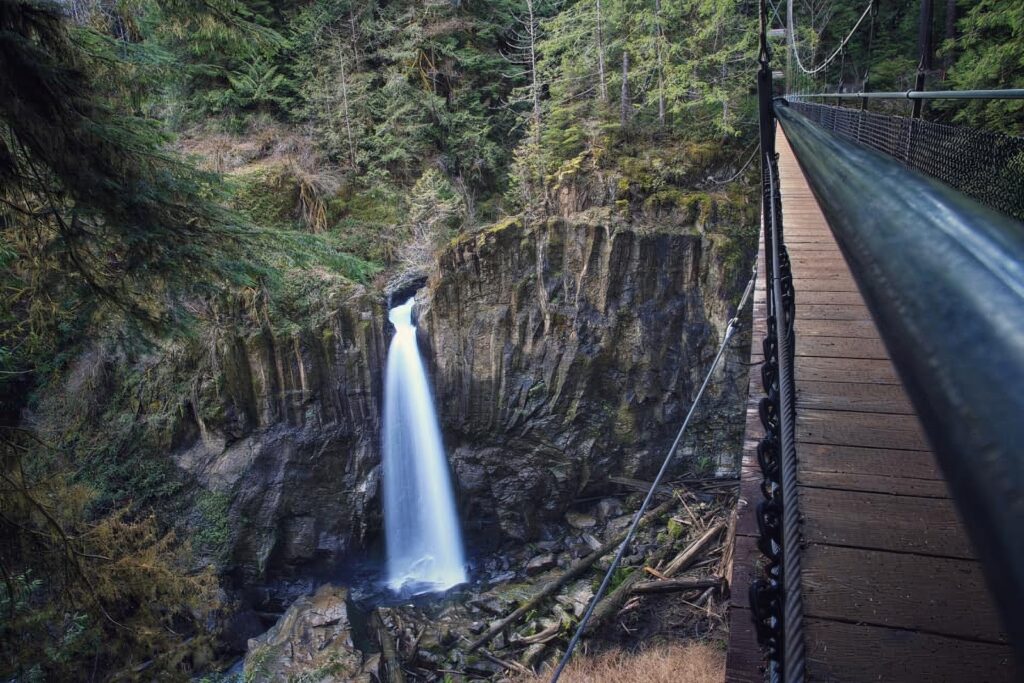
If your ideal Oregon hike ends with a waterfall and a suspension bridge hanging high above a forested canyon, Drift Creek Falls is hard to beat.
Located inland from Lincoln City in the Siuslaw National Forest, the trail passes through thick Coast Range forest before reaching the dramatic suspension bridge overlooking Drift Creek Falls.
It’s an especially good choice for people who want something that feels more like a traditional forest hike than a walk along an exposed coastal headland.
The road to the trailhead can be narrow and winding, so give yourself some extra time getting there.
Once you arrive, though, you’re surrounded by exactly the sort of lush coastal forest that makes Western Oregon special.
5. Cascade Head
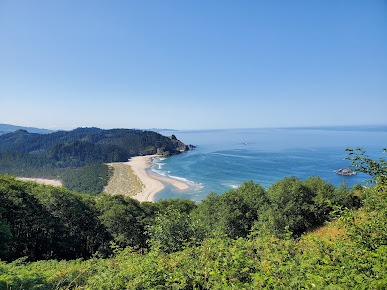
For huge views, Cascade Head is difficult to top.
The headland rises dramatically above the Pacific near Lincoln City, with hiking routes climbing from thick coastal forest into open meadows overlooking the ocean and Salmon River estuary.
On a clear day, the views seem to stretch forever.
Visitors should pay close attention to current trail access before heading out because portions of the Cascade Head trail system can be subject to seasonal closures and restrictions.
Even if your preferred route isn’t available, the Lincoln City area offers plenty of nearby alternatives.
And while the first five hikes on this list take advantage of the relatively clean marine air along the coast, you don’t necessarily have to drive all the way to the Pacific to find better conditions today.
6. McDonald-Dunn Research Forest
Here’s one for anyone who wants fresh air without heading to the beach.
The McDonald-Dunn Research Forest sits immediately north of Corvallis and offers a sprawling network of forest roads and trails through the foothills of the Coast Range.
And Sunday’s air quality in Corvallis looks excellent.
Late Sunday morning, Corvallis was reporting a U.S. AQI of 22, firmly in the Good category, with PM2.5 levels remaining low.
Even better, Oregon State University currently lists the McDonald-Dunn Forest as fully open. OSU says visitors have access to roughly 35 miles of trails and more than 110 miles of roads throughout the research forest.
That means you can tailor the outing to whatever you’re looking for, whether that’s a short walk beneath the trees or a much longer trek through the hills.
The forest is actively managed, and temporary logging-related closures can happen during the summer, so hikers should still watch for posted signs and check OSU’s current forest updates before heading out.
But for anyone in Eugene, Salem, Albany, or Corvallis who doesn’t feel like making the drive to the beach, this may be one of the best alternatives on the list today.
7. Silver Falls State Park
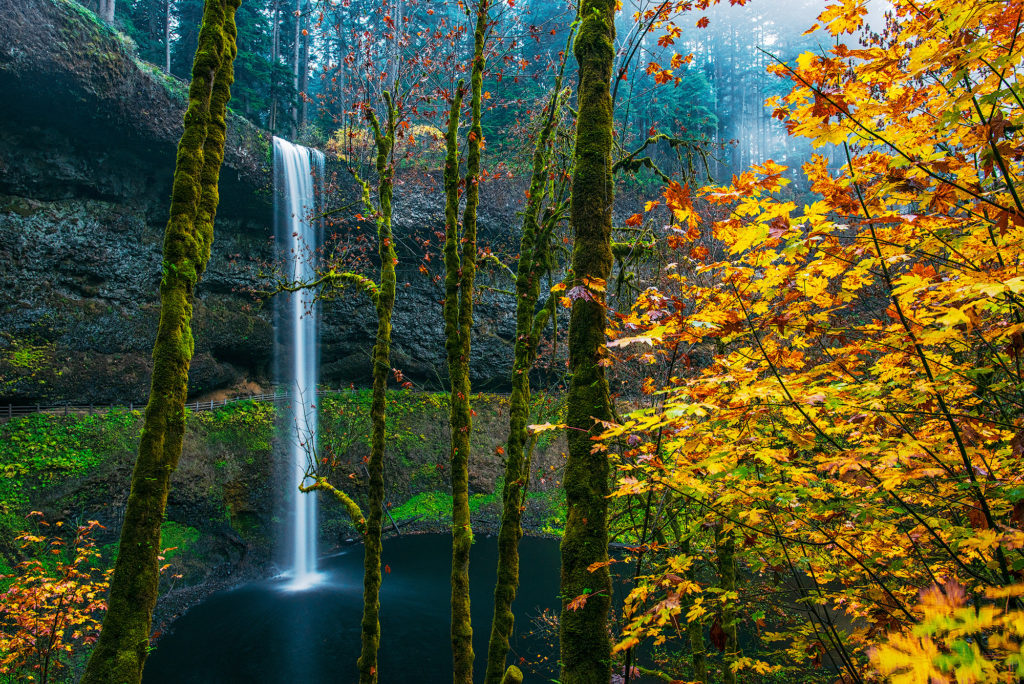
Yes, Silver Falls.
Oregon’s famous waterfall park is another inland option where conditions look considerably better than many smoke-affected parts of the state.
Silverton was reporting an AQI of approximately 13 Sunday morning, putting local air quality firmly in the Good category.
Silver Falls State Park is also operating this weekend. In fact, Oregon State Parks lists programming taking place at the park Sunday evening, August 9.
The obvious choice here is the legendary Trail of Ten Falls, where hikers can travel through a lush canyon filled with waterfalls, towering trees, and sections of trail that actually pass behind several of the falls.
You don’t have to hike the entire loop, either.
Shorter options around South Falls and Lower South Falls allow visitors to experience some of the best scenery without committing to the full route.
If you’ve been avoiding the Cascades because of smoke, Silver Falls offers something of a compromise: a deep, heavily forested waterfall hike that still feels like classic western Oregon wilderness while remaining much farther west than many of the areas currently dealing with wildfire smoke.
8. L.L. Stub Stewart State Park
Northwest Oregon gives us another good option.
L.L. Stub Stewart State Park sits in the Coast Range west of Portland near Banks and Vernonia. Although it’s technically in the Coast Range, this is very much an inland forest hike, not an Oregon Coast destination.
Banks was reporting Good air quality Sunday, with low PM2.5 concentrations.
Stub Stewart is also open for day use, with summer hours currently running from 7 a.m. to 9 p.m. Oregon State Parks lists multiple upcoming August events at the park and provides a dedicated trail map for visitors.
The park contains miles of forested trails winding through the hills, making it easy to build anything from a relatively short walk to a much longer afternoon hike.
It’s also a good reminder that the Coast Range itself can provide refuge from wildfire smoke without requiring you to continue all the way west to Highway 101.
For Portland-area hikers especially, Stub Stewart may be one of the most convenient options on this list today.
You Don’t Necessarily Have to Head to the Coast
The Oregon Coast remains one of the most reliable places to look when wildfire smoke settles over the interior of the state.
But today’s conditions show why it pays to actually look at the air-quality map instead of assuming everything east of Highway 101 is smoky.
Corvallis is in the Good category.
Silverton is in the Good category.
Banks is reporting Good conditions.
And all three areas offer legitimate hiking destinations that are well outside some of the hardest-hit smoke zones.
Meanwhile, Oregon DEQ continues to expect intermittent smoke in areas including Deschutes County, eastern Douglas County, Hood River County, northern Jackson and Klamath counties, Lake County, and Sherman County. Other portions of Eastern Oregon have also experienced smoke impacts in recent days.
So if your original Sunday plan involved heading toward Bend, the central Cascades, or deeper into Eastern Oregon, there are some pretty compelling reasons to point the car west instead.
That doesn’t necessarily mean all the way west.
Cape Perpetua, Heceta Head, Drift Creek Falls, and Cascade Head remain excellent choices if you want ocean air.
But McDonald-Dunn Forest, Silver Falls, and Stub Stewart give you three very different inland alternatives where air quality is looking good today.
There is, however, no such thing as a guaranteed smoke-free hike during Oregon wildfire season.
Smoke can travel hundreds of miles, winds can shift, and air quality that looks fantastic at breakfast can deteriorate by afternoon.
Before leaving home, check the Oregon DEQ Fire and Air Quality Map for the latest readings near your destination. The map displays current fires and air-quality monitors across Oregon, and DEQ specifically cautions that wildfire smoke conditions can change rapidly.
Pack plenty of water, check for fire restrictions and trail closures, and enjoy breathing something other than wildfire smoke for a few hours.