
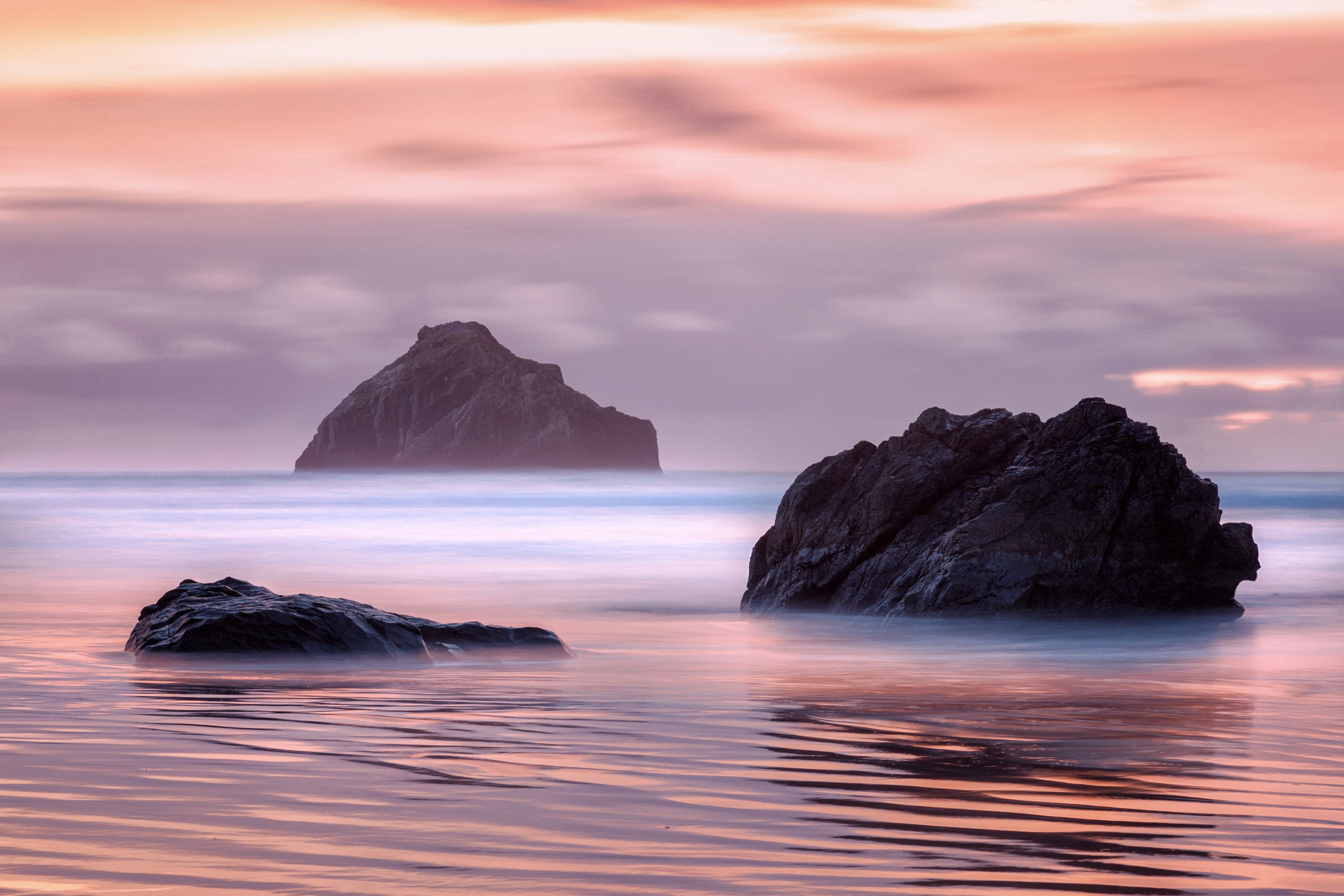
A little piece of frosted glass can change the pace of an Oregon beach walk. Suddenly you’re noticing the curve of every pebble, the shells scattered through the sand, and the small things a passing wave has left behind. That is the pleasure of searching for Oregon Coast sea glass: an ordinary stretch of shoreline becomes a reason to slow down. Finding something beautiful is a bonus, not the price of a successful day.
The coast does not offer a dependable supply of sea glass at every beach, and a list of place names cannot tell you what this morning’s tide has uncovered. These 12 stops, arranged from north to south, are places to enjoy a patient search when access and conditions allow, rather than a ranking of proven glass deposits. Some are broad and sandy; others have rocky edges or changing patches of gravel that invite a closer look. Use our Oregon Coast guide to compare nearby towns, plan a longer beachcombing trip, and build an itinerary with time for more than the drive.
What Real Sea Glass Looks and Feels Like
Sea glass begins as human-made glass that has been weathered in the ocean. A well-worn piece usually has rounded edges and a frosted, subtly textured surface, rather than the glossy faces and cutting edges of a freshly broken bottle. Look closely and you may see tiny pits, curves, or surviving bottle details beneath the wear. A piece need not be a perfect jewel to be interesting, but sharp glass deserves careful handling, never a bare-handed test of its edge.
The International Sea Glass Association’s identification guide explains that frosting and small surface marks are clues, not conclusive proof: manufactured craft glass can imitate them. Context matters, especially when buying glass rather than finding it yourself. Fresh, sharp fragments are litter, not the rounded sea glass collectors usually seek; pick them up only if you can contain them safely for disposal. Never toss glass into the ocean to “make” future treasures.
When to Search: Follow the Tide, Then Check the Surf
An outgoing tide and a daylight low tide can expose more ground for searching, but there is no magic hour that works along the entire coast. Early morning can mean fewer people have walked a beach, while an afternoon low tide may fit your trip better. Check a tide table for the particular area and date, and leave yourself time to return before the water rises. Oregon State Parks links regional tide tables from many of its park pages; use those alongside a current weather and surf forecast, rather than treating the tide chart as a safety clearance.
Storms can strip away sand, expose gravel, and redistribute the small objects beachcombers notice, particularly in the wetter months. They can also bury a promising patch or leave the shoreline dangerous long after the rain stops. Search only after hazardous surf has subsided, and skip the beach when advisories or on-site conditions call for it. On a suitable day, look for loose material in pebble bands and along the wrack line, the ribbon of seaweed and debris left by the tide, without pulling apart habitat or digging into banks. A stretch that looks unpromising today may look quite different on a future visit.
Keep the Ocean in View
Beachcombing asks you to look down, but Oregon’s surf demands that you keep looking up. The National Weather Service warns that sneaker waves can arrive after a long lull, surge much farther inland than expected, and move heavy drift logs. Stay well back from the water, keep a clear escape route, and avoid logs within reach of waves. Keep children close, follow local dog rules, and leave rocks and jetties to the waves. No interesting piece of glass is worth stepping into the surf to retrieve.
Wear shoes with reliable traction and bring layers, a rain shell, and a small container for finds. Choose an access route everyone in your group can manage on the return trip, remembering that steep trails and soft sand can be tiring. Stay away from unstable bluff edges and the base of eroding cliffs, and do not round a headland simply because the tide is low. Before leaving the parking area, check posted closures, parking requirements, and the route back to higher ground.
12 Oregon Coast Beaches for a Patient Search
1. Fort Stevens: An Open-Beach Walk Near the Peter Iredale
Near Warrenton, Fort Stevens State Park provides access to the broad ocean beach around the Peter Iredale shipwreck. It is a practical northern starting point for travelers staying in Astoria or Warrenton, with enough open shoreline to make a long walk the main event. Much of the beach is sand, so look for whatever small bands of shells, pebbles, or loose debris the tide has actually left, rather than expecting a permanent gravel bed. The shipwreck is a historic feature to appreciate, never a collecting site; leave anything that could be associated with it in place. Follow current park signs for vehicle traffic and wildlife restrictions, and keep your search away from the Columbia River’s jetties.
2. Seaside: Easy Town Access and a Different Texture at the Cove
Seaside pairs an expansive sandy beach with the convenience of a town close behind it. Public approaches along the Promenade make it possible to fit a short search between other plans, while Seaside’s beachcombing guide identifies the Cove at the south end as a contrasting, rocky shoreline. Search the open beach for loose material where it has accumulated, keeping well clear of active surf along the stones. Seaside is known for ordinary beach finds such as shells and sand dollars; a sea-glass discovery should be treated as an unexpected extra. Leave living sand dollars and other animals where they are, and do not head toward the estuary or around Tillamook Head in pursuit of a quieter patch.
3. Arcadia Beach: A Sandy Cove South of Cannon Beach
At Arcadia Beach State Recreation Site, a small highway-side park opens onto sand backed by wooded slopes and sandstone bluffs. The beach lies between headlands south of Cannon Beach, giving a walk here a more enclosed feel than the long open shore at Seaside. If scattered pebbles or shell fragments are exposed, those patches are worth a slow scan, although the scenery is a much surer attraction than glass. Stay on the beach you can reach directly from the access, with a clear route back. Oregon State Parks notes that the adjoining headlands can only be passed at low tide, which is a reason to plan conservatively rather than assume a through-walk will be possible.
4. Lincoln City: Separate Natural Sea Glass From Glass Floats
Lincoln City offers several public access points along its long oceanfront, making it convenient to choose a beach near your lodging and return under different conditions. For naturally weathered glass, use the same patient approach you would elsewhere: look at the loose material present that day and expect an uncertain result. The city’s famous Finders Keepers program is a separate attraction, placing artist-made glass floats along the shoreline from Roads End to Siletz Bay. These floats are hidden above the high-tide line and below the beach embankment, not in the beach grass, and they are not naturally tumbled sea glass. Check the program’s current guidance before hunting; its rules limit finds to one float per household per year.
5. Moolack Beach: Watch for Exposed Gravel North of Newport
Moolack Beach, north of Newport, is a useful stop when your idea of beachcombing includes studying stones as well as looking for glass. The Oregon Coast Visitors Association includes Moolack among its central-coast rockhounding destinations, noting that seasonal storm action can expose gravel beds. That supports a reason to examine the terrain, not a promise that those beds will contain sea glass. Use an established public approach from Highway 101, check the descent before committing, and keep clear of eroding banks. When sand covers the interesting material or the surf leaves little room to walk, save the search for another day instead of digging into the bluff.
6. Nye Beach: A Manageable Search With Newport Close By
Newport’s Nye Beach neighborhood makes a beachcombing outing easy to pair with a café, gallery, or meal. The public beach approach by the turnaround leads to an open sandy shore, so this is a convenient place to look without committing to a remote hike. Focus on the small accumulations of shells and stones you can see safely above the wash, rather than covering distance simply for its own sake. There may be very little glass to find, and a mostly sandy beach can make a short, observant walk the better choice. If anyone in your group needs an easier route across the sand, check current beach-access assistance with Newport’s visitor information service before arriving.
7. South Beach: A Longer Walk South of Yaquina Bay
Across the Yaquina Bay Bridge from central Newport, South Beach State Park offers trails and access to miles of broad sandy ocean beach. It suits beachcombers who want room to wander, with the option of combining a search with a stay in the park. Follow a designated beach trail from the appropriate day-use area, then look for fresh surface deposits while keeping your access route in mind. The long shoreline is the attraction here; extensive clean sand may yield little for a glass collector. Stay away from the South Jetty rocks and river-mouth currents, and check current parking requirements before setting out.
8. Seal Rock: Search the Sand, Respect the Tidepools
South of Newport, Seal Rock State Recreation Site combines a sandy beach with large offshore formations and tidepool habitat. Oregon State Parks describes the short beach trail as steep in places, with an accessible viewpoint partway down, so distinguish a viewpoint visit from a beach descent when planning for your group. On a suitable tide, examine loose material on the open sand without climbing over wet rocks or reaching into pools. Sea glass is a possible incidental find, not a reason to disturb the animals that make this shoreline special. If the water crowds the base of the rocks or the trail feels beyond your footing, the overlook is a worthwhile destination in its own right.
9. Heceta Head: Choose the Beach Below the Lighthouse
For this stop, head to the beach at Heceta Head Lighthouse State Scenic Viewpoint north of Florence, rather than assuming every beach with “Heceta” in its name is the same place. The park’s cove beach is accessible from the parking area, while the uphill lighthouse trail is a separate outing. Give any exposed bands of loose stones a careful look, but keep the search on open beach with an easy retreat. A sheltered-looking cove still receives powerful waves, and caves or rock edges are poor places to become absorbed in a hunt. Check posted collecting restrictions and protected-area guidance here before pocketing a find; the lighthouse setting alone makes the stop rewarding.
10. Bandon and Face Rock: Sea Stacks With Room to Wander
Bandon’s coastline makes a compelling southern stop even when your collecting container stays empty. At Face Rock State Scenic Viewpoint, a maintained trail leads from the bluff to a beach framed by remarkable sea stacks. Look for whatever strips of loose pebbles and shells are exposed on the open sand, and change direction when a route would squeeze you between surf and rock. The offshore formations and parts of the rocky intertidal area are protected wildlife habitat, so leave those features undisturbed. Plan for the climb back to the viewpoint and check current day-use parking rules, then give yourself time to enjoy Bandon without making a glass find the measure of the trip.
11. Gold Beach: Start With the Visitor Center’s Beach Access
Gold Beach gives travelers a practical place to break a south-coast drive and explore the shoreline near the mouth of the Rogue River. The visitor center is a useful starting point, with access to South Beach Park and information about beach mobility equipment and seasonal access mats. This is a different South Beach from the state park in Newport, so double-check your destination when planning. Look for safely exposed patches of mixed sand and small stones, appreciating the area’s broader beachcombing possibilities without counting on sea glass. Keep well away from the river mouth, jetties, and waterlogged driftwood, and ask locally about the day’s access conditions before choosing how far to walk.
12. Harris Beach: A Scenic Finale Near Brookings
Near Brookings, Harris Beach State Park offers sandy stretches, rocky outcrops, and views of offshore islands. Use the park’s day-use beach access and stay on a route that keeps an easy return available as the tide changes. Where small stones have collected on the open beach, a slow scan can be part of the outing, but the dramatic setting is far more predictable than a sea-glass find. Keep collecting separate from tidepool exploration, leave wildlife undisturbed, and respect protected offshore habitat. Check parking fees and current park notices before you go, especially if you are combining your walk with a camping stay.
What You Should—and Should Not—Take Home
A modest souvenir is very different from treating the coast as a free supply yard. Oregon State Parks’ collecting guidance allows small quantities of certain nonliving natural materials for personal, noncommercial use, subject to limits and local restrictions. That guidance is not blanket permission to take every object, and manufactured glass can also raise questions if it belongs to a historic or archaeological site. For sea glass, check the rules at your exact beach and ask park staff when its status is unclear. Leave suspected artifacts and shipwreck material in place, and photograph an uncertain find rather than removing it.
Keep your search on the surface, avoid digging into cliffs or dunes, and leave living creatures, occupied shells, plants, and attached tidepool life alone. Respect nesting closures and other posted protections even when the ground beyond a sign looks promising. Never break rocks, dismantle driftwood habitat, or move large objects to reach a possible find. A small litter bag is a useful addition to your kit, but only pick up sharp or hazardous debris when you can handle and transport it safely; report anything suspicious to the appropriate local authority.
Oregon Coast Sea Glass FAQ
Where is the best place to find sea glass on the Oregon Coast?
There is no verified, consistently best beach among these stops. Choose a safely accessible beach with visible loose pebbles, shells, or fresh tide deposits, and be willing to return under different conditions. Lincoln City is a strong choice for an organized glass-float hunt, but that is a different activity from finding natural sea glass.
What time of day is best for sea-glass hunting?
Let the local tide and surf forecast decide, rather than the clock alone. A daylight outgoing or low tide can provide more ground to examine, and mornings may offer a quieter walk. If low tide coincides with hazardous surf, poor visibility, or an unsafe return route, choose another time.
Can you legally collect sea glass in Oregon?
Check the specific beach before collecting; there is no permission slip that covers every object and protected area. Oregon allows limited personal souvenir collecting in many ocean-shore settings, while archaeological objects and some protected resources are off limits. Ask a ranger about glass if you are unsure of the local rule or a piece’s connection to a historic site.
How do you know if sea glass is genuine?
Rounded edges, frosting, and uneven surface wear are useful clues to natural weathering. Fresh sharp edges suggest a fragment that has not worn into the smooth piece collectors usually want. Manufactured glass can mimic natural wear, so appearance alone cannot prove authenticity or tell you exactly how old a piece is.
Is sea glass common on the Oregon Coast?
Plan for occasional finds rather than a full handful at every stop. Large sandy stretches may offer little glass, and exposure changes as storms, waves, and tides move material around. A walk with no glass can still turn up interesting shells, beautiful stones to admire, and a coastline worth returning to.
Explore More of Oregon
Build a longer route with our Oregon Coast Guide, which brings nearby towns, beaches, and other stops into one trip-planning resource. Then check the Oregon Events Calendar for something to enjoy between beach walks. Leave room in the itinerary for changing weather and a second look at a favorite stretch of sand; patient days tend to make the best beachcombing memories.