
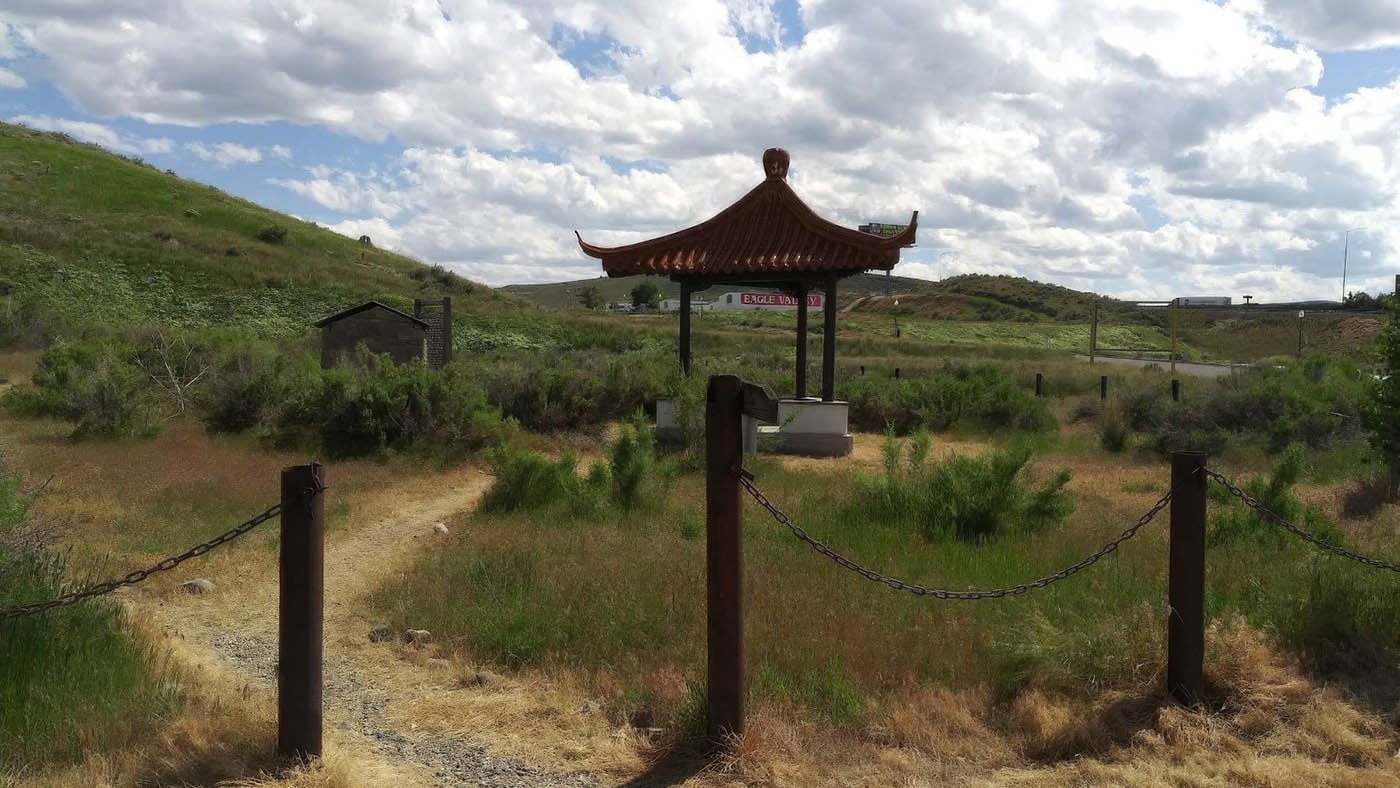
Several years ago, I was on a solo photography trip through Baker City when I came across a little cemetery in a place I never would have expected to find one. It sat along a quiet road, not far from the bustling Interstate 84, with a hotel nearby and an old-fashioned windmill standing almost absurdly close to the grounds. It was small, peaceful, seemingly out of place, and far too easy to overlook.
At the time, I wasn’t even sure it had a proper name.
As it turns out, it does. It’s known simply as the Chinese Cemetery, and the history behind this little patch of ground is pretty remarkable. What I didn’t fully appreciate when I first visited was how much of northeastern Oregon’s early prosperity depended on Chinese immigrants, or how badly many of those same people were treated by the communities they we indispensable in helping to build.
The more I learned, the more I realized this wasn’t simply a story about an old cemetery. It was a story about a nearly vanished community, the gold that transformed Oregon’s eastern mountains, and people whose contributions have too often been reduced to a footnote in our state’s history.
A Cemetery Where Most of the Graves Are Empty
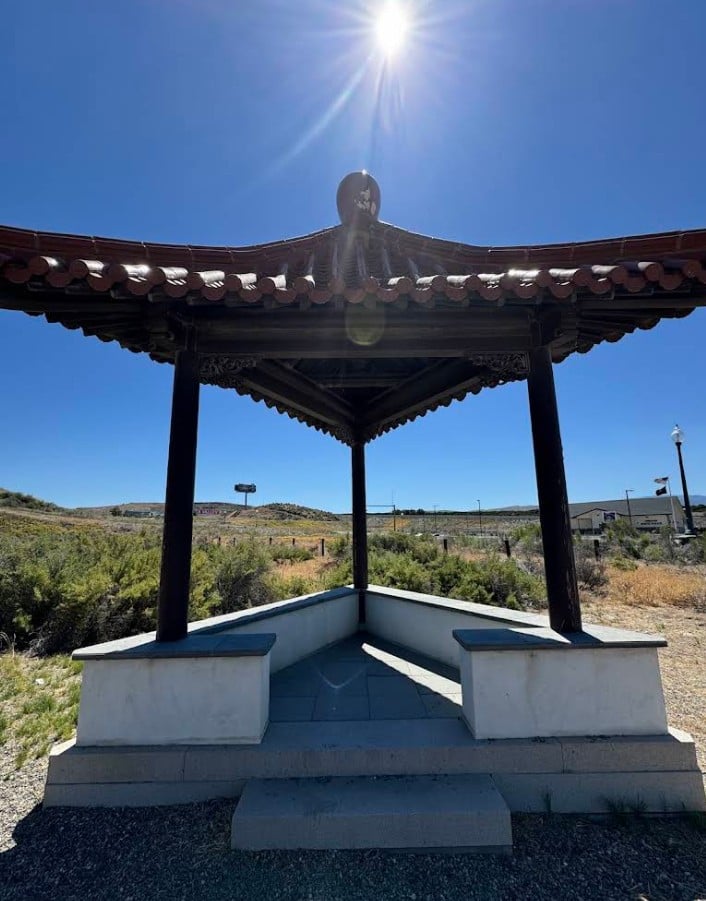
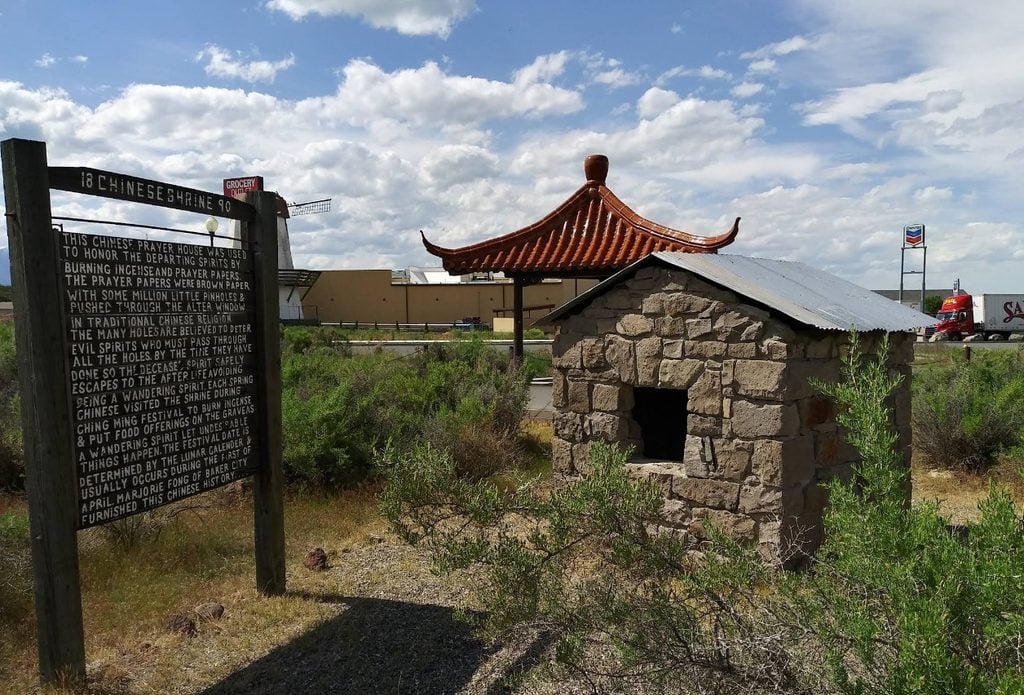
The cemetery sits on Windmill Road, just east of Exit 304 along I-84. Today, visitors will find a Chinese-style pavilion with a red-tiled roof, interpretive signs, a memorial stone, and a small structure resembling a traditional prayer-paper burner. The grounds are modest, but their significance reaches well beyond Baker City.
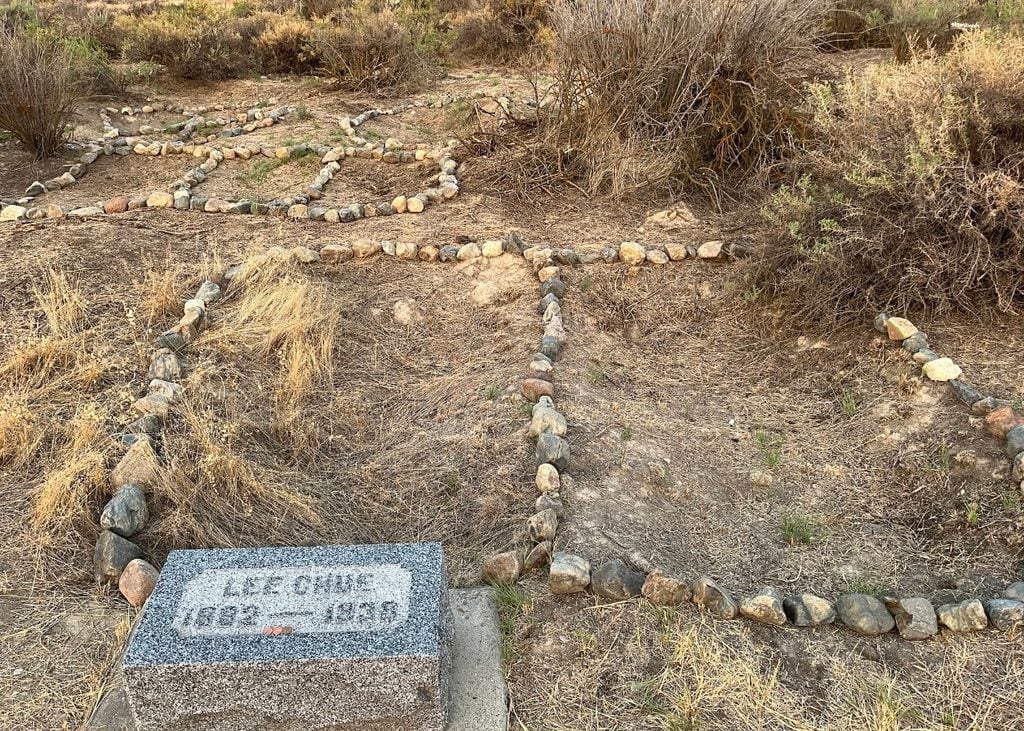
According to the Baker County Historical Society, surviving burial records document approximately 46 people interred here, with burials recorded between 1894 and 1948. Only one marked grave remains, belonging to Lee Chue, who lived from 1882 to 1938. The cemetery’s memorial also recognizes Chinese residents whose names and burial records have been lost.
There’s a fascinating reason so many graves are empty.
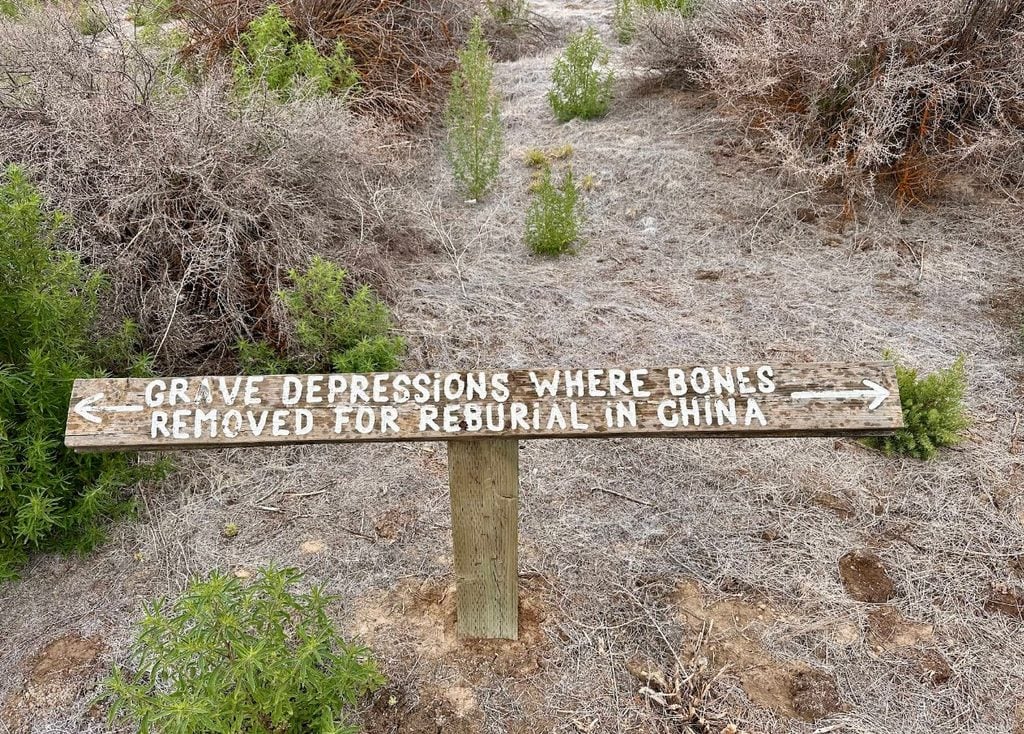
For many Chinese immigrants, burial in America was not meant to be permanent. Following traditional customs of ancestor reverence, families and community associations arranged for the deceased to be buried temporarily, then exhumed years later so their remains could be returned to their ancestral villages in China.
The Chinese Consolidated Benevolent Association in Portland helped coordinate this process. Bones were carefully recovered and prepared for the long journey across the Pacific, where families could honor their loved ones according to their traditions.
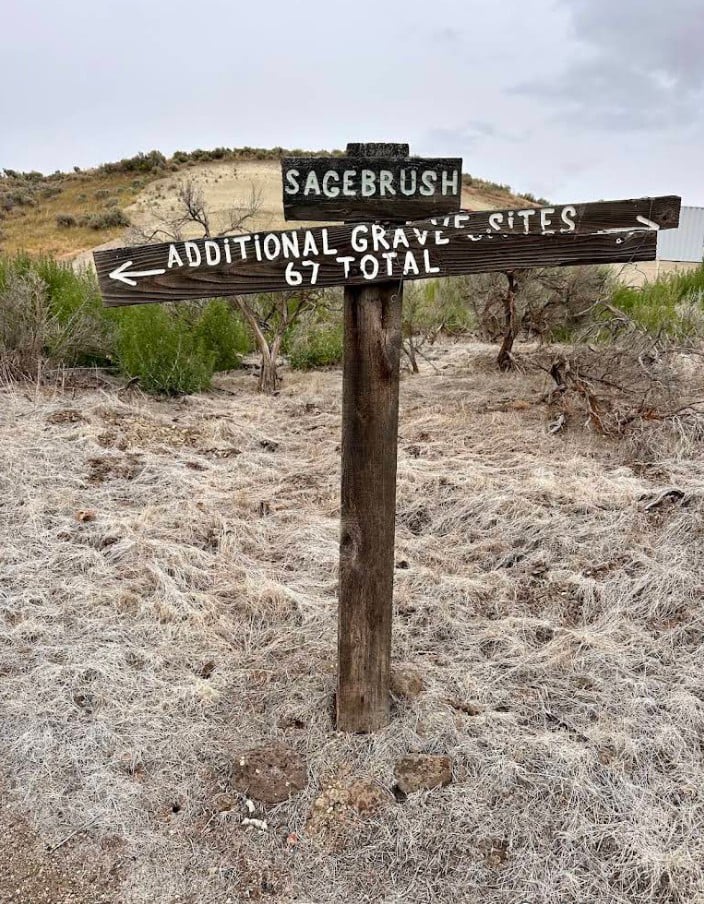
Not everyone made that journey home. Some remains are believed to still be buried at Baker City’s cemetery, and the historic records are incomplete.
Those shallow depressions in the earth aren’t simply abandoned graves. Many represent the final traces of people whose families hoped they would one day return home, even in death.
The Gold Rush That Built Northeastern Oregon
To understand why a Chinese cemetery exists in Baker City at all, we have to go back to the 1860s, when gold discoveries transformed the Blue Mountains.
The discovery of rich placer deposits around Auburn in 1862 brought thousands of prospectors into the region. Mining camps sprang up across the mountains, including Auburn, Sumpter, Granite, Sparta, and settlements along the Burnt and Powder rivers.
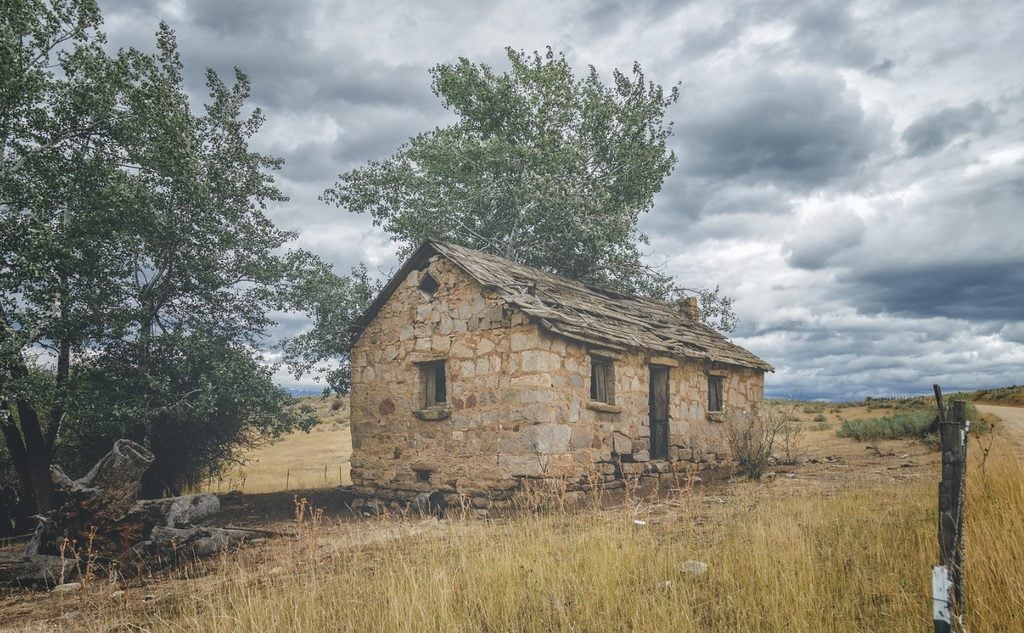
Much of the familiar history of this period focuses on white prospectors, frontier entrepreneurs, and the fortunes made in gold. But Chinese immigrants were an enormous part of this story, working claims, constructing mining infrastructure, building transportation routes, and developing the businesses that helped these isolated communities survive.
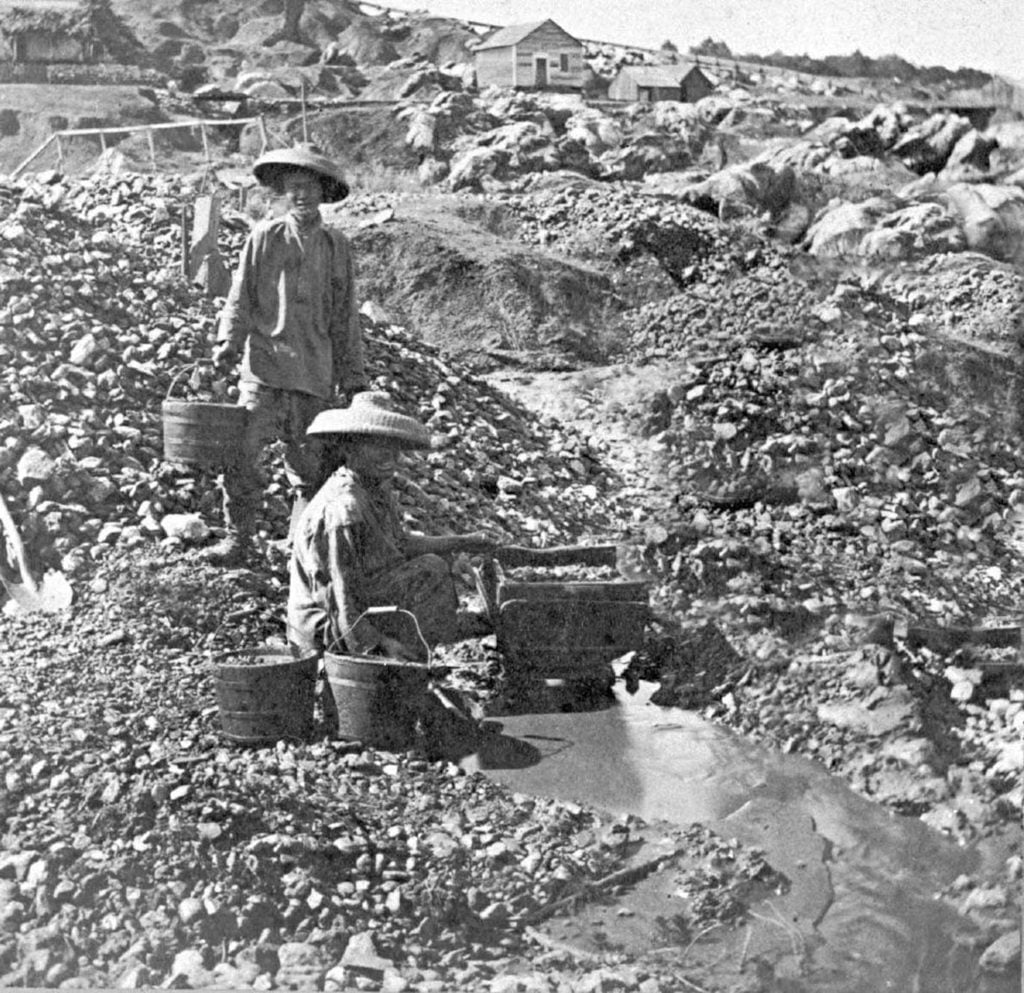
According to historian Jeff LaLande’s research in the Oregon Encyclopedia’s history of Chinese mining, at least 1,760 Chinese residents lived east of the Cascades by 1870, most working in the John Day mining region. By 1880, Chinese miners accounted for more than three-quarters of the mining population in the Blue Mountains.
Sit and seriously think about that for a minute.
The Chinese weren’t a minor presence in Oregon’s gold country. In many places, they were the mining workforce.
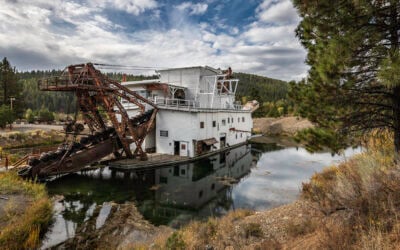
They often worked deposits that had already been mined by others, recovering gold from gravel and tailings that earlier prospectors had considered exhausted. But their work went far beyond sorting through leftovers. Chinese miners operated their own partnerships, developed sophisticated placer-mining techniques, and constructed enormous water systems essential to extracting gold.
One of the most extraordinary examples is the Eldorado Ditch.
The Men Who Dug More Than 100 Miles by Hand
Beginning in the 1860s, Chinese laborers helped construct a massive system of ditches that carried water from the Burnt River region toward mining operations in what is now Malheur County. By 1878, workers had excavated approximately 100 miles of the system, with the larger network eventually extending considerably farther.
The project was an engineering achievement accomplished largely with hand tools, on difficult terrain, long before modern earthmoving equipment existed.
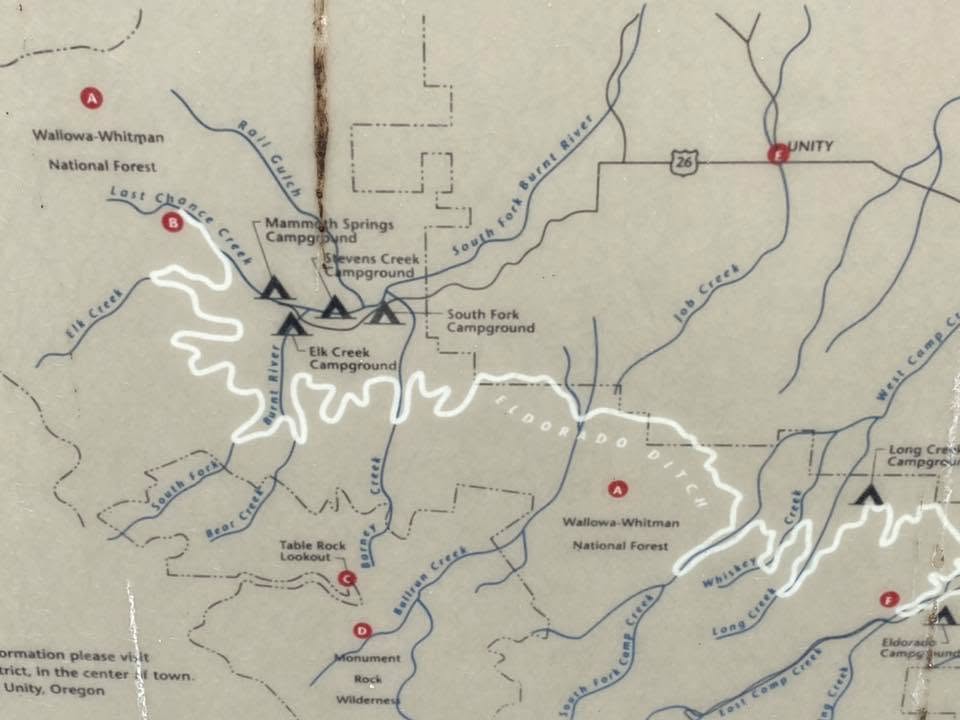
The Oregon Encyclopedia’s account of the Eldorado Ditch estimates that 1,000 Chinese laborers worked on the project in 1870. They earned approximately $2 to $2.50 per day, between $1 and $2 less than white workers.
Their labor helped make large-scale mining possible and fueled the economy of a region still developing its towns, roads, and commercial infrastructure.
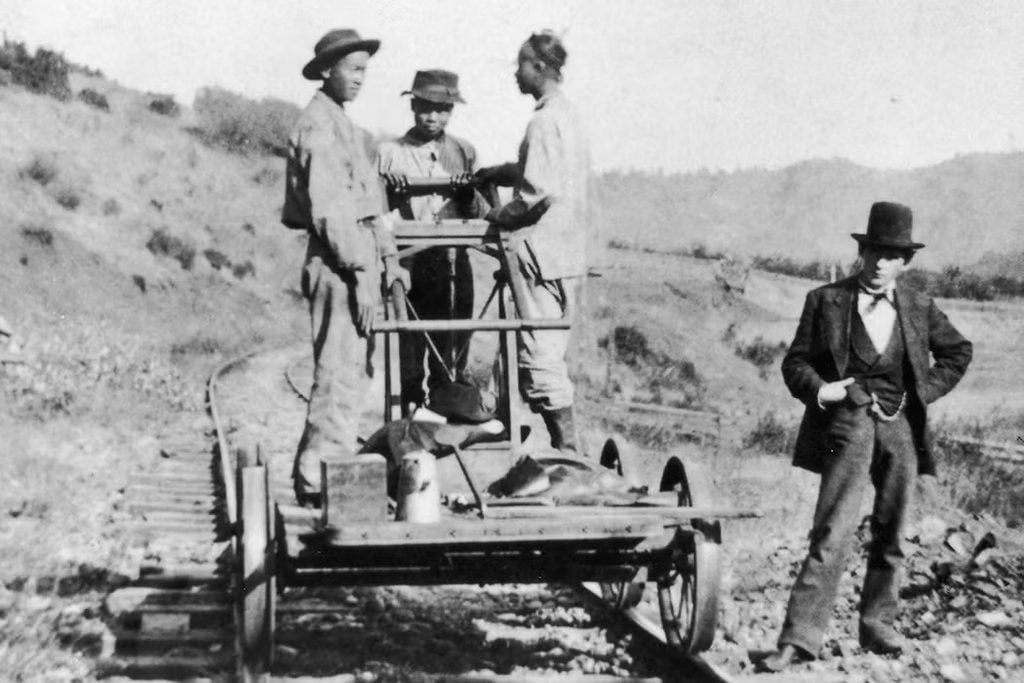
Chinese workers also helped build the railroad through eastern Oregon. Historian Gary Dielman estimates that approximately 2,000 Chinese laborers participated in constructing the Oregon Railway and Navigation Company line, completed through the region in 1884.
These weren’t incidental contributions. The water systems, mines, and rail lines were foundations of the regional economy.
Yet the men responsible for much of that work faced extraordinary prejudice.
The People Oregon Needed, but Refused to Treat as Equals
Chinese immigrants came to Oregon seeking opportunity, many hoping to earn enough money to support families back home. What they encountered was a society that welcomed their labor far more readily than their presence.
Discriminatory taxes, restrictions on mining claims, barriers to citizenship, and limitations on legal rights shaped their lives. For years, Chinese residents could not testify against white defendants in court, leaving them especially vulnerable to theft and violence.
The federal Chinese Exclusion Act of 1882 compounded these injustices by prohibiting most Chinese laborers from entering the United States. It also made it extraordinarily difficult for Chinese families to reunite.
Prejudice wasn’t confined to laws passed in distant capitals.
Baker City had its own Chinatown, centered around Auburn Avenue between Resort Street and the Powder River. It was a genuine community, with businesses, homes, a temple, and gardens. Chinese merchants, cooks, physicians, laundry operators, and farmers contributed to everyday life in the city.
But local attitudes could be openly hostile.
As documented in Gary Dielman’s history of Baker City’s Chinatown, newspapers routinely used degrading language to describe Chinese residents. In 1893, Mayor Charles Palmer publicly questioned whether Chinese residents should be tolerated in the community.
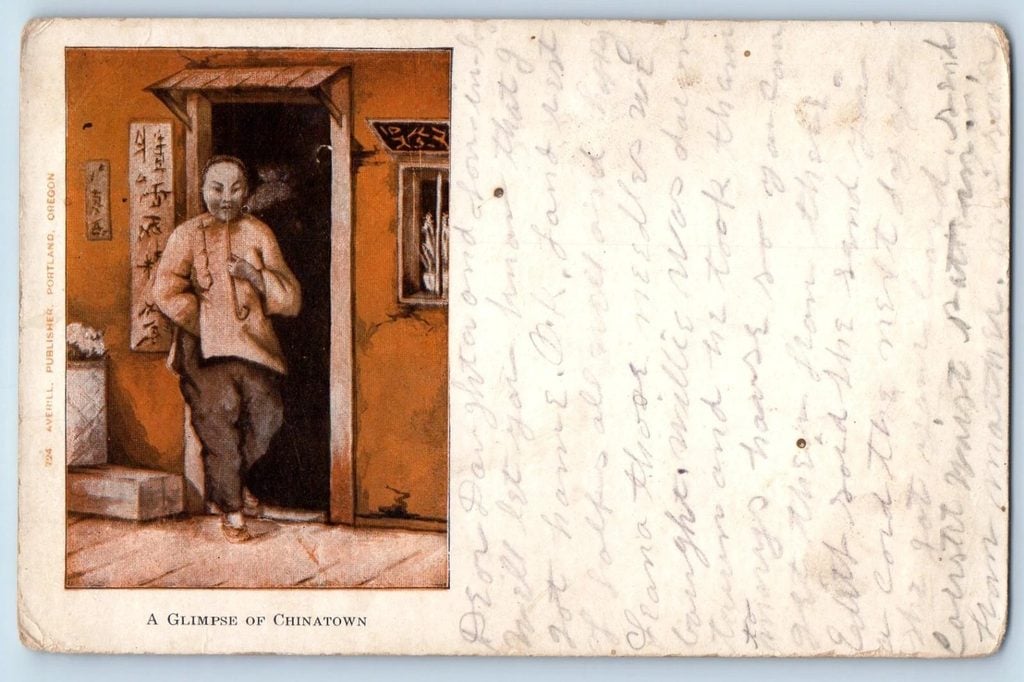
In 1906, the city erected a tall wooden gate across Auburn Avenue at the entrance to Chinatown, physically separating the district from the surrounding community.
It’s a particularly ugly detail in a history that otherwise celebrates the city’s early prosperity.
The Chinese helped build the economy, maintained businesses, supplied food, and laid the groundwork for further development. Yet they could be treated as outsiders in the very communities they helped sustain.
The 1887 Massacre That Exposed the Worst of That Hatred
Perhaps the darkest chapter of Chinese mining history in northeastern Oregon unfolded in May 1887, in the rugged Snake River country of Hells Canyon.
At a place now known as Chinese Massacre Cove, a group of white men and boys from Wallowa County ambushed Chinese gold miners working near Deep Creek.
As many as 34 miners were murdered.
Some of their bodies were dumped into the Snake River, eventually washing downstream. The killings were investigated, and six suspects were indicted. Three fled, while the other three were acquitted following a trial in Enterprise.
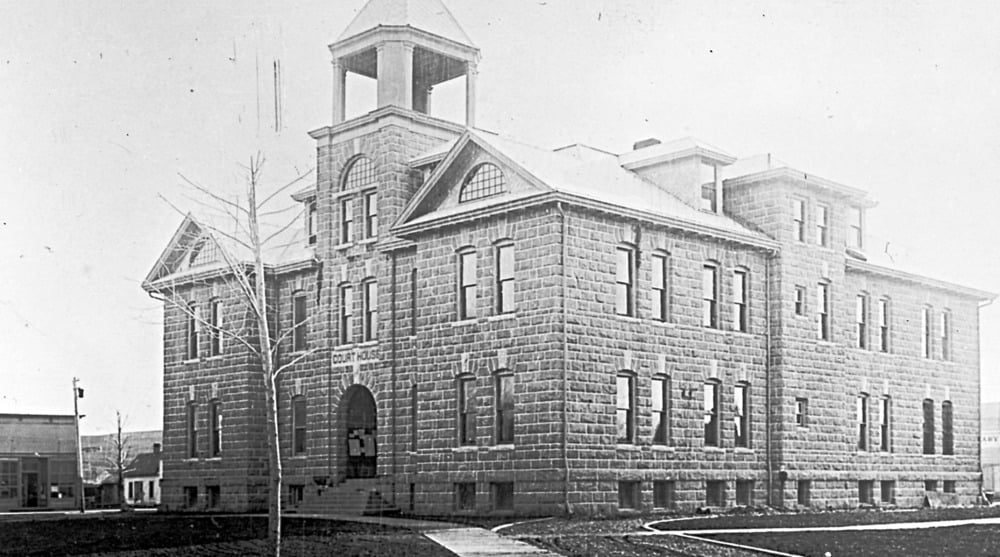
Nobody was actually punished for the massacre.
The details, documented by historian R. Gregory Nokes in the Oregon Encyclopedia’s account of the Chinese Massacre at Deep Creek, are horrifying. They also illustrate just how vulnerable Chinese immigrants could be when racial prejudice and the failure of law enforcement intersected.
The crime was largely forgotten for generations. Important court records were rediscovered in a Wallowa County courthouse safe in 1995, helping historians reconstruct what happened.
A memorial was finally installed at the massacre site in 2012.
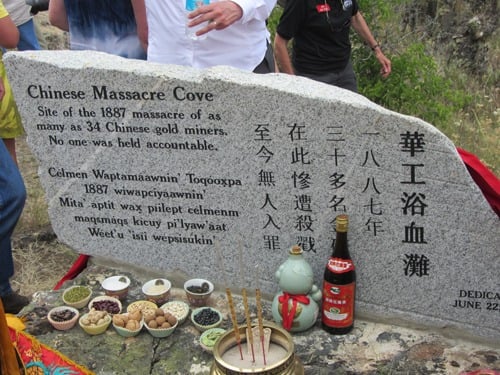
The miners killed in Hells Canyon weren’t the same people buried at Baker City’s cemetery. But their fate was part of the larger reality faced by Chinese communities throughout Oregon’s mining country.
The violence was real. So was the injustice that allowed it to go unpunished.
The Chinatown That Disappeared
Back in Baker City, Chinese immigrants built a community that lasted for generations.
The town’s Chinatown included a substantial temple, sometimes called a joss house, along with stores, homes, and extensive vegetable gardens near the Powder River. The gardens supplied fresh produce to local residents, while Chinese-owned businesses helped support both the mining population and the broader town.
In 1903, fire insurance maps recorded more than 50 structures in Chinatown. It was an established neighborhood, not a temporary cluster of tents.
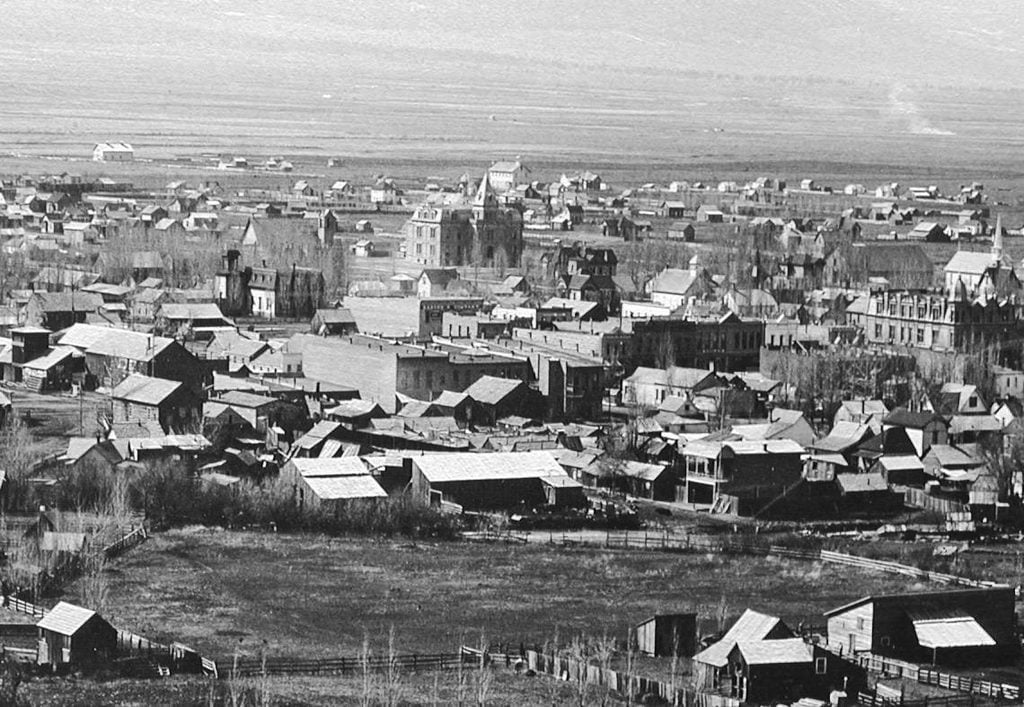
Over the following decades, the community gradually diminished. Immigration restrictions and shifting economic opportunities had profound effects on Chinese communities throughout the West, although historians acknowledge that the individual reasons Baker City’s residents left aren’t fully documented.
By the mid-1940s, most of the original Chinatown’s residents had moved away. During the 1970s, its remaining buildings were demolished.
Today, nothing of the original neighborhood remains standing.
It’s important to note that Chinese immigrants didn’t simply disappear from Baker City’s history. Families continued operating businesses elsewhere in the city, including the Royal Café, which remained under Chinese family ownership for more than half a century.
But the physical heart of the old Chinatown was gone.
And that brings us back to the little cemetery beside the interstate.
What Remains, and What We Owe the People Who Came Before Us
In 1994, the Baker County Historical Society began efforts to preserve the cemetery. Volunteers, local supporters, and members of Oregon’s Chinese community worked to protect the grounds and recognize the people buried there.
In 2002, a new Chinese-style pavilion, designed and manufactured in Suzhou, China, was dedicated at the site. The grounds also include a replica of the traditional structure used for burning ceremonial paper offerings in remembrance of the dead.
It’s beautiful in its simplicity, and I’m grateful the people involved understood that this modest cemetery was worth saving.
The cemetery is also a reminder that Oregon’s pioneer story was far more complicated than the version many of us grew up hearing.
Chinese miners helped extract the gold that financed communities. Chinese workers dug ditches and built railroads. Chinese gardeners fed towns, merchants opened businesses, and families preserved their traditions thousands of miles from home.
They were part of Oregon’s history from the beginning of its development as a state. And too often, the history written about them focused more on the people who excluded them than on their own lives and accomplishments.
For years I’ve kept thinking about that small cemetery and its strange location, tucked beside a road with a windmill nearby and interstate traffic passing just beyond it.
Thousands of travelers pass through Baker City every year, many stopping for fuel, food, or a night’s sleep. I wonder how many realize that this quiet place exists, or understand the history it represents.
The people buried there weren’t footnotes. They had names, families, ambitions, beliefs, and stories of their own. Some made it home to China after death. Others remained in the Oregon soil where they had spent so much of their lives, never to be reunited in life with their families back home.
We can’t undo what happened to them. But we can tell their stories accurately, preserve the places that remain, and give them the recognition they’ve long deserved.
And the next time you find yourself passing through Baker City, consider taking a few minutes to visit the Chinese Cemetery.
It’s a small place.
But the history it holds is anything but small.
Visiting the Chinese Cemetery: The cemetery is located on Windmill Road in Baker City, just east of Interstate 84 at Exit 304. It can be reached from Campbell Street by turning onto Windmill Road. The grounds contain a memorial pavilion, historic markers, and the remaining marked grave of Lee Chue. Visitors are encouraged to treat the site as a place of remembrance, not simply a roadside attraction.