
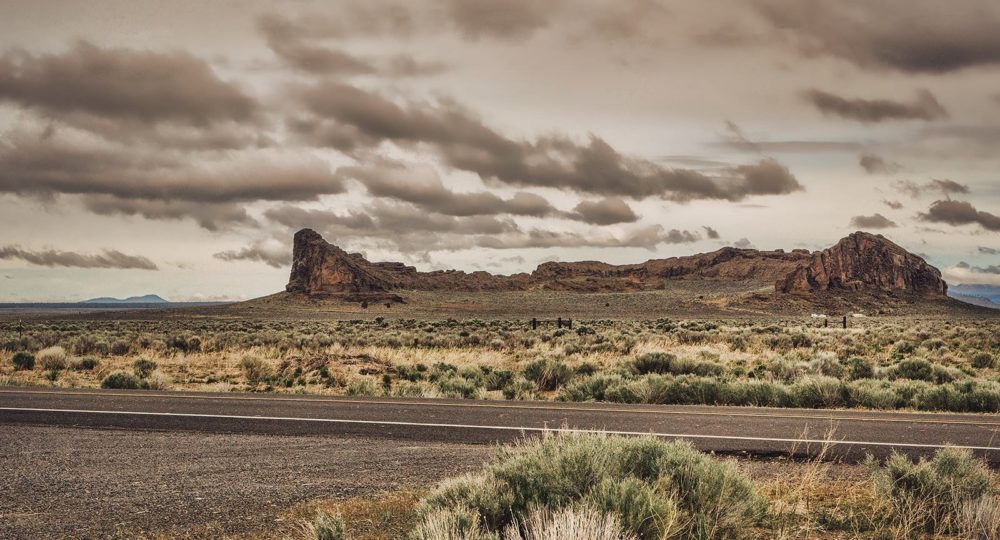
There are places in Oregon that look impressive in photos, and then there’s Fort Rock, which has a funny way of making every photo seem inadequate.
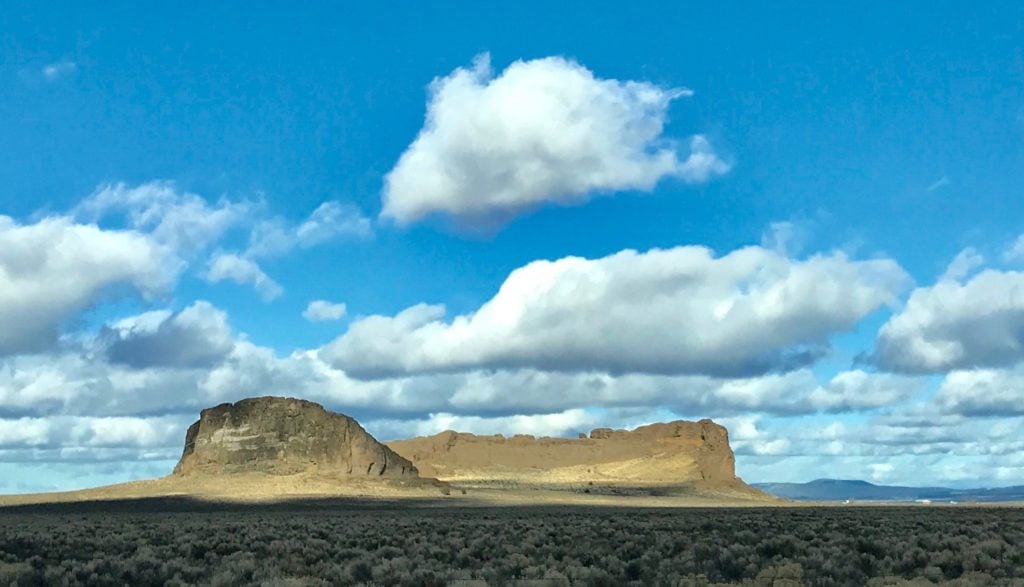
You can see it long before you arrive, rising out of a flat sea of sagebrush like the remains of some enormous stone fortress. There are no mountains crowded around it, no thick forest hiding the view, and very little to distract you from the fact that this giant horseshoe of rock is just sitting there in the middle of Oregon’s high desert. The closer you get, the stranger and better it becomes.
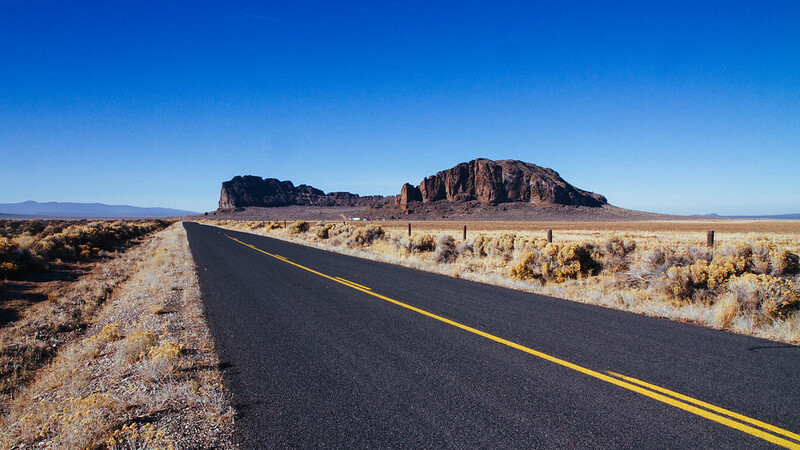
Fort Rock is about 65 miles southeast of Bend in northern Lake County, surrounded by the wide-open country of Oregon’s Outback. It’s remote enough to feel like you’ve escaped civilization for a while, but easy enough to reach that you don’t need a lifted truck, satellite phone, and three days of freeze-dried food just to see the main attraction. The real trick is giving yourself enough time, because there’s much more out here than the rock itself.
At a Glance:
| What to Know | Details |
|---|---|
| What is Fort Rock? | A massive volcanic tuff ring formed when magma interacted explosively with water in an ancient lake basin. |
| Where is it? | In northern Lake County, roughly 65 miles southeast of Bend, near the community of Fort Rock. |
| Main destination | Fort Rock State Natural Area |
| Best for | Geology, photography, easy exploring, Oregon history, road trips, high-desert scenery and stargazing |
| Admission | Check Oregon State Parks before your visit for current access information and restrictions. |
| Can you visit Fort Rock Cave? | Yes, but only on a reserved Oregon State Parks guided tour. The cave location isn’t publicly shared. |
| Can you fly a drone? | No. Drones are currently prohibited year-round at Fort Rock State Natural Area to protect nesting birds. |
| Nearby history stop | Fort Rock Valley Historical Homestead Village, open seasonally. |
| Great side trip | Christmas Valley and Crack-in-the-Ground |
| Great dinner stop | Cowboy Dinner Tree near Silver Lake, reservations required. |
| Before you go | Bring water, layers and downloaded maps; top off your gas tank and check current road, weather, wildfire and park conditions. |
So, What Exactly Is Fort Rock?
Despite the name, Fort Rock was never a military fort.
It’s a volcanic tuff ring, formed when rising magma encountered water beneath an ancient lake and produced an explosive eruption. Layer upon layer of volcanic debris accumulated around the vent, eventually creating the enormous rocky ring we see today. Later, waves from ancient Fort Rock Lake battered the formation, cutting terraces into the cliffs and helping shape the opening that gives Fort Rock its unmistakable horseshoe appearance.
And yes, this whole dry basin was once dramatically wetter than it is today. Geological evidence preserved in the rock includes wave-cut benches from ancient lake levels, which is difficult to wrap your head around when you’re standing out there surrounded by dust, rabbitbrush, and miles of dry Oregon sky. The landscape basically keeps whispering, “You should’ve seen me 16,000 years ago.”
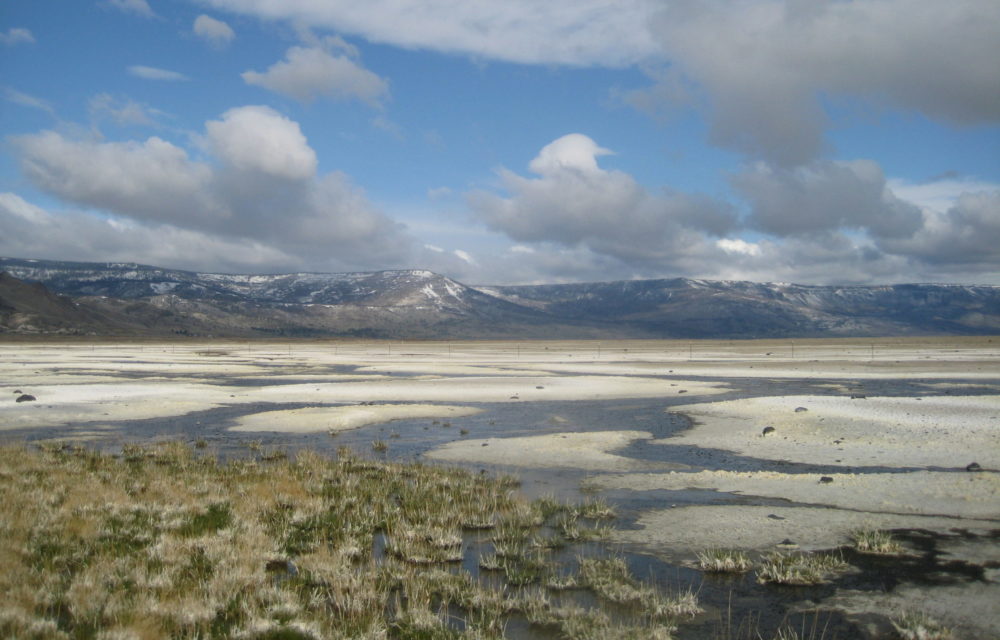
Fort Rock’s cliffs rise roughly 260 feet above the surrounding basin, and the formation measures around 2,300 feet across at its widest point. From the road it looks big. Once you start walking inside it, you realize your eyes were lying to you.
Exploring Fort Rock State Natural Area
The centerpiece of any visit is Fort Rock State Natural Area, where you can get out of the car and wander into the massive volcanic formation itself.
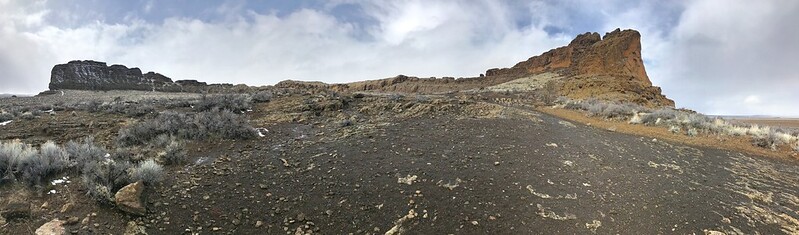
This isn’t the kind of place where you need a complicated itinerary. Park, start walking, and give yourself time to explore. The sandy ground, towering walls, strange volcanic textures, and enormous opening toward the desert make the inside of Fort Rock feel almost like a natural amphitheater. Every few minutes you’ll turn around and get another view that makes you reach for your camera again.
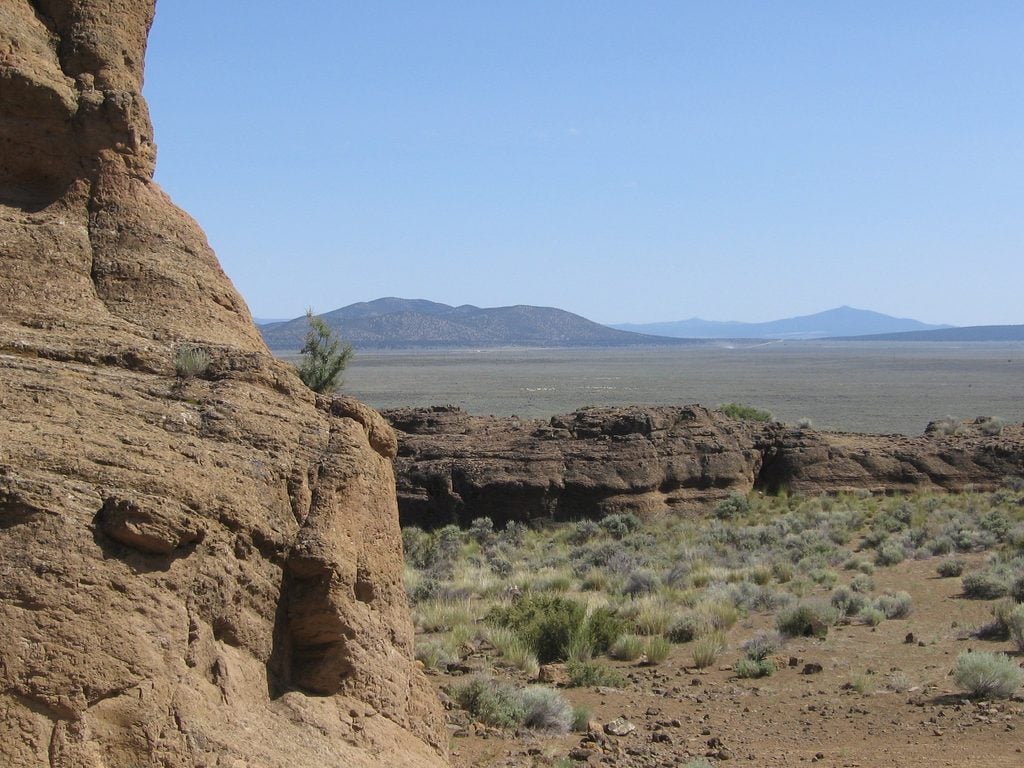
The geology is cool, but it’s the scale and silence that really stick with me. Fort Rock sits out in country where the horizon seems impossibly far away, and once the wind dies down there may not be much to hear at all. If you spend most of your life along I-5, that kind of quiet can feel almost suspicious.
Oregon State Parks manages Fort Rock as a day-use natural area. Drones are currently prohibited year-round to protect nesting eagles and falcons, and other restrictions can change depending on wildlife, wildfire conditions, and the season. If you’re making a special trip, check the official park page before leaving home rather than trusting something somebody posted four summers ago. Oregon State Parks
This Is Also an Incredible Place for Stargazing
Stick around the area after sunset and Fort Rock takes on an entirely different personality.
There’s very little artificial light out here compared with Bend, Eugene, Portland, or almost anywhere in western Oregon. On a clear night, the high desert sky can be spectacular, and Oregon State Parks specifically allows after-hours stargazing in the designated day-use area with a stargazing permit displayed on your vehicle.
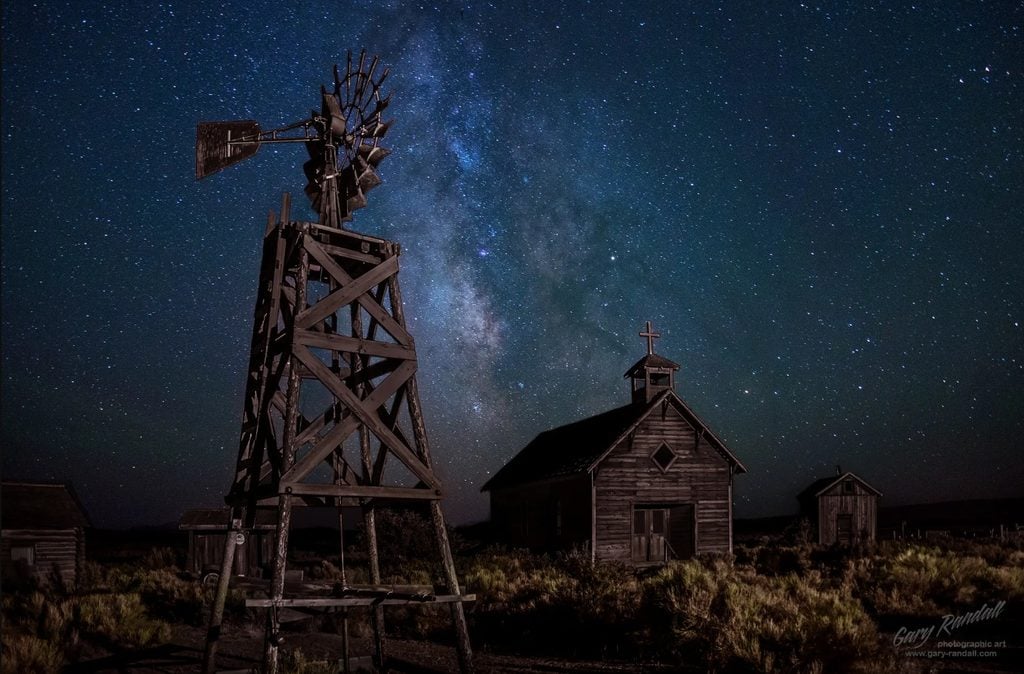
Bring layers even if the afternoon is warm. High desert temperatures can drop quickly once the sun disappears, and standing under a ridiculously dark Oregon sky is considerably more enjoyable when you’re not wondering why you left your jacket in Bend.
The History Deserves More Than Just Another Roadside Legend
Long before anyone tried to dry-farm this unforgiving patch of Oregon, people had already been living in the Fort Rock Basin for thousands of years. Ancestors of the Klamath, Modoc, and Yahooskin bands of Northern Paiute were in this landscape more than 11,000 years ago, when the basin looked dramatically different than it does today. Ancient lakes and marshes spread across areas that are now dry sagebrush country, providing plants, waterfowl, game, and other resources that supported human life here for generations
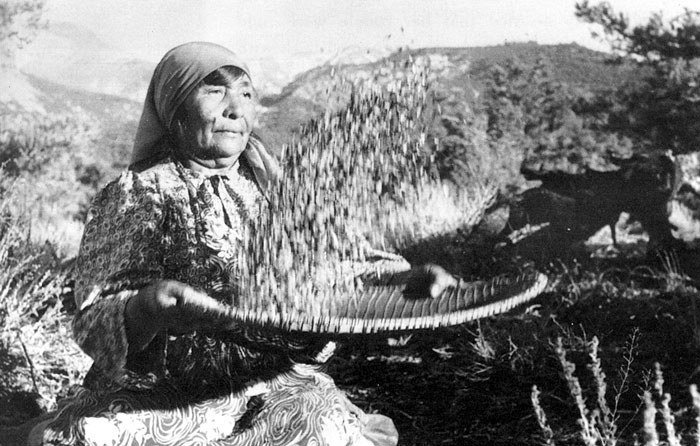
By the nineteenth century, the Fort Rock Valley was primarily Northern Paiute homeland. That part of the story deserves to sit beside the geology and homesteading history, not underneath it as a footnote. Federal treaties, warfare, and forced relocation pushed Native people from much of the region before land was opened to Euro-American settlement, setting the stage for the homestead rush that reshaped Fort Rock Valley in the early 1900s. Oregon Encyclopedia
The remarkable archaeology scattered across Oregon’s high desert is a reminder that what looks empty from the highway never really was.
Don’t Miss the Fort Rock Homestead Village
If it’s open during your visit, the Fort Rock Valley Historical Homestead Village Museum is absolutely worth adding to the day.
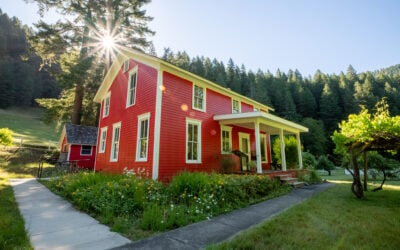
The museum preserves real buildings from the surrounding homestead era, giving you a look at what life was like for the families who tried to make a go of it in this remote part of Oregon during the early 1900s. Rather than one big museum building filled with display cases, you walk through an actual collection of historic structures that were moved here and preserved.
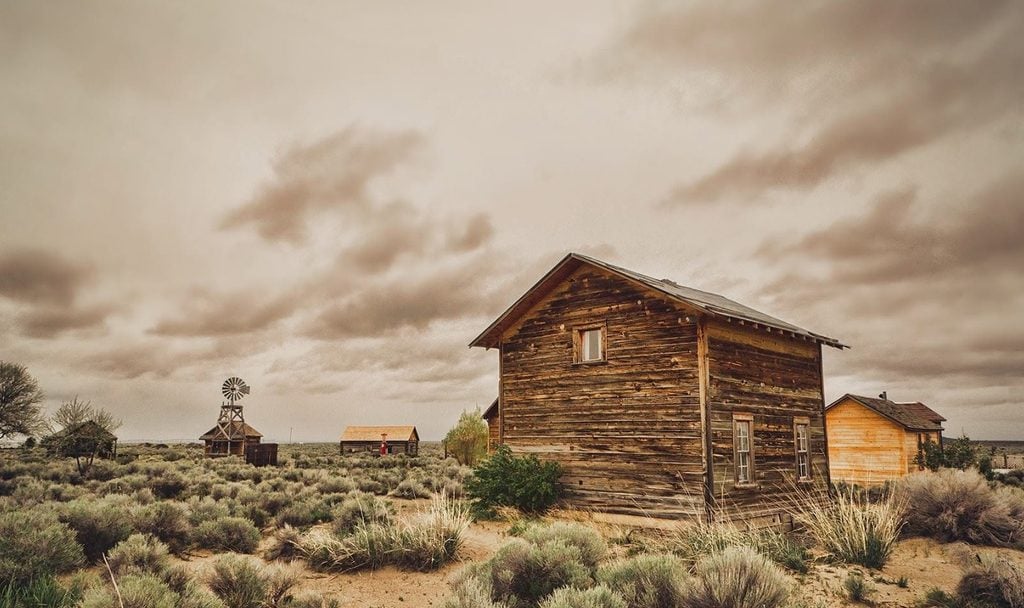
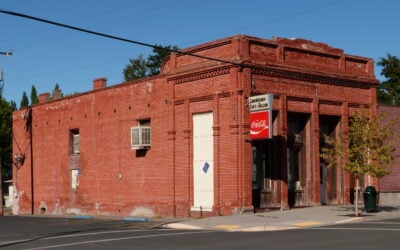
That includes old homes, a schoolhouse, church, mercantile, and other pieces of Fort Rock Valley history. It adds something important to the trip because after spending an hour looking across this enormous, exposed landscape, you begin to appreciate just how tough you’d have needed to be to homestead here.
The museum operates seasonally. Its 2026 season ran from late May into September, so always check current dates and hours before driving out specifically for it.
Fort Rock Cave Is a Completely Different Experience
One important thing to understand before coming out here: Fort Rock State Natural Area and Fort Rock Cave are not the same place.
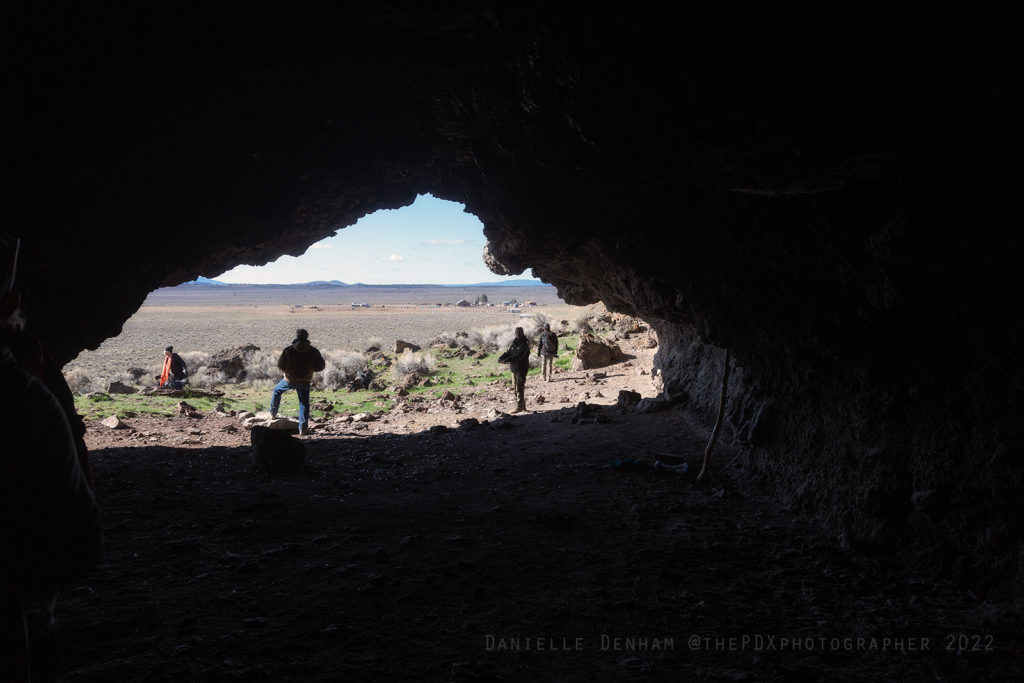
Fort Rock Cave is a protected archaeological site nearby where archaeologist Luther Cressman discovered ancient woven sagebrush sandals in 1938. Some have been dated to roughly 9,350 to 10,500 years ago, making them among the most remarkable archaeological discoveries ever made in Oregon. The cave is a National Historic Landmark, its location isn’t publicly shared by Oregon State Parks, and you can only visit as part of a reserved guided tour.
In 2022 we were fortunate enough to take this extraordinary tour ourselves, which we’ve highlighted in our Fort Rock Cave tour and history guide, including our firsthand visit, the sandal discovery, Native history, current tour rules, and what you should know before trying to book.
Make a Bigger Loop Through Christmas Valley
If you’ve already driven this far into Oregon’s high desert, Christmas Valley makes a natural extension of the adventure.
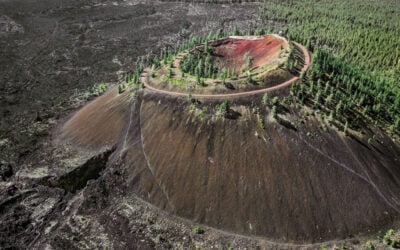
The landscape gets wonderfully weird out here. Lava fields, dry lake beds, sagebrush, enormous open skies, volcanic craters, sand dunes, and little communities seem to appear in places where you weren’t expecting anything at all. It’s one of those corners of Oregon where twenty miles can feel like fifty, mostly because there’s so much space between everything.
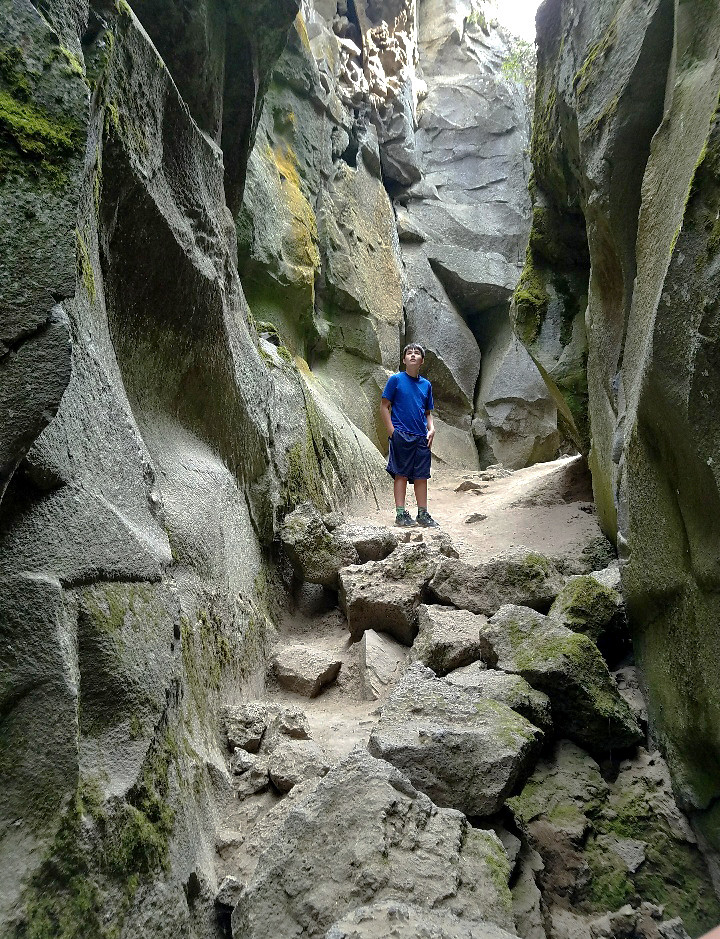
One of the best-known stops is Crack-in-the-Ground, a volcanic fissure where you can actually hike down into the crack itself. Temperatures along the bottom can be as much as 20 degrees cooler than the surface, making it particularly memorable on a hot high desert day. The access road is rugged, however, and the BLM currently recommends four-wheel drive, so this is one of those adventures where knowing when to turn around counts as a skill.
Christmas Valley is also the closest service community for several remote recreation sites in the area. Fill up when you have the chance, carry plenty of water, download your maps ahead of time, and don’t assume cell service will magically appear because you’d really like it to.
And Then There’s the Cowboy Dinner Tree
Now we’re talking.
If you want to turn this from “a cool Oregon road trip” into one of those days you’ll still be telling somebody about five years from now, make reservations at the Cowboy Dinner Tree near Silver Lake.
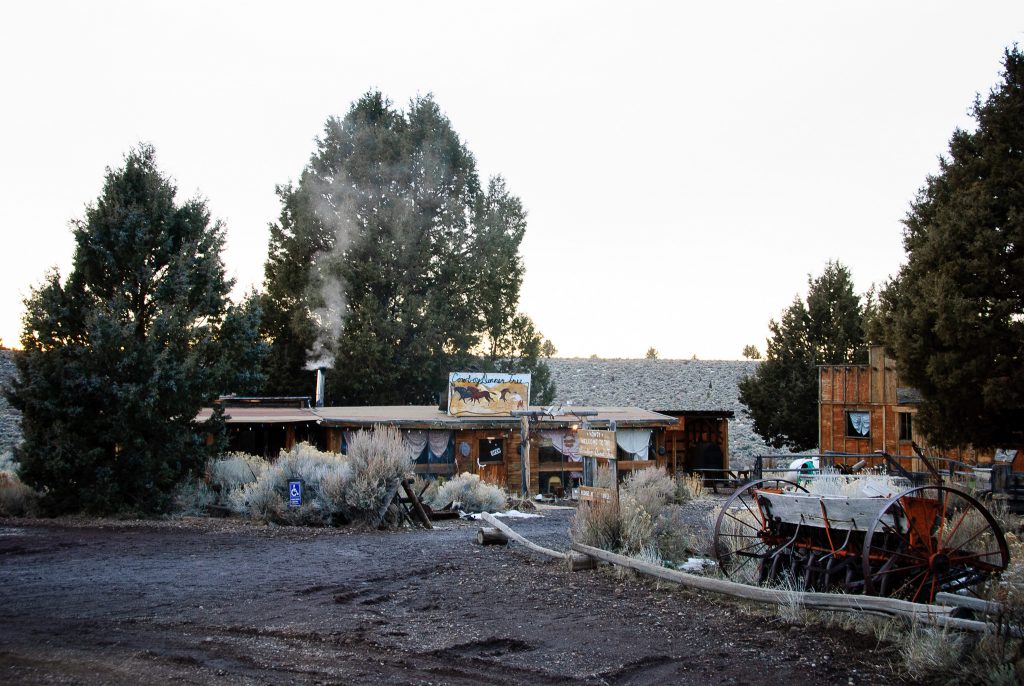
This place is pure Oregon Outback. You drive out into what feels like the middle of nowhere, arrive at a rustic old homestead, and sit down to a dinner built around one of two completely reasonable choices: an entire roasted chicken or a 26-to-30-ounce cowboy-cut steak. Because apparently moderation got lost somewhere back near Highway 97.
Reservations are required and the restaurant says it can book months ahead. As of 2026, dinner is $50 per adult, they’re cash-only, and yes, bringing a cooler for your leftovers is a very good idea. The Cowboy Dinner Tree is roughly a 45-minute drive from Fort Rock, making it an almost unfairly good ending to a day in this part of Oregon.
Turn It Into an Overnight Trip at Summer Lake Hot Springs
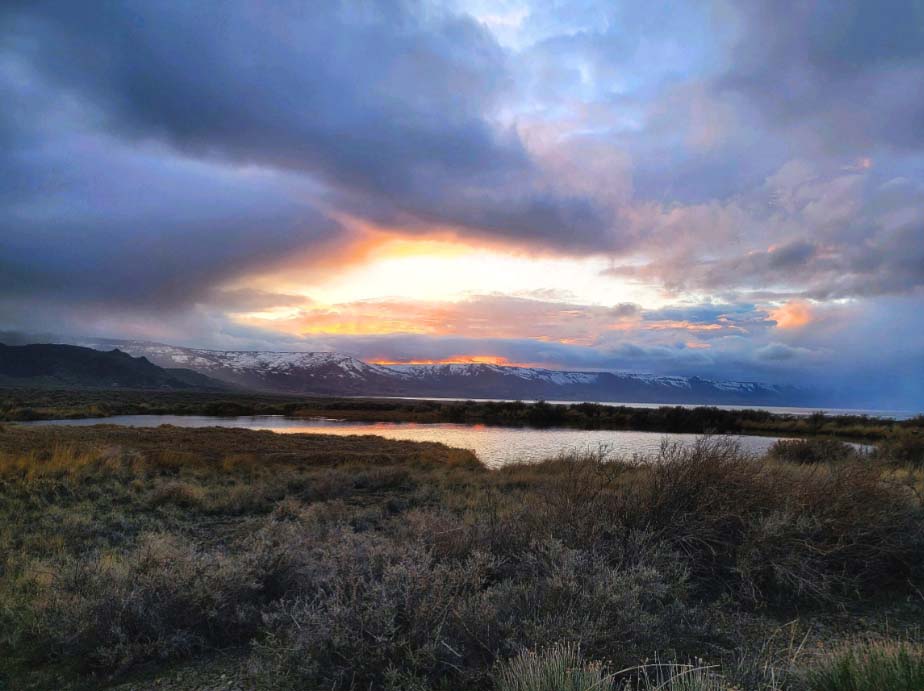
If you’ve got another night to spare, there’s an even better way to finish a Fort Rock road trip than simply pointing the car back toward Bend. Head south on Highway 31 toward Summer Lake Hot Springs, where steaming mineral water and an enormous high-desert sky make it very easy to forget that civilization exists somewhere beyond the sagebrush.
The historic bathhouse dates to 1929 and surrounds a large mineral pool that typically sits around 97 to 99 degrees. Outside, rock soaking pools average closer to 104 degrees, which is about perfect when the desert air turns cold and the stars come out. The property also has cabins, RV spaces, and tent camping, so instead of trying to cram Fort Rock, Christmas Valley, dinner, and another two hours of driving into one heroic day, you can actually slow down and enjoy being out here.
There is one important change to know before making this a spontaneous detour: Summer Lake Hot Springs currently does not allow day use. Reservations and an overnight stay are required, and cabin stays currently have a two-night minimum. That makes this less of a “swing by for an hour” stop and more of a destination you build into the trip, which, frankly, may be the better way to experience Summer Lake anyway.
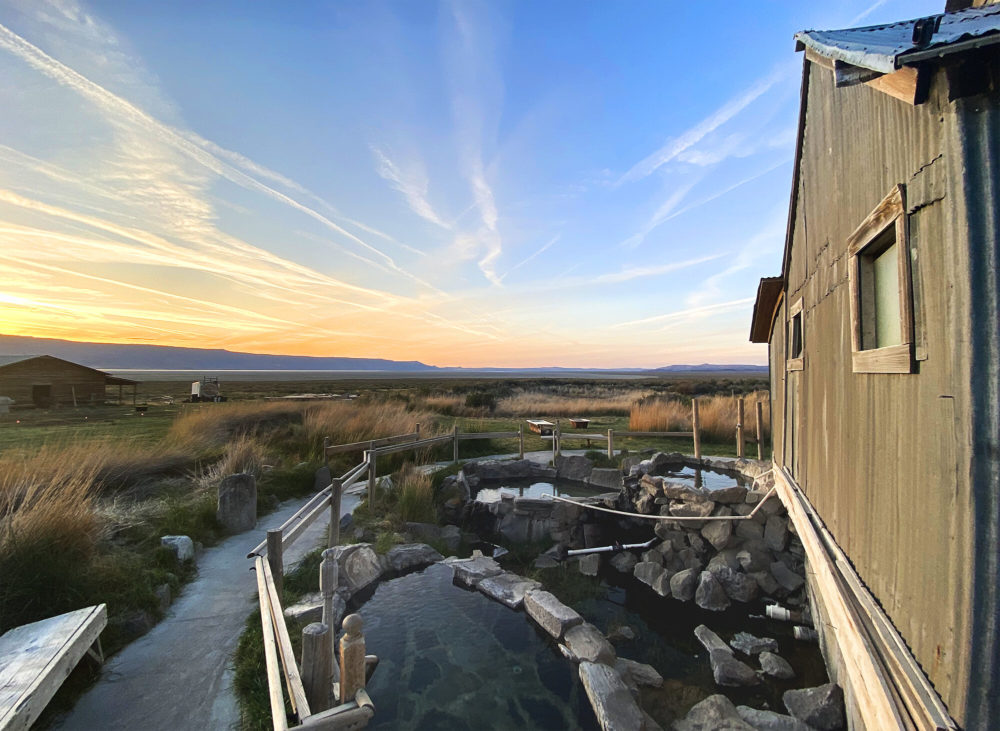
We’ve spent time out here ourselves, and this is one of those corners of Oregon that just gets under your skin. If soaking beneath a high-desert sky sounds like your kind of ending to the trip, read our guide to Summer Lake Hot Springs before you go. It covers the springs, Summer Lake, nearby wildlife viewing, and several other places worth working into an Oregon Outback getaway.
How I’d Spend a Day at Fort Rock
For a first visit, I wouldn’t try to conquer every landmark within a 50-mile radius.
Start at Fort Rock State Natural Area while the day is still cool and spend an hour or two exploring the formation. Visit the Homestead Village if it’s open, then either continue toward Christmas Valley for Crack-in-the-Ground or take your time wandering the back roads and enjoying the landscape. If you planned ahead far enough to score reservations at Cowboy Dinner Tree, finish the day there and accept the fact that you probably won’t need breakfast tomorrow.
If you’ve reserved a Fort Rock Cave tour, make that the anchor of the trip instead. The cave tours are seasonal, guided, and limited, so don’t build an elaborate itinerary and then assume you can squeeze the cave into whatever ten-minute hole remains.
This Is the Oregon We Love Exploring
Fort Rock is exactly why we built That Oregon Life in the first place. Oregon is so much bigger than the handful of landmarks that show up on every travel list, and sometimes the best day begins by pointing the car toward a tiny town surrounded by more sagebrush than people.
If this kind of road trip is your thing, start digging through our Central Oregon Travel Guide for more high-desert adventures, or browse our Oregon Hiking Guide when you’d rather build the next trip around a trail. You can also explore our statewide Oregon Cities and Towns Guide to find those smaller communities that tend to make Oregon road trips far more interesting than simply racing from attraction to attraction.
Fort Rock may be a giant volcanic formation in the middle of nowhere, but that’s kind of the point.
Give it a day. Bring water. Bring a camera. And definitely make the dinner reservation before you start fantasizing about that steak. It’s worth it, we promise.