
From earthquake simulators and working science labs to a real Navy submarine floating on the Willamette River, OMSI turns an ordinary museum visit into an unforgettable Oregon adventure.
There’s a moment when you’re approaching the Oregon Museum of Science and Industry in Portland that makes it clear this won’t be a typical museum visit.
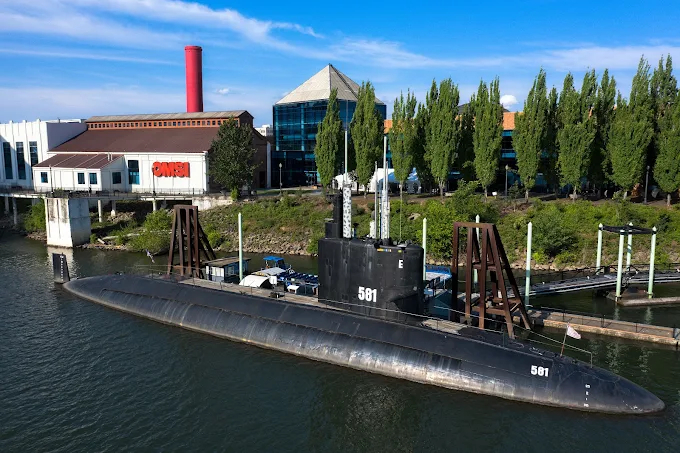
The Willamette River stretches alongside the building. Portland’s skyline rises across the water. A tall red smokestack stands over the complex, a reminder of the industrial history built into the museum itself.
Then you spot the submarine.
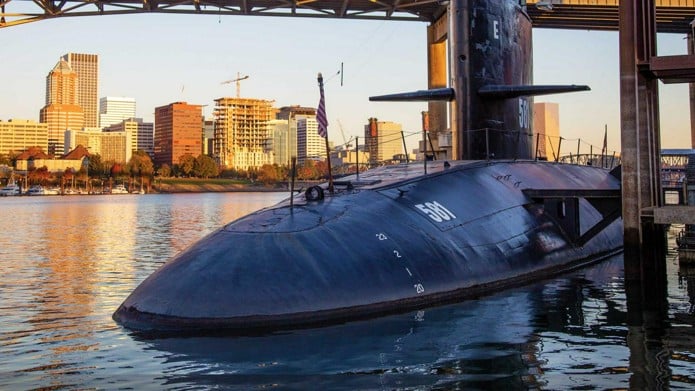
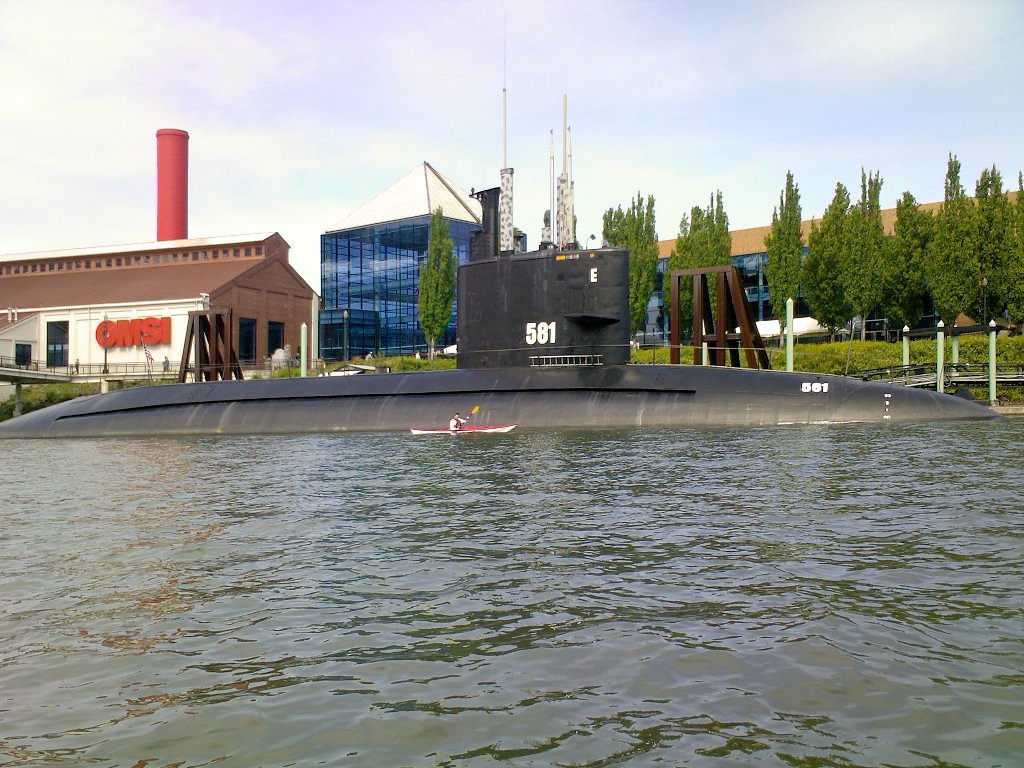
Long, black and unmistakably real, the USS Blueback rests in the river beside the museum. It doesn’t look like a display assembled for visitors. It looks as though it surfaced in the middle of Portland and decided to stay.
That unusual first impression captures what makes OMSI special. This isn’t a museum where families are expected to quietly walk past objects behind glass. Visitors are encouraged to touch, build, experiment, test, climb, question and occasionally make a little noise.
Inside, children can investigate the science of motion, adults can rediscover the joy of figuring out how something works, and entire families can lose track of time while moving between laboratories, interactive exhibits, a planetarium and one of the most fascinating historic vessels in Oregon.
OMSI, pronounced “om-zee” by generations of Oregonians, occupies a sprawling 219,000-square-foot complex along Portland’s Central Eastside waterfront. The museum includes hands-on exhibition halls, working science labs, a giant-screen theater, a 200-seat planetarium and the USS Blueback. Travel Oregon also describes the museum as having more than 200 interactive exhibits and activities spread across four primary halls.
For many Oregon families, OMSI is more than a Portland attraction. It’s the place where they remember touching a fossil, watching a chemistry demonstration, crawling through a submarine hatch or staring upward as stars appeared across the planetarium dome.
And in 2026, the museum is giving visitors even more reasons to return.
A Portland Landmark Built Around Curiosity
OMSI’s location is part of the experience.
The museum sits at 1945 SE Water Avenue, just across the Willamette River from downtown Portland. Its glass entrance, brick buildings and enormous red smokestack form one of the most recognizable sights along the Eastbank Esplanade.
The property’s industrial character is no accident. Before OMSI arrived, the site had been occupied by a historic sawdust-fired power-generation plant. The museum incorporated portions of that past, including its turbine buildings and smokestack, into a science center designed to connect old technology with new ideas.
It’s an appropriate setting for a museum devoted to experimentation.
Instead of hiding the building’s machinery and industrial bones, OMSI makes them part of the atmosphere. Walk through the Turbine Hall and you can still sense that this was once a place built around energy, engineering and motion.
The difference is that today, much of that energy comes from visitors.
Children race from one experiment to another. Parents lean over displays trying to solve challenges before their kids do. School groups gather around instructors. Somewhere nearby, a machine begins moving, a demonstration produces an unexpected reaction, or a young visitor announces a discovery loudly enough for half the hall to hear.
That lively environment is one reason OMSI works so well as a family destination. Science isn’t presented as a collection of facts to memorize. It becomes something happening all around you.
OMSI’s Story Began Long Before It Reached the Waterfront
Although its current building opened in the 1990s, OMSI’s history reaches back more than 80 years.
The Oregon Museum Foundation was established in 1944 and eventually became the Oregon Museum of Science and Industry. During its early decades, the organization steadily expanded its exhibits, educational programs and reach across the state.
In 1951, geologist Alonzo Hancock began hosting a summer geology camp in the high desert near Fossil. That program eventually became Camp Hancock, which continues operating in Central Oregon and remains an important part of OMSI’s outdoor education work. The Kendall Planetarium opened at OMSI’s former Washington Park location in 1967, while the museum’s first nationally traveling exhibition, Atom-Magic, began touring in 1972.
By the mid-1980s, OMSI had grown beyond what its Washington Park facility could comfortably accommodate. Museum officials say its popularity had outpaced the building’s capacity several times over.
A community campaign raised money for a much larger science center, while Portland General Electric contributed an 18.5-acre former power-generation site on Water Avenue. The new waterfront museum opened in 1992 with a planetarium, large-format theater and numerous exhibition spaces.
The USS Blueback opened for public tours two years later, in 1994. OMSI continued expanding in the following decades with new exhibit halls, education programs, traveling exhibitions, camps and science outreach efforts.
Even a major flood couldn’t keep it down. When the Willamette River flooded in 1996, OMSI suffered extensive damage and closed for months. Community support and museum staff helped restore the facility and reopen it.
That history explains why the museum feels so deeply rooted in Oregon. It didn’t arrive as a polished tourist attraction created overnight. It grew out of decades of school programs, summer camps, volunteer efforts and community support.
Turbine Hall Is Where the Museum Comes Alive
For first-time visitors, Turbine Hall is often the best place to begin.
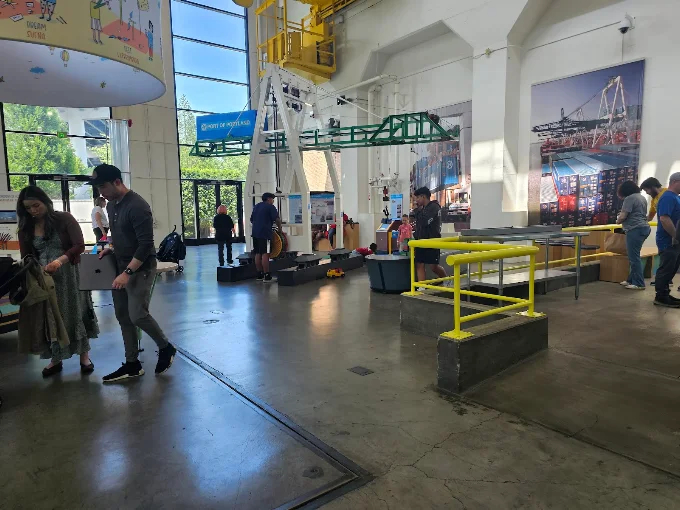
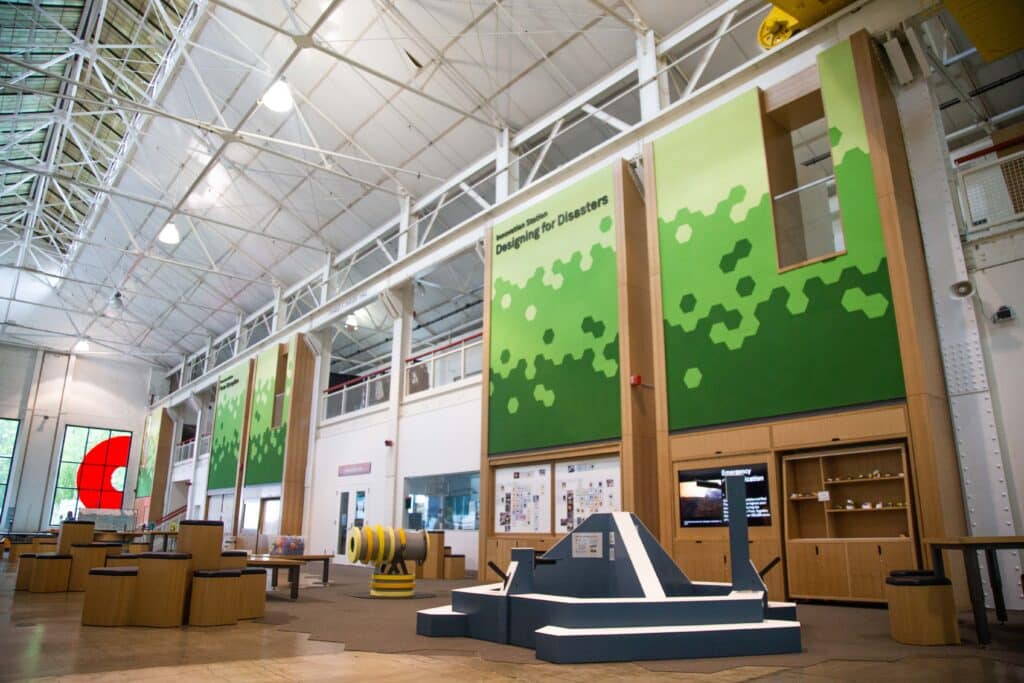
This large, multi-level space turns broad scientific ideas into physical challenges. Rather than simply reading about engineering, energy or motion, visitors are invited to experiment with them.
You may find yourself constructing something, testing its strength and returning to the drawing board when it fails. You might investigate how machines work, explore forces you can’t normally see or discover how a small adjustment completely changes the outcome of an experiment.
That trial-and-error process is the real attraction.
There’s no pressure to get everything right on the first try. In fact, some of the most memorable moments happen when an idea doesn’t work. A structure falls. A design refuses to move. A carefully planned solution produces an entirely unexpected result.
Then everyone starts asking why.
OMSI describes Turbine Hall and the Curium as places where visitors can explore scientific phenomena and use tools to imagine, build, test and improve potential solutions for people and communities. General museum admission includes access to these spaces.
The hall’s open design also makes it easy for families with different interests to explore at their own pace. One child may become absorbed in an engineering challenge while another is fascinated by an exhibit across the room. Adults who thought they were simply supervising often end up participating too.
It’s surprisingly difficult to stand beside an interactive science experiment and not touch it.
Young Scientists Get a Space of Their Own
Families with toddlers and preschoolers don’t have to worry about younger children being overwhelmed by exhibits designed for older students.
OMSI’s Science Playground is a dedicated environment for the museum’s youngest visitors. Travel Oregon describes it as a 7,000-square-foot area created for children up to age 6, with hands-on activities that turn movement, water, building and imaginative play into early science experiences.
This is where small children can climb, crawl, build and explore without being told they’re too young to understand the museum.
That matters because OMSI’s approach treats curiosity as something that begins long before a child can explain a scientific concept. Pouring water, stacking blocks, examining textures and watching objects move are all early experiments.
The nearby Discovery Lab similarly serves children from birth through age 6 and their families. Activities change regularly and are intended to engage the senses, strengthen early science skills and help developing minds make new connections.
For parents, these spaces offer something equally valuable: a place where energetic children are supposed to touch everything.
A family could easily spend a large portion of its visit in Science Playground alone. However, it’s worth leaving time for the rest of the museum, especially if older siblings are along.
Real Laboratories Let Visitors Do More Than Watch
OMSI’s labs help distinguish it from museums where science remains safely contained inside displays.
Depending on the daily schedule, visitors may be able to enter chemistry, physics, paleontology, life science and discovery labs. These aren’t simply rooms decorated to resemble laboratories. They’re active learning spaces supported by trained staff and volunteers.
In the Chemistry Lab, visitors can examine how substances interact and learn to use real scientific tools and materials. The Physics Lab focuses on forces and principles shaping the world around us.
The Paleontology Lab brings visitors closer to specimens millions of years old. Staff and volunteers may be seen working with fossils collected in the region, offering a fascinating glimpse into the careful process that happens before a fossil becomes part of a finished museum display.
The Life Lab explores ecosystems, adaptations and the surprising variety found throughout the natural world.
Lab times and availability can change, so it’s worth checking the schedule after arriving. Even a short lab experience can become one of the day’s highlights, especially for children accustomed to seeing science performed only by someone else.
Here, they get to take part.
OMSI’s Newest Hall Looks Directly at Oregon’s Changing Environment
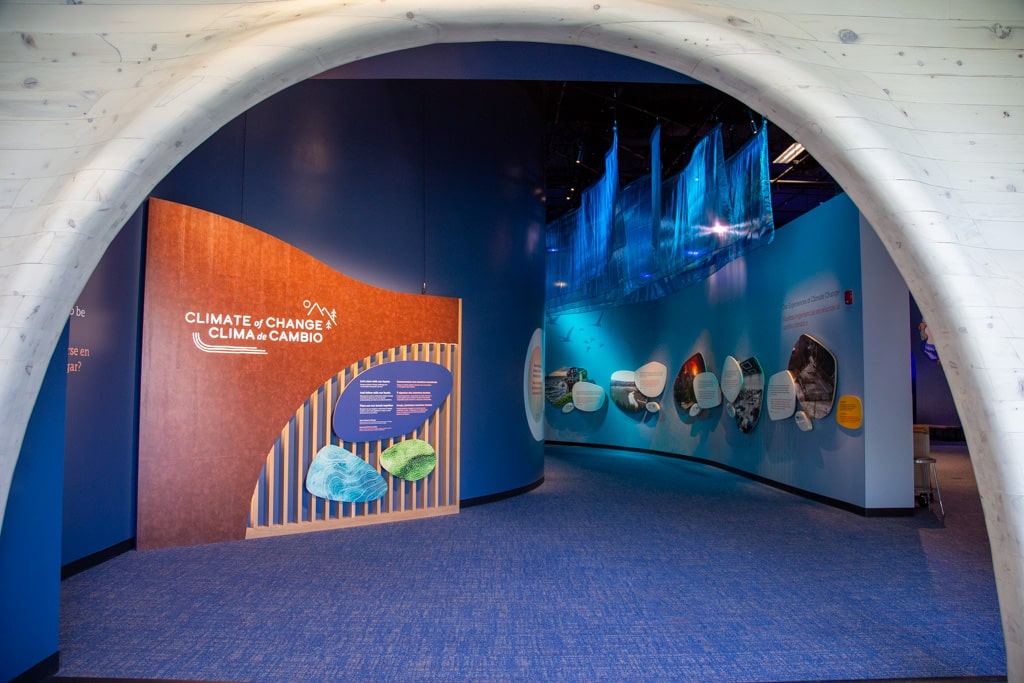
One of the most important additions to OMSI opened in spring 2026.
The Nancy Stueber Natural Sciences Hall is home to Climate of Change / Clima de Cambio, a permanent exhibition examining the relationship between people and the environment.
Rather than treating climate science as a distant issue, the hall focuses on human connections, local stories and practical responses. The exhibition was developed with more than 15 regional partners and includes perspectives from Indigenous leaders, young people and communities working on real-world solutions.
The hall features an entrance sculpture made from reclaimed yellow cedar mass timber, a multimedia experience about the connections between people and nature, short films highlighting community-led climate solutions, murals by local artists and a reimagined Science on a Sphere installation.
Science on a Sphere is especially striking.
Images and data are projected onto a large suspended globe, allowing visitors to see planets, weather systems, atmospheric patterns and environmental changes in a format that feels immediate and enormous.
You’re not looking at a tiny map printed in a textbook. You’re standing in front of a world.
The hall doesn’t approach the subject as though visitors should leave feeling powerless. Its central question asks what people can cultivate together, shifting attention toward collaboration, resilience and informed action.
That local emphasis gives the exhibition a distinctly Pacific Northwest character. Oregon’s forests, rivers, communities and changing landscapes aren’t abstract examples here. They’re part of the larger story.
OMSI’s 2025 annual report said the renovated hall was expected to serve more than 800,000 visitors annually. Its July 2026 media kit noted that 45 partners from 15 organizations contributed to the hall’s development.
The USS Blueback Is Unlike Anything Else at an Oregon Museum
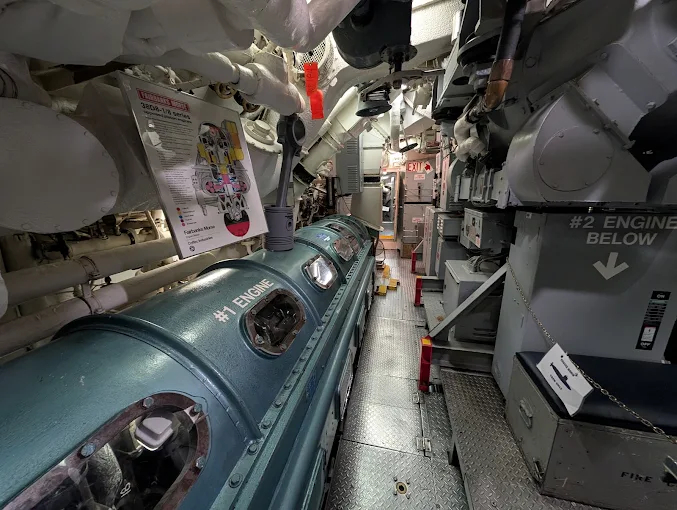
It’s impossible to discuss OMSI without returning to the submarine.
The USS Blueback is a 219-foot former U.S. Navy submarine moored beside the museum in the Willamette River. OMSI describes it as the Navy’s last active-duty diesel-electric submarine. It carried a crew of approximately 85 people and remained in service from 1959 until 1990.
Today, small groups can explore the vessel during guided tours lasting roughly 45 minutes.
Walking inside immediately changes your sense of scale. From the riverbank, the submarine looks enormous. Once you step through its watertight opening, it begins to feel remarkably small.
Passageways are narrow. Bunks are stacked close together. Machinery, controls, pipes and gauges fill nearly every available space. It becomes difficult to imagine dozens of crew members living and working there for months.
Visitors can look through a periscope, see crew quarters, examine period equipment and move through parts of the submarine that were once restricted to trained sailors. Tour groups are limited to 12 people, which helps preserve the intimate feeling of entering a space never designed for crowds.
The tour is fascinating, but it isn’t suitable for everyone.
Visitors must be at least 3 years old and 36 inches tall. Entering requires bending and stepping through a small watertight doorway, and the interior includes steep stairs and tight spaces. Strollers, walkers and wheelchairs can’t be taken aboard, and visitors must be able to navigate the vessel without being carried. OMSI has a practice hatch in its lobby so guests can test the entry before purchasing or beginning a tour.
Closed-toe shoes are recommended.
For those able to participate, the Blueback tour is worth planning around rather than treating as an afterthought. Tour capacity is limited, and tickets are separate from regular museum admission.
It’s one thing to read about life aboard a submarine. It’s another to stand inside one, surrounded by metal walls and machinery, while imagining the river disappearing above you.
The Planetarium Can Take You Far Beyond Oregon
After spending part of the day inside a submarine, visitors can head in the opposite direction and travel into space.
The Harry C. Kendall Planetarium is a 200-seat theater beneath a 52-foot dome. OMSI calls it one of the most technologically advanced planetariums in the Pacific Northwest.
Programs vary, but they may explore planets, constellations, black holes, meteor showers and the night sky visible over Oregon. Some presentations examine how cultures around the world have observed and interpreted the heavens.
The dome changes the experience completely.
Instead of watching space through a rectangular screen, the audience is surrounded by it. Stars stretch overhead. Planets move across the room. The edge of the theater seems to disappear.
For children, it can feel like a first trip into the universe. For adults, it often recreates the sense of wonder that first made space fascinating.
The planetarium is also known for laser shows accompanied by popular music. OMSI’s current system uses six laser projectors, while its digital projection technology can display detailed simulations and incorporate astronomical information.
Planetarium programs are ticketed separately, and the schedule changes, so visitors should look at showtimes before arriving. Choosing a show in advance can help give the day some structure, especially when the rest of the museum encourages wandering.
Portland’s Largest Screen Is Inside the Museum
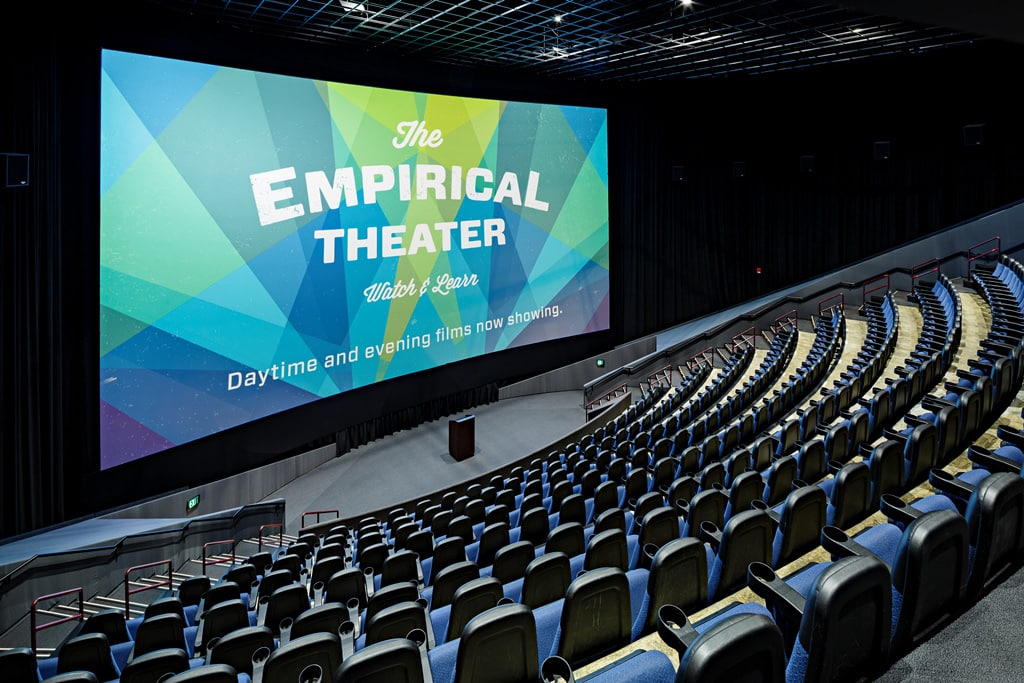
OMSI’s Empirical Theater offers another chance to sit down without leaving the experience behind.
The theater shows science documentaries, nature films, special presentations and selected mainstream movies on what OMSI describes as the largest movie screen in Portland. Its audio system includes Dolby Atmos, creating an immersive environment for films that are already designed to look enormous.
Daytime programs may take viewers into deep oceans, distant ecosystems or prehistoric worlds. Evening events sometimes pair films with talks, demonstrations, themed food or discussions about the science behind what appears on screen.
This makes the theater more than a place to rest tired feet, although parents may appreciate that benefit too.
It extends the museum beyond its exhibition halls. A visitor can spend the morning experimenting with physics, tour the submarine after lunch and end the afternoon watching a film that transports the entire audience somewhere else.
Films begin without the long series of previews common at commercial theaters, and OMSI recommends arriving 10 to 15 minutes before showtime. Theater tickets are separate from general museum admission.
Rotating Exhibitions Give Oregonians a Reason to Return
Permanent exhibits form the heart of OMSI, but the featured exhibition hall keeps the museum changing.
Over the years, visiting exhibitions have explored dinosaurs, the human body, animals, engineering, animation, ancient civilizations and other subjects capable of filling a large gallery.
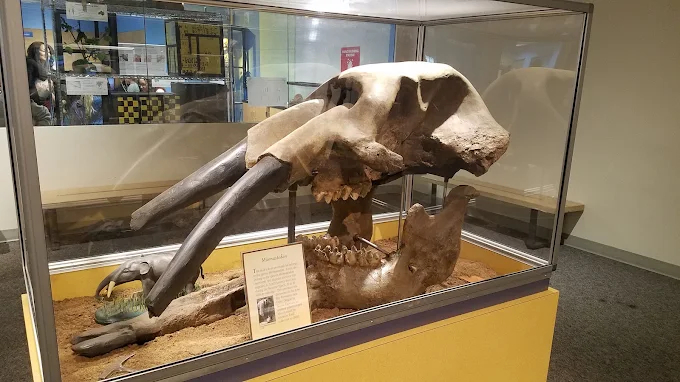
These temporary exhibits are often the first thing returning visitors ask about. Families who have visited OMSI for years may already have favorite permanent areas, but a major traveling exhibition can make the museum feel completely new.
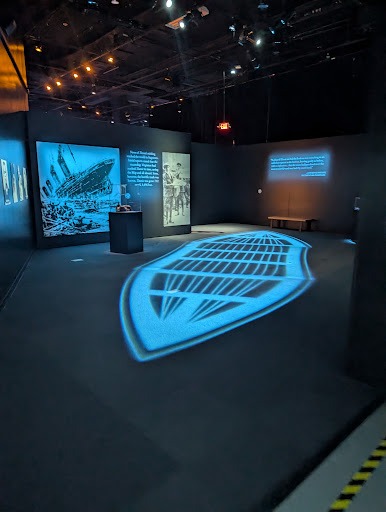
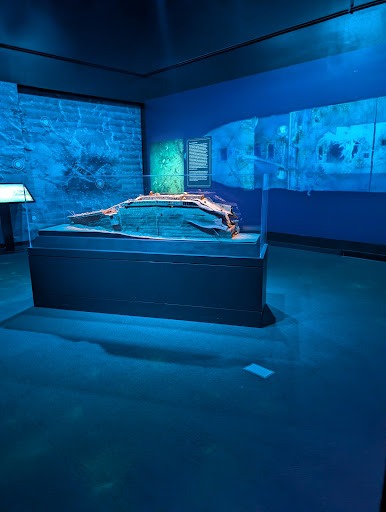
In 2026, OMSI is hosting TITANIC: The Artifact Exhibition from March 21 through October 18.
The exhibition includes more than 100 authentic artifacts recovered from the wreck site and uses personal stories to help visitors understand the ship’s first and final voyage. Guests are invited to imagine themselves as passengers while exploring recreated spaces, historic objects and accounts of the people aboard.
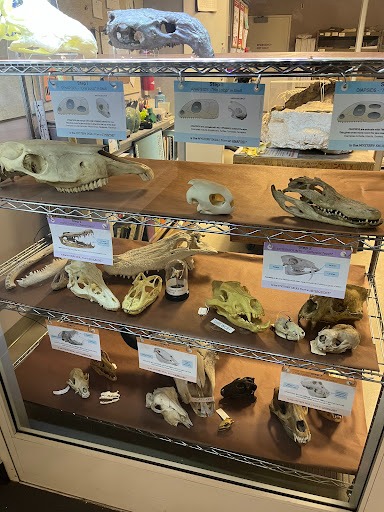
Most visitors spend approximately 45 to 60 minutes in the exhibition, although OMSI doesn’t impose a time limit. Entry is timed, and advance reservations are strongly recommended. A ticket to the Titanic exhibition also includes admission to OMSI’s permanent halls and labs.
Temporary exhibitions do cost more than standard museum admission, but they can become the centerpiece of a visit.
Anyone planning an OMSI trip after October 2026 should check the museum’s current schedule to see what has replaced it.
OMSI Isn’t Only for Children
It’s easy to think of OMSI as a children’s museum, especially when school buses are parked outside and the halls are filled with families.
But adults who visit without children often discover how much they missed while supervising someone else.
OMSI hosts evening programs, science talks, movie events, planetarium shows, laser performances and its popular OMSI After Dark series. Current programming also includes Science Pub presentations where researchers and other experts discuss topics in a more relaxed setting.
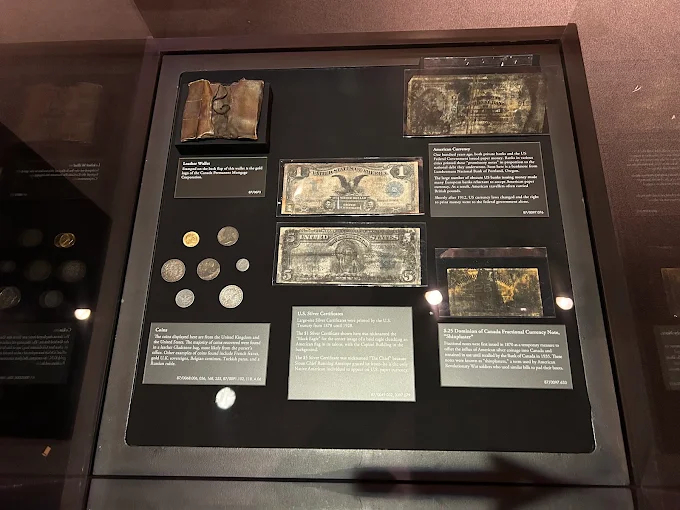
Without the pressure of keeping a group together, adults can take their time with exhibits, attend a lecture, explore the submarine or finally attempt the engineering challenge they hurried past during a previous family visit.
The museum’s appeal comes from the fact that curiosity doesn’t have an age limit.
A child may be delighted that something lights up. A teenager may want to understand how it was engineered. An adult may start wondering how the same principle affects everyday life.
Everyone begins at a different point, but they’re exploring the same question.
The Riverside Setting Makes the Day Feel Bigger Than the Museum
One of OMSI’s best features is technically outside its doors.
The museum connects easily with Portland’s Eastbank Esplanade, a paved riverfront route used by walkers, runners and cyclists. The esplanade opened in 2001 through a partnership involving OMSI and other city organizations.
This gives families an opportunity to step outside, walk beside the river and enjoy views of downtown Portland.
The Hawthorne Bridge rises nearby, boats move along the Willamette, and the city feels close without pressing in on the museum. On a clear day, the waterfront is a pleasant place to take a break before heading back inside.
Visitors could also make OMSI part of a larger Portland outing rather than treating it as an isolated destination. The museum sits near the central east side’s restaurants, food carts, transit connections and riverfront paths.
That flexibility is useful because OMSI can be intense in the best possible way. After a few hours of lights, sounds, experiments and excited voices, a quiet walk along the river may be exactly what everyone needs.
OMSI’s Influence Reaches Far Beyond Portland
The building on Water Avenue may be OMSI’s most visible home, but the organization’s work extends throughout Oregon and beyond.
OMSI operates camps, school programs, traveling education programs, digital resources and community events. Its outdoor programs include Camp Hancock in Oregon’s high desert and Camp Gray on the coast near Newport.
The museum also creates traveling exhibitions and works with museums, nature centers and communities on exhibit design and science-learning experiences.
OMSI’s 2025 annual report said 1,150,950 people participated in its programs during the year. More than 90,000 students benefited from OMSI programming in their schools, while 14,810 young people were served by regional educators. The organization also invested more than $1.6 million in financial access for 174,773 participants.
Those numbers include much more than visitors walking through the Portland museum, but they reveal OMSI’s larger role.
For some Oregon students, an OMSI educator visiting their school may be their first connection with the organization. Others encounter it at summer camp, during a community science night or through a traveling program hundreds of miles from Portland.
The museum belongs to Portland, but its mission has always been statewide.
How Much Time Should You Spend at OMSI?
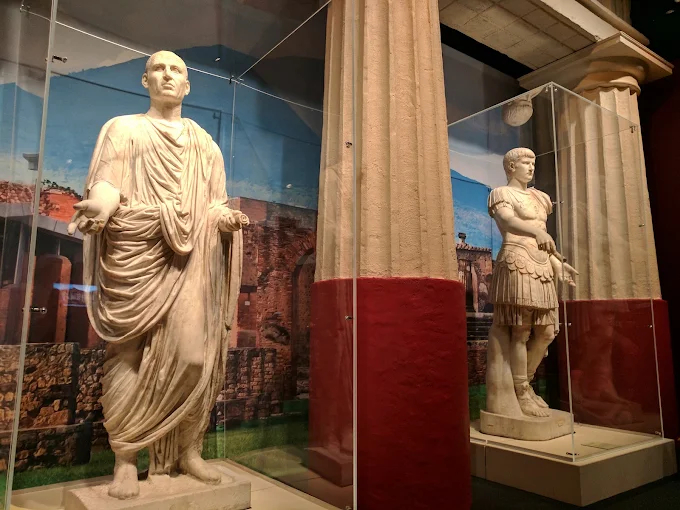
A quick visit is possible, but it may leave you feeling as though you barely started.
Families interested primarily in the permanent exhibit halls should allow at least three hours. Visitors adding a submarine tour, planetarium program, laboratory experience, movie or temporary exhibition could easily spend most of the day.
A comfortable full-day plan might begin with the busiest interactive halls in the morning, followed by lunch and a scheduled ticketed experience in the afternoon.
One possible itinerary would look like this:
Arrive close to opening and begin in Turbine Hall while everyone has energy. Let younger children spend time in Science Playground, then explore the Natural Sciences Hall before lunch.
Reserve a submarine tour or planetarium show for early afternoon. Afterward, visit the labs and any exhibits you missed. End with a documentary or a walk along the river.
Trying to do everything in a single trip can make the day feel rushed. Families who live within driving distance may have a better experience choosing a few priorities and saving the rest for another visit.
That’s especially true for children who become completely absorbed in one area. Pulling them away because the itinerary says it’s time to move on can defeat the purpose of bringing them to an interactive museum.
Sometimes the best plan is to let curiosity decide.
Current Admission, Hours and Parking
As of August 2026, regular museum admission is listed at $22.50 for adults ages 14 and older, $20.50 for seniors ages 63 and older, and $15.50 for children ages 3 through 13. Children younger than 3 are admitted free, although tickets are still required. Featured exhibitions, submarine tours, planetarium programs and theater shows may require separate or upgraded tickets.
OMSI’s 2026 summer hours are 9:30 a.m. to 5:30 p.m. Monday through Friday and Sunday. On Saturdays, the museum remains open until 7 p.m. Hours can change during holidays, school breaks and different seasons.
On-site parking currently costs $5 plus fees for two hours or $8 plus fees for the entire day. Evening parking after 5 p.m. is listed at $2 plus fees. Visitors can pay through the Parking Kitty app, at the front desk or through kiosks in the museum lots.
Public transportation, cycling and walking are also practical options. The museum’s riverfront location makes it especially convenient for visitors traveling along the Eastbank Esplanade.
Because prices, schedules and temporary exhibitions change, checking OMSI’s official visitor information before leaving home is always a good idea.
Tips for a More Comfortable Visit
Weekends, holidays and school breaks can bring large crowds. Arriving when the museum opens usually makes it easier to explore popular spaces before they become busy.
Purchase timed tickets in advance for major featured exhibitions, submarine tours and planetarium shows. This is particularly important when a popular traveling exhibition is nearing the end of its run.
Families with very young children should begin with the areas they care about most. Energy levels can drop quickly in such a large museum.
Visitors sensitive to noise or lighting may want to review accessibility information before arriving. OMSI offers sensory kits, and several spaces are wheelchair accessible. The Natural Sciences Hall uses darker thematic lighting and can become loud.
The submarine has much stricter physical requirements than the rest of the museum, so anyone uncertain about navigating it should try the practice hatch in the lobby.
Finally, don’t assume every laboratory or demonstration operates continuously. Check the daily schedule when you arrive and build your visit around anything you don’t want to miss.
The Area Around OMSI Could Become a Destination of Its Own
OMSI’s future plans extend well beyond renovating exhibition halls.
The proposed OMSI District would transform 24 acres around the museum into a mixed-use neighborhood centered on science, culture, learning and public access to the Willamette River.
Plans include approximately 1,200 market-rate and affordable homes, public plazas, event areas, a waterfront education park, a Center for Tribal Nations and up to three million square feet of development. OMSI says the waterfront park is intended to help restore Tribal presence along the river and create a place where visitors can understand the land and water through cultural and scientific perspectives.
The district is also planned around climate-conscious development, habitat restoration, sustainable transportation and additional parks and green spaces.
It’s an ambitious vision, and it may take years to fully emerge. But the idea feels consistent with OMSI’s history.
The museum has never remained still for very long. It grew from a community foundation into a statewide educational organization, outgrew one home, transformed an old industrial property and continued reinventing its exhibits as science and Oregon changed around it.
Now, it’s imagining what an entire neighborhood built around learning could look like.
Why OMSI Remains One of Oregon’s Most Memorable Museums
There are larger museums in America. There are collections with older objects, grander architecture or more famous paintings.
But OMSI offers something many traditional museums don’t.
It gives people permission to be curious.
You don’t need to arrive with a deep understanding of astronomy, engineering, chemistry or natural science. You only need to be willing to push a button, test an idea, ask a question or follow a child who has suddenly become fascinated by something you nearly walked past.
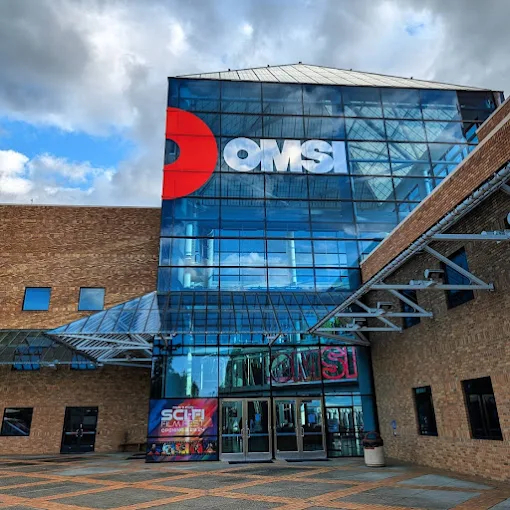
That’s how an ordinary day at OMSI unfolds.
You might enter because it’s raining. You might come for the Titanic exhibition, the submarine or a planetarium show. You may simply need something to do with the kids during a weekend in Portland.
Then, somewhere between the turbine hall and the river, someone in your group discovers a question they hadn’t thought to ask before.
And that may be the best thing any museum can offer.
Frequently Asked Questions About Visiting OMSI
Where is OMSI located?
OMSI is located at 1945 SE Water Avenue in Portland, Oregon, along the east bank of the Willamette River.
Is parking available at OMSI?
Yes. Paid parking is available in OMSI’s North and South parking lots. Visitors can pay through the Parking Kitty app, at the museum’s front desk, or at parking kiosks located in the lots.
Parking costs $5 plus fees for up to two hours or $8 plus fees for the entire day. Guests arriving after 5 p.m. can expect to pay a flat evening rate of $2 plus fees.
Parking rates may change, so visitors should check OMSI’s official website before their trip.
How long are USS Blueback submarine tours?
Guided tours of the USS Blueback generally last between 40 and 50 minutes.
Because tour capacity is limited, visitors may want to reserve tickets in advance, particularly on weekends, holidays and school breaks.
Is it difficult to enter and navigate the submarine?
The USS Blueback is a fascinating but physically challenging space to explore.
Visitors must bend and stoop to pass through a small watertight hatch when entering the submarine. OMSI has a practice hatch in the lobby so guests can determine whether they are comfortable and physically able to enter before beginning the tour.
The submarine includes narrow passageways, confined spaces and very steep stairs. Visitors must be able to navigate the vessel independently. Children cannot be carried during the tour.
Wheelchairs, walkers and strollers are not permitted aboard the submarine, although canes are allowed. Closed-toe shoes are strongly recommended.
Are there age or height requirements for the submarine tour?
Visitors must be at least 3 years old and at least 36 inches tall to tour the USS Blueback. Everyone participating must also be able to climb through the practice hatch in the OMSI lobby.
Is the USS Blueback wheelchair accessible?
The interior of the submarine is not wheelchair accessible due to its narrow passageways, steep stairs and watertight hatches. Wheelchairs, walkers and strollers cannot be brought aboard.
Visitors who cannot enter the submarine can still view it from the museum grounds and the surrounding waterfront area.
Are accessibility resources available aboard the submarine?
Many informational panels inside the USS Blueback include Braille text. Visitors who need additional support should speak with a submarine staff member before the tour.
Does OMSI offer accessibility services?
Yes. OMSI provides a variety of accessibility resources and services throughout the museum. The organization also offers admission assistance and financial aid programs intended to make its exhibits and educational experiences available to more members of the community.
Visitors with specific accessibility needs should review OMSI’s current accessibility information or contact the museum before arriving.
How much time should visitors plan to spend at OMSI?
Most families should plan to spend at least three to four hours exploring OMSI. Visitors adding a submarine tour, planetarium show, movie or featured exhibition could easily spend most of the day at the museum.
Are submarine tours included with general admission?
USS Blueback tours typically require a separate ticket and are not included with standard museum admission. Planetarium shows, theater presentations and some featured exhibitions may also require additional tickets.
Ticket prices, schedules and availability can change, so it is best to review the current options before visiting.
Visiting OMSI is easier when it fits the rest of the trip. Our Portland travel guide covers family pacing, hotel areas, rainy-day choices, and getting around.