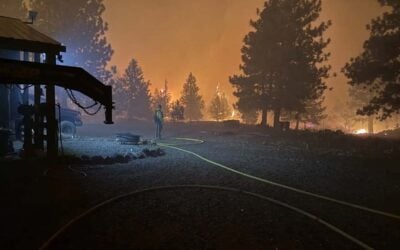

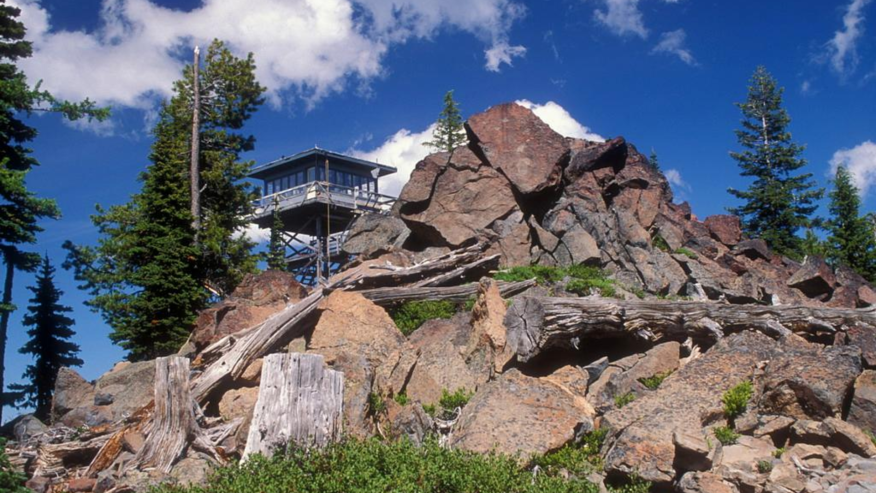
A longtime piece of Oregon’s wildfire history has been lost to the Grasshopper Fire.
Officials with the Mt. Hood National Forest confirmed Saturday that the Flag Point Fire Lookout was destroyed by the wildfire overnight, despite an extensive effort by firefighters to protect the remote structure.
Flag Point has served as an important wildfire detection site for more than a century and held deep meaning for many people living in the communities surrounding the forest.
The first lookout at Flag Point was installed in 1924. The structure that stood at the site until this week was constructed in 1973, making it more than 50 years old.
Unlike many historic fire lookouts that have been retired or converted into recreational rentals, Flag Point remained part of the Mt. Hood National Forest’s active wildfire detection network. It continued to be staffed each summer, working alongside forest patrols, cameras and other remote-sensing technology used to identify new fires.
Firefighters Spent Three Days Trying to Save It
As the Grasshopper Fire moved closer, crews made a determined effort to give the lookout the best possible chance of surviving.
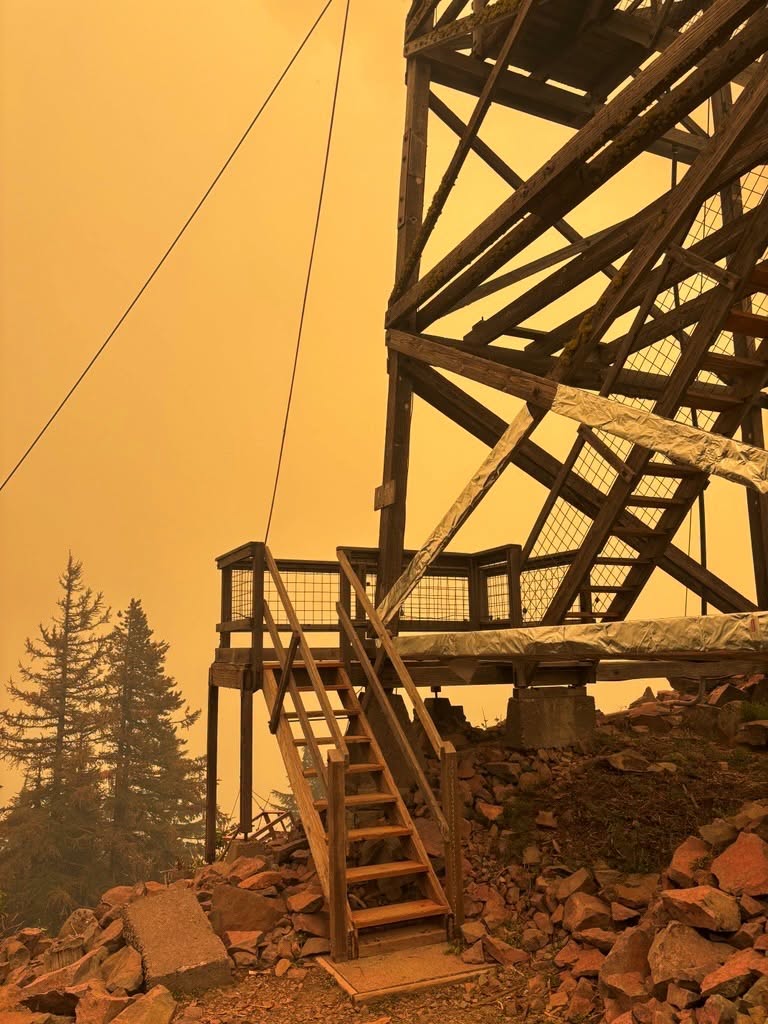
Over three days, firefighters cleared vegetation from around the structure and removed nearby trees where conditions allowed. Crews also placed fire retardant around the lookout and remained involved in structure-protection work for as long as they could safely stay in the area.
Earlier in the incident, the Forest Service reported that Flag Point Lookout and nearby radio equipment were being wrapped in protective material as firefighters prepared for the approaching flames.
Those preparations were ultimately not enough to overcome the fire’s intensity.
According to the Forest Service, increasing fire behavior, dense smoke and hazardous conditions eventually made it unsafe for firefighters to continue directly protecting the structure.
Crews were forced to withdraw rather than risk lives trying to defend the lookout.
“Firefighter and public safety remain the highest priority on every incident,” Mt. Hood National Forest officials said in announcing the loss.
The Forest Service said the work performed around Flag Point reflected firefighters’ larger commitment to protecting lives, communities and critical infrastructure threatened by the Grasshopper Fire.
A Lookout That Watched Over the Forest for Generations
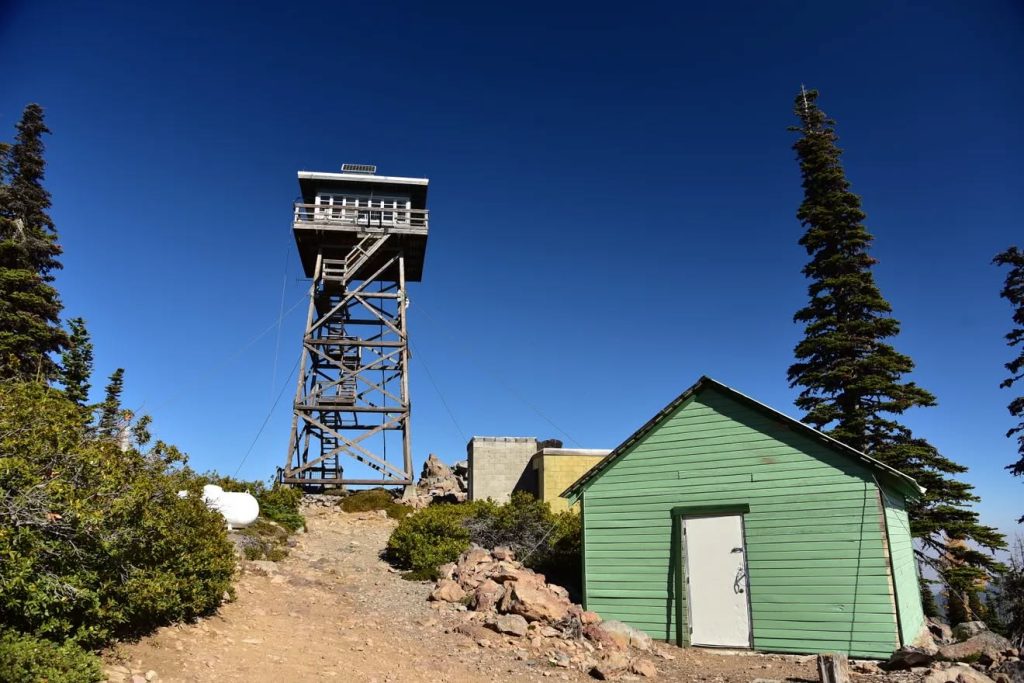
Fire lookouts once formed the backbone of wildfire detection throughout Oregon’s forests.
From their elevated positions, trained observers scanned the surrounding landscape for smoke, recorded weather conditions and helped fire officials determine the location of newly reported fires.
Although modern cameras, aircraft and satellite-based systems have changed how wildfires are detected, staffed lookouts continue to provide human observation from some of Oregon’s most remote areas.
For generations, Flag Point was part of that tradition.
Its loss is more than the destruction of a building. It marks the disappearance of a working link to the early days of wildfire detection in the Pacific Northwest—a site where people watched over the surrounding forest for more than 100 years.
Grasshopper Fire Suppression Continues
Firefighters remain fully engaged in suppressing the Grasshopper Fire and protecting nearby communities and essential infrastructure.
The fire was first reported during the evening of July 23, east of Detroit. It grew rapidly during its early days as wind, heat and dry vegetation created difficult conditions for crews.
The public is being asked to follow all forest closures and current fire restrictions. Entering a closed area can place visitors in danger and interfere with firefighting operations.
Officials also urged people throughout the region to be extremely careful with anything capable of producing a flame or spark. With Oregon already facing dangerous summer fire conditions, another human-caused ignition could pull firefighters and aircraft away from existing incidents.
Additional information about the Grasshopper Fire, including closures, evacuation notices and suppression activity, is available through the official Forest Service and InciWeb incident updates.
Sources: Mt. Hood National Forest–U.S. Forest Service and the Grasshopper Fire incident-management team.
For current Oregon fire conditions: Track current fire incidents, mapped evacuation areas, smoke, road conditions, and official resources on our Oregon Wildfire Map.