
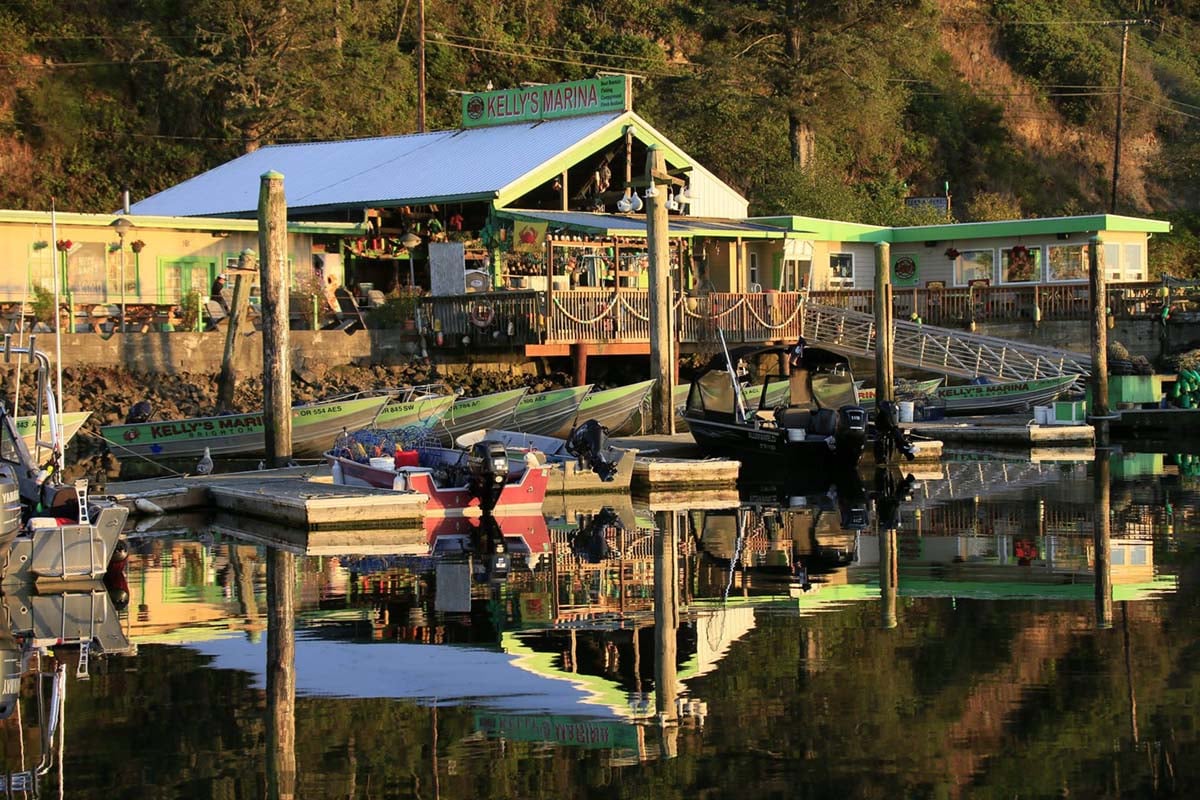
Some Oregon Coast trips are built around a hotel room and a restaurant reservation. This one is built around a campsite, a baited crab ring, and the possibility that dinner might come out of Nehalem Bay.
I went to Kelly’s Brighton Marina last year, and I had an absolute blast. What stayed with me was not simply the crabbing. Oregon has plenty of places where you can throw a ring from a dock or launch a boat. What makes Kelly’s different is how naturally the whole experience fits together: you can camp beside the water, wake up at the bay, rent the gear you need, catch Dungeness crab, and have your legal keepers cooked right there at the marina.
That combination turns an activity into a complete Oregon Coast weekend. You are not crabbing for a couple of hours and then immediately climbing back into the car. You get to settle in, pay attention to the tide, enjoy the working-marina atmosphere, and let the day unfold around the water.
Kelly’s Brighton Marina sits along Highway 101 just north of Rockaway Beach, across Nehalem Bay from the long sand spit of Nehalem Bay State Park. Manzanita is a short drive north, Tillamook is south, and the beaches at Rockaway are close enough to work into the same trip. But once you arrive, the marina feels like its own little world.
If you are planning a larger trip, our Oregon Coast guide can help you build the rest of your route. For this particular weekend, though, I would let camping and crabbing be the main event.
Kelly’s Brighton Marina at a glance
Short answer: Kelly’s Brighton Marina is a working marina and waterfront campground on Nehalem Bay, just north of Rockaway Beach. Visitors can reserve a dry or partial-hookup campsite, rent a crab boat or crab from the dock, and have legal-size Dungeness crab cooked on site. Camping can be reserved online; crabbing is first-come, first-served.
- Best for: First-time crabbers, families, waterfront campers, and hands-on Oregon Coast weekends
- Location: Nehalem Bay in Tillamook County, immediately north of Rockaway Beach
- Camping: Dry sites, partial-hookup waterfront RV sites, plus limited cabin and trailer availability
- Crabbing: Two-hour boat packages or dock crabbing; equipment, instruction, and cooking of legal catches are included
- Reservations: Reserve camping online; crabbing is first-come, first-served
- License: Oregon shellfish license required for harvesters age 12 and older unless an official exemption applies
- Before driving over: Call (503) 368-5745 to confirm tides, weather, hours, and boat availability
Facts checked: September 14, 2026, using Kelly’s official crabbing and camping pages plus current Oregon agency guidance. Prices and operations can change.
The official That Oregon Life store
The Oregon you bring home.
Start the day with Oregon-roasted coffee, then find original gear inspired by the places, stories, and oddities that make this state ours.
Shop Oregon gear
Why camping and crabbing belong in the same trip
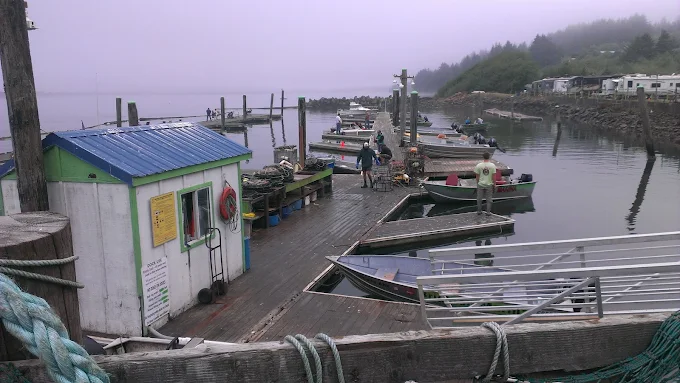
The best part of camping at a marina is that the activity you came for is not somewhere else. There is no long morning commute to a launch, no puzzle involving separate parking lots, and no rush to squeeze crabbing between checkout and the drive home. The bay is the setting for the entire stay.
That matters because crabbing runs on the bay’s schedule more than ours. Tide, current, wind, and recent conditions can all affect the experience. Staying nearby gives you room to ask the marina staff when conditions look best and plan around that window. If the morning is the better bet, you are already there. If the useful tide arrives later, you can have breakfast, walk the property, or explore Rockaway Beach before coming back.
I also like the simplicity of making the catch part of camp dinner. Camping meals often involve a cooler full of food that was bought days earlier. Here, the most memorable possibility is dinner coming from the water in front of you. There are no guarantees in recreational crabbing, of course. You may catch keepers, or you may spend more time measuring and releasing crab than planning a feast. That uncertainty is part of what makes pulling a ring exciting.
Even if the bay does not hand over dinner, Kelly’s sells live Dungeness crab, Manila clams, and Pacific Netarts oysters. The marina says it will cook purchased seafood on request. That gives the weekend a useful backup plan without removing the adventure.
This is a working marina, not a polished resort
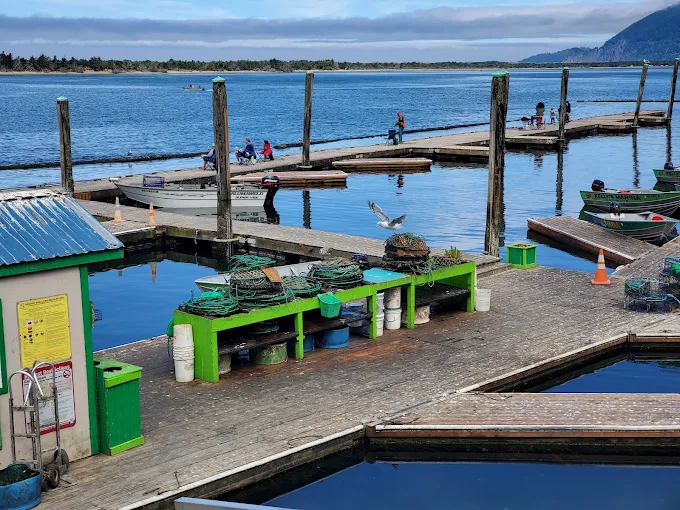
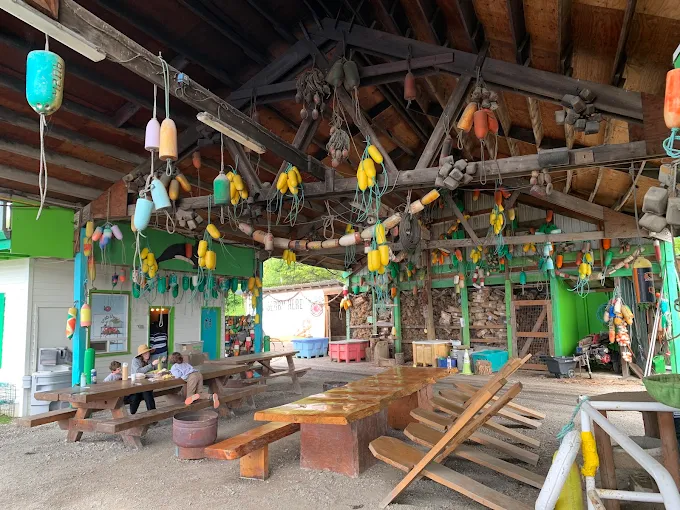
One reason I enjoyed Kelly’s is that it feels like a place organized around doing something. Boats, rings, buckets, gauges, bait, life jackets, docks, and seafood are not decorative touches. They are the point.
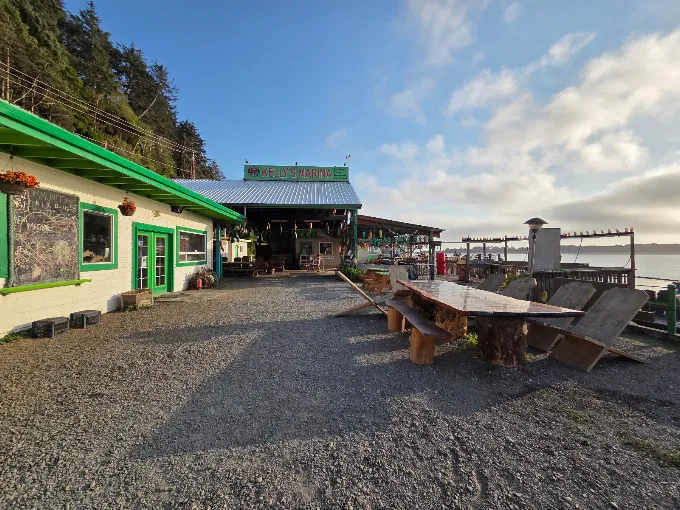
Do not arrive expecting a luxury RV park with manicured hedges, a swimming pool, and a calendar of organized campground activities. Kelly’s is a working waterfront marina with places to camp. Its appeal is direct access to Nehalem Bay and a staff that helps beginners understand the basics.
That distinction is important when deciding whether the stay is right for you. Travelers who need full hookups and resort-style facilities may prefer another campground. People who want to wake up close to their boat rental, sit near the water, and build the day around crabbing will understand the charm immediately.
The setting also makes it easy for a group to enjoy the same trip at different speeds. The enthusiastic crabbers can focus on the rings. Someone who wants a lower-key afternoon can stay closer to camp or spend time at the picnic tables. Families can choose the dock instead of committing everyone to a boat. You are not locked into one rigid version of the weekend.
What the waterfront camping is really like
Kelly’s currently lists both dry campsites and partial-hookup waterfront RV sites. The dry sites are listed at $42 per night and include one vehicle, a picnic table, a fire ring, space for up to six people, and taxes. Small RVs are allowed in these sites.
The partial-hookup RV sites are listed at $49 per night. These waterfront sites include water and electric service, a picnic table, a fire pit, space for up to six people, and taxes. A second vehicle costs an additional $15 under the marina’s current posted rates.
The marina also lists one small cabin and one trailer for rent when available. Those can be useful for someone who wants the waterfront experience without sleeping in a tent or bringing an RV, but availability and current pricing should be checked through the reservation system.
Amenities are practical. Coin-operated hot showers and flush toilets are located near the marina store, and portable toilets are positioned around the campground. The campground follows a pack-it-in, pack-it-out approach, with dumpsters near the showers for properly bagged garbage.
Waterfront does not mean silent. This is an active marina where people launch boats, handle gear, clean catches, and start their day early. For me, that working-waterfront energy is part of the appeal. If your perfect campground requires total stillness and maximum separation from other people, set your expectations accordingly.
Reservations for camping are handled through Campspot. Crabbing, on the other hand, is first-come, first-served. That difference is worth remembering: book the place where you will sleep, but call before the trip to ask about tides, conditions, operating hours, and likely demand for boats.
Boat crabbing or dock crabbing?
Kelly’s offers two easy ways to get started, and neither requires you to own gear.
The current $130 crabbing boat package includes a two-hour boat rental, three baited crab rings, a bucket and measuring gauge, life jackets, basic crabbing instruction, and cooking for any legal-size crab you keep. The marina lists a maximum boat capacity of approximately 700 pounds, which it describes as roughly four or five adults. There is seating for up to six when children or lighter passengers are part of the group.
Additional boat time is currently $25 per hour. Weekend rentals have a three-hour maximum. All crabbing experiences are first-come, first-served, and the marina does not take reservations for them.
If taking a boat onto the bay feels like too much for a first attempt, dock crabbing is the gentler introduction. The current $17 dock-crabbing package includes one baited ring or trap, a bucket and gauge, instruction, life jackets for children age 12 and younger, and cooking for legal-size catches.
I would choose based on your group, not on which option sounds more impressive. The dock makes sense for families with younger children, anyone uncertain about boats, or visitors who want to learn the mechanics before heading onto open water. A boat gives you more mobility and makes the outing feel like a bigger adventure, but it also demands more attention to wind, tide, weight, and the marina’s instructions.
Neither option guarantees crab. What you are paying for is access, equipment, instruction, and the chance to participate without buying a pile of gear first. That is a much better way to discover whether crabbing is something your family wants to do again.
Dock crabbing vs. a crab boat: which should you choose?
| Choose | Dock crabbing | Crab-boat rental |
|---|---|---|
| Current starting price | $17 | $130 for two hours |
| Best for | Young families, nervous beginners, shorter visits | Groups wanting the fuller Nehalem Bay experience |
| Included gear | One baited ring or trap, bucket, gauge, instruction, child life jackets | Three baited rings, bucket, gauge, life jackets, instruction |
| Cooking | Included for legal catches | Included for legal catches |
| Reservations | None; first-come, first-served | None; first-come, first-served |
| Main tradeoff | Easier and cheaper, but you stay in one location | More mobility and adventure, but greater exposure to wind, tide, and boat conditions |
My recommendation: Start on the dock if anyone in your group is unsure about boats or needs a lower-pressure introduction. Choose the boat when everyone is comfortable on the water and the marina says conditions are appropriate.
The simple suspense of pulling a crab ring
The basic rhythm of ring crabbing is easy to understand. A baited ring goes into the water and rests on the bottom. You give crab time to find it. Then you pull steadily and quickly enough to keep them from escaping as the ring rises.
The suspense is what makes such a simple process addictive. Once the gear disappears below the surface, you cannot see what is happening. Every pull begins as a question. The ring may come up empty, crowded with crab that must be released, or holding a legal male that changes the plan for dinner.
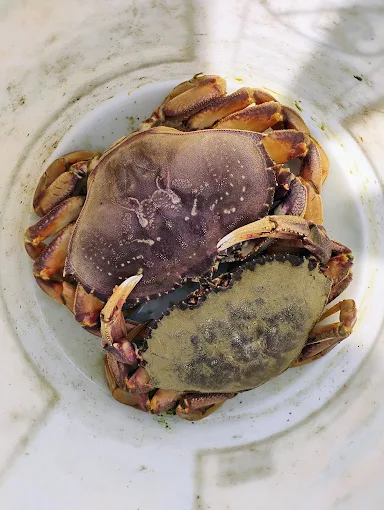
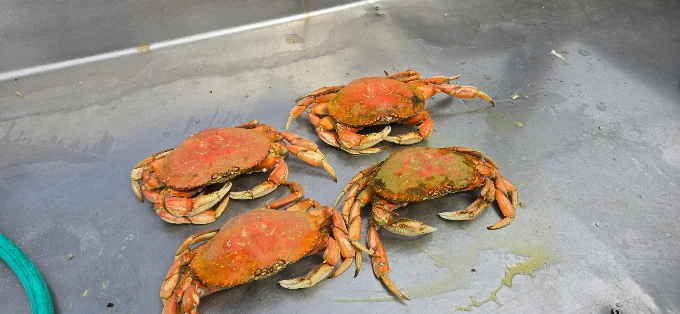
After a ring comes up, the sorting has to happen carefully. Dungeness crab must be identified by sex and measured correctly. Undersized crab and females go back into the bay. Kelly’s provides a gauge and instruction, but every harvester is still responsible for following Oregon law.
This is also where patience becomes part of the experience. Crabbing is not an assembly line. A previous family account of visiting Kelly’s described repeated cycles of dropping, waiting, pulling, measuring, and releasing before the group reached its goal. That is a useful expectation even though every day is different. The time on the dock or boat is not dead time between guaranteed catches; it is the activity itself.
When I think back on going to Kelly’s last year, that hands-on quality is what separates it from simply ordering crab at a restaurant. You have to pay attention. You participate in the process. The meal, if you earn one, comes with a story attached.
Then Kelly’s cooks the legal crab you catch
The built-in cooking is the detail that completes the whole experience. Kelly’s says cooking your legal-size catches is included with both its boat and dock crabbing packages.
That means you do not need to pack an oversized pot, outdoor burner, extra fuel, and a separate cooking setup at camp. You bring the legal keepers back, let the marina handle the cooking, and enjoy them beside the same bay where they were caught.
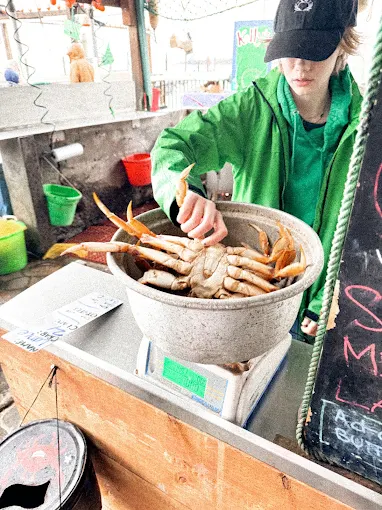
For first-timers, there is another benefit: staff can check the catch before it goes into the pot. You should learn the rules yourself, but having experienced eyes nearby is reassuring when you are still figuring out how to identify males and place the gauge correctly.
Eating crab is never a tidy affair, and that is part of the fun. Shells crack. Hands get messy. The meal takes longer than something served on a plate with the work already done. At a campsite or picnic table, that feels exactly right.
If you intend to transport cooked crab rather than eat it immediately, bring a clean cooler and enough ice to keep it cold. Oregon food-safety guidance recommends chilling harvested shellfish quickly. Do not let the excitement of the catch push safe handling into the background.
When should you go crabbing on Nehalem Bay?
There is no single hour that works every day. Tide, current, wind, recent weather, and crab behavior all matter. Slack water around high or low tide is often easier for beginners because strong current can move gear and make rings harder to handle. That is general guidance, not a substitute for a current local report.
Call Kelly’s at (503) 368-5745 before you lock in the day. Ask what time they recommend arriving, what the tide will be doing, whether boats are operating, and what people have been finding recently. A five-minute call can be more useful than building the entire trip around a generic tide chart.
Fall is widely considered a strong season for Oregon Dungeness because crab often have better meat fill after molting. But “fall is best” is not a guarantee that every September or October crab will be heavy. Recently molted crab can be legal yet light on meat. Conditions vary among bays and from week to week.
The marina’s listed fall hours currently run from September 8 through Thanksgiving weekend, 7 a.m. to 5:30 p.m. daily. It lists different hours during spring, summer, December, and winter. Hours and operations can change, so confirm rather than relying on an old screenshot or social post.
Oregon crabbing rules you need to know
Kelly’s supplies instruction and measuring equipment, but the responsibility to follow Oregon regulations remains with each person harvesting crab.
- License: Everyone age 12 and older needs an Oregon shellfish license unless a current state-designated free-fishing day applies.
- Sex: Recreational harvesters may keep male Dungeness crab only.
- Minimum size: A keeper must measure at least 5 3/4 inches across the back of the shell, measured in front of—but not including—the points.
- Daily limit: The current recreational limit is 12 Dungeness crab per person.
- Gear: Oregon limits each person to three crab rings, lines, or pots in total.
- Open water: Bays, beaches, estuaries, tide pools, piers, and jetties are generally open all year and at all hours unless another closure or advisory applies.
- Ocean closure: Recreational ocean crabbing closes October 16 through November 30. That ocean closure does not automatically close crabbing inside Nehalem Bay.
Review the current Oregon Department of Fish and Wildlife shellfish regulations before your trip. Rules can change, and a business’s summary should never replace the state source.
Check shellfish safety every time
Legal harvest and safe harvest are two different questions. Oregon agencies can issue health advisories or biotoxin closures that affect whether crab or clams should be collected or eaten.
Before harvesting, check the Oregon Department of Agriculture’s current recreational shellfish status or call the Shellfish Safety Hotline at 1-800-448-2474. Do this close to the trip, not weeks in advance.
ODA recommends removing and discarding crab viscera, often called the butter or guts, before cooking. When whole crab are cooked in liquid, toxins present in the viscera can move into the cooking liquid. Discard that liquid rather than using it for sauces, soups, or stock.
The same caution matters if you add clamming to the weekend. Marine biotoxins are not destroyed by cooking or freezing. Always check the specific harvest status for the species and area you plan to visit.
The clam-ferry bonus across the bay
Kelly’s also advertises a ferry service across Nehalem Bay for visitors interested in digging purple varnish clams near Nehalem Bay State Park. The currently listed price is $25 per boatload for up to five people, subject to the same approximate 700-pound limit used for the marina’s small boats.
The idea is wonderfully Oregon: crab on one side of the bay, ride across to dig clams, and return when you are ready. In practice, it requires more planning than the romantic version suggests. You need the right tide, legal access, appropriate digging tools, a shellfish license when required, and a current biotoxin check. Ferry availability can also change with weather and marina operations.
If you are interested, ask about it directly when you call. Do not assume the ferry will be running simply because it appears on an older page or post.
Is this a good trip with kids?
For many families, yes—especially if the adults match the plan to the children’s ages, patience, and comfort near water.
Dock crabbing gives kids a process they can understand: lower the ring, wait, pull, see what came up, and help identify or measure the crab. There is enough repetition to build anticipation, and every pull creates a new moment even when nothing is legal to keep.
The challenges are equally real. Docks can be wet. Crab have claws. Bait smells like bait. Waiting can stretch longer than expected. Young children need close supervision around the water, and nobody should treat a provided life jacket as permission to stop paying attention.
Pack snacks, warm layers, waterproof outerwear, and a backup activity for slow stretches. Set expectations around the experience rather than a required number of keepers. A child who helps release an undersized crab has still participated in the day.
The dock is my first recommendation for a cautious family introduction. If everyone enjoys it, a boat rental can become the next version of the adventure.
What I would pack for a camp-and-crab weekend
Kelly’s provides the central crabbing equipment included with its packages, but a few personal items will make the weekend much more comfortable.
- Waterproof jacket and pants, even when the forecast looks friendly
- Warm layers that can handle wind off the bay
- Water-resistant boots or shoes with dependable traction
- Gloves you do not mind getting wet or smelling like bait
- A clean cooler and ice for any seafood you take home
- Paper towels, wet wipes, and a change of clothes
- Headlamp or flashlight for camp
- Camp chairs for relaxing near the water
- Food for the trip that does not depend on catching crab
- Downloaded or printed proof of your shellfish license
- A current copy or bookmark of Oregon’s shellfish rules and health-status page
I would also bring a flexible attitude. Weather may change. The tide window may not match your preferred schedule. The crab may be uncooperative. The strongest version of this trip treats the catch as a thrilling possibility rather than an entitlement.
Turn it into a full North Coast weekend
Kelly’s location makes it easy to add other North Coast stops without spending the whole weekend driving.
Rockaway Beach is just south, with a long sandy beach, views of Twin Rocks, casual food stops, and the kind of classic beach-town pace that pairs well with a morning on the bay. Our Rockaway Beach guide can help you fill out that part of the trip.
To the north, Manzanita offers another good base for shops, food, and beach time. Continue toward Oswald West State Park for the forested walk to Short Sand Beach. Tillamook is roughly half an hour south when traffic is reasonable, while Cannon Beach is a similar distance north.
My preference would be to keep the itinerary loose. Camp at Kelly’s, plan the crabbing window first, and fit the beach towns around it. The whole point of staying at the marina is to avoid turning the main experience into one more rushed stop on Highway 101.
Is Kelly’s Brighton Marina worth visiting?
Yes—especially if you want more than a standard campground. Kelly’s is worth the trip for beginners and families who want camping and crabbing bundled into one practical waterfront experience. The strongest reason to stay is convenience: your campsite, rented gear, instruction, crabbing access, and catch-cooking service are all in the same place. Travelers seeking a quiet resort-style RV park or guaranteed seafood dinner should choose differently.
Current prices at a glance
- Two-hour crab boat: $130, including three baited rings, bucket, gauge, life jackets, instruction, and cooking for legal catches
- Additional boat time: $25 per hour, with a three-hour maximum on weekends
- Dock crabbing: $17, including one baited ring or trap, bucket, gauge, instruction, child life jackets, and cooking for legal catches
- Dry campsite: $42 per night, taxes included
- Partial-hookup waterfront RV site: $49 per night, taxes included
- Second vehicle: $15
- Clam ferry: $25 per boatload, when available
- Shellfish license: Separate and required for harvesters age 12 and older unless an official exemption applies
These were the marina’s posted prices when this article was reviewed. Rates and package details can change. Confirm with Kelly’s before building your budget around them.
Kelly’s Brighton Marina information
Address: 29200 US-101, Rockaway Beach, OR 97136
Phone: (503) 368-5745
Email: kellyscrabstaff@gmail.com
Website: kellysbrightonmarina.com
Camping reservations: Campspot
Frequently asked questions about Kelly’s Brighton Marina
Can you camp and go crabbing at Kelly’s Brighton Marina?
Yes. Kelly’s offers dry camping and partial-hookup waterfront RV sites on Nehalem Bay, along with first-come boat rentals and dock crabbing. Camping reservations are handled online, while crabbing does not require—or accept—reservations.
Does Kelly’s Brighton Marina cook the crab you catch?
Yes. The marina’s current boat and dock crabbing packages include cooking for legal-size crab you keep. Every crab must meet Oregon’s sex and minimum-size requirements.
Do you need a reservation to go crabbing at Kelly’s?
No. Kelly’s states that boat and dock crabbing are first-come, first-served. Calling before your trip is still important because tides, weather, hours, and boat availability can affect the day.
How much does crabbing at Kelly’s cost?
As checked September 14, 2026, Kelly’s lists dock crabbing at $17 and a two-hour crab-boat package at $130. The boat package includes three baited rings; additional boat time is $25 per hour, with a three-hour weekend maximum. Confirm current prices directly with the marina.
How much does camping at Kelly’s Brighton Marina cost?
As checked September 14, 2026, dry sites are listed at $42 per night and partial-hookup waterfront RV sites at $49 per night, with taxes included. A second vehicle costs extra. Current availability and pricing appear in the marina’s reservation system.
Do you need an Oregon shellfish license at Kelly’s?
Anyone age 12 or older generally needs an Oregon shellfish license to harvest crab or clams. Official free-fishing days may provide an exception, but size limits, bag limits, and health closures still apply.
Is Kelly’s Brighton Marina good for first-time crabbers?
Yes. Both crabbing options include basic instruction and measuring equipment. Dock crabbing is the easiest starting point for families or anyone who is not ready to operate a small boat.
Can you keep every crab you catch?
No. Under current Oregon rules, recreational crabbers may keep only male Dungeness crab measuring at least 5 3/4 inches across the back, with a daily limit of 12 per person. Undersized crab and females must be released.
Official sources and verification
Operational details were checked September 14, 2026, against Kelly’s Brighton Marina, its official crabbing page, and its official camping page. Harvest regulations come from the Oregon Department of Fish and Wildlife. Current biotoxin status should always be checked through the Oregon Department of Agriculture immediately before harvesting.
Why I would go back
I had a blast at Kelly’s last year because it did not feel like one more attraction I was supposed to photograph and leave. It was participatory. The bay set the schedule. The possibility of catching dinner gave the day momentum. And the camping-and-crabbing combination made the place feel like a destination instead of a roadside stop.
That is the hook for me. You can arrive on the North Coast with no crab boat and no stack of specialized gear, spend the night near Nehalem Bay, learn how to work a ring, and possibly sit down to a meal that came out of the water a short time earlier.
Choose the dock if you want the easiest introduction. Rent a boat if your group is ready for a fuller bay experience. Either way, call first, respect the tide, measure every crab carefully, and check state health advisories before you harvest.
Then slow down. Stay by the water. Let the weekend be about the experience rather than a checklist. That is where Kelly’s Brighton Marina really shines—and why the trip has stayed with me.