
Before breakfast could return to the Long Branch Café & Saloon, one of Weston’s oldest buildings had to come through another fire. The September 2021 blaze closed the restaurant for about a year, interrupting a business that had spent decades feeding people inside an old brick mercantile. When the café reopened in September 2022, just ahead of the Pendleton Round-Up, the building began serving its familiar purpose again. The remaining repairs would take more time, money, and help from people determined to keep this corner of Main Street standing.
Today, the Long Branch offers a particularly Oregon combination: a country café menu, a building dating to the 1870s, and a small town whose history is close enough to explore after your meal. Its address at 201 East Main Street once belonged to the Saling and Reese Store, where customers came for merchandise rather than chicken fried steak and eggs. A Weston history exhibit now adds another reason to look around inside. Breakfast can be the beginning of a visit that reaches well beyond the table.
The setting matters here. Weston sits in Umatilla County in Eastern Oregon, east of Athena and south of Milton-Freewater, with the Blue Mountains and an agricultural landscape helping shape its surroundings. It is the sort of place where an older commercial building can remain an important part of daily life instead of becoming a landmark people only photograph from across the street. At the Long Branch, the historic address still has a practical job to do. Travelers get a meal, and the town keeps a reason for people to come through the door.
A café in a building older than the town’s incorporation
The local historical account of the Saling and Reese Store places its construction around 1874. Weston was incorporated in 1878, according to the city’s history, so the mercantile was already part of the community before that formal milestone. Isham Saling and Isham Reese were the businessmen associated with the building. Their names still provide the best starting point for understanding why this particular café address has attracted so much preservation work.
A mercantile was an essential business in a developing farming community. It offered a place to purchase the goods needed to keep households and livelihoods running, often gathering several kinds of merchandise under one roof. Weston’s city history traces Saling and Reese to an earlier general merchandise operation run by Hill and Baker. The building’s later uses included grocery and hardware businesses, continuing that connection with everyday needs as the town changed around it.
There is a lovely continuity between those uses and a café. The items being sold have changed, but the reason for gathering at the corner remains easy to recognize. A store brings customers together while they take care of the week’s necessities, and a restaurant does much the same over a breakfast plate or a lunch order. The Long Branch gives visitors a way to use the building, rather than simply admire the fact that someone saved it.
It is also helpful to separate the age of the building from the age of the restaurant. The café has occupied the space for decades, while the mercantile’s history reaches much further back. Local preservation records describe a brick structure dating approximately to 1874 and a later wood addition from around 1920. Those different periods explain why one address can contain several layers of Weston’s commercial life, with a much older storefront attached to spaces that developed as the business’s needs grew.
The official That Oregon Life store
The Oregon you bring home.
Start the day with Oregon-roasted coffee, then find original gear inspired by the places, stories, and oddities that make this state ours.
Shop Oregon gear
The brickwork gives the corner its character
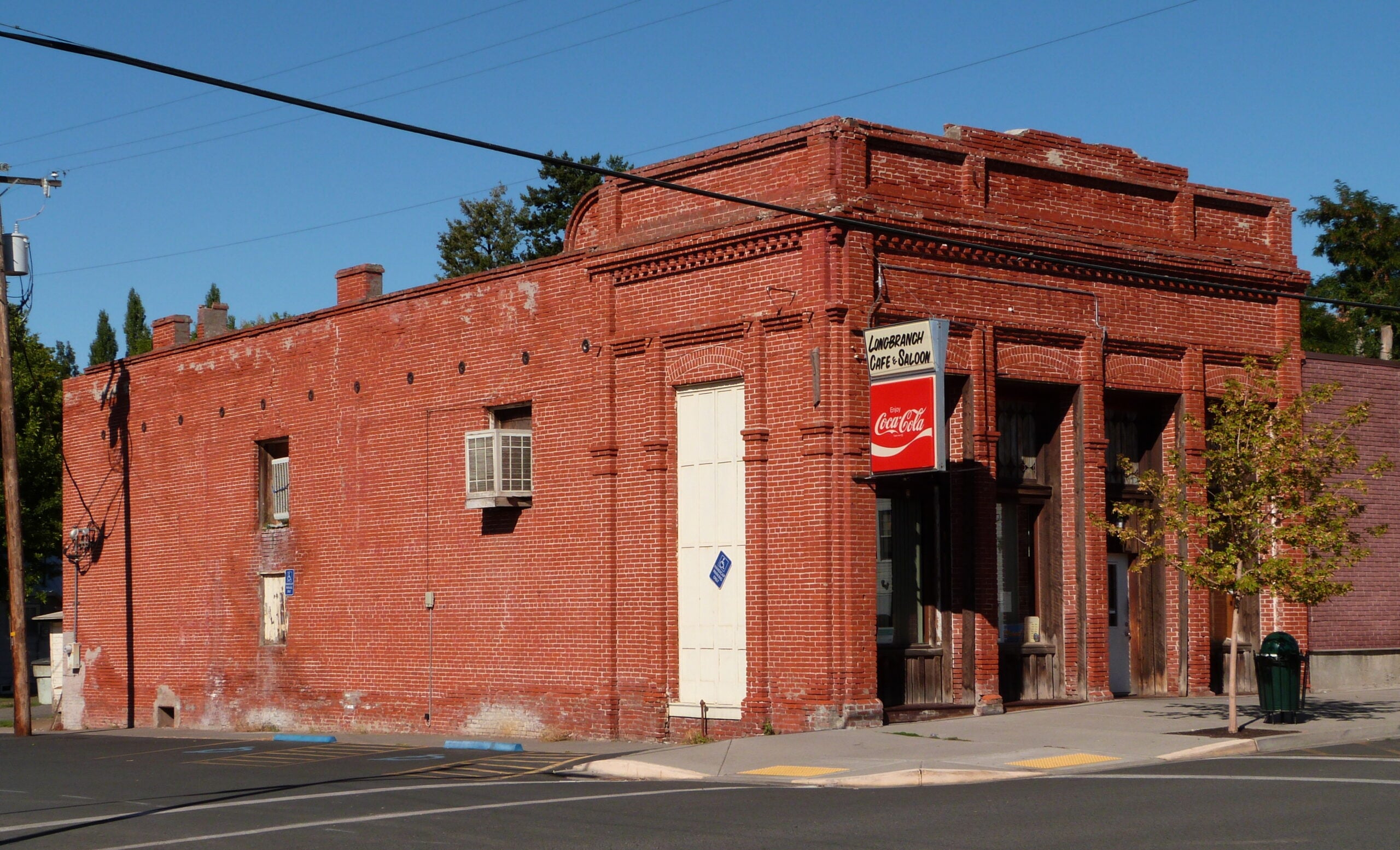
The Long Branch’s historic exterior has more detail than a quick glance at the sign might suggest. Tall openings are set deeply into the front wall, with brick piers dividing the façade into four bays. Above them, decorative brickwork and a raised parapet give the single story structure a more substantial presence on the street. It is an approachable example of the Italianate commercial architecture found elsewhere in Weston’s historic district.
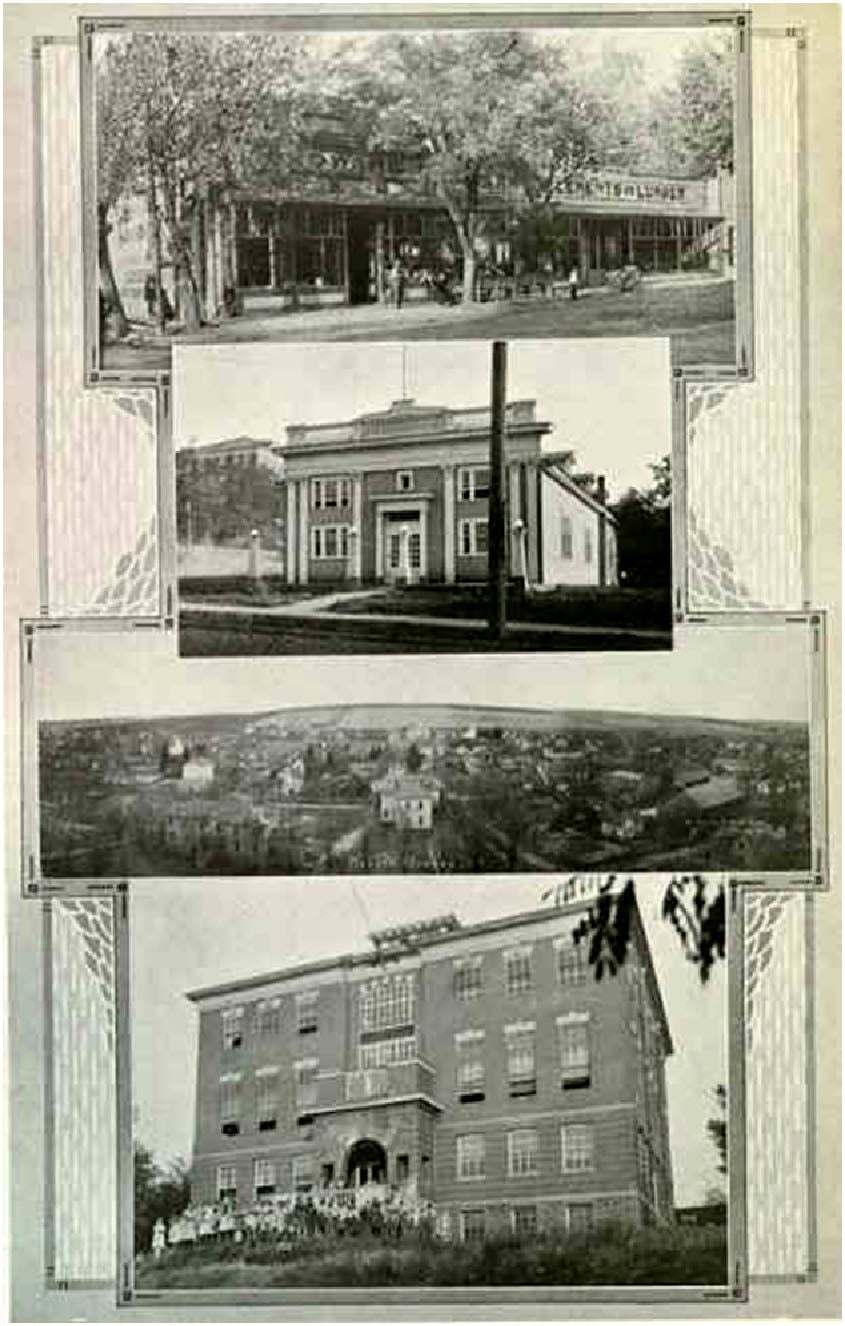
Look at an archival photograph and the proportions become especially clear. The building’s front is compact, while the openings and upper brickwork draw attention upward. The wall along Franklin Street reveals a different side of the same structure, extending the building’s presence around the corner. Those details help explain why repairing a few rows of masonry can have such a noticeable effect on the appearance of an entire intersection.
Local preservation accounts identify the structure as Weston’s oldest surviving brick building and describe its survival through the nineteenth century fires of 1874 and 1883. The bricks themselves were locally made, adding another connection between the building and the town that produced it. Its history involves both the people who operated businesses inside and the workers who supplied the material around them. The walls are part of the story, with repairs carrying that story forward.
Weston’s association with brickmaking appears prominently in a 1922 Umatilla County promotional booklet. The publication presented brick production as a leading local industry and praised the use of Weston brick across the surrounding region. Its enthusiastic language belongs to a booster publication from another era, but the emphasis is revealing. The town took pride in making the material that helped give its commercial streets a lasting form.
Breakfast has plenty of familiar company
The food listings at the Long Branch lean toward the American café meals that make sense before a drive, after an early start, or during a day spent exploring older towns. Published menu listings include chicken fried steak and eggs, French toast, hash dishes, burgers, and sandwiches. The selection covers people who want breakfast and people who are already thinking about lunch. Check the menu when you arrive, since availability and preparations can change.
Some of the listed names have a little Western personality of their own. Cowcamp Hash, Diamond Jim with gravy, and the Sage Hen Chicken Sandwich appear alongside more immediately recognizable dishes. You do not have to know the story behind every name to see the café’s sense of place coming through. Ask about the ingredients in a named dish before ordering, especially if you have an allergy or a particular breakfast in mind.
For a savory breakfast, the chicken fried steak and eggs is a natural item to investigate first. French toast provides a different direction for someone who would rather start with something sweet. Hash dishes give the menu another familiar breakfast category, while the listed taco omelet suggests an option beyond a plain egg plate. These are useful starting points for choosing an order, with the day’s actual menu supplying the details.
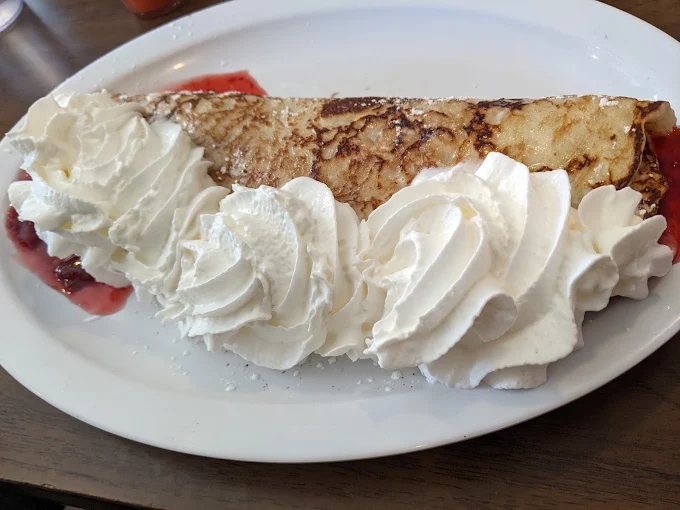
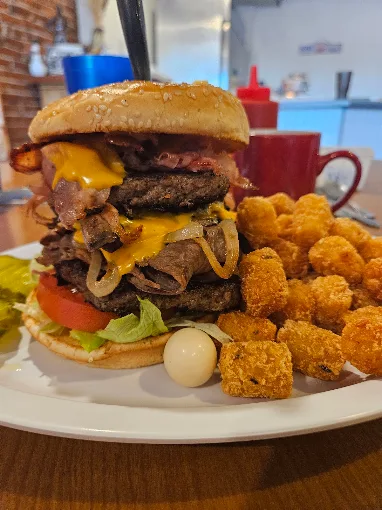
Lunch listings include a bacon cheeseburger with fries and a bacon burger paired with onion rings. The Sage Hen sandwich gives another member of the table something different to consider. That range is part of the appeal of a country café stop: people can arrive with different appetites and still find familiar territory on the menu. It is easy to picture the usefulness of that flexibility on a trip with several people whose preferred mealtime rarely lines up perfectly.
The Long Branch’s appeal also suits travelers who enjoy learning about a place while they eat. The meal gets you inside a historic commercial building, and the history exhibit gives you something more specific to notice once you are there. There is no need to make breakfast itself into a complicated occasion. Allow a little room in the day for the building, the display, and a walk afterward, and the stop becomes a more complete introduction to Weston.
A local history exhibit inside the café
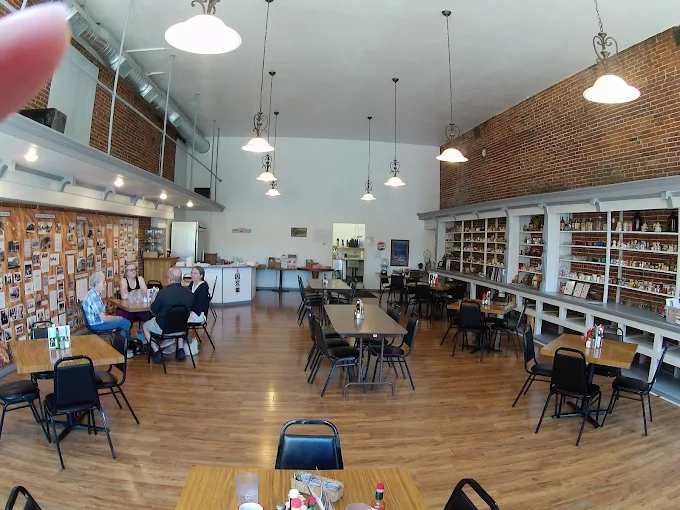
The café’s connection with Weston history became more formal in 2024. In its annual report, published in the January 2025 newsletter, the Weston Area Development Association recorded the installation of a history exhibit at the Long Branch that May. The project included brochures and historical material intended to help people understand the town around them. It brought the preservation organization’s work into a place where residents and visitors already had reasons to gather.
The association continued advertising the display in its April 2026 newsletter, describing photographs and related historical research at the café. That makes the exhibit a useful part of a visit, rather than simply an old mention in a travel directory. Ask staff where to find it and leave a few minutes to read before heading back outside. Historical photographs can make a familiar looking street much easier to interpret.
A photograph of a previous business at the same address is especially good at changing how you see a building. Windows, signs, additions, and neighboring structures begin to stand out when you compare them across different periods. You can take that habit of looking onto Main Street after your meal. Once you recognize one old storefront as a working place with successive owners, the rest of the district becomes more inviting to explore.
The fire and the year spent getting back open
For the Long Branch, the most recent major interruption began on September 5, 2021. A fire damaged the restaurant and kept it closed for roughly a year. Annie Charnley Eveland’s June 2023 reporting for the Walla Walla Union-Bulletin documented the reopening in September 2022, shortly before the Pendleton Round-Up. The restaurant could serve customers again, although the historic structure still needed substantial work.
That reporting identified Bernice Charlton as the owner of both the building and the business for 33 years at the time. Her long connection with the address gives the recovery a human scale. A damaged café in a small historic district represents years of work tied to one place, as well as a building with a much older past. The reopening preserved a business that people knew while giving the next stage of restoration a chance to proceed.
The association’s 2024 restoration brochure explains that the property was already undergoing restoration when the fire occurred. Insurance did not cover all the repairs, leaving a personal investment by the owner as part of the recovery. That detail helps explain why reopening and finishing the preservation work were separate milestones. Returning food service to the building did not mean every wall, roof, and exterior problem had been resolved.
Visitors usually experience a restaurant as a single place: the door, the table, the order, and the meal. The Long Branch’s recovery reveals the considerable work behind keeping that experience possible. Brick repairs and roof work belong to the same story as getting the café open again, even though they are less visible than a new menu or a reopened entrance. Knowing a little of that effort makes the building’s continued use more meaningful.
Hundreds of bricks and a community preservation effort
The work gathered support from several directions. The Long Branch project received an $80,000 Oregon Main Street grant, with a required $24,000 match, according to the preservation records. WADA’s restoration brochure lists a $20,000 Wildhorse Foundation grant and a $4,000 Kinsman Foundation award toward that match. Those amounts show the scale of a particular preservation project, rather than a simple cosmetic improvement to a restaurant frontage.
By July 2024, the association reported that Pioneer Waterproofing was working on the historic masonry. Its annual report later recorded completion of the north and east walls that summer, using approximately 450 to 500 bricks from the city’s stored supply. That is a wonderfully concrete detail in a story that could otherwise disappear into grant amounts and project names. A reserve of local bricks helped repair a building originally made with local material.
The same annual report documents roof patching in November 2024, another practical step in keeping the structure usable. It also records the ongoing search for grants and the reality that some applications did not succeed. Historic restoration proceeds through completed jobs, available funds, and the next problem that needs attention. The café’s reopening sits within that longer process, with the building’s continued care extending beyond the moment customers returned.
That effort connects the Long Branch with the wider work of preserving downtown Weston. A single repaired corner helps maintain the relationship between neighboring storefronts, public spaces, and the streets people use to reach them. The benefit is easy to understand during a visit that includes a meal and a walk. You are able to spend time in a district where older buildings remain useful parts of the town.
A Main Street walk after breakfast
The Weston Area Development Association’s historic walking tour makes a good companion to a café stop. Much of the commercial district is concentrated along Main Street, with the Saling and Reese Store among the places explained in the route. Open the guide before setting off, or use the linked Clio entries to read about buildings as you reach them. Each entry provides a more specific reason to look at a façade you might otherwise pass without noticing.
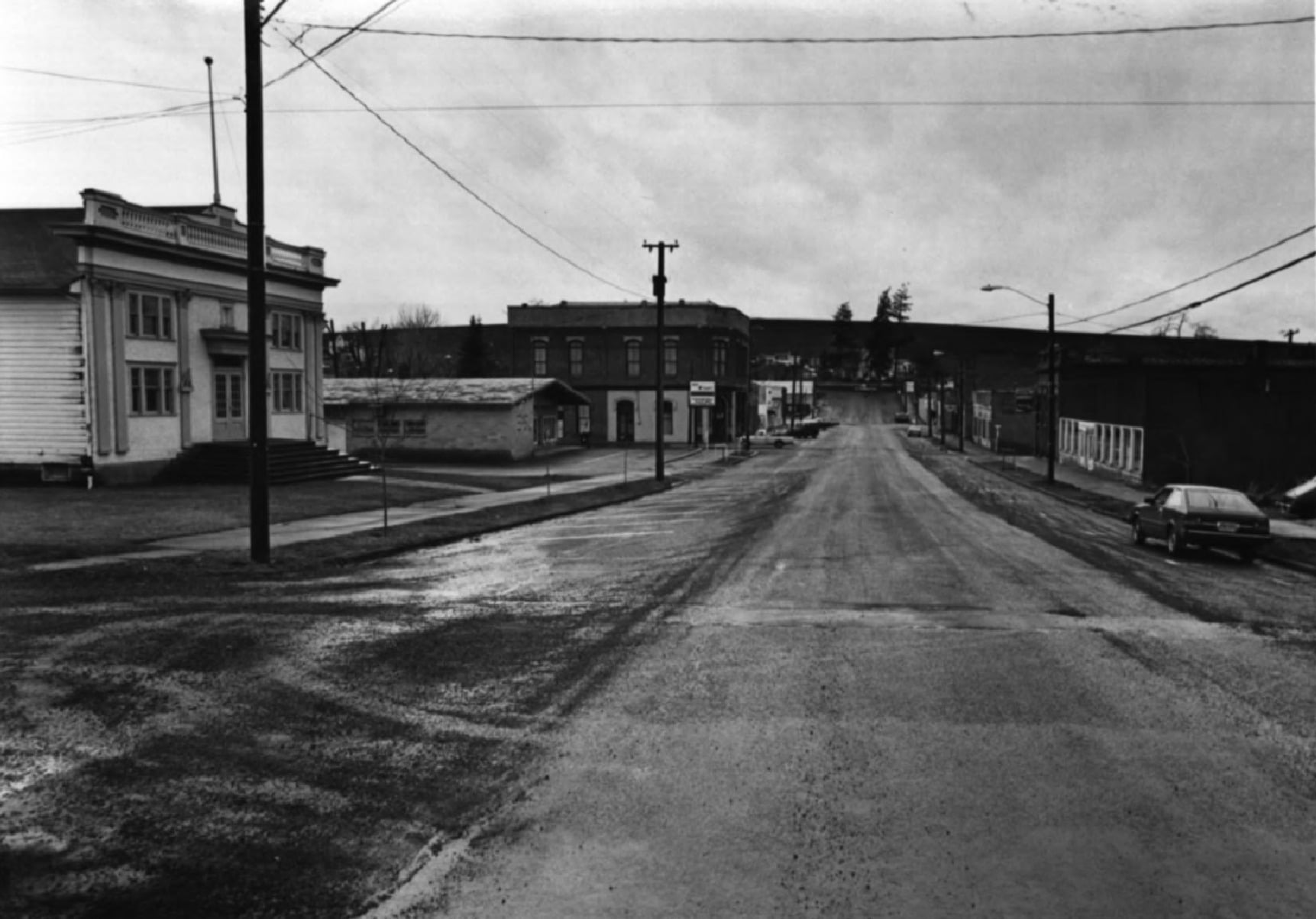
The Masonic Building at 109 East Main Street is one worthwhile comparison. Its historic upper floor housed a lodge, while the ground floor served commercial uses. The former bank and Old Post Office add other kinds of business to the street’s history. Together, they help explain how the café’s mercantile fitted into a district where residents once came to shop, handle money, collect mail, and attend meetings.
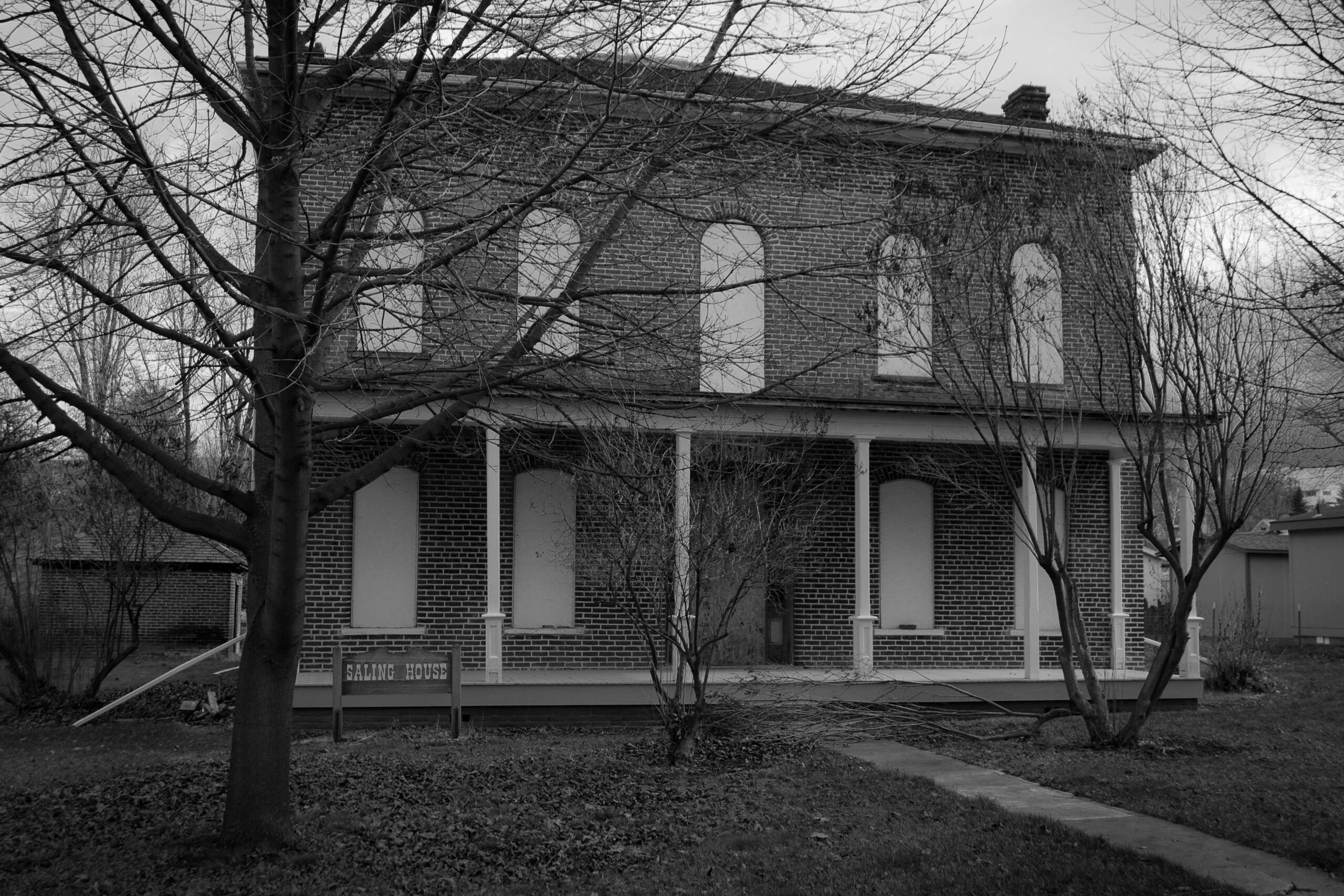
Isham Saling’s name leads to another stop beyond the storefronts. The Isham Saling House at 324 North Water Street dates to 1880 and preserves another part of the merchant’s connection with Weston. The brick house gives the commercial story a residential counterpart, linking a businessman associated with the old store to the home he built nearby. View it respectfully from public areas and confirm any special access rather than assuming it is regularly open for interior tours.
Keep the walk modest enough to enjoy the details. Read a historical description, compare it with the building in front of you, and notice which features have survived a change of use. Historic designation does not turn every property into a public museum, and some buildings on a tour remain private spaces. The value of the route comes from understanding the street, with the café providing a welcoming place to begin that process.
A small town stop in a much larger landscape
The landscape around Weston and neighboring Athena helps explain the town’s long association with farm trade. Fields and nearby communities give the older commercial center a wider setting than its short stretch of Main Street might suggest. A store or café serves people whose lives extend well beyond the downtown blocks. That relationship between rural surroundings and a gathering place in town is part of what makes a stop here feel connected to northeastern Oregon.
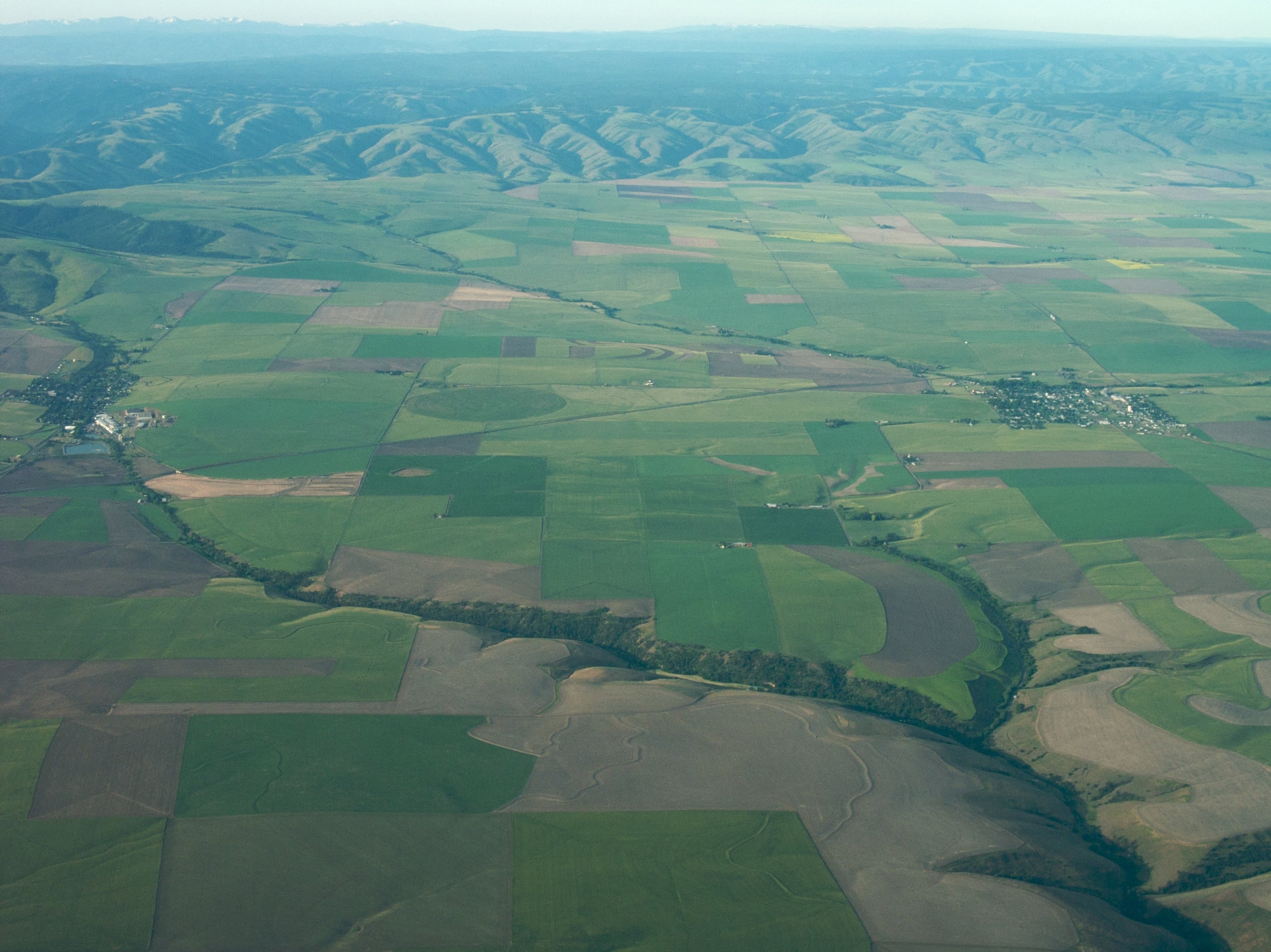
Weston can also fit into a trip that includes Pendleton’s downtown and historic attractions. Use the towns’ different scales to your advantage, allowing time for a larger collection of attractions in one place and a meal with a short walking tour in another. A visit to the Long Branch works best when Weston has a little space in the itinerary. The café and the surrounding streets offer enough to reward a pause instead of a hurried departure after breakfast.
What to know before making the trip
The Long Branch Café & Saloon is at 201 East Main Street, Weston, Oregon 97886. Its listed telephone number is 541-566-3478. Call before a special trip to confirm current kitchen hours, especially for an early breakfast, a late meal, or a visit with a larger group. Published directories disagree on parts of the schedule, so a direct answer from the café is more useful than choosing one listing and hoping it is current.
Payment is another detail to settle before arriving. Several restaurant directories describe a cash only policy and an ATM at the business, but confirm the present arrangement when you call. Ask about the day’s menu at the same time if a particular dish is the reason for your visit. These are small preparations that can make a rural restaurant stop much easier, especially when you are combining it with other plans.
Leave enough time for the history exhibit and a nearby walk, and check the association’s current tour information if you want to follow a route. The exhibit lets you combine a meal with a closer look at local history in the same building. For other food stops with a strong connection to their surroundings, explore our Oregon food and restaurant guide. The Long Branch belongs in that conversation because of the particular place it continues to serve.
A breakfast plate is a simple reason to visit an old building, and sometimes that is exactly what a historic town needs. The Long Branch’s mercantile began as a place where people took care of ordinary needs, and the café keeps that everyday connection alive. Its fire, reopening, and brick repairs give the familiar act of sitting down for a meal an unusually long backstory. When you step onto Main Street afterward, you have both a reason for coming and a better sense of the town that welcomed you.