
There’s a moment every year when Oregon starts to feel different.
The mornings turn cold enough that you start thinking about grabbing a jacket before walking out the door. The first real rains begin waking up creeks and waterfalls that spent much of summer running low. Then, almost without warning, flashes of yellow, orange and deep red start appearing beneath forests that were almost entirely green just a few weeks earlier.
That’s when you know fall has arrived.
And while Oregon may be famous for its endless evergreens, anyone who thinks we don’t get spectacular fall color simply hasn’t been looking in the right places.
Bigleaf maples turn brilliant yellow along Coast Range streams. Vine maples explode in shades of red and orange beneath towering Douglas firs. Aspens light up the high desert and mountain valleys. Historic towns suddenly look like scenes from an old postcard, and some of Oregon’s most beautiful waterfalls become even more dramatic when the forest around them starts changing.
The best part is that there isn’t just one place to experience it.
From waterfall hikes and alpine lakes to ghost towns, wine country and winding mountain roads, here are 15 of our favorite places to see fall colors in Oregon.
But First, When Do Fall Colors Peak In Oregon?
There’s no single perfect weekend for fall color across the entire state.
Elevation, rainfall, cold nights, wind and even summer drought conditions can change the timing from year to year. Generally, though, you’ll start noticing color in parts of Oregon by late September, with much of the state putting on its best display during October.
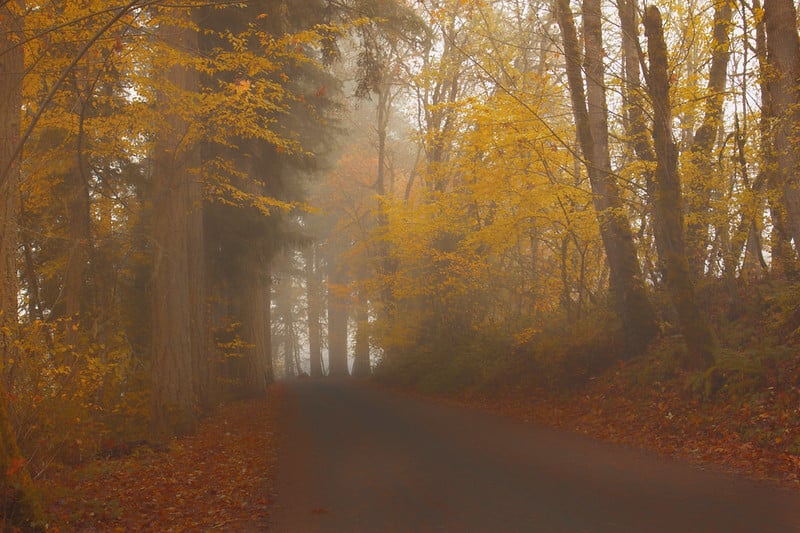
Central Oregon and the Willamette Valley can be excellent by mid-October. Southern Oregon, Mount Hood and the Columbia River Gorge often continue building color later into the month, while some pockets of Northeast Oregon can stay colorful into early November.
That means you don’t have to chase one magical weekend.
If you’re willing to road trip a little, you can follow Oregon’s changing leaves for weeks.
Before heading out, remember that fall also brings changing mountain weather, occasional early snow, wildfire restrictions and seasonal road closures. Check current conditions before traveling into remote areas, particularly in the Cascades, Blue Mountains and Steens Mountain country.
And if you’d rather explore Oregon’s autumn scenery on foot, our growing Oregon Hiking Guide can help you find trails around the state.
1. Silver Falls State Park
If you could only choose one place to experience fall in Western Oregon, Silver Falls would be very hard to beat.
The forest surrounding South Falls begins picking up brilliant yellows, rusty oranges and flashes of red as autumn settles into the Cascade foothills. Fallen leaves collect along the trails, mist hangs between enormous trees after the rains return, and waterfalls that spent late summer running lighter begin waking back up.
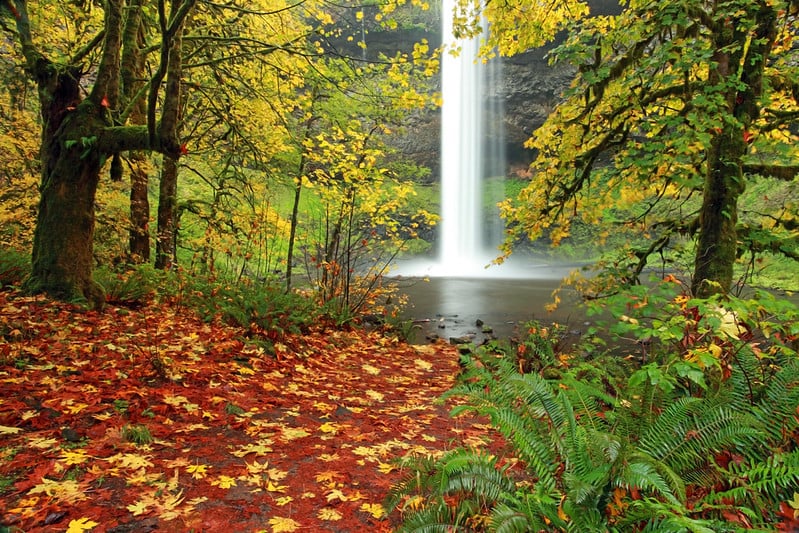
Then there’s the Trail of Ten Falls.
This legendary loop takes hikers through one of the most waterfall-packed landscapes in Oregon, including several places where the trail actually passes behind the falling water. Add wet basalt, moss, fog and autumn foliage and you’ve got one of those places where stopping for photos every five minutes is basically unavoidable.
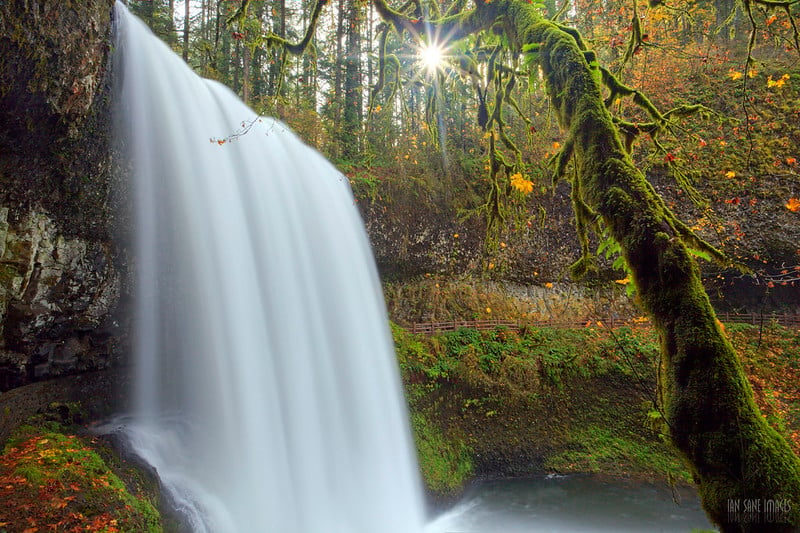
You don’t have to hike the entire loop, either. South Falls alone makes this worthwhile, and several shorter trail combinations let you experience a good portion of the park without committing to the full trek.
We’ve got a complete look at why Silver Falls becomes especially spectacular in autumn if you want to plan a dedicated fall trip.
A Trip to Silver Falls State Park is Best For: Waterfalls, hiking, photography and classic Western Oregon fall scenery.
2. The Columbia River Gorge
The Columbia River Gorge already feels oversized.
Cliffs tower above the Columbia. Waterfalls plunge from basalt walls. Mount Hood occasionally appears in the distance, and the Historic Columbia River Highway connects viewpoints that have been blowing travelers away for more than a century.
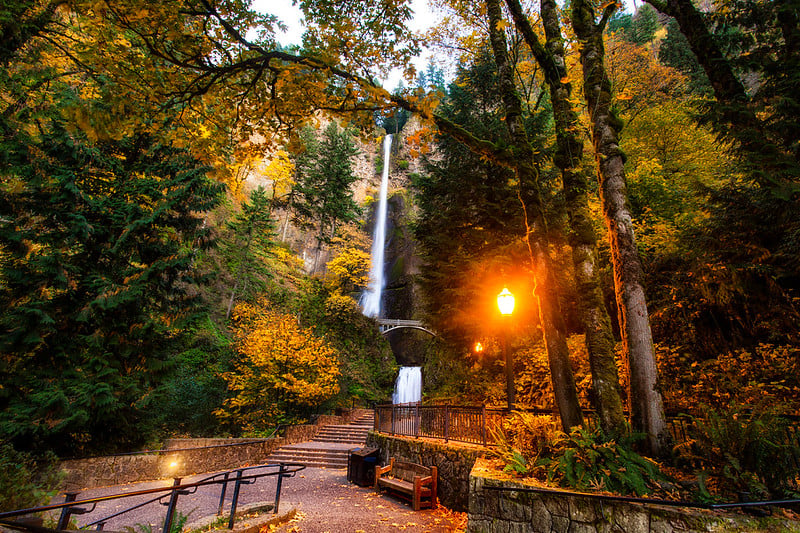
Then fall arrives.
Maples, cottonwoods, oaks and other deciduous trees add streaks of yellow, orange and red to forests dominated by dark green evergreens. Multnomah Falls gets most of the attention, but fall is an excellent time to slow down and explore more of the Gorge instead of treating Oregon’s most famous waterfall as the entire destination.
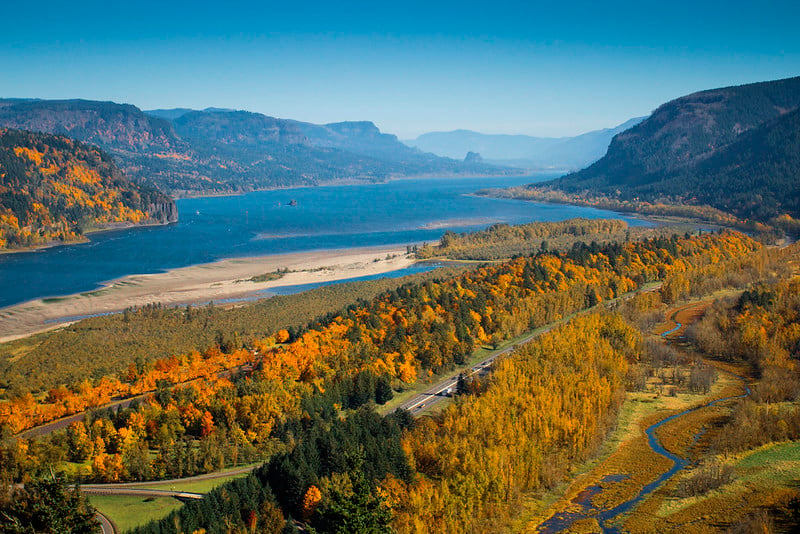
Latourell Falls, Bridal Veil, Wahkeena Falls and the overlooks along the historic highway can all become part of an incredible autumn drive.
Head farther east and the landscape changes again. Forest gives way to drier hills around Mosier and The Dalles, while orchards and vineyards throughout the Hood River Valley bring an entirely different kind of fall scenery.
If waterfalls are your weakness, bookmark our Oregon Waterfalls Guide before you go. We’re building it specifically to make finding waterfall adventures around Oregon much easier.
A Trip to The Gorge is Best For: Scenic drives, waterfalls, viewpoints and combining fall color with a Hood River weekend.
3. Sweet Creek Falls Trail
There are waterfall hikes where the forest is basically something you walk through to get to the main attraction.
Sweet Creek isn’t one of them.
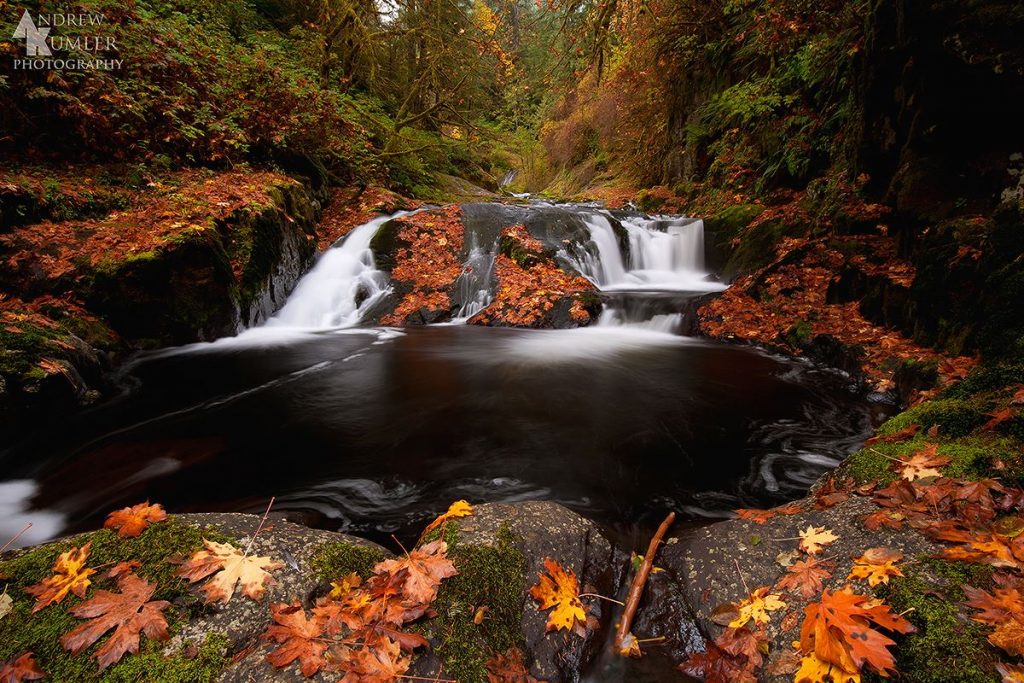
Tucked into the Coast Range east of Florence, this trail follows the water through a lush canyon filled with moss, ferns, enormous trees, footbridges and a seemingly endless succession of small cascades. The entire journey feels like the destination.
Fall makes it even better.
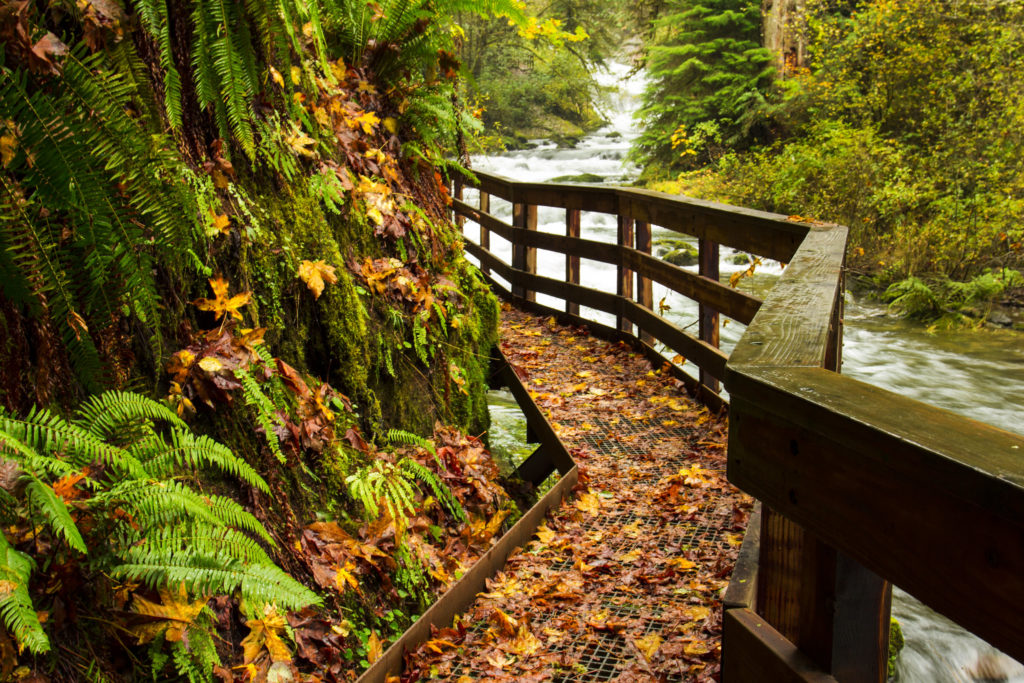
Bigleaf maples begin dropping golden leaves along the creek while vine maples add splashes of orange and red beneath the evergreens. Once autumn rain returns, the creek begins coming back to life too.
That combination is exactly what you want from an Oregon fall hike.
And despite the name, Sweet Creek Falls isn’t one single waterfall. Depending on how you count them, you’ll encounter around 11 waterfalls and cascades along the route.
We recently put together a complete guide to hiking Sweet Creek Falls during Oregon’s fall season, including what to expect on the trail and why this one belongs on your autumn list.
You can also turn the hike into a coastal weekend using our huge Oregon Coast Guide to find nearby towns, beaches, viewpoints and other things to do.
The Sweet Creek Falls Trail is Best For: Waterfalls, easygoing hiking, mossy forest and Oregon Coast road trips.
4. The Elkhorn Scenic Byway And Oregon’s Old Gold Country
This might be our favorite fall road trip in Eastern Oregon.
The Elkhorn Scenic Byway loops through the mountains outside Baker City, winding past alpine scenery, old mining country, historic settlements and places where Oregon’s gold-rush past still feels remarkably close.
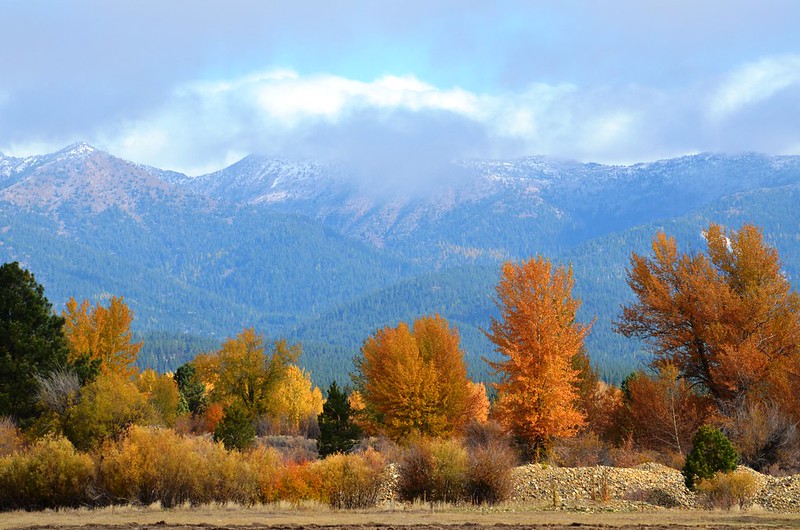
Fall gives the whole thing another layer.
Yellow and gold appear along mountain valleys and streams while the high peaks of the Elkhorns rise behind the trees. Old buildings and mining remnants suddenly look even moodier, and the tiny communities scattered along the route feel like they belong in another era entirely.
But what makes the Elkhorn route so much fun isn’t just the foliage.
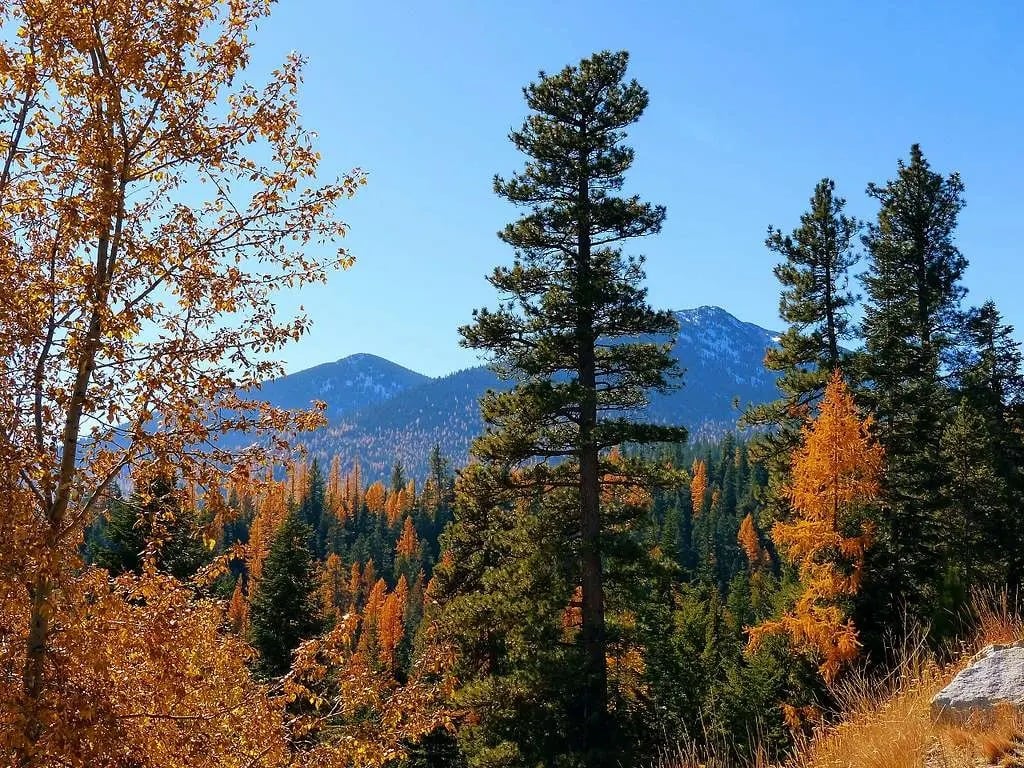
You can explore around Sumpter, wander through tiny Granite, see remnants of old mining operations, visit Anthony Lakes and follow portions of a landscape that once drew thousands of people into these mountains searching for gold.
Our complete Elkhorn ghost town road trip goes much deeper into stops including Whitney, Bourne, Granite and other pieces of forgotten Oregon.
Just remember that this is mountain country. The high portion of the route is seasonal, and early snow can arrive while much of Western Oregon is still enjoying mild weather.
The Elkhorn Scenic Byway is Best For: Road trips, ghost towns, history, mountain scenery and getting far away from crowds.
5. Ride The Sumpter Valley Railroad Through Fall Color
Driving through fall scenery is one thing.
Watching it roll past the window of an old train is something else entirely.
The historic Sumpter Valley Railroad operates through the old mining country near Sumpter and McEwen, where narrow-gauge trains once played an enormous role in the region’s timber and mining industries.
Today, the railroad gives visitors a chance to experience a piece of that history for themselves.
Fall may be the coolest time to do it.
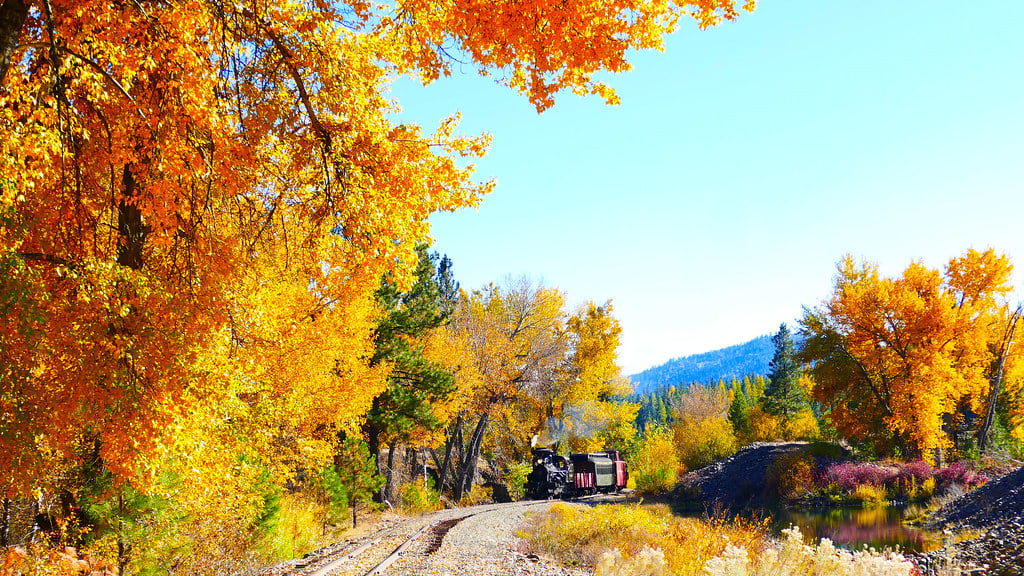
Bright foliage appears around stretches of the route, old dredge tailings and ponds create unusual scenery, and the sound of a locomotive echoing through the valley makes the whole experience feel wonderfully removed from modern Oregon.
For 2026, fall rides are once again part of the railroad’s seasonal schedule.
We put together a complete guide to riding the Sumpter Valley Railroad during fall if you want to build this into your Eastern Oregon road trip.
Pair it with the Elkhorn Scenic Byway and you’ve got the makings of an absolutely fantastic fall weekend.
The Sumpter Valley Railroad is Best For: Families, history lovers, photographers and anyone who thinks fall is 100% improved by steam trains.
6. McDowell Creek Falls Trail
McDowell Creek is one of those places that quietly delivers way more than you expect.
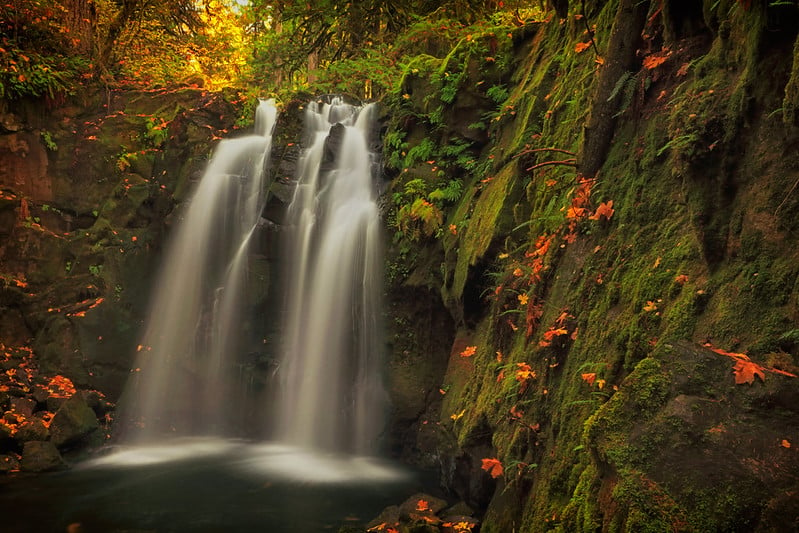
Located east of Lebanon, this little county park packs multiple waterfalls, wooden bridges, moss-covered forest and beautiful creek scenery into a surprisingly short hike.
In fall, it gets even better.
Golden leaves collect around the creek and along the trail while autumn rain brings more energy back to the waterfalls. It feels wild enough to scratch that Oregon adventure itch without requiring a massive hike or a trip deep into the mountains.
That’s part of why we keep coming back.
The loop is only around two miles depending on the route you take, yet you can see several waterfalls, including Royal Terrace Falls and Majestic Falls.
If you want something beautiful without sacrificing the entire day, read our guide to this short Oregon hike that packs four waterfalls into one easy loop.
The McDowell Creek Falls Trail is Best For: Families, shorter hikes, waterfalls and spontaneous Willamette Valley adventures.
7. Steens Mountain
Fall on Steens Mountain feels completely different from fall in the Willamette Valley.
There are no endless walls of wet fir trees here.
Instead, Steens rises dramatically from the high desert of Southeast Oregon, surrounded by sagebrush, enormous skies, deep gorges and country so wide open that distances can become difficult to judge.
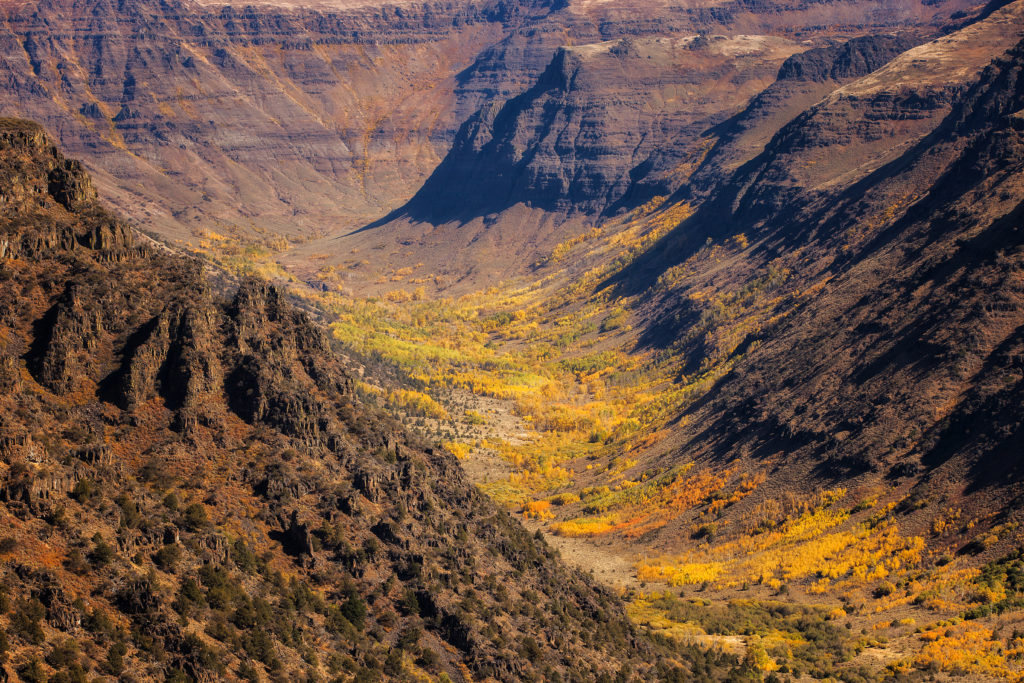
Then you round a corner and hit a grove of brilliant yellow aspens.
Those pockets of color against the otherwise rugged landscape are what make autumn here so striking. Aspen-filled drainages and groves can look almost electric when the leaves turn, especially beneath clear blue high-desert skies.
The Steens Mountain Loop Road also takes travelers into some truly spectacular country when conditions allow.
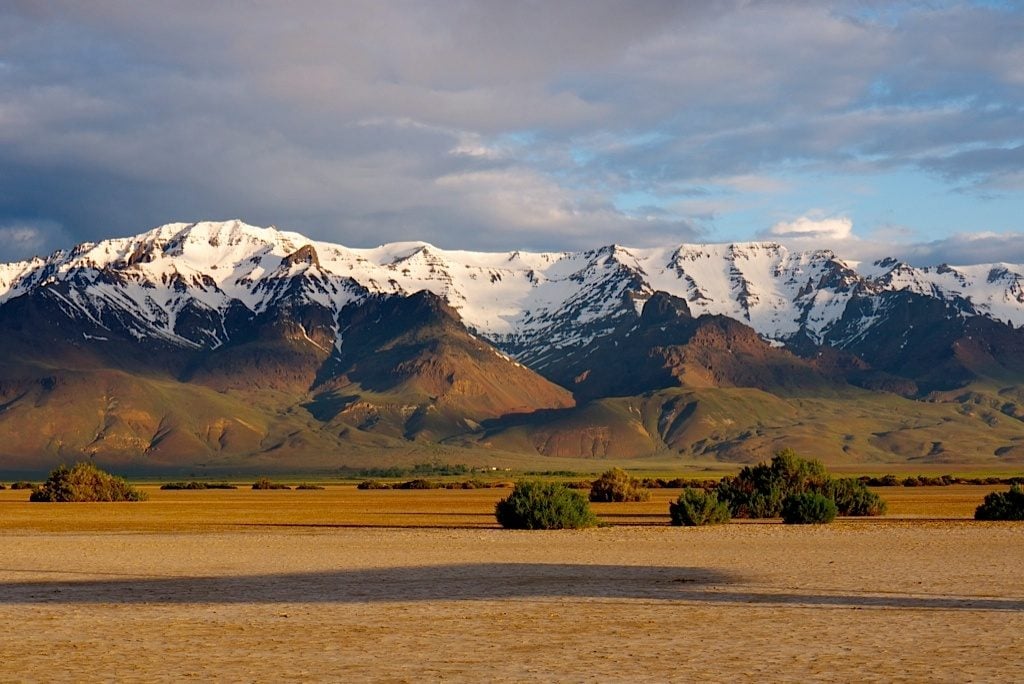
This is another place where fall weather needs to be taken seriously. Steens is high, remote and subject to snow, rough weather and seasonal access changes much earlier than lower elevations.
Go prepared.
But if you catch it at the right time, there aren’t many fall drives in Oregon that feel bigger.
Visiting Steens Mountain is Best For: High desert, aspens, wildlife, huge landscapes and remote adventure.
8. Lithia Park And Downtown Ashland
Not every great fall-color trip requires hiking boots.
Sometimes you just want coffee, a cozy downtown and enough autumn leaves to make you seriously consider moving there.
That’s Ashland.
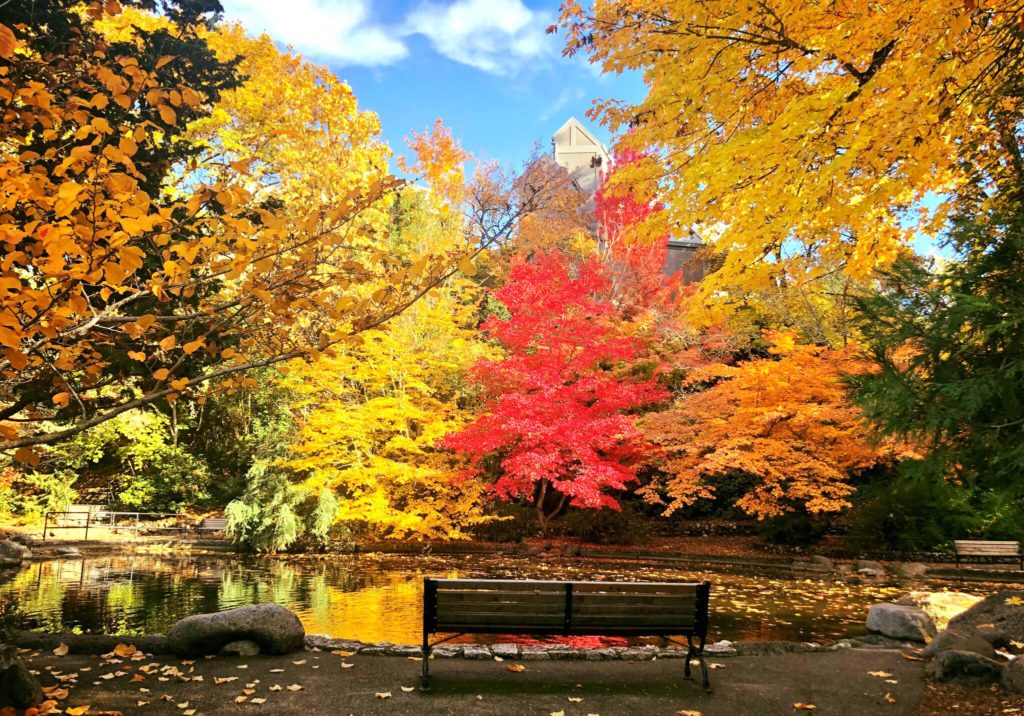
Lithia Park stretches from the edge of downtown into the forested hills above the city, creating one of the prettiest urban parks in Oregon. The variety of trees here means fall doesn’t arrive as one flat wash of yellow. You’ll see different shades and species changing over time, creating layers of red, gold and orange throughout the park.
Then walk back downtown.
Historic architecture, restaurants, bookstores, cafés and the general energy surrounding the Oregon Shakespeare Festival make Ashland one of the easiest places on this list to turn into a full fall weekend.
Southern Oregon’s color often hangs on after some higher-elevation areas have started slipping toward winter, so Ashland can also be a great option later in the season.
Ashland and Lithia Park Are Best For: Couples, weekend getaways, easy walking, food and fall color without a wilderness expedition.
9. Golden And Silver Falls
Way back in the Coast Range east of Coos Bay sits one of Oregon’s most underrated waterfall destinations.
Golden and Silver Falls State Natural Area feels remote from the moment you start getting close.
The roads narrow. The forest closes in. Cell service becomes less important. And then you arrive beneath enormous trees with two impressive waterfalls waiting just a short hike away.
Fall is when the surrounding forest can really show off.
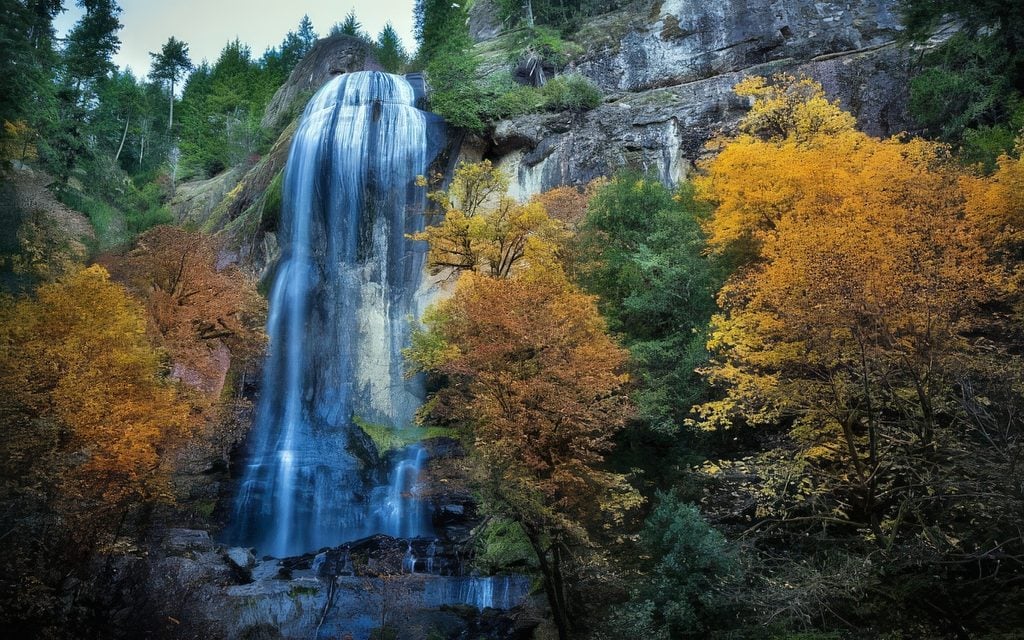
Maples and alders bring yellow and gold into a landscape dominated by deep green conifers, and the return of seasonal rain can give the waterfalls more life than they had at the end of summer.
This isn’t the same Silver Falls as the famous state park near Silverton, either. Golden and Silver Falls sit inland from the southern Oregon Coast and feel considerably more isolated.
Read our feature on why Golden and Silver Falls are especially beautiful in autumn before making the trip.
And because you’re already near Coos Bay and North Bend, this is another easy destination to combine with our Oregon Coast Guide.
Golden and Silver Falls State Natural Area is Best For: Waterfalls, Coast Range forest, photographers and travelers who prefer places that feel hidden.
10. The Umpqua National Forest And Highway 138
If your perfect fall road trip involves waterfalls every few miles, this is your kind of place.
The Highway 138 corridor east of Roseburg has earned its reputation as one of Oregon’s great waterfall routes, with access to places like Toketee Falls, Watson Falls, Whitehorse Falls and other cascades tucked into the forest.
The waterfalls alone are enough reason to make the trip.
Fall gives you another.
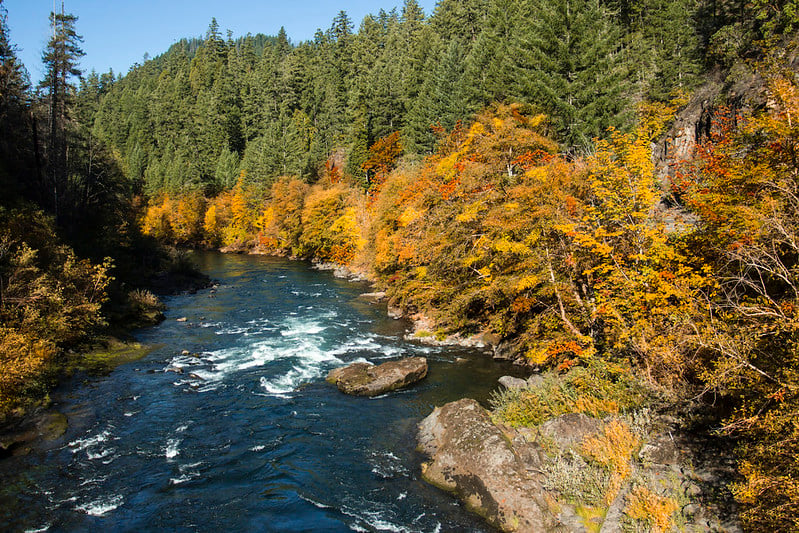
Vine maple and bigleaf maple introduce reds, oranges and yellows beneath the evergreen canopy, and the first sustained autumn rains begin giving the surrounding creeks and waterfalls more power.
This is the kind of road where planning too rigidly almost defeats the purpose.
Give yourself time to pull over. Hike the short trails. Stop beside the river. Eat lunch somewhere beautiful. Let the day get away from you a little.
You can use our Oregon Waterfalls Guide to find more cascades worth adding to your route.
The Umpqua National Forest is Best For: Waterfall chasing, road trips, photography and people who can’t pass a waterfall sign without stopping.
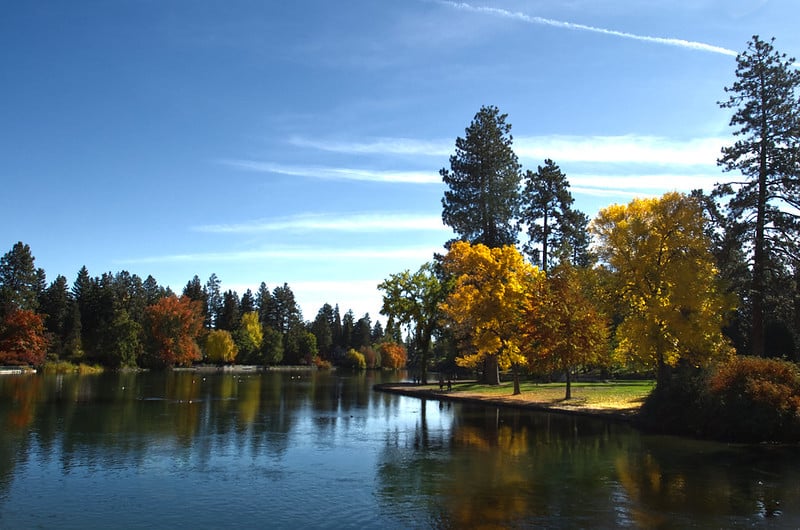
11. Bend, Dillon Falls And The Deschutes River
Central Oregon brings a completely different color palette to fall.
The deep greens and mossy forests of Western Oregon give way to ponderosa pine, volcanic rock, open skies and pockets of brilliant yellow.
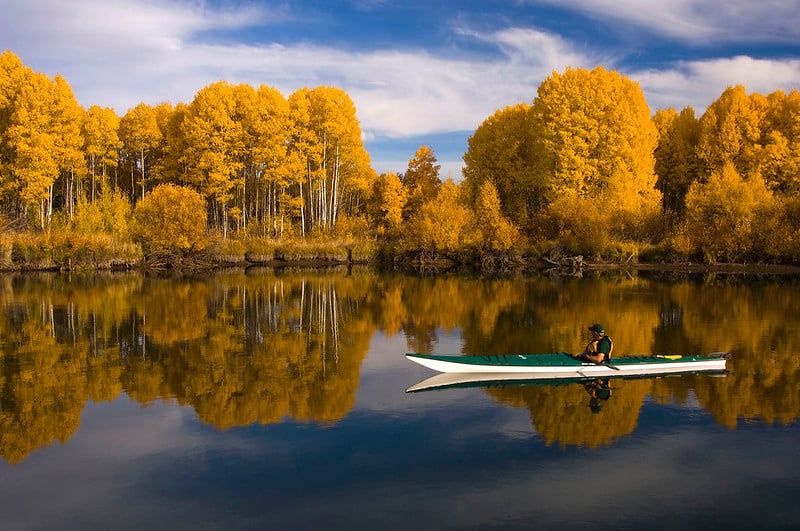
Around Bend, stretches of the Deschutes River can become particularly beautiful as autumn settles in.
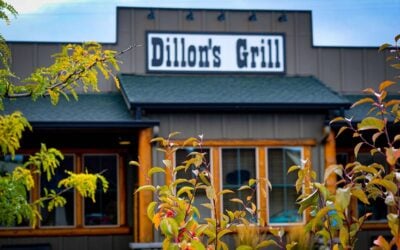
Dillon Falls is one of our favorite places to experience the change. Trails follow the river through classic Central Oregon forest, with patches of deciduous color glowing against the darker pines.
The cooler temperatures are also a gift.
Trails that can feel hot and exposed in summer become considerably more comfortable once September and October arrive, and Bend itself gives you virtually unlimited options for turning an afternoon hike into a full weekend.
Coffee in the morning, a hike beside the Deschutes, dinner and a beer afterward?
There are worse ways to spend an October day.
Browse our Oregon Hiking Guide if you want to add more Central Oregon trails to the trip.
A Trip to Central Oregon and/or Bend is Best For: Hiking, river scenery, Central Oregon weekends and crisp sunny fall days.
12. Oregon Wine Country
There’s a completely different way to experience Oregon fall color, and it doesn’t require climbing a mountain.
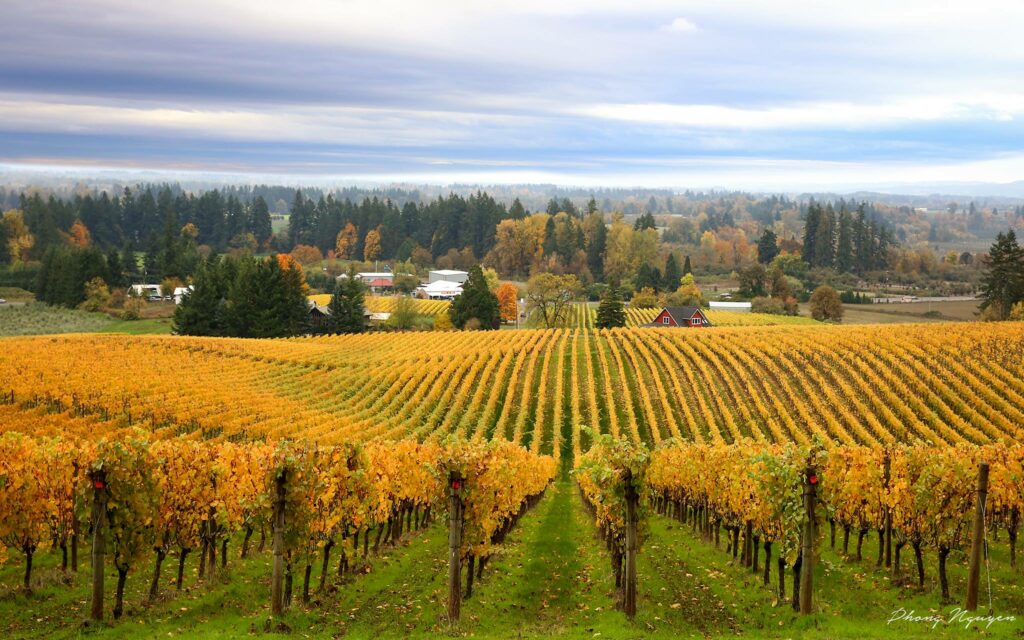
Drive into the hills around Dundee, Newberg, Carlton and McMinnville during autumn and the vineyards themselves become part of the show.
Rows of grapevines shift from summer green toward yellow, gold, orange and rust, creating stripes of color across rolling hills. Add old barns, oaks, foggy mornings and distant Coast Range hills and suddenly the Willamette Valley looks like somewhere you’d expect to find in a ridiculously expensive coffee-table book.
Harvest season also gives the area an energy you don’t get during the middle of winter.
You don’t need to drink wine to appreciate the scenery, either. The backroads themselves can make for a beautiful drive, and towns like McMinnville and Carlton give you plenty of places to stop for food and coffee.
If you are visiting wineries, make reservations where required and always have a safe transportation plan.
A Trip to Oregon’s scenic Wine Country is Best For: Couples, scenic drives, food, photography and slower fall weekends.
13. Portland’s Parks And Neighborhoods
You don’t have to leave Portland to see spectacular fall color.
In fact, the city’s huge variety of planted and native trees can create one of the most diverse autumn displays anywhere in Oregon.
Hoyt Arboretum is an obvious place to start. With trees from around the world and miles of trails weaving through Washington Park, you can experience a surprising amount of color without ever really leaving the city.
Laurelhurst Park is another favorite when leaves begin collecting around the paths and pond.
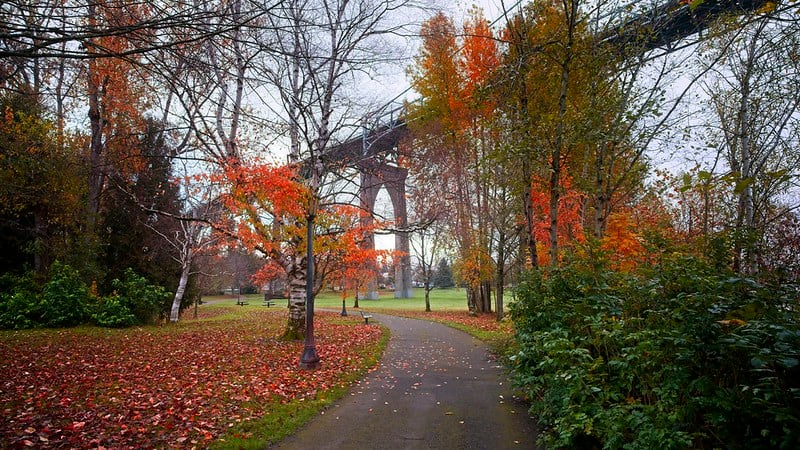
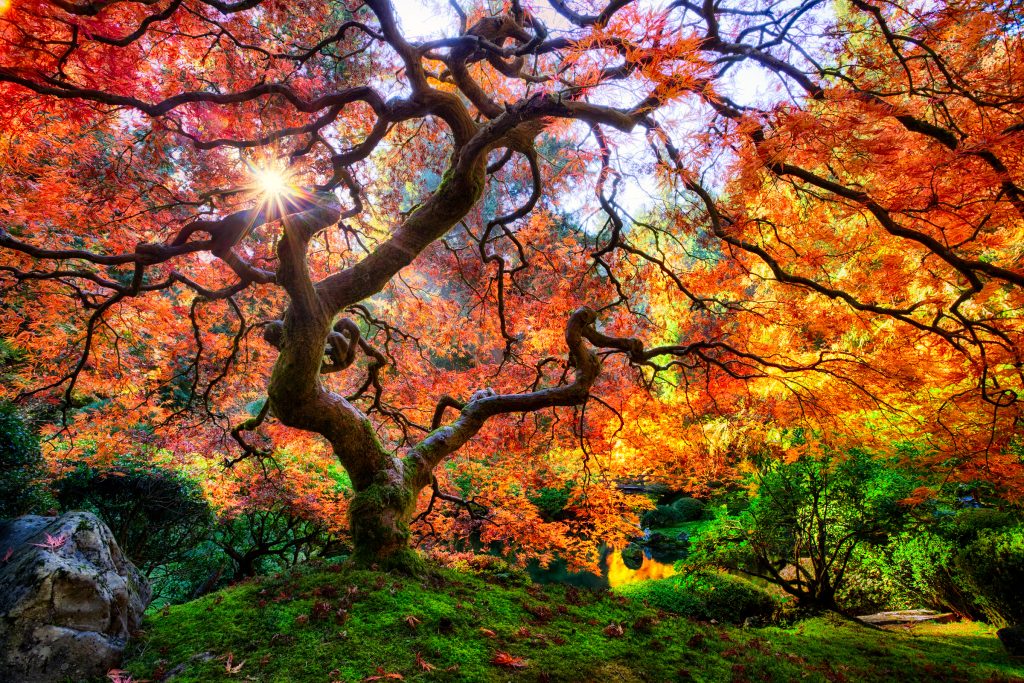
Then there’s Mount Tabor, the Portland Japanese Garden, Cathedral Park beneath St. Johns Bridge, neighborhoods filled with mature street trees, and hiking trails throughout Forest Park.
One of the best ways to enjoy Portland in fall is simply to pick a neighborhood and walk.
Grab coffee, leave the car behind and let yourself wander.
A Day of Exploring Portland’s Fall Color is Best For: Easy day trips, urban photography, families and anyone who wants fall color without driving across Oregon.
14. The Upper Rogue River
The Upper Rogue is beautiful any time of year, but fall makes the river corridor particularly interesting.
Here, forests, volcanic features and rushing water come together around places like Natural Bridge and Rogue Gorge. Deciduous trees and shrubs add changing color to the river corridor while evergreens keep the landscape unmistakably Southern Oregon.
This makes for an excellent road trip from the Medford area toward the Cascades.
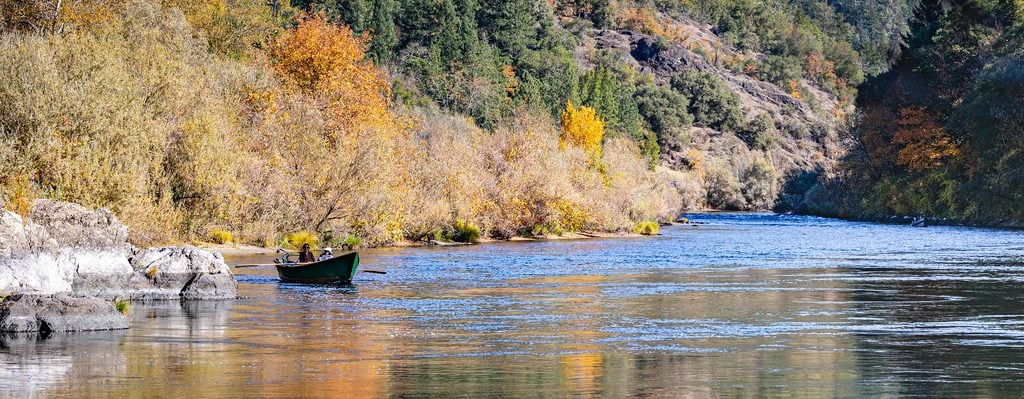
Natural Bridge is always fascinating, where the Rogue disappears through an ancient lava tube before emerging farther downstream. Rogue Gorge offers another chance to watch the river squeeze through a narrow volcanic channel with impressive force.
Fall also brings cooler temperatures that make short hikes considerably more enjoyable.
From here, you can continue exploring deeper into the Cascades or turn the trip into a longer Southern Oregon adventure like we did this summer.
A Trip to the Upper Rogue is Best for: Rivers, volcanic scenery, easy hikes and Southern Oregon road trips.
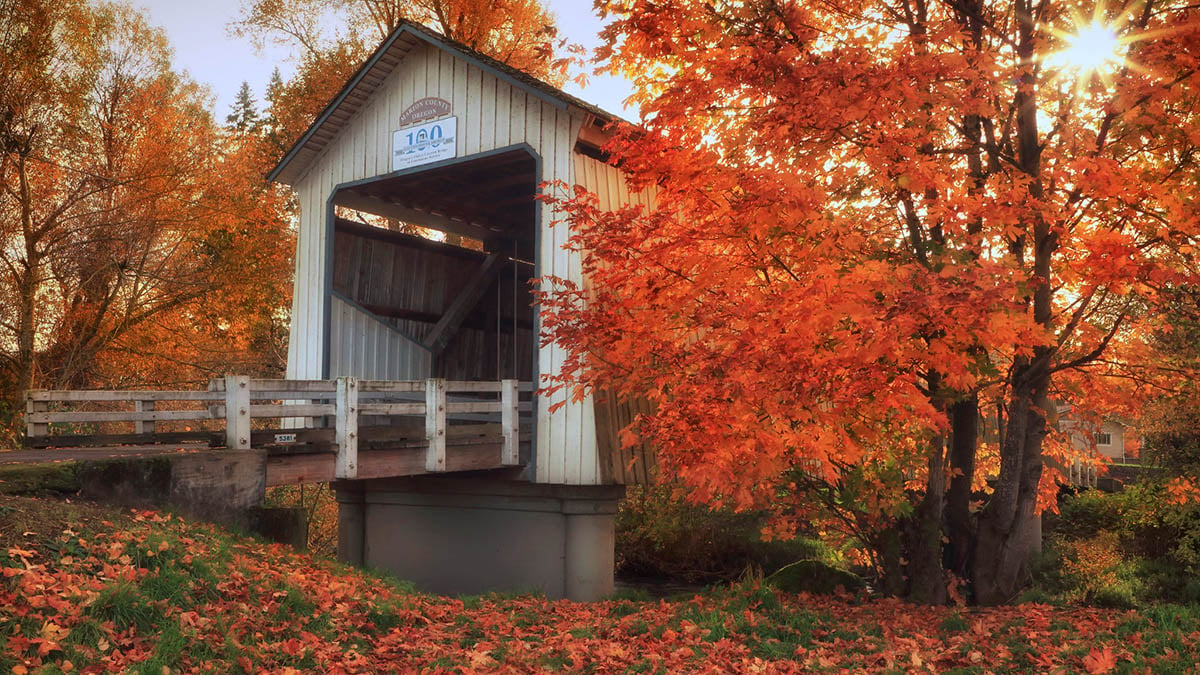
15. Covered Bridge Country In The Willamette Valley
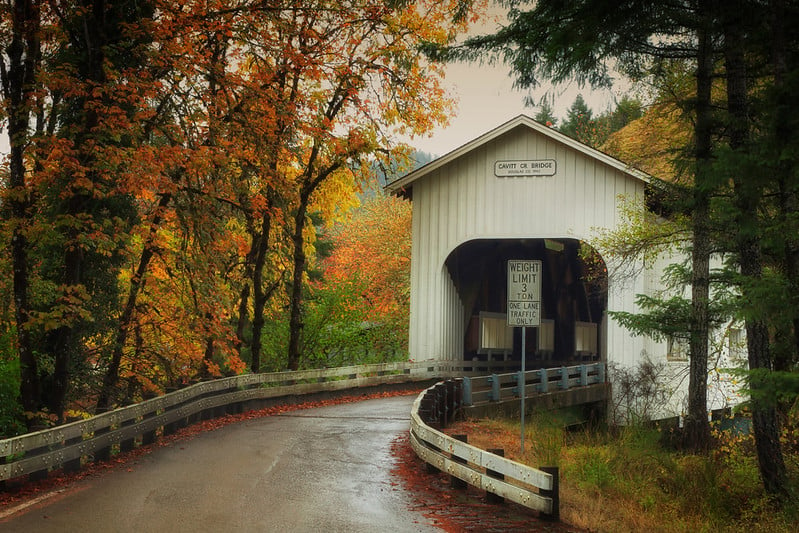
Few things pair with fall color quite as perfectly as an old covered bridge.
Oregon still has dozens of historic covered bridges, and many are concentrated in the Willamette Valley and surrounding foothills.
That makes fall the perfect excuse to build your own covered-bridge road trip.
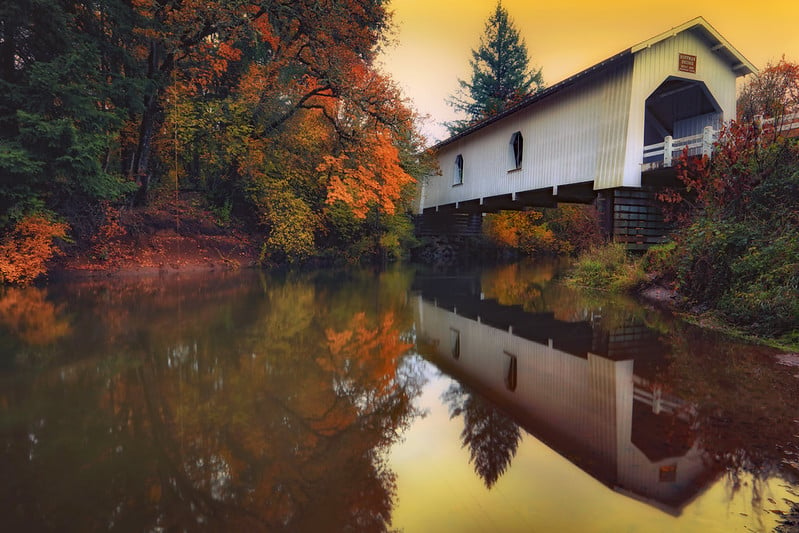
Around Cottage Grove, you can connect several bridges in a single outing while driving through farmland, forests and small communities. Lane County and Linn County also hold some absolute beauties.
Once maples, cottonwoods and other trees start changing, those old wooden structures become ridiculous photo subjects.
And unlike some of Oregon’s mountain destinations, a covered-bridge trip works even when the weather isn’t perfect.
A little rain and fog might actually improve it.
If you’re planning an October road trip, we’ve also rounded up more of our favorite things to do in Oregon during October.
Seeking Out Oregon’s Historic Covered Bridges is Best For: Road trips, photography, history and rainy, lazy fall days.
A Few Things To Know Before Chasing Oregon Fall Color
–Don’t get too hung up on finding the exact “peak” day. Some of our favorite Oregon fall trips have happened before peak color, when green, yellow, orange and red were all mixed together. Others happened after a storm had knocked half the leaves onto the ground and turned the trail itself into the most beautiful part of the hike.
–Weather matters. Mountain conditions can change quickly, and some scenic roads close seasonally. Wildfire restrictions and closures can also linger into autumn. Always check current road, trail, park and forest conditions before heading into remote areas.
–Bring layers. An afternoon that feels almost like summer in the Willamette Valley can turn into a freezing evening in the mountains.
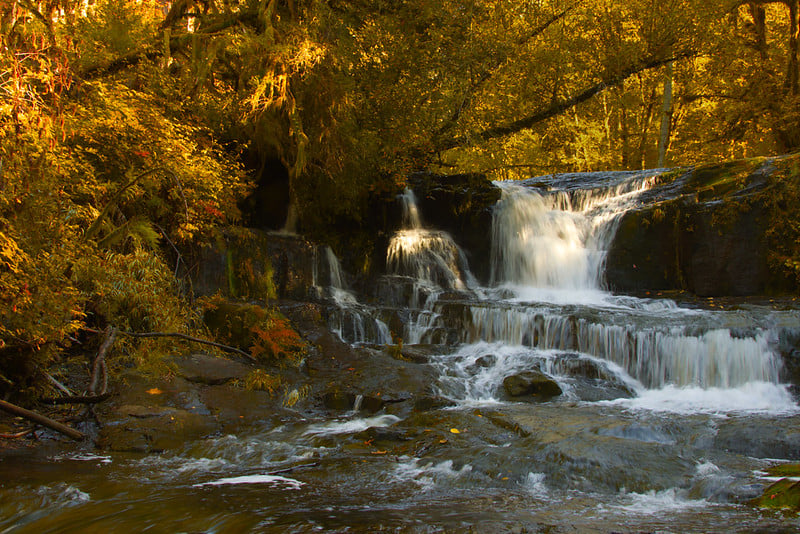
–And if you’re photographing fall color, don’t automatically stay home because the forecast says rain or fog. Wet leaves can become incredibly saturated, waterfalls look better, moss glows green and a foggy day can transform an ordinary Oregon forest into something spectacular.
Fall In Oregon Never Lasts Long Enough
Maybe that’s part of why we love it.
Summer seems endless while we’re in the middle of it, and then suddenly the mornings are cold, Halloween decorations are appearing on porches and leaves are piling up along the sidewalk.
For a few weeks, Oregon looks completely different. Waterfalls roar back to life. Mountains turn gold. Vine maples flash red beneath ancient forests. Old railroad tracks disappear beneath leaves. And roads you’ve driven a hundred times suddenly make you slow down and look again.
Don’t wait until every leaf is already on the ground.
Grab a jacket, fill the coffee thermos, pick somewhere on this list and go see it.
Fall is coming to Oregon.
And it never sticks around nearly as long as we’d like.
Need help turning a foliage stop into a full weekend? Use the Fall in Oregon guide to choose a region, a weather-flexible activity, and a practical backup.