North Coast campground deep dive
Fort Stevens is not a quiet little campground beside one attraction. It is a sprawling North Coast base with hundreds of sites, miles of roads and trails, historic military grounds, a freshwater lake, and beach access. The payoff is variety; the challenge is choosing the right site.
Fact-checked: September 9, 2026. Operating details can change; official manager links below control current fees, closures, and booking.
The honest read
Who this trip is really for
Fort Stevens is best for campers who want a full itinerary and do not mind a large, active campground. Bring bikes if you can. If your ideal night is small, private, and far from campground traffic, a smaller Coast park may fit better.
Compare campgrounds in the Oregon Camping Guide →At a glance
What matters before you book
- Setting
- Wooded campground near Hammond, Warrenton, Astoria, and the Pacific
- Current mix
- 174 full-hookup, 302 electric/water, 6 tent, 15 yurts, 11 deluxe cabins, 9 primitive hike-in
- Reservations
- Required; bookings open up to six months ahead
- Facilities
- Flush toilets, hot showers, dump station, hiker/biker camp
- Accessibility
- Accessible cabins and yurts are listed; verify the exact unit
- Typical cost
- Varies by site, date, and residency; check the live booking total
Why people build whole weekends around Fort Stevens
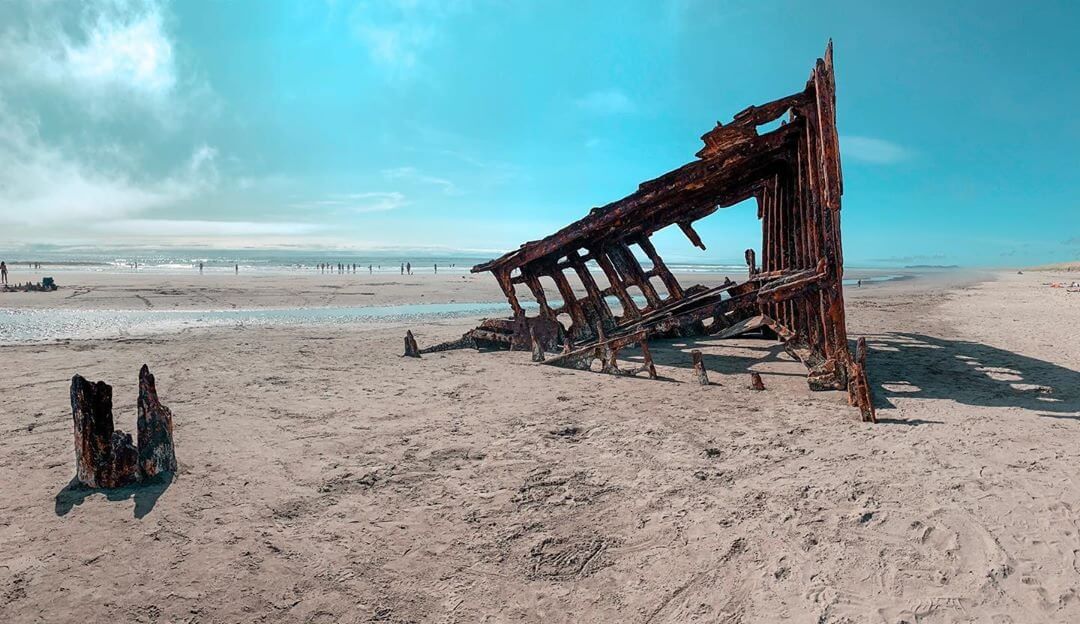
The park has enough range to keep a mixed group occupied. Some people want the fort and military history; others want the Peter Iredale shipwreck, Coffenbury Lake, fishing, beach walks, or an easy bike ride. Astoria and Warrenton add groceries, restaurants, and wet-weather options.
That range is the real advantage over smaller Coast campgrounds. You can arrive, park, and create several different days from one base. It also explains the crowds: Fort Stevens is a destination campground, not a hidden pullout.
Choose the exact site—not just Fort Stevens
The inventory is dominated by RV-capable sites. Tent campers should not assume every empty-looking pad will feel sheltered or intimate. Study the official map for bathroom distance, loop traffic, pull-through geometry, vegetation, and the route to the activities you care about.
Families often value a flatter bike-friendly loop and quick restroom access. RV travelers need the published length and hookup details for the exact site. Light sleepers should consider internal traffic and neighboring rigs. Hike-in sites trade convenience for a simpler camp.
Yurts, cabins, and accessibility
Yurts and deluxe cabins help when rain tolerance, mobility, or gear is the limiting factor. Oregon State Parks currently lists pet-friendly options in both categories and identifies accessible units. These stays carry lodging tax and can have different cancellation or pet fees.
“Accessible” is not one universal layout. Confirm parking, ramps, bed configuration, restroom access, and the path to the activities your group wants before checkout.
The honest drawbacks
Fort Stevens is big. Walking from camp to every attraction is unrealistic, and even biking requires an honest look at distance, weather, and younger riders. Summer weekends feel active. Wind, rain, and cool evenings can arrive when inland Oregon is hot.
Check official notices before leaving because beach access, lake conditions, fire restrictions, and construction can change. A site reservation is not a promise that every activity is available.
A practical two-day rhythm
On arrival day, learn the campground loop, settle in, and use the remaining light for Coffenbury Lake or a short bike ride. Give the historic area its own block the next morning. Save the shipwreck and a broad beach walk for a tide and weather window that looks good.
If Astoria is part of the trip, schedule it deliberately. Trying to fit the fort, shipwreck, lake, beach, and town into one day turns a good campground into a checklist.
Make the decision
Compare the useful choices
Full-hookup site
Best for: Larger RVs and longer stays
Tradeoff: Most developed campground feel
Official Full-hookup site informationElectric/water site
Best for: Trailers, vans, and mixed comfort needs
Tradeoff: Confirm exact pad length
Official Electric/water site informationYurt or deluxe cabin
Best for: Rain-proofing and lighter packing
Tradeoff: Higher total and rapid booking
Official Yurt or deluxe cabin informationPrimitive hike-in site
Best for: Simpler camping inside the park
Tradeoff: Carry-in logistics and limited inventory
Official Primitive hike-in site information