
Eugene, Oregon: the honest travel guide
A creative college town with serious food, river paths, track history, nearby waterfalls, and just enough rough edges to reward visitors who plan by neighborhood instead of postcard.
The honest Eugene briefing: is it worth a trip?
Yes—especially if you like a city that feels lived in rather than staged for visitors. Eugene is a University of Oregon town, a track town, a river town, and a counterculture town. It can deliver a genuinely good food-and-outdoors weekend without Portland’s scale, but it is not a compact resort destination where every attraction sits on one polished main street.
Downtown, the Whiteaker, the campus area, and Springfield’s Main Street each feel different. Some central blocks are busy for markets, shows, games, and dinner, then become quiet quickly. Visitors will also see homelessness and people in crisis. That does not make the entire city unsafe, but it does make the exact hotel block, the walk back after dark, and normal vehicle-security habits more useful than a vague “good neighborhood” label.
What we would tell a friend: Book by the exact address, not merely “downtown Eugene.” Do not leave bags, outdoor gear, or visible clutter in a parked car. On a football weekend, graduation weekend, or major track meet, reserve early and expect traffic and room rates to behave like a much larger city. For an ordinary weekend, let Eugene be relaxed: one neighborhood, one trail or river walk, one good meal, and one event.
Eugene’s appeal is not one blockbuster attraction. It is the combination: Saturday Market, campus museums, a run beside the Willamette, dinner in the Whit, a show at the Hult Center or Cuthbert, and a forested summit before lunch. Our story of Dolly Parton’s “Eugene, Oregon” captures something real about the city’s long relationship with live music and memorable crowds.
Where to stay in Eugene: choose the trip before the hotel
Market District and Fifth Street
Best all-around first visit. This is the easier polished base for restaurants, shops, Amtrak, and a short walk toward downtown and the riverfront. It reduces friction for a food-led weekend.
Tradeoff: Rooms can cost more, and this is only one version of Eugene. You will still travel for campus, South Eugene hikes, and many Whiteaker stops.
Downtown
Best for shows, markets, and transit. The Hult Center, Park Blocks, library, Saturday Market, Farmers Market, and Eugene Station are nearby.
Tradeoff: Activity changes block by block and by hour. Check the exact address and plan your late return instead of assuming every downtown block stays lively.
University and Fairmount
Best for campus, Hayward Field, museums, and a greener residential feel. It is the natural choice when a Duck game, track meet, or University of Oregon visit anchors the trip.
Tradeoff: Event weekends bring noise, traffic, parking restrictions, and higher rates. Verify walking distance to your actual venue.
Whiteaker neighborhood
Best for brewery, food, art, and counterculture energy. The Whit has personality and some excellent stops within a compact area.
Tradeoff: Parking is limited, the streets mix homes and nightlife, and the area can feel rougher around the edges. It is a place to visit deliberately, not our automatic family hotel recommendation.
For a quiet base, South Eugene can work well if you have a car and value neighborhoods and Ridgeline access over walking to nightlife. Springfield is also a legitimate alternative—not a Eugene suburb pretending to be a neighborhood. Its Main Street, restaurants, and easier I-5 access can make sense, and our Springfield guide helps compare the two.
University of Oregon and the Ducks: plan the campus or game weekend
The University of Oregon is not a small attraction tucked into Eugene; it helps set the city’s rhythm. A quiet weekday campus visit, a track meet at Hayward Field, and a sold-out football Saturday at Autzen Stadium are three completely different trips. Decide which one you are taking before choosing a hotel, parking plan, or dinner reservation.
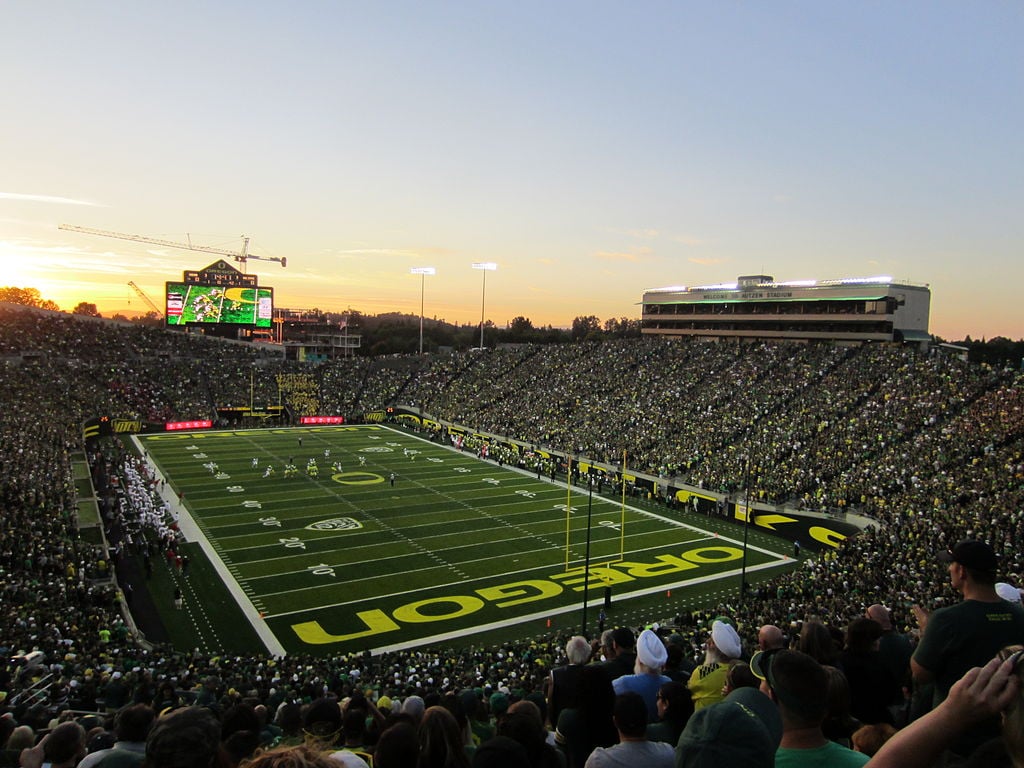
Visiting the campus
The main campus is a worthwhile walk even if nobody in your group is applying to college. Pair its tree-filled grounds and historic buildings with the Jordan Schnitzer Museum of Art, the Museum of Natural and Cultural History, the Erb Memorial Union, and the shops and food around 13th Avenue. Use the official UO visit page for guided-tour availability, self-guided options, building access, and current arrival instructions.
Honest tip: A regular admissions tour does not automatically include Autzen Stadium, Hayward Field, or Matthew Knight Arena. Treat athletic-venue access as a separate question instead of promising the family a stadium tour that may not exist that day.
Oregon football at Autzen Stadium
Autzen sits north of the Willamette River, separate from the core academic campus. On a home-game Saturday, traffic, hotel prices, restaurant waits, and parking become part of the event. Buy through the official Oregon football ticket page, load mobile tickets before joining the crowd, and verify the current bag, entry, parking, and kickoff information close to game day.
Honest tip: Driving toward the stadium shortly before kickoff is usually the stressful version of the day. If your route and mobility allow, walking from the campus or riverfront side can be more predictable than chasing a close parking space.
Hayward Field and TrackTown
Hayward Field is central to Eugene’s identity, but it is an active competition venue—not a museum that is always open for wandering. Track meets can reshape lodging and traffic just as dramatically as football. The University says Hayward’s museum has public hours, while the regular campus tour does not include the stadium; confirm current access through UO before building the day around it.
Honest tip: If a major meet is the reason for the trip, stay close enough to walk or use a direct transit plan. If it is not, check the athletics calendar anyway so an unexpected crowd does not derail an otherwise relaxed weekend.
Where to stay for a Ducks weekend
Campus and Fairmount are the natural bases for university access. The Market District and downtown provide more restaurants and evening options but require a longer walk or transportation plan. Springfield and Gateway can work when central rooms disappear, but crossing the river near event time can be slow. Reserve early for football, graduation, major track meets, and move-in weekends.
Honest tip: Do not judge distance by a map pin alone. Confirm the walking route, river crossing, late return, and whether the hotel’s parking remains available on event days.
What we would tell a friend: Make the Ducks event the anchor of the day. Eat earlier than usual, expect crowds before and after, save tickets and directions where they work without a perfect signal, and do not schedule a timed dinner across town immediately after the final whistle. For a normal campus visit, weekdays while classes are in session feel more representative than a quiet holiday or summer weekend.
Eugene’s sports identity also overlaps with its music and counterculture history. Our archive story about the Grateful Ducks game and Autzen’s Grateful Dead connection is a good example of why a Ducks weekend can feel distinctly Eugene rather than like a generic college-football trip.
The Eugene experiences worth building time around
Saturday Market and the Farmers Market
On market days, the Park Blocks give a first visit an easy center: local makers, food, music, produce, and a cross-section of Eugene in one place. Check the current schedule before planning the entire morning around it; these are not daily attractions.
University of Oregon and Hayward Field
Walk the campus for architecture, trees, the Jordan Schnitzer Museum of Art, the Museum of Natural and Cultural History, and the track history around Hayward Field. A stadium event and a casual campus walk are very different days—verify access and schedules.
Willamette River paths and Alton Baker Park
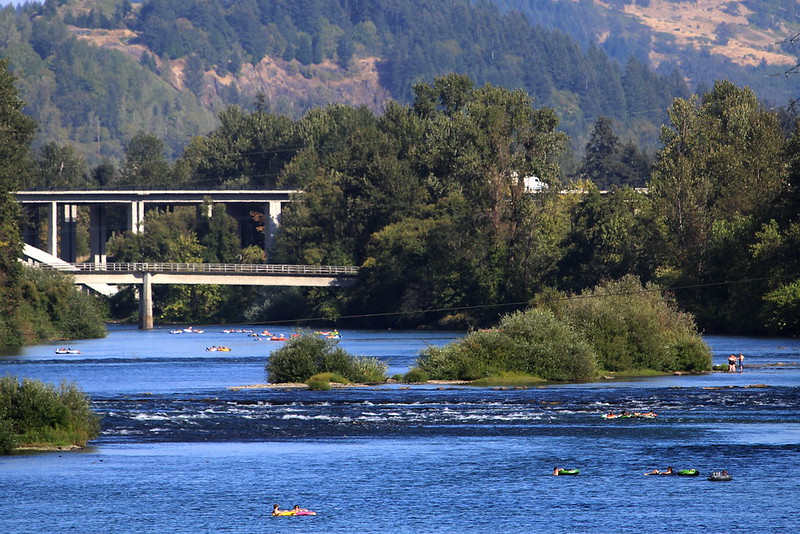
The Ruth Bascom Riverbank Path System is one of Eugene’s highest-return experiences: a roughly 12-mile network on both sides of the river, connected by bridges and parks. Walk or ride one useful segment instead of treating the whole network as a box to check.
Hendricks Park
This forested hill park near campus is a strong slower stop, especially when the rhododendron garden is in season. Paths can be damp and uneven; choose shoes for an Oregon park rather than a formal garden promenade.
Spencer Butte
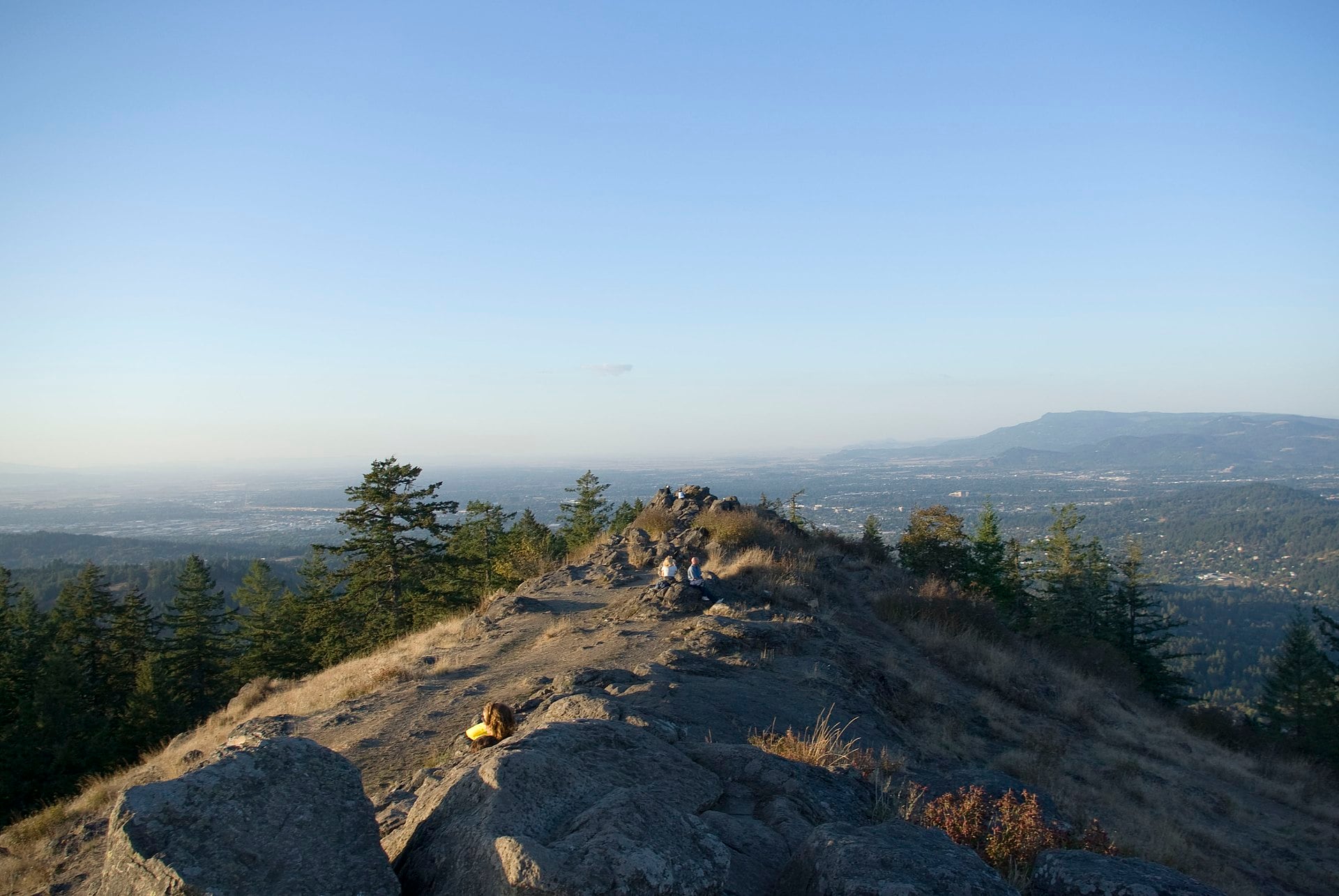
Eugene’s landmark summit is a real hike, not a downtown overlook. The standard Main Summit Trail is about two miles round trip with roughly 700 feet of climbing; the West Trail is steeper and may involve scrambling. Use our complete Spencer Butte trail guide and check the City of Eugene’s current trail information before leaving.
The Whiteaker
Come for a deliberate food, coffee, brewery, live-music, or art stop. Walking, cycling, bus, or rideshare can be smarter than hunting for parking. If the Whit is your evening, let it be the evening instead of squeezing it between campus and South Eugene.

Good rainy-day choices
Rain does not cancel Eugene. Pair one campus museum or downtown gallery with a bookstore, bakery, long lunch, movie, or show. The city’s independent character is often easier to appreciate on a damp day when you stop trying to rush between outdoor landmarks. Romantasy readers may want our look at Daffodil Books.
Eugene food: build meals around where you already are
Eugene’s food scene works best as neighborhood exploration, not a stale top-ten list. Restaurants open, close, change hours, and sell out. Confirm the current menu and opening hours on the restaurant’s own site or social account before crossing town.
Downtown and the Market District
This is the easiest zone for a first-time dinner, market stop, bakery, coffee, or drinks without moving the car. It pairs naturally with the Hult Center, Saturday Market, Amtrak, and the riverfront.
Whiteaker
Choose the Whit when you want food carts, breweries, casual international food, coffee, and a little more personality. Do not turn it into a driving crawl; park once where legal or arrive without a car.
Campus and Franklin Boulevard
This corridor makes sense before or after campus, Hayward Field, or a Springfield stop. It includes student-friendly food, old-school counters, and places that matter more for comfort than trendiness.
Worth a short drive
Pleasant Hill, Springfield, Creswell, and the edges of the metro have destination meals, but they are not walkable add-ons to downtown. Treat one as the point of the outing.
Snack Shack
An old-school Franklin Boulevard burger and milkshake stop with the kind of comfort-food appeal Eugene does well.
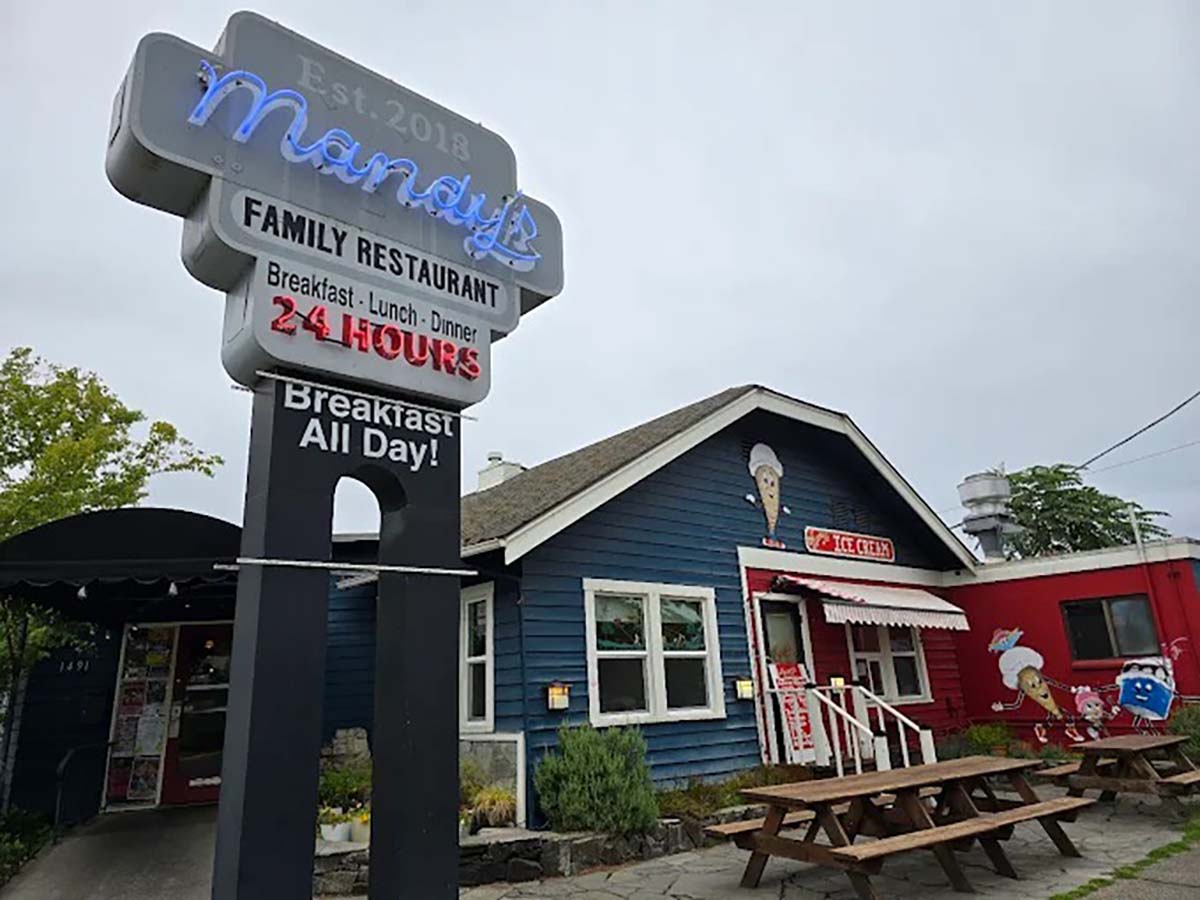
Mandy’s Family Restaurant
A 24-hour local diner option for late arrivals, early departures, and anyone who wants breakfast without a trend forecast.
Kasumi House
A current Eugene food story built around sushi tacos and a relaxed menu that is more fun than formal.
Cioppino House
A Pleasant Hill destination south of Eugene that fits a deliberate dinner drive, not a casual downtown walk.
Rattlesnake BBQ
Film history and smoked meat come together outside the central city; check the current location and hours first.
More Eugene stories
Use the Eugene archive for new openings, local news, and stories that should support—rather than replace—this permanent guide.
Getting to Eugene and getting around once you arrive
Eugene Airport: simple terminal, deliberate ground plan
Eugene Airport (EUG) is outside the urban core. Do not land assuming you can walk to a hotel or step onto a frequent downtown train. The airport lists permitted taxis, rideshare, rental cars, pre-arranged hotel shuttles, and scheduled bus service among its ground options. Check the airport’s current ground-transportation page before the trip, especially for a late arrival.
EmX and buses
Lane Transit District’s EmX is the most useful visitor route: it connects West Eugene, downtown Eugene, the University of Oregon, downtown Springfield, and the Gateway/RiverBend area. It is valuable when your hotel and plans actually sit near the line. Use LTD’s live schedule and service alerts rather than assuming a map means frequent late-night service.
Walking and cycling
Downtown, the Market District, campus, and parts of the river path work well on foot or bicycle. The metro is flatter than many Oregon destinations, but distance, rain, darkness, event crowds, and bike security still matter. Lock a bike properly and do not plan a late return solely because the daytime route looked easy.
When a car helps
A car earns its keep for Spencer Butte, wineries, Cottage Grove, Oakridge, the McKenzie corridor, waterfalls, and the Coast. It adds less value during a downtown-campus day. If you drive, put valuables away before reaching the parking spot or trailhead and never leave visible luggage in the vehicle.
Weather, wildfire smoke, and the season nobody should oversimplify
Late spring and early fall often offer the easiest balance of green landscapes, comfortable walking weather, and fewer peak-event pressures. Winter is gray and wet, but it can be excellent for museums, restaurants, markets, waterfalls, and a slower city trip. Summer is dry, busy, and good for river paths and events.
Smoke is a summer wildfire possibility—not Eugene’s permanent condition. During active fire periods, smoke can move into the southern Willamette Valley from fires near or far away, and conditions can change within a day. Do not write off the season, but do check the That Oregon Life wildfire map, official air-quality information, weather, and road closures before a hike or long outdoor day. Have an indoor alternative when the air is unhealthy.
Rain makes roots, rock, wooden bridges, and leaf-covered slopes slick. Heat makes exposed river paths and trailheads feel different than a shaded neighborhood. Eugene is easy to enjoy when the itinerary responds to the actual day instead of a generic “best time to visit” promise.
Day trips from Eugene that make geographic sense
The smartest regional day chooses one corridor. Eugene can reach the Cascades, Coast Range, Oregon Coast, covered-bridge country, and wine country, but it cannot do all of them well in the same day.
McKenzie River and Highway 126
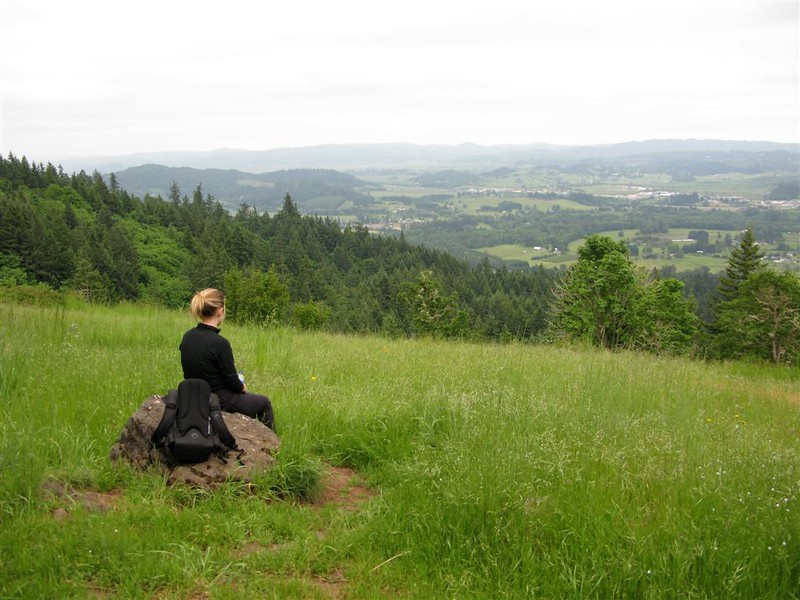
Build one day around the McKenzie River, clear water, forest, and one or two verified stops. Sahalie and Koosah Falls, Clear Lake, and the McKenzie River Trail belong to the same broad corridor, but closures, snow, trail construction, and parking conditions decide the real itinerary. Start with our McKenzie River Trail guide.
Waterfalls near Eugene
McKenzie River waterfalls, Highway 58, Cottage Grove/Layng Creek, and the Coast Range are separate waterfall days. Our waterfalls near Eugene guide organizes them by corridor, difficulty, and season so you do not spend the day connecting distant trailheads.
Mount Pisgah
Mount Pisgah is close enough to feel like part of a Eugene trip but still deserves a deliberate drive and real hiking time. It is a high-return choice for broad Willamette Valley views without committing the entire day to the Cascades. Read our Mount Pisgah hiking guide before choosing the route.
Florence and the Oregon Coast
Florence is roughly 60 miles west and makes the cleanest Eugene-to-coast day. Old Town, dunes, riverfront, and beaches can fill the day without racing north and south. Use our Florence guide and check Highway 126 conditions before leaving.
Sweet Creek Falls
Sweet Creek sits in the Coast Range between Eugene and Florence, so it works best as the forest half of a focused Highway 126 day—not as an extra stop tacked onto a packed coast itinerary. Our current Sweet Creek guide explains access changes and how to pair the hike with Florence.
Lowell, Dexter Reservoir, and Highway 58
East of Eugene, the Highway 58 corridor starts paying off before Oakridge. The Lowell Covered Bridge is an easy history-and-scenery stop beside Dexter Reservoir; continue toward Oakridge for mountain biking, forest, Salt Creek Falls, and Cascade scenery. Winter snow and seasonal facilities can change the day.
Cottage Grove and its covered bridges
About 25 to 30 minutes south of Eugene, Cottage Grove works as a half-day or slow full day for historic downtown streets, murals, lakes, and covered bridges. Start with our complete Cottage Grove guide, then use the Row River Trail and covered-bridges guide if walking or biking is the main event.
Oregon Country Fair
The Fair near Veneta is a destination event, not an ordinary Eugene attraction. Tickets, transportation, heat, dust, crowds, and timing need their own plan. Read our Oregon Country Fair guide and verify current-year details before going.
What is happening in Eugene
Events are part of Eugene’s identity, but a permanent guide should not age into an expired concert list. The live feed below comes from our Oregon Events directory, filters to Eugene, and sends each listing to its own details page. Always verify time, venue, ticket availability, and cancellation information with the organizer before leaving.
Upcoming events in Eugene
Browse all Eugene events →
 Sep 20–Sep 21, 2026
SOMD Graduate Student Entrance Exam: Music Theory (online via Canvas)
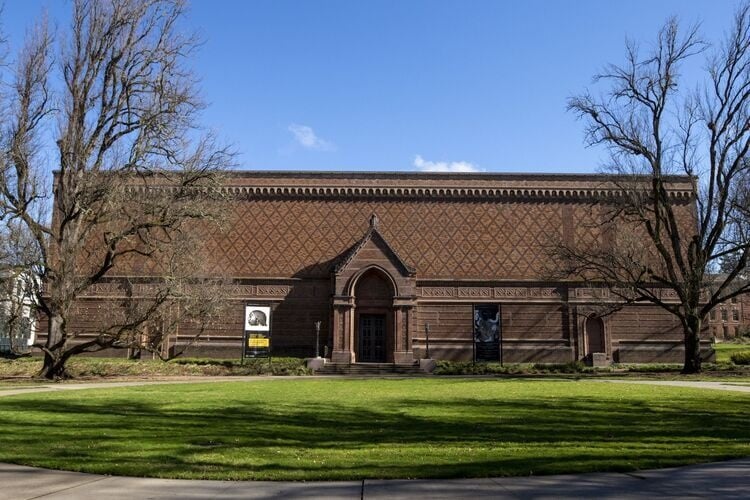 Sep 20–Sep 21, 2026
Collecting America: Recent Acquisitions
Jordan Schnitzer Museum of Art (JSMA)
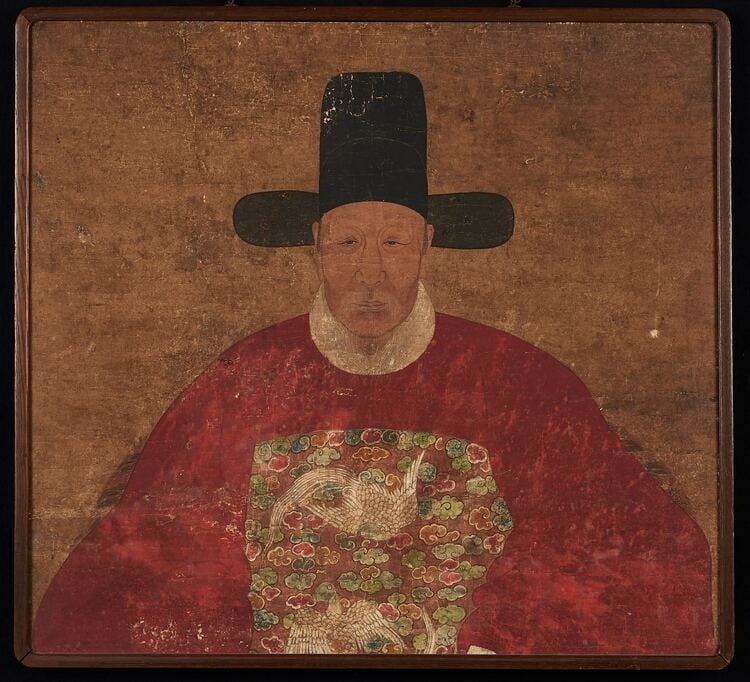 Sep 20–Sep 21, 2026
Navigating Through Centuries: From Ancient to Global Contemporary in Korean Art
Jordan Schnitzer Museum of Art (JSMA)
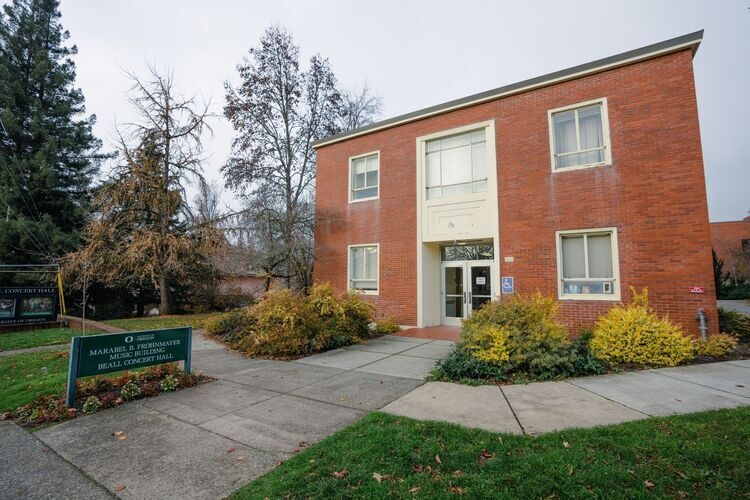 Sep 21, 2026
SOMD Graduate Employee Meeting for New and Returning GEs
Frohnmayer Music Building, 163
 Sep 21, 2026
SOMD Graduate Employee Meeting for New and Returning GEs
Frohnmayer Music Building
 Sep 21, 2026
High Drama: Japanese Prints of Theater, Heroes and History
Jordan Schnitzer Museum of Art (JSMA), Fay Boyer Preble and Virginia Cooke Murphy Wing
Quick answers for planning Eugene
How many days do you need in Eugene?
Two days is enough for downtown or the Market District, campus, a river walk, one neighborhood food evening, and either Spencer Butte or a museum. Add a third day for the McKenzie River, waterfalls, Oakridge, wineries, or Florence.
Do you need a car in Eugene?
Not for a focused downtown-campus trip near EmX, especially if you use rideshare for an occasional gap. A car is strongly useful for Spencer Butte and most regional day trips.
What is the best area for a first-time visitor to stay?
The Market District/Fifth Street area is the easiest all-around base for restaurants, shops, Amtrak, and access toward downtown and the riverfront. Downtown suits shows and markets; the campus area suits University of Oregon visits and track or football events.
Is downtown Eugene safe for visitors?
Most visitor days are ordinary, but downtown conditions vary by block and hour. Choose the exact hotel location carefully, plan the return after dinner or a show, avoid leaving anything visible in a vehicle, and use normal city awareness rather than treating the entire area as either dangerous or problem-free.
Is Eugene always smoky in summer?
No. Smoke is episodic and tied to active wildfires and wind. Many summer days are clear, while some periods can bring unhealthy air. Check live wildfire, air-quality, weather, and road information close to the day of travel.
Are Eugene and Springfield the same destination?
They are separate cities in one connected metro. A visitor may cross between them without much ceremony, but each has its own downtown, neighborhoods, parks, and identity. EmX links central Eugene, the University of Oregon, downtown Springfield, and Gateway/RiverBend.