
There are beautiful towns in Oregon, and then there are places like Hood River where it sometimes feels like nature may have been showing off a little. Perched above the Columbia River and surrounded by orchards, forested hills, waterfalls, vineyards, and some of the most spectacular scenery in the Pacific Northwest, this small town has long been one of those places that Oregonians are proud to call their own. Now, Hood River is getting some major national recognition, as Travel + Leisure has officially named it the Best Small Mountain Town in America for 2026.
The announcement came as part of Travel + Leisure’s annual America’s Best Small Towns awards, published on August 18, and while we’re always happy to see an Oregon town get some well-deserved love, anyone who has spent a sunny weekend wandering Hood River probably won’t be too surprised. There’s a remarkable amount packed into this little corner of the Columbia River Gorge. You can hike through wildflowers in the morning, grab lunch along the waterfront, wind your way through orchard country in the afternoon, and finish the day with a locally brewed beer while watching the evening light settle over the river.
The official That Oregon Life store
The Oregon you bring home.
Start the day with Oregon-roasted coffee, then find original gear inspired by the places, stories, and oddities that make this state ours.
Shop Oregon gear

That’s really what makes Hood River special. Plenty of towns have mountains, plenty have good food, and plenty have beautiful surroundings, but Hood River has somehow managed to gather an almost ridiculous collection of Oregon experiences into one small place. It has the rugged outdoor personality you’d expect from a mountain destination, but it also has generations of farming history, a lively downtown, a surprisingly sophisticated food scene, wineries, cideries, breweries, galleries, and enough quiet country roads to make you forget Portland is only about an hour away.
Travel + Leisure focused heavily on Hood River’s reputation as an outdoor playground, and there’s certainly no arguing with that. The Columbia River helped put this place on the map decades ago when windsurfers discovered that the Gorge’s famous winds created exceptional conditions on the water. The town is still closely associated with windsurfing, but today you’re just as likely to see kiteboarders, wing foilers, paddleboarders, kayakers, and other hardy souls skimming across the Columbia while the rest of us watch comfortably from shore. The magazine described Hood River as a year-round adventure hub, highlighting everything from watersports and mountain biking to waterfall hikes and winter recreation around Mt. Hood.
On a warm summer day, the waterfront alone is worth the drive. Colorful sails move across the river, families gather near the water, dogs appear to be having the time of their lives, and the hills on the Washington side of the Columbia rise dramatically across the channel. Hood River has an energy during the warmer months that’s difficult to describe until you’re standing there. It feels active without necessarily feeling frantic, and even if you have absolutely no intention of strapping yourself to a sail and launching into the Columbia, it’s hard not to get caught up in the fun.
Then there’s everything waiting just beyond town. Mountain bikers have long known about the trail systems around Hood River, including the renowned riding at Post Canyon, while hikers have access to an enormous variety of trails throughout the Columbia River Gorge. Travel + Leisure singled out the Mosier Twin Tunnels along the Historic Columbia River Highway State Trail as one of its can’t-miss experiences, a scenic paved route where forest gradually gives way to the drier landscape and wildflower-covered hills east of Hood River.
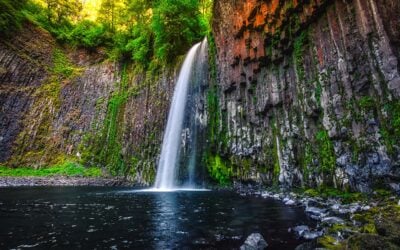
One of the wonderful things about this part of Oregon is how quickly the landscape changes. Head west and the Gorge becomes lush, dripping, green, and filled with waterfalls. Travel east and the forests begin opening into golden hills, rocky slopes, and a noticeably drier climate. Turn south from Hood River, however, and another side of the region begins to unfold as the road climbs through the Hood River Valley toward the snowy bulk of Mt. Hood.
This is where Hood River becomes much more than an adventure town.
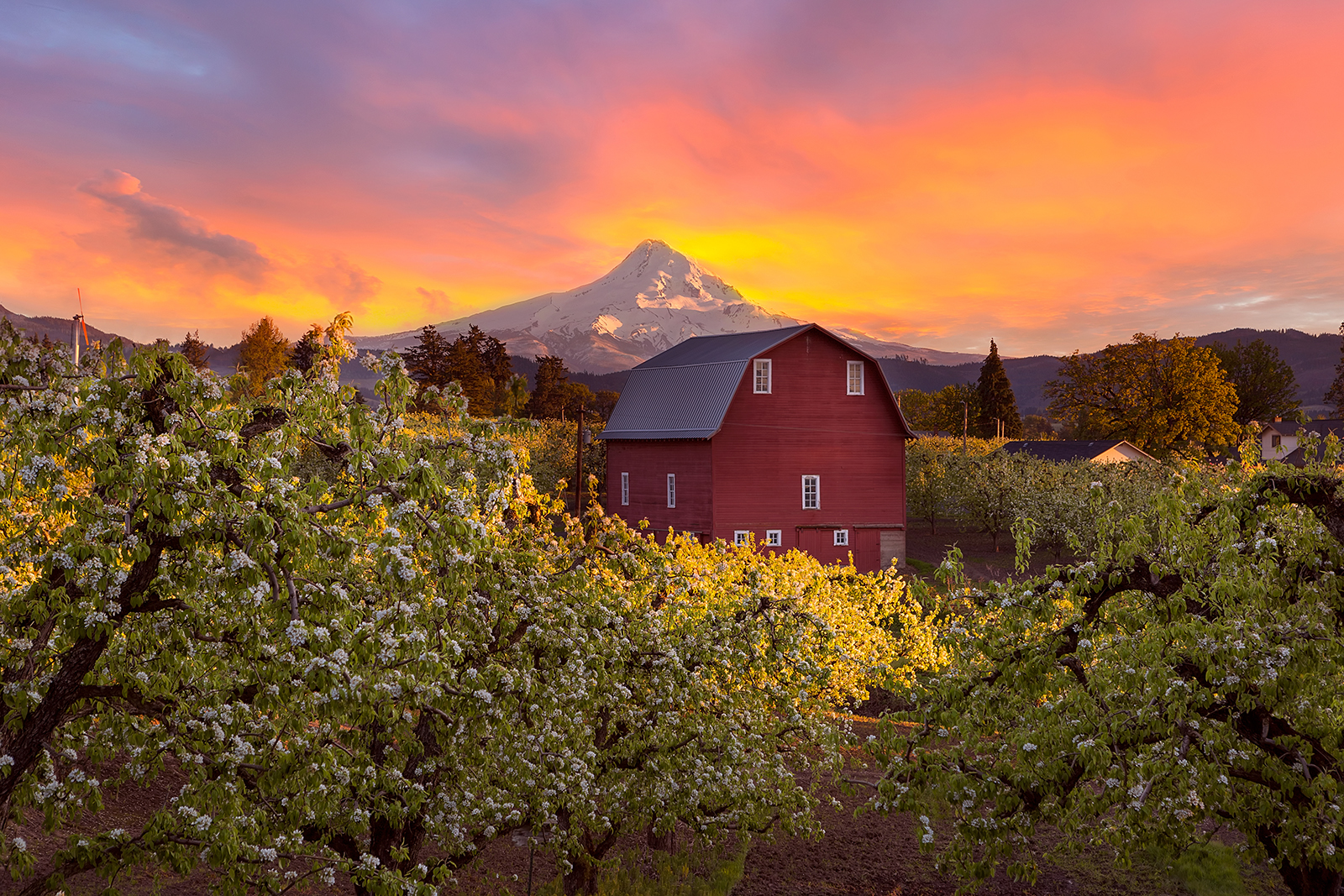
Fruit has been part of the valley’s story since the 1800s, and today orchards spread across thousands of acres of the surrounding countryside. According to Visit Hood River, the first fruit trees were planted in the valley in the 1850s, and the region now has more than 16,000 acres devoted to pears, apples, cherries, and other crops. It’s one thing to read that number on a page and another to see the orchards stretching across the valley with Mt. Hood rising in the distance.
Perhaps the best way to experience this agricultural side of Hood River is along the Hood River Fruit Loop, one of the prettiest drives you can take in Oregon when the seasons are right. The self-guided route follows approximately 35 miles of scenic country roads through orchards and farmland, connecting dozens of farm stands, wineries, breweries, cideries, flower fields, and other local stops.
This isn’t the kind of drive you should rush. In fact, trying to hurry through the Fruit Loop rather defeats the purpose. You may start out thinking you’ll simply stop for a bag of apples and find yourself an hour later wandering through flowers, tasting cider, eating something fresh from a bakery, or standing beside a farm field with one of those picture-perfect views of Mt. Hood that somehow looks even better in person than it does in photographs.
Spring is especially beautiful here. Orchards throughout the valley burst into shades of white and soft pink as apple, pear, cherry, and peach trees begin blooming, usually creating a spectacular display during April. On a clear day, rows of blossoms seem to lead straight toward the snow-covered mountain, and there are moments when the entire valley looks almost too perfectly arranged to be real.
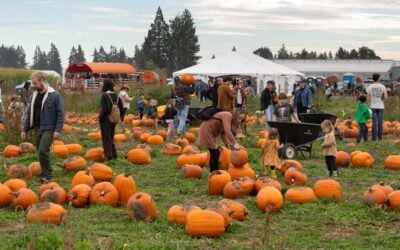
Fall brings a completely different personality. From June through October, one fruit after another comes into season, but early autumn is an especially rewarding time to wander the Fruit Loop as apples and pears fill farm stands, harvest activity picks up, winery crush season begins, and cooler temperatures settle over the valley. It’s also a wonderful season for simply driving the backroads, where brilliant foliage mixes with old barns, orchards, vineyards, and views that seem to change around every corner.
This agricultural history is one of the things that keeps Hood River grounded. Tourism is obviously a major part of the modern town, but just minutes beyond downtown are working farms where families have been growing fruit for generations. Visit Hood River highlights several longtime agricultural operations along the Fruit Loop, including The Gorge White House, a fourth-generation family farm established in 1908, Draper Girls Country Farm, which traces its family farming story to 1962, and Mt. View Orchards, another longstanding Hood River Valley operation.
That connection between the farms and the rest of Hood River also finds its way onto local menus. Travel + Leisure made a point of highlighting how much the town’s restaurant and brewery scene has grown, and this is another area where Hood River punches well above what you might expect from a community of its size. You can spend your day eating fresh fruit beside an orchard and your evening sitting down to an ambitious dinner built around ingredients from the surrounding region.
One familiar favorite is pFriem Family Brewers, whose waterfront tasting room has become a destination of its own. Travel + Leisure included pFriem’s craft beer and pimento cheeseburger among its five experiences visitors shouldn’t miss. The location certainly doesn’t hurt either, especially after a day spent on the river or exploring the Gorge.
For those looking for something a little more refined, Travel + Leisure also highlighted Votum, where chef Sarah Doyle has brought a fine-dining approach to local and regional ingredients. The restaurant is one example of how much Hood River’s culinary identity has expanded beyond the brewpubs and casual outdoor-town fare people may associate with the area. That variety is part of the fun here: Hood River can be a burger-and-beer town one evening and a tasting-menu town the next without either one feeling particularly out of place.
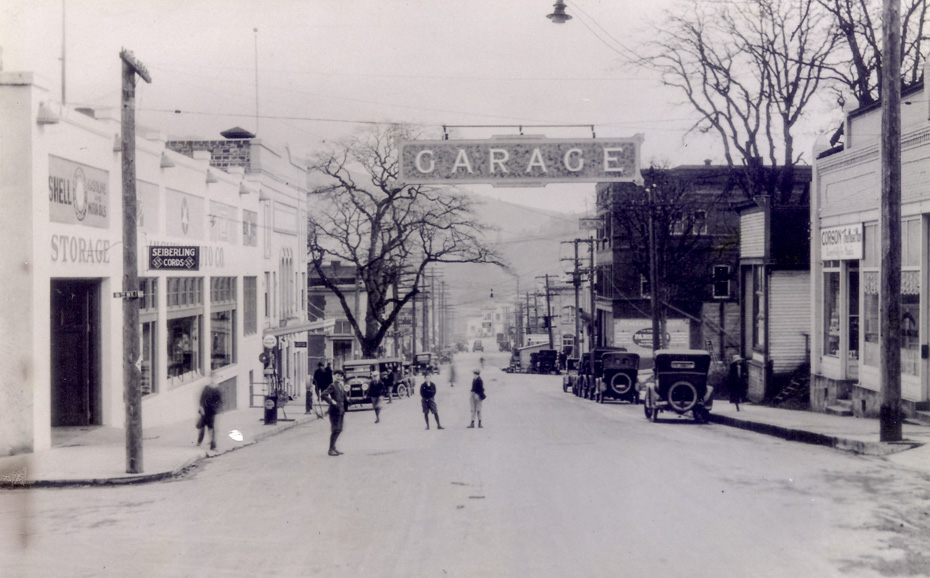
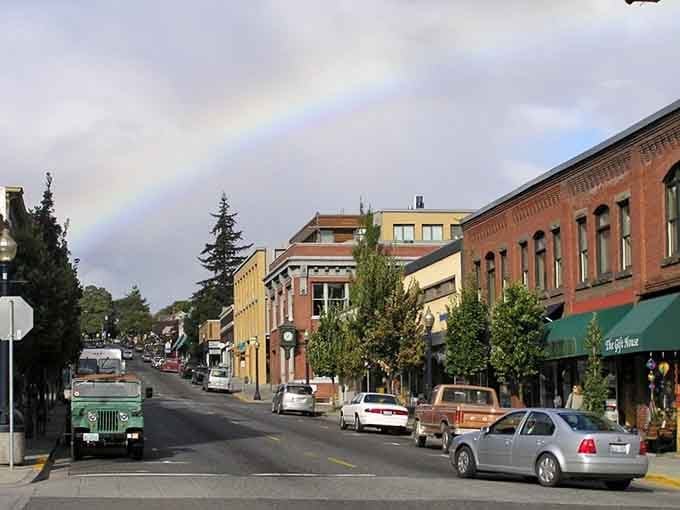
Downtown itself remains one of the easiest parts of Hood River to love. Oak Street and the surrounding blocks are lined with shops, cafes, restaurants, galleries, tasting rooms, and historic buildings, and the town is compact enough that the best way to explore is often simply to park the car and wander. Be prepared for a few hills, though. Hood River is beautiful, but it does occasionally remind your calves that it was built on a slope.
The town’s creative scene has been growing as well, and Travel + Leisure pointed to that evolution as one reason Hood River earned this year’s award. Industrial Street Studios, an artist cooperative that opened in February 2026 inside the historic Big 7 building, now provides studio and gathering space for more than 20 artists and makers. The magazine also highlighted First Friday events there, when visitors can meet artists and explore the work being created inside the cooperative.
That may not be the first thing that comes to mind when someone mentions Hood River, which is exactly why it’s interesting. For years the town’s national identity has been closely tied to the river, extreme sports, and outdoor recreation, but there’s much more happening here. Art studios, galleries, restaurants, local shops, music, and wellness businesses have quietly added another layer to a place that already had plenty going for it.
One of Hood River’s newest additions is the Lightwell Hotel + Spa, which opened in fall 2025. Travel + Leisure describes it as the town’s first full-service hotel in more than a century, with 69 rooms, multiple dining spaces, an adventure lounge, and a subterranean spa with a sauna and heated soaking pool. It’s another sign of just how much Hood River continues to change, and how the town has increasingly become a destination for people who may want a little relaxation mixed in with all that outdoor adventure.
Of course, nobody should feel obligated to treat a trip to Hood River like an endurance event. Sometimes travel coverage of outdoor towns gives the impression that if you aren’t mountain biking before breakfast, kiteboarding after lunch, and trail running at sunset, you’re somehow doing vacation incorrectly. Hood River is every bit as enjoyable at a slower pace.
You can spend a morning wandering downtown, drive through the valley with the windows down, pick up fresh fruit at a farm stand, stop somewhere for lunch, and find a quiet place to take in the view. Families can explore the waterfront, couples can spend an afternoon visiting wineries and cideries, photographers can disappear into orchard country, and history lovers can find another side of the valley altogether. The area is even home to the Western Antique Aeroplane & Automobile Museum, which maintains an impressive collection of vintage planes and automobiles, while The Fruit Company Museum tells part of Hood River’s long agricultural story.
The seasons also keep Hood River from ever feeling quite the same from one visit to the next. Summer has the energy of the river and long evenings outside. Fall is harvest season, filled with orchard stops and changing leaves. Winter shifts attention toward Mt. Hood, where skiing, snowboarding, snowshoeing, and Nordic recreation are all within reach. Travel + Leisure specifically highlighted Nordic skiing at Teacup Nordic as part of Hood River’s appeal as a true four-season mountain destination.
And then spring arrives, bringing waterfalls, wildflowers, and blossom season back to the valley. It’s easy to understand why people return here over and over instead of treating Hood River as a place to check off a list once and move on.
The national attention does come with a certain bit of irony. Oregonians tend to have complicated feelings when one of our favorite places gets discovered by the rest of the country. We love seeing a little Oregon town praised by a major travel publication, and at the very same time, part of us quietly wonders whether we really needed to tell everyone.
Hood River certainly isn’t an undiscovered secret. Summer weekends can be busy, restaurants fill up, and traffic through the Gorge has a way of reminding you that plenty of other people had the exact same brilliant idea for their Saturday. The town has changed enormously over the years as tourism, recreation, food, wine, and hospitality have grown around it.
Yet beneath all of that, the things that made this valley extraordinary in the first place haven’t gone anywhere. The Columbia still cuts its enormous path through the Gorge. Mt. Hood still rises above the orchards. Farmers still tend pear and apple trees across the valley, waterfalls still tumble through nearby forests, and the evening sun still lights up the surrounding hills in a way that can make you stop whatever you’re doing and look.
Perhaps that’s why the title of America’s Best Small Mountain Town actually feels appropriate. Hood River isn’t simply a town near a mountain, and it isn’t only the windsurfing destination many travelers first heard about decades ago. It’s one of those rare places where the landscape, agriculture, recreation, food, and community all seem connected.
There are certainly other Oregon towns that could make a strong case for the title. Joseph has the Wallowas, Sisters has the Cascades, and communities scattered across the state have their own remarkable combinations of scenery and character. Trying to declare one town the absolute “best” will always invite an argument, particularly in Oregon, where we’re blessed with more beautiful little towns than we know what to do with.
Still, spend a few days in Hood River and you begin to see why it rose to the top this year. There simply aren’t many places where you can watch kiteboarders sailing across a huge river, explore a thriving downtown, drive through generations-old orchards, hike among waterfalls and wildflowers, eat remarkably well, sample local beer and cider, and look up to find one of the most iconic mountains in the Pacific Northwest filling the horizon.
Travel + Leisure may have officially crowned Hood River the Best Small Mountain Town in America for 2026, but the award really just gives us another excuse to appreciate a place Oregonians have loved for generations. Whether you come for the river, the orchards, the trails, the food, the mountain, or simply a beautiful drive through the Gorge, Hood River has an uncanny way of giving you a reason to come back.
And if you do decide to make the trip, leave a little extra room in the car. There’s a very good chance you’ll head home with a bag of pears, a few jars from a farm stand, something you found downtown that you definitely didn’t plan on buying, and considerably more photographs of Mt. Hood than you expected to take. Around here, that’s simply part of the experience.