

A disagreement between a Portland mother and her children’s elementary school over gender identity, parental involvement and what belongs in the classroom has grown into something much larger.
It is now a federal constitutional fight.
Allison Roberts, a mother of two students in Portland Public Schools, filed a federal lawsuit on August 12 against the district and two administrators, arguing that school officials crossed the line from managing a disagreement to punishing a parent for expressing views they did not like.
At the center of the case is a one-year order barring Roberts from the campus of Meriwether Lewis Elementary School. Her lawsuit also challenges Portland Public Schools policies concerning gender identity, parental notification and harassment, and raises questions about how far a public school district can go when a parent’s political or religious objections collide with district policy.
The allegations remain just that at this point. Roberts and her attorneys have laid out their version of events in a 40-page verified federal complaint, but the claims have not been proven in court, and Portland Public Schools had not publicly presented a detailed response to the allegations when KATU reported on the lawsuit.
Still, the dispute touches a nerve that extends far beyond one Southeast Portland elementary school.
Across Oregon and the country, parents, educators, courts and lawmakers have increasingly found themselves wrestling with the same basic questions: How much authority should schools have over sensitive issues involving a child’s gender identity? When should parents be informed? And where is the line between maintaining an inclusive school environment and respecting a family’s religious beliefs or objections?
For Roberts, the answers began to matter personally when the issues arrived in her children’s classrooms.
A Classroom Disagreement Becomes Something Bigger
According to Roberts’ lawsuit, her concerns developed over several incidents involving lessons and school activities related to gender and sexuality.
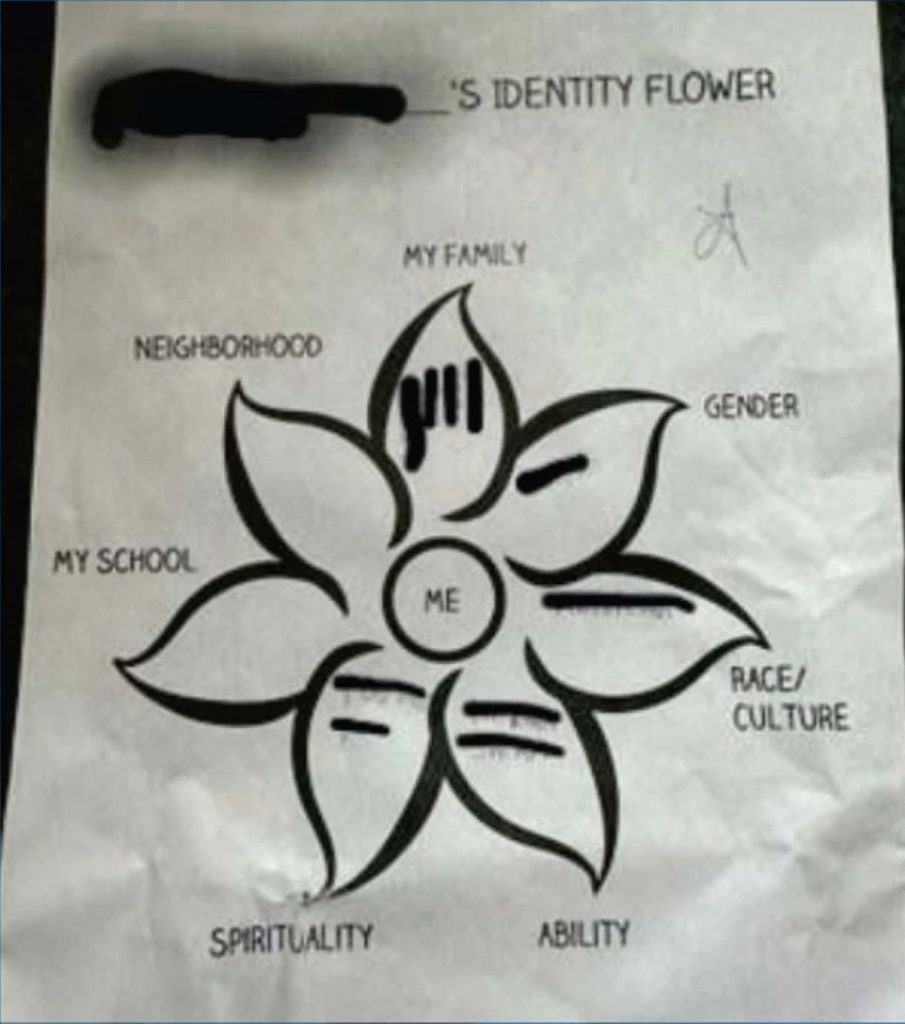
One involved an assignment that she says asked her son to identify his gender. Roberts, a Christian, says in the complaint that she believes biological sex is part of God’s design and objects to teaching children that they should reconsider or redefine that identity.
Her attorneys characterize the district’s approach as conflicting with her religious beliefs and her authority as a parent.
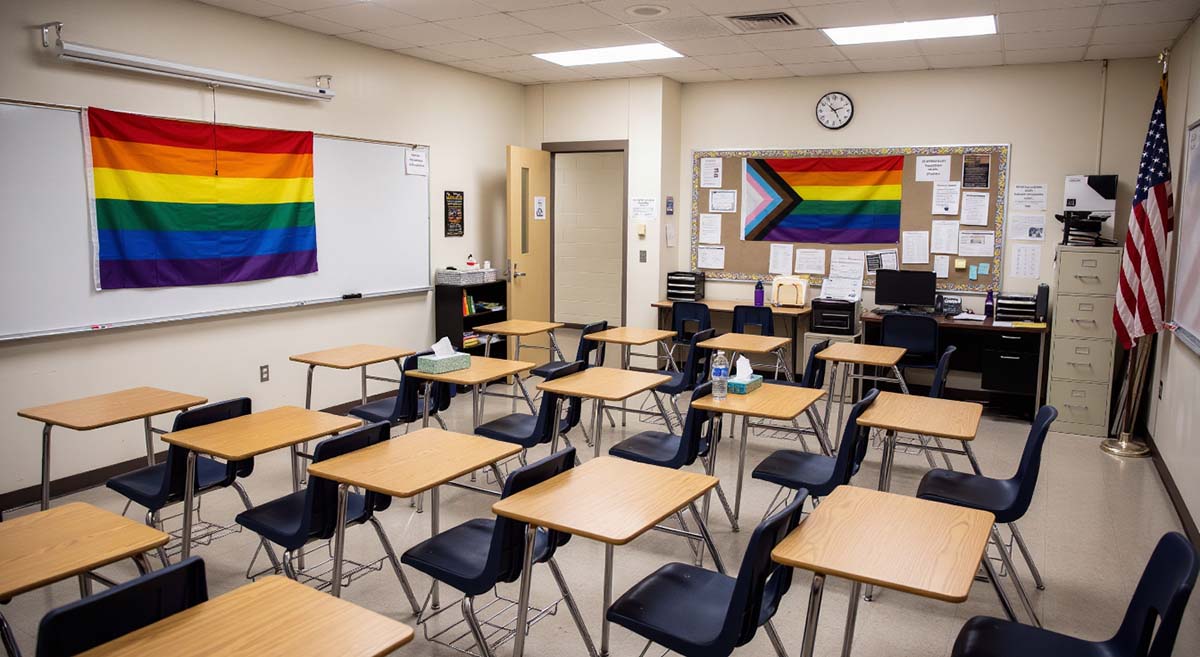
Another disagreement involved benches at Lewis Elementary decorated with Pride imagery.

Roberts says she did not object to the school’s original rainbow Pride design. What concerned her, according to the lawsuit and KATU’s reporting, was the decision to replace it with the more expansive Intersex-Inclusive Progress Pride Flag without first seeking input from parents.
That version incorporates elements representing transgender people, intersex people, people of color and people affected by HIV/AIDS.
To supporters, those symbols represent an effort to make students and families feel included. Roberts sees the newer flag differently. According to her complaint, she considers it a political and ideological statement carrying messages that conflict with her faith.
That distinction is important because the lawsuit is not simply arguing that Roberts disliked something displayed at a school. Her broader argument is that public institutions should not be able to adopt controversial positions, dismiss religious objections to them and then penalize citizens who publicly disagree.
Not everyone in Portland sees the issue that way.
Ashley Schofield, another PPS parent interviewed by KATU, said discussions about gender identity can help children understand classmates whose experiences may be different from their own. She described her son learning how to respectfully interact with a classmate who used they/them pronouns.
Basic Rights Oregon has similarly argued that discussing gender identity can help transgender students feel safe and accepted at school.
Portland Public Schools openly maintains resources and policies intended to support transgender, nonbinary and gender-expansive students. Its current materials include a Gender Identity Support Guide, policies relating to transgender and gender-expansive students and other LGBTQ2SIA+ resources.
So the underlying disagreement was hardly unique. What happened afterward is what transformed it into a federal lawsuit.
Taking Her Objections to the Sidewalk

Roberts says in her complaint that she initially brought her concerns to Lewis Elementary Principal Deanne Froehlich but did not believe the school adequately addressed them.
Eventually, she decided to communicate directly with other parents.
According to the federal complaint, Roberts prepared a letter outlining her objections to the school’s handling of gender-related issues and distributed copies while standing on the public sidewalk outside Lewis Elementary.
The lawsuit says neither Roberts nor the person helping her approached students, entered school property or pressured anyone to take the material.
That detail now matters considerably.
A public sidewalk is traditionally one of the places where Americans enjoy their strongest First Amendment protections, and Roberts’ attorneys argue that criticizing government officials and handing literature to willing adults is precisely the kind of speech the First Amendment was designed to protect.
The district’s treatment of that speech is now a major part of the case.
A Heated Encounter During School Pickup
The conflict escalated dramatically following an encounter near the school during pickup in February.
Roberts’ lawsuit says the husband of another parent confronted her after learning she had voted for Donald Trump. She claims he shouted at her and repeatedly made disparaging comments about white people.
According to Roberts’ account in the complaint, she eventually cursed at him, accused him of being racist and left.
The complaint says the entire exchange lasted less than five minutes.
The next morning, according to the lawsuit, police arrived at Roberts’ home and served her with an order prohibiting her from entering Lewis Elementary property for one year.
The trespass notice described a safety concern and accused Roberts of harmful, unlawful or disruptive behavior, according to the complaint. Roberts denies in the lawsuit that she threatened or intimidated anyone.
She also says the man involved in the confrontation was not given a comparable trespass order.
That difference in treatment is one of the strongest threads running through Roberts’ lawsuit.
Her attorneys argue that if two adults were involved in an ugly verbal confrontation but only the parent who had already been criticizing district policies received severe punishment, the court should examine whether safety was really the district’s concern or whether Roberts’ viewpoint played a role.
The district will have an opportunity to dispute that characterization in court.
An Email to the School Community Raises the Stakes
Roberts alleges that matters became more damaging when Principal Froehlich emailed the Lewis Elementary community about behavior described as harassment, intimidation and hate speech.
Roberts contends in the complaint that although the communication did not formally name her, people familiar with the dispute could determine who was being discussed. She says the district effectively portrayed her as the aggressor at a time when she believed she had been the one confronted.
The complaint later quotes district communications describing Roberts’ speech as contrary to the values of the Lewis school community.
For Roberts’ attorneys, that language is evidence that this was no longer simply about keeping order at pickup.
Their contention is that administrators began judging the substance of Roberts’ beliefs.
That distinction could become critical. Public schools have broad authority to keep campuses safe and to respond to genuinely threatening behavior. What government officials generally cannot do is punish someone simply because her political, religious or social views are unpopular.
The lawsuit asks a federal judge to decide which of those situations occurred here.
Her Appeal Did Not End the Ban
Roberts challenged the trespass order through the district’s appeal process.
According to her complaint, her case was considered in a Zoom proceeding by a three-member panel that included two custodians and a basketball coach. Roberts’ attorneys describe the hearing as hurried and inadequate, alleging that no witnesses to the supposed harassment testified and that few specifics concerning the underlying accusations were presented.
The district upheld the ban.
For Roberts, the result carried consequences beyond an abstract dispute with school administrators.
The order meant she could not attend her son’s graduation from elementary school before he moved on to middle school, according to the lawsuit.
She continued criticizing the district afterward, writing another letter about the controversy.
Then came what her attorneys describe as an even more serious warning.
District Allegedly Threatened a Permanent, District-Wide Ban
According to the complaint, Roberts was warned that continued conduct the district regarded as harassment could result in her being permanently barred not just from Lewis Elementary, but from Portland Public Schools property across the district.
Roberts says in the lawsuit that the threat worked.
She stopped distributing her letters and curtailed other public advocacy because she feared losing access to the schools her children attended.
That is the heart of her First Amendment claim.
Roberts does not have to show she was jailed or fined to argue that government officials chilled her speech. Her attorneys contend that threatening to exclude a mother indefinitely from her children’s schools was powerful enough to make her silence herself.
The complaint says she remains uncertain about what the district considers prohibited harassment and fears additional punishment if she resumes speaking publicly about Lewis Elementary or its policies.
The Case Is Also About What Schools Tell Parents
The lawsuit reaches beyond Roberts’ own campus ban.
She is also challenging Portland Public Schools policies concerning students who identify differently at school than they do at home.
PPS materials currently state that students should be addressed using names and pronouns corresponding with their gender identity, while the district also maintains formal guidance for transgender and gender-expansive students.
Roberts’ complaint argues that the district’s policies can allow a student to socially transition at school without parents necessarily being told.
Her attorneys use the term “social transition” to describe steps such as adopting another name, using different pronouns or presenting as another gender without necessarily involving medical treatment.
Roberts argues in her complaint that parents should be informed about something that significant in a child’s life.
The district’s approach reflects a competing concern raised by LGBTQ advocates nationwide, who argue that automatically disclosing a student’s gender identity to family members could place some young people in difficult or unsafe situations.
That tension between student privacy and parental authority has become one of the most consequential education debates in America.
And since 2025, the legal ground beneath that debate has shifted considerably.
Recent Supreme Court Decisions Give the Case Added Weight
Roberts’ attorneys are relying partly on recent Supreme Court decisions involving parental rights and religious objections in public schools.
In Mahmoud v. Taylor, decided in June 2025, the Supreme Court sided with religious parents who sought the ability to excuse their children from instruction using LGBTQ-themed storybooks. The Court concluded that the parents were entitled to preliminary relief under the Free Exercise Clause.
That does not automatically decide Roberts’ case. The facts and policies involved are different.
But it means courts are taking seriously claims that public-school policies can substantially burden parents’ religious exercise when schools provide no meaningful opportunity for notice or accommodation.
The legal landscape shifted again this year in Mirabelli v. Bonta.
In March 2026, the Supreme Court granted emergency relief in a California dispute involving policies that restricted schools from notifying parents about a child’s gender transition at school without the child’s consent. The Court emphasized the longstanding constitutional role of parents in directing the upbringing and education of their children.
Roberts’ complaint specifically cites both decisions.
Her lawyers argue that PPS policies concerning gender identity, pronouns, parental notice and religious objections now have to be examined against that newer body of Supreme Court precedent.
That makes this more than another heated Portland disagreement destined to disappear after a few days on social media.
Depending on how the federal court approaches the claims, the case could add to the growing legal battle over who has the final say when schools and parents disagree over some of the most sensitive decisions involving children.
A Fight Over Portland’s Harassment Policy
Roberts is also challenging the district’s harassment rules themselves.
Her lawsuit argues that PPS uses language broad enough to leave parents unsure of when criticism, confrontation or unpopular speech might become punishable “harassment.”
The complaint alleges that the policy gives school administrators too much discretion, particularly when determining whether political or religious speech crosses a line.
Roberts’ attorneys point again to the February confrontation. They argue that the other participant allegedly made inflammatory remarks but was not subjected to the same sanctions, while Roberts was banned, investigated and publicly criticized.
The lawsuit characterizes that as selective enforcement based on viewpoint.
Whether a judge agrees will depend on evidence from both sides.
School districts plainly have legitimate reasons to prohibit intimidation, threats and disruptions. Parents and students also have a legitimate interest in being able to enter a school without becoming targets of harassment.
But government policies cannot be so elastic that ordinary political criticism becomes punishable simply because administrators find it offensive.
That balance is now headed for federal court.
What Roberts Wants From the Court
Roberts is asking for more than the removal of her own trespass order.
Her lawsuit seeks declarations that the district violated her constitutional rights, injunctions preventing enforcement of policies she believes suppress protected speech, and changes involving parental notification and the ability of parents to opt their children out of certain gender-related instruction.
She also wants the district’s harassment policy invalidated to the extent the court finds it unconstitutional, along with reimbursement of her legal expenses.
Portland Public Schools and the administrators named as defendants will have the opportunity to answer those claims.
Until then, readers should keep one important distinction in mind: a lawsuit presents one side’s allegations, not a final determination of what occurred.
But the questions Roberts is asking are unlikely to disappear regardless of who ultimately prevails.
For years, many school debates centered on budgets, testing, class sizes and graduation rates. Increasingly, Oregon families are also finding themselves debating something more fundamental: where the authority of the school ends and the authority of the parent begins.
Supporters of Portland’s policies see them as protections for children who may feel vulnerable or marginalized.
Critics see an institution taking on decisions that properly belong within the family, particularly when parents are kept in the dark or given no practical way to object.
Roberts’ case puts both arguments directly in front of a federal judge.
And in a state where disagreements over education, parental rights and gender policy have become increasingly difficult to separate from politics, the outcome could be watched well beyond the halls of one Portland elementary school.