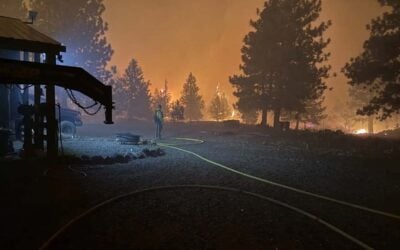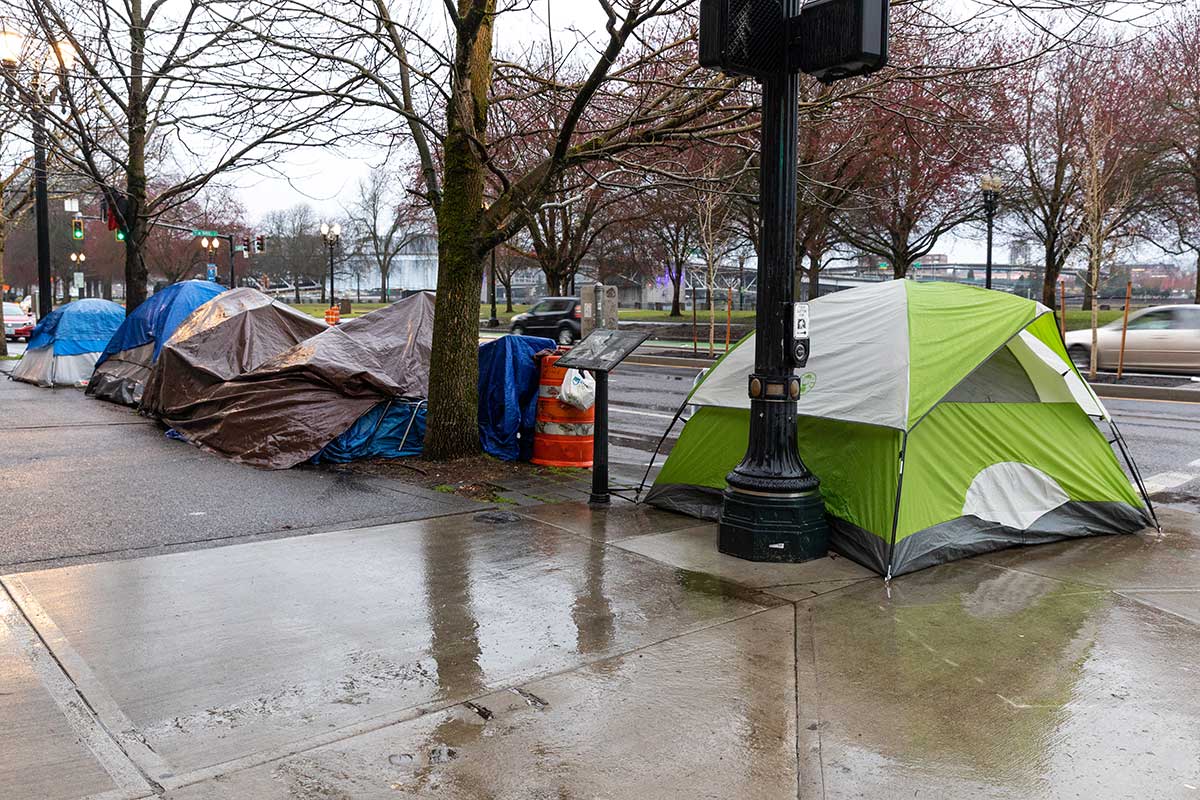

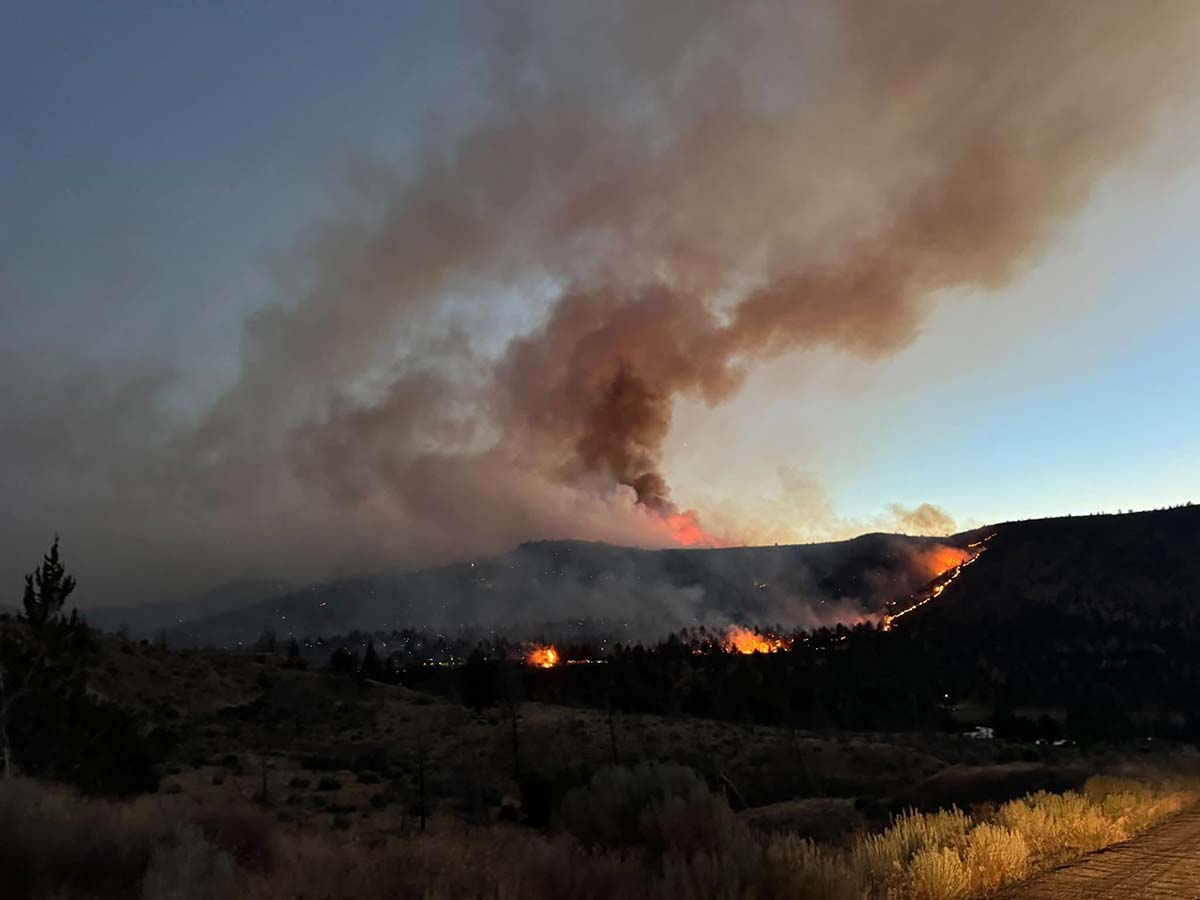
Central Oregon entered the final weekend of July under a sky filled with smoke, flashing emergency alerts and the unsettling knowledge that several dangerous wildfires were growing at the same time. This article is based on reporting from OPB journalists Joni Auden Land and Jen Baires, along with updates from Oregon fire agencies and local officials.
By Monday morning, more than 34 large fires were active across Oregon. Together, they had burned more than 1 million acres, according to the Oregon Department of Forestry.
Thousands of people have been ordered or advised to leave their homes. Major highways have closed with little warning. Some houses have already been lost, and fire crews are being forced to make increasingly difficult decisions about where limited personnel and equipment are needed most.
For communities near Warm Springs, Madras, Sisters and Prineville, the situation has changed by the hour.
The Bench Fire Forces Warm Springs to Evacuate
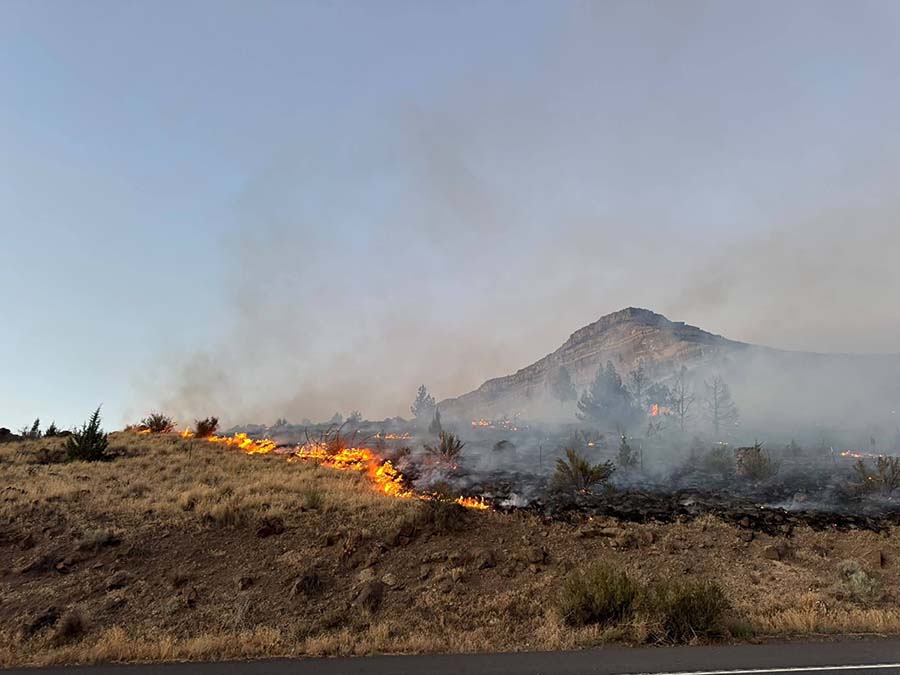
The Bench Fire became one of the most immediate threats over the weekend after spreading rapidly through Jefferson County west of Madras.
By Sunday, the fire had grown beyond 20,000 acres and remained at zero percent containment. Its movement toward the Confederated Tribes of Warm Springs Reservation prompted Level 3 “Go Now” evacuation orders throughout Warm Springs and in other threatened areas of Jefferson County.
🔥WARM SPRINGS WILDFIRES: The Warm Springs Agency area is under a Level 3 "Go Now" evacuation notice as the Bench and Beachcomb fires threaten the Warm Springs Reservation.
— Jeremy Scott (@jeremyscottpdx) July 26, 2026
🛑TRAFFIC ALERT: Highway 26 is closed from MP 108-110 due to the fires.
📷: CTWS Fire Management pic.twitter.com/GRlpmYFJuv
The fire crossed the Deschutes River on Saturday, a troubling development that allowed it to continue advancing through dry grass, brush and timber.
Firefighters had worked to establish containment lines during the first night of the incident, but flames eventually crossed those barriers. From there, the fire expanded quickly under hot, dry and windy conditions.
The nearby Beachcomb Fire had already burned more than 13,000 acres. Over the weekend, the Beachcomb and Bench fires joined together, creating an even larger and more complicated incident for crews to manage.
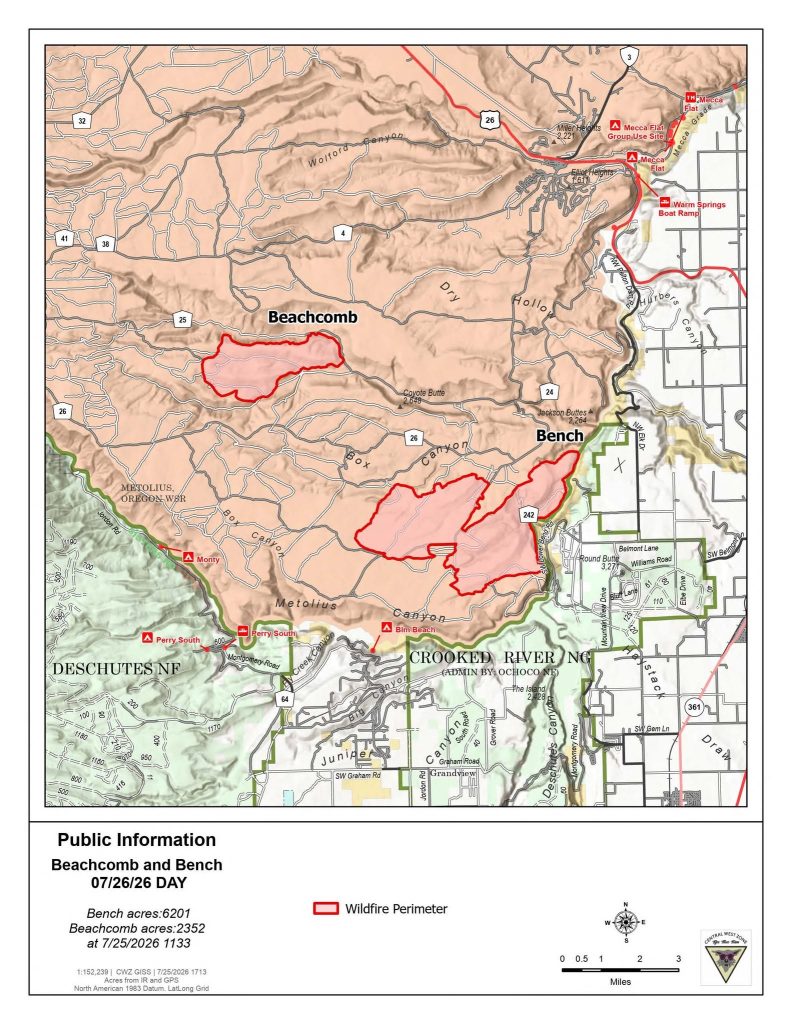
More than 200 firefighters and support personnel were assigned to the two fires.
Late Saturday night, the Oregon State Fire Marshal invoked the Emergency Conflagration Act, opening the door for additional statewide resources. Oregon’s Red Incident Management Team was assigned to help coordinate the response.
Some Homes Have Been Lost
Officials confirmed Sunday that the Bench Fire had destroyed some homes, although a complete damage assessment was not yet available.
Fire representatives said crews were still working to determine the total number of structures lost. Despite the destruction, officials emphasized that firefighters had successfully protected most of the homes threatened by the flames.
That offers some comfort, but little certainty, for families who left without knowing what they might find when they return.
In Madras, a Red Cross shelter provided a temporary place to sleep for people displaced by the fire.
Some arrived after firefighters moved them out of dangerous areas. Others discovered late at night that road closures and advancing flames had made it impossible to return home.
One woman staying at the shelter had been caring for relatives’ children when firefighters helped move the group to safety. Another couple arrived around 1:30 in the morning after realizing they could no longer reach their house.
For evacuees, the shelter offered something simple but deeply important: a cot, a safe building and a place to pause while the situation outside remained uncertain.
Evacuation Notices Changed Almost as Quickly as the Fire
Keeping the public informed has been especially difficult because the fires are moving so quickly.
The Jefferson County Sheriff’s Office described trying to publish evacuation information only to have the designated levels change before the message could even be completed.
View from my porch last night of the Bench Fire. One of the smaller ones in Central OR right now too. 💔 pic.twitter.com/cpK06Zl6SP
— YFTYBTM (@YFTYBTM) July 25, 2026
That has become one of the defining realities of this fire emergency. A neighborhood listed under a Level 1 “Be Ready” notice can move to Level 2 “Be Set” or Level 3 “Go Now” in a short period of time.
Residents throughout the affected region are being urged to keep phones charged, monitor official emergency channels and be prepared to leave immediately.
Those with livestock, pets, medications or mobility concerns may need considerably more time to evacuate and should not wait until flames are visible.
Highway Closures Add to the Confusion
Wildfire activity has also disrupted travel across Central and Eastern Oregon.
Highway 26 closed overnight between Warm Springs and Madras as firefighters worked near the roadway. Another closure was reported Sunday between Prineville and John Day, although local residents and delivery drivers were still allowed through in some areas.
Transportation officials warned that fast-moving fires could continue to affect both Highway 26 and Highway 20 east of the Cascades into Monday.
These closures can change suddenly depending on wind direction, visibility, fire behavior and the movement of emergency equipment.
Anyone traveling through Central or Eastern Oregon should check road conditions before leaving, even when using a route that was open only a few hours earlier. This is not the kind of fire season where yesterday’s information, or even this morning’s information, can always be trusted by afternoon.
Oregon Is Seeing August Fire Conditions in July
The scale of the current outbreak is especially concerning because it is arriving earlier than many Oregonians are accustomed to seeing.
Officials say much of the state is already experiencing conditions more typical of August.
An unusually low winter snowpack left forests, grasslands and high desert areas with less moisture heading into summer. Weeks of heat and drying winds have turned vegetation across much of Oregon into highly receptive fuel.
Under these conditions, something as small as a spark or drifting ember can become the beginning of another major incident.
The growing number of fires is also putting enormous pressure on Oregon’s firefighting system.
Crews assigned to one wildfire cannot simply be pulled away every time another fire begins. With dozens of large incidents already burning, state and federal agencies must prioritize fires based on danger to human life, homes, infrastructure and surrounding communities.
That means some fires may receive fewer resources than officials would ideally like to provide.
Akawa Butte Fire Remains a Major Threat Near Sisters
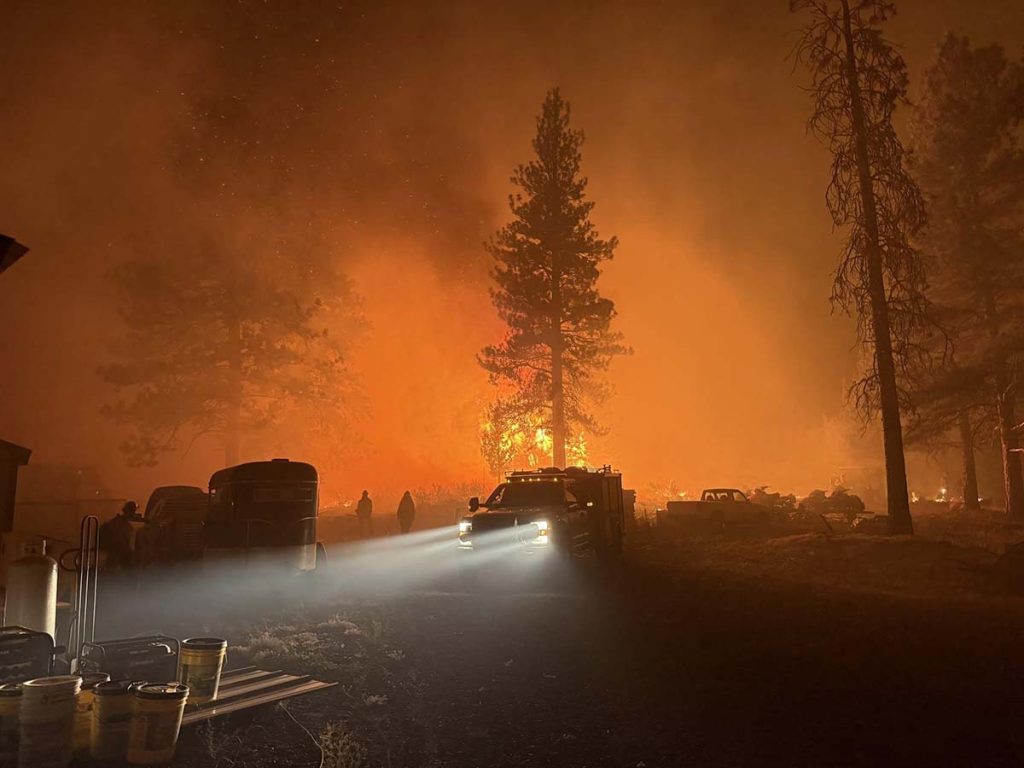
West of the Bench Fire, the Akawa Butte Fire continues to burn near Sisters.
As of the latest Monday morning update included in the report, the fire had burned more than 27,000 acres and was listed at 6 percent containment.
Its proximity to Sisters led officials to designate it as the highest-priority wildfire in the nation.
That ranking does not necessarily mean it is the country’s largest fire. It reflects the immediate danger posed by its location, the number of homes and people potentially in its path, and the resources needed to prevent it from reaching populated areas.
Residents in and around Sisters have spent days watching evacuation maps, packing vehicles and preparing for the possibility of leaving.
For a community surrounded by forests and familiar with fire season, this incident still feels different. The danger is arriving early, several major fires are already burning nearby, and firefighting resources are being pulled in multiple directions.
Three Enormous Fires Burn Elsewhere in Oregon
While much of the immediate attention has been focused on Warm Springs, Madras and Sisters, some of Oregon’s largest fires are burning farther east.
The Rowe Creek Fire Complex has grown beyond 208,000 acres, making it the largest active fire in the state. It has affected a wide area of Wheeler County, where rural residents face long evacuation routes and limited access to emergency services.
In southeastern Oregon, the Big Grass Fire has burned nearly 200,000 acres. Much of that fire is moving through sparsely populated country, but its immense footprint demonstrates how quickly flames can travel across dry rangeland.
The Hay Creek Complex in north-central Oregon has surpassed 181,000 acres after burning for more than 10 days. It was listed at 60 percent containment Monday morning.
Those three fires alone account for hundreds of thousands of burned acres. Combined with the Bench, Beachcomb, Akawa Butte and dozens of other incidents, they illustrate the enormous geographic scale of Oregon’s current emergency.
This is not a single wildfire threatening one town. It is a statewide crisis unfolding across forests, ranchland, river canyons and high desert communities.
What Oregonians Can Do Right Now
Residents in wildfire-prone areas should know their evacuation level and understand what it means.
Level 1 means it is time to prepare. Level 2 means conditions are becoming dangerous and residents should be ready to leave at a moment’s notice. Level 3 means the danger is immediate and people should evacuate without delay.
A basic evacuation kit should include identification, medications, water, essential clothing, phone chargers, pet supplies and important documents. Vehicles should be kept fueled, and trailers needed for animals should be positioned where they can be accessed quickly.
People outside evacuation zones can help by avoiding closed roads, giving emergency vehicles room to pass and resisting the temptation to drive toward smoke for a closer look.
Oregonians should also be extraordinarily careful with anything that could create a spark. Mowing dry grass, dragging trailer chains, parking over vegetation, improperly extinguishing campfires and using outdoor equipment can all start fires under extreme conditions.
A Long Summer Still Lies Ahead
Perhaps the most sobering part of Oregon’s current wildfire emergency is the date.
It is still July.
The state has already crossed 1 million burned acres, more than 34 large fires are active, homes have been lost and firefighting resources are stretched across an enormous landscape.
The traditional peak of Oregon’s fire season is still ahead.
For families facing evacuation, acreage figures and containment percentages are more than numbers on a map. They represent unanswered questions about homes, animals, neighbors and communities that may look different when people are finally allowed to return.
Across Central Oregon, firefighters are working long shifts in punishing conditions. Shelter volunteers are making room for displaced families. Neighbors are helping move livestock, share updates and check on people who may need assistance.
That spirit of looking after one another has always been part of life in Oregon’s smaller communities.
This summer, it may become more important than ever.
Current Evacuation Levels:
- Crook County: Facebook.com/CrookCountySheriff
- Gilliam County: Facebook.com/GilliamCountySheriff
- Grant County: Facebook.com/profile.php?id=100068819321423
- Harney County: Facebook.com/HarneyCoSheriff
- Jefferson County: Facebook.com/JeffersonCountyORSheriff
- Sherman County Facebook.com/profile.php?id=100064318254818
- Umatilla County: Facebook.com/UmatillaCountySheriff
- Union County: Facebook.com/UnionCountyORSheriff
- Wheeler County: Facebook.com/WheelerCountySheriffsOffice
- Wasco County: Facebook.com/WascoCountySheriff
- Confederated Tribes of Warm Springs, Oregon: Facebook.com/CTWSO
Fire acreage, containment levels, evacuation zones and highway closures can change rapidly. This article reflects information available Monday morning, July 27, 2026. Residents should rely on local sheriff’s offices, emergency management agencies, fire officials and Oregon transportation authorities for the latest instructions.
Source: Original reporting by Joni Auden Land and Jen Baires for Oregon Public Broadcasting, published July 26 and updated July 27, 2026. Additional information came from the Oregon Department of Forestry, Oregon State Fire Marshal, Jefferson County Sheriff’s Office and incident management teams.