
Getting window glass to a house usually involves a delivery truck. At the remote place now known as Rogue River Ranch, it involved a railroad journey from Portland and a long pack-animal trip into the canyon. The house that emerged became much more than a family home. With a trading business downstairs, lodging upstairs, and neighbors arriving for supplies and company, it helped hold a scattered Southern Oregon community together.
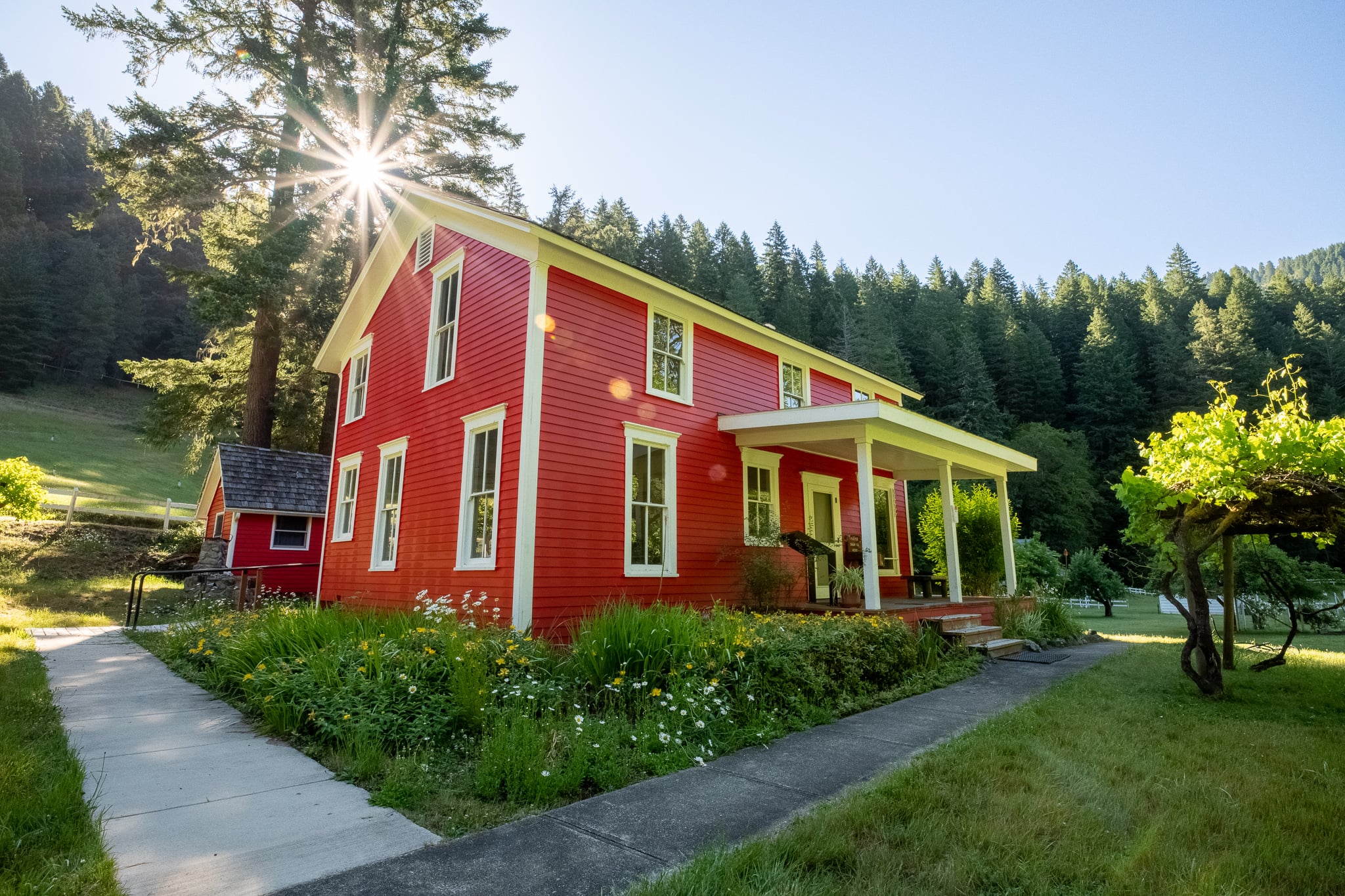
Today, the red house stands near the meeting of Mule Creek and the Rogue River, surrounded by steep country that still makes a visit something to plan. It is part of Rogue River Ranch National Historic Site, a small complex preserved by the Bureau of Land Management. Rafters and hikers may encounter it as a stop within a longer journey, while drivers negotiate narrow roads to reach it. However you arrive, this is a place where an ordinary window can tell you something about the work of living here.
A house that had to be carried into being
The Billings family completed the main house in 1903. Building in this part of the Rogue canyon meant working with what could be obtained locally and transporting the rest over difficult terrain. Timber could come from nearby trees; glass had a longer journey. The BLM’s account describes windows arriving by rail from Portland and then traveling 21 miles from Galice by pack mule.
That detail makes the house easier to understand than a simple construction date. Each window represented fragile cargo that had to survive a rough trip before it could become part of a permanent home. The family was committing labor and resources to a place well beyond a convenient supply route. Even the comparatively modest scale of the building becomes impressive when you consider how much had to happen before its rooms could be used.
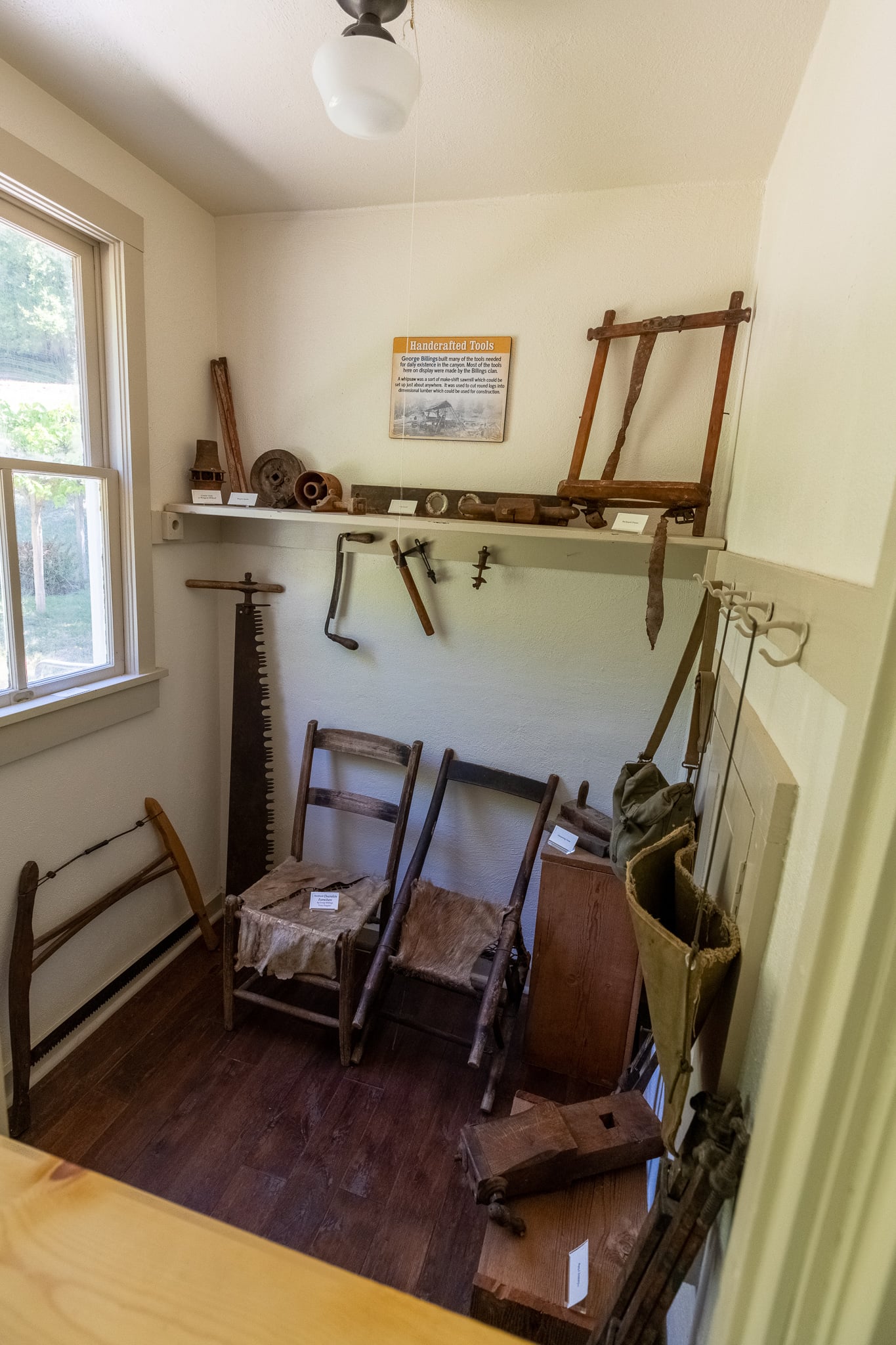
In recollections preserved in a BLM historical booklet, Ivin Billings described his father’s work on the house and its furnishings. He remembered handmade window frames and furniture, along with lumber prepared at the site. Those memories put skilled hands back into a building that could otherwise be viewed only as an old farmhouse. They also suggest how little separation there was between making a home and making the equipment needed to live in it.
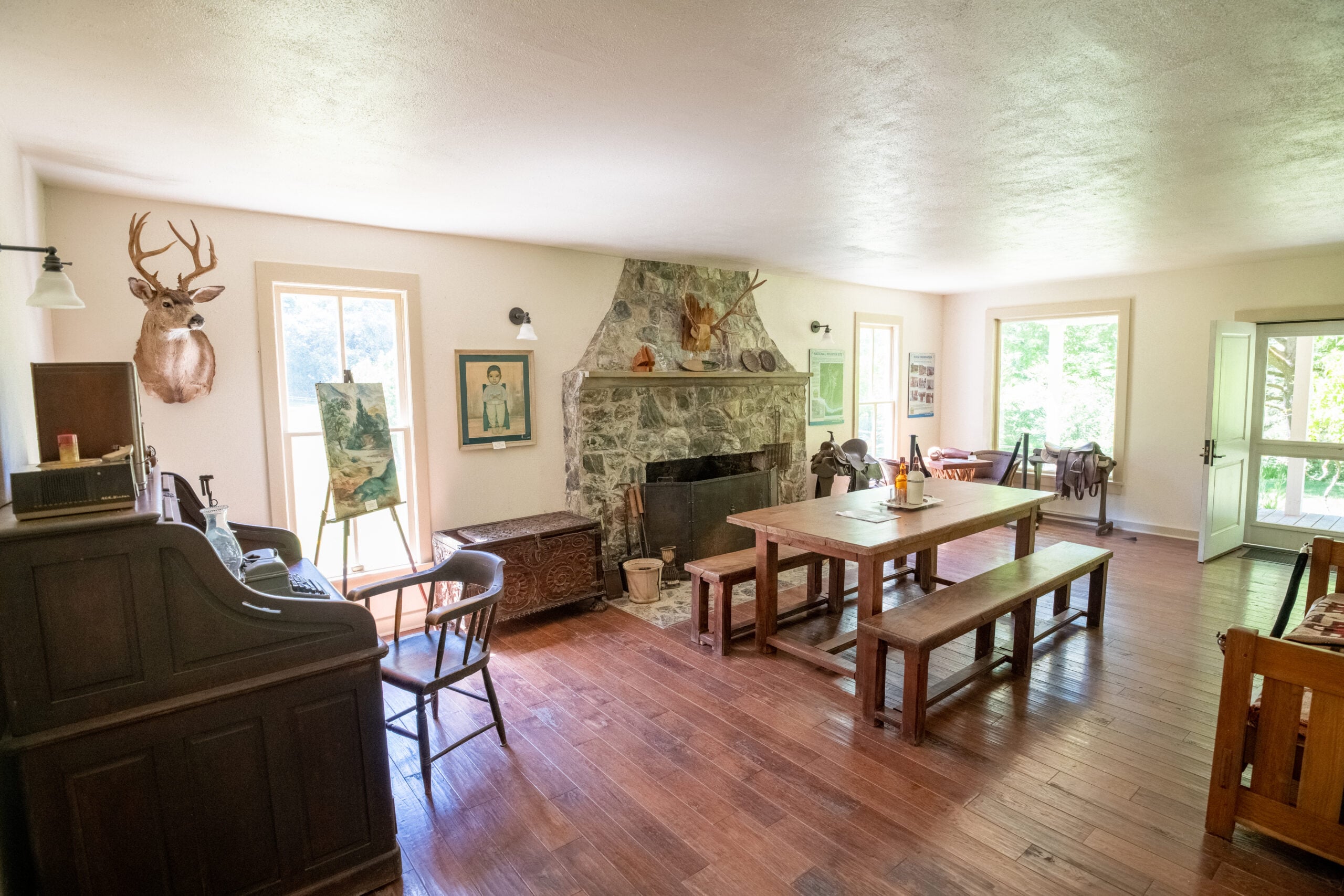
Ivin’s account recalled a wood heater rather than a fireplace in the living room, and he distinguished original practical hardware from more decorative additions. That is useful context when looking at a preserved house. A historic room can contain layers from different owners, repairs, and later interpretation. The ranch’s interest comes partly from those changes, rather than from a claim that every visible object has stood untouched since 1903.
Long before the ranch, people lived along the river
The ranch buildings occupy a place with a much longer human history. Archaeological work in the surrounding area documents Indigenous use reaching back thousands of years, well before a homestead claim or mining company appeared in the canyon. Fish, plant foods, animals, and materials for making everyday objects made the river country important. The meeting of a creek and a major river was already a meaningful place in that landscape.
The nineteenth century brought violent disruption. The Rogue River wars and the forced removal of Native people to reservations in 1856 changed life across the region. A history of the ranch therefore cannot begin with the suggestion that newcomers arrived in empty country. The buildings belong to a later period within land that Indigenous people had long known, used, and cared for.
Adeline Billings is part of both the family story and that wider history. She was Karuk, from the Klamath River country of Northern California, and married John Billings. The couple lived near Agness before moving farther upriver, raising a large family as they went. Their children’s lives connected the ranch’s later history to an Indigenous family history that continued after removal and war.
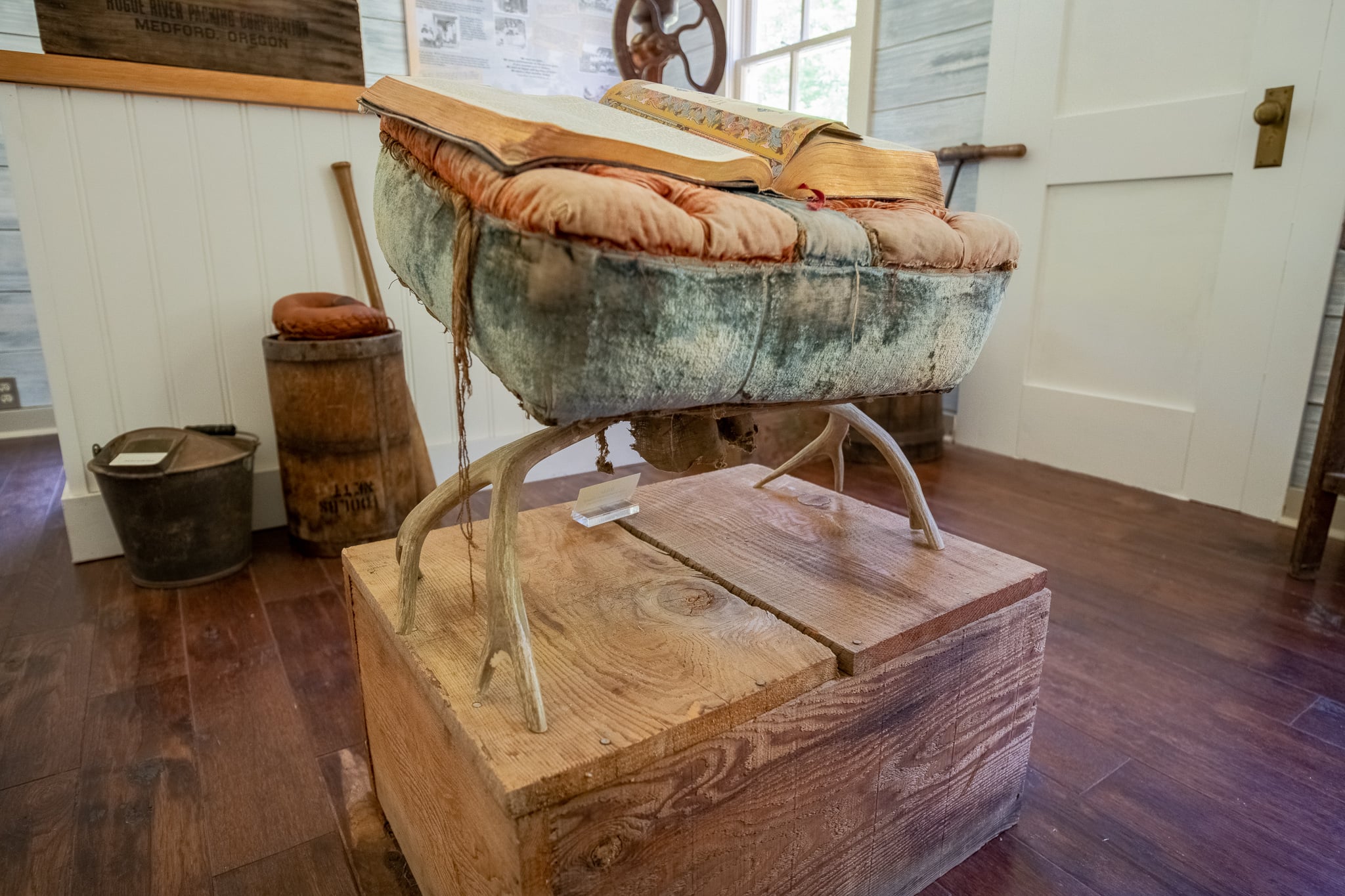
The museum includes interpretation of Native history alongside its mining and ranching subjects. Take time with that material rather than treating it as a brief preface to the buildings outside. Baskets and other objects can point toward knowledge, materials, and skilled work as directly as a carpenter’s tools do. Read the labels carefully, since a display’s objects and its broader account of a region are not necessarily the same thing.
Gold brought work, machinery, and a need for supplies
Mining helped shape the community that developed around Mule Creek. In the early 1880s, the Marks Brothers Mining and Milling Company operated a sawmill and flume system on the creek’s East Fork. Members of the Billings family worked in that activity. The region’s steep terrain did not prevent industrial ambition, though it made the movement of people, equipment, and supplies difficult.
Tom Billings filed a homestead claim at the mouth of Mule Creek in 1887 and transferred it to his older brother George the following year. George and Sarah Ann Billings later settled there with their young son Ivin. By the time the two-story house was completed, it could serve people whose own work kept them moving through the canyon. A trading post and boarding house were practical responses to a community’s needs.
The Red River Mining and Milling Company subsequently took over earlier mining facilities and claims. Its operations at Douglas Bar included a house, an assay office, and hydraulic mining equipment. These were more substantial efforts than the solitary prospector with a pan that often dominates popular images of Oregon’s gold era. There were businesses, workers, and systems built to move water and process gravel.
The company did not prosper indefinitely. When its operations failed in the early twentieth century, George Billings regained his original claim as an agricultural homestead. The shift helps explain why a ranch, rather than an operating mine, is what visitors find here today. Farming, boarding travelers, and selling goods offered other ways to keep a household and a local business going.
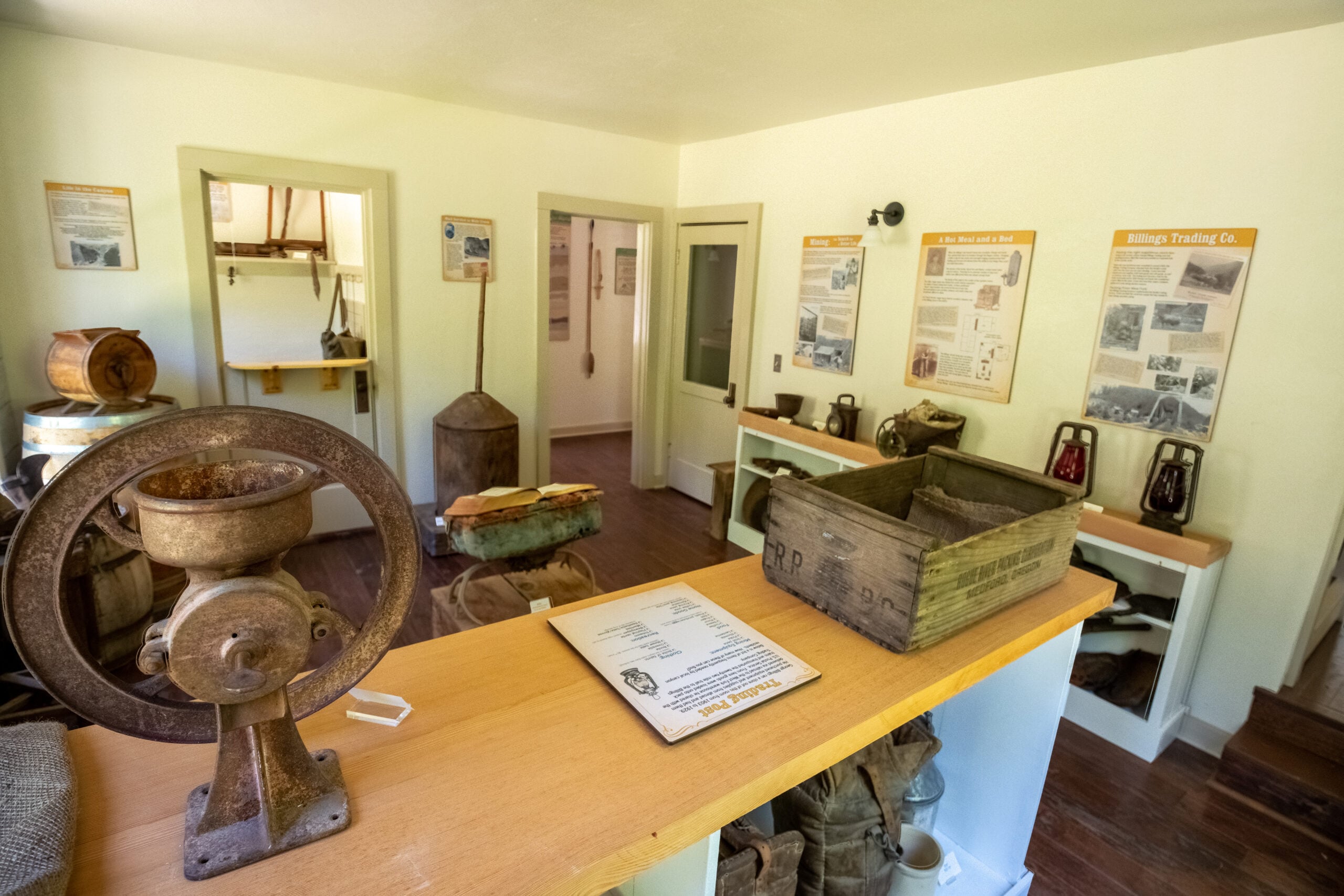
A general store with bedrooms above it
Billings Trading Company supplied people living and working in the canyon. Tools, food, and other goods had to reach customers whose homes and claims were scattered through difficult country. The trading business gave those residents somewhere closer than a distant town to obtain necessities. Its usefulness depended on the same transportation challenges that had complicated construction of the house itself.
The upper floor provided lodging for travelers and workers. Ivin later remembered boarders arriving in numbers that required the household to keep food ready. Feeding guests was part of the business, and the garden and river contributed to the household’s food supply. The work of hospitality here involved growing, gathering, storing, cooking, and keeping enough on hand for people who might arrive without much warning.
It is easy to call an upstairs room a hotel and imagine the arrangements of a modern inn. This was a much more practical kind of accommodation, shaped by the space and resources available. Travelers needed food and a place to sleep in a canyon with few alternatives. Looking at the house as a working business makes its rooms more interesting than imagining a rustic vacation from another century.
The property also served postal functions during the life of the Marial community. Mail added another reason for people to return to a place already handling goods, lodging, and social gatherings. Letters connected households to relatives, buyers, and the world beyond the canyon. A trading post with a place for mail could become a regular point of contact for people who did not see one another every day.
The neighbors came for more than groceries
Marial took its name from Marial Billings, Tom and Anna Billings’ daughter, born in 1894. The settlement was small, but its residents still needed places to meet. The ranch’s buildings helped provide them. During the trading company’s busiest decades, the BLM’s historical account describes a local community of roughly 75 to 100 people.
A barn built in 1908 housed horses and mules below and gatherings above. The building later became known as the tabernacle, with dances and religious services both appearing in its history. People walked from other places along the river to attend. The same structure could serve animals, social life, and worship as the community’s needs and customs changed.
That combination is one of the most appealing things about the ranch’s history. There was no separate building for every activity that a larger town might take for granted. Rooms and outbuildings had to earn their space through use. The result was a modest group of structures doing the work of a much larger collection of services.
It also changes what is worth noticing on a visit. A barn is more than a picturesque shape beside a lawn when you know people climbed upstairs for company after a long walk. The house is more than a preserved family residence when you remember the customers and boarders it served. The people using these rooms were buying food, looking for a bed, collecting letters, and catching up with neighbors.
Work continued through the winter
Ivin’s recollections describe a household whose labor changed with the season. Winter provided time to repair equipment, make pack gear, and do leather work. Horses needed feed even when weather made travel difficult. Keeping animals and tools ready was part of maintaining the connections that the household and trading business depended on.
The blacksmith shop and tack-related buildings help make that work visible. A damaged tool or piece of equipment could not always be replaced by a quick trip to town. Repair skills mattered, and the ability to make or adapt something locally could save a long journey. The buildings offer a practical explanation for why so many different trades and tasks belonged to a single ranch.
Food preservation was another part of that seasonal work. Ivin recalled produce from the garden and fish kept for later use, giving the household resources beyond what could be brought in on a particular supply trip. His memories are one person’s account, not a complete record of everything the family ate or did. Still, they help explain the amount of preparation behind the seemingly simple act of serving a traveler breakfast.
New owners changed the buildings and the road
The Anderson family later acquired the ranch and enlarged its role as a private retreat. They added or improved buildings, expanded the property, and invested in access. The collection of structures that survives therefore includes work from more than the Billings period. A visit can reveal both the earlier trading community and the changes made by later owners.
Road improvements were especially significant. Earlier travel depended heavily on footpaths and pack animals, while the later road allowed vehicles to reach the property. That did not make the canyon an easy place to get around. It did change how people could transport supplies and use the ranch, leaving another layer of history in the route rather than only in the buildings.
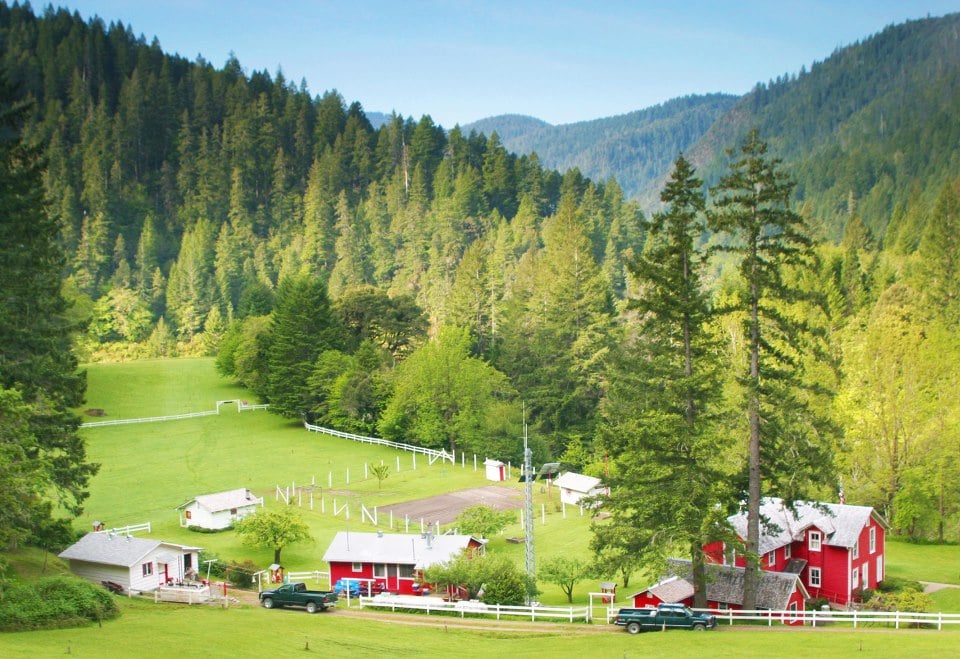
The house gained its distinctive red exterior during the Anderson years, in the 1950s. That familiar color belongs to the property’s later story rather than the moment its first walls went up. The bright siding is one of the Anderson family’s lasting contributions to the property visitors see today. The ranch remained useful because people altered it, repaired it, and found different ways to live there.
A private ranch became part of a protected river
The federal government acquired the property in 1970 under the Wild and Scenic Rivers program. The Rogue had been included in the original group of rivers protected by the 1968 law. With the BLM responsible for the ranch, preservation and public interpretation became part of its purpose. A property once serving local trade and a private household could now help visitors understand the canyon’s history.
Rogue River Ranch was listed on the National Register of Historic Places in 1975. The main house became a museum, with displays addressing Indigenous history, mining, the Billings family, and the Anderson period. More recent work between 2017 and 2019 improved the building and interpretation. The museum is therefore an active preservation project, not simply an old house left open for people to wander through.
That public role gives a stop here more substance than a quick photograph of the red siding. A river trip can bring visitors close to the canyon’s scenery while leaving its former communities largely invisible. The ranch supplies names, objects, and buildings that make those communities easier to understand. Its location also reminds you that people chose to live and work in places that modern travelers often approach primarily for recreation.
October is the edge of the visiting season
The public museum also creates an opportunity to compare the objects inside with the working landscape outside. Look at a tool or a piece of household equipment, then consider the distance to the next source of supplies. A replacement handle, a repaired strap, or a preserved food supply could matter far beyond its price. The collection gives those everyday decisions a place beside the more dramatic story of finding gold.
That is particularly useful for younger visitors who know a ranch mainly through animals and barns. This one also required carpentry, cooking, trading, maintenance, and the management of guests. Choose one of those jobs and follow its evidence through the rooms and outbuildings. The visit becomes easier to understand when the buildings are connected to tasks a person had to complete, rather than treated as a checklist of old structures.
Allow time to look back at the complex from the open ground, too. The house and supporting buildings belong together, and their relationship is part of what the historic site preserves. Keep to designated visitor areas and respect closed doors or posted limits. Preservation works best when another person can return later and find the same details available to study.
The BLM lists the site’s season as May through October, making fall a time to check arrangements carefully rather than assume the museum stays open all winter. The ranch is near the mouth of Mule Creek in Curry County, on the north bank of the Rogue. There is no ordinary town-center street address to aim for. Use the official site information and directions for the actual location, rather than mistaking the agency’s Grants Pass office address for the ranch.
Driving access follows narrow, winding roads without fuel stops or services along the route. Bring sufficient food, water, fuel, and a route plan, and verify current conditions with the land manager before committing to the drive. A listing that says the museum is seasonally open is not a report that every approach road is clear today. Leave enough daylight for the return rather than treating the ranch as a quick detour from the interstate.
Hiking and boating approaches need their own planning. The ranch lies deep within the Rogue’s wild section, reached as part of a much larger trail or river journey. It is not an easy short walk from a roadside parking lot near Grants Pass. River permits, trail conditions, weather, and the skills needed for remote travel should be checked through the current official information before choosing either approach.
The historic site has no admission fee, and nearby Tucker Flat offers primitive camping, but the ranch itself is listed for day use. The BLM reports no accessible facilities, so visitors with specific mobility needs should check the setting and access before traveling. For a broader trip, our Southern Oregon guide can help you choose a base and keep the canyon journey in proportion. At the ranch, give the museum time before heading back outside to look again at the house and its windows.