
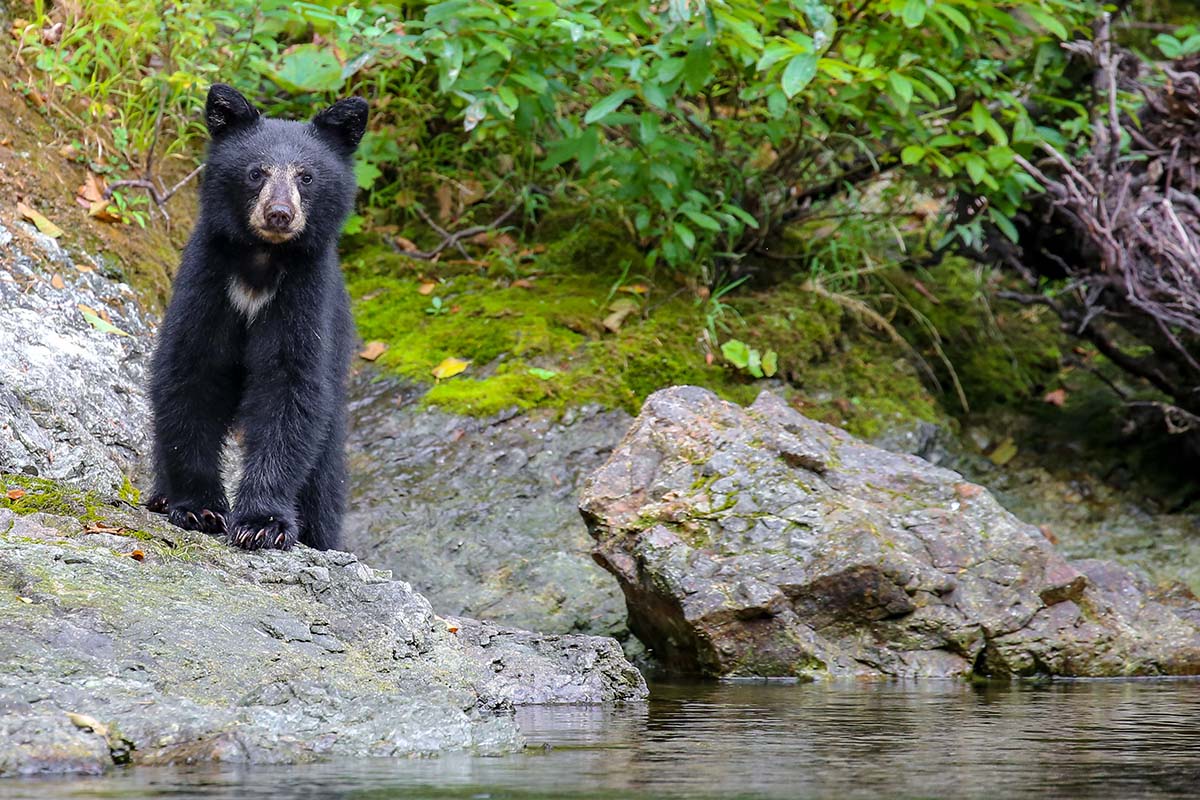
A quiet campground tucked into Oregon’s Coast Range has been temporarily closed after a mother black bear and her cub began aggressively searching for food and behaving in ways that raised concerns for visitor safety.
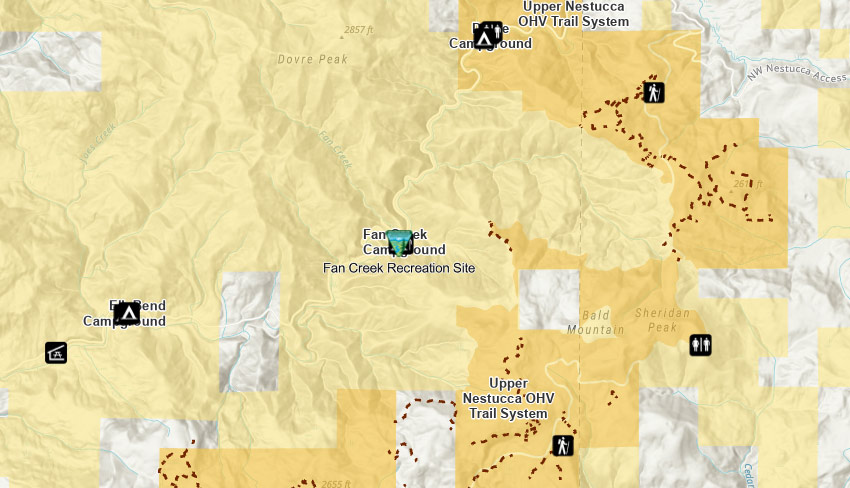
The trouble is unfolding at Fan Creek Campground along the Nestucca River Corridor, roughly 25 miles west of McMinnville. Federal land managers say the two bears have been moving through the campground looking for food, and their behavior has become concerning enough that the Bureau of Land Management decided it was safer to clear the area and keep campers out for the time being.
For anyone who has spent a summer weekend camping in the Coast Range, the situation is a reminder that even a developed campground with picnic tables, fire rings and designated campsites is still part of a much larger wild landscape. Black bears live throughout western Oregon, and in most cases they want very little to do with people. The problem begins when a bear learns that tents, coolers, trash cans and picnic areas can offer an easier meal than whatever it might find naturally in the forest.
That appears to be the concern at Fan Creek, where officials say the bears have not only been searching for food but have also shown a troubling lack of fear around humans.
“The bears have been threatening to visitors, and they do not seem to be afraid of humans,” Tillamook Field Manager Janet Satter said in announcing the closure. “For everyone’s safety, the campground is closed for the time being.”
The closure affects visitors who were already planning summer trips to the area, including people with existing campground reservations. BLM staff are contacting those whose plans have been disrupted and are asking visitors to respect the temporary shutdown while officials determine how to handle the situation.
“We are reaching out to visitors with impacted reservations, and we thank them for their flexibility and for respecting this temporary closure,” Satter said.
For now, there is no announced date for Fan Creek to reopen.
A Small Campground in a Beautiful Corner of the Coast Range
Fan Creek sits along the Nestucca River Corridor, a part of western Oregon that can feel remarkably remote despite being within relatively easy reach of the Willamette Valley. From McMinnville, the landscape gradually changes as farms and vineyards give way to the heavily forested slopes of the Coast Range. Roads begin following creeks and rivers through deep green valleys, and before long the bustle of the valley feels much farther away than it really is.
That sense of isolation is exactly why people come here. The Nestucca River corridor has long been a destination for campers, anglers, families, scenic drivers and anyone looking for a quieter alternative to the busier recreation areas closer to the coast. Instead of large developed campgrounds packed with RVs and rows of amenities, this part of Oregon offers smaller sites tucked among the trees, with the river never far away.
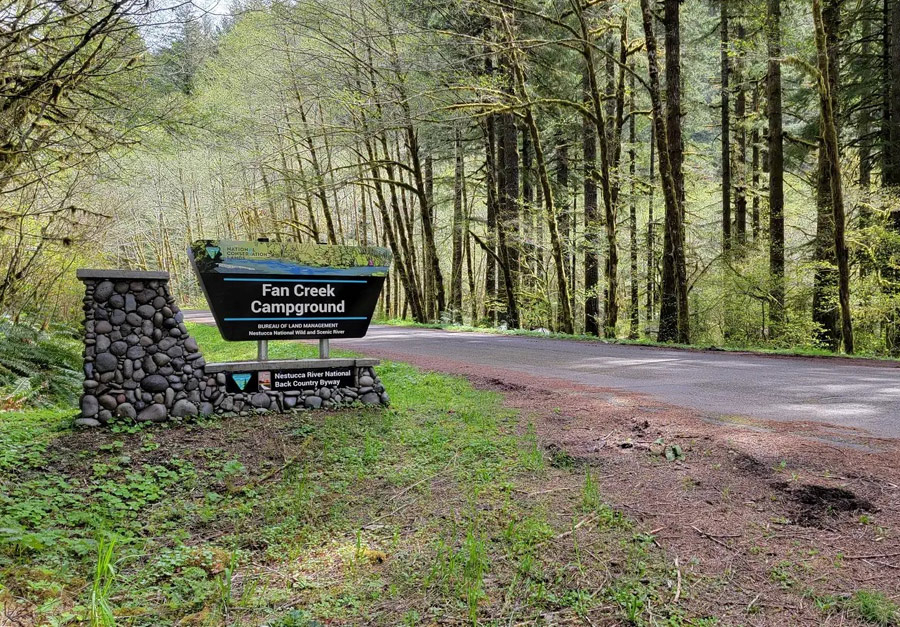
Fan Creek is one of those places. It is the kind of campground where mornings begin with the sound of water moving through the valley and evenings settle in beneath a canopy of Coast Range timber. For many visitors, the appeal is the simplicity of it. You can set up camp, spend the day fishing or exploring the river corridor, cook dinner outside and fall asleep surrounded by forest.
Of course, that forest does not stop at the edge of the campground.
Wildlife passes through the area whether the campsites are occupied or not, and black bears are a natural part of that landscape. Seeing one from a safe distance can be an unforgettable experience. Having one repeatedly enter a campground expecting to find food is something very different.
Why a Bear That Is Not Afraid of People Becomes a Serious Concern
Most black bears would rather avoid humans. In a typical encounter, a bear that realizes people are nearby will often move away rather than approach them. That natural caution is one of the things that allows people and bears to share Oregon’s forests with relatively few serious conflicts.
Food can change that relationship.
A bear that discovers an unattended cooler, a bag of garbage, pet food, cooking scraps or some other easy source of calories may remember exactly where it found that meal. If the same thing happens again, the bear can begin returning to campsites intentionally. Over time, an animal that once avoided people may start associating humans with food instead of danger.
That is when wildlife managers begin worrying about what is often called food conditioning or habituation. A bear that has become comfortable wandering through occupied campsites is much more difficult to manage than a bear that disappears into the trees the moment it notices someone nearby.
The fact that the mother bear and cub at Fan Creek reportedly do not appear afraid of people is therefore one of the most important details in the closure announcement. Land managers are not shutting down the campground simply because somebody spotted a bear in the woods. This is happening because the animals have repeatedly been looking for food around an area used by campers and have displayed behavior officials consider threatening.
That distinction matters. If public lands were closed every time somebody saw a black bear, enormous portions of western Oregon would spend much of the year behind locked gates. Bear sightings themselves are not unusual. Bears behaving aggressively around people and actively searching a campground for food are a different matter.
The presence of a cub adds another complication. Nobody wants to accidentally end up between a mother bear and her young, particularly in a confined campground where people, tents, vehicles, pets and food are all concentrated into a relatively small area.
Rather than gamble on the possibility of a dangerous encounter, the BLM chose to temporarily remove visitors from the equation.
A Closure in the Heart of Summer Camping Season
The timing could hardly be more inconvenient for campers. Mid-August is prime outdoor season in western Oregon, particularly for families hoping to squeeze in another trip before summer begins winding down. While the Willamette Valley can bake under hot afternoon temperatures this time of year, the Coast Range often offers shaded campsites, cool evenings and rivers that make for an easy escape from the heat.
Fan Creek is exactly the kind of place people might reserve months in advance for an August weekend. Many campers are not simply deciding on Friday afternoon where they would like to sleep that night. They may have already requested time off work, packed vehicles, coordinated schedules and planned an entire trip around a specific reservation.
BLM officials said they are contacting people whose reservations are affected by the shutdown. Those visitors will now need to make other arrangements while the campground remains unavailable.
Fortunately, closing Fan Creek does not mean the entire Nestucca River Corridor is off limits.
The BLM is directing campers toward other reservable campgrounds in the area, including Dovre and Alder Glen. Anyone planning a trip should check current availability before heading into the Coast Range, particularly because displaced Fan Creek campers could increase demand at nearby sites.
The important point is that this is a localized closure tied to the bear activity at Fan Creek, not a broad closure of the Nestucca recreation area.
Dovre and Alder Glen Offer Nearby Alternatives
For people determined to spend a weekend along the Nestucca, Dovre and Alder Glen offer the possibility of keeping at least part of the original trip intact. Both are located along the same general river corridor, allowing visitors to stay in the Coast Range rather than completely changing destinations.
That means a family that planned on fishing the Nestucca or exploring the surrounding forest may still be able to do so, provided another campsite is available. The scenery remains much the same, with thick timber, winding roads and the river forming the backbone of the recreation area.
Still, anyone moving to another campground should carry the lesson from Fan Creek with them.
The bears involved in the closure may be concentrated around Fan Creek right now, but every campground in the Coast Range should be treated as bear country. Moving several miles down the road does not suddenly put visitors outside black bear habitat. Food storage and campground cleanliness matter everywhere in the corridor.
That includes things people do not always immediately think of as bear attractants. Garbage is obvious, but food wrappers, cooking grease, pet food, dirty dishes and scraps left around a fire ring can all create smells that draw wildlife into a campsite.
Even something as innocent as leaving snacks on a picnic table while walking down to the river can create an opportunity for an animal that has learned to investigate campgrounds.
The Coast Range Is Prime Black Bear Country
Black bears are found across a large portion of Oregon, with western Oregon’s forests providing especially good habitat. The Coast Range offers a mixture of dense cover, streams, open areas and natural food sources that allow bears to move through the landscape without people ever knowing they are nearby.
That is worth remembering because seeing a bear does not necessarily mean an area has a bear problem. In many cases, it simply means you happened to catch a glimpse of an animal that has been living in the surrounding forest all along.
People hiking, hunting, camping or driving remote forest roads in Oregon occasionally see black bears crossing roads or moving along hillsides. Those encounters usually end quickly, with the bear heading in one direction and the people continuing in another.
A healthy amount of distance between humans and wildlife is good for everyone involved.
The situation becomes much less comfortable when a bear begins intentionally approaching areas where people gather. Campgrounds provide an especially tempting target because they concentrate food smells into small spaces. Dozens of people may cook breakfast, grill meat, open coolers and throw away leftovers in the same general area over the course of a busy weekend.
To a wild animal with an exceptional sense of smell, that can be hard to ignore.
A Picnic Basket Is Funny Until the Bear Actually Comes Looking
It is easy to joke about bears raiding picnic baskets. Popular culture has been doing it for generations, and there is something undeniably cartoonish about the mental image of a bear strolling away with somebody’s lunch.
In real life, however, a bear successfully stealing food from a campsite can be the beginning of a serious problem.
The bear learns almost immediately that visiting people can pay off. The next campsite may have another cooler. The next picnic table may have another plate of food. The next garbage bag may contain another easy meal that requires far less effort than searching the forest.
What feels like a funny camping story to the person who lost a bag of marshmallows can become dangerous for the next family that uses the site.
That is why keeping food secured is not simply about protecting your groceries. It is about preventing wildlife from developing behavior that can ultimately put both the animal and future visitors at risk.
Once a bear has repeatedly learned to seek food around people, wildlife managers face a much more difficult situation. Relocation is not always a simple solution, and bears that become heavily conditioned to human food can continue seeking it elsewhere.
The best outcome is preventing that behavior from developing in the first place.
Campers Have More Control Over Bear Problems Than They May Realize
Most people heading into the forest would never intentionally feed a bear. The idea sounds obviously dangerous, and very few campers would walk toward a black bear and offer it part of their dinner.
Unintentional feeding is much more common.
Leaving a garbage bag beside the picnic table overnight can feed a bear. Walking away from an open cooler can feed a bear. Dumping food scraps around camp can feed a bear. Pet food left outside can do the same thing.
The bear does not know or care whether a person intended to provide the meal.
From the animal’s perspective, the lesson is simple: there was food near humans, and finding it was easy.
A clean campground therefore benefits more than the people occupying it that night. It also helps protect everyone who camps there afterward.
That is one reason incidents like the one at Fan Creek are useful reminders even for people who never plan to visit the Nestucca River. Oregon has thousands of campsites tucked into wildlife habitat, from the Coast Range to the Cascades and far into the eastern side of the state. The same basic responsibilities follow campers wherever they go.
Pack food away when you are not using it. Do not leave trash scattered around camp. Keep scented items secured, and do not assume that putting something inside a tent makes it safe from wildlife.
A tent is protection from rain and mosquitoes. It is not a bear-proof container.
What To Do If You Encounter a Bear
The BLM is also reminding visitors to understand how to react if they encounter a bear while using public lands.
The first rule is simple: give the animal space.
If you spot a bear at a distance, there is no reason to approach it for a photograph or try to get a closer look. Wildlife viewing is best done from far enough away that the animal can continue whatever it was doing without feeling surrounded or threatened.
If an encounter happens at closer range, officials advise people to remain calm rather than panic. Speak in a steady voice, avoid sudden movements and slowly back away while giving the bear room to leave.
Running is generally a bad idea. A person is not going to outrun a black bear, and sudden movement can make an already tense encounter worse.
People should also avoid crowding an animal, particularly if a cub is nearby. A mother bear may be far more concerned with protecting her young than anything else happening around her.
Once safely away from the area, the BLM asks visitors to report bear encounters to the appropriate field office. Reports can help land managers recognize patterns and determine whether an isolated sighting is turning into a larger problem.
In the case of Fan Creek, officials clearly believe that threshold has been crossed.
The Goal Is to Protect People and the Bears
Campground closures caused by wildlife can generate frustration, particularly during the busiest weeks of summer. It is easy to understand why someone who booked a site months ago might be disappointed to learn that the trip is suddenly changing because two bears have moved into the area.
But keeping people out temporarily may be the best possible outcome for everyone.
Removing campers means removing many of the food smells, trash and human activity that may be encouraging the animals to remain near the campground. It also dramatically reduces the chance that a curious visitor will try to approach the cub, that a dog will chase one of the bears or that someone will unexpectedly walk around a campsite and find a black bear standing a few feet away.
It gives wildlife officials room to evaluate the situation without a campground full of people complicating matters.
That matters for the bears, too.
When wild animals become accustomed to obtaining food from humans, the story does not always end well for them. What begins as a bear knocking over a trash can can eventually turn into an animal approaching people or entering developed areas with increasing confidence.
Preventing those situations is much easier than trying to solve them after the behavior has become firmly established.
The temporary closure at Fan Creek is therefore not simply about keeping a mother and cub away from campers. It is also about creating enough separation that officials can hopefully prevent the situation from escalating any further.
Oregon’s Wild Places Are Still Wild
One of the things that makes camping in Oregon special is knowing the landscape around you is not simply scenery.
Those dark forests stretching beyond the campground contain deer, elk, coyotes, cougars, bears and countless smaller animals moving through places that have been their habitat long before someone installed a picnic table or numbered a campsite.
It can be easy to forget that while sitting beside a campfire.
Developed campgrounds create a sense of comfort. There is a road in, a designated place to park, a fire ring, perhaps a restroom and neighboring campers within shouting distance. Compared with backpacking miles into the wilderness, it can feel almost like an outdoor neighborhood.
Wildlife does not recognize that boundary.
To a bear, the forest surrounding campsite number six and the forest two miles up the mountain are part of the same landscape. A campground is simply another place within its territory, and if that campground repeatedly contains food, it can quickly become one of the most interesting places in the neighborhood.
Fan Creek is a perfect example of that collision between recreation and the wild character that draws people into the Coast Range in the first place.
We want Oregon’s forests to remain wild enough to have bears in them. We just do not want those bears climbing into our campsites looking for dinner.
Living with both requires a little common sense and a lot of respect for the animals that were already there.
A Reminder Before Your Next Oregon Camping Trip
The Fan Creek closure comes during a time of year when thousands of Oregonians are loading coolers, tents, fishing gear and camp chairs into vehicles for late-summer trips. Some are heading into the Cascades. Others are bound for the coast, high desert, mountain lakes or forest campgrounds like those along the Nestucca.
Wherever the road leads, it is worth spending an extra minute thinking about wildlife before settling into camp.
Secure food instead of leaving it unattended. Keep garbage under control. Clean up after meals. Do not leave pet food outside overnight, and make sure children understand that seeing a wild animal does not mean they should approach it.
If a bear appears, give it every opportunity to leave.
Most of the time, that is exactly what the animal wants to do.
The unusual part of the Fan Creek situation is that these particular bears apparently have become comfortable enough around people that officials no longer trust that normal distance will be maintained. That is why the campground is empty instead of simply operating under a warning.
It is also why the closure is worth paying attention to even if your next camping trip is nowhere near McMinnville.
Every food-conditioned bear starts somewhere.
Fan Creek Will Remain Closed for Now
The Bureau of Land Management is working with the Oregon Department of Fish and Wildlife to address the situation involving the mother bear and cub. Officials have not announced exactly what steps will be taken or how long the process might last.
Until the BLM determines that conditions are safe, Fan Creek Campground remains temporarily closed.
People with affected reservations are being contacted, while campers looking for alternatives are being directed toward reservable sites at Dovre and Alder Glen along the Nestucca River Corridor.
Visitors heading into the area should check current campground conditions before leaving home and avoid assuming that Fan Creek has reopened simply because several days have passed. Wildlife situations can change quickly, but reopening will depend on officials being confident that people can safely return.
In the meantime, the forest belongs to the bears.
And perhaps there is something fitting about that in a place like the Oregon Coast Range. We build campgrounds so we can spend a few nights closer to the wild, but every once in a while the wild offers a reminder that it never actually left.
Fan Creek will eventually welcome campers back. When it does, the best thing visitors can do is make sure the only food available to the bears is the food they were meant to find in the forest.
Sources: Bureau of Land Management, “Bear Aware: BLM Closes Fan Creek Campground Due to Bear Activity,” Aug. 13, 2026; Oregon Department of Fish and Wildlife, Living With Black Bears and Help Keep Bears Wild. The BLM is working with ODFW regarding the bear activity and temporary campground closure.