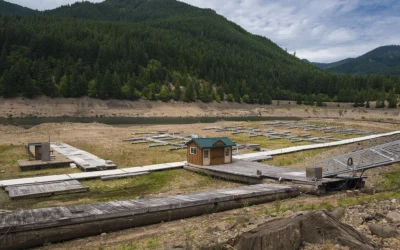

If you’ve spent much time scrolling through Oregon news lately, you’ve probably seen some version of the same strange story.
A reservoir is being lowered. A dam is spilling more water. Fish are dying. A town is worried about its drinking water. Someone is suing the federal government. Somewhere else, environmental groups are suing because agencies aren’t doing enough for salmon.
And depending on who made the video you’re watching, you’re likely to come away believing either that Oregon’s dams are killing salmon, or that efforts to save salmon are killing fish and threatening the very communities those dams were built to serve.
The truth is considerably messier.
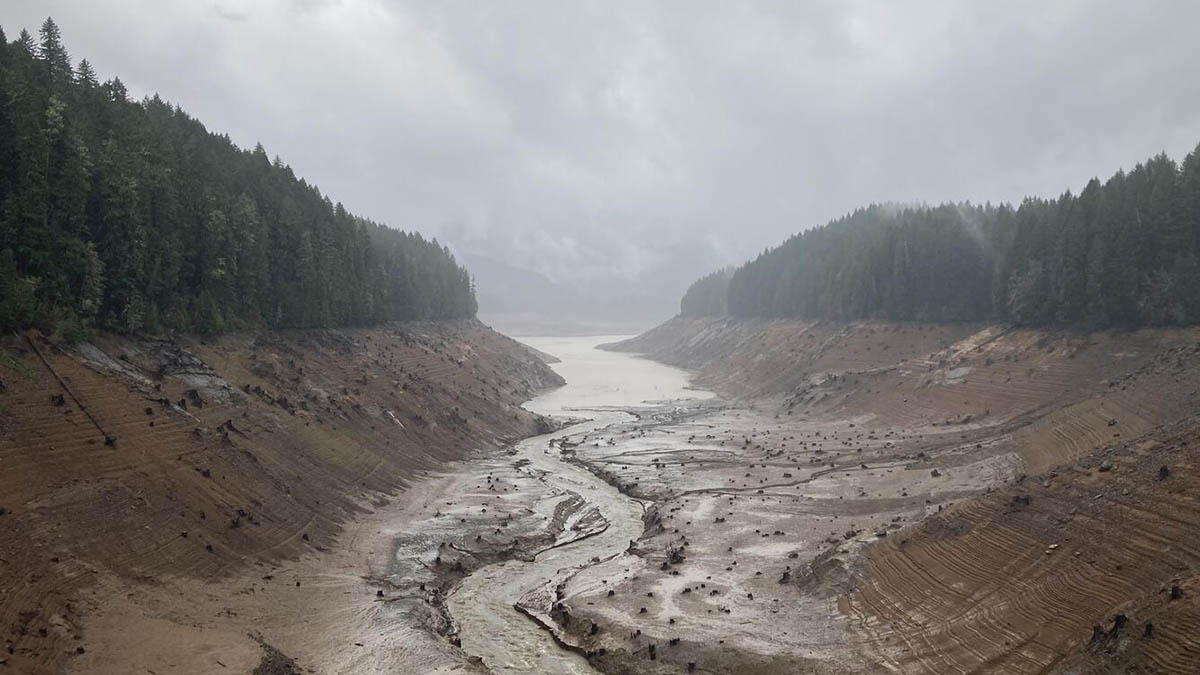
Across Oregon and the greater Pacific Northwest, federal agencies are changing the way some massive dams and reservoirs operate in an attempt to help threatened and endangered salmon and steelhead. Those changes have sound biological reasoning behind them, but they’ve also produced consequences that have surprised, angered, and frightened communities downstream.
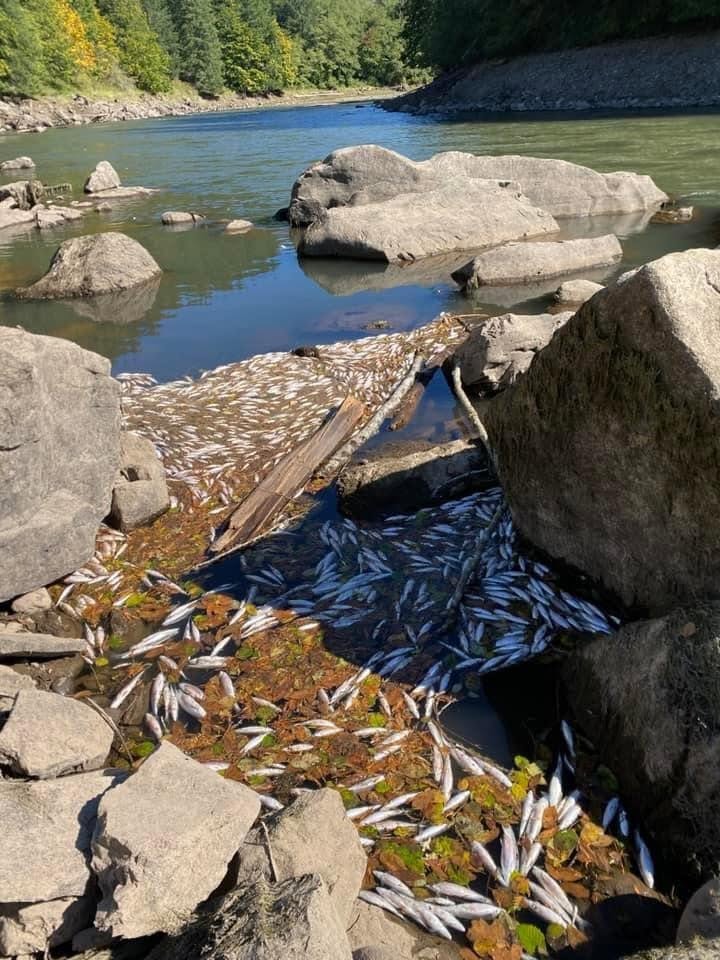
At Green Peter Reservoir, one fish-passage operation resulted in thousands of dead kokanee.
Downstream cities have dealt with muddy water severe enough that the Army Corps of Engineers halted a later drawdown early.
Now Detroit Reservoir is next, and Salem and Marion County are fighting the federal government in court over what they believe could happen there.
So how did we get to the point where Oregon is lowering reservoirs to save fish, while other fish are dying and cities are worrying about their drinking water?
It begins with a basic problem that’s been sitting behind Oregon’s dams for decades.
Green Peter Showed How Complicated Saving Salmon Can Get
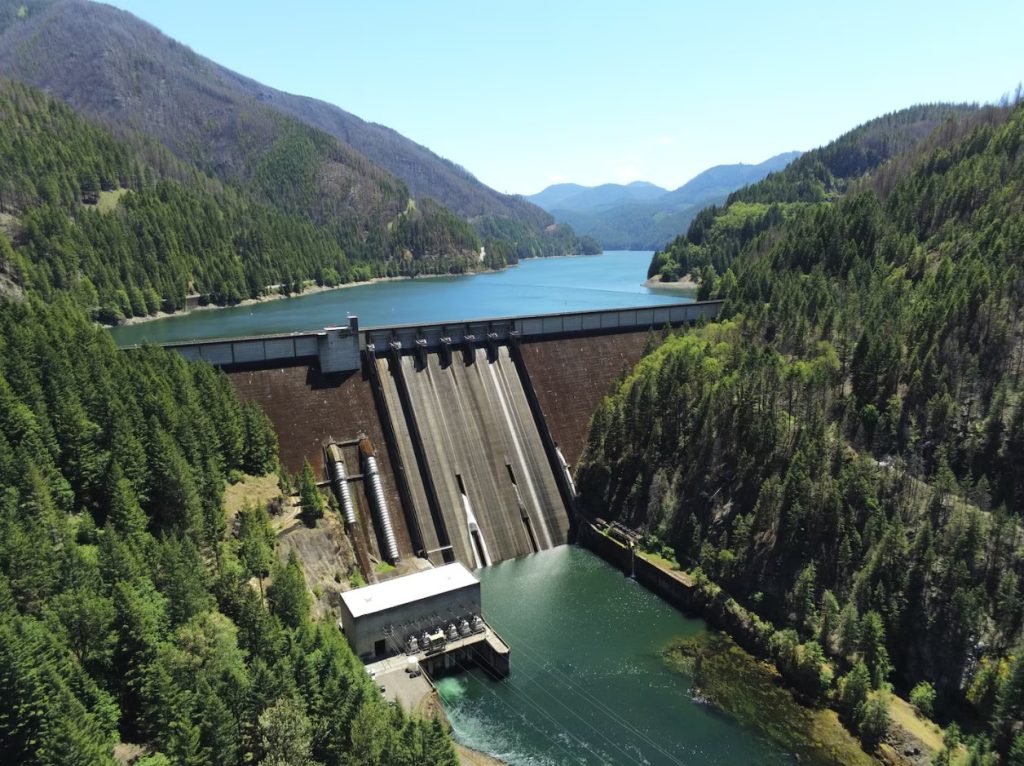
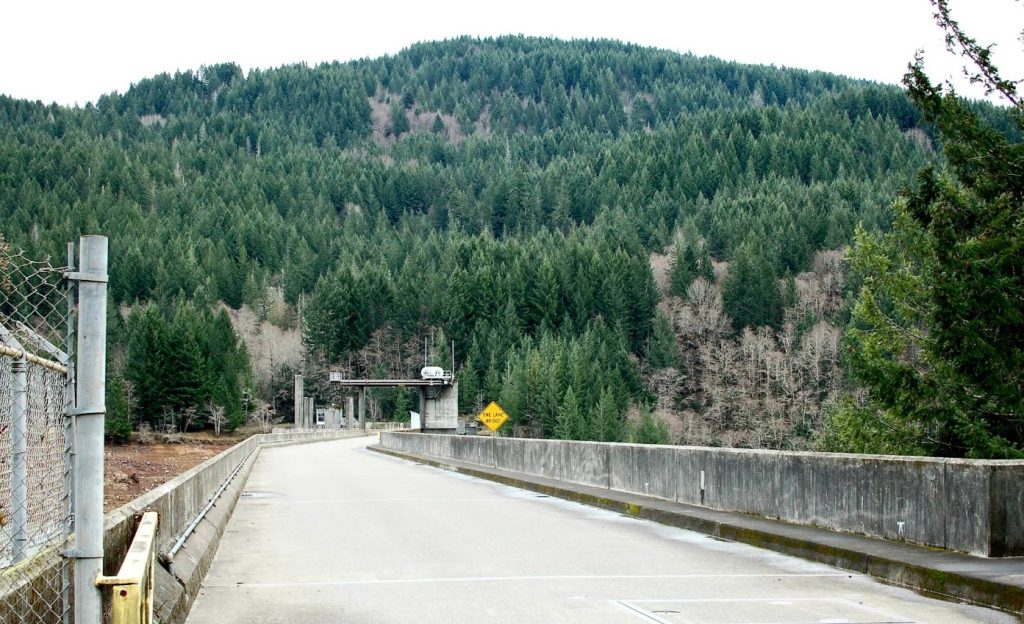
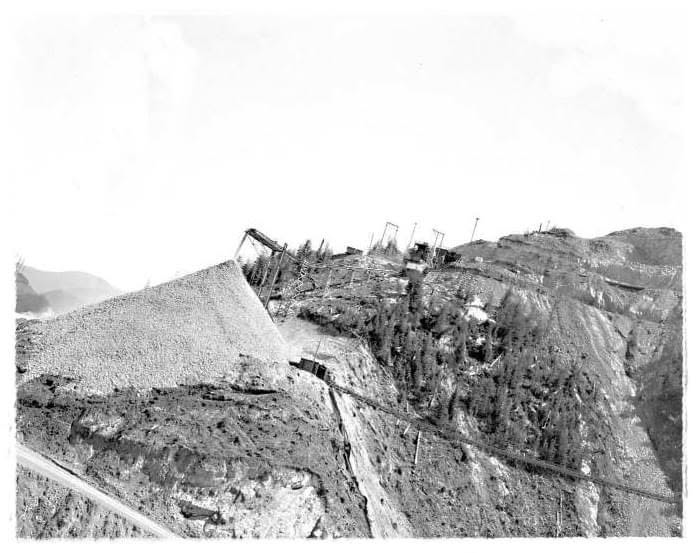
Green Peter Dam rises above the Middle Santiam River east of Sweet Home. Like many of western Oregon’s large federal dams, it was built during an era when flood control, hydropower, water storage and economic development were enormous priorities.
Getting tiny juvenile salmon safely around a towering concrete dam wasn’t nearly as simple.
That problem eventually became impossible to ignore as Upper Willamette spring Chinook and winter steelhead received protection under the Endangered Species Act.
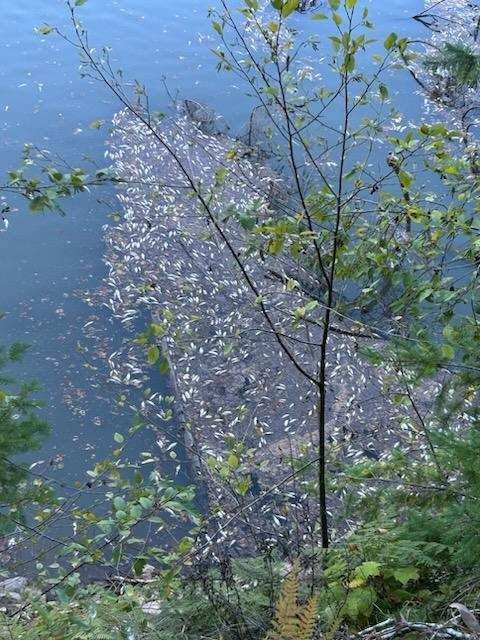
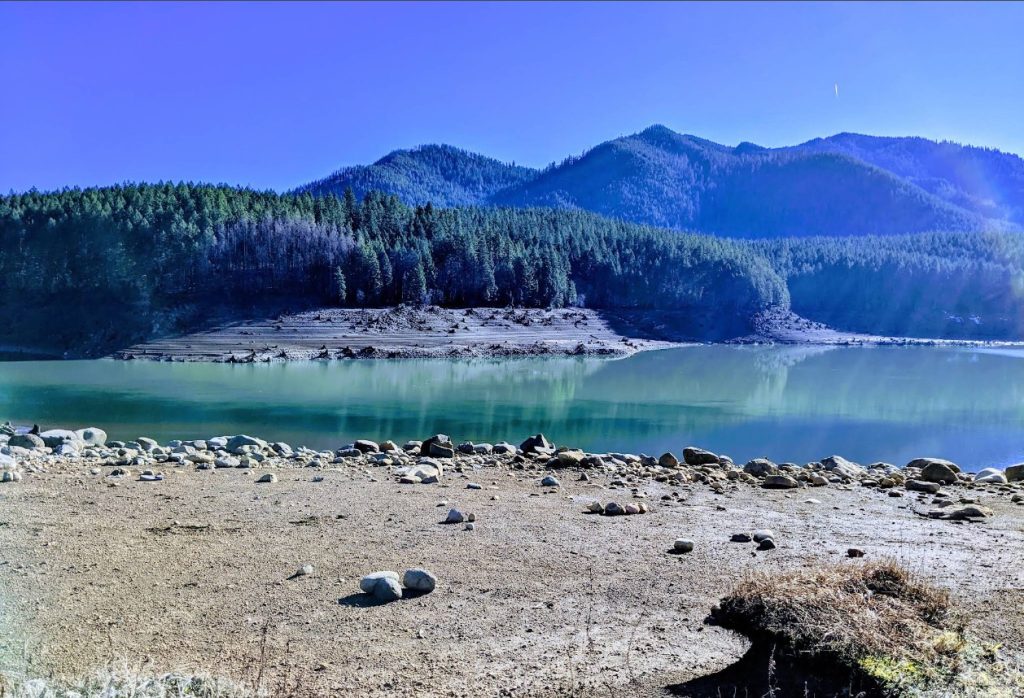
In 2023, Green Peter Reservoir underwent a particularly deep fall drawdown as part of court-ordered changes intended to improve downstream passage for juvenile spring Chinook and steelhead.
Then fish started washing up dead.
The Oregon Department of Fish and Wildlife determined that at least 8,000 kokanee had died from barotrauma, essentially a fish version of the bends. Fish moving through a deep regulating outlet experienced a rapid pressure change as they went from deep reservoir water to much shallower water below the dam.
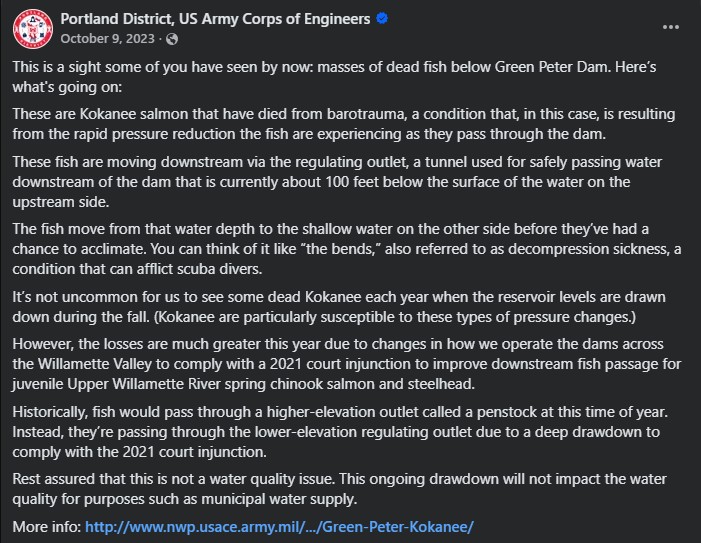
It made for some disturbing images, and an almost absurd headline: an operation meant to help salmon had killed thousands of salmon.
But there’s important context.
The dead fish were kokanee, a landlocked form of sockeye salmon that the Corps says aren’t native to Green Peter Reservoir and aren’t protected under the Endangered Species Act. The drawdown was intended to improve passage for threatened native spring Chinook and steelhead.
That distinction doesn’t make thousands of dead fish meaningless. What it does demonstrate is how complicated these reservoirs have become as ecosystems. Changing conditions to benefit one species can have consequences for another.
And dead kokanee weren’t the only warning sign.
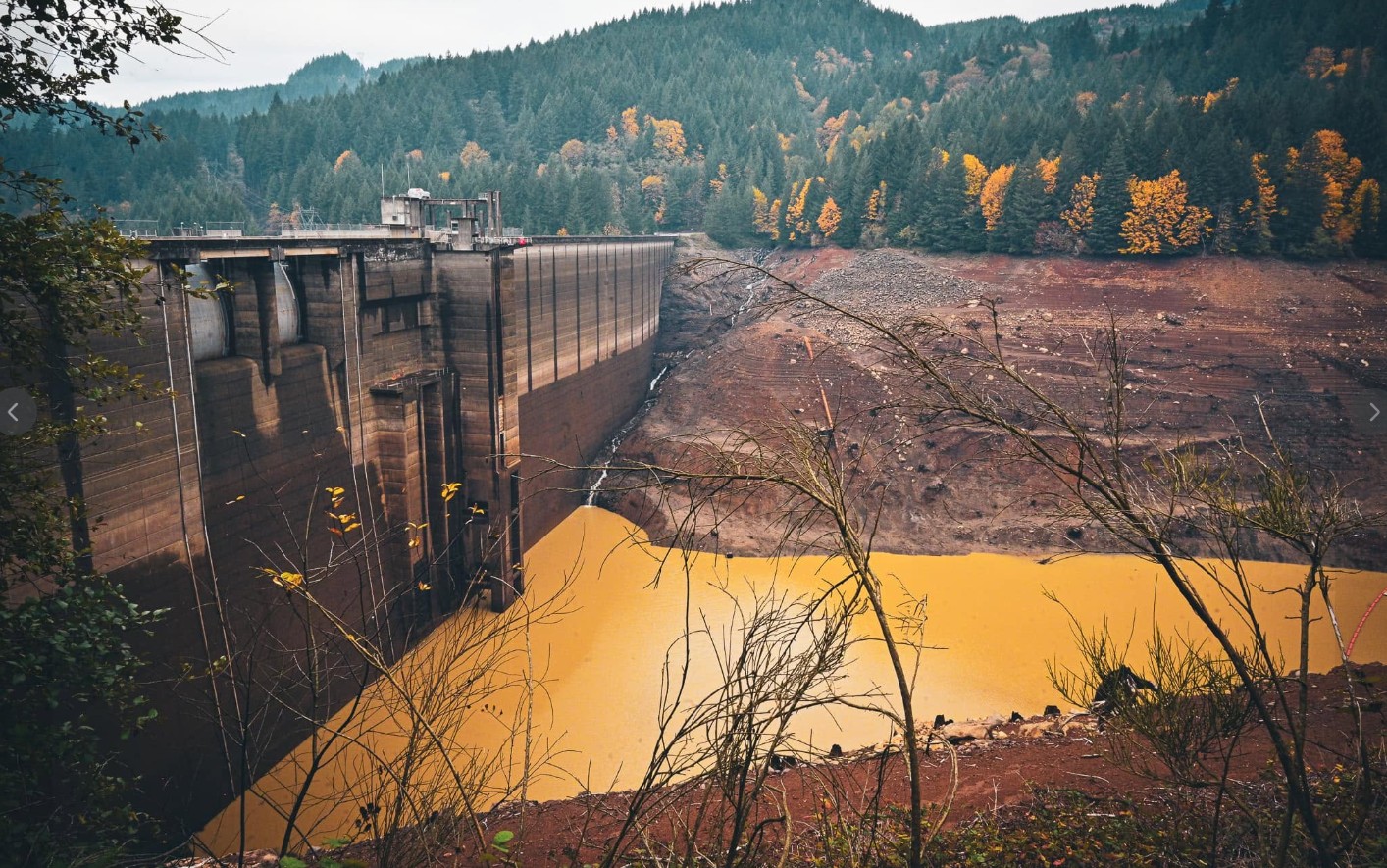
During another Green Peter drawdown in November 2024, Lebanon, Sweet Home and Albany raised concerns about high turbidity, meaning suspended sediment making its way downstream and creating problems for municipal water-treatment facilities.
The Corps halted the drawdown early. Heavy rain had contributed to the turbidity, but the incident demonstrated another potential consequence of lowering reservoirs deeply enough to expose and mobilize decades of accumulated sediment.
Those experiences are now hanging heavily over the biggest Oregon dam controversy of 2026, Detroit Lake.
And the effects weren’t limited to municipal water systems.
Around Lookout Point Reservoir southeast of Eugene, some homeowners experienced an even more immediate problem: their private wells stopped producing water.
KEZI reported in 2023 that Larry Nelson, a 74-year-old Vietnam veteran living east of Lowell, was taking a shower when his water suddenly stopped. “I knew what happened right away — my well had gone dry,” Nelson told KEZI. “The same thing had just happened to my neighbor.”
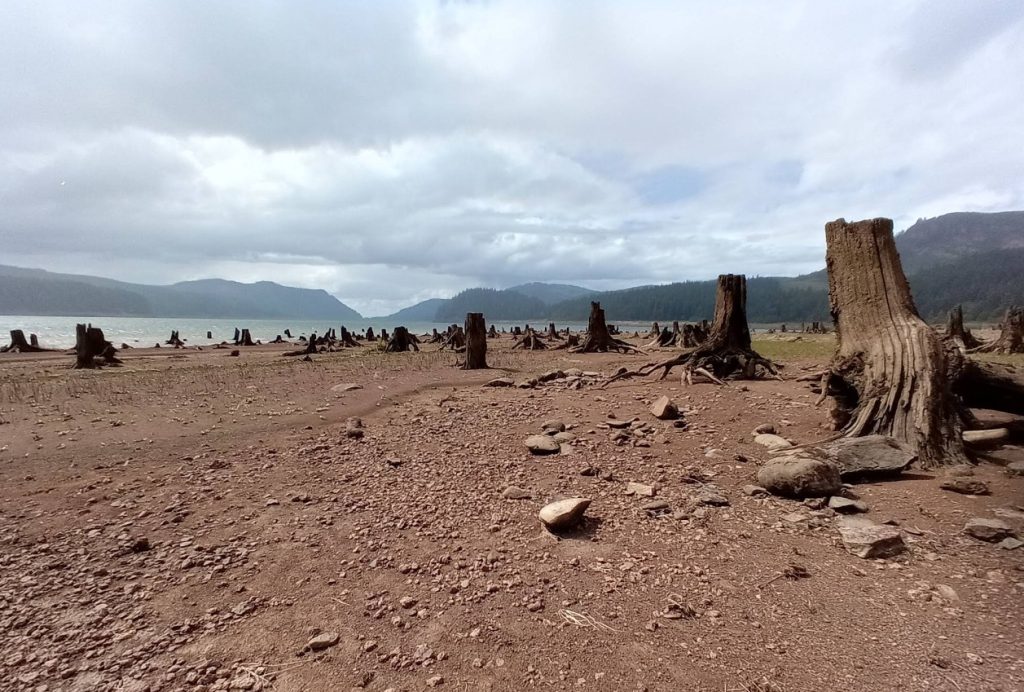
Nelson told reporters he knew of four people living along Lookout Point Reservoir whose wells had gone dry. According to the reporting, those wells had continued working when the reservoir was at its normal seasonal low of around 850 feet, but began failing after the water dropped below roughly 830 feet during the unusually deep drawdown. Lookout Point was ultimately being taken much lower, toward 750 feet.
For Nelson, it wasn’t an abstract environmental tradeoff. KEZI reported that he estimated drilling and setting up a deeper replacement well could cost $25,000 to $30,000.
It’s another example of why the reservoir debate has become so contentious. Lowering water behind a dam may create a better route for migrating salmon, but the water stored there is also connected to communities, drinking-water systems, groundwater and the people who built their lives around these reservoirs.
Why Lower a Lake to Help a Fish?
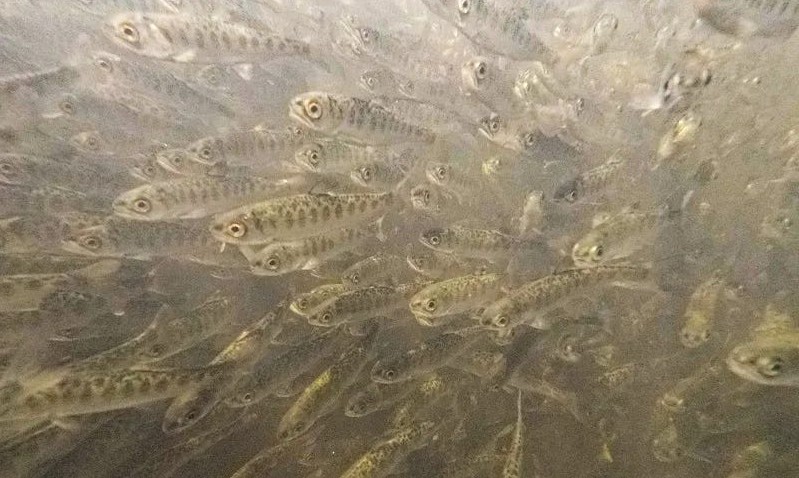
It sounds backwards until you picture the problem from the perspective of a young salmon.
Juvenile Chinook are trying to move downstream toward the Willamette, Columbia and eventually the Pacific Ocean. But above some of Oregon’s dams, what would naturally have been a moving river has become a huge reservoir.
The fish encounter slow water, predators and a concrete barrier hundreds of feet tall.
Worse, many young salmon tend to orient toward water relatively near the surface, while the routes through an older dam can be much deeper.
NOAA Fisheries has documented that juvenile Chinook in Willamette Valley reservoirs can have difficulty finding downstream passage, with some fish remaining in reservoirs rather than successfully migrating to sea. Regulating outlets can provide better passage opportunities, but at dams such as Detroit those outlets become useful to surface-oriented fish only when reservoir elevations are lowered substantially.
So one solution is surprisingly simple in concept:
Bring the surface of the reservoir closer to the outlet.
That’s a drawdown.
Other methods involve releasing water through spillways rather than turbines, changing the timing of releases, delaying reservoir refill, or directing water through particular outlets.
The Army Corps’ latest operating plan calls for different strategies at different Willamette Valley dams. Green Peter gets deep fall drawdowns and spring spill. Lookout Point gets a deep late-fall drawdown and spring spillway use. Cougar gets a deep late-fall drawdown followed by delayed refill. Foster, Hills Creek and Big Cliff have their own specialized operations.
These aren’t random experiments. They’re attempts to make dams built generations ago function in ways their original designers never had to prioritize.
But here’s the larger question:
If federal agencies have known for years that Detroit needs effective downstream fish passage, why are we still relying on reservoir-wide operational workarounds with potentially serious side effects instead of having a permanent passage system in place?
There’s an uncomfortable answer sitting right in the Corps’ own 2026 explanation:
Money and engineering.
The Corps says current funding limitations and design requirements are precisely why it’s concentrating on these cheaper operational measures while it reconsiders longer-term structural options.
But Green Peter demonstrated something else.
Moving the water can move a lot more than salmon.
Detroit Lake Is Where the Fight Gets Serious
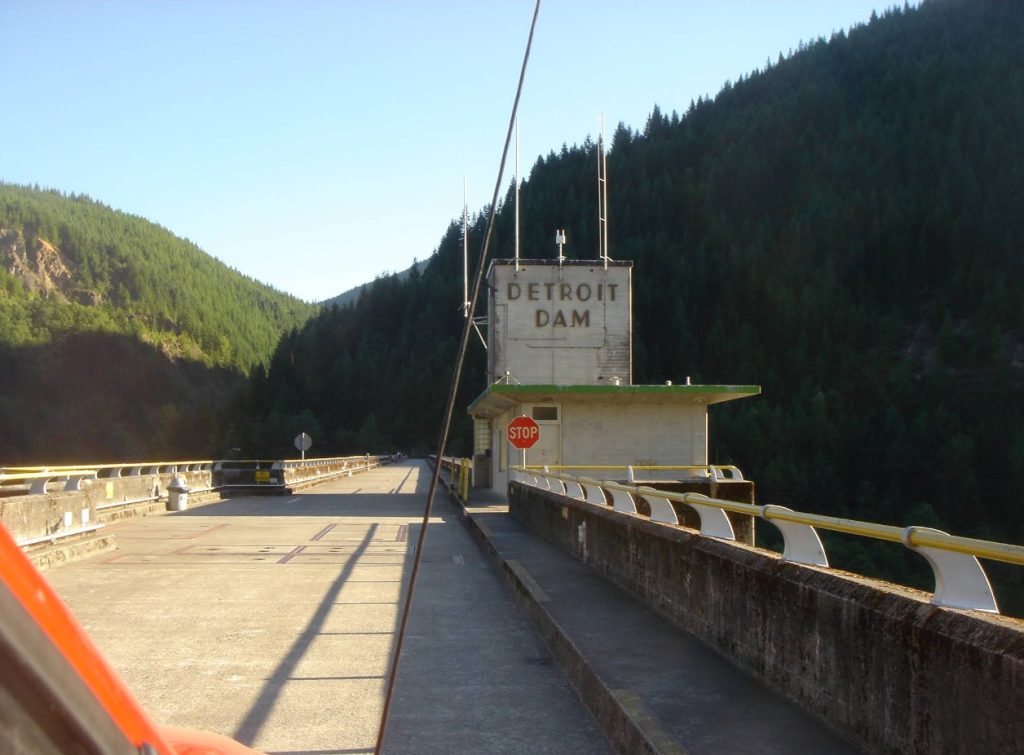
Detroit Dam is part of the same 13-dam federal Willamette Valley system, but the stakes downstream are enormous.
The North Santiam River is Salem’s principal drinking-water source.
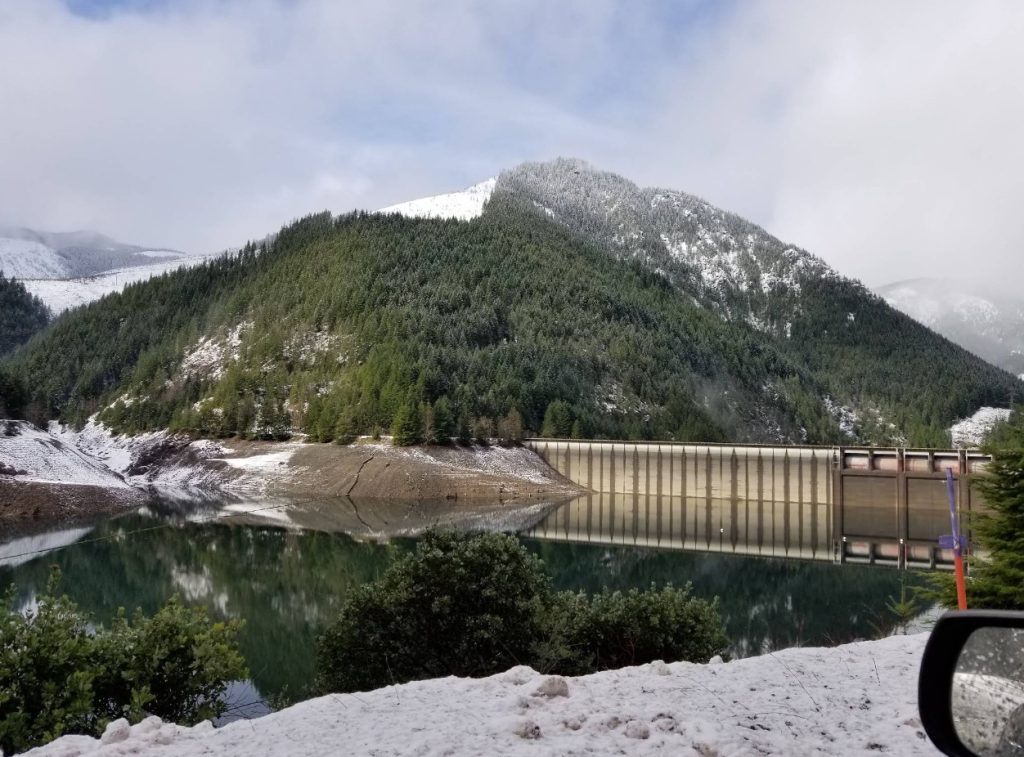
The Corps plans to begin Detroit’s first fish-passage drawdown sometime after November 1, 2026. Importantly, the current plan does not call for immediately taking Detroit Reservoir all the way to the eventual deep-drawdown target.
For 2026, the Corps says it will lower Detroit to an elevation of 1,425 feet, a level the reservoir previously reached in 2015 and 2019. The agency plans to hold it there for roughly two weeks. In future years, the Corps intends to gradually work toward 1,395 feet, the elevation it says is needed for safe fish passage through a regulating outlet.
The Corps argues its step-down approach gives engineers an opportunity to monitor water quality and respond before attempting deeper operations. It says the 1,425-foot level previously occurred without reported drinking-water impacts and that real-time monitoring will help determine whether future drawdowns should be modified, paused or stopped.
Salem isn’t convinced those assurances go far enough.
The city filed a federal lawsuit in July challenging the plan and seeking safeguards for its drinking-water system. Salem says suspended sediment could clog the slow-sand filters at its Geren Island treatment facility about 27 miles downstream from Detroit Dam. The city supplies water to more than 200,000 people and businesses in Salem and surrounding communities.
Salem has been developing groundwater wells and other backup supplies, but the city says its existing alternatives don’t provide enough water to replace its normal daily demand without additional work.
Then this week, Marion County escalated its own challenge, filing a motion for a preliminary injunction. County commissioners pointed directly to what happened at Green Peter and argued that repeated, deeper Detroit drawdowns could threaten drinking water, recreation, fisheries and the tourism-dependent communities around the lake.
That sets up a remarkable conflict.
The federal government says it has environmental obligations to improve passage for protected native fish.
Local governments are responding that the method used to fulfill those obligations may itself create environmental and public-safety risks.
Both are talking about protecting water.
Both are talking about protecting fish.
And they’re suing each other over how to do it.
The Columbia River Fight Is Similar, But It’s Not the Same Fight
The dam videos circulating online often lump Detroit, Green Peter and the giant Columbia and Snake River hydroelectric system into one giant controversy.
There is overlap, but they’re not interchangeable.
On the Columbia and lower Snake rivers, much of the current argument centers on spill.
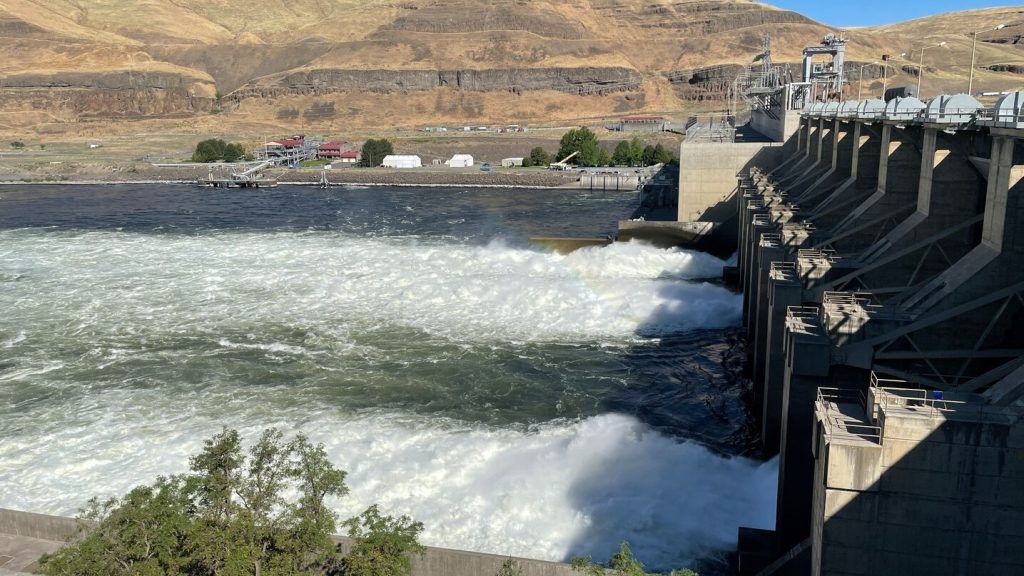
Instead of routing all available water through hydroelectric turbines, dam operators send some over spillways. That creates another passage route for migrating juvenile salmon and steelhead and can reduce the time fish spend moving through the dam system.
In February 2026, U.S. District Judge Michael Simon ordered increased spill at eight dams on the lower Columbia and Snake rivers after litigation resumed over endangered salmon. The court did not grant every request from salmon advocates, including a request for lower reservoir levels, but it did require additional fish-protection measures affecting hydropower operations.
There is a genuine tradeoff here.
Water sent over a spillway isn’t traveling through a turbine at that moment, so increased spill can mean less opportunity to generate electricity. Too much spill can also elevate total dissolved gas in the water, which is why managers operate under water-quality limits and monitor gas levels.
That makes the debate over cost, reliability and unintended consequences legitimate.
What About The Klamath River Dam Removal?
The Klamath River offers another reminder that even removing dams isn’t consequence-free.
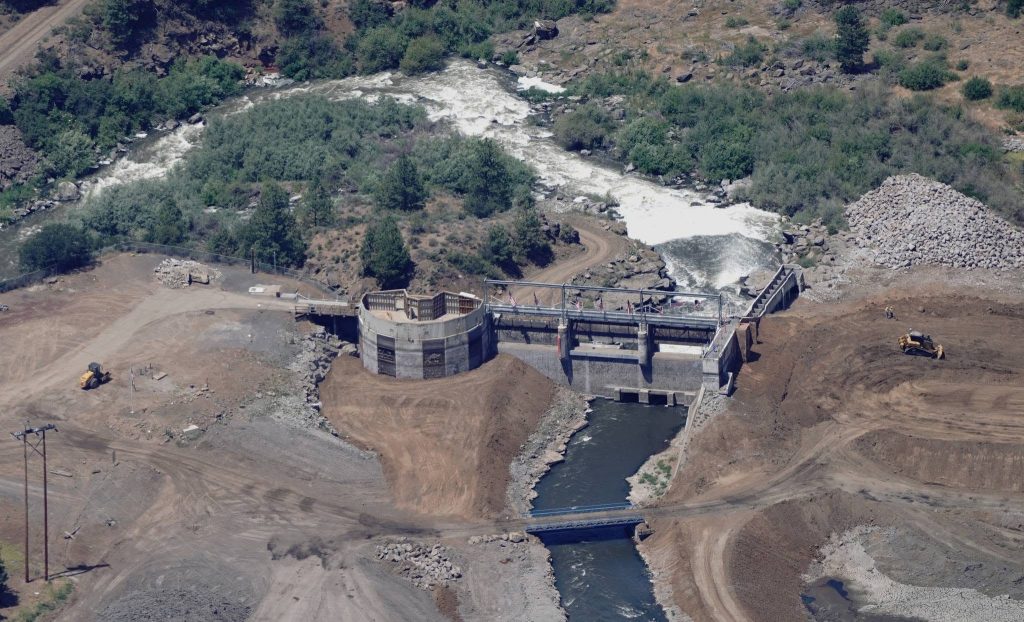
During the 2024 removal of Iron Gate Dam (one of three dams removed on the Klamath River in 2024), California wildlife officials released roughly 830,000 hatchery Chinook fry upstream of the site. A large number subsequently died from gas bubble disease after passing through a diversion tunnel being used during the removal process. Officials changed later releases to avoid the same problem.
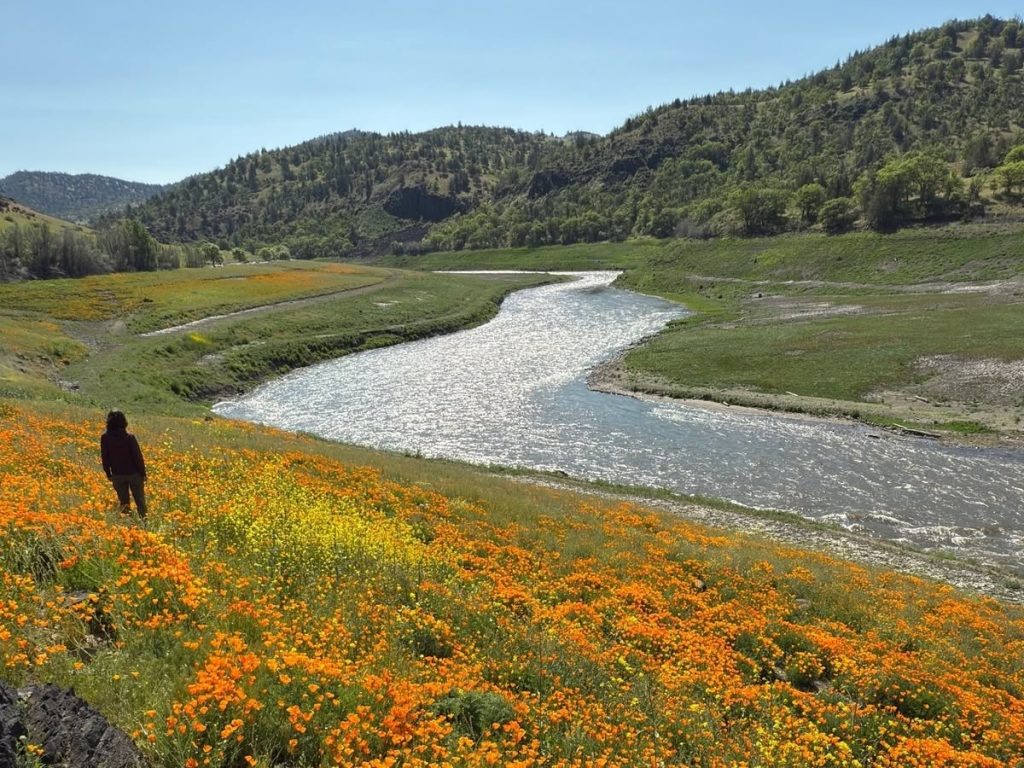
But there’s another side to that story. Once Iron Gate and the other three Klamath dams were gone, adult Chinook quickly began returning to stretches of river they hadn’t been able to reach in more than 60 years, with spawning documented above the former dam sites.
It’s a useful snapshot of the larger debate unfolding across Oregon and the West: even restoration projects designed to help salmon can cause real short-term harm, while still producing longer-term benefits that are difficult to ignore.
And Then There’s Leaburg
Closer to Eugene and Springfield, Leaburg Dam on the McKenzie River frequently gets pulled into the same conversation.
It’s another dam. It’s being decommissioned. Fish passage will improve.
But it’s a fundamentally different story.
Leaburg is a relatively small run-of-river hydroelectric project rather than a giant federal storage reservoir like Detroit or Green Peter. Its generating canal has been out of service since 2018 after seepage and internal-erosion concerns emerged.
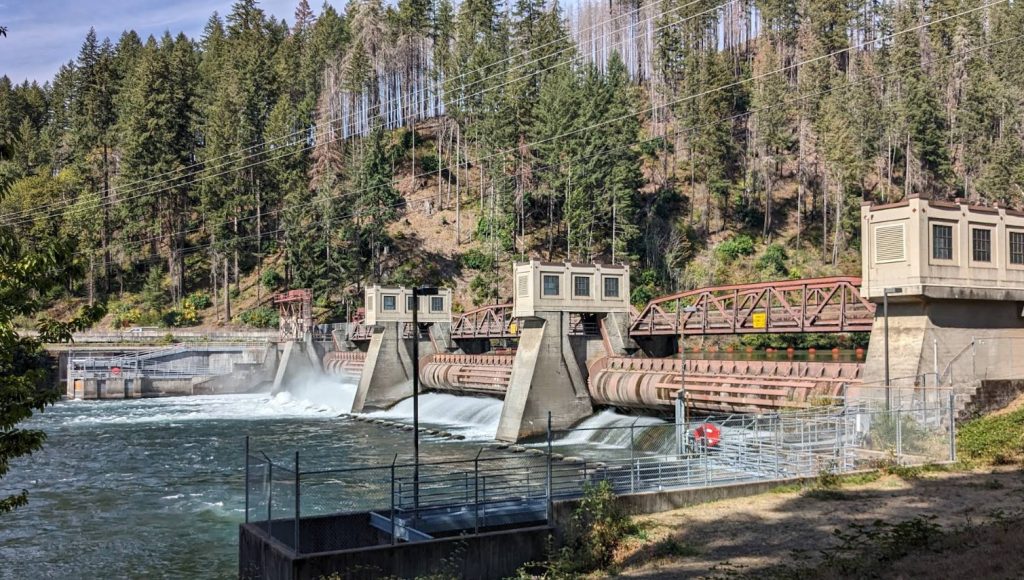
EWEB eventually determined that returning the aging project to generation didn’t make economic sense and chose decommissioning. Fish habitat and river restoration are important parts of what happens next, but Leaburg isn’t simply being torn out because somebody decided salmon matter more than electricity.
That nuance matters because Oregon isn’t experiencing one unified “war on dams.”
It’s dealing with aging infrastructure, endangered species, dam safety, court rulings, drinking water, power generation, recreation and rivers that we’ve fundamentally altered over the last century.
Oregon Is Asking Old Dams to Do New Things
Maybe that’s the easiest way to understand the entire controversy.
Oregon built much of this infrastructure to solve the problems of another era.
The federal Willamette Valley dams remain enormously important for flood-risk management, along with hydropower, irrigation, recreation and other water uses. The Corps says the 13-dam system prevents roughly $500 million in flood damage in an average year.
But those dams also radically changed rivers that salmon evolved to travel freely.
Now we’re asking the same structures to do both.
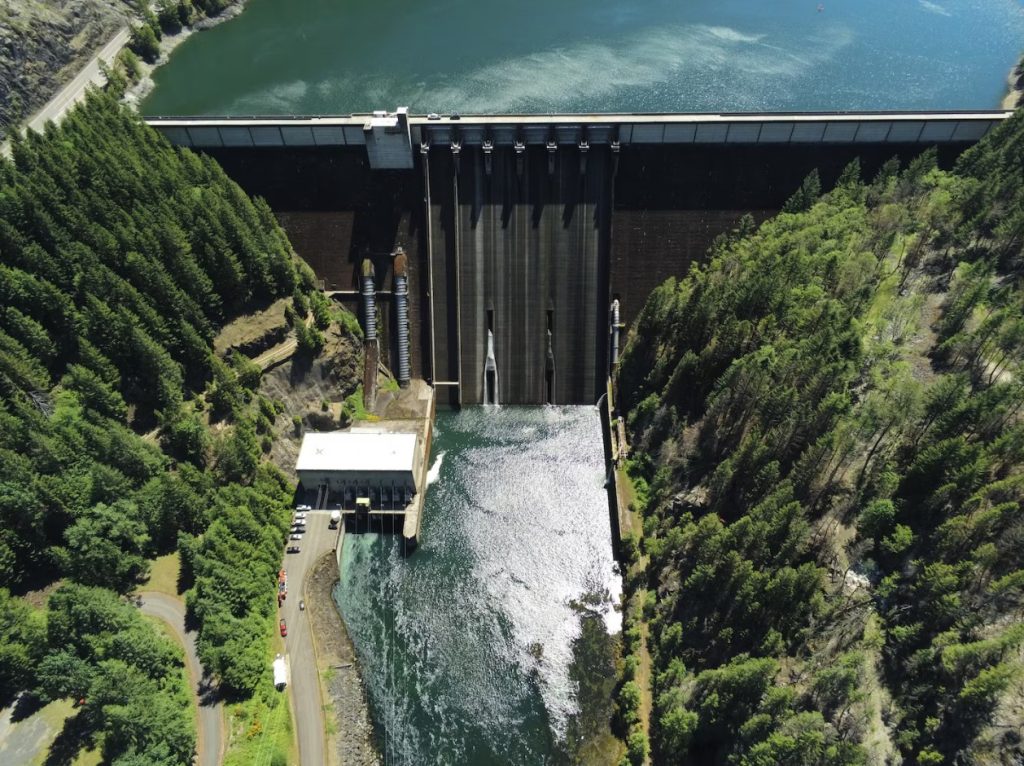
Stop floods.
Store water.
Generate electricity.
Provide recreation.
Protect drinking water.
Maintain suitable temperatures.
And somehow allow a juvenile Chinook a few inches long to successfully navigate a massive artificial lake and a concrete wall before continuing hundreds of miles toward the Pacific.
There may be no solution without tradeoffs.
Lower a reservoir and sediment can move.
Send water over a spillway and you give fish another route while giving up some power generation.
Create conditions for one species and another species may suffer.
Keep reservoir operations unchanged and threatened native salmon may continue struggling to complete the migration their survival depends upon.
That’s what makes what happened at Green Peter, and what’s coming at Detroit, so important.
This isn’t really a story about choosing fish or choosing dams.
It’s about what happens when we try to make a water system built for the priorities of the 20th century meet the environmental, energy and community demands of the 21st.
And Oregon is discovering that fixing one part of that system can create an entirely new problem somewhere downstream.