
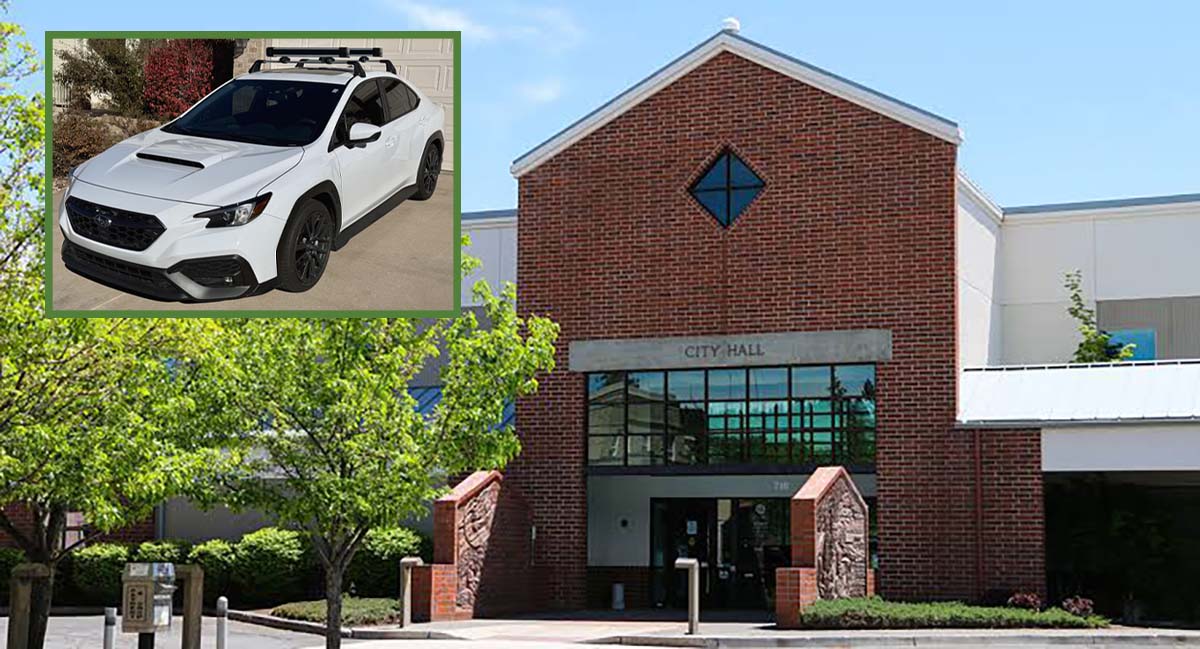
BEND, OR — In what city officials are calling a long-overdue effort to “protect Bend’s visual identity,” the Bend City Council is reportedly considering a new ordinance that would prohibit vehicles from operating within city limits unless they are equipped with at least one approved piece of outdoor recreation gear.
Under the proposal, every car, truck, SUV, and suspiciously clean crossover registered in Bend would be required to display either a bike rack, ski rack, kayak straps, rooftop cargo box, or some other visible indication that the owner occasionally spends money at REI.
The official That Oregon Life store
The Oregon you bring home.
Start the day with Oregon-roasted coffee, then find original gear inspired by the places, stories, and oddities that make this state ours.
Shop Oregon gear


“This is really about preserving the character of Bend,” said city spokesperson Kara Whitlock, standing next to a Subaru Outback carrying two mountain bikes, a paddleboard, and what appeared to be an empty Thule box. “We’ve reached a point where someone can drive through downtown in a perfectly normal sedan with absolutely nothing strapped to the roof. Frankly, people are uncomfortable.”
The proposed ordinance, tentatively named the Recreational Vehicle Authenticity and Lifestyle Compliance Act, would give residents 90 days to bring their vehicles into compliance.
City officials stressed that drivers would not actually be required to use the equipment.
“You don’t have to mountain bike,” Whitlock clarified. “You don’t have to ski. You don’t even have to know how to get the kayak off the roof. We’re not unreasonable. The important thing is that other people believe you might.”
Residents driving Subarus would automatically receive a six-month grace period, since city planners say most are “already 80 percent of the way there.”
Toyota 4Runners with rooftop tents would be considered fully compliant regardless of whether the tent has been opened since purchase.
Jeep Wranglers would require additional documentation.
“They’re complicated,” said Whitlock.
The ordinance would reportedly establish several tiers of compliance. A basic hitch-mounted bike rack would satisfy minimum requirements, while residents seeking “Bend Premium Status” could earn additional points by installing a rooftop cargo carrier, displaying a Mt. Bachelor sticker, or leaving a pair of muddy trail-running shoes visibly wedged behind the driver’s seat.
Vehicles carrying both skis and mountain bikes at the same time would qualify for immediate residency verification.
City Council members say the proposal was prompted by a growing number of reports involving “uncomfortably ordinary vehicles” appearing around town.
One incident allegedly involved a silver Toyota Camry parked outside a popular brewery with no bike rack, roof box, trail stickers, or evidence whatsoever that the driver owned a hydration bladder.
Witnesses described the scene as unsettling.
“I kept looking at it thinking maybe the rack had fallen off,” said longtime Bend resident Trevor Mills. “But no. Just a car. Like something you’d see in Salem.”
Mills shook his head.
“I’m not saying those people don’t belong here. I’m just saying they could at least strap a paddleboard to it.”
Local outdoor retailers have broadly welcomed the proposal and are reportedly preparing for a surge in demand from residents who have no intention of changing their hobbies but do not want to risk being pulled over.
Several stores are already advertising “Emergency Bend Compliance Packages” consisting of a basic roof rack, two carabiners, a reusable water bottle, and a sticker depicting the Three Sisters.
Police say enforcement would initially focus on education rather than citations.
Drivers found operating a rackless vehicle would receive a warning and a pamphlet titled So You Live In Bend Now.
Repeat offenders could face fines of up to $250 or be required to park outside city limits and enter town on an e-bike.
Authorities are also discussing a controversial provision allowing officers to conduct roadside “recreation checks.”
During a recreation check, motorists could be asked to name at least one trail near Phil’s, identify which month they last visited Mt. Bachelor, or explain why they have been driving around for six years with an empty Yakima rack.
Civil liberties advocates have raised concerns.
“This ordinance could unfairly target people who simply drive cars for transportation,” said attorney Nathan Brooks. “There are still several of those people living in Bend.”
City officials insist exemptions would be available for certain vehicles, including work trucks, ambulances, school buses, and vintage Volkswagen vans, which would automatically qualify under a separate provision recognizing “historical outdoorsiness.”
Electric vehicles would be reviewed on a case-by-case basis.
A Tesla with no roof accessories, for example, would need either a bike rack or visible evidence that the owner works remotely.
The measure has received mixed reactions from residents.
“I support it completely,” said local homeowner Melissa Grant while loading groceries into an SUV equipped with a bike rack carrying no bicycles. “We moved here because Bend has a certain lifestyle. If people start driving around with bare roofs, where does it end?”
Grant said her family owns four bicycles, three paddleboards, two pairs of skis, a rooftop tent, and a kayak they purchased in 2022.
“We haven’t actually used the kayak,” she admitted. “But everybody knows we have it.”
Others worry the proposal does not go far enough.
A growing group of residents is reportedly pushing for an amendment requiring every vehicle to display at least one layer of Central Oregon dust from May through October.
“A spotless SUV is much more suspicious than a missing bike rack,” said resident Dylan Pierce. “You see a completely clean Tacoma in August and immediately wonder what that person is hiding.”
The City Council is expected to discuss the ordinance at an upcoming meeting, where officials will also consider whether paddleboards technically count if they remain strapped to a vehicle for more than 60 consecutive days.
If approved, the new rules could take effect next summer.
At press time, Bend officials were reportedly investigating a Honda Accord spotted near the Old Mill District with no roof rack, no bumper stickers, and tires that appeared to have never touched gravel.