
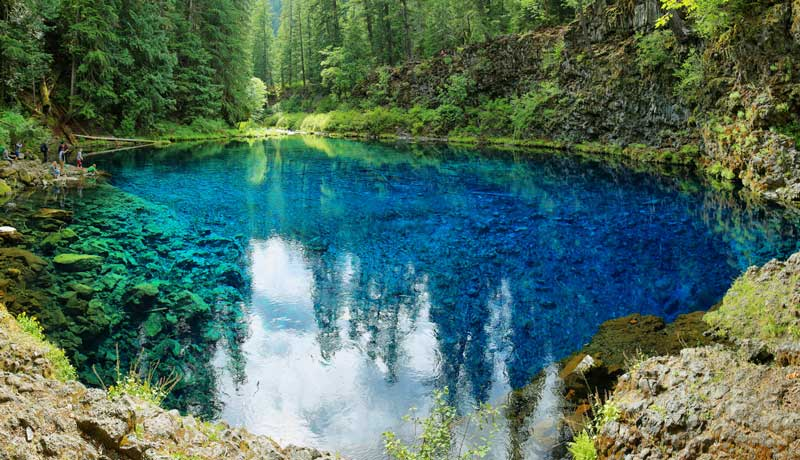
There are places in Oregon that look beautiful in photographs, and then there are places that somehow manage to look even more unreal when you finally see them with your own eyes. Tamolitch Blue Pool is one of those places.
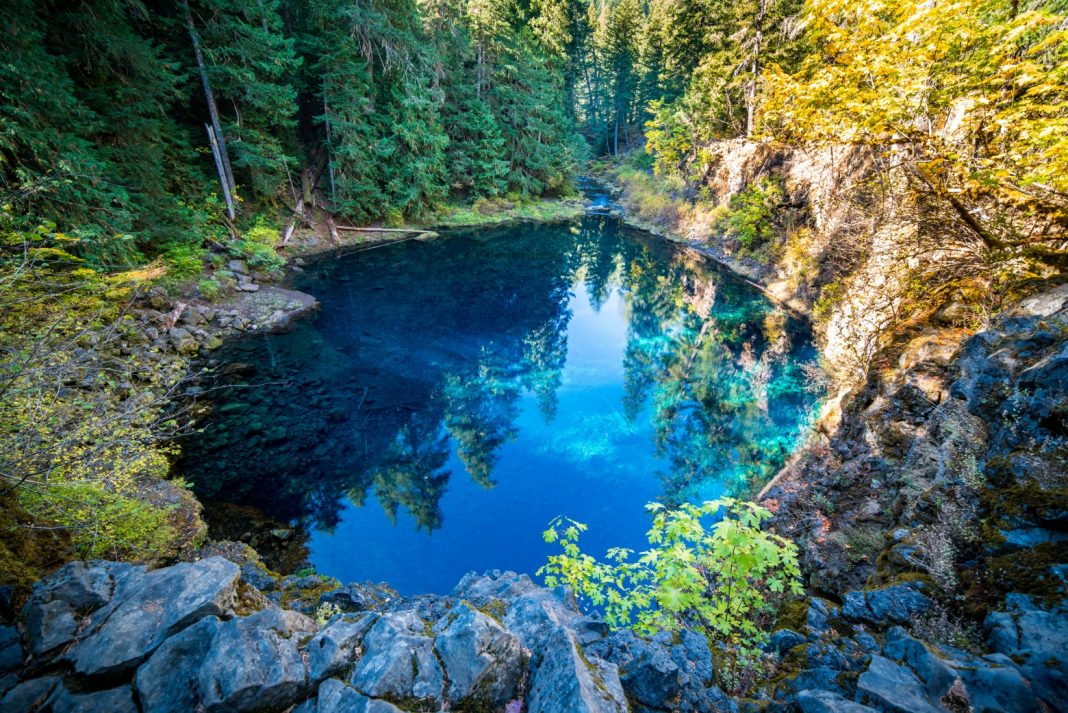
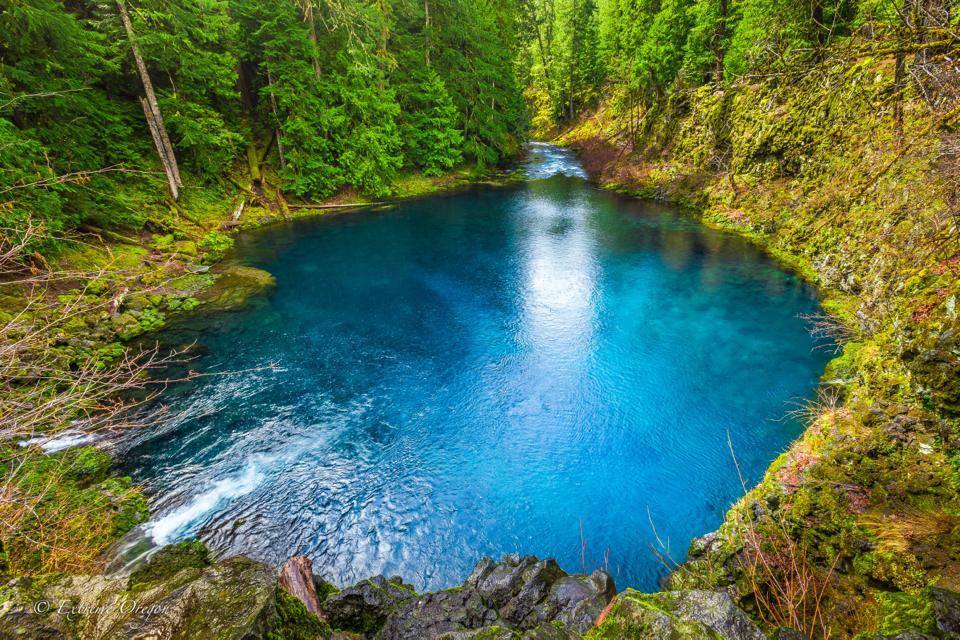
Hidden among the old-growth forests and ancient lava flows of the McKenzie River Valley, Blue Pool glows with a shade of blue that almost doesn’t seem natural. The water is so clear that rocks on the bottom can appear close enough to touch, even though portions of the pool are around 30 feet deep. Towering Douglas firs and western red cedars surround the basin, while dark volcanic rock frames water that can shift from turquoise to sapphire depending on the light.
We’ve been exploring and photographing Oregon for years, and Blue Pool remains one of those places that deserves its reputation. The hike itself is part of what makes the experience special. Rather than simply pulling into a scenic overlook, you walk through a landscape shaped by volcanic eruptions, underground water, moss-covered lava and the cold, clear McKenzie River.
If you’re planning a trip to Blue Pool in Oregon, however, there are a few things you should know before heading out. Access and parking are changing in 2026, the trail can become extremely crowded, and despite the inviting color of the water, this is not a swimming hole. The water is dangerously cold, the cliffs are hazardous, and serious accidents have occurred here.
Here’s what you need to know before hiking to Tamolitch Blue Pool.
Planning a larger trip? Compare Blue Pool with other routes in our Oregon hiking guide and statewide trail map, explore nearby falls in our Oregon waterfalls guide, or use our complete McKenzie River Trail guide for the surrounding corridor.
Blue Pool Oregon Quick Facts
Location: Willamette National Forest, McKenzie River Valley, Oregon
Official name: Tamolitch Pool, often called Tamolitch Blue Pool or Blue Pool
Trail: McKenzie River National Recreation Trail #3507
Typical hike: About 4 miles round trip from the traditional southern trailhead
Difficulty: Moderate
Terrain: Forest trail, roots, rocks and sections of uneven lava rock
Water depth: Approximately 30 feet at its deepest point
Water temperature: Roughly 37 to 42 degrees Fahrenheit
Swimming: Not recommended; plans for the site include closing the pool to swimming
Best season: Late spring through fall for most hikers
Crowds: Heavy during spring and summer, especially on weekends
Cell service: Limited or nonexistent in portions of the area
Nearest community: McKenzie Bridge
Always check current Willamette National Forest information before leaving home, especially while trailhead construction and access changes are underway.
The official That Oregon Life store
The Oregon you bring home.
Start the day with Oregon-roasted coffee, then find original gear inspired by the places, stories, and oddities that make this state ours.
Shop Oregon gear


Important Blue Pool Trail and Parking Changes for 2026
If you have hiked Blue Pool in years past, don’t assume everything will look exactly the same when you return.
A major Forest Service project is changing how visitors access Tamolitch Pool. Plans call for a new parking area covering roughly three acres, rerouting part of the McKenzie River National Recreation Trail, adding recreation amenities and closing Tamolitch Pool to swimming.
Construction has been underway during 2026. As of summer 2026, the traditional Blue Pool trailhead off the gravel forest road has remained open while work continues on the new trail and parking area. The new route is being developed on the southeast side of the McKenzie River, and the eventual transition is expected to change the familiar approach many longtime visitors remember.
That means directions, parking and even the final hiking route may change as the project moves forward.
We’ve also covered the project separately on That Oregon Life, including the roughly $3.4 million cost and the debate surrounding whether one of Oregon’s most popular natural attractions really needs this level of redevelopment.
For anyone visiting in 2026 or 2027, our strongest advice is simple: check current Forest Service information immediately before your trip rather than relying on an old hiking guide, saved map or social media post.
Blue Pool isn’t moving, but the way you get there is.
Where Is Blue Pool in Oregon?
Tamolitch Blue Pool sits in the McKenzie River Valley inside the Willamette National Forest, east of Eugene and Springfield along the Highway 126 corridor.
It is part of the spectacular upper McKenzie River region, an area filled with old-growth forest, volcanic formations, waterfalls, lakes and some of the clearest water in Oregon.
The pool lies along the McKenzie River National Recreation Trail, a roughly 26-mile route popular with hikers and mountain bikers. Blue Pool is one of the trail’s most recognizable destinations, but it is far from the only thing worth seeing in the area.
Nearby attractions include Clear Lake, Sahalie Falls, Koosah Falls and several campgrounds along the McKenzie River. Proxy Falls is another spectacular waterfall worth working into a larger McKenzie River road trip.
If you’re coming from Eugene or Springfield, Blue Pool makes an easy day trip, although there is enough to see in this part of Oregon to fill an entire weekend.
How Long Is the Blue Pool Hike?
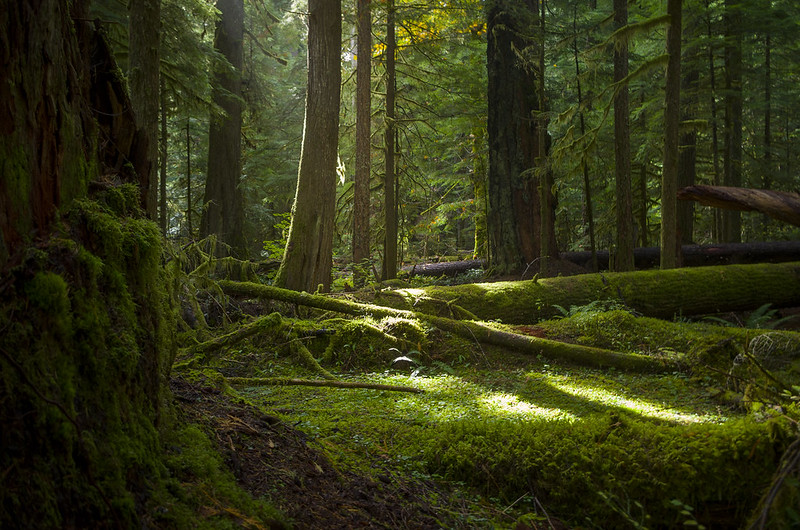
The traditional hike to Tamolitch Blue Pool from the southern trailhead is approximately four miles round trip.
This isn’t an especially steep hike, but calling it “easy” can be misleading. Portions of the trail cross rough volcanic terrain where lava rock, exposed roots and uneven surfaces require you to watch your footing.
Wear real walking or hiking shoes.
Every summer, people show up to popular Oregon trails dressed as though they’re walking from a hotel lobby to the beach. Blue Pool is not the place for flimsy flip-flops. Even when the weather is warm and dry, the volcanic sections can be awkward underfoot. Rain adds another layer of slickness.
Most hikers should give themselves at least a couple of hours for the round trip, and considerably longer if they want time to photograph the pool, enjoy the forest and avoid feeling rushed.
Remember that getting to the pool is only half the hike. You still have to walk back.
What the Hike to Blue Pool Is Actually Like
One of our favorite things about this hike is that Blue Pool isn’t the only reward.
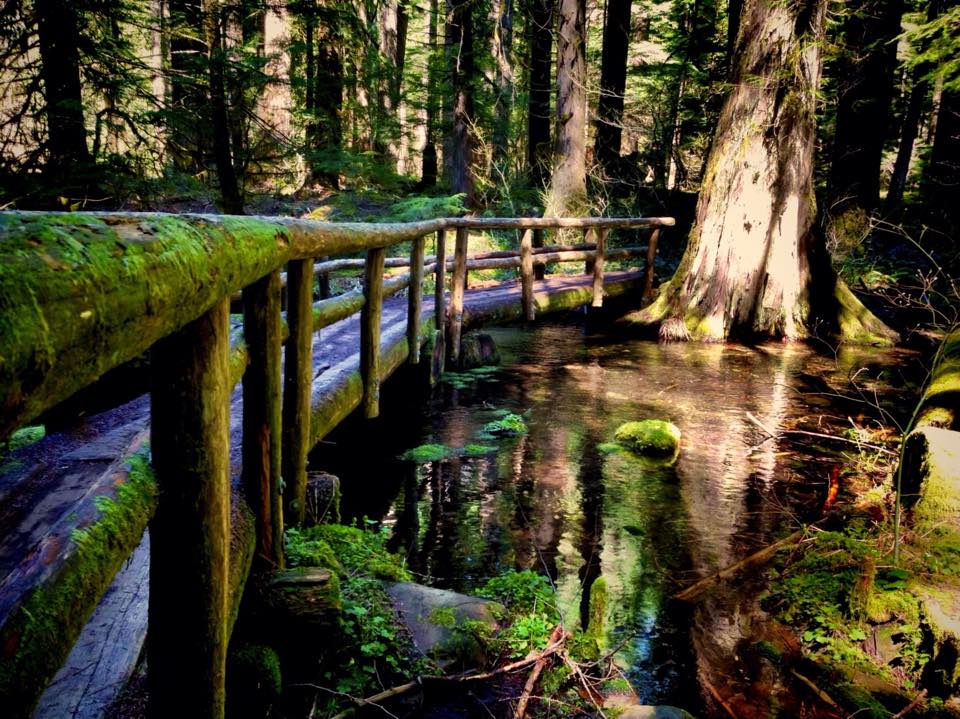
The trail passes through classic western Oregon forest filled with Douglas fir, western hemlock, western red cedar, ferns, moss and vine maple. In places, the McKenzie River rushes beside the trail. Elsewhere, dark lava formations interrupt the green forest and give the landscape an entirely different character.
As you get closer to Tamolitch Pool, those volcanic features become increasingly important.
The trail crosses sections of old lava where every step reminds you that the peaceful forest you’re walking through was shaped by a much more violent geological past.
Eventually, the landscape opens toward the cliffs above Blue Pool.
And that’s when you see it.
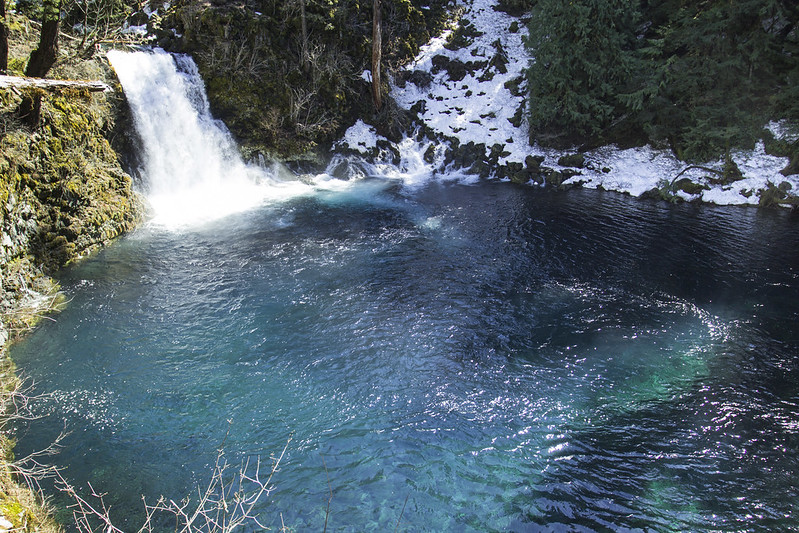
Even if you’ve seen hundreds of photos, the color can still catch you off guard. On a bright day the pool almost appears illuminated from within, with brilliant blue water sitting beneath dark rock and deep green forest.
Take your time here. This is also where caution becomes especially important. Stay away from exposed cliff edges and don’t assume a social trail leading toward the water is safe simply because other people have used it.
Why Is Oregon’s Blue Pool So Blue?
This is one of the most interesting things about Tamolitch Pool, and the science is better than some of the myths that have circulated online over the years.
According to a geological field guide associated with Oregon State University’s H.J. Andrews Experimental Forest, researchers measured Tamolitch Pool at approximately 5.4 degrees Celsius, or about 42 degrees Fahrenheit, during the cited study.
The pool’s remarkable clarity plays a major role in its color.
Water molecules absorb longer wavelengths of visible light, including more of the red end of the spectrum, while shorter blue wavelengths remain visible. Suspended sediment and particles normally scatter light and can make natural water appear cloudy, green or brown.
Tamolitch’s exceptionally clear water contains very little suspended material. Light can travel through a greater depth of clean water, allowing the blue wavelengths to dominate what we see.
Depth strengthens the effect.
The result is that remarkable sapphire and turquoise color that has made Blue Pool one of the most photographed places in Oregon.
The lava landscape contributes indirectly by influencing the underground flow and clarity of the water, but it is not simply a case of rocks “dying the water blue.” What you’re seeing is a beautiful combination of extremely clear water, depth, geology and light.
Where Does the Water at Blue Pool Come From?
Blue Pool is one of the places where the volcanic history of the Oregon Cascades becomes visible right in front of you.
Upstream, the McKenzie River disappears into and through an ancient lava flow before returning to the surface at Tamolitch Pool.
This underground journey is an important distinction because you may see simplified explanations claiming that the modern hydroelectric system caused the river to disappear underground. Geological research indicates that the subterranean flow through the Tamolitch lava flow is a natural feature and predates the modern reservoir and diversion system.
Human alterations upstream did, however, change the behavior of Tamolitch Falls.
Historically, water flowed over the cliff at Tamolitch Falls more consistently. Today the waterfall is generally dry, which is why you’ll sometimes hear it described as a “dry waterfall.” During periods of sufficiently high water, however, visitors can still occasionally witness water spilling over the old falls into the pool.
Most of the time, Blue Pool seems to emerge mysteriously from beneath the landscape.
Knowing what’s happening underground makes the sight even more remarkable.
How Deep Is Blue Pool?
The commonly cited maximum depth of Tamolitch Blue Pool is approximately 30 feet.
That’s difficult to believe when you’re standing above it.
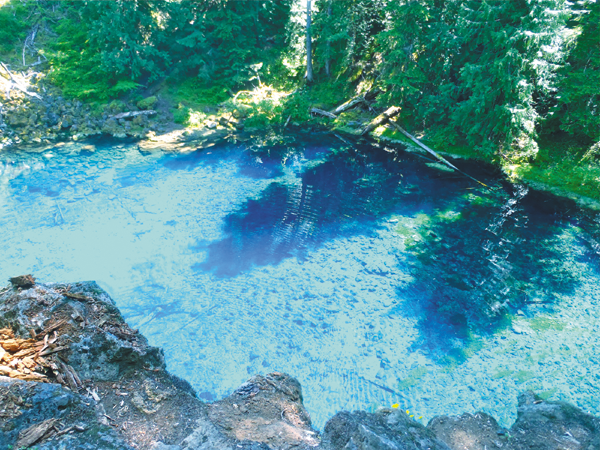
The water is so clear that rocks on the bottom can appear astonishingly close to the surface. That visual illusion is one of the characteristics that makes Blue Pool beautiful, but it’s also another reason visitors should treat the area with respect.
Clear water doesn’t mean shallow water.
And a pool surrounded by cliffs and steep terrain is nothing like stepping into a normal lake or swimming pool.
How Cold Is Blue Pool?
Very cold.
Water temperatures are generally reported in the upper 30s to low 40s Fahrenheit. Local tourism information lists the water around 37 degrees, while geological research has measured approximately 42 degrees.
Either way, this is exceptionally cold water.
Sudden immersion in water this cold can trigger a cold-shock response, including involuntary gasping, rapid breathing and loss of breathing control. Those reactions become especially dangerous when a person enters unexpectedly, jumps from height or surfaces disoriented.
The brilliant sunshine of an Oregon summer afternoon can also create a dangerous psychological disconnect. You may be standing on hot rock in 85-degree weather staring at water that looks like something from a tropical postcard.
The water doesn’t care how warm the air is.
Can You Swim at Blue Pool?
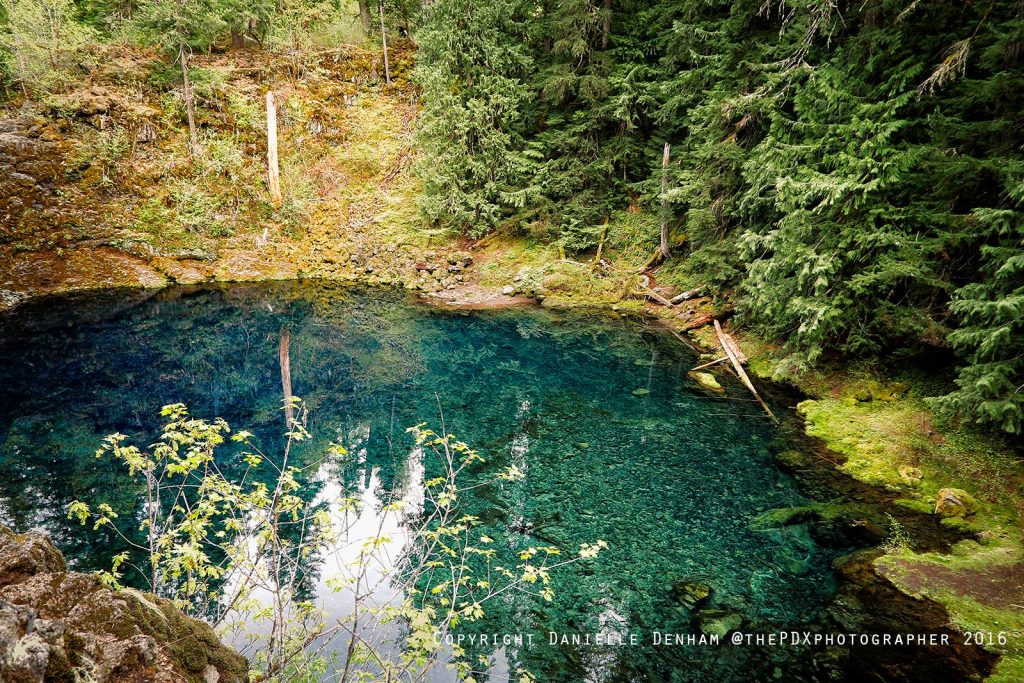
We don’t recommend it.
The Forest Service’s management plan for Tamolitch Pool specifically calls for closing the pool to swimming as part of the site’s redevelopment, so visitors should also pay close attention to current signs and regulations as the new facilities and trail come online.
Even apart from regulations, Blue Pool combines several risks in one deceptively beautiful place: extremely cold water, considerable depth, steep rock walls, cliff exposure and a remote location where emergency response isn’t instantaneous.
People have been seriously injured and killed here.
Blue Pool should be treated as a place to admire, photograph and remember, not as a swimming hole.
There are plenty of Oregon summer destinations better suited to getting in the water.
Do Not Cliff Jump at Blue Pool
This deserves its own section because photographs and social media videos can make jumping into Blue Pool look far safer than it is.
It isn’t.
The cliffs surrounding the pool are high, the water is dangerously cold, submerged hazards may not be obvious and rescue is difficult. Fatal accidents have occurred at Tamolitch Pool over the years.
Jumping into water this cold compounds the normal dangers of cliff jumping. A person entering the pool can experience the physical impact of the jump and then immediately encounter cold shock.
The fact that other people have jumped doesn’t make it safe.
One of the worst habits social media has encouraged at outdoor destinations is the assumption that if somebody else filmed themselves doing something, it must be reasonable for the next person to try.
Blue Pool is an excellent place to ignore that instinct.
How to Get to Blue Pool From Eugene and Springfield
Blue Pool is roughly 60 miles east of Eugene in the McKenzie River corridor.
From Eugene or Springfield, take Highway 126 east toward McKenzie Bridge and continue upriver into the Willamette National Forest.
Historically, visitors using the southern approach continued toward Trail Bridge Reservoir and then followed forest roads to the Tamolitch trailhead. Because a new trailhead and route are being developed in 2026, we strongly recommend using current Forest Service directions rather than relying entirely on older turn-by-turn instructions.
Expect the drive from the Eugene-Springfield area to take roughly an hour and a half under normal conditions.
It’s one of our favorite things about living in this part of Oregon. In less than two hours you can leave the Willamette Valley behind and find yourself standing beside water that looks like it belongs somewhere much farther from home.
Getting to Blue Pool From Bend
Blue Pool is also a popular day trip from Bend and Central Oregon.
The drive generally takes you across the Cascades toward the Highway 126 corridor. Travel times can vary considerably with weather, seasonal road conditions, construction and your starting point within Central Oregon.
If you’re coming from Bend, consider making a larger loop of the day. Clear Lake, Sahalie Falls and Koosah Falls pair beautifully with Blue Pool and require relatively little additional driving once you’re already in the McKenzie River area.
During winter and shoulder seasons, check pass conditions before leaving Bend. Mountain weather in Oregon can turn an otherwise easy summer drive into an entirely different trip.
Parking at Tamolitch Blue Pool
Parking has long been one of the biggest headaches at Blue Pool.
The Forest Service describes the trailhead as experiencing heavy use, particularly during spring and summer. On beautiful summer weekends, the popularity becomes obvious quickly.
That parking pressure is one of the major reasons for the ongoing trailhead redevelopment.
RELATED: Proxy Falls, The Ultimate Oregon Waterfall Experience
Until the new system is fully operational, parking conditions may continue to change. Arriving early is still one of the best strategies for avoiding the worst crowds, but do not park illegally, block roadways or interfere with emergency access.
If the trailhead is packed, consider changing plans and visiting one of the many other destinations along the McKenzie.
No Oregon hike is worth turning a forest road into a demolition derby.
Best Time of Year to Visit Blue Pool
For most visitors, late spring through fall offers the easiest conditions.
Summer brings long days and beautiful light, but it also brings the largest crowds. If you want the classic glowing blue color, bright midday and early afternoon light can make the pool particularly dramatic.
Early fall is one of our favorite times in the McKenzie River Valley. Crowds often begin to ease, temperatures are comfortable and vine maples start adding red and gold to the surrounding forest.
Winter visits are another matter entirely. Snow, ice, slick lava rock, fallen trees and mountain driving conditions can dramatically increase the difficulty.
Before visiting outside the main hiking season, check trail and road conditions rather than assuming this is simply the summer hike with colder weather.
What to Bring on the Blue Pool Hike
You don’t need expedition equipment for the standard hike, but you should come prepared.
Wear sturdy closed-toe shoes or hiking shoes with good traction. Bring drinking water, snacks and a basic first-aid kit. Bug spray can be useful during warmer months, and layers are always smart in the Cascades, where weather can change quickly.
Download any maps or directions you may need before leaving reliable cell service.
A camera is also worth bringing. Blue Pool is one of those rare places where almost every overlook offers another composition.
If you’re photographing the pool with a phone, try tapping on the brightest portion of the water and lowering the exposure slightly. Overexposed images can wash out the deep blue color that your eyes see naturally.
And no matter what you bring in, bring it back out with you.
Dogs at Blue Pool
Dogs are commonly seen along the McKenzie River Trail and local destination information lists pets as allowed with restrictions, but visitors should check current Forest Service rules before heading out.
Even where dogs are permitted, keep them under control.
This is a heavily traveled multi-use trail with hikers, mountain bikers, steep terrain and potentially dangerous water. A dog racing ahead around a blind corner or toward a cliff edge can quickly turn a beautiful day into an emergency.
Bring plenty of water for your dog rather than treating Blue Pool itself as a convenient place for a swim.
Mountain Bikes and the McKenzie River Trail
The McKenzie River National Recreation Trail is famous among mountain bikers, which means hikers should remember they’re sharing portions of the route.
Stay aware of your surroundings, particularly on narrower sections where vegetation, rocks and curves can limit visibility.
The Forest Service has also planned a bike-specific bypass around the Tamolitch Pool area, another part of the broader effort to manage increasingly heavy recreational use.
Whether you’re hiking or riding, a little trail courtesy goes a long way.
Other Things to See Near Blue Pool
If you’re driving all the way into the McKenzie River Valley, don’t make Blue Pool your only stop.
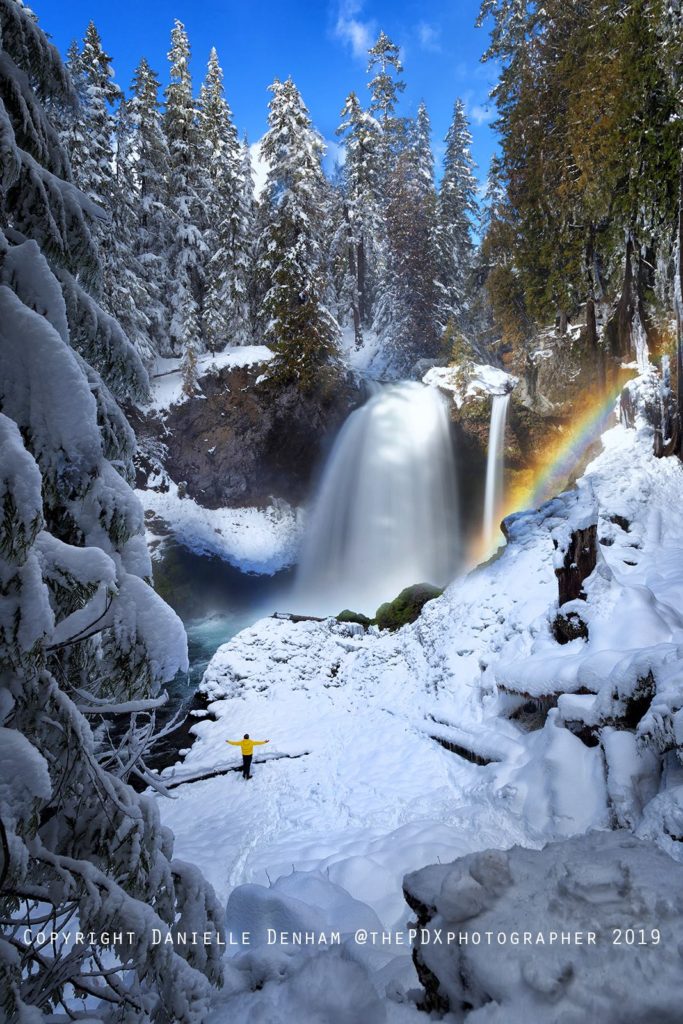
Sahalie Falls and Koosah Falls are two of Oregon’s most accessible and spectacular waterfalls. A forest trail connects the two and follows the McKenzie through some gorgeous scenery.
Clear Lake sits near the headwaters of the McKenzie and is famous for its incredibly clear water and submerged ancient forest. It makes a wonderful companion destination to Blue Pool.
Proxy Falls, along the Old McKenzie Pass route when seasonal access allows, is another one of Oregon’s great waterfalls.
The wider McKenzie River Trail is worth exploring in its own right, particularly for visitors interested in hiking, backpacking or mountain biking.
There are also campgrounds, lodges and cabins scattered throughout the McKenzie River corridor, making this an easy destination to turn into a weekend rather than trying to cram everything into one afternoon.
Camping Near Blue Pool
Camping directly at Blue Pool isn’t the idea here. Instead, look to established campgrounds and lodging throughout the McKenzie River Valley.
Several Forest Service campgrounds are located along the Highway 126 corridor, although closures and construction can affect availability from year to year. Always check the current status of a campground before building a trip around it.
McKenzie Bridge and the surrounding area also offer cabins and other lodging for travelers who would rather end the day with a hot shower and actual bed.
Staying overnight gives you another advantage: you can reach Blue Pool early before the biggest wave of day-trippers arrives.
Frequently Asked Questions About Blue Pool Oregon
Where is Blue Pool Oregon?
Tamolitch Blue Pool is in the Willamette National Forest along the McKenzie River east of Eugene and Springfield, near McKenzie Bridge and Trail Bridge Reservoir.
How long is the Blue Pool hike?
The traditional southern hike is approximately four miles round trip. Trail distances may change as the new Tamolitch trailhead and rerouted trail are completed.
Is the Blue Pool hike difficult?
The standard route has relatively modest elevation gain but includes roots, rocks and uneven volcanic terrain. We consider it moderate rather than difficult for most prepared hikers.
Why is Tamolitch Blue Pool so blue?
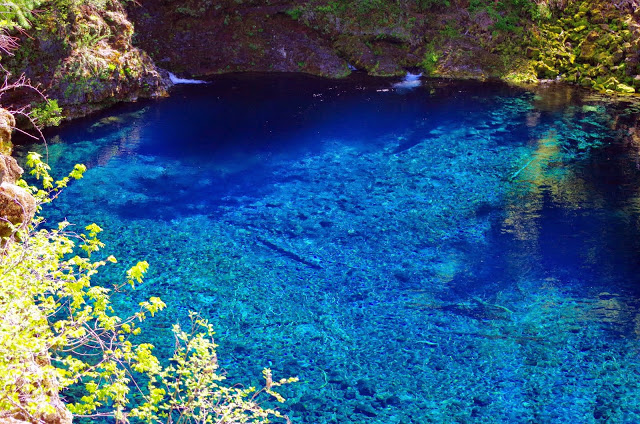
The water is exceptionally clear and contains little suspended material. Longer wavelengths of visible light are absorbed as light travels through the water, while blue wavelengths remain more visible. The depth and purity of the pool enhance the brilliant blue appearance.
How deep is Blue Pool in Oregon?
Tamolitch Pool is commonly reported to reach approximately 30 feet at its deepest point, although the remarkable clarity makes it look much shallower.
How cold is Blue Pool?
Water temperatures generally remain in the upper 30s to low 40s Fahrenheit. The water is cold enough to create a serious cold-shock risk.
Can you swim in Blue Pool Oregon?
We strongly recommend against swimming at Tamolitch Blue Pool. The water is extremely cold, the location is remote, serious accidents have occurred, and Forest Service plans for the area include closing the pool to swimming.
Can you jump from the cliffs at Blue Pool?
Do not cliff jump at Tamolitch Blue Pool. The combination of height, cold water, submerged hazards and remote emergency access makes jumping extremely dangerous.
When is the best time to visit?
Late spring through early fall offers the most accessible conditions for most hikers. Summer generally provides the brightest light but also attracts the largest crowds.
Does Blue Pool have a waterfall?
Tamolitch Falls is generally dry today, but during unusually high flows, water can still spill over the old waterfall cliff into the pool.
One of Oregon’s Most Unforgettable Hikes
Blue Pool has changed considerably in popularity since we first began sharing this place with readers years ago. What once felt like a relatively quiet stop along the McKenzie River Trail is now one of the best-known outdoor destinations in Oregon.
The crowds, construction and growing pains are real.
But so is the magic.
Walk through the forest, cross the ancient lava and stand above that impossible blue water for the first time, and it’s easy to understand why people keep coming.
Tamolitch Blue Pool is more than a backdrop for a photograph. It’s the visible meeting point of Oregon’s volcanic history, abundant water and deep Cascade forest. Understanding how the place formed, and respecting how dangerous it can be, makes the experience richer rather than diminishing it.
Go early. Wear good shoes. Stay back from the cliffs. Leave the water alone. Pack out what you bring in.
And give yourself enough time to simply stand there and take it all in.
Some places really are worth the hype.
Blue Pool is one of them.
Keep exploring with our complete Oregon hiking guide, waterfall map and guide, and McKenzie River Trail guide.
Sources
U.S. Forest Service, Willamette National Forest: Tamolitch Pool project and McKenzie River Trailhead information. The Forest Service project calls for a roughly three-acre parking area, rerouted McKenzie River National Recreation Trail section, additional recreation amenities and closure of Tamolitch Pool to swimming.
U.S. Geological Survey / Oregon State University-affiliated geological field guide: Field-Trip Guide to Mafic Volcanism of the Cascade Range in Central Oregon. Includes discussion of the Tamolitch lava flow, the McKenzie River’s underground path and the optical explanation for Tamolitch Pool’s remarkable blue color.
Eugene, Cascades & Coast: Tamolitch Pool visitor information, including trail conditions, water temperature, depth, parking and safety information.
Oregon Hikers Field Guide: Tamolitch Pool and McKenzie River Trail information, including trail terrain, pool depth and water-temperature ranges.
That Oregon Life: “$3.4 Million to Redesign Tamolich Blue Pool Has Oregonians Asking One Question: Why?” Updated reporting on the 2026 Tamolitch redevelopment project.
OregonHiking.com: 2026 Central Oregon trail updates regarding construction of the new Tamolitch trailhead and trail.