

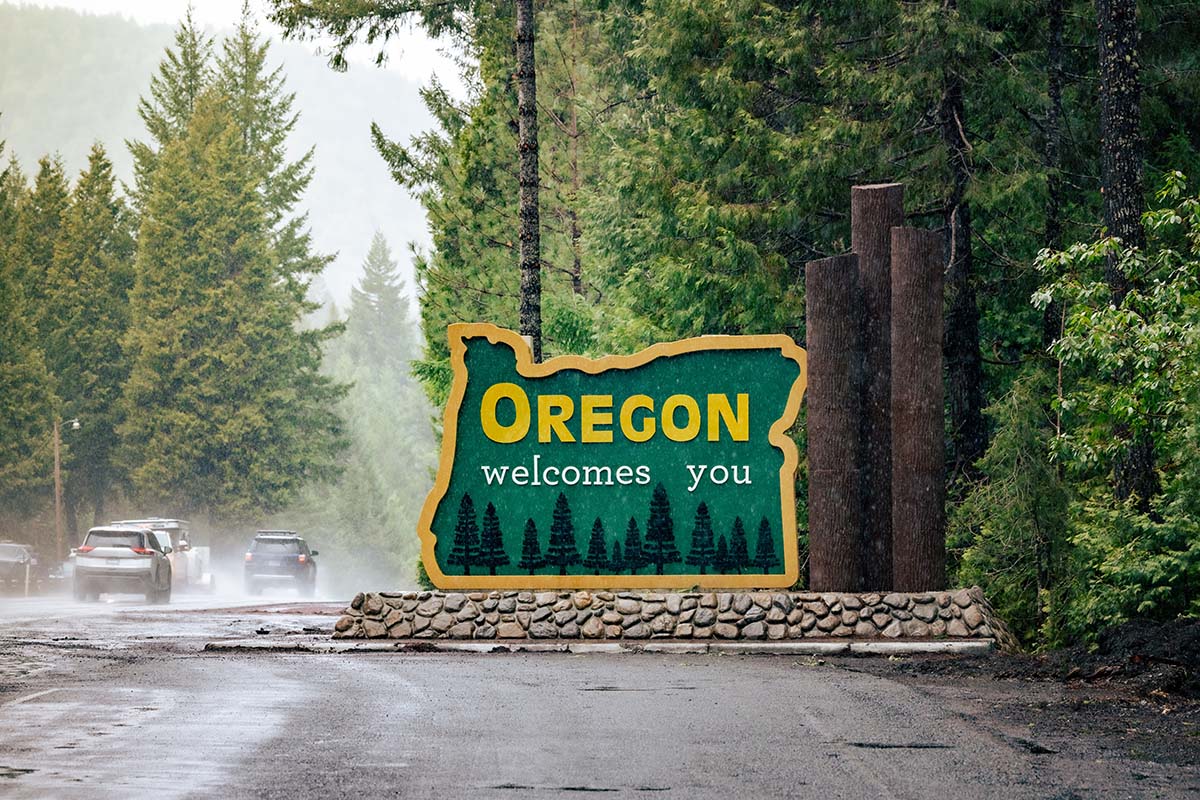
There was a time when convincing someone to move to Oregon did not require much of a sales pitch.
You could point toward the Cascades, the Oregon Coast, the Columbia River Gorge, Bend’s high desert, the forests outside Eugene or any number of small towns tucked between mountains and rivers. Oregon built much of its modern identity around quality of life, outdoor access and being a place people actually wanted to call home.
A new national ranking suggests that beautiful scenery is no longer enough to overcome some increasingly serious problems.
WalletHub’s 2026 ranking of the best states to live in placed Oregon 42nd out of 50 states, making it the ninth worst overall. Neighboring Idaho went in exactly the opposite direction, taking the No. 1 spot in the country.
The difference is difficult to ignore.
Oregon continues to perform well when it comes to quality of life, but affordability, economic conditions and especially safety pulled the state far down the national list. At the same time, Oregon is wrestling with a struggling Portland economy, concerns about businesses taking investment elsewhere and growing dissatisfaction with state leadership.
Taken individually, none of those measurements tells the entire story of Oregon.
Taken together, they paint a much more uncomfortable picture.
Oregon Falls to No. 42 While Idaho Takes the Top Spot
WalletHub compared all 50 states using 51 indicators across five major categories: affordability, economy, education and health, quality of life and safety.
Oregon finished with an overall score of 46.49, ranking 42nd nationwide. The state came in 41st for affordability, 36th for its economy and a striking 48th for safety. Education and health landed in the middle of the pack at 26th.
Quality of life was Oregon’s saving grace.
The Beaver State ranked 11th in that category, reinforcing something Oregonians already understand. There are still plenty of reasons to love living here.
WalletHub also ranked Oregon fourth for the lowest average weekly work hours. Housing, however, remains a major problem. Oregon had the fifth highest housing costs in America, ranking 46th on that individual measure.
Then there is Idaho.
Idaho finished first overall with a score of 60.15. It ranked 10th for affordability, seventh for its economy and third for safety. Idaho also had the highest income growth in the country according to WalletHub’s measurements.
WalletHub also credited Idaho with relatively low real estate taxes, strong homeownership, low overall taxes and strong public safety numbers. The Gem State had the lowest property crime rate in the country in the data used for the analysis.
For Oregonians, the comparison is especially difficult to miss because this is not Florida, New Hampshire or some distant East Coast state outperforming Oregon.
It is Idaho.
Oregon’s Affordability Problem Is Becoming Hard to Ignore
For working families, the problem is not complicated.
Oregon has become expensive.
Housing is one of the clearest examples. Whether someone is trying to buy their first home in Eugene, rent an apartment in Portland, relocate to Bend or find something affordable near the Oregon Coast, the math has become increasingly difficult.
WalletHub’s ranking reflects that pressure, putting Oregon 41st overall for affordability and 46th specifically for housing costs.
That creates a strange contradiction.
Oregon remains a state with an enviable landscape and an above average quality of life ranking, yet more residents are being asked to spend a larger portion of their income simply to stay here.
Eventually, quality of life is affected by the cost required to access it.
A waterfall is still beautiful, but that does not make the mortgage payment.
Portland’s Problems Are Now an Economic Problem Too
No discussion about Oregon’s recent struggles is complete without Portland.
Oregon’s largest city remains the state’s economic engine and its most visible city nationally. What happens in Portland affects the reputation of the entire state, fairly or not.
The Portland Metro Chamber’s 2026 State of Downtown report shows just how much ground the city still needs to recover.
Portland’s Central City had more than 10 million square feet of vacant office space on average during 2025, the highest vacant inventory on record. The Chamber described leasing activity as being at record lows and office vacancy as historically high.
There has been some improvement. Central City foot traffic has recovered to approximately 86% of its prepandemic level, and downtown office vacancy showed a modest improvement during the first quarter of 2026. But the larger economic picture remains weak.
The Portland Metro Chamber’s broader 2026 economic report found that the region lost 8,800 jobs during 2025, one of the worst performances among major metropolitan areas in the country. Housing construction has slowed sharply, population growth has stagnated and Portland continues to perform poorly in national rankings for real estate investment attractiveness.
Those are not simply political talking points.
They are measurable economic problems.
Portland’s troubles began before Tina Kotek became governor and many decisions involving policing, homelessness, taxes and public space are controlled by Portland, Multnomah County and Metro rather than Salem. The pandemic and permanent changes in remote work also devastated downtown office districts across the country.
Still, years after the worst of the pandemic, Portland continues to struggle with problems many competing cities have moved further toward solving.
Businesses Are Looking Beyond Oregon
Oregon’s business climate adds another layer to the story.
One of the most symbolic departures came from a company that could hardly have been more Oregon.
Dutch Bros began in Grants Pass in 1992 and grew from a small Southern Oregon coffee operation into a national chain. In 2025, the company officially moved its headquarters from Grants Pass to the Phoenix, Arizona area after previously shifting a substantial share of its corporate workforce there.
Portland has seen prominent office departures as well.
Adobe closed its downtown Portland office, with dozens of employees told they would need to relocate to Seattle or San Jose to keep their positions, while others shifted to remote work.
The broader issue may be even more significant than individual corporate departures.
Research highlighted in 2026 found that nearly one quarter of roughly 400 Oregon businesses surveyed had been contacted by economic recruiters from other states since 2021. The concern is not simply companies packing up their headquarters and disappearing overnight. It is Oregon businesses choosing Arizona, Texas, North Carolina and other states when deciding where to put their next factory, office, expansion or round of hiring.
That distinction matters.
Calling it a mass corporate exodus would oversimplify the situation. But losing future investment can be just as damaging over time.
Even Oregon’s Own Economic Plan Acknowledges the Problem
Perhaps the most telling assessment does not come from Republicans, business lobbyists or critics of the governor.
It comes from Gov. Tina Kotek’s own office.
Kotek’s December 2025 Prosperity Roadmap acknowledged that Oregon was facing sluggish job growth, elevated unemployment, declining population trends and business outmigration. Her administration said Oregon needed coordinated action to reverse those problems.
The roadmap established ambitious goals, including accelerating GDP growth, generating more living wage jobs and retaining Oregon businesses.
It also set a particularly notable benchmark.
Oregon was ranked No. 39 in CNBC’s Top States for Business ranking at the time, and Kotek’s plan called for moving the state into the top 10.
The opposite happened.
CNBC’s 2026 ranking dropped Oregon another three positions to No. 42.
Oregon ranked 43rd for cost of doing business. Its infrastructure ranking slipped from 14th to 17th, workforce fell from 23rd to 24th and technology and innovation dropped from 14th to 18th. Oregon did improve modestly in economy and business friendliness, but not enough to prevent another overall decline.
Oregon had ranked as high as No. 28 in CNBC’s list just three years earlier.
That is a troubling trajectory regardless of political affiliation.
Tina Kotek Is Also Struggling With Oregon Voters
Those economic numbers arrive as Kotek faces her own leadership problem.
The latest Morning Consult State Leader Pulse covering the second quarter of 2026 placed Oregon’s Democratic governor 48th nationally in net approval.
Only two governors ranked lower.
Morning Consult found 43% of registered Oregon voters approved of Kotek’s job performance while 46% disapproved, giving her a negative 3 net approval rating.
Her political vulnerability is showing elsewhere.
A separate Oregon poll conducted in late June showed Republican Christine Drazan leading Kotek 48% to 44% in a potential gubernatorial matchup, although individual polls are only snapshots and Oregon’s November race remains competitive.
Critics of Oregon’s current leadership increasingly point to affordability, homelessness, public safety, education, taxation and economic competitiveness as evidence that years of state policy are producing diminishing returns.
Supporters of Kotek would argue that many of Oregon’s biggest problems were inherited, that housing shortages took decades to develop, that Portland’s struggles cannot be pinned on a governor and that her administration is now explicitly working to streamline regulations, increase housing production and make Oregon more competitive.
Both things can be true.
Kotek did not create every problem facing Oregon.
But after more than three years as governor, voters and businesses are also entitled to judge the results.
Oregon Still Has Something Most States Would Love to Have
None of this means Oregon suddenly became an awful place.
Spend an August evening along the McKenzie River, watch waves roll into Cape Kiwanda, hike above the Columbia Gorge or drive through the Wallowas and it becomes pretty difficult to argue that Oregon has somehow lost what makes it special.
The state still ranked 11th nationally for quality of life in WalletHub’s study.
That matters.
Oregon has extraordinary natural resources, major technology and manufacturing industries, strong agricultural regions, world class outdoor recreation, internationally recognized food and wine and communities that many people genuinely love.
The question is whether state leaders can keep those advantages from being overwhelmed by the price of living and doing business here.
For too long, Oregon could rely on people wanting to come here.
Businesses wanted Oregon workers. Young people wanted to move to Portland. Families accepted high housing costs because Oregon offered something they thought was worth paying for.
That equation is changing.
Idaho’s No. 1 Ranking Should Get Oregon’s Attention
Perhaps the most important part of WalletHub’s new ranking is not that Oregon finished 42nd.
It is who finished first.
Idaho has many of the same natural advantages Oregon likes to sell. Mountains, rivers, outdoor recreation and wide open spaces are hardly foreign concepts on the other side of the Snake River.
Yet WalletHub found Idaho combining those lifestyle advantages with stronger affordability, economic performance and public safety.
Oregon, meanwhile, remains caught in an increasingly uncomfortable position.
It has the scenery.
It has the lifestyle.
It has the restaurants, rivers, beaches, mountains and forests.
What it increasingly struggles to offer is affordability, economic confidence and the sense that things are headed in the right direction.
A national ranking cannot decide where someone should live, and no spreadsheet can measure every reason an Oregonian chooses to stay.
But rankings can reveal patterns.
Right now, several of those patterns are pointing the same direction: Oregon is becoming harder to afford, Portland’s economy remains wounded, the state’s business competitiveness has deteriorated and the governor charged with helping turn those trends around is among the least popular in America.
Meanwhile, right next door, Idaho just ranked No. 1.
Sources
WalletHub: Best States to Live In (2026)
https://wallethub.com/edu/best-states-to-live-in/62617
Morning Consult: State Leader Pulse, Q2 2026 Governor Approval Rankings
https://pro-assets.morningconsult.com/wp-uploads/2026/07/State-Leader-Pulse-Q2-2026.pdf
Oregon Governor’s Office: Oregon’s Prosperity Roadmap
https://www.oregon.gov/gov/Documents/Oregon%27s_Prosperity_Roadmap_December_2025.pdf
Portland Metro Chamber: 2026 State of the Economy
https://portlandmetrochamber.com/resources/2026-state-of-the-economy/
Portland Metro Chamber: 2026 State of Downtown & the Central City
https://portlandmetrochamber.com/resources/2026-state-of-downtown/
OPB: Dutch Bros Officially Moving Headquarters From Grants Pass to Phoenix, Arizona
https://www.opb.org/article/2025/06/11/dutch-bros-headquarters-grants-pass-phoenix-arizona/
OPB: Oregon’s Business Reputation Has Taken a Hit. Are Businesses Really Leaving?
https://www.opb.org/article/2025/09/12/oregons-business-reputation-has-taken-a-hit-are-businesses-really-leaving/
Axios Portland: Oregon Isn’t Just Losing Businesses, It’s Losing Their Growth
https://www.axios.com/local/portland/2026/03/09/oregon-businesses-expand-out-of-state-growth-incentives
Axios Portland: Oregon Drops in CNBC’s Best States for Business Ranking
https://www.axios.com/local/portland/2026/07/10/oregon-drops-cnbc-best-states-business-ranking