
Across Oregon, wildfires are often described through numbers.
Acres burned. Containment percentages. Evacuation zones. Engines, crews and aircraft assigned to the flames.
But on the Warm Springs Reservation, the Bench Fire is being measured in family homes, treasured belongings and places that carried generations of memories.
Six primary residences and five outbuildings have been destroyed as the fire continues burning across tribal land, according to reporting from KGW. Families have been forced to leave their communities, while others remain close to home under difficult conditions, facing smoke, power interruptions and concerns about the reservation’s water supply.
For Warm Springs tribal member Isa, the losses are deeply personal. The homes destroyed by the fire belonged to people they have known and loved for much of their life.
“They were safe havens for a lot of people, me included,” Isa told KGW.
More Than Houses Were Lost
A home is never simply a building.
It is where children grow up, relatives gather, meals are shared and family history takes shape. On the Warm Springs Reservation, some of the homes destroyed by the Bench Fire had remained within the same families for generations.
That makes the loss especially painful.
“I know the people that lost their homes,” Isa told KGW. “This is all we have. For a lot of people these were generational homes.”
The fire did not just take walls, roofs and furniture. It took places filled with photographs, keepsakes and memories that cannot easily be replaced.
The full extent of the damage may not yet be known. Firefighters and emergency officials remain focused on protecting lives and preventing additional losses while assessments continue in areas affected by the flames.
Bench and Beachcomb Fires Burn Together
The Bench Fire began Thursday, July 23, approximately four miles southwest of the Warm Springs community.
It eventually merged with the nearby Beachcomb Fire. The two fires are now being managed together under the Bench Fire name.
As of Tuesday morning, July 28, the fire had burned 40,296 acres and remained 0% contained, according to KGW. The cause remained under investigation.
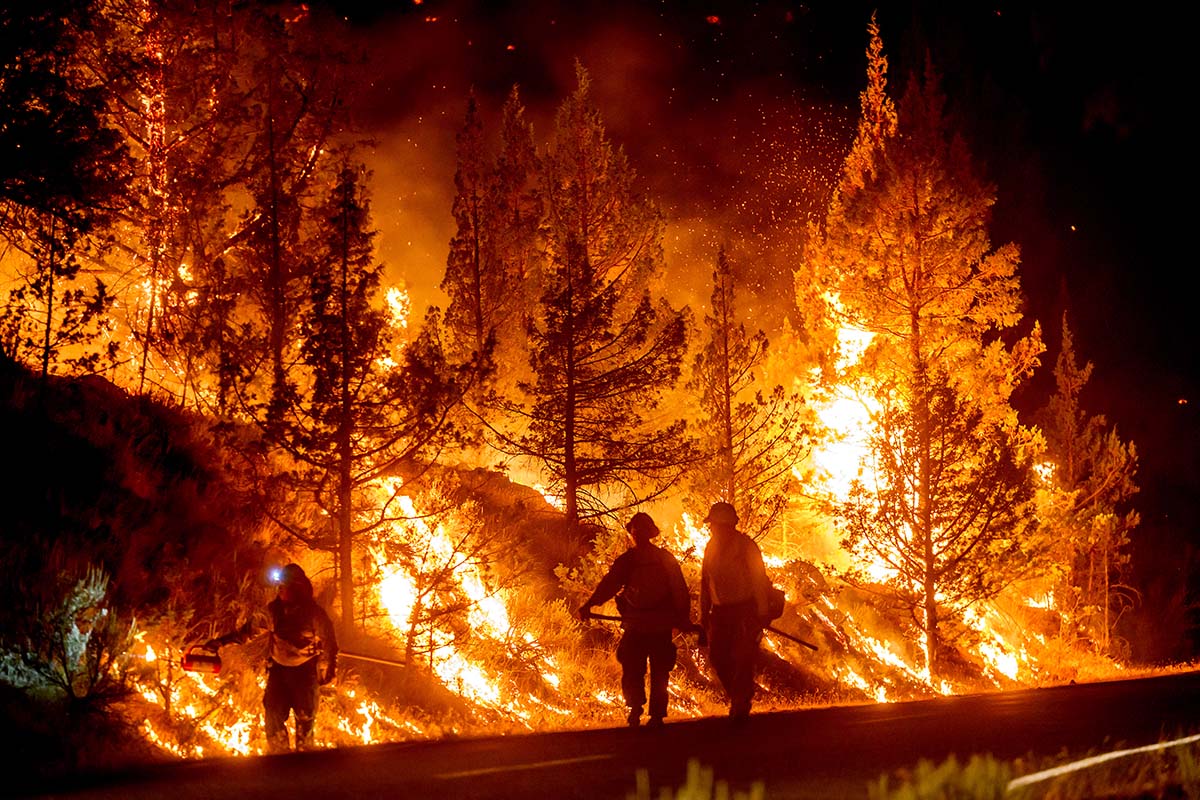
Hot temperatures, strong winds and extremely dry vegetation helped the fire grow rapidly. Officials warned that the Bench Fire was capable of extreme behavior, including long wind-driven runs and embers traveling far ahead of the main fire.
Those conditions created three active fronts threatening the Warm Springs community.
The most destructive period came as winds intensified late Sunday. Flames began moving quickly enough that firefighters had to adjust their strategy and concentrate on the places where they could make the greatest immediate difference.
Firefighters Shift Their Focus to Homes
When conditions allow, firefighters often work directly along the edge of a wildfire, building containment lines and attempting to stop the flames from advancing.
That becomes much more dangerous when a fire is moving quickly, throwing embers over roads and containment lines while threatening neighborhoods from several directions.
Matthew Wilcox, a public information officer assigned to the fire, told KGW that crews experienced several hours of active to highly active fire behavior Sunday afternoon. Conditions finally began to moderate as the sun went down.
As the flames intensified, firefighters temporarily shifted away from trying to hold every section of the fire’s perimeter. Their attention turned toward protecting homes, neighborhoods and critical infrastructure.
This approach, known as point protection, positions crews and equipment near structures facing the greatest immediate danger. Firefighters can then return to direct containment work when fire behavior becomes safer and more manageable.
According to KGW, much of that structure-protection work has been concentrated along the northern side of the Warm Springs Reservation and in areas east of Madras.
The response has included seven crews, 14 engines, six bulldozers, three water tenders and a helicopter. Additional resources have also been requested as major fires across Oregon continue to stretch firefighting personnel and equipment.
Crews Build Lines and Defend Critical Areas
Firefighters completed bulldozer and hand-built firelines along M-100 Road.
Crews also carried out structural protection work near Palmer Lane, using a bulldozer line and a carefully managed firing operation to remove vegetation that could feed the advancing wildfire.
Additional suppression efforts focused near Campbell and Willow creeks.
Firefighters have continued reinforcing completed lines, watching for new spot fires and preparing M-100 Road, U.S. Highway 26 and Forest Road 25 as part of the larger containment strategy.
Even when the main wall of flames has passed through an area, the danger is not necessarily over. Burning roots, trees and pockets of vegetation can continue smoldering for days. Wind can revive those hot spots or carry embers into areas that have not yet burned.
That means crews must repeatedly check miles of fireline while remaining prepared to respond if conditions suddenly change.
The Fire Could Affect the Tribal Economy
The destruction of homes is the most immediate and painful consequence of the Bench Fire, but tribal leaders are also worried about what the fire could mean for the reservation’s land and economy.
Edward Henderson, secretary-treasurer and CEO of the Confederated Tribes of Warm Springs, told OPB that the reservation relies heavily on timber production.
If large areas of valuable timber are destroyed, the damage could have lasting consequences for tribal government revenue and the services it supports.
The reservation’s forests are more than scenery. They are part of the community’s natural resources, economy and long-term future. The full extent of the fire’s impact on timberland may not be known until officials are able to safely examine the burned areas.
Water Concerns Add Another Layer of Hardship
Residents who have remained on the reservation are facing challenges even in places where homes are still standing.
Warm Springs officials issued notices asking residents to conserve water and boil it before drinking, according to OPB.
Tribal officials said the reservation’s water tanks had been full before the emergency. As the flames moved closer to populated areas, however, residents began using sprinklers and garden hoses in an effort to protect their properties.
That heavy demand placed additional strain on the water system.
The request to conserve water is especially important during a wildfire. Firefighters, homes, shelters and essential community services may all depend on the same limited supply.
Power interruptions have created additional difficulties for residents, particularly for anyone relying on electric pumps, medical equipment or refrigeration.
Evacuating Was Not Simple for Everyone
Hundreds of people on the Warm Springs Reservation have been ordered to leave or prepare to leave as the fire has advanced.
But getting away from the flames has not always been straightforward.
OPB reported that intermittent highway closures and confusion surrounding evacuation maps complicated the process during the chaotic opening days of the fire.
One Warm Springs resident told OPB that she and her husband packed their camper and attempted to evacuate Saturday, only to discover that the highway was closed at both ends of the reservation.
The couple remained awake late into the night, uncertain about whether they would be able to leave if conditions worsened.
Evacuation information was also not immediately available through Watch Duty, a fire-tracking application widely used by Oregonians. In a fast-moving emergency, even a brief information gap can add fear and confusion for families trying to decide where to go.
Some residents have evacuated to Madras or other nearby communities. Others have sought refuge at a shelter operating in Warm Springs, while some residents have continued sheltering in place.
Level 3 Evacuations Remain in Effect
At the time of KGW’s report, Level 3 “Go Now” evacuation notices remained active for several areas in the Warm Springs Agency District.
Those areas included:
- Greeley Heights
- Tenino Apartments
- The Trailer Courts
- West Hill
- Elmer Quinn Park
- The Campus Area
- Residences along Shitike Creek
Level 3 evacuation notices also remained in effect for Pelton Park, Pelton Dam, Dry Hollow and Lake Simtustus.
A Level 3 notice means residents should leave immediately. People should not wait for another warning or spend additional time gathering belongings.
Evacuation boundaries can change quickly. Residents should rely on official alerts from tribal and county emergency agencies rather than social media posts or screenshots that may already be outdated.
Travelers should also check TripCheck before attempting to drive through Central Oregon.
The Oregon Department of Transportation has warned motorists not to depend on GPS applications to find unofficial detours around wildfire closures. Smaller rural roads may be blocked, congested, privately maintained or unable to safely handle heavy traffic.
Families Find Shelter in Madras
Some displaced residents have found temporary refuge at St. Patrick Catholic Church in Madras, where volunteers and the American Red Cross have been helping families with meals, supplies and other immediate needs.
Bill Ayers, a general manager with the Red Cross, told KGW that volunteers are trying to care for entire families and give them a sense of stability during an incredibly uncertain time.
For someone who has fled a wildfire, knowing where the next meal will come from or where their children can sleep can provide a small measure of comfort.
Livestock owners have also been affected. Cattle and other animals have been transported to the Jefferson County Fairgrounds as residents work to move people, pets and livestock away from threatened areas.
Evacuating large animals can be particularly difficult during a fast-moving fire. It requires trailers, open roads and enough time to safely gather the animals before flames or smoke make the process impossible.
Neighbors Step Forward to Help
As the Bench Fire has displaced families, people across Madras and the surrounding area have begun collecting supplies for evacuees.
OPB reported that local residents Karen McCarthy and Tari Donohue went shopping with money donated by community members, purchasing practical items such as socks, underwear, drinks and snacks.
Their effort was a small but meaningful example of the way Central Oregon communities often respond during a disaster.
Families who leave their homes with little warning may arrive at a shelter with only the clothing they were wearing. Simple items that many of us take for granted can suddenly become urgently needed.
Financial donations are generally the most effective way to support wildfire recovery because relief organizations can use the money to purchase exactly what families need. Anyone planning to donate physical items should coordinate with an established shelter or relief organization before delivering them.
Unrequested supplies can overwhelm volunteers or create additional work at already busy evacuation centers.
Smoke Creates Health Concerns
The wildfire is also affecting air quality across the region.
The Oregon Department of Environmental Quality included Jefferson County in an air-quality advisory related to wildfire smoke across Central and Eastern Oregon.
Smoke levels can change quickly depending on wind direction, temperature and fire activity. Even when flames are miles away, smoke can settle into valleys and communities overnight.
Wildfire smoke can irritate the eyes, throat and lungs. It can be particularly dangerous for children, older adults, pregnant people and anyone with asthma, heart disease or other respiratory conditions.
Residents should monitor local air-quality readings, keep windows closed when smoke is heavy and limit strenuous outdoor activity during periods of unhealthy air.
Dangerous Weather Continues to Challenge Firefighters
Weather remains one of the greatest challenges facing crews.
Temperatures were expected to reach between 89 and 94 degrees, with dry conditions and west winds capable of gusting up to approximately 20 mph overnight.
Wind can push flames across containment lines and send burning embers into untouched vegetation. Those embers may start new fires well beyond the main perimeter, forcing crews to defend several places at once.
Even after temperatures fall at night, fire behavior may remain active if winds continue.
For residents watching firefighters defend their homes and community, the danger those crews face is not lost on them.
“Those firefighters are risking their lives, their safety to help us,” Isa told KGW.
Part of a Much Larger Oregon Fire Emergency
The Bench Fire is burning during one of the most severe stretches of wildfire activity Oregon has faced in recent years.
As of Tuesday, July 28, dozens of large fires had burned more than 1.1 million acres across the state, according to figures reported by OPB from the Oregon Department of Forestry.
At least 6,000 people were under Level 3 evacuation orders statewide, with thousands more under lower evacuation levels.
Those numbers provide important context for the challenges facing firefighters at Warm Springs. The Bench Fire is competing for crews, engines, aircraft and equipment while major incidents continue burning across Central, Eastern and Southern Oregon.
For the families who have lost their homes, however, the Bench Fire is not simply one incident among many.
It is the fire that changed everything.
Stage 2 Fire Restrictions Remain Active
Stage 2 fire restrictions remain in effect in Jefferson County and on the Warm Springs Reservation.
The restrictions prohibit campfires outside approved areas, along with fireworks, blasting, debris burning, exploding targets and tracer ammunition.
Bottled-fuel appliances may be used in properly cleared locations.
Chainsaw use is prohibited from 1 to 8 p.m., while off-road motorcycles and ATVs are generally limited to improved roads. Limited exceptions may apply to landowners.
With firefighting resources already stretched across Oregon, preventing another human-caused fire is critically important.
How to Help Warm Springs Families
A dedicated donation page has been established to support wildfire recovery efforts on the Warm Springs Reservation, according to KGW.
Community members wishing to donate nonperishable food or bottled water can coordinate a drop-off with Caroline Cruz by calling 541-460-1109 or emailing caroline.cruz@wstribes.org.
Those interested in making a large financial donation or contributing by check can contact Pamela Douglas at 541-553-3410 or 541-460-1188. She can also be reached at pam.douglas@wstribes.org.
People interested in volunteering can contact Danny Martinez at 541-419-8094 or danny.martinez@wstribes.org.
Oregon emergency officials recommend coordinating donations and volunteer efforts through recognized organizations rather than arriving at shelters or active fire areas without being requested.
For the families who have lost their homes, recovery will not end when the final flames are extinguished.
Replacing essential belongings, finding permanent housing and rebuilding homes will take time. Grieving the loss of places filled with family history may take even longer.
But across Warm Springs, Madras and neighboring Central Oregon communities, people are already stepping forward with shelter, meals, supplies and support.
The Bench Fire has taken homes and pieces of family history. It has also revealed the determination of a community working together through one of the most painful moments it has faced.
Sources: This article is based primarily on reporting published by KGW, with additional Warm Springs community, evacuation, water-system and statewide wildfire context reported by Oregon Public Broadcasting.
Wildfire resources: Find current incidents, mapped evacuation areas, smoke, road conditions, and recovery help on our Oregon Wildfire Map.