Quick answer: The only developed campground operating inside Crater Lake National Park in 2026 is Mazama Campground, a seasonal campground about 7 miles from Rim Village. Lost Creek Campground is closed for all of 2026. If Mazama is full—or you want lake access, hookups, cabins, or a quieter base—look north to Diamond Lake, west to Union Creek and Prospect, or south toward Fort Klamath and Chiloquin.
Crater Lake camping takes a little more planning than pitching a tent beside an ordinary Oregon lake. Snow controls the season, campsites inside the park are limited, and there are no developed campgrounds with a view of Crater Lake itself. Get the location right, though, and you can wake up under old-growth pines, spend the day circling the rim, and still have time for a waterfall or short hike before dinner.
Updated September 2026. Seasonal dates, road access, fire restrictions, and reservation rules can change quickly. Check the official Crater Lake current conditions before leaving home.
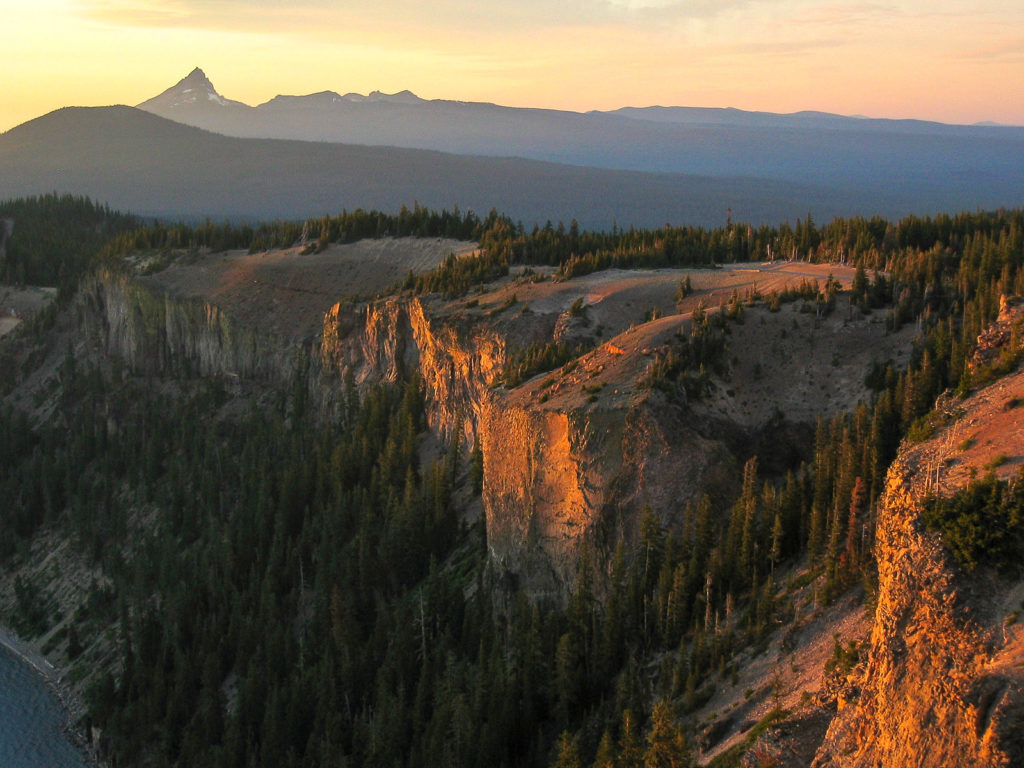
The rim of Crater Lake with Mount Thielsen in the distance. Photo by Arthur T. LaBar via Flickr CC2.
Crater Lake Camping at a Glance
| Area | Best for | What to know |
|---|---|---|
| Mazama Campground | Staying inside the park | Seasonal; tents and RVs; some electric sites; advance reservations are important in midsummer |
| Diamond Lake area | Lake access and more campground choices | About 25 miles north of park headquarters when the North Entrance is open |
| Union Creek area | Waterfalls, forest camping, and west-side access | About 21 miles west of park headquarters along Highway 62 |
| Fort Klamath area | Cabins, small campgrounds, and south-side access | About 20 miles south of park headquarters |
| Prospect and Chiloquin | RV hookups and backup options | Farther from the rim, but useful when closer campgrounds are full |
Can You Camp Inside Crater Lake National Park?
Yes, but developed camping inside the park is limited. In 2026, Mazama Campground is the only developed campground operating in the park. You cannot sleep overnight in a Rim Village parking lot, roadside pullout, picnic area, or overlook. Camping inside the caldera is also prohibited.
Backcountry camping is allowed in approved areas with a permit, but that is a separate experience from car camping. The park requires a backcountry permit year-round, and summer camping with a view of the lake is not allowed. If you are planning an overnight backpacking trip, read the National Park Service backcountry camping rules before choosing a route.
Mazama Campground
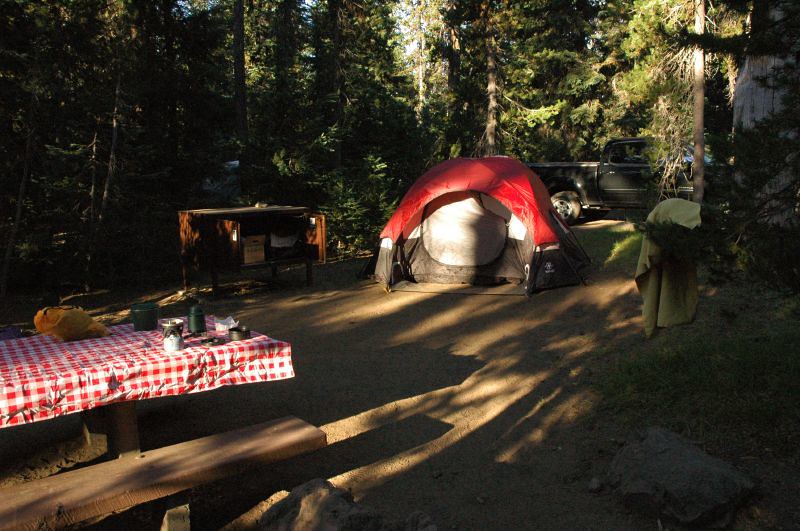
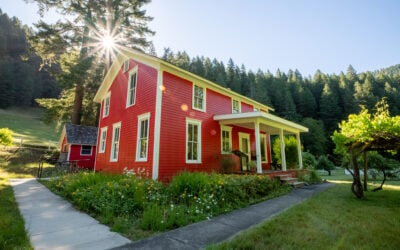
Mazama Campground at Crater Lake National Park. Photo by Fawn via Flickr CC2.
Mazama Campground is the most convenient choice if your priority is spending as much time as possible inside Crater Lake National Park. It sits in an old-growth forest at roughly 6,000 feet and has 214 sites. Each site includes a picnic table, fire ring, and bear-resistant food locker.
The campground typically operates from June into late September, but snowpack and safety conditions determine the real opening and closing dates. Not every loop opens at the same time. The campground accommodates tents, trailers, and RVs, and a small number of sites have electrical hookups. Potable water, flush toilets, a dump station, and seasonal services are available when the campground is fully operating.
For 2026, accessible sites are first-come, first-served through June 30; from July through September, sites are available by reservation. Always confirm current rules and availability through the official Mazama Campground page or the park concessioner before driving up.
Lost Creek Campground
Lost Creek Campground is closed for all of 2026. Older travel guides may still describe it as a 16-site, first-come, first-served tent campground, but it should not be part of a current camping plan. Check the official Lost Creek Campground page for future reopening information.
Best Campgrounds Near Crater Lake
The “best” campground depends on your route and what you want after leaving the rim. Diamond Lake works well for campers arriving from the north. Union Creek and Prospect make sense from Medford and the Rogue Valley. Fort Klamath and Chiloquin are practical for travelers coming from Klamath Falls.
North: Diamond Lake Campgrounds
The Diamond Lake area is the strongest alternative to camping inside Crater Lake National Park. You get several large campgrounds, a real lake for boating and fishing, and mountain views. The tradeoff is seasonal access: the drive is shortest when the park’s North Entrance is open.
- Diamond Lake Campground: A large Forest Service campground for tents and RVs, with showers and easy access to Diamond Lake. Many sites are reservable during the peak summer season.
- Broken Arrow Campground: A quieter forest campground at the south end of Diamond Lake with tent, RV, trailer, and group sites.
- Thielsen View Campground: A good pick for campers who want a more rustic setting and views toward Mount Thielsen.
- Diamond Lake RV Park: The practical choice if hookups, laundry, and RV-focused services matter more than a primitive camping feel.
For a bigger Oregon camping shortlist beyond Crater Lake, browse our Oregon Camping Guide.
West: Union Creek and Prospect
West-side camping pairs naturally with Rogue Gorge, Natural Bridge, and the forested Highway 62 corridor. It is one of our favorite ways to turn a Crater Lake visit into a fuller Southern Oregon road trip.
- Farewell Bend Campground: A large campground beside the Upper Rogue River with sites for tents and RVs. Most sites are reservable, and Union Creek Resort is nearby for food and supplies.
- Union Creek Campground: Forest camping near the Rogue River and the Upper Rogue River Trail, with many reservable sites for tents and smaller RVs.
- Natural Bridge Campground: A smaller, more rustic first-come, first-served campground near the Natural Bridge day-use area.
- Abbott Creek and River Bridge campgrounds: Simple Forest Service options near Prospect. These are better for campers who do not need hookups or extensive services.
- Crater Lake RV Park: A year-round RV option near Prospect with hookups and showers.
Build an extra day into your trip for the Rogue River corridor or follow our Southern Oregon waterfall road trip.
South: Fort Klamath and Chiloquin
South of the park, you will find a mix of small campgrounds, RV sites, and cabins. This area is useful if Mazama is full or if you want easier access to groceries and services along Highway 62 and Highway 97.
- Crater Lake Resort: Cabins, tent sites, and RV hookups along Fort Creek. It is a comfortable option for families who want more amenities than a basic forest campground. See our guide to Crater Lake Resort.
- Jackson F. Kimball State Recreation Site: A small, first-come, first-served campground near the headwaters of the Wood River. It has vault toilets and no potable water, so arrive prepared.
- Collier Memorial State Park: A larger seasonal campground near Chiloquin with tent sites, RV hookups, and showers.
- Agency Lake Resort and Sportsman’s River Retreat: Useful alternatives for RV travelers and campers who want access to Upper Klamath Lake country.
RV Camping Near Crater Lake
Mazama Campground is the only developed campground inside the park that accepts RVs and trailers. It has a limited number of electric sites, but it is not a full-hookup RV resort. If hookups are essential, look outside the park at Diamond Lake RV Park, Crater Lake RV Park near Prospect, Crater Lake Resort near Fort Klamath, or one of the RV parks around Chiloquin.
Large rigs require extra planning on Rim Drive. Parking is limited, turnarounds can be tight, and overnight RV parking is not allowed in park pullouts or parking lots. Review the park’s RV and towing guidance before attempting the rim with a trailer.
Crater Lake Camping Reservations
You do not need a timed-entry reservation to enter Crater Lake National Park, but you do need an entrance pass. Camping reservations are separate. Mazama Campground and many nearby Forest Service campgrounds can fill well ahead of summer weekends.
- Reserve as early as you can for July, August, and holiday weekends.
- Keep a backup area in mind. Diamond Lake, Union Creek, Fort Klamath, and Prospect give you options in four directions.
- Recheck road access. A campground north of the park can be much less convenient when the North Entrance is closed.
- Confirm fire rules. Restrictions can change during hot, dry weather.
When Is the Best Time to Camp at Crater Lake?
July through September is the most reliable window for developed camping and full road access. June can still feel like winter at higher elevations, and October can bring sudden snow and seasonal closures. Nighttime temperatures drop quickly even in summer, so bring warm layers and a sleeping setup rated for cold mountain conditions.
The park itself is open year-round, but camping services are not. Winter camping is a backcountry trip that requires the right equipment, route knowledge, and a permit—not a casual version of summer car camping.
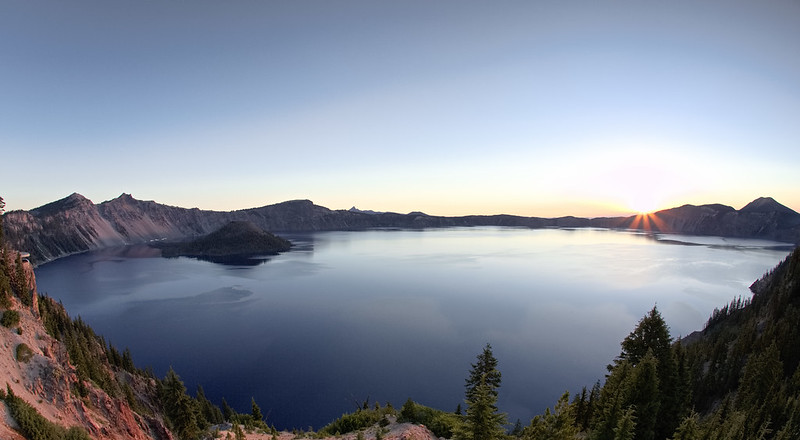
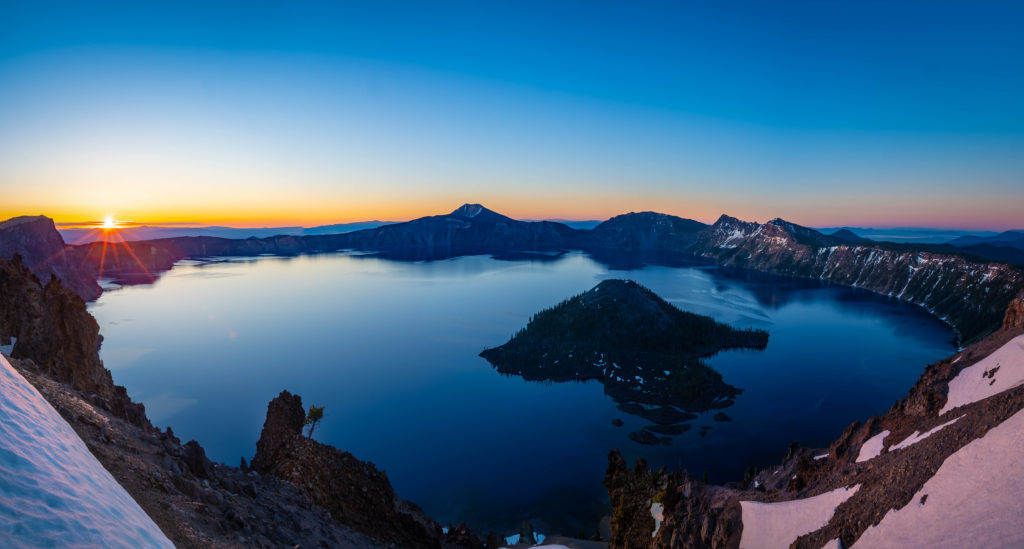
Sunrise at Crater Lake. Photo by Jim Bahn via Flickr CC2.
What to Do While Camping Near Crater Lake
Give yourself at least two full days if you can. One day can disappear into Rim Drive overlooks, short walks, and weather changes. Use another for a longer trail, the Pinnacles, waterfalls, or the Rogue River corridor.
- Choose a trail from our guide to the best hikes at Crater Lake.
- Read these Crater Lake facts before your first overlook stop.
- See what it is like to stay at the historic Crater Lake Lodge.
- Explore the waterfalls and old-growth forest around Union Creek.
Crater Lake Camping Tips
- Store food correctly. Use the bear-resistant locker at your campsite and keep a clean camp.
- Do not count on cell service. Download maps, confirmations, and directions before entering the park.
- Bring water. Some nearby Forest Service and state park campgrounds have no potable water.
- Pack for cold nights. Mazama sits at about 6,000 feet, and mountain weather can change fast.
- Know your entrance. The South and West entrances are the most dependable approaches when seasonal roads are closed.
- Leave the rim wild. Overnighting in pullouts, overlooks, parking lots, and picnic areas is prohibited.
Frequently Asked Questions
Can you camp at Crater Lake National Park?
Yes. Mazama Campground is the park’s developed campground operating in 2026. Backcountry camping is also allowed in approved areas with a permit. Camping in parking lots, pullouts, overlooks, picnic areas, and inside the caldera is prohibited.
Are there campsites with a view of Crater Lake?
No developed campground overlooks the lake. Summer backcountry camping along the caldera rim is also prohibited, so plan to enjoy the lake during the day and sleep in the forest below the rim.
Do you need reservations for Crater Lake camping?
Reservations are strongly recommended—and required for most Mazama Campground stays from July through September. Rules differ at nearby campgrounds, with a mix of reservable and first-come, first-served sites.
Can you camp in an RV at Crater Lake?
Yes. Mazama Campground accepts RVs and trailers and is the only developed RV campground inside the park. Full-hookup options are available outside the park.
Is dispersed camping allowed near Crater Lake?
Backcountry camping inside the national park requires a permit and must follow park restrictions. Surrounding national forests offer additional dispersed-camping possibilities, but local closures, fire rules, and stay limits apply. Confirm the rules with the appropriate Forest Service ranger district before choosing a site.
How far are campgrounds near Crater Lake from the rim?
Mazama Campground is about 7 miles from Rim Village. Nearby camping areas are generally 20 to 35 miles from park headquarters, although actual drive times vary with entrance and road closures.
Bottom line: Choose Mazama for the simplest in-park experience, Diamond Lake for water and more campground choices, Union Creek for waterfalls and forest scenery, or Fort Klamath for cabins and south-side access. Then verify conditions one last time before you go—the mountain always gets the final say.