
Oregon Gun Laws in 2026
What Oregon residents, visitors and new arrivals need to know about buying, background checks, open and concealed carry, vehicle transport, secure storage, local rules and Measure 114.
What are Oregon's gun laws in 2026?
Oregon does not require a permit simply to own a firearm, and its Measure 114 permit-to-purchase and magazine provisions are not scheduled to apply until January 1, 2028. Current law still generally requires an Oregon State Police background check for dealer sales and most private transfers. Concealed handgun carry generally requires an Oregon Concealed Handgun License, Oregon does not recognize other states' carry licenses, and cities or counties may restrict loaded firearms in public places.
Background checks
Required for dealer transfers and generally for private-party transfers, subject to statutory exceptions.
Measure 114 permit and magazine rules
Oregon Laws 2026, chapter 120 sets January 1, 2028 as the operative date for the principal provisions.
Loaded public carry
State law allows cities and counties to regulate loaded firearms in public places. Portland is the clearest example.
Three cautions before relying on any Oregon gun-law summary
- The answer can change based on the firearm, the person, the location and whether the firearm is loaded, concealed or readily accessible.
- Public buildings, school grounds, court facilities, tribal land, federal property and private property can have rules beyond the statewide overview.
- Oregon's statutes display Measure 114 language even though its principal purchase-permit and magazine provisions have a later operative date. Read the 2026 session law with the ORS.
Legal-information notice: This independent guide is general education, not legal advice. Laws, court orders and local ordinances can change quickly. For a decision with legal consequences, read the linked source and consult a qualified Oregon attorney or the relevant agency.
Oregon protects the right to bear arms—and expects responsible conduct
The Second Amendment protects “the right of the people to keep and bear Arms.” Oregon's constitution separately says the people have a right to bear arms for defense of themselves and the state. For many Oregonians—especially hunters, sport shooters, collectors, rural residents and people concerned with self-defense—lawful firearm ownership is an important civil right and part of everyday culture.
That right exists within a body of federal, state and local law. Responsible ownership means knowing where carry is lawful, preventing unauthorized access, handling every firearm safely, and recognizing when training or secure temporary storage is the prudent choice. Respect for constitutional rights and a serious commitment to gun safety reinforce one another.
Read the Second Amendment at Congress.gov and Oregon Constitution, Article I, section 27.

Buying a gun in Oregon in 2026
You do not need an Oregon permit-to-purchase as of September 14, 2026. A seller still generally must initiate a background check through the Oregon State Police Firearms Instant Check System before transferring a firearm.
- Bring qualifying identification.OSP lists the current photo-identification information used for the transaction.
- The seller submits the check.OSP reviews state and federal databases and checks the firearm's identifying information.
- Wait for the transaction result.Approval, denial or a pending result depends on the records available. A buyer who is denied can use OSP's challenge process.
- Receive the firearm with a lock.When a background check is required, Oregon law requires transfer with an engaged trigger or cable lock or in a locked container.
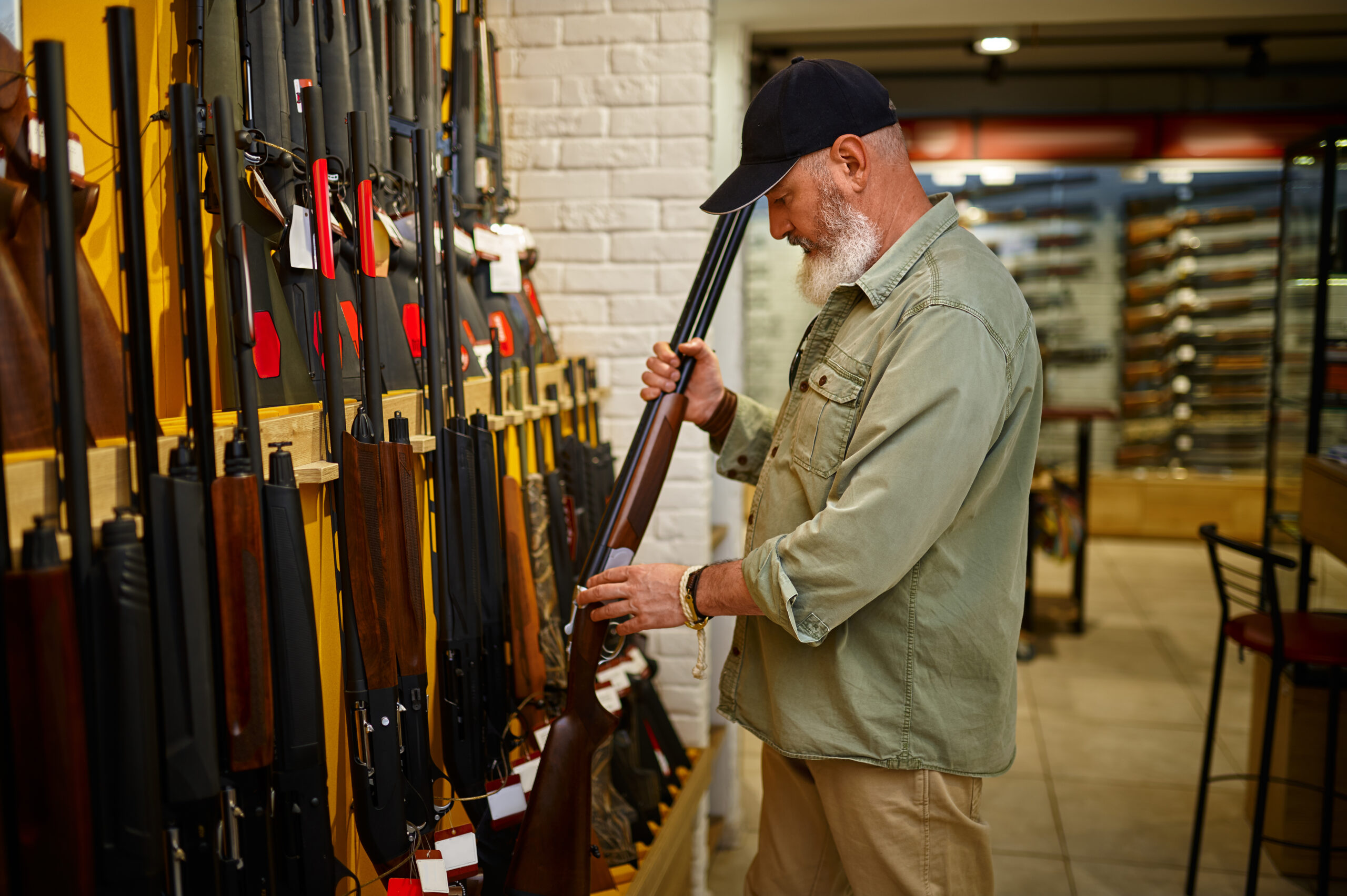
Private-party transfers
Most transfers between private individuals must go through a gun dealer, who performs the background check. “Transfer” is broad and can include a sale, gift, loan or lease. Oregon law provides limited exceptions, including transfers between specified close family members and certain temporary transfers for hunting, target shooting, training, repair or an imminent emergency.
Age rules
OSP states that Oregon's minimum purchase age is 18, while federal law sets a stricter minimum of 21 for a handgun purchased from a federally licensed dealer. Eligibility also depends on the buyer's residency, criminal record, court orders and other state and federal disqualifiers.
Is Oregon an open carry state?
Oregon generally does not prohibit an adult who may lawfully possess a firearm from carrying it openly, and ORS 166.250 says a firearm carried openly in a belt holster is not concealed. That is only the statewide starting point. A city or county may restrict possession of a loaded firearm in public places under ORS 166.173, and special-location rules still apply.
No general statewide license
- Generally lawful for a person who may possess the firearm
- Local loaded-firearm ordinances can change the answer
- Public buildings and other restricted places require separate review
Oregon CHL generally required
- Licenses are issued through county sheriffs
- Applicant generally must be at least 21 and demonstrate handgun competence
- Oregon does not recognize out-of-state concealed-carry licenses
Oregon concealed handgun license basics
ORS 166.291 and 166.292 govern issuance. Applications go to a county sheriff, normally in the applicant's county of residence. The statute includes age, residence, training or competence, background and disqualifier requirements. A license is generally valid for four years unless revoked. Nonresidents should not assume they qualify: the statute gives sheriffs limited discretion for residents of contiguous states who meet its criteria.
Can you carry a gun in a vehicle in Oregon?
A person without an Oregon CHL can violate ORS 166.250 by possessing a handgun that is both concealed and readily accessible inside a vehicle. For most vehicles, the statute generally treats a handgun in the passenger compartment as readily accessible. It also describes locked-storage rules for vehicles without storage outside the passenger compartment, plus separate treatment for motorcycles, ATVs and snowmobiles.
Unload the firearm, secure it in a locked container, keep the key or combination inaccessible to unauthorized people, and place it outside the passenger compartment when the vehicle has such a storage area.
A valid Oregon CHL, the type of firearm, where it sits, whether it is concealed, local loaded-firearm ordinances, and the destination can all affect legality.
Oregon's secure-storage law says a handgun left unattended in a vehicle is not secured if it is visible to people outside the vehicle.
This is a conservative safety and planning summary, not a declaration that one transport method is lawful in every circumstance. Read ORS 166.250 and 166.395 and check the local law at both ends of a trip.
Where firearms may be prohibited or specially regulated
Public buildings and schools
ORS 166.370 covers firearms in public buildings and court facilities. School, college, university and local governing boards may adopt and post policies that limit the defense otherwise available to CHL holders in specified locations. Read posted signs and the controlling body's website.
Portland and local rules
Portland City Code 14A.60.010 restricts loaded firearms in public places, including in vehicles, while listing exceptions and affirmative defenses. Other Oregon cities and counties may have their own ordinances. Verify the exact jurisdiction before carrying.
Federal, tribal and private property
Federal facilities, post offices, secure airport areas, tribal lands and private property can involve rules not captured by a statewide summary. A property owner or operator may also control access. Follow posted restrictions and ask the responsible authority when uncertain.
Read Portland's loaded-firearm ordinance and ORS 166.360–166.380.
Gun safety is part of responsible ownership
Oregon law generally requires a firearm that is not carried by or under the control of its owner, possessor or an authorized person to be secured with an engaged trigger or cable lock, inside a locked container, or in a qualifying locked gun room. The law can impose greater penalties and civil consequences when an unsecured firearm is accessed or used.
- Treat every firearm as loaded. Check its condition yourself and never rely on assumption.
- Keep the muzzle in a safe direction. Never point at anything you are not prepared to destroy.
- Keep your finger off the trigger. Move it to the trigger only after the sights are on target and you have decided to fire.
- Know the target and what is beyond it. A safe backstop and a clear field matter on a range and while hunting.
- Use eye and hearing protection. Seek hands-on instruction when handling an unfamiliar firearm.
- Prevent unauthorized access. Store firearms locked, keep lock access controlled, and consider storing ammunition separately.

What happened to Oregon Measure 114?
As of September 14, 2026, Measure 114's principal permit-to-purchase and large-capacity-magazine provisions are not operative. Oregon Laws 2026, chapter 120—enacted through House Bill 4145—changed the applicable date from March 15, 2026 to January 1, 2028.
Voters approve Measure 114
The measure includes a permit-to-purchase system, safety training, completed background checks and restrictions involving magazines over 10 rounds.
Litigation delays implementation
State and federal challenges create a changing legal landscape, while the existing background-check and carry framework continues.
HB 4145 becomes law
Oregon Laws 2026, chapter 120 moves the relevant operative date to January 1, 2028 and expressly addresses pending proceedings.
Current scheduled date
The permit and magazine provisions are set to apply then unless a court decision or later legislation changes the result.
What this means today
You do not need a Measure 114 purchase permit in September 2026, and the measure's 10-round magazine restriction is not currently operative. Existing background checks, carry restrictions, secure-storage requirements, prohibited-person laws and local ordinances still apply.
Follow our reporting on the 2026 Measure 114 delay, the state-court ruling, and the earlier Measure 114 court battle. For the controlling text, use Oregon Laws 2026, chapter 120.
Moving to Oregon with firearms: a practical checklist
Inventory before the move
Record makes, models and serial numbers; confirm that every firearm and magazine is lawful at your origin, along the route and at the destination.
Plan locked transport
Use locked cases, keep firearms unloaded, prevent unauthorized access and review ORS 166.250 for vehicle accessibility.
Do not rely on an old carry permit
Oregon does not recognize another state's concealed-handgun license. Apply through your Oregon county sheriff if you want an Oregon CHL.
Check city and county rules
Local loaded-firearm ordinances matter, especially in Portland and other urban jurisdictions. Read posted public-building policies.
Set up secure home storage
Have compliant locks, locked containers or a qualifying gun room ready before firearms arrive—particularly when children, guests or contractors may be present.
Separate hunting law from carry law
Hunting seasons, tags, legal weapons, discharge rules and land-manager restrictions are additional layers. Check current ODFW regulations.
Pair this checklist with our complete Moving to Oregon guide, 2026 cost-of-living budgets, and comparison of the best places to live in Oregon.
Oregon gun law FAQ
Is Oregon an open carry state?
Generally, yes for an adult who may lawfully possess a firearm, but local governments may restrict loaded firearms in public places. Portland has a significant local rule. Restricted-location and private-property rules also apply.
Do I need a permit to buy a gun in Oregon in 2026?
No Oregon permit-to-purchase is required as of September 14, 2026. The 2026 Legislature moved the Measure 114 purchase-permit implementation date to January 1, 2028. Background checks are still generally required.
Does Oregon require background checks for private gun sales?
Generally yes. Most private transfers must go through a gun dealer for an OSP background check. ORS 166.435 contains exceptions, including specified close-family transfers and limited temporary transfers.
Does Oregon recognize concealed carry permits from other states?
No. An out-of-state permit does not itself authorize concealed handgun carry in Oregon. Oregon CHLs are issued through county sheriffs.
Can I carry a gun in my vehicle in Oregon?
It depends. Without an Oregon CHL, a handgun that is concealed and readily accessible in a vehicle can violate ORS 166.250. Vehicle type, location, local ordinances and destination rules all matter. Locked, unloaded and inaccessible transport is the conservative planning approach.
What is Oregon law on storing firearms?
When a firearm is not carried by or under the control of the owner, possessor or an authorized person, ORS 166.395 generally requires an engaged trigger or cable lock, a locked container, or a qualifying gun room.
Are magazines over 10 rounds illegal in Oregon in 2026?
The principal Measure 114 magazine restriction is not scheduled to apply until January 1, 2028. Litigation or later legislation could change the timeline; verify current official sources before acting.
Where do I apply for an Oregon concealed handgun license?
Apply through the sheriff in your Oregon county of residence. Applicants generally must be at least 21, meet the statutory eligibility rules, demonstrate handgun competence and complete fingerprint-based background screening.
Who cannot possess a firearm in Oregon?
State and federal law disqualify multiple categories of people, including many people with felony convictions, certain domestic-violence convictions or qualifying court orders, and some people subject to mental-health or protective orders. The details and restoration processes are fact-specific; review OSP's disqualifier list and seek legal advice.
Does an Oregon CHL let me carry everywhere?
No. Court facilities, certain public buildings, school grounds subject to adopted policies, federal property, tribal lands, private property and other locations can remain restricted. Follow signs and verify the rule for the exact location.
How this guide was verified
That Oregon Life reviewed the current Oregon Revised Statutes together with the 2025 and 2026 session-law changes that are not yet fully reflected in every codified display. We used government sources for legal status and separated our news coverage from the authorities controlling the law.
Editorial and legal-source review: September 14, 2026. General educational information only. If an official source and this summary differ, follow the official source and obtain legal advice.