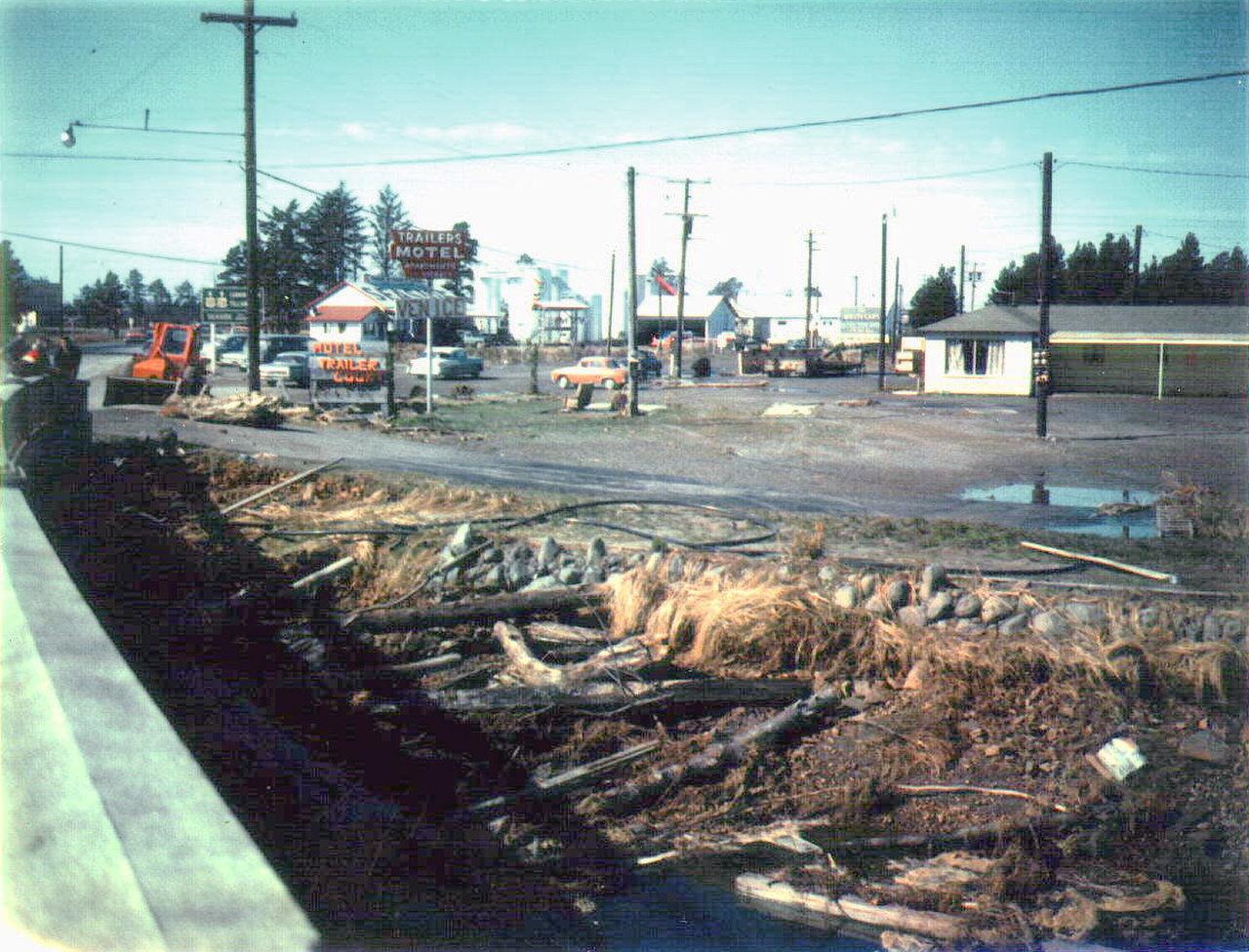
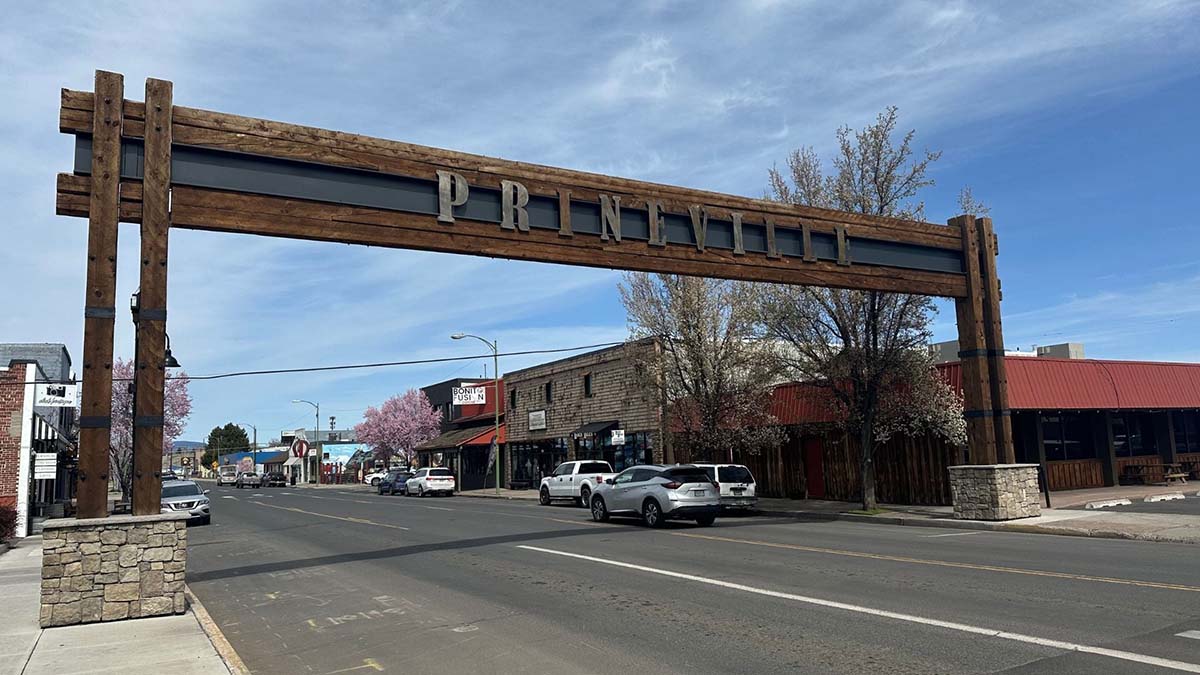
There is something about Prineville that has always felt a little different from the rest of Oregon.
It is not quite Bend, not quite the Willamette Valley, and not quite the wide-open ranch country farther east. It sits in its own pocket of Central Oregon, surrounded by rimrock, juniper, old ranching history, dry summer heat, cold winter mornings, and those big blue skies that make everything feel a little more spacious.
For people who love Oregon but are tired of feeling crowded, Prineville has long held a certain appeal. It is the kind of place where the courthouse still anchors the middle of town, the Crooked River still bends through the landscape, and a drive in almost any direction can put you near reservoirs, forest roads, fishing water, rockhounding country, or high desert views.
Now Prineville has landed on another list that may catch the attention of Oregonians thinking seriously about where they want to live next.
According to SafeWise’s 2026 safest cities report for Oregon, Prineville ranked as the 10th safest city in the state. The annual report placed Prineville alongside West Linn, Lake Oswego, Sandy, Monmouth, Newberg-Dundee, Lebanon, Central Point, Canby, and Sherwood as Oregon’s 10 safest cities for 2026.
For Central Oregon, that is notable. Many of the cities on the list are located near the Portland metro area or in the Willamette Valley. Prineville stands out as the lone high desert community in the top 10, a place where Oregon’s pioneer past, outdoor recreation, and modern growth are all colliding in real time.
SafeWise ranked cities using FBI-reported violent and property crime data, adjusted for population so communities of different sizes could be compared more fairly. The report also notes that its rankings are based on crime data only and should not be read as a complete judgment of any community’s character, quality of life, or everyday experience.
That distinction matters, because anyone who has spent time in Oregon knows a city is more than a spreadsheet. Safety is not just a number. It is also whether people know their neighbors, whether kids can ride bikes down quiet streets, whether businesses feel supported, whether parks are cared for, whether local law enforcement is visible and responsive, and whether people still feel some ownership in the place they call home.
Still, numbers do tell part of the story. And in Prineville’s case, the numbers are moving in a direction many residents would likely welcome.
SafeWise reported that Prineville had a 2026 violent crime rate of 2.4 incidents per 1,000 residents, down from 5.1 the previous year. Property crime was listed at 7.4 incidents per 1,000 residents, down from 11.7 the prior year and 12.4 the year before that. The report also showed Prineville jumping 17 spots in the ranking.
That is the kind of movement that gets noticed, especially in a state where many residents have been openly worried about crime, theft, drugs, homelessness, and public disorder in recent years.
SafeWise’s broader Oregon report paints a complicated picture. On one hand, only about four in 10 Oregon residents said they feel safe in the state. On the other hand, the report found that Oregonians are less worried about crime, gun violence, and package theft than they were in previous years.
That tracks with the strange way many people talk about Oregon right now. There is frustration, no doubt. There is also exhaustion. But there are still communities across the state where people are working hard to keep things livable, neighborly, and grounded.
Prineville may be one of those places.
The city has never really been a polished postcard version of Oregon. It has a working-town feel, shaped by ranching, logging, government, small businesses, and people who like having room to breathe. It is the county seat of Crook County, which the Oregon Blue Book describes as having only one incorporated population center, Prineville itself. The county’s other communities include places like Powell Butte, Post, and Paulina.
That setting alone gives Prineville a different rhythm than many Oregon cities. It is not a suburb tucked into a major metro area. It is a hub for a mostly rural county, a place people drive into for groceries, school events, doctor appointments, courthouse business, rodeo week, and dinner after a long day outside.
The landscape helps define it. The Ochoco National Forest and Crooked River National Grassland cover nearly one million acres of Central Oregon country, including forest, grassland, and rocky river canyon landscapes. For people in Prineville, that kind of access is not an abstract tourism pitch. It is part of daily life.
You can be in town one minute and pointed toward the Ochocos the next. You can fish, camp, hunt, hike, explore backroads, or simply take a long drive when the sky is clear and the light is hitting the hills just right. Visit Central Oregon describes Prineville as a destination for Prineville Reservoir State Park, Ochoco National Forest, fishing, rockhounding, scenic drives, and golf. It also notes the city’s reputation for history, dark skies, and the Crooked River Roundup, one of Oregon’s longtime rodeo traditions.
That local identity is part of why the safety ranking feels bigger than a simple top 10 list. Prineville is not just a dot on a ranking. It is a real Oregon town with deep roots and a strong sense of place.
It is also a city that has seen change.
Like much of Central Oregon, Prineville has felt the pressure of growth, rising costs, shifting industries, and more people looking beyond Bend and Redmond for a place to settle. Some move there for affordability. Some come for the quiet. Some come for land, jobs, family, recreation, or a slower pace. Others come because the city still feels like Oregon in a way that is harder to find in bigger places.
That does not mean Prineville is perfect. No town is. A safest cities list does not erase the daily concerns residents may have about traffic, schools, housing, drugs, theft, emergency response, or the growing pains that come when a community changes.
SafeWise makes that point in its own way, saying its rankings are meant to highlight crime patterns and relative risk, not define what life is like in any one place. The company also notes that crime statistics do not capture every factor that influences how safe people feel, including community resources, local reporting practices, prevention efforts, and lived experience.
That is important context. A person who lives in Prineville may experience the town differently than someone who only sees the ranking. A resident on a quiet street near the edge of town may feel differently than a business owner dealing with theft. A family moving from Portland may see Prineville as a relief. A longtime local may see all the ways the town has changed and worry about where things are headed.
Both things can be true.
Still, Prineville’s inclusion on the list is meaningful because the numbers behind the ranking show improvement in both major categories SafeWise examined. Violent crime fell from the prior year, while property crime continued a two-year decline.
Across Oregon, property crime remains one of the state’s most persistent safety concerns. SafeWise found that 22 percent of Oregonians said they experienced property crime in the 12 months before the survey, down from 32 percent the year before and close to the national figure of 21 percent. But Oregon’s statewide property crime rate remained above the national rate in the report.
Package theft is an even bigger sore spot.
According to SafeWise, 43 percent of Oregon residents reported having a package stolen in the previous 12 months. That was down from 46 percent the year before, but still high enough to place Oregon behind only New York and Pennsylvania among states with the highest reported package theft experiences.
Anyone who has had a package disappear from a porch knows how personal that kind of theft feels. It may not be the most serious crime on paper, but it chips away at the small sense of trust that makes a neighborhood feel comfortable. It changes how people shop, how they schedule deliveries, whether they install cameras, and whether they ask a neighbor to grab a box before it sits out too long.
SafeWise reported that Oregon residents most often use security cameras, guard dogs, and firearms to address property safety concerns. That mix says a lot about Oregon itself. We are a state of Ring cameras and rural driveways, apartment porches and farm dogs, urban neighborhoods and people who still keep a rifle in the safe.
Violent crime concerns also remain part of the conversation, though SafeWise found improvement there as well. The report said 10 percent of Oregonians experienced violent crime in the 12 months before the survey, down from 13 percent the previous year. It also found that 26 percent of Oregonians said they carry some form of personal protection, with pepper spray, pocket knives, and firearms among the most common options.
Those numbers help explain why safety rankings get attention. People are not just browsing lists out of curiosity. Many are asking real-life questions. Where can I raise kids? Where can I retire? Where can I still afford a home? Where can I walk the dog at night without feeling on edge? Where can I build a life in Oregon without giving up on Oregon?
For some, Prineville may be part of that answer.
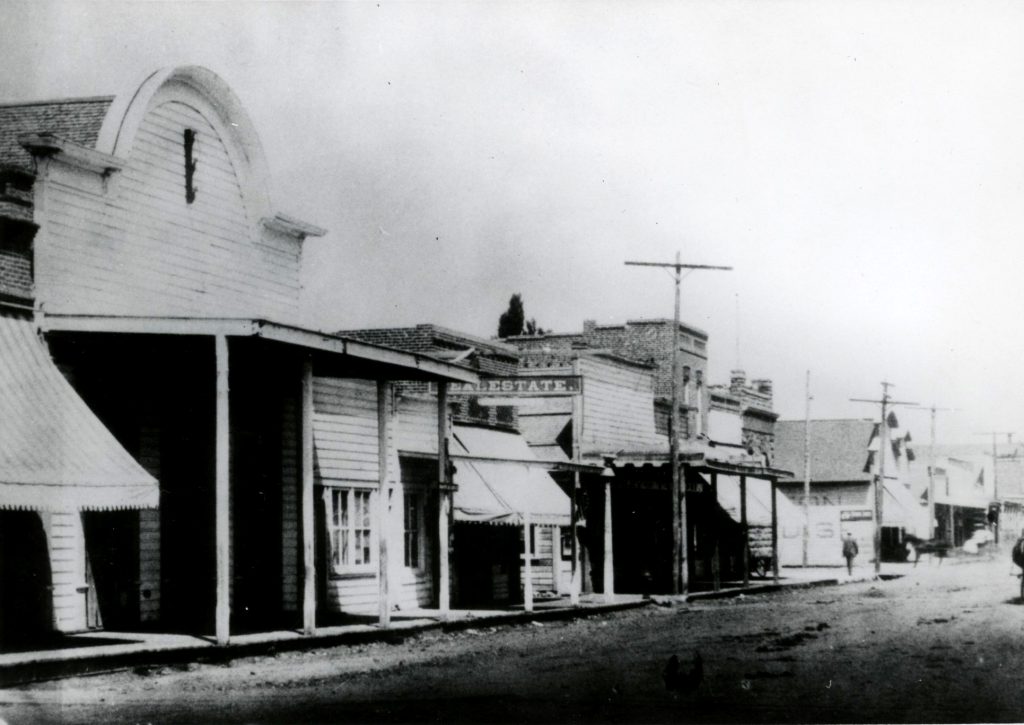
The city has the advantage of feeling removed from the chaos of Oregon’s largest urban centers while still being connected to Central Oregon’s larger economy. It is close enough to Redmond and Bend for many services and regional opportunities, but far enough away to maintain its own identity. It has old buildings, new development, rodeo culture, public lands, and a downtown that still feels like the center of a real community.
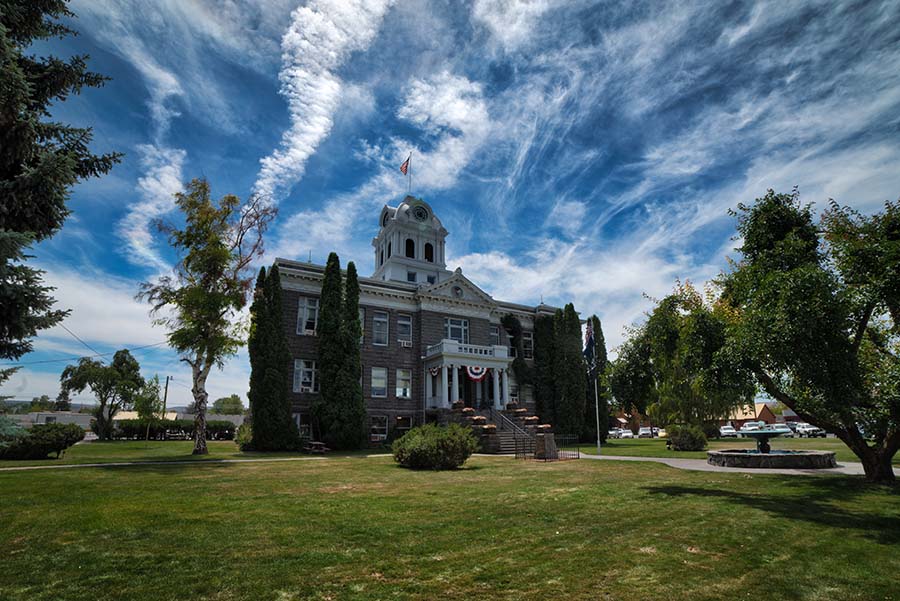
The Crook County Courthouse is one of the city’s most visible reminders of that history. Completed in 1909, the courthouse was built with native basalt from a quarry west of town and included a three-story clock tower that made it one of Oregon’s tallest buildings at the time.
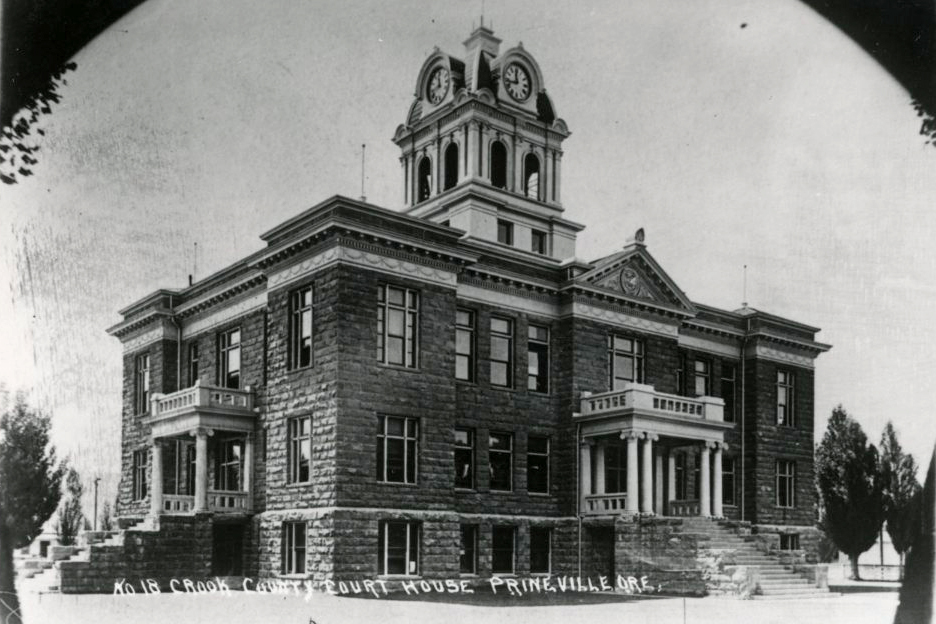
Courtesy Oregon Hist. Soc. Research Lib., Orhi17673
It remains one of those landmarks that tells you where you are before a sign ever does.
That kind of historic anchor matters in Oregon towns. It gives people a point of pride. It also creates continuity, especially in places experiencing growth. When new subdivisions appear, traffic patterns change, and more people arrive from somewhere else, the older parts of town remind residents that Prineville did not just show up yesterday.
The broader Crook County area has long attracted visitors for hunting, fishing, boating, sightseeing, and rockhounding, with the Oregon Blue Book noting that rockhounds can search for agates, limb casts, jasper, and thundereggs on mining claims provided by the Prineville Chamber of Commerce. That is the kind of detail that makes Central Oregon feel like Central Oregon. It is not just a place to live. It is a place to get dusty, fill a cooler, load up the pickup, and come home with a story.
That sense of place is also part of what makes safety feel different in a town like Prineville. In a smaller community, the line between public safety and community health can feel thinner. People tend to notice when something is off. They know which roads get sketchy in winter, which intersections need attention, which parks are busy, which neighbors need help, and which businesses have been hit by theft.
Of course, small-town life can also magnify problems. When crime happens, people hear about it. When a theft hits a local business, it can feel like it happened to the whole town. When a violent incident occurs, it travels through the community quickly. That is why improving numbers can matter, but so can the day-to-day work of trust, communication, and prevention.
SafeWise notes that community safety is influenced by things like public lighting, visible law enforcement presence, neighborhood support, community liaison access, and local safety programs. Those are not flashy solutions. They are practical, local, and often built over time.
For Prineville, the 2026 ranking may also be useful for people considering a move within Oregon. Many families and retirees are looking outside the state’s biggest cities, not necessarily because they want to leave Oregon behind, but because they want an Oregon that feels more manageable.
They want the mountains, the rivers, the small businesses, the school games, the Fourth of July parades, the hunting seasons, the coffee shops, the quiet mornings, and the sense that people still look out for each other.
Prineville offers a version of that, wrapped in high desert light.
The city is not alone on SafeWise’s list, of course. West Linn claimed the top spot for the seventh year in a row. Lake Oswego came in second, followed by Sandy, Monmouth, Newberg-Dundee, Lebanon, Central Point, Canby, Sherwood, and Prineville.
Several cities on the list showed encouraging trends. SafeWise reported that Newberg-Dundee and Prineville both saw violent crime decline year over year while property crime declined for two years. The report also noted that Lebanon, Central Point, West Linn, Lake Oswego, and Monmouth had multi-year improvements in one or both crime categories.
Across the 10 safest cities, SafeWise reported two murders during the reporting period, occurring in Lake Oswego and Central Point. Sandy and Monmouth reported zero rapes.
Those are sobering details, but they also point to why the ranking is based on rates rather than reputation. Some communities may be known as affluent, rural, suburban, fast-growing, or quiet, but the report attempts to compare them through reported crime data adjusted for population.
For Prineville, the property crime rate is especially notable. At 7.4 incidents per 1,000 residents, the city’s rate was lower than several higher-ranked communities on the list, though its violent crime rate was higher than some of the cities above it. That mix helps explain why it landed at number 10 rather than higher, while still making the statewide safest cities group.
The bigger story may be momentum. A city that climbs 17 spots in a statewide ranking is a city moving in the right direction, at least by the measurements used in the report.
And for a place like Prineville, momentum matters.
This is a town with old roots and a modern future. It is a place where ranching heritage and data center-era growth can exist in the same conversation. It is a community where people still care about rodeo traditions, local history, public lands, and whether the town can grow without losing its soul.
Safety is part of that conversation. So is housing. So are jobs. So are schools, roads, healthcare, fire season, water, and whether the people moving in understand the place they are joining.
A ranking does not answer all of those questions. But it can give people a starting point.
For current residents, Prineville’s spot on the list may be a point of pride. For people elsewhere in Oregon, it may be a reason to take a closer look. And for anyone who has watched Oregon change rapidly over the last decade, it is a reminder that there are still communities where improvement is possible, where local identity matters, and where the idea of a safer, more grounded Oregon does not feel out of reach.
Prineville is not trying to be Portland. It is not trying to be Bend. It is not trying to be the next shiny resort town.
It is Prineville.
A little dusty. A little rugged. Proud of its rodeo. Close to the Ochocos. Surrounded by country that still feels wide open. Old enough to have stories. Small enough that people still notice each other.
And according to SafeWise’s 2026 report, it is now one of the safest cities in Oregon.
Is Prineville one of the safest cities in Oregon?
Yes. According to SafeWise’s 2026 safest cities report, Prineville ranked among the 10 safest cities in Oregon. The report placed Prineville at number 10 statewide after reviewing violent crime and property crime data submitted through FBI crime reporting.
Where did Prineville rank among Oregon’s safest cities?
Prineville ranked number 10 on SafeWise’s 2026 list of the safest cities in Oregon. The full top 10 included West Linn, Lake Oswego, Sandy, Monmouth, Newberg-Dundee, Lebanon, Central Point, Canby, Sherwood, and Prineville.
Why was Prineville named one of Oregon’s safest cities?
Prineville made the list because its reported violent crime and property crime rates were low enough to place it among Oregon’s top 10 safest cities. SafeWise also noted that Prineville saw declines in both violent crime and property crime compared with previous years.
Did crime go down in Prineville?
According to the SafeWise report, yes. Prineville saw its violent crime rate drop from the previous year, and its property crime rate also continued to decline. The report showed Prineville moving up significantly in the statewide rankings.
What is Prineville, Oregon known for?
Prineville is known for its Central Oregon high desert setting, small-town feel, rodeo history, access to the Ochoco Mountains, nearby Prineville Reservoir, the Crooked River, outdoor recreation, ranching roots, and historic downtown. It is also the county seat of Crook County.
Where is Prineville located?
Prineville is located in Central Oregon, east of Bend and Redmond. It sits in Crook County and serves as the county seat. The city is surrounded by high desert country, rimrock, ranchland, forest roads, and access to the Ochoco National Forest.
Is Prineville a good place to live?
For many people, Prineville can be a good place to live, especially for those who want a smaller Central Oregon community with outdoor access, a slower pace, and a strong local identity. Like any city, it has its challenges, including growth, housing pressures, and everyday public safety concerns, but the 2026 SafeWise ranking suggests Prineville compares favorably with other Oregon cities when it comes to reported crime rates.
Is Prineville cheaper than Bend?
Prineville has often been viewed as a more affordable Central Oregon alternative to Bend, though prices can change quickly as more people move to the region. Many residents are drawn to Prineville because it offers access to Central Oregon without the same level of crowding and cost associated with Bend.
What county is Prineville in?
Prineville is in Crook County, Oregon. It is the county seat and the main incorporated city in the county.
What outdoor activities are near Prineville?
Popular outdoor activities near Prineville include fishing, boating, camping, hiking, hunting, rockhounding, horseback riding, scenic driving, wildlife viewing, and exploring public lands. Nearby destinations include Prineville Reservoir, the Crooked River, Ochoco National Forest, and the Crooked River National Grassland.
Is Prineville near Bend?
Yes. Prineville is east of Bend and Redmond in Central Oregon. It is close enough for regional access to Bend’s shopping, medical services, restaurants, and job market, while still maintaining a more small-town feel.
Why are people moving to Prineville?
People move to Prineville for several reasons, including outdoor recreation, more space, a smaller community feel, Central Oregon scenery, family ties, job opportunities, and relative affordability compared with some nearby cities. Safety rankings like the 2026 SafeWise report may also make Prineville more attractive to people considering a move within Oregon.
Is Prineville rural or suburban?
Prineville has a small-city feel with strong rural roots. It is not a suburb of Portland or Bend, though it is connected to the broader Central Oregon region. The city serves as a local hub for Crook County, with ranchland, forest, public lands, and high desert country surrounding it.
What makes Prineville different from other Oregon cities?
Prineville stands out because of its high desert landscape, historic downtown, rodeo culture, ranching heritage, and access to wide-open Central Oregon recreation. It feels different from Oregon’s coastal towns, Willamette Valley communities, and Portland-area suburbs.
What is the safest city in Oregon?
According to SafeWise’s 2026 report, West Linn was ranked the safest city in Oregon. Prineville ranked number 10 on the same list.
Is Prineville safe for families?
Based on the SafeWise 2026 report, Prineville ranked among the safest cities in Oregon, which may appeal to families looking for a smaller community. Families should still consider other factors such as schools, housing, healthcare access, commute times, and neighborhood fit when deciding whether Prineville is right for them.
What should people know before moving to Prineville?
People considering a move to Prineville should know that it is a Central Oregon town with a strong local identity, outdoor access, dry high desert weather, and a slower pace than larger cities. It may appeal to people who like small-town life, public lands, and open space, but newcomers should also consider housing costs, job options, winter driving, summer wildfire smoke, and distance from larger urban services.
Why is Prineville included in conversations about Oregon safety?
Prineville is being discussed because it appeared on SafeWise’s 2026 list of Oregon’s safest cities. The report found that Prineville’s violent crime and property crime rates improved, helping it earn a spot in the statewide top 10.