
An absurd Oregon ballot proposal that would radically reshape hunting, fishing, farming, ranching, animal research, wildlife management, and even ordinary food production has cleared a major procedural hurdle, bringing one of the most sweeping animal-rights initiatives in state history closer to voters.
Initiative Petition 28, formally known as the People for the Elimination of Animal Cruelty Exemptions Act, or PEACE Act, has been pitched by supporters as a compassionate effort to extend animal cruelty protections beyond household pets. But opponents across Oregon argue the measure is not a modest animal-welfare reform at all. They say it is a sweeping criminalization of long-standing practices that feed families, support rural economies, fund conservation, sustain restaurants, and form part of Oregon’s outdoor identity.
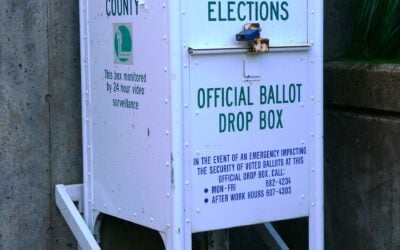
Supporters of IP28 submitted 142,784 signatures to the Oregon Secretary of State’s Office ahead of the deadline, according to the campaign. That is well above the 117,173 valid signatures required to qualify for the November 2026 general election ballot, though the state still has to verify that enough of those signatures are valid.
That verification process now becomes the next major step. Until the Secretary of State finishes reviewing the petitions, IP28 is not officially on the ballot. But for farmers, ranchers, hunters, anglers, seafood workers, restaurant owners, tribal communities, wildlife managers, and many everyday Oregonians, the warning siren is already loud enough.
Because if this measure qualifies and passes, Oregon would not merely be having a symbolic debate about animal rights. The state would be considering whether to make broad categories of hunting, fishing, animal slaughter, breeding, and other animal-related practices subject to criminal animal cruelty laws.
That is why opponents are calling IP28 one of the most extreme ballot proposals Oregon has seen in years.
The measure would expand Oregon’s existing animal cruelty framework by removing many of the exemptions that currently protect lawful activities involving animals. Those exemptions matter because they are what separate animal abuse from legal hunting, fishing, animal husbandry, livestock production, veterinary care, wildlife management, scientific research, pest control, and other practices that have long been regulated under separate bodies of law.
Supporters argue those exemptions leave too many animals without legal protection. Opponents counter that the exemptions exist for a reason: Oregon’s animal cruelty laws were never designed to treat a deer hunter, a cattle rancher, a commercial fisherman, a veterinarian, a researcher, or a family raising livestock as if they were committing the same kind of crime as someone abusing a dog in a backyard.
That distinction is at the heart of the fight.
The IP28 campaign says the proposal would extend protections currently associated with companion animals to mammals, birds, reptiles, amphibians, and fish. The campaign describes the measure as a way to protect animals on farms, in research labs, and in the wild from intentional injury and killing. It also seeks to address forced breeding practices, which the campaign characterizes through the lens of animal sexual assault law.
But the practical effect, critics say, is not hard to see. If intentionally injuring or killing covered animals becomes criminal outside narrow exceptions, then hunting and fishing become nearly impossible to square with the law. Livestock slaughter becomes legally endangered. Standard breeding and husbandry practices could be exposed to prosecution. Research involving animals could be shut down or forced out. Wildlife management tools could be narrowed dramatically. Pest control could become legally complicated. Oregon’s food systems could be thrown into chaos.
This is not some far-fetched interpretation invented by opponents. Even supporters acknowledge that IP28 would protect animals from slaughter, hunting, fishing, and experimentation. The campaign’s own materials describe a fundamental shift away from killing animals as a strategy for meeting human needs.
That may sound noble to activists who already believe Oregon should move toward a no-kill model for nearly every category of animal. But for most of the state, it raises a blunt question: who gets to decide that hunting, fishing, ranching, seafood, animal agriculture, and rural traditions should be placed under criminal suspicion?
Chief petitioner David Michelson has framed the campaign as an effort to make not killing animals the default. Supporters say the initiative is meant to start a larger conversation about how animals are treated and whether society should move toward alternatives. They point to plant agriculture, nonlethal wildlife management, and non-animal research methods as examples of where they believe Oregon could go instead.
But opponents argue that IP28 does not simply start a conversation. It puts a legal hammer over entire sectors of Oregon life and then tells people to figure out the transition later.
That is a very different thing.
A ballot conversation is one thing. A criminal statute is another.
Oregon has plenty of room for debate over animal welfare. Voters can support humane treatment of animals while also recognizing the difference between cruelty and food production. They can support conservation while also understanding that hunters and anglers are often among the people funding and participating in that conservation. They can care about sustainable practices while still knowing that Oregon’s farms, ranches, fisheries, and restaurants cannot be remade overnight by slogans.
IP28 collapses those distinctions.
The measure has drawn criticism from people who might otherwise disagree on plenty of political issues. Gov. Tina Kotek has publicly opposed the proposal, warning that criminalizing hunting and fishing would be wrong for Oregon and that the petition risks targeting common agricultural practices important to the state’s economy. Her Republican challenger, Sen. Christine Drazan, has also attacked the measure, calling it a threat to Oregon’s economy, way of life, jobs, and food supply.
When both major candidates for governor find themselves on the same side of a ballot fight in Oregon, that should tell voters something. This is not a normal left-versus-right issue. It is a sweeping proposal that cuts across partisan lines because its impact would reach far beyond politics.
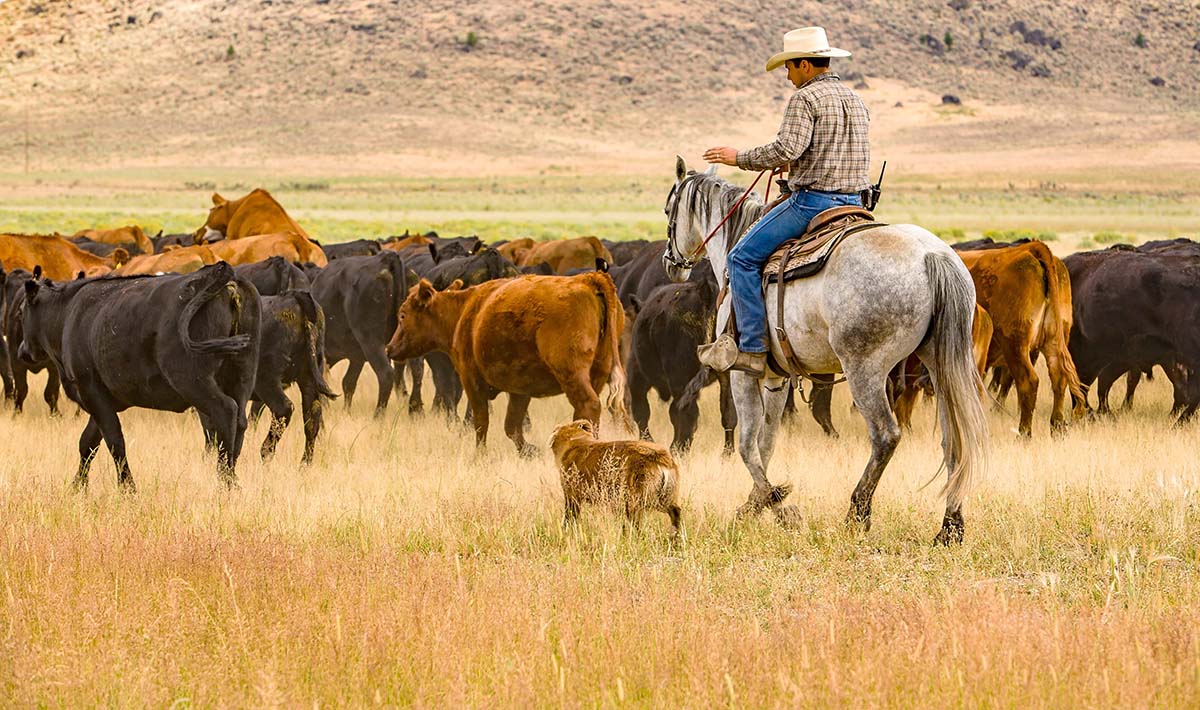
The opposition is not limited to politicians. Farmers and ranchers see IP28 as a direct threat to their ability to operate. Hunters and anglers see it as a direct attack on outdoor traditions and food gathering. Restaurant owners worry about what happens when Oregon seafood, Oregon meat, and Oregon-raised products are suddenly trapped in legal uncertainty. Wildlife advocates who support regulated hunting and fishing worry about funding and management. Rural communities see another example of urban activists trying to impose an ideological experiment on people whose livelihoods they do not understand.
At Portland’s historic Dan & Louis Oyster Bar, owner Meinert Wachsmuth warned that the business impacts could be serious, but he also pointed to something bigger than balance sheets. Hunting and fishing, he noted, are tied to families and traditions in ways that cannot simply be replaced by policy language.
That matters. Because for many Oregonians, hunting and fishing are not hobbies reserved for trophy photos or weekend bragging. They are how grandparents teach grandchildren patience, responsibility, respect for wildlife, and where food comes from. They are how families fill freezers. They are how people stay connected to land, rivers, seasons, and community. They are also part of Oregon’s conservation model, where license fees, tags, and related activity help support wildlife agencies and habitat work.
To dismiss all of that as outdated cruelty is not compassion. It is arrogance.
The Oregon Hunters Association has been among the groups sounding the alarm. Executive Director Todd Adkins has described the proposal as extreme and warned that it would create deep anxiety across the state. His concern is not simply that a few traditions would be inconvenienced. It is that commercial fishing, ranching, hunting, and other animal-based sectors could be fundamentally upended.
That is the part IP28 supporters often try to soften with language about transition funds, alternatives, and future possibilities. The campaign has pointed to a Humane Transition Fund that would be intended to help with food assistance, replacement income, job retraining, conservation, and rewilding efforts.
But promising a transition fund does not erase the consequences of the policy itself.
You cannot tell ranchers, fishing families, meat processors, farmers, restaurant owners, guides, feed suppliers, truckers, processors, small-town businesses, and rural workers that their industries may be criminalized, then reassure them that a committee might help them transition into something else. That is not a serious economic plan. That is a demolition notice with a pamphlet attached.
And Oregon should know better.
This is a state already struggling with affordability, unemployment concerns, downtown business decline, rural-urban distrust, housing pressure, and a political culture where many communities feel ignored by Portland and Salem. Dropping a measure like IP28 into that environment is not healing. It is gasoline.
Supporters will argue that animals deserve protection, and most Oregonians would agree with that in principle. Oregon already has animal cruelty laws because people across the political spectrum believe deliberate abuse and neglect should be punished. Nobody needs to support animal cruelty in order to oppose IP28. In fact, that is one of the most dishonest frames around this debate: the idea that voters must choose between caring about animals and preserving hunting, fishing, farming, ranching, and food production.
That is a false choice.
Oregonians can oppose cruelty while still supporting lawful hunting. They can oppose neglect while still supporting ranching. They can support humane standards while still supporting local meat and seafood. They can care about wildlife while still understanding that regulated hunting and fishing are deeply connected to conservation. They can believe pets deserve protection without pretending that a salmon, a steer, a cougar, a chicken, and a Labrador retriever all belong in the exact same legal category.
The law already recognizes context because context matters.
A person torturing an animal for amusement is not the same as a rancher managing livestock. A poacher illegally killing wildlife is not the same as a licensed hunter following state rules. Someone neglecting a dog is not the same as a fisherman catching dinner. A malicious abuser is not the same as a farmer producing food.
IP28 blurs these lines in a way that should concern anyone who believes laws should be precise, fair, and rooted in reality.
The measure’s supporters want Oregon to rethink its relationship with animals. Fine. Let the debate happen. But voters should not be fooled by soft branding. Calling something the PEACE Act does not make it peaceful for the communities it would disrupt. Calling exemptions “loopholes” does not mean the activities they protect are abusive. Calling a forced economic transformation a moral conversation does not make the consequences any less real.
There is also a democratic irony here. The campaign argues that a citizen initiative is simply a peaceful way to propose change because it only passes if a majority of voters approve it. That is true as far as process goes. Ballot measures are part of Oregon’s political system.
But democracy is not only about whether something can be placed on a ballot. It is also about whether voters are told clearly what they are being asked to approve.
And IP28 deserves absolute clarity.
If this reaches the ballot, voters should understand that they are not just voting on whether animals should be treated kindly. They are voting on whether Oregon should remove legal protections around practices that include hunting, fishing, farming, ranching, animal husbandry, slaughter, research, wildlife management, and related industries. They are voting on whether criminal animal cruelty laws should be expanded into areas that have long been governed by separate regulations. They are voting on whether the state should gamble with food production, rural jobs, cultural traditions, conservation funding, and local businesses in pursuit of an activist vision that many Oregonians never asked for.
That is the real ballot question, no matter how gentle the campaign language sounds.
The food implications alone are enormous. Oregon restaurants, grocery stores, seafood markets, ranches, farms, and processors all exist within supply chains that depend on animal agriculture and fishing. If local production is restricted or criminalized, products do not magically appear from nowhere. Businesses may import from other states or countries, often with less local oversight, more transportation cost, and fewer connections to Oregon’s own sustainability standards.
That means IP28 could perversely punish local producers who are already subject to Oregon rules while pushing demand toward outside markets. It could make food more expensive. It could reduce access to local protein. It could hurt small businesses while doing little to reduce overall consumption. People who can afford imported alternatives may adapt. Working families may simply pay more.
This is a recurring problem with ideological policy: the people who write the slogans rarely suffer first from the consequences.
Rural families do. Small businesses do. Workers do. People on tight grocery budgets do. Communities built around agriculture, seafood, hunting, and outdoor recreation do.
The initiative could also deepen the divide between Oregon’s urban political class and the rest of the state. Many rural Oregonians already feel that decisions affecting their land, water, livelihoods, and traditions are made by people who neither know nor respect their lives. IP28 fits perfectly into that fear. It tells them that practices they consider responsible, lawful, and necessary may now be morally rebranded as cruelty and legally treated as crime.
That is not how you build trust.
Nor is it how you build effective conservation.
Hunters and anglers are often caricatured by animal-rights activists as the problem, when in reality many are deeply invested in habitat, wildlife populations, public lands, stream health, and responsible management. Oregon’s wildlife system is not perfect, and reasonable people can debate management decisions. But removing hunting and fishing from the equation would not automatically create a healthier natural world. It would create new funding questions, new management problems, and new conflicts over how to handle predators, invasive species, overpopulation, disease, crop damage, and human-wildlife encounters.
Nonlethal tools have a place. They do not solve everything.
That is another flaw in IP28: it assumes Oregon can simply replace complex systems with moral preference. But agriculture, wildlife, food production, research, and conservation are not simple. They involve tradeoffs. They involve biology, economics, geography, culture, public safety, and practical limits. Pretending otherwise may feel good in a campaign video, but it is a dangerous way to write law.
There are also questions about tribal rights and tribal practices that should not be brushed aside. Hunting, fishing, and animal harvest are not merely recreational activities for many communities. They can be tied to treaty rights, sovereignty, subsistence, ceremony, and cultural continuity. Any statewide measure that threatens to criminalize or restrict those practices deserves intense scrutiny.
Oregon voters should be especially cautious about a ballot proposal that uses universal language while potentially colliding with deeply specific legal and cultural realities.
Supporters say the measure leaves exceptions for veterinary practices and self-defense. But the narrowness of those exceptions is exactly what worries critics. Life is broader than a veterinary office and a self-defense emergency. Agriculture is broader than that. Wildlife management is broader than that. Food production is broader than that. Rural life is broader than that.
A law this sweeping cannot be rescued by two narrow carveouts.
Even some voters who are sympathetic to animal-rights arguments may decide IP28 goes too far. That may be the most important political reality facing the campaign. Oregon is a blue state in many elections, but it is not a state made up entirely of activists who want to abolish hunting and fishing. It is a state of coastal fishing towns, high desert ranches, Willamette Valley farms, Cascade elk camps, tribal fisheries, small-town butcher shops, farmers markets, oyster bars, cattle operations, hunting families, and people who may vote progressive on many issues while still wanting no part of criminalizing the way their neighbors produce food.
That is why the opposition to IP28 has the potential to be broad and fierce.
This measure is not simply controversial because people misunderstand it. It is controversial because many people understand it quite well.
They understand that if the law changes who is protected under animal cruelty statutes, the consequences do not stay theoretical. They understand that if the state removes exemptions for lawful hunting, fishing, animal husbandry, slaughter, and other practices, people can face criminal exposure for activities that were legal and regulated. They understand that if legal Oregon tries to become a so-called no-kill or no-harm sanctuary state for broad categories of animals, the result is not just compassion. It is upheaval.
And they understand that once a practice is criminalized, the government is no longer merely encouraging a new moral direction. It is threatening punishment.
That is why voters should look past the name of the measure and examine the machinery underneath it.
The PEACE Act is being sold as a humane expansion of protection. But in practice, it asks Oregon to take a radical leap into criminalizing or legally endangering activities that are central to the state’s economy, culture, food systems, and outdoor life.
The campaign has every right to collect signatures. Supporters have every right to make their case. But opponents have every right to answer with equal force: this is too extreme for Oregon.
Animal welfare matters. Responsible agriculture matters. Sustainable fishing matters. Ethical hunting matters. Conservation matters. Local food matters. Rural economies matter. Tribal rights matter. Family traditions matter. Jobs matter. Legal clarity matters.
IP28 puts too many of those things at risk.
If the Secretary of State determines that enough signatures are valid, Oregon voters may soon face a decision much bigger than a feel-good question about kindness to animals. They may be asked whether the state should use criminal law to force a sweeping than a feel-good question about kindness to animals. They may be asked whether the state should ideological transformation of food, farming, wildlife, and tradition.
That should alarm anyone who believes Oregon’s future should be built by practical people, not by activists trying to turn an entire state into a legal experiment.
If IP28 reaches the November ballot, it deserves to be defeated clearly, loudly, and decisively.