

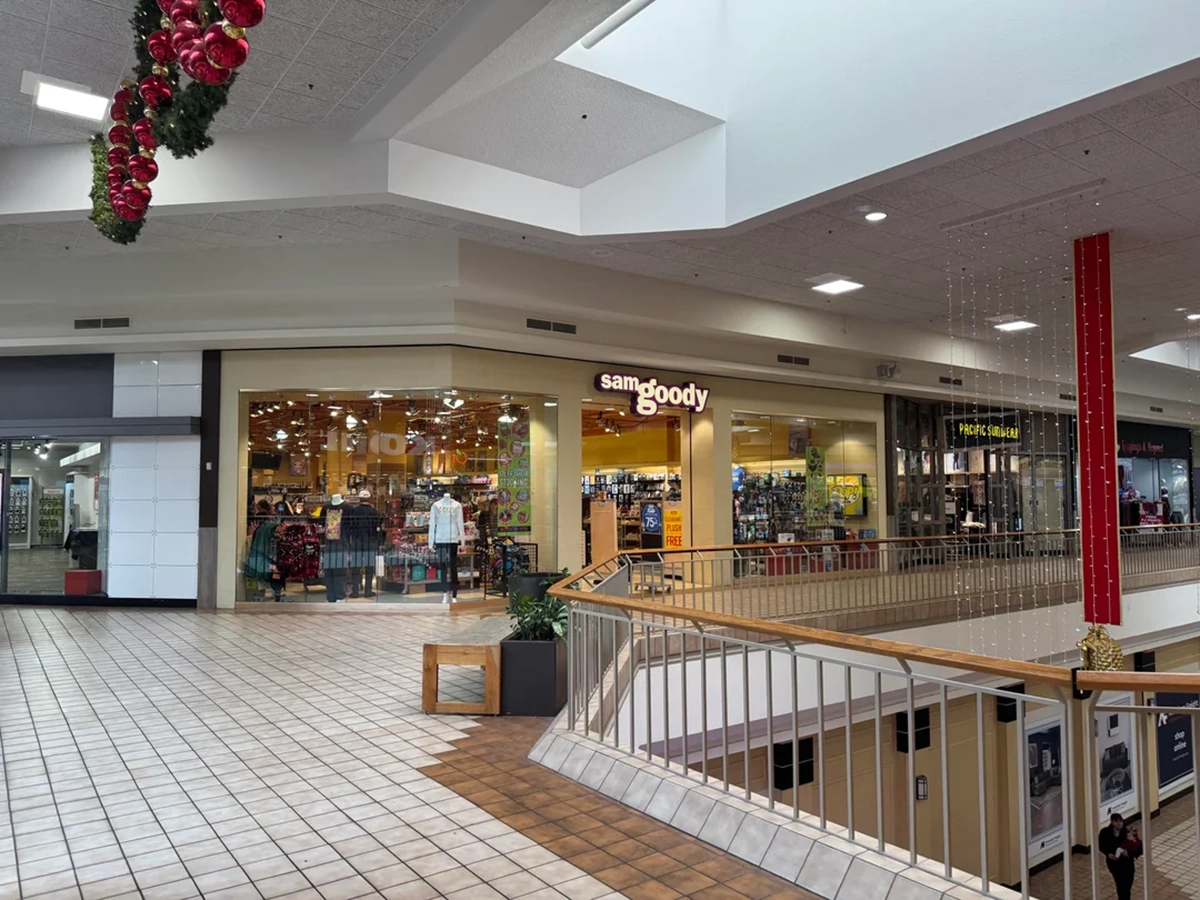
There are certain store names that hit an entire generation right in the memory.
Sam Goody is one of them.
For millions of Americans who grew up before streaming took over everything, Sam Goody was not just a place to buy music. It was the mall stop. The place where you wandered in with no plan, flipped through rows of CDs, checked the new releases wall, looked at movie posters you could not afford, and tried to decide whether one album was worth blowing your entire weekend budget.
For a long time, it felt like stores like Sam Goody would always be there.
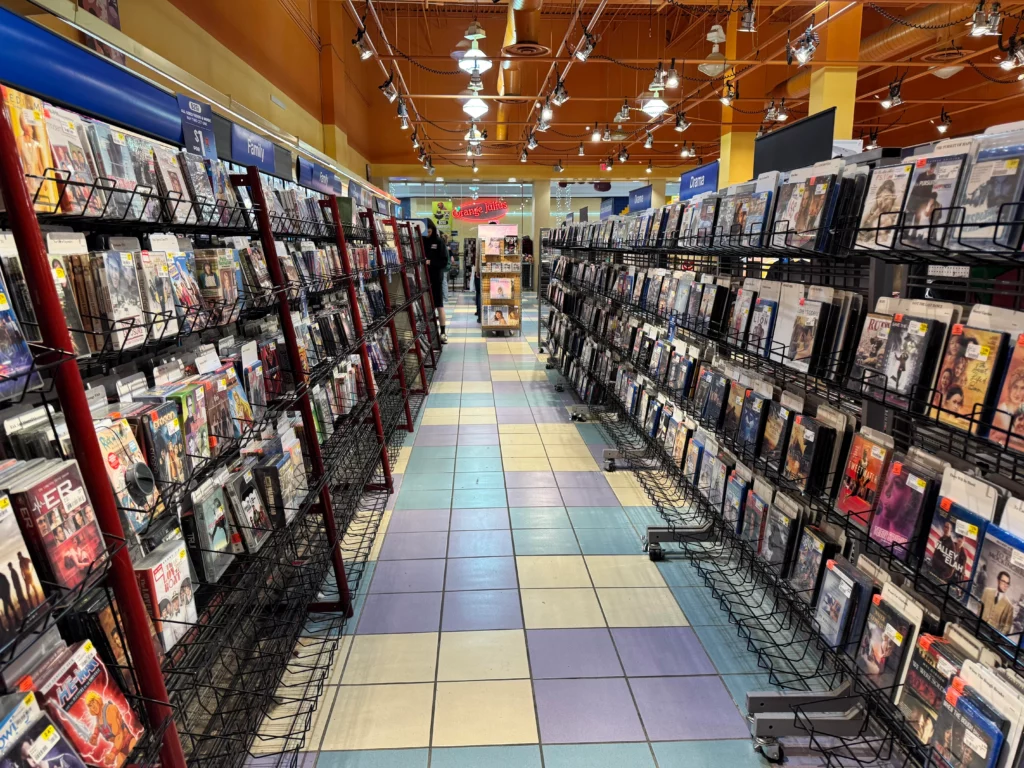
They were part of the mall ecosystem. You had the food court. You had the arcade. You had the movie theater if your mall was lucky. You had the weird kiosk selling remote control helicopters. And somewhere nearby, glowing with posters, plastic jewel cases, headphones, DVDs, band shirts, and that unmistakable feeling of teenage freedom, you had Sam Goody.
Now, nearly all of that is gone.
Except, somehow, in Oregon.
As of now, the last known Sam Goody still operating appears to be inside the Rogue Valley Mall in Medford, Oregon. The mall’s own directory still lists Sam Goody as an active store at 1600 North Riverside Avenue, complete with phone number and current hours.
That means Oregon, already famous for being home to the last Blockbuster on Earth in Bend, may now have another strange and wonderful title to add to its collection: home of the last Sam Goody in the world.
And honestly, that feels very Oregon.
Not because Oregon is stuck in the past, but because this state has always had a soft spot for the things the rest of the country was too quick to toss aside. Old theaters. Neon signs. roadside diners. drive-ins. record shops. bookstores. video stores. Odd little places with soul. The kind of places that make no sense on a spreadsheet and perfect sense to anyone who has ever walked through the door.
Sam Goody was once everywhere. At its peak, the company reportedly operated around 1,300 locations, and by the 1980s and 1990s it had become one of the defining music retailers of American mall culture.
The chain’s story goes back to the 1950s, when Sam Goody became known for discount record sales before the brand grew into a national name. Over time, it became a go-to destination for vinyl, cassettes, CDs, DVDs, posters, headphones, and nearly anything else tied to music and movies. For a generation raised on physical media, a trip to Sam Goody was part shopping, part discovery, and part social ritual.
Then the world changed.
The internet arrived. Music downloads followed. Streaming took over. Malls began losing their gravitational pull. The same people who once spent Saturday afternoon browsing CD racks could suddenly pull up almost any song ever recorded from a phone in their pocket. Convenience won. The shelves disappeared. The listening stations went quiet. One by one, the stores closed.
By late 2024, only two Sam Goody locations were being widely reported as left: one at the Ohio Valley Mall in St. Clairsville, Ohio, and one at the Rogue Valley Mall in Medford. The Ohio store, a longtime local fixture that had opened in 1980, was reported to be closing in early 2025.
That left Medford.
The Medford location had also been mentioned in late 2024 reports about the final two remaining stores, with Consequence noting that the two locations were in Ohio and Oregon, while no timeline had been given for the Oregon store’s closure at that time.
But here we are in 2026, and Rogue Valley Mall still lists Sam Goody as open.
For anyone who remembers the golden age of the mall music store, that fact feels almost unbelievable.
The Rogue Valley Mall itself sits along North Riverside Avenue in Medford, a familiar stop for generations of Southern Oregon shoppers. It is the kind of regional mall many Oregonians know by heart. Not flashy. Not trying to be a luxury shopping destination. Just a place people went after school, on lunch breaks, during Christmas shopping, or on hot summer days when the air conditioning alone was reason enough to walk inside.
And somewhere in that mall, the Sam Goody name is still hanging on.
That is the part that makes this story bigger than one store.
Because this is not just about retail. It is about memory.
Sam Goody belonged to an era when buying music felt like an event. You did not just tap a screen and instantly hear an album. You saved up. You asked friends what was good. You read the sticker on the front of the CD case. You studied the track list. You took a chance on a band because the cover art looked cool. You opened the plastic wrap in the car before you even left the parking lot.
If the album was good, it became part of your life. If it was bad, you were stuck with it anyway, which somehow made you listen harder.
There was a weight to it. Literally and emotionally.
Today, almost every song is available instantly, but a lot of the magic of finding it has disappeared. The old music stores gave people a place to wander. A place to be surprised. A place where your taste could be shaped by a staff pick, a poster, a listening station, or the friend who insisted you absolutely had to hear track seven.
Sam Goody was one of those places.
That is why the Medford store matters.
It is not just a surviving business. It is a living piece of American mall culture, still standing in a state that has become oddly good at preserving the last physical remnants of the pre-streaming world.
Just look at Bend.
Oregon is already home to the last Blockbuster on Earth, located at 211 NE Revere Avenue in Bend. The store became the last Blockbuster in the United States in 2018 and the last one in the world in 2019, after the final remaining locations elsewhere closed.
The Bend Blockbuster has become a full-blown pilgrimage stop for people who remember renting movies on Friday nights, arguing over what to watch, and hoping the new release was not already gone. Today, it is part working video store, part museum, part souvenir shop, and part cultural monument to a time when entertainment required leaving the house.
That Oregon now appears to have both the last Blockbuster and the last Sam Goody feels almost too perfect.
One is in Bend, holding the line for movie night.
One is in Medford, holding the line for mall music culture.
Together, they make Oregon feel like the unofficial last stand of physical media.
It is tempting to laugh about that, because yes, there is something funny about a state better known for forests, waterfalls, volcanoes, rain, breweries, and weird roadside attractions also becoming the final refuge for two of America’s most nostalgic entertainment chains.
But there is something genuinely meaningful here too.
Oregon has always had a stubborn streak. We keep places alive because people care about them. Not always because they are practical. Not always because they are efficient. Sometimes because they mean something. Sometimes because they remind us of who we were. Sometimes because a store is not just a store, but a doorway back into a specific version of ourselves.
The last Blockbuster works because people still want to walk through those blue and yellow doors. They want to take pictures, buy a shirt, rent a movie, and remember what it felt like when the weekend started in the aisles of a video store.
The last Sam Goody works the same way.
For some people, walking into that store in Medford is probably just a quick mall stop. For others, it is a time machine.
It brings back the smell of new plastic CD cases. The excitement of finding an album you had been looking for. The sticker shock of import prices. The wall of DVDs. The band shirts. The posters. The feeling of being 14, 17, or 22 again, standing in a mall and believing that the right album might change everything.
That is what makes these surviving places powerful. They hold ordinary memories that turned out not to be ordinary at all.
For younger visitors, Sam Goody may look like a curiosity from another planet. A store built around things you can now stream instantly. A place where music and movies take up actual space. But for people who lived through it, that physical space was the point.
You browsed differently when you had to touch things.
You remembered where you bought an album.
You loaned CDs to friends and sometimes never got them back.
You read liner notes.
You looked at album art.
You made choices.
You built a collection that said something about you.
That is the world Sam Goody came from, and against all odds, one little piece of it appears to still be alive in Southern Oregon.
There is also something fitting about the location. Medford is not Portland. It is not Bend. It is not one of Oregon’s usual national media darlings. It is a working Southern Oregon city, close to the Rogue River, the Applegate, Jacksonville, Ashland, Table Rocks, vineyards, orchards, wildfire country, and some of the most beautiful landscapes in the state.
And tucked inside its mall is a store name that once belonged to nearly every mall in America.
That contrast is what makes the story so good.
The last Sam Goody is not sitting in Times Square. It is not in Los Angeles. It is not preserved as a corporate museum in some glassy entertainment complex. It is in Medford, Oregon, inside a real mall, still listed with regular mall hours, still carrying a name that millions of people thought had vanished for good.
Just like the last Blockbuster is not in Hollywood.
It is in Bend.
Maybe that is the Oregon magic of it all. These places survive here not because they are trendy, but because they are allowed to remain themselves.
In a culture that moves too fast and deletes its own history almost as soon as it makes it, there is something refreshing about a Sam Goody sign still glowing in a mall. There is something comforting about knowing that somewhere in Oregon, you can still visit the last Blockbuster, and apparently the last Sam Goody too.
It is easy to call it nostalgia, and nostalgia is definitely part of it.
But maybe it is also a reminder.
Not everything old needs to be replaced.
Not every experience is improved by making it faster.
Not every memory belongs in the cloud.
Sometimes, the thing that matters is still being able to walk through the door.