

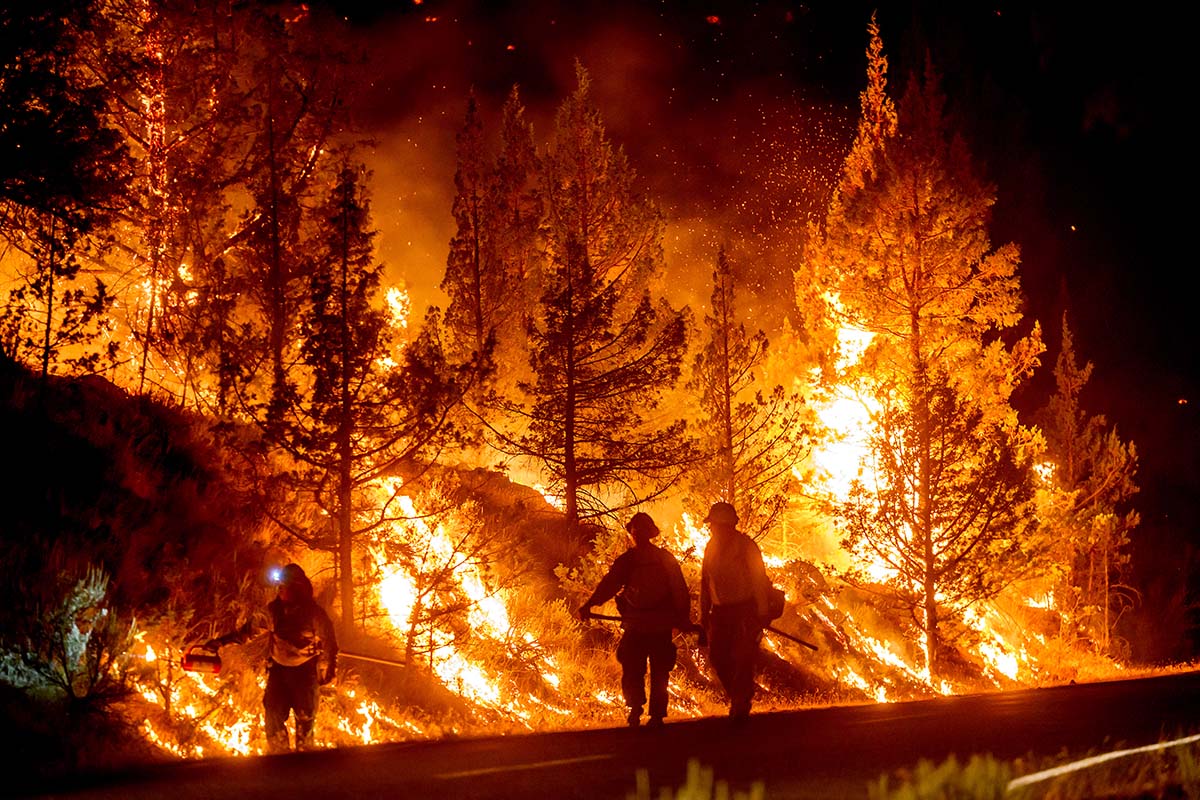
Oregon has not yet reached August, but the 2026 wildfire season has already left an enormous mark across the state.
From the open rangelands of southeastern Oregon to the dry hills surrounding small communities in the central and eastern parts of the state, fire has moved across the landscape with startling speed. Smoke has settled into valleys, evacuation notices have disrupted summer routines and firefighting crews have been stretched across dozens of incidents.
The official That Oregon Life store
The Oregon you bring home.
Start the day with Oregon-roasted coffee, then find original gear inspired by the places, stories, and oddities that make this state ours.
Shop Oregon gear


According to reporting from KOIN and the latest available federal fire information, Oregon is rapidly approaching the acreage burned during the record-setting 2024 season.
The National Interagency Fire Center listed 30 large fires burning in Oregon as of July 29. Together, those active incidents covered more than 1.6 million acres. Because fire boundaries, mapping methods and incident groupings change frequently, statewide seasonal estimates can vary slightly from one report to another. Still, every available count points to the same conclusion: an extraordinary amount of Oregon has burned before the traditional peak of fire season.
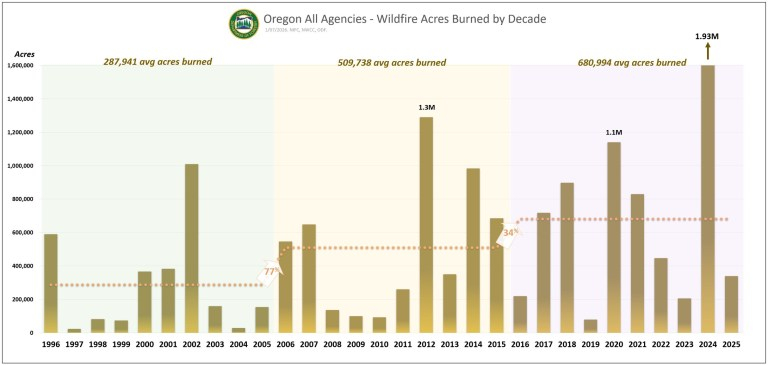
For comparison, Oregon’s entire 2025 wildfire season ended with 2,734 reported fires burning approximately 324,000 acres. The state’s 2024 season set a modern record, with more than 1.9 million acres burned. Oregon’s current acreage is already several times greater than last year’s total and is quickly closing in on the 2024 record.
It is also far above what Oregon typically experiences during an entire season. State officials have placed the recent 10-year average at roughly 680,000 acres burned annually. Oregon has already surpassed that figure more than twice over, with weeks and possibly months of dry weather still ahead.
The rapid escalation followed a burst of thunderstorms and lightning across central and eastern Oregon in mid-July. Numerous fires started within a relatively short period, forcing agencies to divide crews, aircraft and incident-management teams among several major emergencies.
Once those fires were burning, low humidity, dry vegetation and gusty winds helped some of them expand dramatically. The National Interagency Fire Center has kept the Northwest at Preparedness Level 5, the highest national level, as Oregon and Washington compete for crews, engines, aircraft and other resources. International personnel from Australia and New Zealand have also been assigned to assist firefighting operations in the region.
Several Oregon fires have crossed the 100,000-acre threshold commonly used to describe a megafire. The July 29 federal report included the Big Grass Fire at more than 301,000 acres, the Rowe Creek Complex at more than 300,000 acres, the Hay Creek Complex at more than 200,000 acres, the Coleman Creek Fire at more than 180,000 acres and the Second Flat Fire at more than 100,000 acres. Those figures can change quickly as crews improve mapping and fires continue to spread.
The numbers are staggering, but acreage alone does not tell the complete story.
This season is not a repeat of the Labor Day fires of 2020, when wind-driven flames swept through heavily forested areas west of the Cascades and devastated communities including Detroit, Blue River, Gates, Talent and Phoenix.
Many of the largest fires burning this year are moving through grasslands, sagebrush, grazing country and other open landscapes in central and eastern Oregon. Under strong winds, grass and brush fires can travel enormous distances in a short period of time. They may cover more acreage than a forest fire while producing a very different pattern of damage.
That does not make them harmless.
Rangeland fires can destroy homes, barns, fences, grazing areas, wildlife habitat, utility infrastructure and the winter feed relied upon by ranching families. They can close highways, threaten small towns and leave rural communities facing years of rebuilding.
Forest fires often behave differently. Timber and heavier vegetation can support longer-burning fires with greater flame intensity, particularly where steep terrain makes access difficult. Forested fires may also threaten valuable timber, watersheds and communities surrounded by dense vegetation.
The distinction is important as Oregon once again enters a familiar debate over how its forests and wildlands should be managed.
Some Oregonians argue that more mechanical thinning, removal of smaller trees and brush, commercial timber work, grazing and prescribed burning could reduce the amount of fuel available when a wildfire begins. Research from Oregon State University has found that thinning can moderate fire behavior in dry ponderosa pine forests, while prescribed burning can extend the benefits of those treatments.
Others urge caution about treating all Oregon landscapes the same way. Strategies that may work well in the dry forests of eastern and southern Oregon may be less effective or appropriate in the wetter forests of the Coast Range and western Cascades. Critics of aggressive cutting also raise concerns about habitat, soil disturbance, water quality, carbon storage and whether some projects are designed primarily around timber production rather than community protection.
Prescribed fire carries its own tradeoffs. Supporters view it as a way to return low-intensity fire to landscapes where it was historically common, including places traditionally managed with Indigenous cultural burning. It can improve habitat, reduce surface fuels and help restore some fire-adapted ecosystems. At the same time, prescribed burns require trained workers, favorable weather and careful smoke management, and they cannot be used safely during every season.
Fire researchers generally emphasize that the effectiveness of any treatment depends heavily on the landscape. Oregon State University notes that fuel reduction and prescribed burning have strong scientific support in seasonally dry forests. Their role is less certain in moist forests that historically burned less often and are influenced more strongly by drought and extreme fire weather.
The enormous acreage burning this summer also demonstrates why the discussion cannot be limited to forests. Much of the 2026 fire footprint is in rangeland and grass country, where invasive grasses, lightning, wind, drought, grazing practices, road access and rapid detection may be just as important as tree density.
No single approach can eliminate wildfire from Oregon. Forest thinning cannot stop every wind-driven fire. Prescribed burning cannot be conducted everywhere. Full suppression can protect communities but may also allow fuels to accumulate in landscapes that historically experienced regular fire. Leaving every area untreated can preserve habitat in some places while allowing dangerous conditions to build in others.
The larger conversation includes forest and rangeland restoration, responsible timber management, prescribed and cultural fire, defensible space around homes, fire-resistant construction, evacuation planning, firefighting capacity and careful decisions about where new homes are built.
For now, crews remain focused on the immediate work of protecting lives, homes and infrastructure.
August and September are often among Oregon’s most difficult wildfire months. In especially dry years, meaningful fire activity can continue into October before widespread rain finally quiets the landscape.
Oregon has already experienced a season that would be considered severe even if it ended today. Instead, the state is entering the heart of summer with millions of acres of dry vegetation, firefighting resources under heavy demand and no guarantee that the worst is behind us.
For current Oregon fire conditions: Track current fire incidents, mapped evacuation areas, smoke, road conditions, and official resources on our Oregon Wildfire Map.