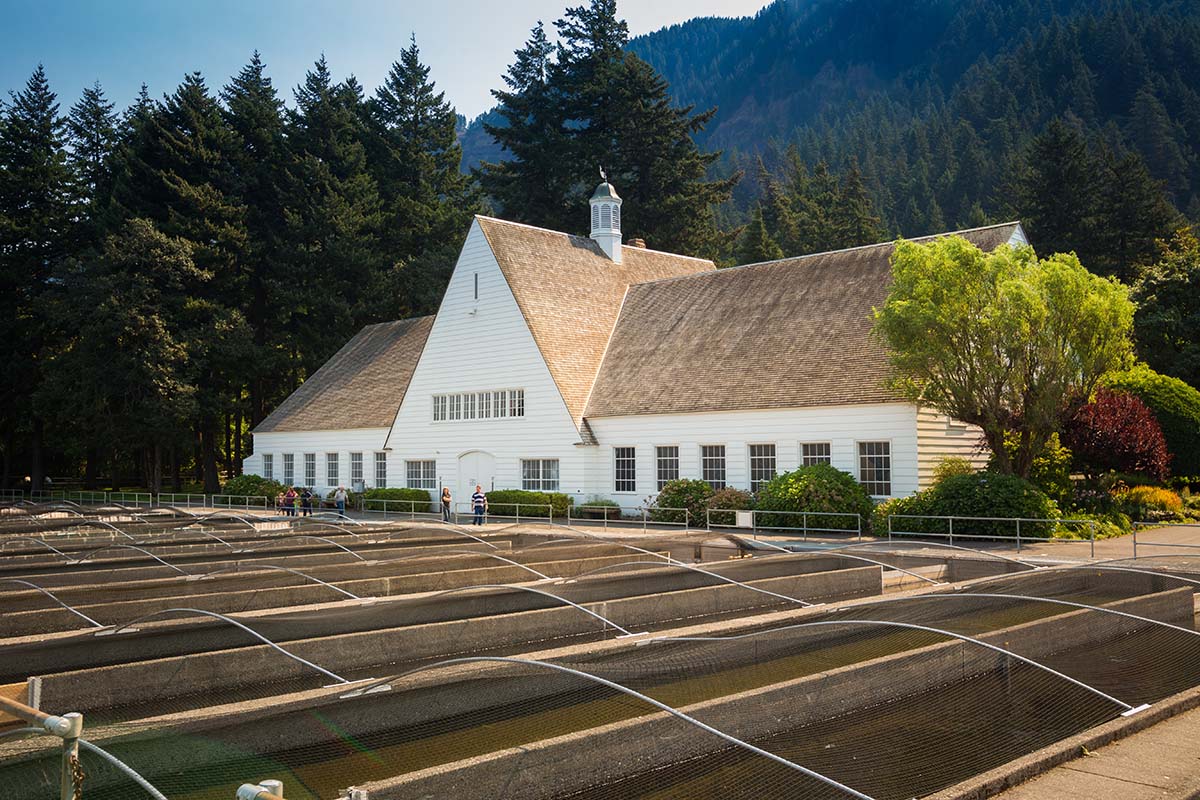
There are some Oregon places that sound simple on paper until you actually go.
A fish hatchery? Sure, maybe you picture a few ponds, a couple signs, and a short stop to stretch your legs on the way through the Columbia River Gorge. Then you arrive at Bonneville Fish Hatchery near Cascade Locks, follow the little fish prints along the walkway, and suddenly you understand why more than a million people come through here every year.
This is not just a working hatchery. It is part science lesson, part garden walk, part roadside wonder, and part old-school Oregon family tradition.
There are salmon channels, trout ponds, shaded paths, picnic tables, beautifully kept grounds, and one very large local celebrity named Herman.
And the best part? It is free.
A Columbia Gorge Classic With Roots Back to 1909
Bonneville Fish Hatchery has been part of the Columbia River story for more than a century. The hatchery was constructed in 1909, long before it became the beloved family stop it is today.
In 1957, the facility was remodeled and expanded as part of the Columbia River Fisheries Development Program, also known as the Mitchell Act. That program was created to help enhance declining fish runs throughout the Columbia River Basin.
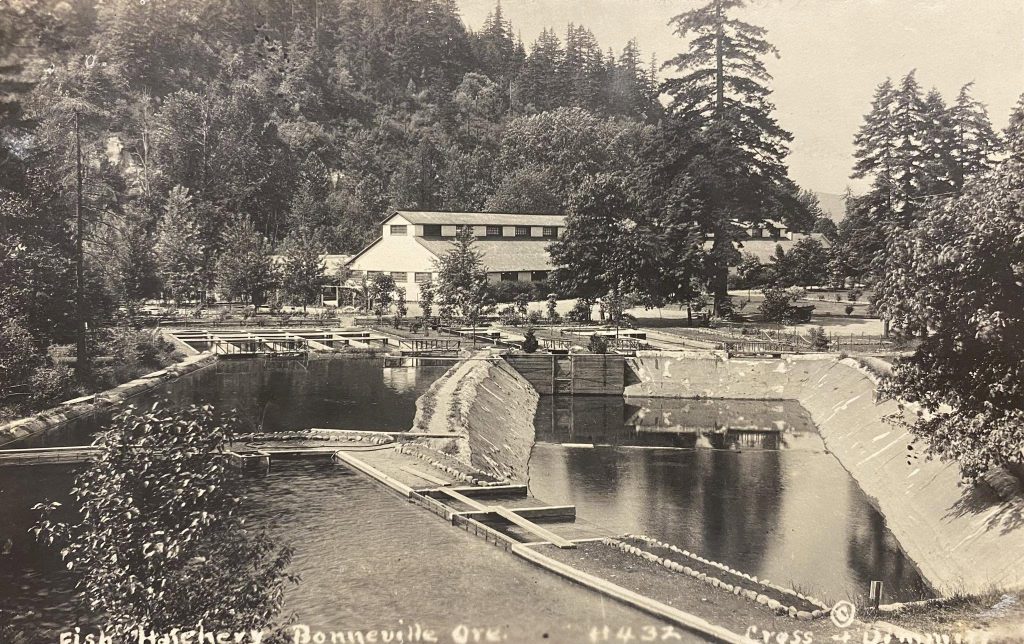
Another major renovation came in 1974, when the U.S. Army Corps of Engineers worked to mitigate fish losses connected to the construction of John Day Dam. Then in 1998, the hatchery added the Captive Broodstock Facility for the Grande Ronde Basin spring Chinook supplementation program.
That is a lot of history tucked behind what, at first glance, feels like a peaceful place to feed trout and wander through gardens.
Today, Bonneville remains the Oregon Department of Fish and Wildlife’s largest hatchery facility. Its work includes adult collection, egg incubation, and rearing of Tule fall Chinook, as well as adult collection and spawning of coho salmon. The hatchery also helps rear summer steelhead, winter steelhead, and coho, with coho egg incubation taking place at nearby Cascade Hatchery.
The facility also has strong egg and fingerling quarantine resources that can assist other hatchery programs around the basin. In other words, while visitors are watching fish through glass windows and tossing pellets into trout ponds, important conservation and fish-production work is happening all around them.
The official That Oregon Life store
The Oregon you bring home.
Start the day with Oregon-roasted coffee, then find original gear inspired by the places, stories, and oddities that make this state ours.
Shop Oregon gear

Herman the Sturgeon Is the Star of the Show
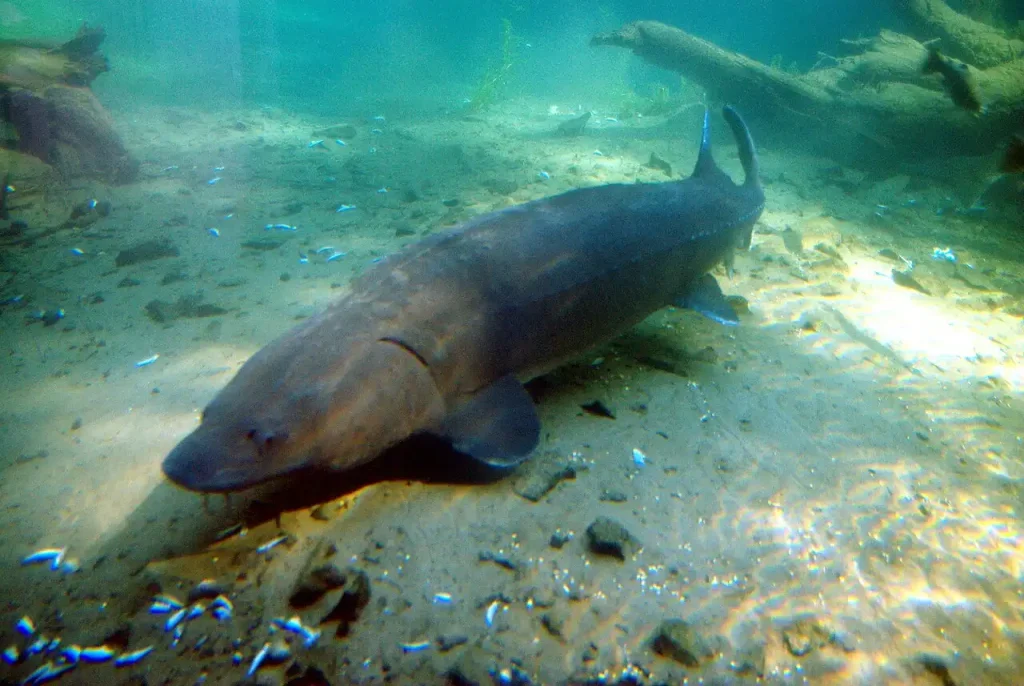
For many visitors, the first thing they want to see is Herman the Sturgeon.
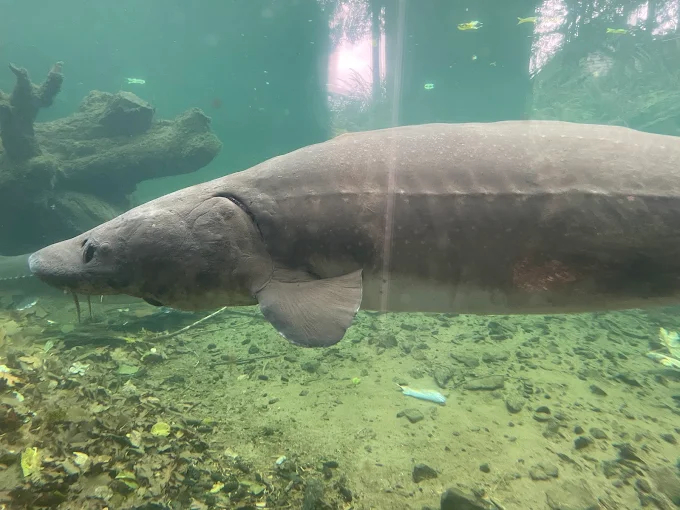
Herman is a massive white sturgeon who has lived at the hatchery for decades, and seeing him in person is one of those Oregon experiences that quietly sneaks up on you. You can know ahead of time that he is around ten feet long, roughly 500 pounds, and more than 80 years old. You can read about how ancient and impressive sturgeon are. You can even tell yourself you are just stopping by for the kids.
Then Herman glides past the viewing window like some ancient river creature from another era, and suddenly everyone is leaning closer.
Children press in to get a better look. Parents pretend they are only excited because the kids are excited. Grandparents smile because this is exactly the kind of place Oregon does so well: humble, fascinating, beautiful, and just a little bit weird in the best way.
White sturgeon have a prehistoric look to them, with armored bodies and slow, graceful movements. They evolved more than 200 million years ago and are cartilaginous fish, meaning they do not have bones in the same way many other fish do. They are more like sharks or Pacific lamprey in that regard.
Their mouths work almost like vacuum tubes, especially useful for feeding along the bottom. In the outdoor sturgeon pond, visitors can see younger sturgeon too, but Herman is the unforgettable one.
The Sturgeon Viewing Center, the small white building beyond the outdoor pond, was built in 1998. Walk inside and you can see Herman through the viewing windows, moving with that calm, prehistoric confidence that makes people stop mid-sentence.
He does not perform. He does not need to. He simply exists, enormous and unbothered, while visitors gather around in quiet amazement.
Follow the Fish Prints
One of the sweetest details at Bonneville is the self-guided walking route. Small fish prints on the pavement lead visitors around the property, making it easy to explore without needing a formal tour.
The route follows paved, well-kept paths that work well for strollers and wheelchairs. It is the kind of outing that feels easy from the start. You can move at your own pace, stop when something catches your eye, and wander without feeling like you are missing anything.
Along the way, signs explain what is happening in the ponds and tanks. Visitors can see different stages of fish development, from tiny fry in nursery areas to larger fish preparing for release.
Even if you are not a fishing person, it is hard not to feel something while standing there. These fish are part of the story of Oregon rivers, tribal history, commercial fishing, recreation, hydropower, conservation, and the complicated relationship humans have with wild places.
Bonneville makes that story approachable. You do not need a biology degree. You just need a little curiosity.
There are interpretive displays both inside and outside, including educational signs, viewing areas, and an informational video. During fall spawning season, visitors can also watch some of the hatchery work that usually happens behind the scenes.
Bring Quarters for the Trout Pond
Some of the best Oregon memories are built from the simplest things.
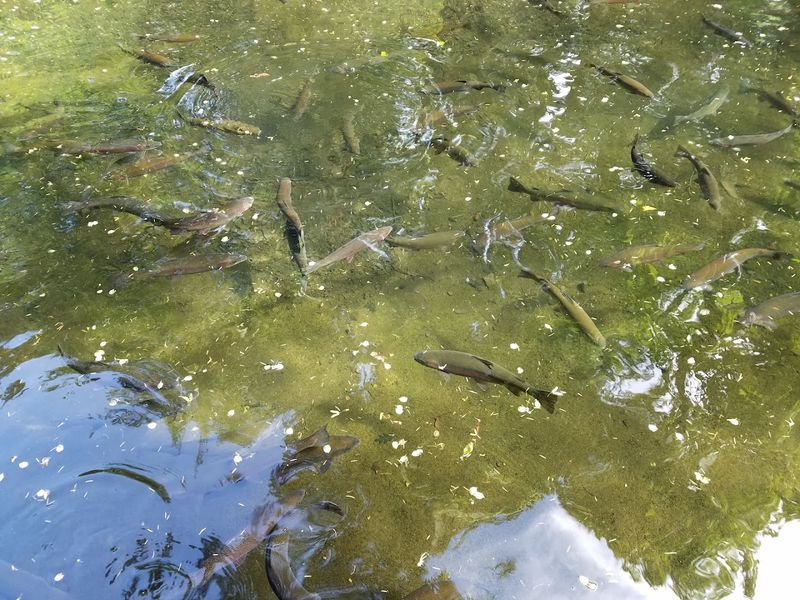
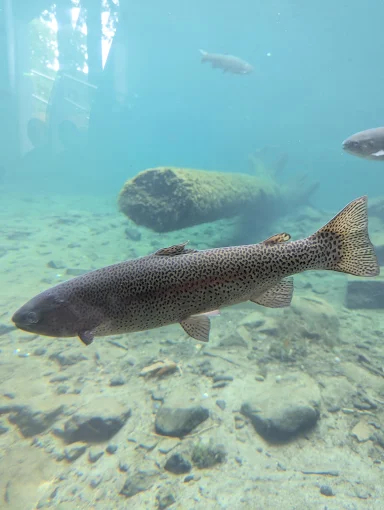
At Bonneville, one of those things is feeding the rainbow trout.
Visitors can use coin-operated machines to buy fish food, and yes, you will want quarters. Probably more than you think. Once those pellets hit the water, the trout erupt into a flashing, splashing frenzy that delights kids and turns adults into kids again.
It is loud, silly, and completely irresistible.
The rainbow trout in the display ponds are not raised at Bonneville as part of the hatchery’s production program. They are brought in for visitors to enjoy, and the money from the feeding machines helps keep the hatchery grounds beautiful.
A small cup can come in handy for holding the pellets, especially if little hands are involved. Ducks sometimes linger nearby too, fully aware that where there are people with fish food, there may be snacks.
One important note: trout can bite. Visitors should not touch them, tease them, or put fingers near the water. They may look fun and harmless while they are splashing for pellets, but those little mouths are quick.
This is the sort of stop where five minutes can easily turn into twenty. You toss one handful, then another, then somebody says, “Okay, just one more,” and of course it is not just one more.
Salmon Season Brings the Water to Life
Bonneville Fish Hatchery is interesting any time of year, especially because the display ponds are open year-round. But fall adds something special.
September and October are considered the best months to visit if you want to see adult fall Chinook and coho salmon spawning. During this time, the energy around the hatchery changes. The water feels alive in a different way.
Watching salmon push upstream is one of those Pacific Northwest sights that never really gets old. There is determination in their movement, a kind of instinctive force that makes people stop talking and simply watch.
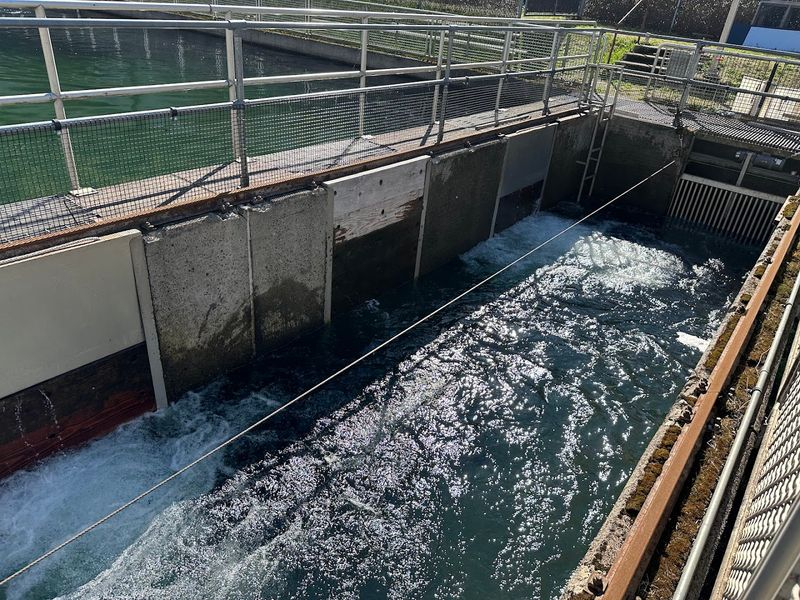
During spawning season, visitors may be able to observe salmon moving through channels and viewing areas as hatchery staff manage the process. It gives families a close look at one of Oregon’s most iconic natural cycles.
The nearby Bonneville Dam fish ladder adds even more to the experience. From the hatchery area, visitors can also head toward the dam’s fish viewing areas, where salmon and steelhead can be seen making their way through the ladder. Lampreys may also appear, which often surprises people seeing them for the first time.
Pairing the hatchery with the fish ladder turns a casual stop into a much richer Columbia Gorge outing. You get the charm of the hatchery, the drama of migrating fish, and a look at the engineering that helps fish move past Bonneville Dam.
The Nursery Tanks Put the Hatchery’s Mission in Perspective
There is something quietly moving about seeing fish at the very beginning of their lives.
The nursery areas at Bonneville help visitors understand that this place is not just about display ponds and family photos. It is part of a much larger effort to support fish populations in the Columbia River Basin.
Tiny fish ripple through the tanks in quick flashes, responding instantly when food appears. Signs help explain what visitors are seeing, and because the information is presented in a clear, approachable way, kids can follow along without feeling overwhelmed.
The hatchery raises Chinook and coho salmon, while also playing a role in rearing steelhead and supporting other programs. The whole operation helps show how much work goes into maintaining fish runs that have faced pressure from dams, habitat changes, overfishing, and other long-term impacts.
For Oregon families, this is where the visit becomes more than cute fish and pretty ponds. It becomes a small window into the complicated work of keeping salmon and steelhead connected to the rivers they have always belonged to.
The Grounds Are Worth the Visit Too
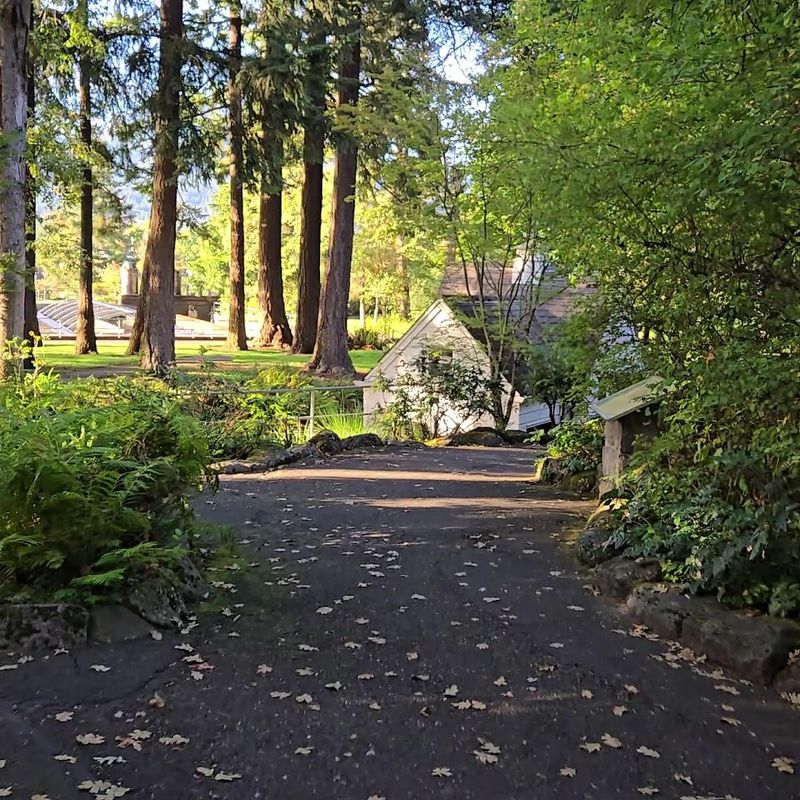
One thing that catches many first-time visitors off guard is how pretty the hatchery is.
This is not a bare-bones industrial facility with a few ponds. The grounds are landscaped with obvious care, with gardens, trees, flowers, seating areas, and peaceful paths that invite you to slow down.
Roses, ornamental plants, cypress trees, and tucked-away benches give parts of the property the feel of a public garden. The ponds and tanks remind you that this is a working hatchery, but the surrounding beauty softens everything. It is educational, yes, but it is also genuinely relaxing.
There are picnic tables on-site, so packing lunch is a good idea, especially if you are visiting with kids or making a longer Gorge day of it. ADA-accessible restrooms are also available, which makes this an easier stop for families and travelers of all ages.
The hatchery is also a good place to look for wildlife. Depending on the season and time of day, visitors may spot fish, songbirds, waterfowl, wading birds, and birds of prey. It is one of those places where kids might come for Herman and leave talking about the ducks, herons, or hawks they noticed along the way.
Between the fish, gardens, dam, and nearby waterfalls, this part of Oregon has a way of turning a quick stop into a full afternoon.
A Small Gift Shop With Coffee, Treats, and Souvenirs
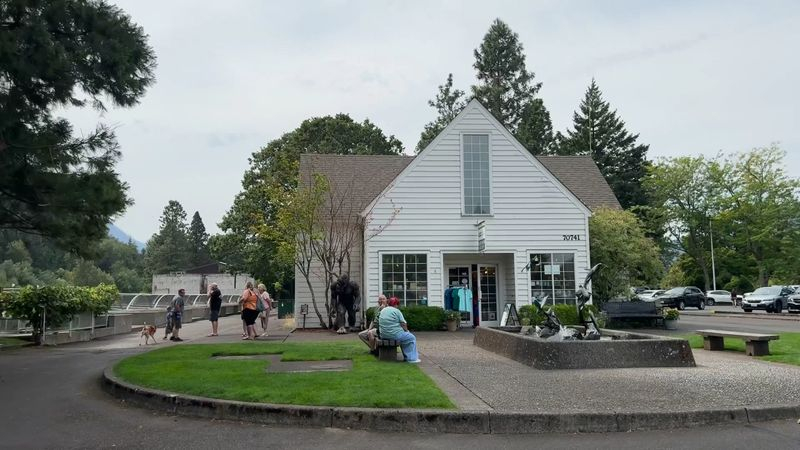
The hatchery gift shop is another fun little bonus. It is open year-round and has the kind of local, nature-focused items you would expect from a Columbia Gorge attraction: fish-themed gifts, hatchery souvenirs, books, small treats, and other browse-worthy finds.
There is usually something charming about gift shops attached to places like this. They are not trying to be flashy. They are just part of the experience.
Grab a coffee, browse for a souvenir, pick up something for the kids, or simply use it as a cozy indoor pause before heading back outside. Purchases help support the hatchery, which makes grabbing a small item feel a little more meaningful.
And yes, this is the kind of stop where you may walk in planning to buy nothing and walk out with something fish-related you absolutely did not know you needed.
Make It Part of a Bigger Columbia Gorge Day
Bonneville Fish Hatchery is worth visiting on its own, but its location makes it easy to fold into a larger Columbia River Gorge adventure.
Neighboring Bonneville Dam has a visitor center and fish-viewing windows where you can watch adult salmon moving through the fish ladder. It is one of the best companion stops if you want the full fish-and-river experience.
Multnomah Falls is only about nine miles west of the hatchery, making it easy to pair the two if you are exploring the Gorge from Portland or the Willamette Valley.
Cascade Locks is just a few miles away, where visitors can find food, river views, the Bridge of the Gods, and the Sternwheeler Columbia Gorge. A cruise from Cascade Locks offers a completely different way to take in the cliffs, water, wind, and history of the Gorge.
Hood River is about 22 miles east, and travelers can continue on for food, shopping, riverfront walks, or a ride on the historic Mt. Hood Railroad.
Across the river on the Washington side, Skamania Lodge, the Columbia Gorge Interpretive Center, and Carson Hot Springs are all within reach. That makes Bonneville an easy anchor point for a day that can be as simple or as packed as you want it to be.
Why So Many People Keep Coming Back
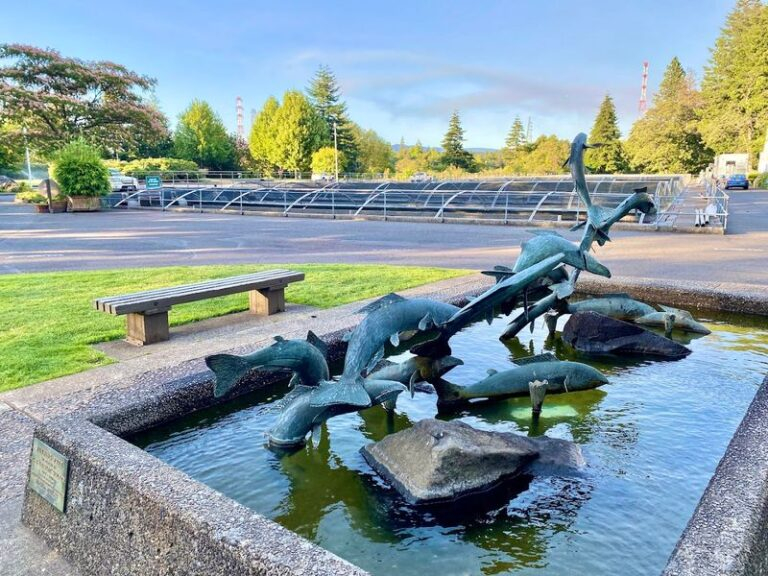
Bonneville Fish Hatchery works because it is not trying too hard.
There are no roller coasters, no flashy gimmicks, and no expensive admission gates. It is just a beautiful, accessible Oregon place where people can learn something, feed fish, walk through gardens, watch salmon, visit a giant sturgeon, and leave feeling like they discovered something special.
It is easy for families. It is interesting for adults. It is peaceful for people who just want a slower stop in the Gorge. It is close enough to other Columbia River Gorge destinations that it fits naturally into a waterfall trip, a drive to Hood River, or a quiet day near Cascade Locks.
And for kids, it has all the ingredients that make a memory stick: animals, water, snacks, a giant fish, and just enough weirdness to make the day feel magical.
Plan Your Visit
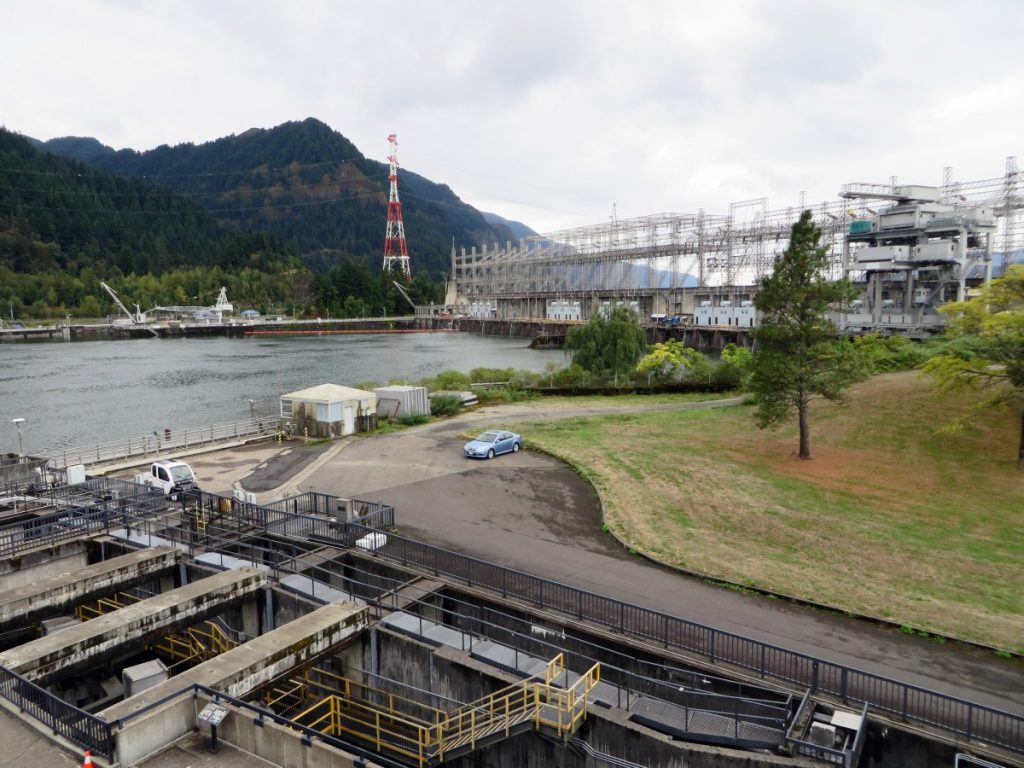
Bonneville Fish Hatchery is located at 70543 NE Herman Loop in Cascade Locks, Oregon.
Take I-84 to Exit 40. The hatchery is about 40 miles east of Portland.
Admission is free. Visiting hours are generally 7:30 a.m. to dusk, seven days a week. The entrance is gate-controlled, so it is best to arrive well before closing.
Phone: 541-374-8393.
The best time to visit is year-round for the display ponds, gardens, trout feeding, and Herman the Sturgeon. For adult fall Chinook and coho salmon spawning, plan for September or October.
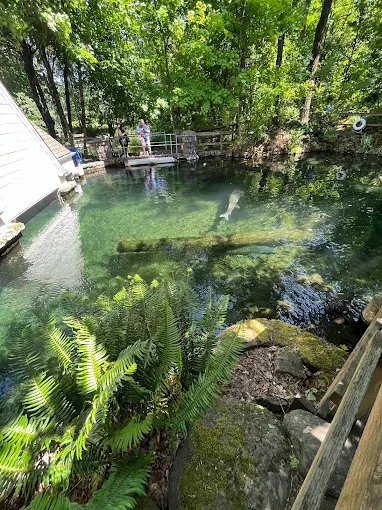
Bring quarters for the trout feeding machines, comfortable shoes for walking the paved paths, and a picnic if you want to make a slower day of it. ADA-accessible restrooms and picnic tables are available.
For Oregon families, Gorge travelers, fish lovers, garden wanderers, and anyone who has ever wanted to stand face-to-face with a ten-foot sturgeon, Bonneville Fish Hatchery is one of those classic Oregon stops that feels far more memorable than it has any right to be.
Come for Herman. Stay for the salmon, the gardens, the trout feeding, the river history, and that unmistakable Oregon feeling of finding wonder in a place you almost drove right past.