
Some Oregon destinations begin with investors, development plans, marketing studies, and carefully drawn blueprints.
Shady Dell Train Park began with one man imagining a place where families could sit beneath the trees, unpack a picnic, watch miniature locomotives roll past, and learn why trains had fascinated generations of people.
That man was Harry Harvey.
In 1954, Harvey acquired a single acre of wooded land near Molalla and began turning his idea into something real. With help from a small group of fellow railroad enthusiasts, he laid roughly 1,000 feet of miniature track through the property.
More than seven decades later, trains are still running there.
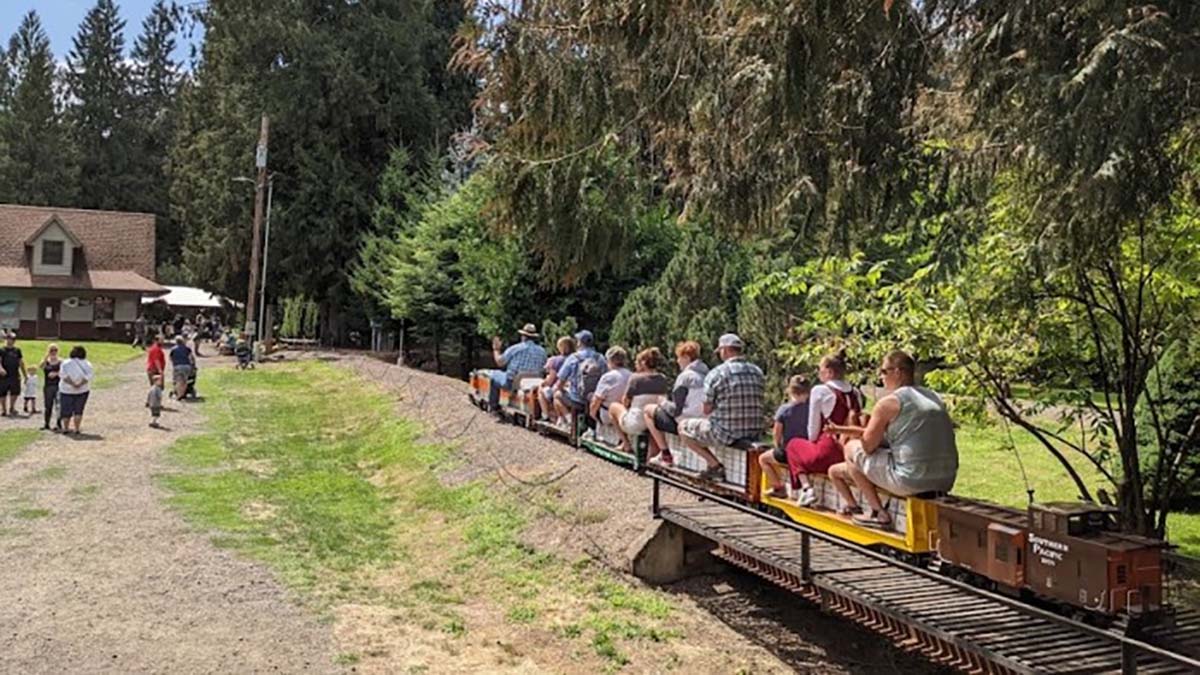
Today, the park has grown from that original acre to four acres filled with thousands of feet of track, ponds, bridges, railroad buildings, picnic areas, working signals, and rideable miniature locomotives. Families continue to visit on summer Sundays, climbing aboard narrow passenger cars for a journey through the trees.
It is now known as Shady Dell Train Park, home of the Pacific Northwest Live Steamers. It is one of Oregon’s most charming family attractions, but calling it an attraction does not quite capture what makes the place special.
Shady Dell is not an amusement park.
It is a functioning miniature railroad built, maintained, and operated by volunteers who genuinely love trains. The engines are not props. Many are privately owned machines constructed or maintained by club members. The bridges, switches, signals, roundhouses, maintenance tracks, and water towers are part of an actual railway system, only built on a smaller scale.
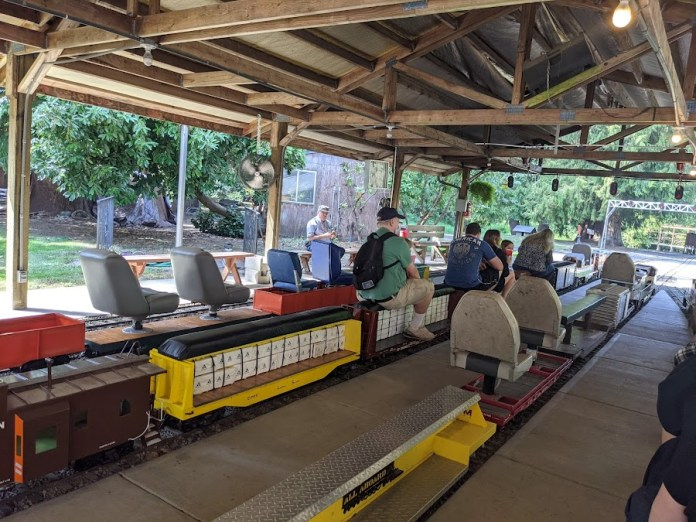
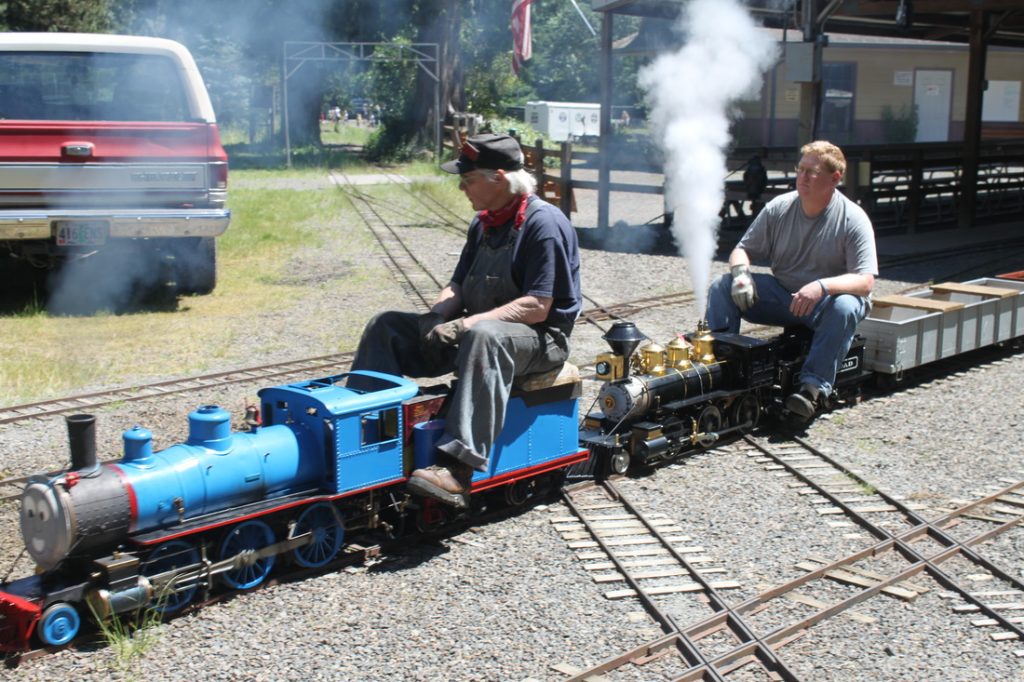
Visitors do not know exactly which locomotives will be operating when they arrive. That uncertainty is part of the fun. One Sunday might bring the sight of a steam locomotive puffing through the woods. Another could feature electric, gasoline, or diesel-style engines pulling passengers across the bridges.
The trains may change, but the original idea remains remarkably close to the dream Harvey had in 1954.
This is still a place where people come to picnic, watch trains, ride trains, and learn about them.
A Railroad Hidden In The Countryside Near Molalla
Shady Dell sits along a branch of the Molalla River, about two miles east of Molalla in rural Clackamas County.
The landscape feels noticeably different from the busier communities closer to Portland. Roads pass farms, pastures, nurseries, wooded properties, and broad stretches of countryside. The surrounding hills hint at the forests and foothills rising toward the Cascades.
Then, tucked among the trees, appears a railroad that seems as though it belongs in a childhood storybook.
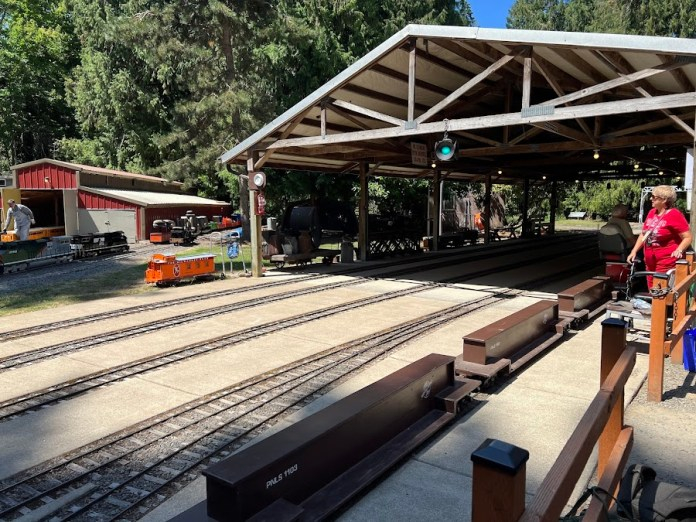
The scale is the first clue that this is not an ordinary train station. The rails are narrow, the locomotives are compact, and passengers sit close to the ground on long riding cars.
Yet the experience feels surprisingly authentic.
A whistle sounds near the station. An engineer checks the equipment. Volunteers help passengers board. The train eases forward, gathering just enough speed to make the air move across your face.
Soon, the station falls behind and the tracks begin curving through the wooded property.
The park occupies four acres and currently has about 4,200 feet of 7.5-inch-gauge track. The route passes ponds, shrubs, trees, landscaped areas, and bridges. Public rides generally last between seven and ten minutes and are open to passengers of all ages.
It is a relatively short ride, but the winding track makes it feel like a real journey.
Children lean forward to see what is beyond the next curve. Adults wave at other trains as they pass. Bridges appear between the trees, followed by open areas where visitors can see more of the railway network.
The experience is gentle rather than thrilling, and that is precisely the point.
No one is strapped into a towering roller coaster. There is no deafening soundtrack or giant digital display demanding attention. The entertainment comes from the train itself, the movement of the wheels, the scenery, the whistle, and the work of the volunteers operating it.
For a few minutes, everyone aboard is simply riding a train through the woods.
The official That Oregon Life store
The Oregon you bring home.
Start the day with Oregon-roasted coffee, then find original gear inspired by the places, stories, and oddities that make this state ours.
Shop Oregon gear

The Dream Began With One Acre In 1954
The story of Shady Dell begins in early 1954, when Harry Harvey acquired the first acre of the property.
Harvey was originally from Portland and already shared an interest in live steam railroading with a circle of other enthusiasts. Among those who helped during the park’s early years were Eddie Maas, Alf Clancy, Ernie Middugler, Walter Beebe, Ted Hohimer, George Burton, Gene Mole, Tom Nicholson, and others.
Together, they installed approximately 1,000 feet of aluminum track built for one-inch-scale trains.
At that point, Shady Dell was not yet the elaborate miniature railway visitors see today. It was a young hobby railroad built through a single acre by people willing to spend their time, money, and physical effort on an unusual shared vision.
That vision was ambitious.
Harvey did not merely want a private track where a few train enthusiasts could operate their equipment. He wanted a park that could be shared with the public, especially families.
His idea combined recreation with education. People could come for a picnic, watch the locomotives, climb aboard for a ride, and leave knowing a little more about railroads than they did when they arrived.
This was happening at an important moment in American railroad history.
By the 1950s, diesel locomotives were rapidly replacing steam engines on major railroads. The great steam era that had shaped transportation, industry, and settlement across the country was fading.
In Oregon, steam locomotives had hauled timber, passengers, mail, agricultural products, and freight through mountain passes, river valleys, logging camps, ports, and growing towns. By the middle of the century, many of those locomotives were being retired or scrapped.
Live steam enthusiasts preserved the experience on a more manageable scale.
Their locomotives were smaller, but the mechanics could be very real. Boilers produced steam. Pistons moved. Rods turned wheels. Engineers managed water, fuel, pressure, speed, and braking.
A miniature locomotive was not simply a decorative model. It was a working machine.
By creating Shady Dell, Harvey and his friends were preserving both the technology of steam railroading and the emotional experience of seeing a locomotive come alive.
The Track Expanded Almost Immediately
The railroad did not remain confined to a single configuration for long.
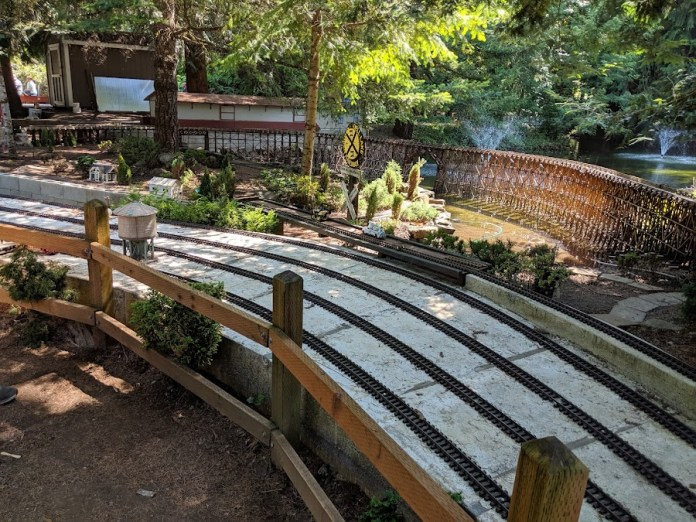
Two years after the original track was installed, the builders added another aluminum rail. This created a dual-gauge system capable of accommodating both 4.75-inch and 7.5-inch-gauge equipment.
Dual-gauge track allows trains with different distances between their wheels to operate over part of the same railway. It is an ingenious solution, but it also adds complexity to track construction and maintenance.
For visitors, the extra rail may look like a small detail.
For railroad builders, it opened Shady Dell to a wider variety of locomotives.
The park grew again in 1958 when Harvey acquired an adjoining acre. He and the other volunteers extended the railway across the new property, creating more room for trains to travel and for the miniature railroad to become increasingly elaborate.
Within four years, Harvey’s original one-acre project had doubled in size.
The expansion also demonstrated that the park was becoming more than a temporary hobby layout. People were investing in its future.
Tracks had to be graded and laid. Bridges needed to be built. Vegetation had to be cleared or shaped around the route. Locomotives required storage and maintenance facilities. Every improvement created additional work, but it also made the railroad more appealing.
The little park was becoming a destination.
Then, only a few years after the expansion, nature nearly wiped it away.
A Devastating Flood Tore Through The Railroad
In 1960, floodwaters struck Shady Dell.
The park’s lightweight aluminum rails were no match for the force of the water. The flood tore track from the ground, wrapped sections of rail around trees, washed away bridges, and damaged the work Harvey and his friends had spent years building.
It would have been an understandable place to stop.
The railroad was still relatively young. It had been built largely through volunteer labor. Reconstructing it would require more time, money, materials, and determination.
Instead, the group rebuilt.
They did not simply replace the damaged railroad exactly as it had been. They used the disaster as an opportunity to make the track stronger.
The lightweight aluminum rail was replaced with steel flat bar. The builders repaired washed-out fills, reconstructed bridges, and restored the route across the property.
It was an early test of the spirit that would define Shady Dell for decades.
The park exists because people repeatedly decided that the work was worth doing.
Tracks wore out and were repaired. Buildings were added. Land was purchased. Equipment changed. New generations of volunteers stepped in.
The flood could have become the end of the story.
Instead, it became one of the first chapters in a much longer one.
The Pacific Northwest Live Steamers Association Takes Shape
By 1963, the group had become organized enough to formally establish the Pacific Northwest Live Steamers Association.
The creation of the association gave the project a structure beyond Harvey’s personal ownership. It helped transform Shady Dell from one man’s park into a lasting community institution.
Harvey eventually donated the track and facilities to the club. The organization then arranged to purchase the underlying real estate.
That transfer mattered.
A privately held hobby railroad can disappear when its owner moves, sells the property, or can no longer maintain it. By placing the park in the hands of an organized association, Harvey helped give it a future that could extend beyond his own lifetime.
The members became caretakers of more than tracks and locomotives. They became caretakers of his original idea.
The club continued adding equipment, infrastructure, and land. What began as an informal effort among friends developed into one of the early miniature railroads of its size on the West Coast.
The park reached its current four-acre footprint in 1975 when the organization purchased two additional adjoining acres.
In just over two decades, Shady Dell had expanded from one acre and roughly 1,000 feet of track into an unusually sophisticated miniature railroad complex.
A 1982 account published in Live Steam Magazine described thousands of feet of mainline and service track operating across the property. At that time, the system included approximately 4,000 feet of dual-gauge mainline, another 1,000 feet of 7.5-inch-gauge mainline, and about 1,500 feet of service track.
The numbers reveal how quickly Harvey’s dream had grown.
This was no longer a train circling a backyard.
It was a railway.
The Incredible Railroad That Existed By The Early 1980s
By the time Shady Dell was profiled in Live Steam Magazine in June 1982, members of the Pacific Northwest Live Steamers had created a remarkable collection of locomotives and railroad infrastructure.
Collectively, the club’s members reportedly owned 70 steam locomotives, four electric locomotives, and five gas-powered engines. The railroad also had cabooses, riding gondolas, and elaborate passenger cars modeled after luxurious Pullman railway cars.
The park had developed the facilities needed to fuel, store, service, and operate that equipment.
Supplies available for locomotives included air, treated water, coal, stove oil, and diesel fuel. This allowed different styles of miniature engines to operate from the same complex.
The club even had a scaled work train designed for railroad maintenance. Its equipment included a Lincoln arc welder, rock-dumping cars, a track sweeper, replacement ties, and tools.
That is one of the details that best captures Shady Dell.
The miniature railroad had its own miniature maintenance railroad.
When track needed attention, members could send out a work train much like a full-sized railroad would dispatch maintenance equipment. The proportions were smaller, but the purpose was real.
The park also contained an impressive collection of storage and servicing buildings.
According to the 1982 description, Shady Dell had a four-stall roundhouse, a ten-stall roundhouse, a seven-track car house, and multiple steaming bays.
A roundhouse is traditionally used to store and service locomotives, often arranged around a turntable. Full-sized roundhouses were once common features of railroad yards because they allowed engines to be directed into individual maintenance stalls.
At Shady Dell, the same concept was recreated for miniature equipment.
The park’s three turntables included one operated hydraulically. Engines could be rotated and directed toward storage tracks or servicing areas, giving the little railway a level of operating realism rarely seen by the general public.
Bridges, Trestles And A Tiny Piece Of Eastern Oregon
The bridges at Shady Dell were not merely simple boards placed over shallow ditches.
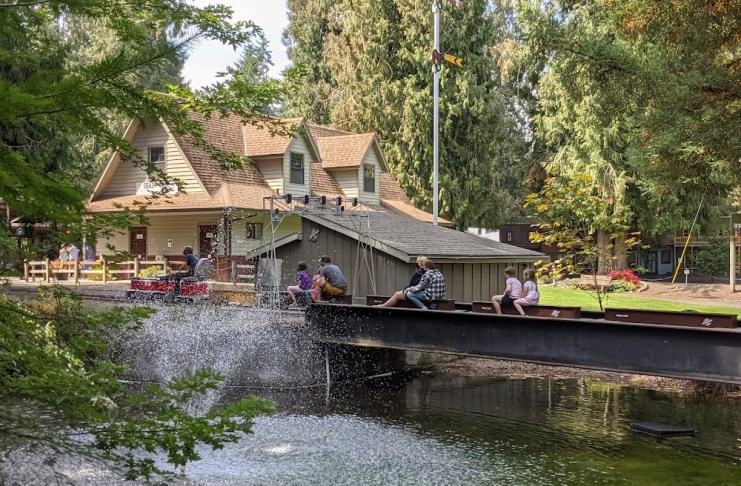
By the early 1980s, the railroad included a 40-foot steel and concrete bridge, a 38-foot wood and concrete bridge, and a 150-foot steel and concrete trestle.
All crossed water.
That meant engineers did not simply guide passengers around a flat loop. Trains traveled across genuine bridge structures spanning ponds, channels, or low areas within the property.
One of the most distinctive features was an 18-foot replica of the Burlington Northern Crooked River Bridge in Central Oregon.
The full-sized Crooked River railroad bridge stands near Terrebonne, stretching high above the dramatic Crooked River Gorge. It is one of those unmistakably Oregon railroad scenes, a steel structure suspended over a landscape carved deeply into volcanic rock.
Shady Dell’s version brought that familiar piece of Oregon railway architecture into the miniature world.
The replica was not the same size or height, of course, but its presence reflected the creativity of the park’s builders. They were not only creating functional structures. They were recreating recognizable parts of railroad history and regional geography.
The tracks were also accompanied by working water tanks, coaling towers, electrically controlled switches, block signals, crossing gates, bells, and lights.
These features helped miniature locomotives operate in a system that resembled a full railway.
Automatic block signals are designed to help separate trains into different sections of track. Switches guide engines from one route to another. Crossing gates warn people when a train is approaching. Water tanks and coaling towers represent the infrastructure once required to keep steam locomotives moving.
To a child, these may simply look like interesting things beside the track.
To a railroad enthusiast, they are evidence of serious design and engineering.
Harry Harvey Became The Park’s Caretaker
In 1978, Harry Harvey moved from Portland to Shady Dell and became the park’s caretaker.
By then, nearly a quarter-century had passed since he purchased the first acre. The railroad had grown far beyond its original track, yet Harvey remained closely involved with the place.
He operated a machine shop at Shady Dell capable of building almost any 1.5-inch-scale locomotive or rail car.
This adds another dimension to the park’s history.
Shady Dell was not simply a place where completed trains arrived to be operated. It was also a place where equipment could be imagined, machined, assembled, repaired, and improved.
Building a live steam locomotive can require metalworking, welding, machining, boiler construction, precision fitting, and a deep understanding of mechanical systems.
The finished locomotive may look charming as it pulls smiling families through the woods, but the work behind it is exacting.
Parts must align properly. Valves must function. Wheels must remain correctly gauged. Brakes must work. Boilers and pressure systems require careful handling.
Harvey’s machine shop helped make Shady Dell a center of craftsmanship as well as recreation.
That combination continues to distinguish the park.
It is a family destination built on top of an engineering workshop, railroad club, historical preservation project, and volunteer community.
Visitors see the smiles.
Behind those smiles are decades of specialized knowledge.
Why No Two Sundays Are Exactly The Same
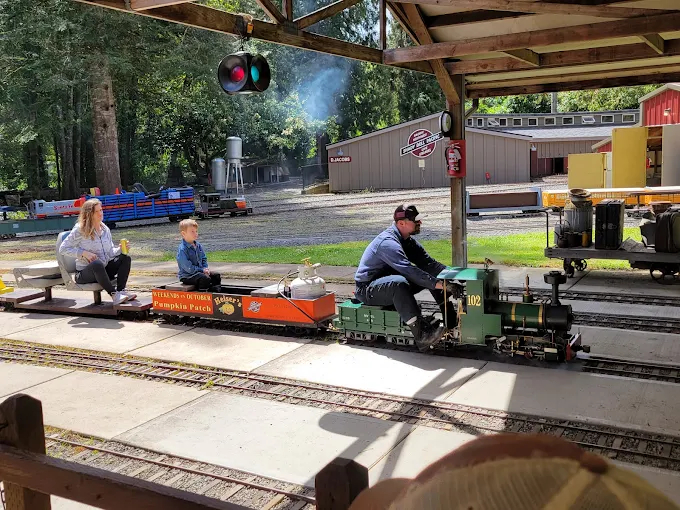
Shady Dell describes itself as a train park rather than an amusement park, and the distinction is important.
At an amusement park, visitors generally expect the same ride vehicles to follow the same route each day. The experience is designed to be predictable and repeatable.
Shady Dell operates differently.
Many of the locomotives are privately owned by club members. Which trains run on a particular Sunday can depend on which engineers and equipment are present.
One visit may feature a traditional steam locomotive sending white vapor into the Oregon air. Another might bring a miniature diesel locomotive, an electric engine, or a gas-powered machine.
There could be several trains operating around the property, each with a different appearance, sound, and personality.
That unpredictability is part of the charm.
Families are not buying a guaranteed ride behind one specific locomotive. They are visiting a working club railway on a public operating day.
The official park website notes that Shady Dell is entirely volunteer-run and that most of the locomotives seen by visitors are both owned and operated by skilled member engineers.
That means the people at the controls are often deeply connected to the machines they are operating.
They may have built the locomotive, restored it, purchased it from another hobbyist, maintained it for years, or spent countless weekends learning its individual quirks.
A locomotive is not simply assigned to them at the start of a shift.
It may be one of their most valued possessions.
Riding The Railroad Today
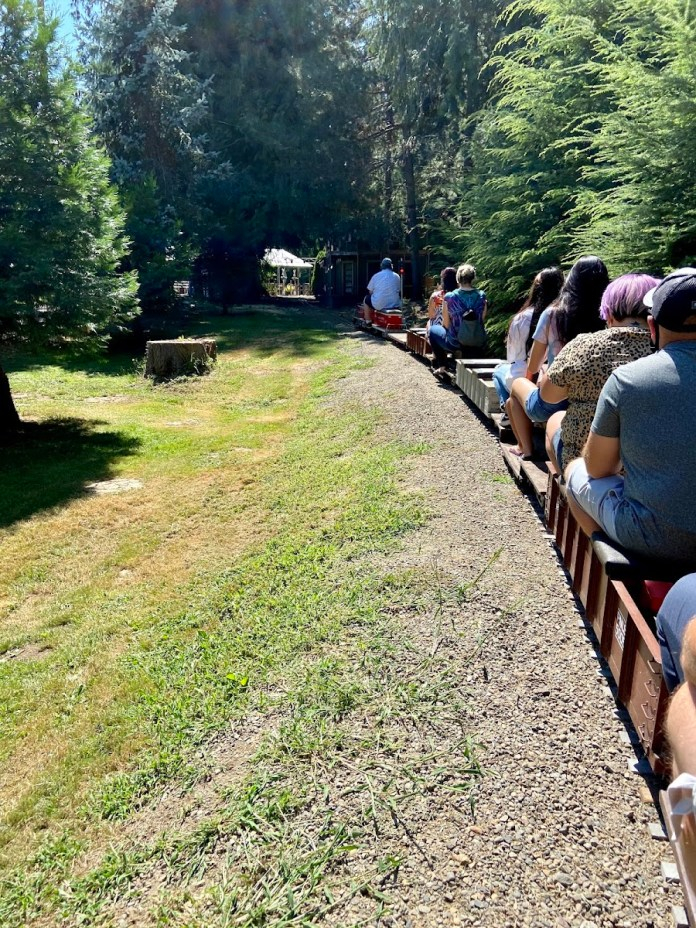
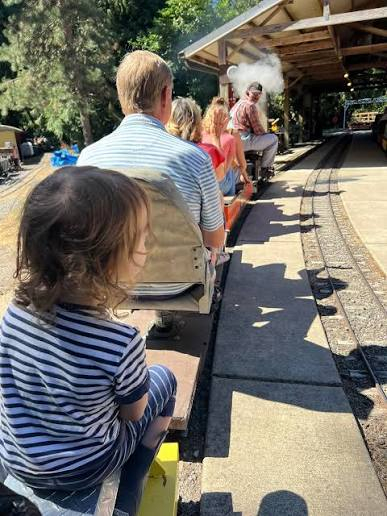
For modern visitors, the experience begins near the station, where volunteers organize passengers and prepare trains for departure.
The passenger cars generally require riders to sit astride a narrow bench. Adults may find the arrangement amusing at first, especially when settling behind a line of excited children, but the seating is part of the classic miniature railway experience.
Once everyone is properly positioned, the train pulls away.
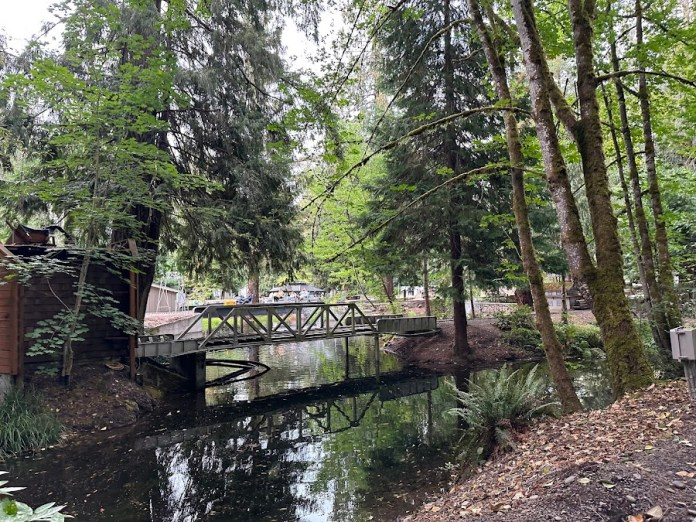
The tracks weave through four wooded acres, passing ponds, shrubs, bridges, signals, and other railroad features. The exact route and scenery can depend on current track operations, but rides typically last seven to ten minutes.
The train remains close enough to the ground for passengers to feel connected to the landscape.
Branches pass overhead. Water appears beside or beneath the track. The locomotive’s sound carries through the trees.
When another train approaches, passengers frequently wave.
It is nearly impossible not to.
The ride has a way of dissolving adult self-consciousness. Parents grin. Grandparents point out details. Children study every curve with complete attention.
For a few minutes, a tiny locomotive becomes the most important thing in the world.
The Perfect Place For A Family Picnic
Harry Harvey originally wanted a place where people could picnic while watching and learning about trains.
That part of his dream remains firmly intact.
Shady Dell includes a covered pavilion and enough picnic seating to accommodate as many as 200 people. The picnic areas are surrounded by trees, ponds, bridges, shrubs, and tracks, allowing visitors to remain immersed in the railroad atmosphere even when they are not aboard a train.
Families can bring their own food and spend part of the afternoon watching locomotives pass.
Food and beverages are allowed on the park grounds and in the waiting area, although they cannot be taken aboard the trains.
The park also operates a concession stand inside the central depot. Current offerings include classic snacks and casual lunch items such as pizza, hot dogs, chili dogs, nachos, caramel popcorn, snow cones, ice cream, root beer floats, candy, and cold drinks.
The snack stand carries Harvey’s name, another reminder that the founder’s presence still runs through the park.
A picnic at Shady Dell does not feel like eating beside a conventional amusement ride.
Trains may pass while you are opening sandwiches. A whistle may interrupt a conversation. Children may abandon their snacks temporarily because a new locomotive has appeared near the station.
There is always something moving somewhere.
Free Rides Supported By Visitors
There is no required admission fee to enter Shady Dell and no ticket charge to ride the trains.
The park operates through donations.
That tradition reflects Harvey’s original desire to create a public place where families could enjoy trains together.
Keeping the experience donation-supported also makes it unusually accessible. A family can spend an afternoon riding miniature trains without first calculating the cost of several admission tickets.
The park’s volunteer organization depends on contributions to maintain the property, tracks, buildings, and public operations.
Anyone who has purchased lumber, steel, fuel, tools, electrical equipment, machine parts, or landscaping supplies understands that running even a miniature railroad is not inexpensive.
The engines may be small, but the maintenance costs are real.
Bridges age. Rails wear. Ties deteriorate. Buildings need repairs. Vegetation must be managed. Signals, switches, and crossing equipment require attention.
Visitors who enjoy the park are encouraged to donate what they can.
A donation is not simply payment for a short train ride. It supports the survival of a railroad that volunteers have spent more than 70 years building and protecting.
A Place Where Children Can Learn Without Realizing It
The park is entertaining, but it also quietly teaches.
Children can see how wheels follow rails, how switches change routes, how signals help manage train movement, and how an engineer controls a locomotive.
They may notice rods moving along the wheels of a steam engine or see vapor released near the boiler. Some will ask why one locomotive sounds different from another.
Others may become curious about the bridges, water towers, or railroad buildings.
This is the kind of learning that begins with excitement rather than an assignment.
A child does not need to understand steam pressure to enjoy the whistle. The enjoyment often comes first, followed by questions.
That is exactly what Harvey hoped to create.
He envisioned a place where watching and riding trains could inspire people to learn about them.
The park still does that on every public operating day.
A child who arrives simply wanting a ride may leave wondering how locomotives work. Another may become interested in model railroads, engineering, metalworking, Oregon history, or transportation.
Many lifelong interests begin with one memorable afternoon.
The Adults Are Not Merely Along For The Ride
Shady Dell is frequently described as a destination for children, but adults may find just as much to appreciate.
Railroads have a powerful connection to memory.
Some visitors grew up with model train sets. Others remember family members who worked for logging railroads, freight companies, or passenger lines. Some have watched trains travel through Oregon towns for decades.
Even people without a personal railroad connection can appreciate the craftsmanship.
The locomotives represent countless hours of mechanical work. The bridges and trestles required planning and construction. The tracks had to be graded, aligned, and maintained.
Nothing about the park happened accidentally.
Older visitors may also recognize the importance of preserving spaces built around volunteer communities.
Shady Dell is the opposite of disposable entertainment.
Its value comes from continuity.
The park has been improved across generations. Members have inherited responsibilities from those who came before them. Children who once rode the trains may later return with children or grandchildren of their own.
Each public run day becomes part of a story that began before many visitors were born.
More Than Seven Decades Of Volunteer Work
The Pacific Northwest Live Steamers has preserved Shady Dell through changing times, changing technology, and changing generations of members.
The club survived the devastating 1960 flood. It expanded the property, rebuilt the railway, installed stronger track, constructed bridges, developed service facilities, and created a public experience that continues today.
The modern park remains entirely volunteer-run.
That means every public Sunday depends on people giving up part of their weekend.
Someone must inspect the track.
Someone must prepare the station.
Someone must organize passengers.
Someone must operate each locomotive.
Someone must staff the snack stand, clean the grounds, maintain the buildings, and handle the less glamorous work that visitors rarely notice.
The park’s cheerful atmosphere rests on a foundation of responsibility.
This is especially true because the trains are real machines carrying real passengers. Safety cannot be improvised. Equipment must be maintained, instructions must be followed, and riders must cooperate with volunteers.
The result feels effortless only because so much effort happens before the public arrives.
Planning A Visit In 2026
Shady Dell Train Park is located at 31803 S. Shady Dell Road in Molalla.
For the 2026 season, the park is scheduled to open for regular public Sundays from May 3 through October 25. Regular public hours are 11 a.m. to 4 p.m., with train rides beginning at approximately 11:30 a.m. The final trains leave the station shortly before closing.
The park has also announced several extended weekends for 2026:
Memorial Day operations are scheduled for May 24 and 25.
Founders Day is scheduled for July 18 and 19.
Train Fest is scheduled for September 5, 6, and 7.
Regular public access is generally limited to Sundays. Saturdays are used for reserved private events and volunteer work days.
Schedules can change because of weather, equipment issues, fire conditions, staffing, or maintenance needs. Visitors should always check the official Shady Dell Train Park website or its social media pages before making the drive.
The park asks guests to avoid blocking neighboring driveways, mailboxes, yards, or emergency access when parking.
Comfortable walking shoes are a good idea because the property is rural and includes outdoor surfaces such as grass, dirt, and gravel. Depending on the season, conditions may be muddy, dusty, or uneven.
Parents should also remember that these are operating locomotives. Some surfaces can become hot, steam may be released, and railroad equipment should never be treated like playground equipment.
Follow volunteer instructions, remain seated during the ride, and keep children close near the tracks and station.
An Oregon Treasure Built In Miniature
Oregon is filled with places that impress visitors through sheer size.
We have mountains rising above the clouds, waterfalls dropping from towering cliffs, ocean waves pounding miles of coastline, and forests where some trees have stood for centuries.
Shady Dell offers a different kind of wonder.
Its magic comes from making things smaller.
A locomotive becomes compact enough to study up close. A railroad bridge can be crossed in seconds. A complete railway system fits inside four acres.
Yet the story behind the park is anything but small.
It began with Harry Harvey purchasing one acre in 1954.
It grew through the help of friends who laid track by hand.
It survived a flood that twisted rails around trees and carried away bridges.
It became the home of an organized live steam association.
It expanded to four acres and developed roundhouses, turntables, trestles, signals, service tracks, work trains, water towers, and coaling facilities.
Most importantly, it continued welcoming families.
The train that departs the station today carries passengers through more than a wooded park. It carries them through decades of Oregon craftsmanship, volunteer labor, mechanical ingenuity, and community memory.
Every whistle is connected to the people who rebuilt after the flood.
Every bridge reflects the work of members who believed the park deserved to grow.
Every free ride continues Harry Harvey’s original promise that people should have a place to picnic, watch, ride, and learn about trains.
That may be why Shady Dell feels so different from a typical family attraction.
It was not created to chase a trend.
It was created because someone loved trains and wanted to share that love with everyone else.
More than 70 years later, Oregon families are still climbing aboard.
Know Before You Go
Destination: Shady Dell Train Park, home of the Pacific Northwest Live Steamers
Address: 31803 S. Shady Dell Road, Molalla, Oregon 97038
2026 season: Sundays from May 3 through October 25, plus select special-event dates
Hours: 11 a.m. to 4 p.m.
Train rides begin: Approximately 11:30 a.m.
Ride length: About seven to ten minutes
Admission: No required entrance or ride fee
Donations: Graciously accepted and important to the volunteer-run park
Amenities: Picnic areas, covered pavilion, concession stand, restrooms, souvenirs, and multiple miniature railroad features
Before leaving home: Confirm the latest schedule and operating conditions through Shady Dell Train Park’s official website or social media pages.