
Long before the first race car rolls onto the clay, Cottage Grove Speedway is already beginning to stir.
Trailers pull into the grounds. Crews unload cars assembled and maintained through countless hours in garages and workshops. Drivers walk the track, study the surface, and talk quietly with the people who will be waiting in the pits once the green flag drops.
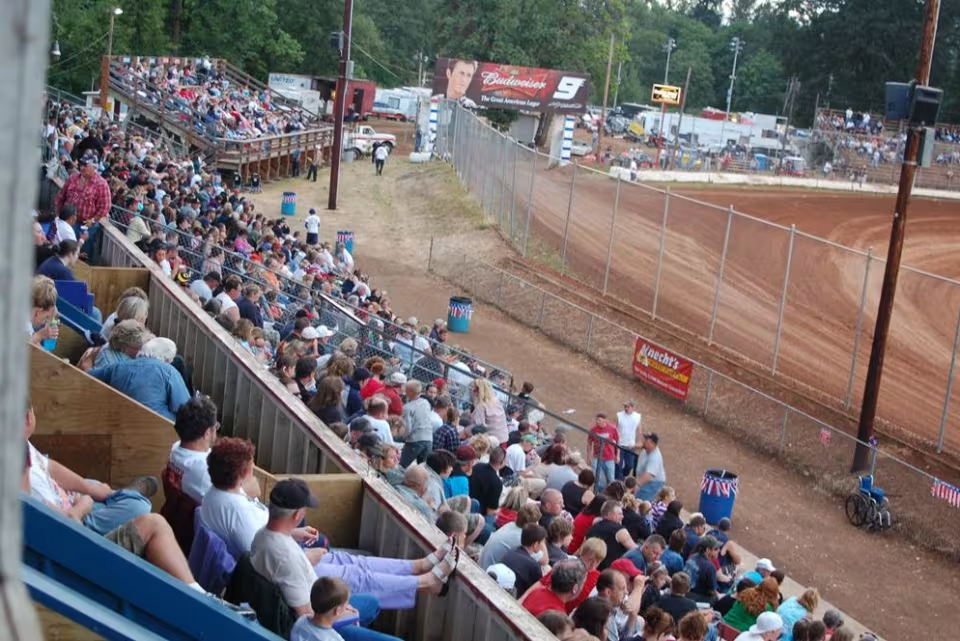
In the grandstands, families begin claiming their spots. Kids lean against the fence hoping for a closer look at the machines gathering below. Regulars settle into familiar seats while first-time visitors quickly realize that a night at a dirt track is going to be louder, faster, and considerably dustier than watching motorsports from the couch.
Then the engines come to life.
Conversation becomes nearly impossible. The sound rolls across the property and into the summer air above Cottage Grove. The smell of race fuel mixes with concession food, warm dirt, and the unmistakable atmosphere of an Oregon Saturday night spent somewhere that has been doing things its own way for generations.
This is Cottage Grove Speedway.
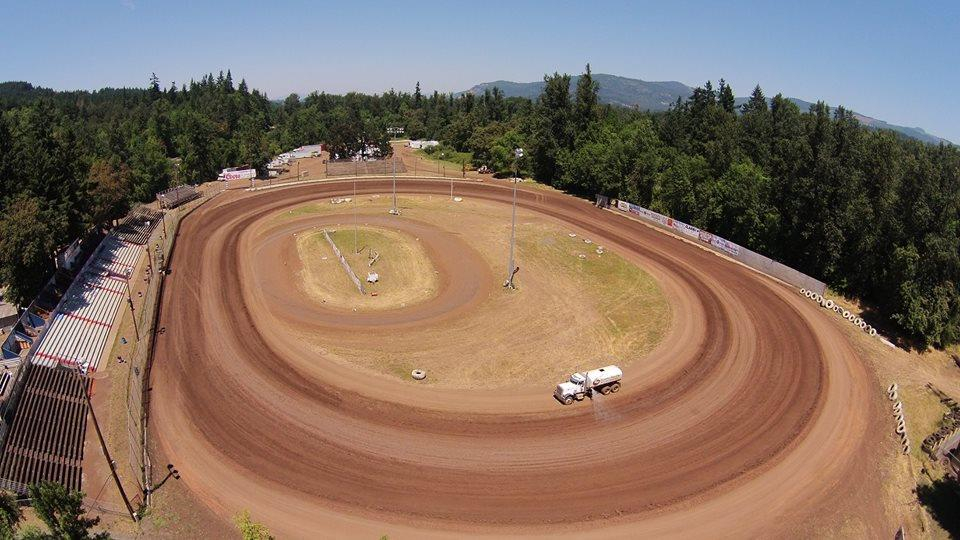
The quarter-mile clay oval held its first race on July 4, 1956. Seventy years later, the track is still sending cars into its banked corners and giving spectators the kind of close, unpredictable racing that helped make local dirt tracks an American tradition.
It is not a polished stadium built to separate spectators from the action.
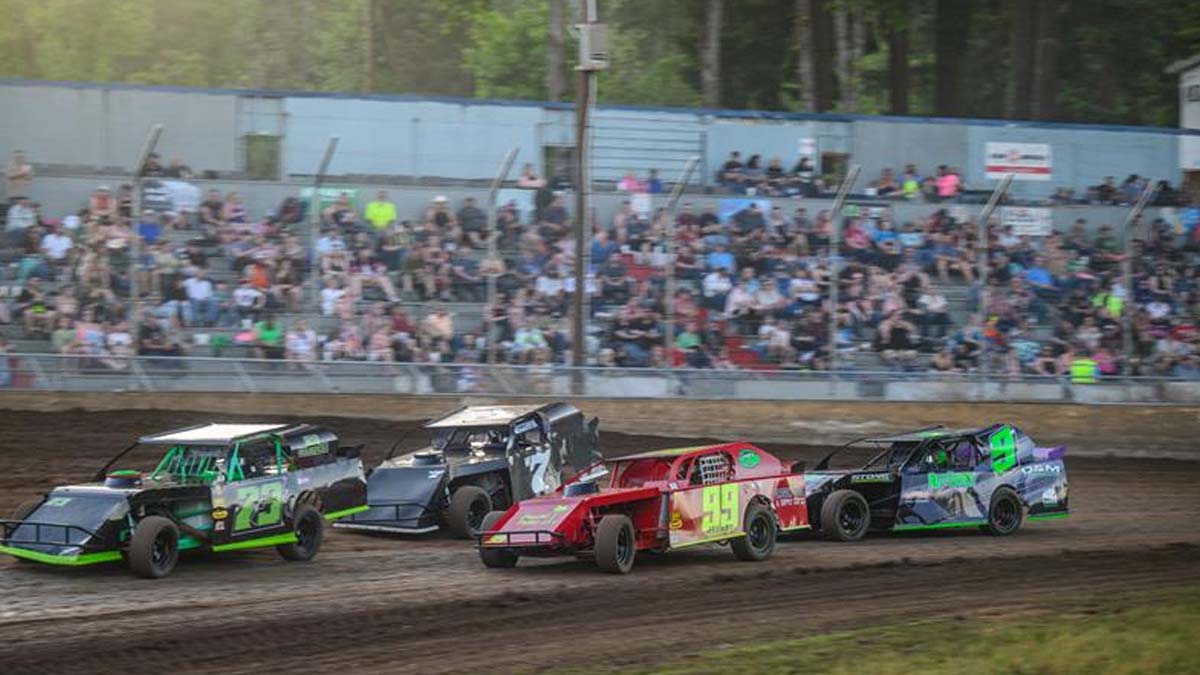
At Cottage Grove Speedway, you feel the engines through the grandstands. Dirt hangs in the lights. Cars run side by side with only a narrow strip of clay and a driver’s judgment separating a clean pass from a very complicated evening.
That closeness is part of the appeal.
For longtime fans, the speedway is woven into the rhythm of summer. For newcomers, one night is often enough to understand why families have been returning for decades.
A Cottage Grove Tradition That Began on the Fourth of July
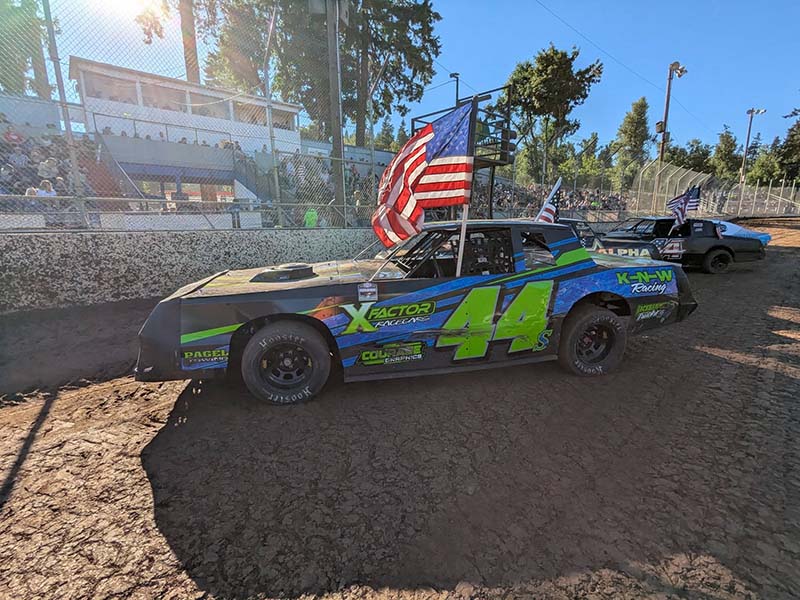
There is something fitting about the first race at Cottage Grove Speedway taking place on Independence Day.
On July 4, 1956, drivers and spectators gathered around a new clay oval in a small Oregon community. No one in attendance could have known with certainty that cars would still be racing around that same quarter-mile track seven decades later.
Oregon has changed enormously since the 1950s.
Interstate 5 reshaped travel through the Willamette Valley. Cottage Grove grew and evolved. Cars became more powerful, racing technology improved, and generations of drivers came and went.
Yet the essential experience at the speedway remained recognizable.
A crowd gathers. Engines fire. Drivers line up. The flag drops.
That continuity is increasingly rare.
Across the country, small racetracks have faced rising operating costs, development pressure, changing entertainment habits, and the challenge of convincing each new generation that an evening in the grandstands can compete with everything available on a screen.
Cottage Grove Speedway has endured.
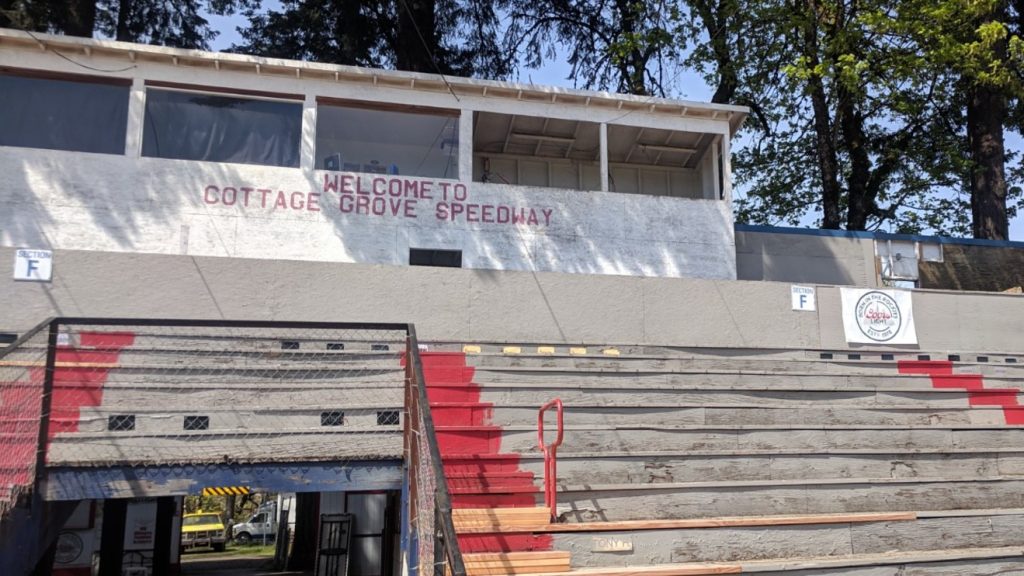
The track entered its 70th season of racing in 2025, marking seven decades since that first Fourth of July event. The facility still identifies itself through the same defining feature that has shaped its reputation from the beginning, its famous quarter-mile clay oval.
That longevity does not come from history alone.
A racetrack survives because people continue showing up.
Drivers build cars and tow them to the grounds. Crews spend weeknights repairing what broke the previous Saturday. Local businesses sponsor teams and events. Volunteers, employees, officials, concession workers, and track crews handle the countless jobs required to turn an empty oval into a full evening of racing.
Fans complete the circle.
Without people in the grandstands, the tradition becomes a memory. At Cottage Grove, it remains very much alive.
The official That Oregon Life store
The Oregon you bring home.
Start the day with Oregon-roasted coffee, then find original gear inspired by the places, stories, and oddities that make this state ours.
Shop Oregon gear

Why a Quarter-Mile Dirt Track Feels So Fast
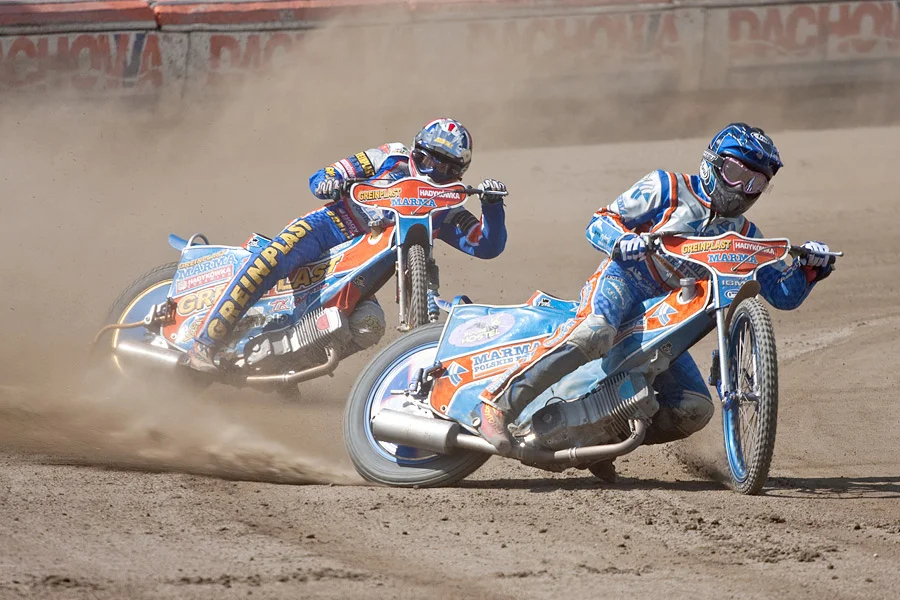
On paper, a quarter-mile oval sounds small.
In person, that is exactly what makes it exciting.
The cars do not disappear into the distance for long stretches. They are almost constantly in front of the crowd, charging into one corner, sliding through the turn, and accelerating toward the next.
A short oval compresses the action.
Drivers have less time to recover from a bad corner. Faster cars begin catching slower traffic quickly. Passing requires patience, nerve, and a willingness to place a race car in a space that may disappear half a second later.
The clay surface adds another layer of uncertainty.
Unlike a paved track, dirt changes during the evening. Moisture moves through the surface. Repeated laps push dirt into new lines. One portion of the track may offer grip while another becomes slick.
Drivers are not merely racing each other. They are constantly reading the oval beneath them.
A line that worked during qualifying may not be the fastest route later in the night. A driver who dominated a heat race might discover that the feature requires an entirely different approach.
That changing surface helps create the side-by-side racing Cottage Grove is known for.
One driver may search for traction near the bottom while another carries more momentum around the outside. Their cars can remain alongside each other for several corners, engines screaming while both drivers wait to see whose line will hold.
From the grandstands, the difference between first and second can look impossibly small.
That is dirt-track racing at its best.
You Do Not Need to Be a Racing Expert to Enjoy It
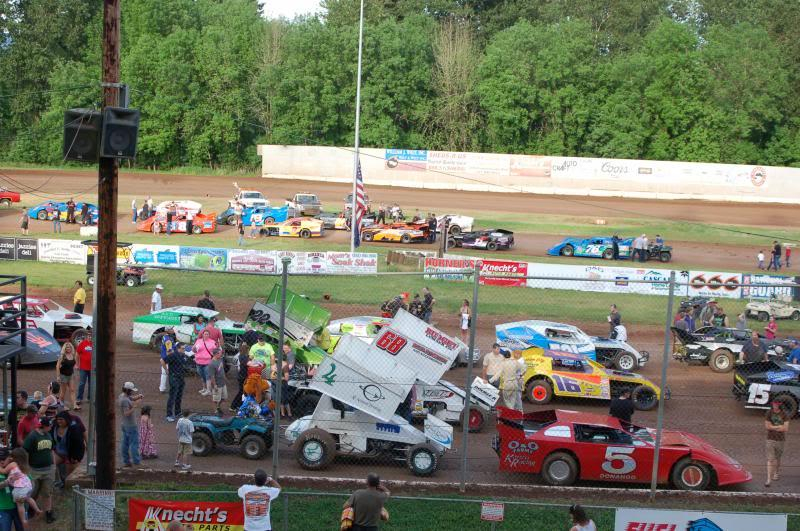
A first visit can feel slightly overwhelming.
The cars look different from one division to the next. Some have enormous wings mounted above them. Others resemble highly modified stock cars. A few sit low and wide, while compact divisions may appear closer to vehicles people once drove to work.
Then an announcer begins talking about heat races, features, points, qualifying, restarts, and track conditions.
Do not worry about understanding everything immediately.
The simplest way to enjoy a first night is to watch what happens when the green flag appears.
Drivers compete in preliminary races that help organize the field and determine who advances. The evening builds toward feature events, where the most important racing usually takes place.
As the laps pass, the stories become easy to follow.
One driver is moving through the field. Another is trying to protect the lead. Two cars have been racing side by side for several laps. Someone who started near the back suddenly appears among the leaders.
You begin recognizing car numbers.
A child in the row ahead picks a favorite based entirely on paint color. Someone nearby explains which driver has been fast all season. A regular points toward the track and predicts where a pass will happen.
Before long, you are no longer watching a group of unfamiliar cars.
You are watching a race.
Sprint Cars Bring an Entirely Different Kind of Energy
Few machines make an entrance like sprint cars.
Their oversized wings, exposed wheels, compact bodies, and enormous power make them look almost unreasonable. They are built for acceleration and control on a surface that is constantly trying to send them somewhere else.
When a field of sprint cars charges into the first corner, the speedway changes.
The sound sharpens. Dirt flies higher. Drivers carry extraordinary speed into the banking, using the throttle and steering to keep the cars balanced while the rear tires fight for traction.
Cottage Grove Speedway has a long association with sprint-car racing, and the track continues to feature several forms of the division.
The 2026 schedule included 360 Sprints, Limited Sprints, Wingless Sprints, and a major NARC King of the West Sprint Car appearance. The track also scheduled a stop for the Sprint Car Challenge Tour and Western Sprint Tour Speedweek.
Winged sprint cars use the large top wing to create downforce and stability. The wing helps drivers carry tremendous speed through a corner, although the cars remain anything but easy to control.
Wingless racing removes that advantage.
Without the top wing, the cars become more visibly unsettled. Drivers slide them deeper into corners and rely more heavily on throttle control, steering, and instinct. To spectators, wingless sprint racing can appear almost like a carefully managed loss of control.
Both versions are spectacular for different reasons.
The winged cars look brutally fast.
The wingless cars look like they are attempting to escape from their drivers.
Late Models Turn Clay Into a Battleground
Late Models provide another form of dirt-track excitement.
These are wide, powerful race cars with bodies designed specifically for competition. They sit low, fill the track, and often race close enough that drivers have very little room for error.
Where sprint cars can look light and explosive, Late Models look planted and aggressive.
They enter the corners hard, slide across the clay, and launch onto the straightaway with the rear tires digging for grip. When several cars fight for the same position, the track can suddenly feel much narrower than a quarter mile.
Late Models appear throughout Cottage Grove’s schedule, including weekly programs and larger events.
The 2026 calendar included the I-5 Silver Bullet Late Model Series, the Marvin Smith Memorial Grove Classic, and the Virgil Hanson Memorial Logger’s Cup. The Logger’s Cup was paired with Frank Brewer’s G60 Classic for IMCA Modifieds, creating one of the summer’s major weekends for full-bodied dirt cars.
These memorial events carry meaning beyond trophies and finishing positions.
Local racing remembers its people.
Names attached to races often belong to drivers, supporters, friends, or community members who helped shape the track. Each annual event becomes a way of keeping those stories connected to the speedway.
New spectators may initially see only cars and numbers.
Longtime fans see history moving around the oval.
Modifieds, SportMods, Street Stocks, and Compact Cars Keep the Program Varied
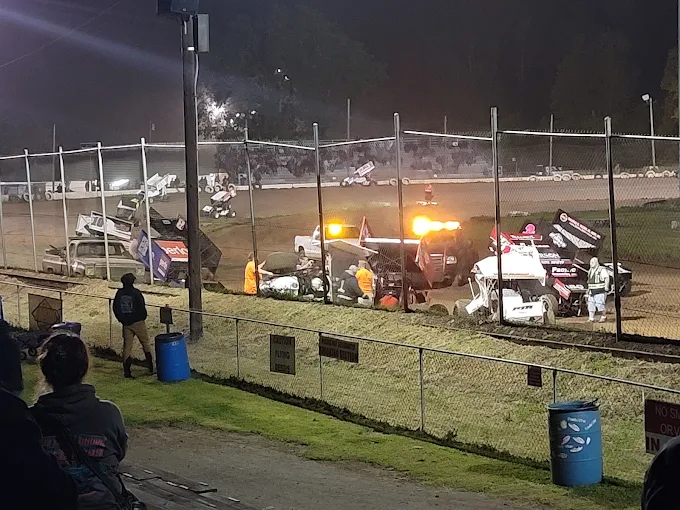
One of the strengths of Cottage Grove Speedway is the variety of racing offered during the season.
IMCA Modifieds are among the most recognizable cars at many dirt tracks. Their open front wheels, angled body panels, and powerful engines give them a distinctive appearance. They can race tightly together while producing the broad, controlled slides that make dirt racing so much fun to watch.
IMCA SportMods offer another competitive division, while Street Stocks bring a more traditional full-bodied shape to the clay.
Compact divisions add a different personality.
The 2026 schedule included IMCA Sport Compacts at many events, along with Dwarf Cars and Hardtops on selected nights. These classes may not always have the visual drama of a winged sprint car, but they frequently produce some of the closest racing of the evening.
That is one of the joys of attending an entire program.
The fastest or most expensive class is not guaranteed to deliver the night’s best finish.
A compact feature may come down to the final corner. Street Stocks may spend lap after lap trading positions. A Dwarf Car race may turn into the event everyone discusses while walking back to the parking lot.
Every division brings its own drivers, families, crews, rivalries, and supporters.
Together, they make the speedway feel less like a single sporting event and more like a weekly gathering of several interconnected racing communities.
The Work Begins Long Before Race Night
Spectators see the finished product.
They see brightly painted cars rolling onto the track, drivers wearing fire suits, and crews waiting in the pits with tools ready.
What they do not always see are the hours that came before.
Grassroots racing is built in garages.
It happens late at night after work, when a driver is still replacing a damaged part from the previous race. It happens when friends gather to solve a mechanical problem that refuses to make sense. It happens when a family spends the week checking bolts, repairing body panels, adjusting suspension, and finding enough money to return for another Saturday.
Many race cars arrive at Cottage Grove behind pickup trucks driven by people who will also serve as mechanic, crew chief, sponsor, and emergency parts runner before the night is over.
This is not distant, corporate motorsports.
The person inside the car may live nearby. The sponsor painted on the side may be a local contractor, repair shop, restaurant, farm, or small business.
The crew may consist of siblings, parents, spouses, children, coworkers, and friends.
That closeness makes every race personal.
When a local driver wins, the celebration extends beyond the person holding the trophy. It belongs to everyone who helped get the car onto the track.
When something breaks, the disappointment spreads through the entire pit.
Often, rival crews step in to help.
Today’s competitor may have the tool or spare part needed to get another car back into the race. Once the repairs are finished, they return to trying to beat each other.
That combination of competition and cooperation is one of the defining features of grassroots racing.
Memorial Races Keep Local Stories Alive
Cottage Grove’s calendar is filled with names that mean something to the racing community.
The Marvin Smith Memorial Grove Classic, Dave Schmidt Memorial Freedom Cup, Froggy 44 Tribute to Mel Walker, Virgil Hanson Memorial Logger’s Cup, Frank Brewer’s G60 Classic, and Ralph Bloom Memorial all appeared on the 2026 schedule.
To a casual visitor, these may simply look like event titles.
To the people who knew those names, each weekend carries memories.
Local racetracks become archives without walls. Their history is not stored only in written records. It is carried through stories told in the pits, old photographs, retired car numbers, memorial stickers, and races held each summer in someone’s honor.
A young fan may hear a name for the first time over the loudspeaker.
A longtime spectator may remember watching that person race.
Both are connected, briefly, by the same event.
This is how a track keeps its history from fading.
The cars change. The technology changes. New families arrive.
The names remain.
The Fourth of July Still Feels Special at the Speedway
Because Cottage Grove Speedway’s first race was held on July 4, Independence Day carries a natural connection to the track’s history.
The modern Freedom Cup continues that midsummer tradition.
In 2026, the Dave Schmidt Memorial Freedom Cup brought three nights of racing to the speedway on July 2, 3, and 4. Limited Sprints, IMCA Modifieds, IMCA SportMods, and Street Stocks filled the program, with fireworks planned for the finale.
There are few settings more naturally suited to a Fourth of July celebration than a dirt track.
Engines roar beneath the summer sky. Families fill the grandstands. Cars throw clay into the air under the lights, and the evening builds toward fireworks.
It is loud, slightly dusty, proudly local, and entirely uninterested in being elegant.
In other words, it feels exactly right.
For families who return each year, the event becomes part of the holiday itself. The memories are not limited to who won.
People remember where they sat, which child covered both ears during the sprint-car feature, who came home coated in dust, and whether the night cooled enough to make everyone grateful someone remembered the jackets.
Those details become tradition.
Special Nights Make the Season Feel Like a Community Calendar
The speedway does more than list racing divisions and dates.
Many programs are designed around the people in the grandstands.
The 2026 season included Fan Appreciation Night, a Mom’s Night Out with free general admission for mothers, Armed Forces Night with free admission for past and present military members, and a Kids Night offering free general admission to children age 12 and younger.
Later events included Ladies Night, Back to School Night, Driver Appreciation Night, Historical Night, and Championship Night.
These promotions help create an atmosphere that is larger than the competition.
Someone may attend because their child gets in free. Another family may come for a memorial race. A visitor who has never watched dirt-track racing might show up for fireworks or monster trucks, then return later for a regular Saturday program.

That first visit matters.
Every longtime racing fan had a first night.
Maybe a parent brought them. Maybe a friend had an extra ticket. Maybe they heard the engines from somewhere nearby and finally decided to see what was happening.
The future of any historic track depends on creating those new memories.
Monster Trucks Bring Their Own Kind of Chaos
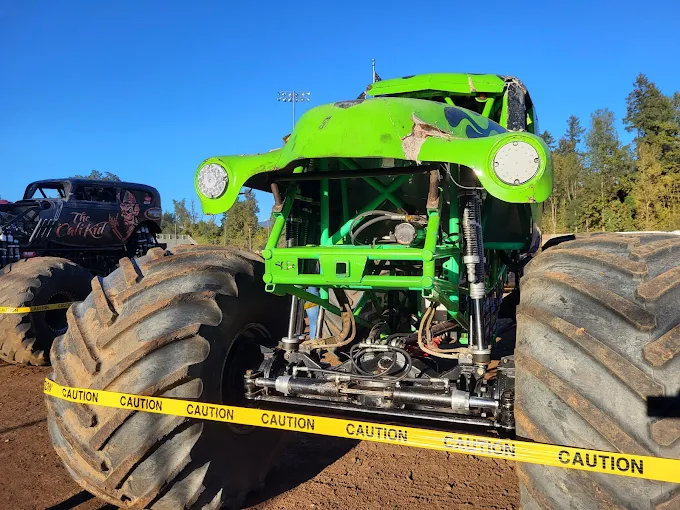
Not every event at Cottage Grove Speedway follows the weekly dirt-racing format.
Monster trucks have also become part of the calendar.
The 2026 schedule included multiple Malicious Monster Truck Tour dates in June and again over Labor Day weekend in September.
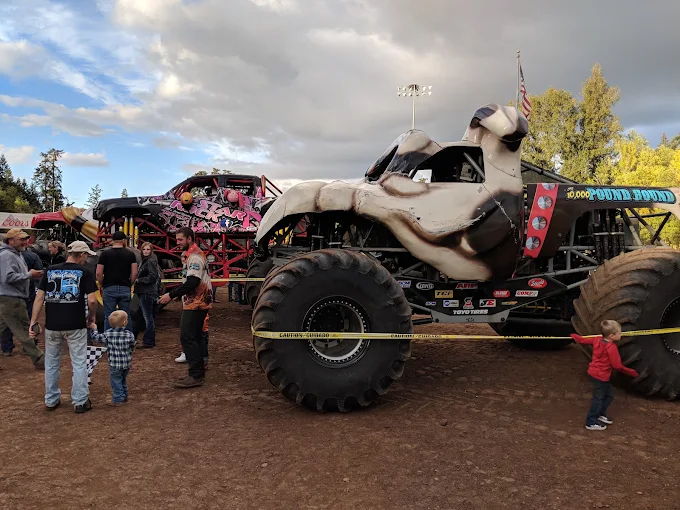
Monster truck events appeal to a broad crowd because very little explanation is required.
The trucks are enormous.
They are loud.
They crush, jump, bounce, and perform acts that appear deeply unkind to mechanical equipment.
Children understand the concept immediately.
For adults, monster trucks offer an opportunity to watch something gloriously excessive while pretending the tickets were purchased entirely for the kids.
These events also introduce new visitors to the speedway grounds. Someone who arrives for monster trucks may later discover sprint cars, Late Models, or Modifieds.
The form of entertainment changes, but the setting remains the same.
A crowd gathers in Cottage Grove to watch powerful machines do unreasonable things on dirt.
Kart Racing Gives the Next Generation a Place to Begin
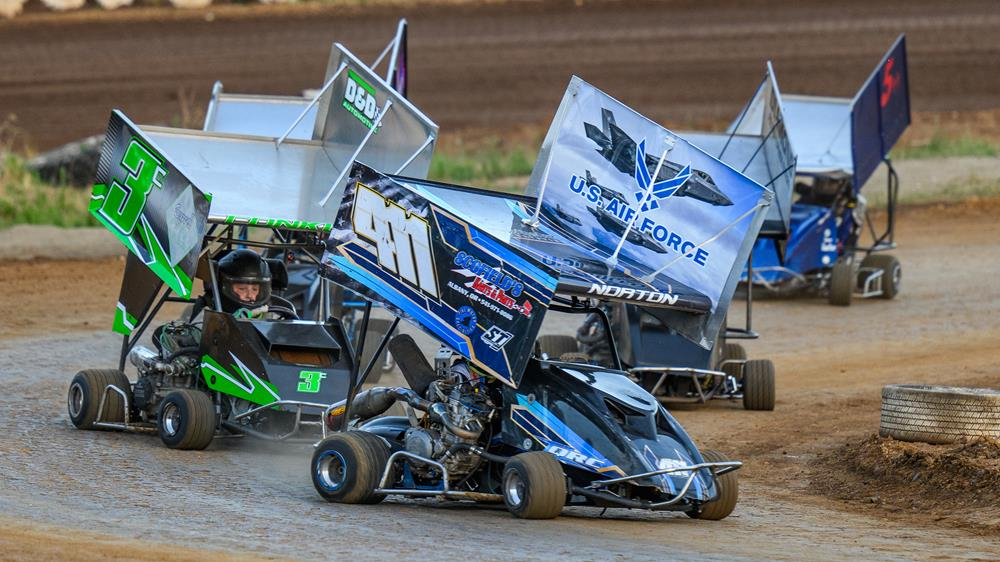
Cottage Grove Speedway also schedules kart racing throughout the season.
Karting is one of the traditional entry points into motorsports. It allows younger drivers and developing racers to learn the fundamentals of competition in a smaller, more accessible machine.
They learn how to hold a line, time a pass, react to changing track conditions, and remain calm while surrounded by other drivers trying to reach the same corner first.
They also learn everything that happens away from the track.
Preparation. Sportsmanship. Mechanical care. Patience. Disappointment. Improvement.
The 2026 calendar included kart races from spring through September, ending with a kart championship race and banquet.
Some kart drivers may eventually move into larger divisions.
Others may race simply because they love it.
Either way, they become part of the community that keeps local motorsports alive.
A historic speedway cannot survive only by remembering its past.
It must also create a place for the future.
The Grandstands Are Part of the Experience
Watching from home can provide replays, commentary, and a clear view of every lap.
It cannot reproduce the grandstands.
At Cottage Grove Speedway, the physical sensation of the race matters.
The engines are not merely heard. They are felt through the boards beneath your feet. Dirt reaches the crowd. The air cools after sunset, and jackets begin appearing as the evening moves toward the feature races.
Spectators react together.
A clean pass brings cheers. A spin causes the entire crowd to rise. A close finish sends everyone searching for the scoreboard or looking toward the officials.
There is no pause button.
The official race-day information recommends bringing a stadium seat or blanket, safety glasses, and a jacket for cooler nights. Most grandstand seating is first come, first served, while reserved and VIP skybox options may also be available.
Safety glasses are particularly sensible.
Dirt-track racing is honest about the dirt.
A light coating of clay is not a failure of the experience. It is evidence that you were close enough to feel part of it.
What to Eat During a Night at the Track
Race-track food occupies its own category of dining.
This is not the time for delicate portions or complicated presentation. The food needs to be hot, filling, easy to carry, and capable of surviving a walk back to the grandstands.
Cottage Grove Speedway’s race-day information lists burgers, hot dogs, chicken strips, corn dogs, nachos, and chili-cheese curly fries at the main concession stand. A separate candy booth offers items such as snow cones, cotton candy, popcorn, and pretzels. Coffee and hot chocolate are also available through the souvenir stand, while adult beverages are sold at the beer barn.
The chili-cheese curly fries have exactly the kind of unnecessary ambition a dirt-track evening deserves.
They are not designed for graceful eating.
They are designed to be shared, guarded, or consumed quickly before someone sitting beside you decides they ordered the wrong thing.
Concession lines also become part of the social experience.
Fans discuss qualifying times, compare predictions, and listen for engines while hoping they do not miss the next race.
A sudden roar from the track can send half the line leaning sideways in an attempt to see what is happening.
Even dinner refuses to separate itself from the action.
Planning Your First Visit
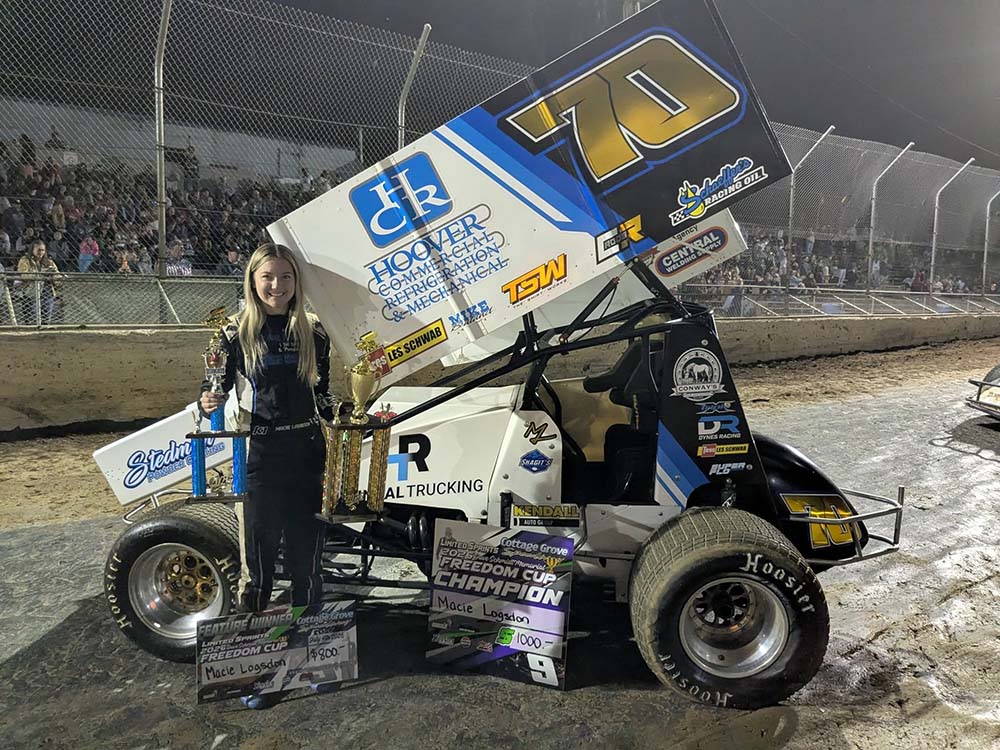
Cottage Grove Speedway is located at 2150 North Douglas Street in Cottage Grove.
For a typical race program, the track says front gates open at 4:30 p.m., hot laps and qualifying begin at 5:30 p.m., and racing starts at 6:30 p.m. Events are generally expected to finish around 10 p.m., although racing, weather, track preparation, and other circumstances can affect the timeline.
The facility advises visitors that it operates on a cash-only basis, with ATMs available on-site. Outside food and drinks are not permitted in the grandstands. Tickets may be purchased online before an event or at the front gate on race day.
Because individual events may use special pricing or different schedules, checking the official calendar before leaving home is important.
Weather matters at a dirt track.
Rain can force cancellations or postponements, while changing conditions may affect the racing program. The 2026 schedule itself shows several early-season rainouts, a reminder that Oregon spring weather does not always cooperate with even the best plans.
Bring layers.
An afternoon that feels warm in the parking lot may become surprisingly cool after sunset.
Bring hearing protection, especially for children or anyone sensitive to loud noise. Racing engines at close range are extremely loud, and protecting your ears makes the evening more comfortable.
Wear clothes that can handle dust.
Most importantly, arrive ready to pay attention. Dirt-track racing moves quickly, and the most memorable moment of the night may happen without warning.
Camping Can Turn a Race Into a Weekend
Visitors traveling from outside the Cottage Grove area can make more than an evening out of the trip.
The speedway says camping is available next door at the fairgrounds, with reservations handled through the neighboring facility. The track also lists a nearby hotel partner within walking distance.
That can be especially useful during multi-night events.
Rather than driving home after the final feature, race fans can stay nearby and return the following day. Multi-night weekends also give visitors time to explore Cottage Grove, find a local breakfast, walk through downtown, or simply spend the morning discussing everything that happened at the track.
Race weekends develop their own temporary community.
Trailers fill the area. Teams make repairs. Fans wear shirts supporting particular drivers. Conversations continue in parking lots, restaurants, and hotel lobbies.
By the second night, even a visitor begins recognizing cars and storylines.
The driver who struggled on Friday may be fast on Saturday.
A car damaged during the first program may reappear after an all-night repair.
The weekend becomes a continuing story rather than a single event.
When the Racing Season Ends, the Lights Change
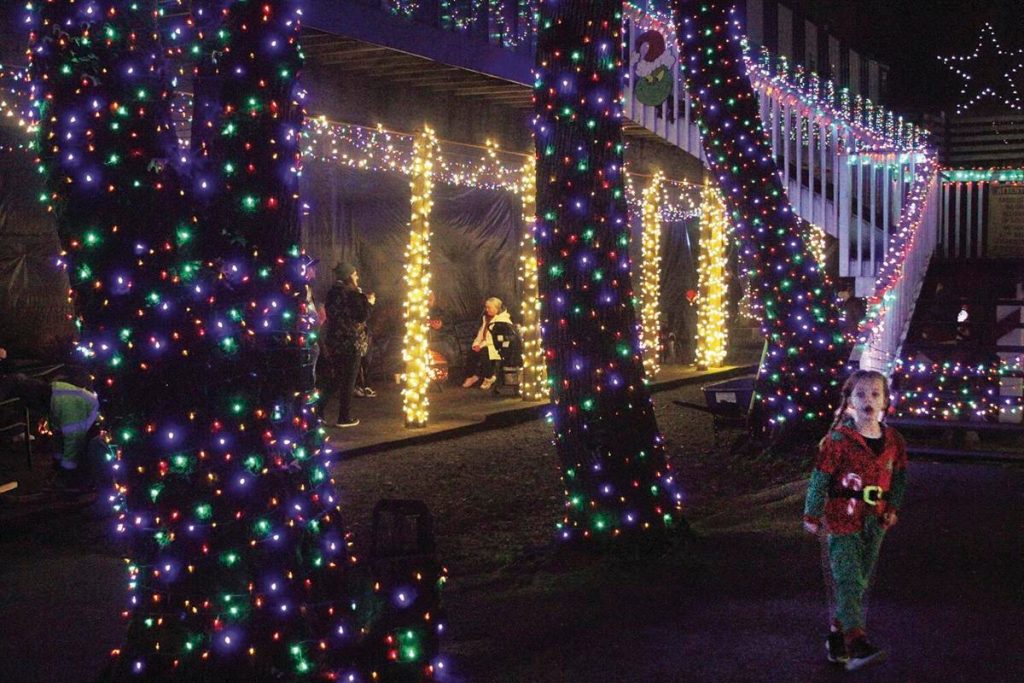
Cottage Grove Speedway does not completely go quiet when the summer racing season is over.
During the colder months, the property takes on a very different personality through Walking in a Winter Wonderland.
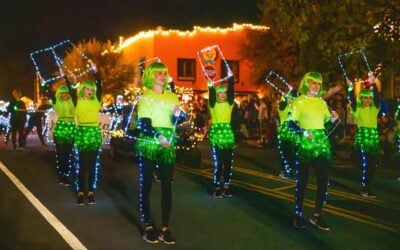
Instead of race cars charging through the corners, visitors walk through a Christmas display illuminated by thousands of lights. The event has featured hot chocolate, fire pits, seasonal food, desserts, enclosed dinner seating, and activities intended for both adults and children.
It is difficult to imagine two more different uses for the same property.
In summer, the speedway is filled with engines, dust, and competition.
In winter, families arrive for Christmas lights, warm drinks, and time beside the fire.
Yet both experiences depend on the same basic idea.
People want a reason to gather.
The speedway provides that reason throughout much of the year.
Because the Christmas attraction is outdoors and the grounds may become muddy, visitors are advised to dress for the weather and wear appropriate shoes. Dates, menus, ticket details, and availability can change from season to season, so guests should confirm the latest information directly with the speedway before planning a holiday visit.
More Than Entertainment for Cottage Grove
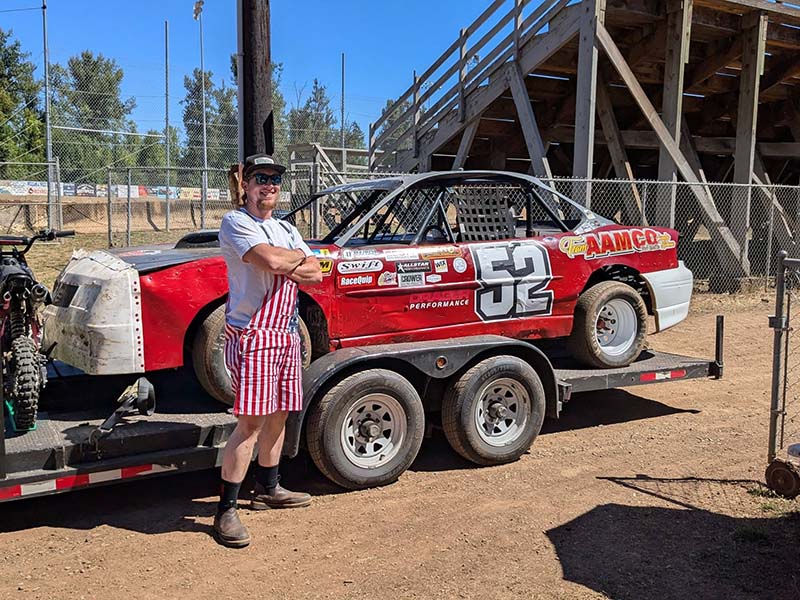
A place that operates for 70 years becomes part of a town’s identity.
Cottage Grove Speedway is not merely a location where cars compete. It is a landmark tied to family memories, local businesses, summer routines, and generations of people who learned to love racing from the grandstands.
Some spectators have been attending since childhood.
They remember older cars, former drivers, past owners, and nights that have grown legendary through retelling. They may now sit beside children or grandchildren who are experiencing the same sounds for the first time.
Drivers form their own connections.
A person may begin in karting, move into a compact car, and eventually race in one of the track’s larger divisions. A family may spend decades supporting different cars carrying the same number.
The speedway becomes a thread running through their lives.
That is the value of continuity.
A track does not remain meaningful simply because it is old. It remains meaningful because people continue creating new experiences there.
History brings visitors through the gate.
The next race gives them a reason to return.
Why Local Dirt Tracks Still Matter
Modern entertainment is often designed to be consumed alone.
A person can watch a movie, stream a game, play online, or scroll through hours of content without leaving home.
A dirt track asks something different.
It asks you to go somewhere.
You sit beside people you may not know. You react to the same moments. You become invested in drivers whose cars were unfamiliar an hour earlier.
The experience is physical, communal, and imperfect.
There may be delays. Dirt will land where you do not want it. The weather may turn cold. A favorite car may break before the feature.
None of that can be edited out.
That unpredictability is part of what makes the night memorable.
Cottage Grove Speedway represents a form of local entertainment that is becoming harder to duplicate. It is rooted in participation rather than passive observation.
The competitors are not distant celebrities appearing once a year.
Many are members of the surrounding racing community. Fans can see the cars in the pits, follow drivers through the season, and return the next week to watch the story continue.
A victory matters because everyone understands what it took to reach the track.
A mechanical failure hurts because people know how much work went into the car.
The distance between spectator and participant is smaller here.
That closeness gives grassroots racing its heart.
Seventy Years Later, the Green Flag Still Drops
Much of what existed in Oregon in 1956 has disappeared or changed beyond recognition.
Businesses closed. Buildings were replaced. Roads moved. Entertainment shifted toward larger venues and digital platforms.
Cottage Grove Speedway remained.
The cars are faster now. Safety equipment has improved. New divisions have joined the program, and major touring series continue to visit.
But when the field lines up under the lights, the basic promise is the same one offered on July 4, 1956.
There will be speed.
There will be noise.
There will be dirt.
Someone will find the fastest route through the corner, and someone else will spend the entire race trying to take it away.
In the grandstands, children will choose favorite cars for reasons that have nothing to do with qualifying times. Regulars will debate track conditions. Families will share fries, pull on jackets after dark, and leave the grounds talking about the pass they almost missed.
That is how a tradition survives.
Not as something sealed behind glass, but as something repeated, renewed, and handed to the next person.
Cottage Grove Speedway has been doing that for seven decades.
The clay is still waiting.
The grandstands are still filling.
And when the green flag drops on another Oregon night, the old track once again feels completely alive.
Plan Your Visit
Cottage Grove Speedway
2150 North Douglas Street
Cottage Grove, Oregon 97424
Phone: 541-942-7561
Official website: https://www.cottagegrovespeedway.com/
Event schedules, admission prices, starting times, racing divisions, and weather conditions can change. Check directly with Cottage Grove Speedway before making a special trip.
Bring hearing protection, safety glasses, a stadium seat or blanket, comfortable layers, and clothes that can survive a little Oregon dirt.
Then find a place in the grandstands and wait for the engines to start.