
As artificial intelligence becomes a larger part of everyday life, the enormous buildings required to power it are beginning to face resistance from communities across the country.
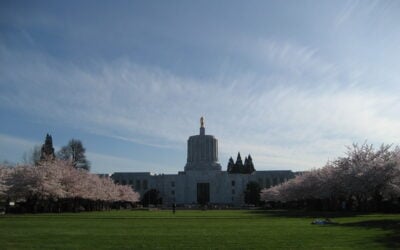
That growing national debate will reach Oregon this weekend when demonstrators gather near the State Capitol in Salem as part of a coordinated day of protests against the rapid expansion of AI data centers.
The official That Oregon Life store
The Oregon you bring home.
Start the day with Oregon-roasted coffee, then find original gear inspired by the places, stories, and oddities that make this state ours.
Shop Oregon gear


The Salem demonstration is scheduled for Saturday, July 18, at 11 a.m. at State Capitol State Park. According to the event listing published by organizers, the gathering is one of dozens planned across the United States as residents raise concerns about electricity prices, water consumption, tax incentives and the effect large technology projects could have on their communities.
A separate protest is also planned in Olympia, bringing the coordinated campaign to both Oregon and Washington.
The demonstrations are being promoted by Humans First, a conservative-led organization chaired by former Tea Party activist Amy Kremer. The group says the July 18 events are intended to pressure elected officials at the local, state and federal levels to place stronger limits on the construction and public financing of large AI data centers.
While the movement has roots on the political right, organizers describe the issue as larger than any single party. Their message focuses heavily on local control, arguing that communities should have more authority over whether massive data centers are built near homes, farms and existing businesses.
Organizers are also calling for the demonstrations to remain peaceful. Materials prepared for local hosts describe participants as law-abiding residents and make it clear that anyone seeking violence or destruction is not welcome.
Why AI Data Centers Are Becoming So Controversial
For many people, artificial intelligence feels almost invisible. Someone enters a question into a phone or computer, receives an answer within seconds and rarely thinks about the physical infrastructure behind that exchange.
Behind the screen, however, AI systems depend on vast facilities filled with servers that operate around the clock.
Those servers consume enormous amounts of electricity. Many facilities also require significant water or other cooling systems to prevent equipment from overheating. Depending on their size, data centers can place demands on a regional power grid comparable to those of a large industrial operation.
That has created anxiety in communities where new projects are being proposed.
Residents are asking whether local power supplies can handle the additional demand, who will pay for new transmission infrastructure and whether ordinary households could eventually see higher utility bills. Others worry about water use, noise, backup generators, loss of farmland and the relatively small number of permanent jobs some highly automated facilities may provide after construction is complete.
Those concerns are not limited to one political group or one region of the country.
A Gallup survey released in May found that 71 percent of Americans opposed the construction of an AI data center in their local area. Nearly half of those surveyed said they strongly opposed one being built nearby.
The survey found that opponents most frequently mentioned heavy resource use, environmental effects, higher utility costs, noise and changes to the character of their communities. Supporters were more likely to point to possible employment opportunities, tax revenue and broader economic development.
The results also showed opposition crossing partisan lines. Majorities of Republicans, Democrats and independents said they would oppose an AI data center near where they live, although the intensity of that opposition differed among the groups.
Protesters Question Tax Breaks And Public Subsidies
One of the central complaints behind Saturday’s demonstrations involves the financial incentives frequently offered to attract technology companies.
Large development projects are often promoted as opportunities to expand the tax base, create construction work and bring investment into a region. To win those projects, however, states and local governments may offer sales tax exemptions, property tax reductions, infrastructure improvements or favorable electricity arrangements.
Humans First argues that communities should not be expected to subsidize projects that could increase pressure on local resources or require expensive upgrades to power systems.
The organization’s campaign materials call for an end to what it describes as corporate welfare, taxpayer bailouts and special deals negotiated without enough public involvement.
That argument has gained traction as residents in several states have questioned whether the long-term economic benefits of data centers match the value of the incentives offered to their developers.
Supporters of data center construction counter that the facilities are essential to keeping the United States competitive in artificial intelligence and other advanced technology. They also argue that major projects can generate construction jobs, new tax revenue and investment in areas that may otherwise struggle to attract large employers.
The disagreement is quickly turning what were once fairly routine land-use decisions into heated public debates.
Salem Rally Comes As Other States Begin Taking Action
The Salem protest also arrives during a week when the national data center fight took a significant turn.
On July 14, New York Gov. Kathy Hochul signed an executive order temporarily pausing state environmental permits for new hyperscale data centers. The moratorium, the first statewide action of its kind in the country, may remain in place for up to one year while New York develops new environmental and energy standards.
New York officials said the pause is intended to examine the effect large data centers could have on electricity demand, water use, air quality and the state’s power infrastructure. The state is also considering ways to prevent ordinary utility customers from being forced to cover the cost of grid expansions needed for major technology projects.
Hochul has directed regulators to study whether data centers should pay more for electricity, produce some of their own power or contribute directly toward improvements to the electrical grid. She is also pursuing legislation that would eliminate certain sales tax exemptions for the largest facilities.
The decision has drawn criticism from supporters of rapid AI development, who warn that restricting construction could send jobs and technology investment to states with fewer regulations.
Humans First has stopped short of calling for a permanent nationwide ban. The organization says it does not support a blanket federal moratorium or automatic moratoriums in every state. Instead, it argues that individual communities should have the power to determine whether a data center fits the future they want.
That distinction is likely to become increasingly important as more proposals reach city councils, county commissions and state regulatory agencies.
What The Issue Could Mean For Oregon
Oregon is no stranger to data centers.
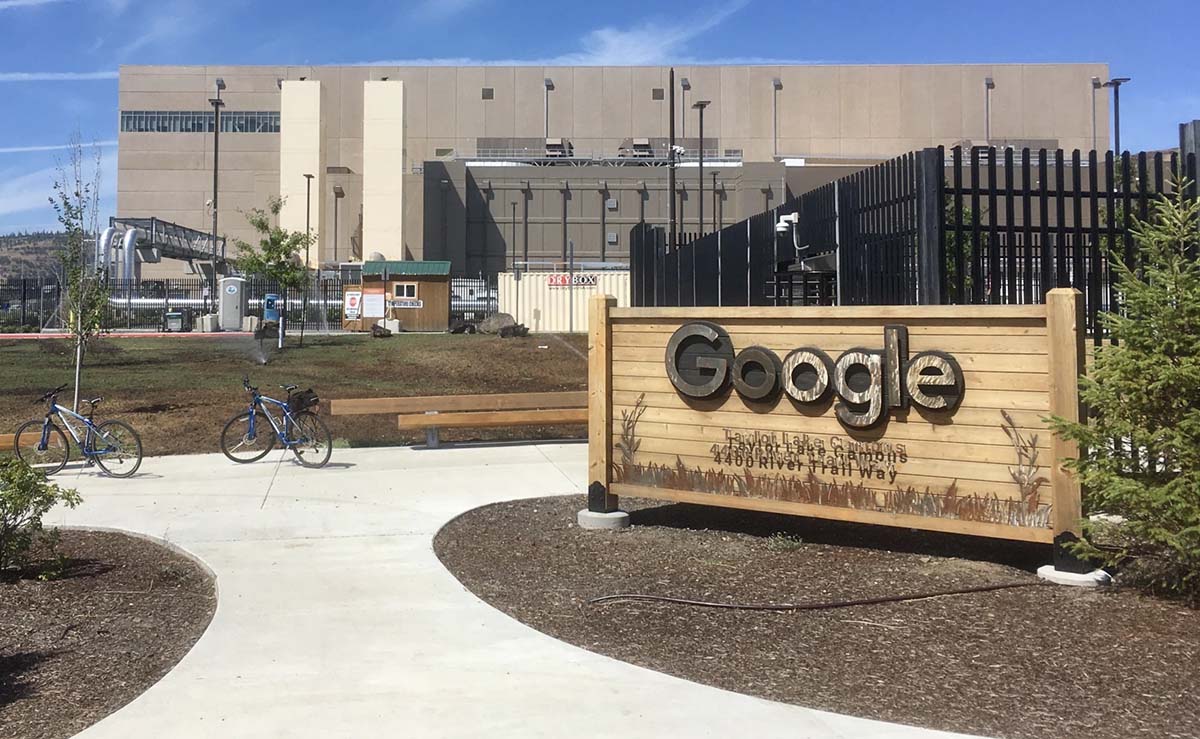
Parts of the state have attracted large technology facilities because of available land, relatively affordable electricity and access to major fiber networks. Central and eastern Oregon communities have already experienced both the economic benefits and resource debates that can accompany the industry.
Data centers can contribute substantial tax revenue and help fund local services. Their construction can also provide well-paying temporary jobs and bring investment to communities far from the Portland metropolitan area.
At the same time, Oregon faces its own questions about energy supply, transmission capacity, water availability and how the costs of rapid industrial growth should be divided.
Those questions become especially complicated when a facility may benefit a global corporation while drawing electricity or water from systems shared with nearby residents.
The Salem rally does not appear to be tied to one specific proposed Oregon facility. Instead, it is part of a broader effort to bring attention to how data center projects are approved, financed and regulated before more of them move forward.
For organizers, the central question is not simply whether artificial intelligence should exist. It is whether the physical infrastructure supporting it should be allowed to expand without stronger public oversight.
What To Know Before Attending
The Salem demonstration is scheduled to begin at 11 a.m. on Saturday, July 18, at State Capitol State Park in Salem. Anyone considering attending should check the organizer’s event page before traveling, since times, gathering locations and other details can change.
Organizers are asking participants to keep the gathering peaceful and focused on public policy. The campaign’s stated priorities include protecting utility customers, limiting taxpayer-funded incentives, preserving local decision-making and requiring greater transparency around the resources data centers consume.
Whether Saturday’s events lead to immediate policy changes remains to be seen. What is clear is that AI data centers are no longer an obscure issue discussed mainly by technology companies and utility regulators.
They are becoming a kitchen-table concern involving electric bills, water supplies, public money and the future character of American communities.
This weekend, Salem will become one of the places where that national conversation moves out from behind computer screens and into the public square.