

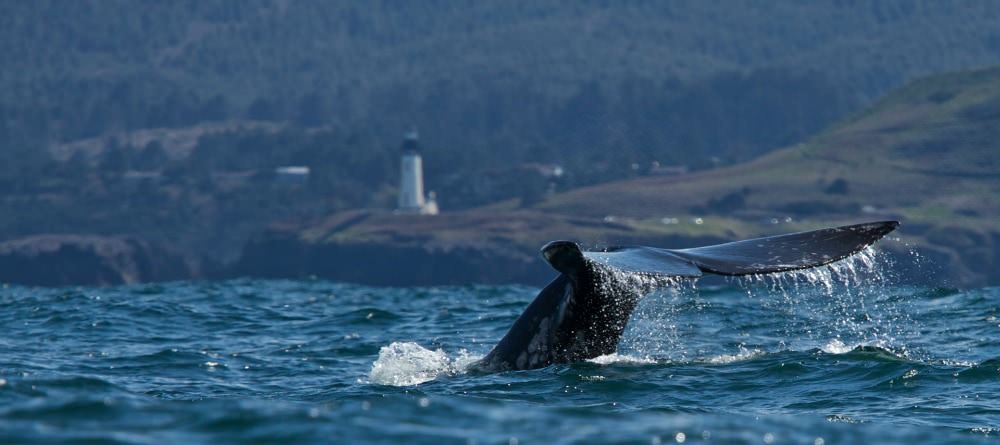
There are few sights on the Oregon Coast as moving as a gray whale breaking the surface of the Pacific.
For many of us, they are part of the rhythm of this place. They pass by our headlands in winter and spring, draw people to overlooks at Depoe Bay and Cape Perpetua, and remind us that the Oregon Coast is not just a scenic backdrop. It is part of one of the longest mammal migrations on Earth.
But in 2026, the story of the gray whale has taken a darker turn.
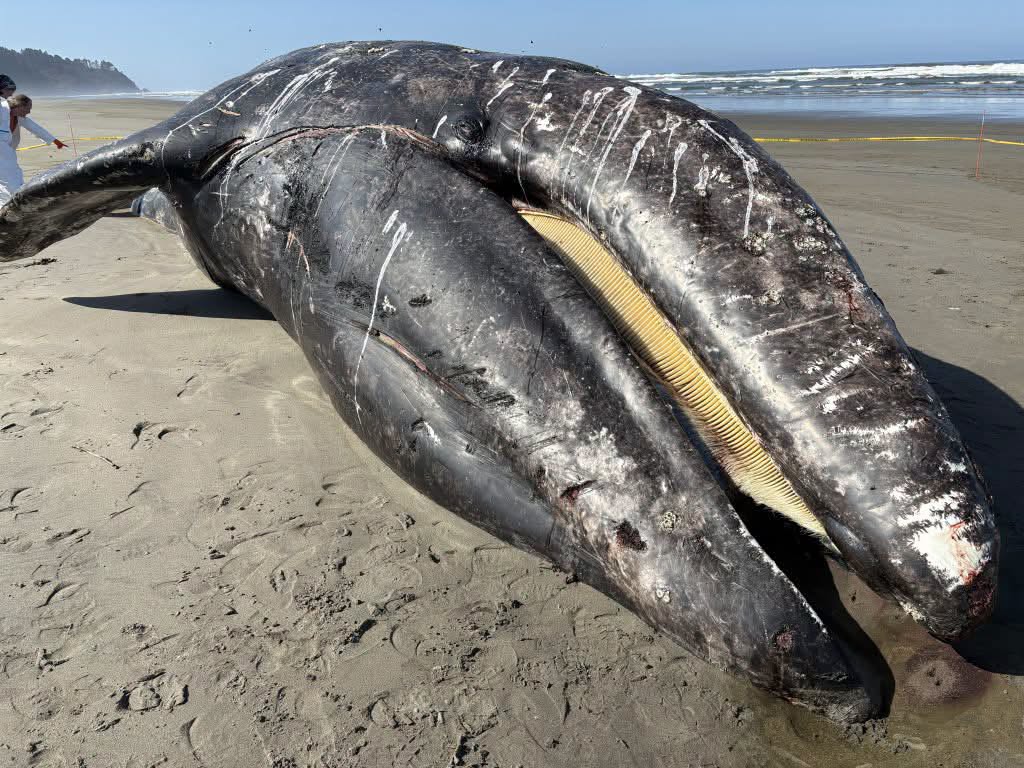
Across the Pacific Coast, gray whales are washing ashore in numbers high enough to alarm researchers, stranding responders, and marine conservation groups. According to KTOO citing the National Oceanic and Atmospheric Administration (NOAA), 145 Pacific gray whales had been found dead on beaches so far in 2026 as of early July, including 13 in Alaska. In 2025, 179 gray whales were found stranded, including 30 in Alaska.
That number does not capture every whale that dies. It only counts the animals that are found.
Many whales sink offshore, drift unseen, or decompose far from any beach where a member of the public or a stranding team can report them. That is one reason the visible carcasses matter so much: they are the part of a much larger ocean story that reaches land.
In Oregon, the numbers are smaller than in places like Washington, Alaska, or California’s Bay Area, but the concern is real. By late April, at least three gray whales had been found on Oregon beaches in 2026, according to Axios Portland reporting. One of those was a 40-foot male gray whale found on the south end of Seaside Beach on April 14. A necropsy later showed the whale was emaciated, suggesting it may have been starving.
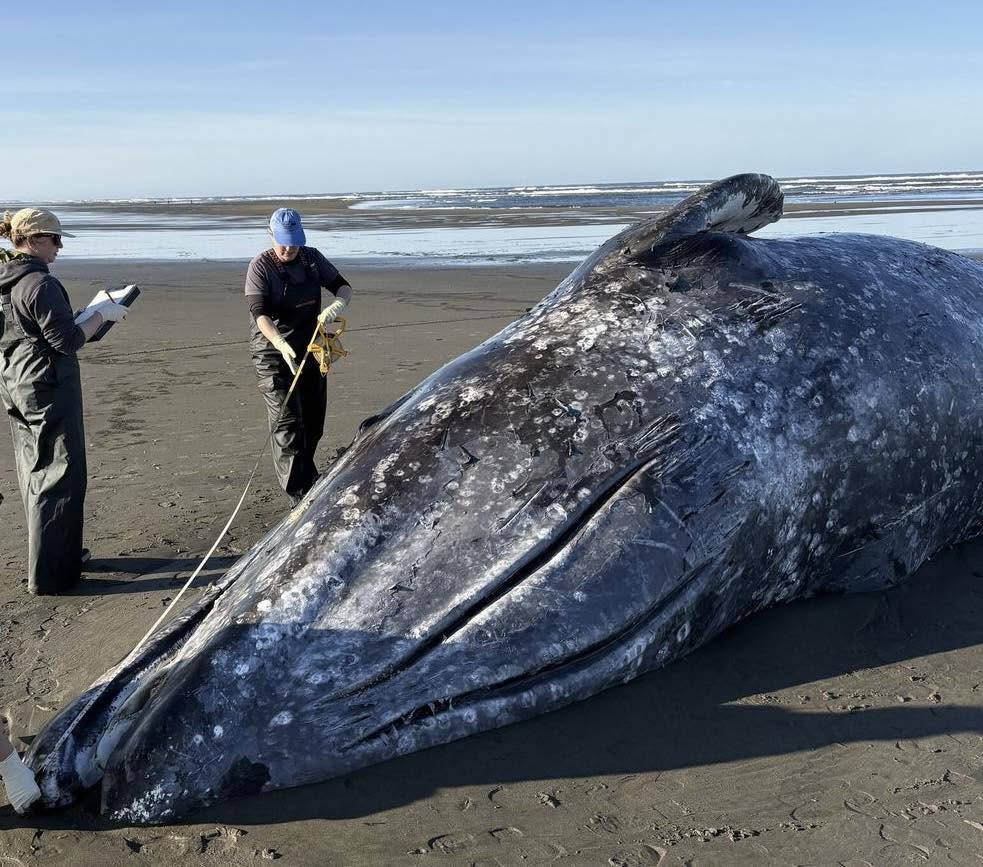
Another gray whale was found near Tillicum Beach between Yachats and Waldport on April 12. Oregon Parks and Recreation Department staff were notified that morning, the Oregon Marine Mammal Stranding Network responded, and samples were collected for further evaluation. KATU reported that the whale was roughly 40 feet long and appeared to have died several days before washing ashore.
For Oregonians, these strandings feel especially unsettling because gray whales are not distant wildlife. They are visible from our beaches. They are tied to our coastal towns, whale-watching weeks, charter boats, state parks, and the quiet pull of binoculars at the edge of a cliff.
And scientists say the pattern is not random.
The 2026 Deaths Are Part Of A Bigger Gray Whale Crisis
The gray whales seen along Oregon belong to the eastern North Pacific population, which migrates between wintering and calving areas off Baja California, Mexico, and summer feeding grounds in the Arctic and sub-Arctic. NOAA says gray whales make one of the longest annual migrations of any mammal, traveling about 10,000 miles round trip and in some cases more than 14,000 miles.
That journey depends on fat reserves.
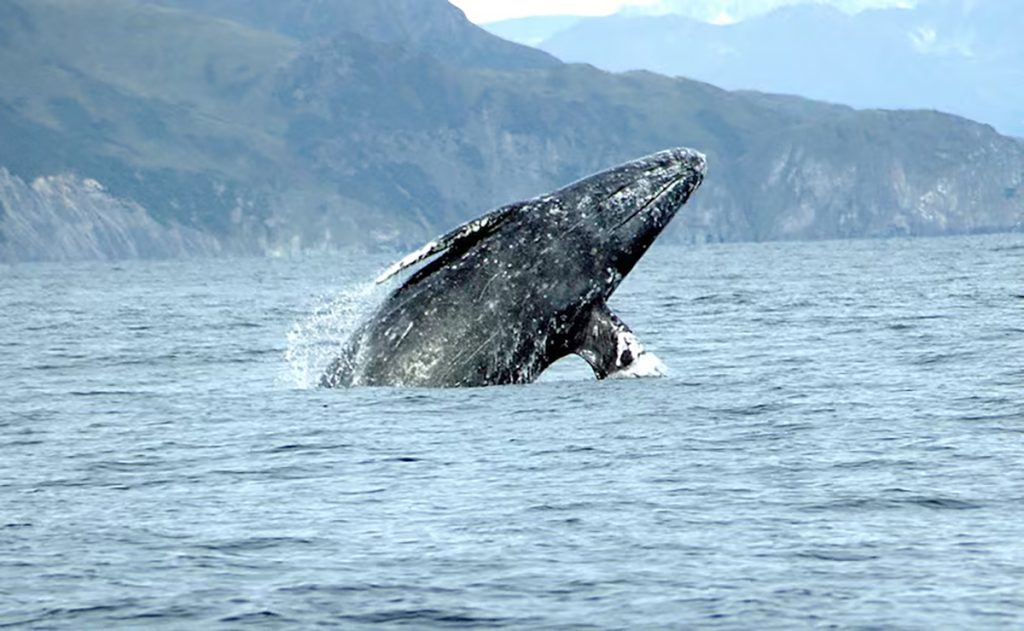
Gray whales do much of their feeding in the northern Bering and Chukchi seas, where they target small crustaceans and other organisms on or near the seafloor. During migration, especially on the northbound trip from Mexico toward Alaska, they are often living off the energy stored from the previous feeding season.
When that feeding season is poor, the consequences can show up months later on beaches from Mexico to Alaska.
Between 2019 and 2023, NOAA declared an Unusual Mortality Event for eastern North Pacific gray whales after elevated numbers of strandings occurred from Mexico through Alaska. NOAA says the event was associated with ecosystem changes in Arctic and sub-Arctic feeding areas that reduced food availability. Many whales showed signs of malnutrition, fewer calves were born, and mortality increased.
NOAA’s population page says the eastern North Pacific gray whale population was estimated at 25,000 to 30,000 animals in 2016, one of the highest estimates in a monitoring record dating back to 1967. By winter 2022/2023, the estimate had fallen to roughly 13,300 to 16,000 whales. NOAA later estimated a low of about 11,700 to 14,200 whales in 2024/2025, followed by an apparent increase to between 15,930 and 20,530 whales in 2025/2026.
That apparent increase is encouraging, but NOAA cautions that recent swings may not simply reflect births and deaths. Changing migration patterns, detection issues, and survey factors may also influence how many whales are counted. NOAA also notes that calf production has remained low since 2019, which raises concern about the population’s resilience.
In other words, the latest estimate does not erase the larger warning signs.
The official That Oregon Life store
The Oregon you bring home.
Start the day with Oregon-roasted coffee, then find original gear inspired by the places, stories, and oddities that make this state ours.
Shop Oregon gear

Why Are Gray Whales Dying?
The clearest answer scientists have is food.
Oregon State University researchers have been central to understanding the gray whale decline. A 2023 OSU news release about research led by Joshua Stewart of OSU’s Marine Mammal Institute explained that dynamic and changing Arctic Ocean conditions likely caused three major mortality events in the eastern North Pacific gray whale population since the 1980s. During these die-offs, the population was reduced by up to 25% over just a few years.
The key is sea ice.
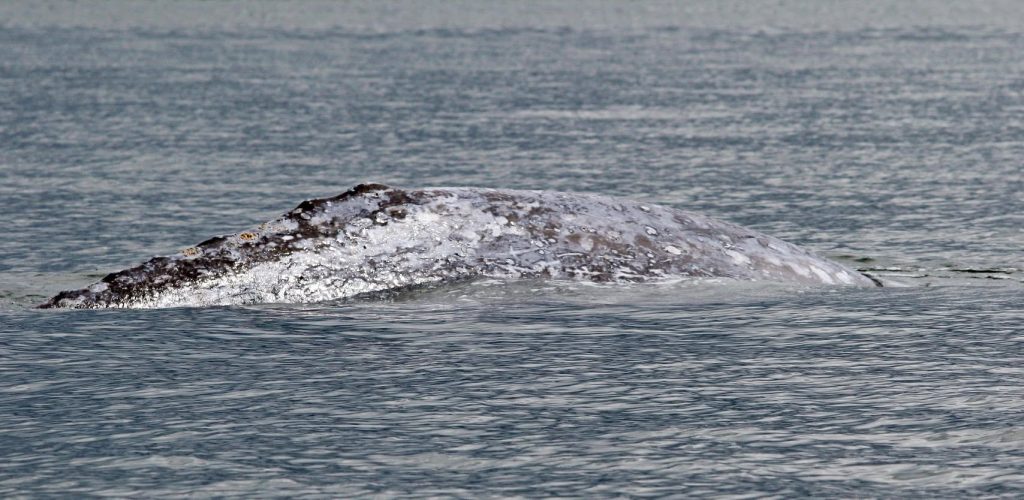
For gray whales, Arctic sea ice is not just frozen water. It helps support a food web. Algae grows under the ice, then sinks to the seafloor, where it helps feed the small crustaceans that gray whales rely on. When sea ice declines, that food system can change. OSU summarized the problem bluntly: less ice can mean less algae reaching the seafloor, warmer water, smaller crustaceans, faster currents, and less habitat for the high-calorie prey gray whales prefer.
That doesn’t mean every whale that washes ashore dies for the same reason.
Some stranded whales show signs of vessel strikes. Some may be affected by entanglement, disease, predation, or other stressors. In Washington this spring, Cascadia Research Collective noted an alarmingly high number of gray whale mortalities and said malnutrition was the most common finding among examined whales, with some animals also showing internal trauma consistent with vessel collision.
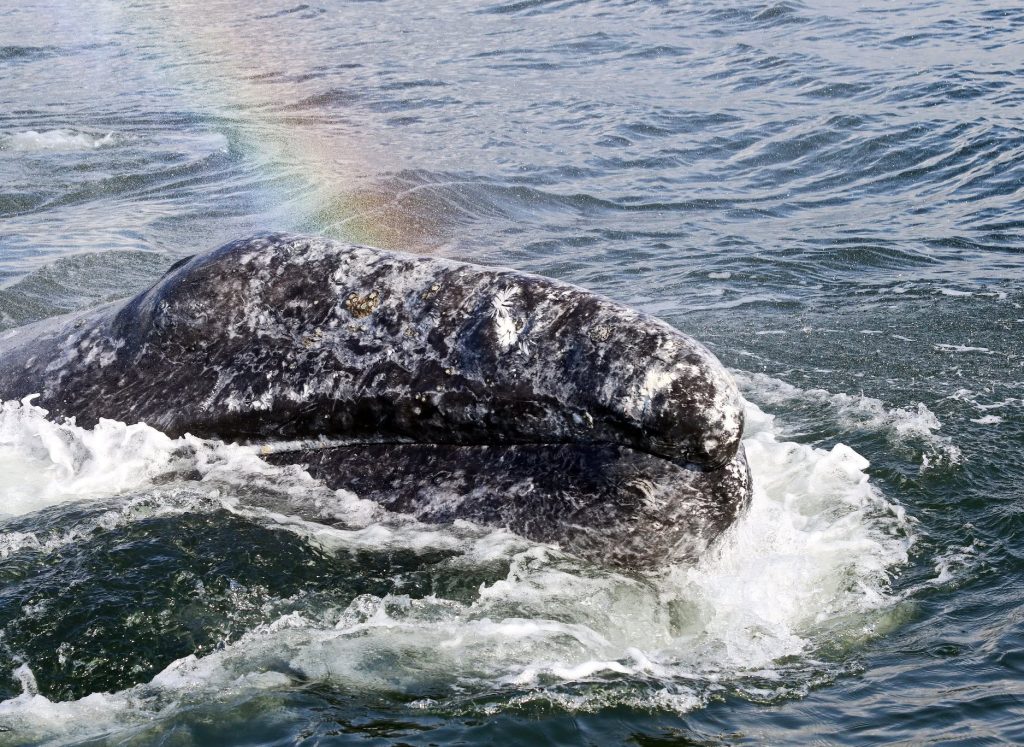
NOAA’s own gray whale species page lists climate change, disturbance from whale watching, entanglement in fishing gear, habitat impacts, ocean noise, and vessel strikes among the threats facing the species.
But the food problem sits at the center of the current concern.
As John Calambokidis of Cascadia Research Collective told the Associated Press after a juvenile gray whale died in Washington’s Willapa River, “the heart” of the crisis appears to be feeding on Arctic prey. The AP reported that the whale had swum about 20 miles up the river before it died, and that hunger may have driven it to search in unusual places.
Is This A New Unusual Mortality Event?
This is where the wording matters.
Some environmental groups and advocates are now calling the current die-off a “catastrophic mortality event,” especially because the observed strandings are so far above long-term averages and because many deaths are never observed. The Guardian reported that environmental groups estimate somewhere between 2,500 and 8,000 gray whales may have died so far in 2026 when unobserved offshore deaths are considered.
But NOAA has not necessarily declared a new Unusual Mortality Event for gray whales in 2026.
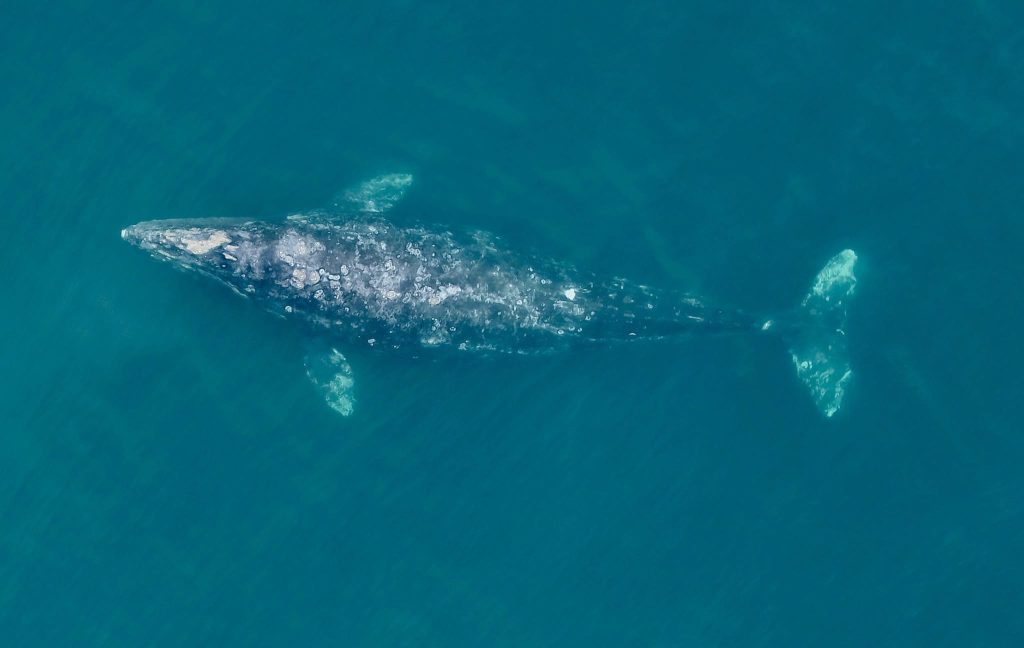
In July, NOAA spokesperson Michael Milstein told KTOO that the agency would consider declaring another UME only if there were new reasons why so many whales were turning up dead. “At this point, elevated strandings have continued, but all indications are that the causes remain the same,” he said.
That distinction is important.
The deaths are elevated. The concern is real. But the official federal label is not the same as the language being used by advocates, conservation groups, or researchers warning about the scale of the problem.
Oregon’s Piece Of The Story
Oregon’s coastline is different from Washington’s maze of inland waters or California’s San Francisco Bay. It has fewer places where gray whales might linger in enclosed waters while searching for food, which may be one reason Oregon often sees fewer strandings than other parts of the West Coast.
OPB reported in April that Oregon does not typically see many gray whale strandings compared with Washington and the Bay Area. NOAA spokesperson Michael Milstein told OPB that Oregon does not have as many coastal “nooks and crannies” where whales might explore for food. OPB also reported that eight whales beached off Oregon’s coast in 2025, and none were gray whales.
That makes the 2026 gray whale strandings more notable.
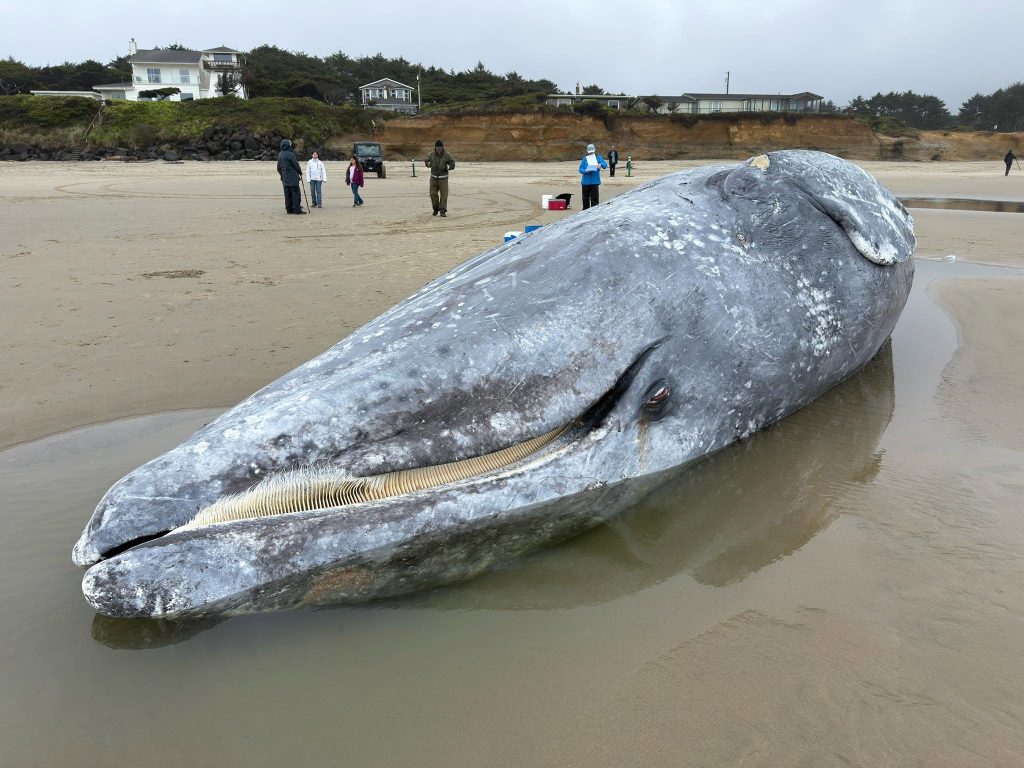
The Seaside whale was found on April 14 and later determined to be emaciated. The Tillicum Beach whale was found two days earlier, near one of the most whale-associated stretches of the central coast. Another gray whale had previously stranded near Florence, making the Seaside whale the third dead whale to beach off Oregon’s coast so far that year.
Each animal becomes part of a scientific record.
That work is carried out in Oregon by the Oregon Marine Mammal Stranding Network, housed at Oregon State University’s Marine Mammal Institute. The network documents and investigates marine mammal strandings in Oregon, collects data from stranded whales, dolphins, porpoises, pinnipeds, sea otters, and sea turtles, works to determine causes of illness and death, and reports information to NOAA’s National Stranding Database.
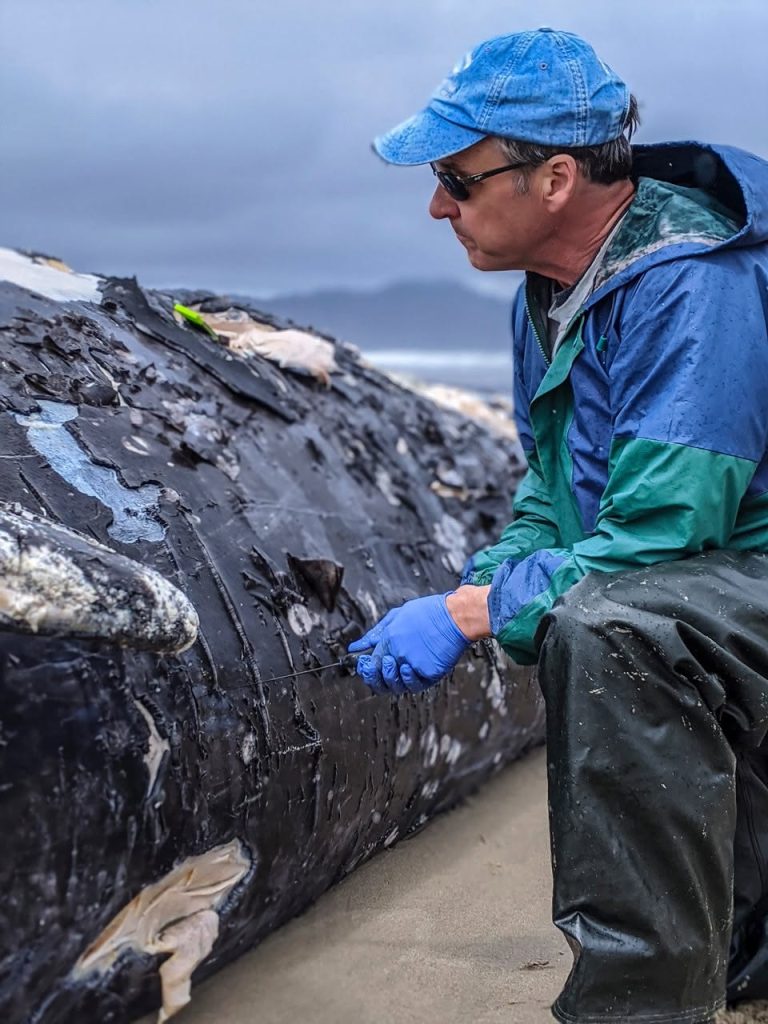
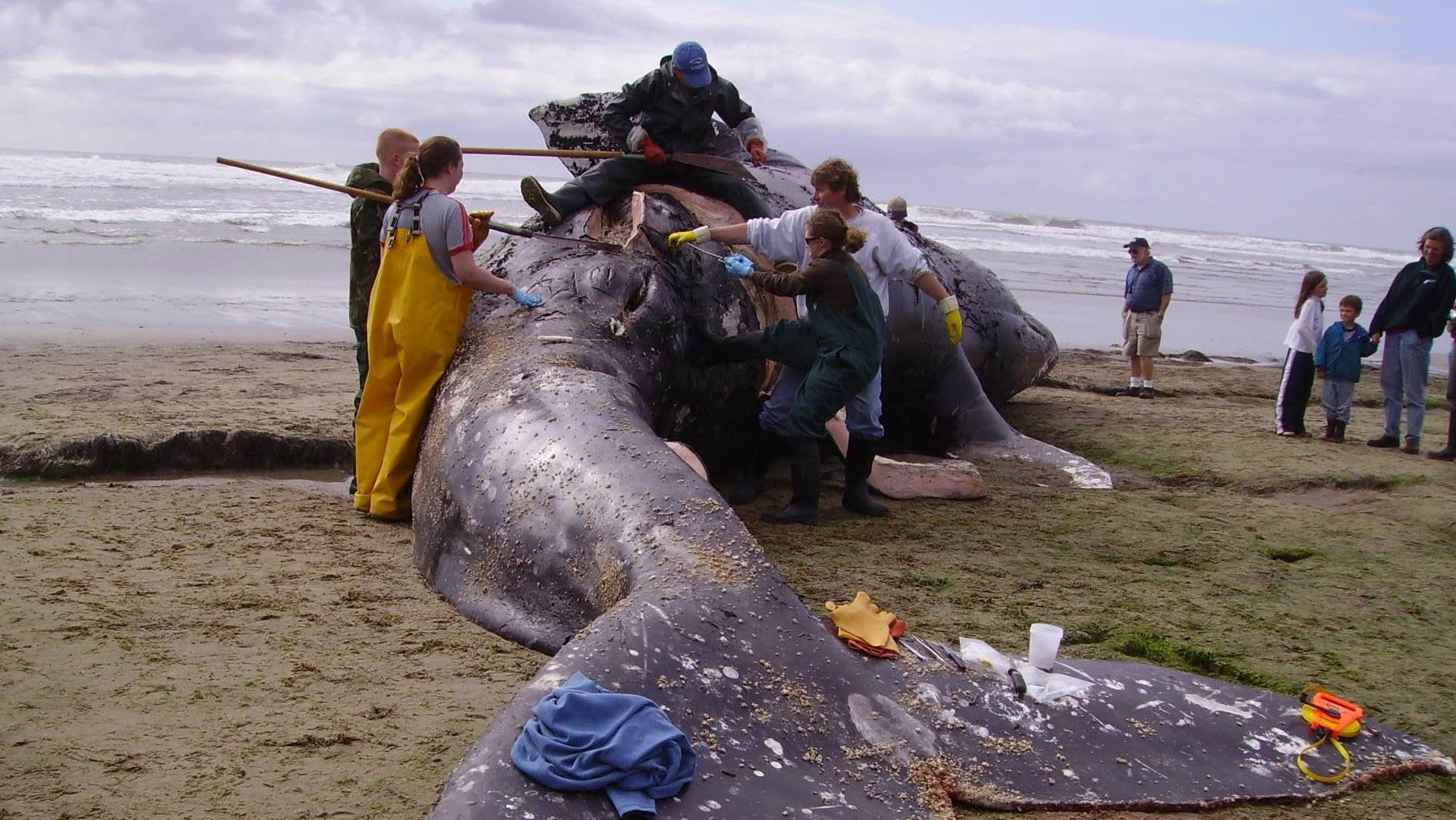
It is difficult, physical, often grim work. A necropsy on a whale is not a simple beach inspection. Responders take measurements, document wounds and body condition, examine blubber and organs when possible, collect tissue samples, and look for signs of malnutrition, trauma, disease, entanglement, or other causes.
For the public, a dead whale on the beach is a sad spectacle.
For scientists, it is evidence.
What This Means For A Whale-Watching State
Oregon has a long relationship with gray whales.
People gather at Whale Watching Center viewpoints in Depoe Bay. They scan the horizon from Cape Meares, Cape Foulweather, Cape Perpetua, Boiler Bay, Yaquina Head, Face Rock, and Harris Beach. Some residents know individual resident whales by markings and behavior. For coastal towns, whales are part of both identity and economy.
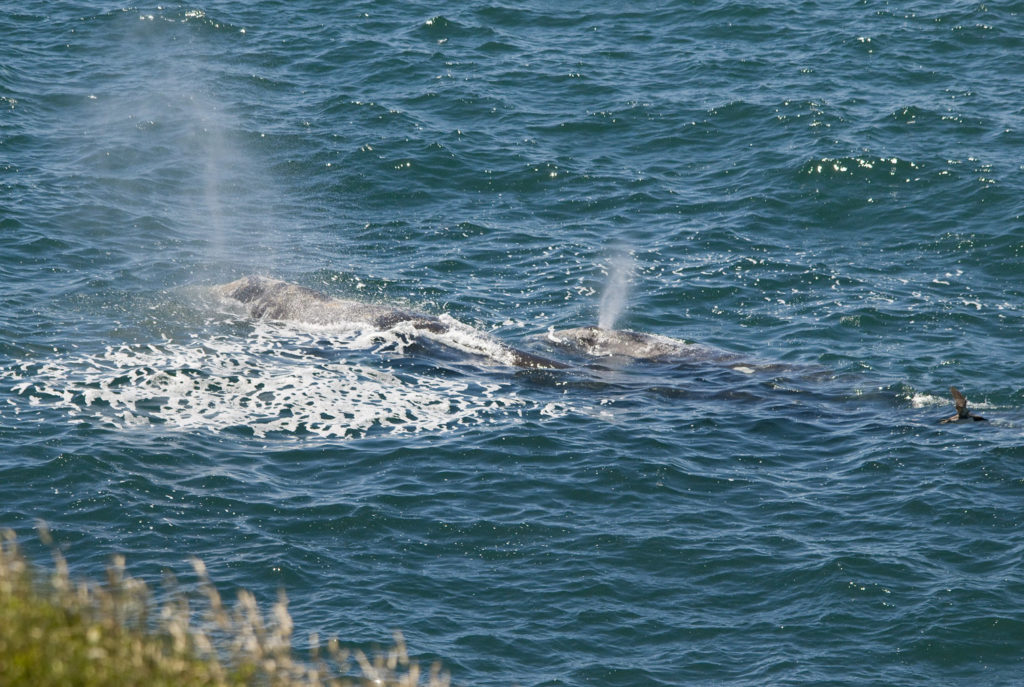
NOAA says gray whales can reach 42 to 49 feet and weigh around 90,000 pounds. They lack a dorsal fin, instead showing a low dorsal hump and a line of small “knuckles” along the back toward the tail. They feed by rolling on their sides and filtering sediment through baleen, leaving trails and pits on the seafloor.
They are also a conservation success story with a complicated present.
Commercial whaling pushed gray whales toward extinction. International protections and the commercial whaling moratorium helped the eastern North Pacific population recover, and NOAA says the eastern stock was delisted under the Endangered Species Act in 1994 after recovering.
But recovery did not mean permanent stability.
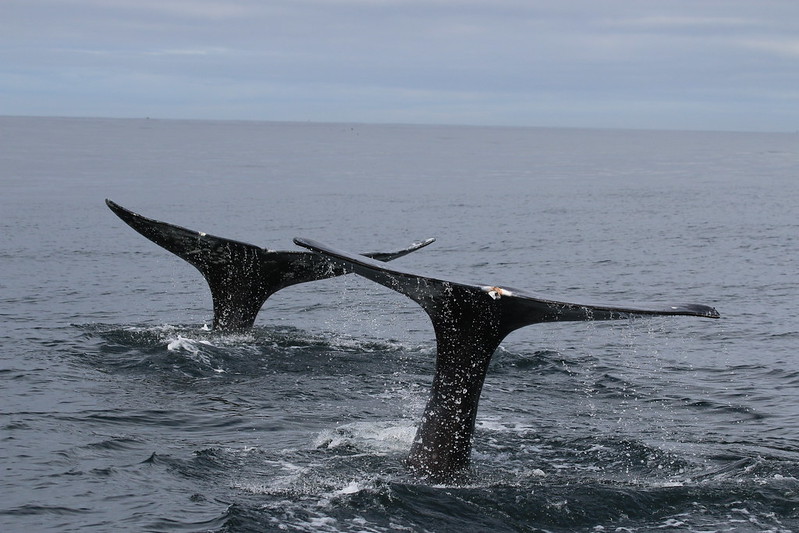
Oregon State’s research points to a more volatile reality: even large, long-lived whales can experience sharp population swings when Arctic feeding conditions change. Stewart said in the OSU release that gray whales are sensitive to climate change impacts and that sudden declines in prey quality can significantly affect the population. He also said gray whales are not likely to disappear entirely because of climate change, but that a much warmer Arctic may not support 25,000 gray whales the way it has in the recent past.
That may be the deeper story behind the dead whales in 2026.
This is not only about the animals that wash ashore. It is about what the ocean can support now, and what it may not be able to support in the future.
Not Entirely in Vain: For Tribes, A Stranded Whale Can Carry Cultural Meaning Even After Death
When a whale washes ashore, the public often sees only the tragedy: a massive animal lost, a beach temporarily closed, and scientists trying to determine what happened. But in some cases, a stranded whale can also become part of something older and deeply meaningful.
For Pacific Northwest Native tribes, whales can hold cultural, ceremonial, educational, and subsistence significance that long predates modern wildlife law. When a whale strands and dies, federal agencies, stranding networks, scientists, and tribal governments may coordinate to determine whether parts of the animal can be respectfully salvaged and used rather than left entirely to decay or be buried.
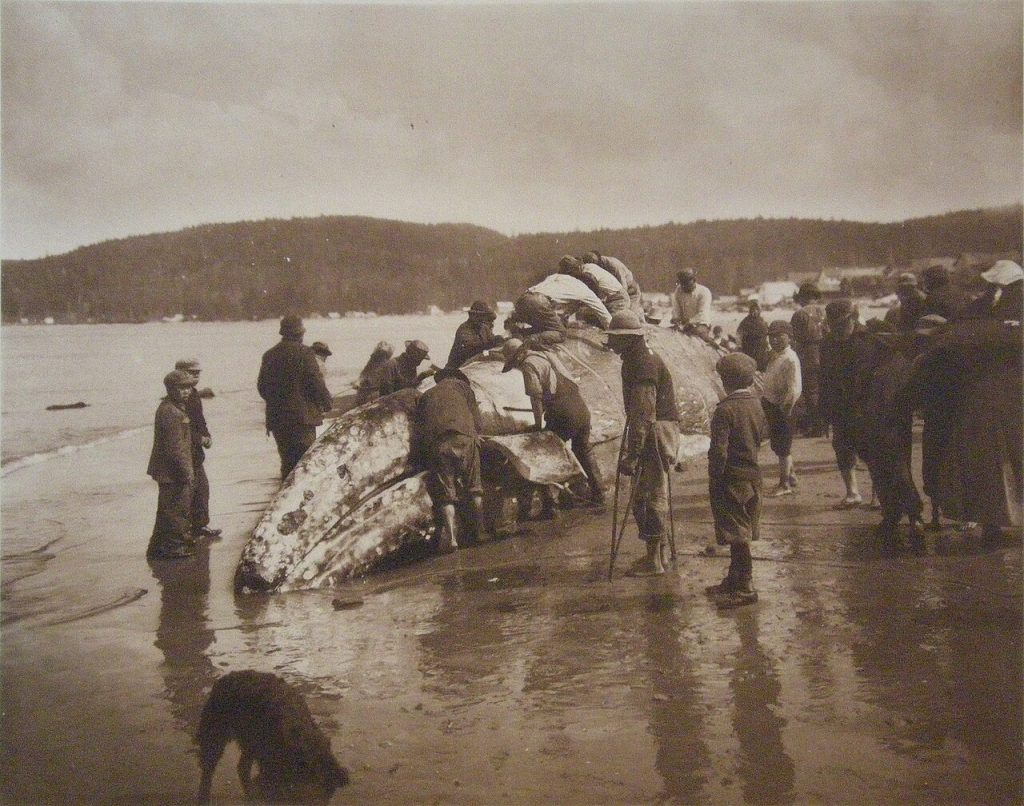
Oregon saw a powerful example of this in November 2025, when the Confederated Tribes of Siletz Indians assisted after a juvenile humpback whale stranded near Yachats. According to the tribe, the whale was found near San Marine north of Yachats on Nov. 15, and after multiple days of response it became clear the animal would not survive. The Siletz Tribe later received authorization to salvage portions of the whale.
The Washington Post reported that tribal members approached the work ceremonially, with prayers and offerings, and salvaged parts such as blubber, bones, baleen, and the skull for cultural and educational use. The meat was not collected because of health concerns. The process also involved cooperation with NOAA and Oregon State University scientists, allowing the whale to serve both cultural and scientific purposes after death.
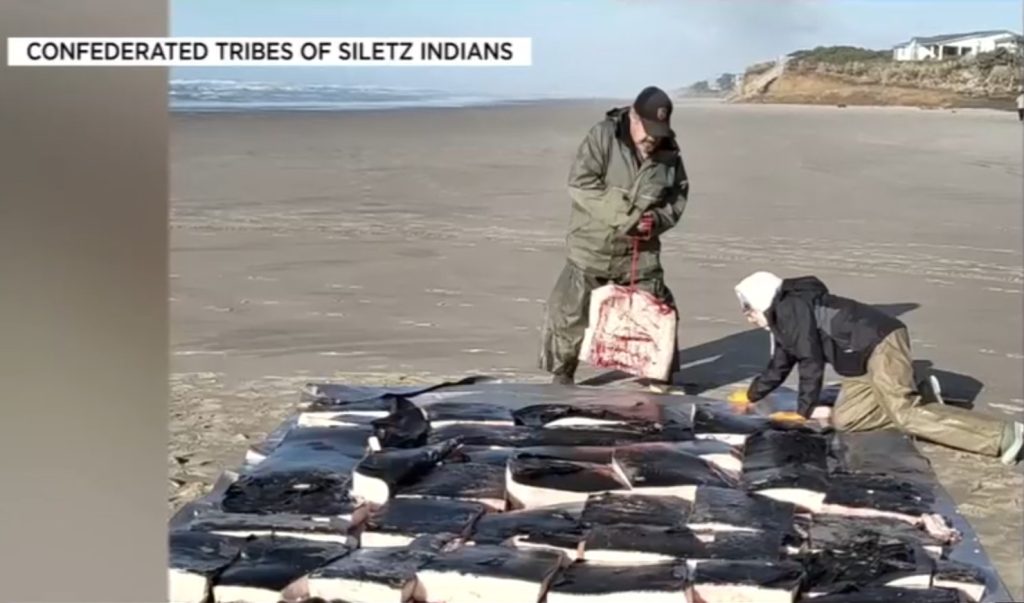
That does not mean every whale carcass is harvested, or that anyone can legally take pieces from a dead whale on the beach. Most stranded whales are documented, sampled, buried, left to decompose naturally where safe, or otherwise managed by agencies and land managers. But when proper authorization is granted and tribal partners are involved, part of the animal may continue to serve a purpose through teaching, ceremony, tools, regalia, museum display, or other cultural uses.
In that way, at least some stranded whales do not simply “go to waste.” Their deaths remain tragic, but their bodies can still carry knowledge, memory, and meaning for the people who have lived alongside them for generations.
What To Do If You Find A Dead Or Stranded Whale In Oregon
If you come across a whale, seal, sea lion, dolphin, porpoise, sea turtle, or other marine mammal on the beach, do not approach it.
Dead whales can carry disease, shift in the surf, attract scavengers, and pose serious safety risks. Live stranded animals are protected by federal law, and well-meaning attempts to touch, push, pour water on, or “help” an animal can make things worse and interfere with trained responders.
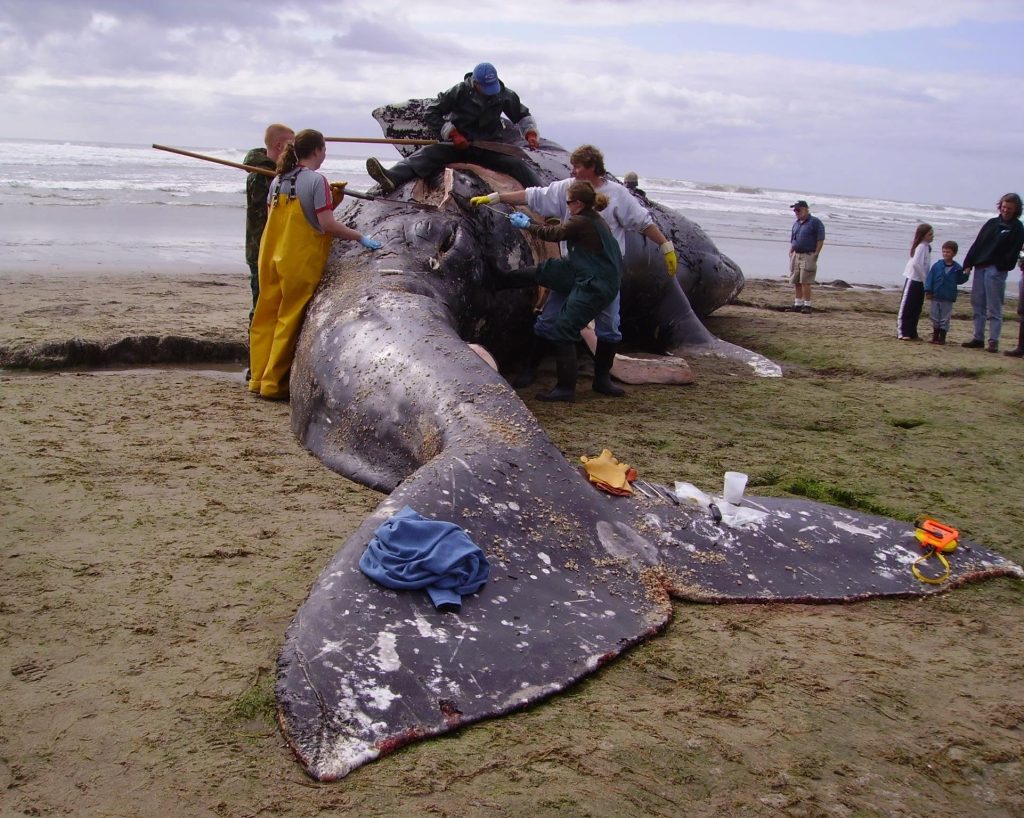
The Oregon Marine Mammal Stranding Network asks the public to report strandings and keep distance. NOAA’s West Coast Marine Mammal Stranding Network hotline is 1-866-767-6114.
Useful details to report include the location, the type of animal if you can tell, whether it is alive or dead, its approximate size, and photos taken from a safe distance.
The best thing most people can do is simple: report it, stay back, keep dogs away, and let trained responders work.
A Warning Written On The Beach
A gray whale on the sand stops people in their tracks.
It is massive, ancient-looking, almost unreal. It turns a familiar beach into something solemn. People gather quietly. Parents lift children for a better view. Rangers set up barriers. Scientists arrive with knives, measuring tapes, sample bags, and the heavy responsibility of turning loss into knowledge.
In 2026, those scenes are happening too often.
For Oregon, the dead whales at places like Tillicum Beach and Seaside are part of a much larger West Coast pattern. The visible strandings are only the portion we can count. Behind them is a changing Arctic, a strained food web, a population still recovering from past die-offs, and a migration that asks these animals to survive thousands of miles on stored energy.
Gray whales have endured centuries of human pressure and dramatic environmental change. They have come back before.
But the question scientists are asking now is not whether gray whales are tough. They are.
The question is whether the ocean they depend on is changing faster than they can adapt.