
On the morning of May 18, 1980, the Pacific Northwest woke up expecting another uneasy spring day beneath the shadow of a restless volcano.
For weeks, Mount St. Helens had been grumbling. Earthquakes rattled nearby communities. Steam bursts shot from the summit. Scientists warned that something catastrophic could happen at any moment. Still, no one truly knew what was coming.
At 8:32 a.m., the mountain exploded.
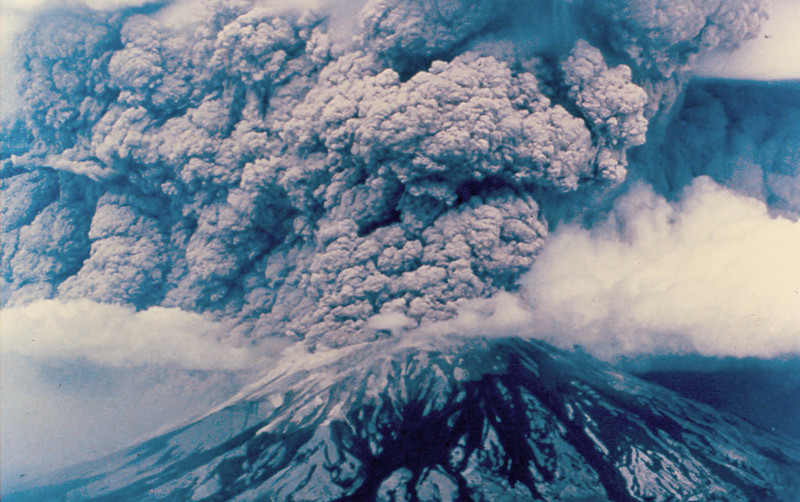
In less than a minute, the summit of the snow-capped mountain collapsed in the largest landslide in recorded history. A massive lateral blast tore across the landscape at hundreds of miles per hour, flattening forests, vaporizing lakes, and instantly transforming one of the most beautiful parts of the Pacific Northwest into an apocalyptic wasteland of ash and fire.
Fifty-seven people lost their lives that day.
Among them were photographers who knowingly stood close to danger because they believed documenting history mattered.
Today, all these years later, many of the haunting images we associate with the Mount St. Helens eruption exist because of the bravery and sacrifice of those men. One final act may have preserved the very film that allowed the world to witness what happened.
A Mountain the Northwest Loved
Before the eruption, Mount St. Helens was often called the “Fuji of America.” Its nearly symmetrical snowcapped peak towered over southwest Washington and could be seen from parts of Oregon on clear days.
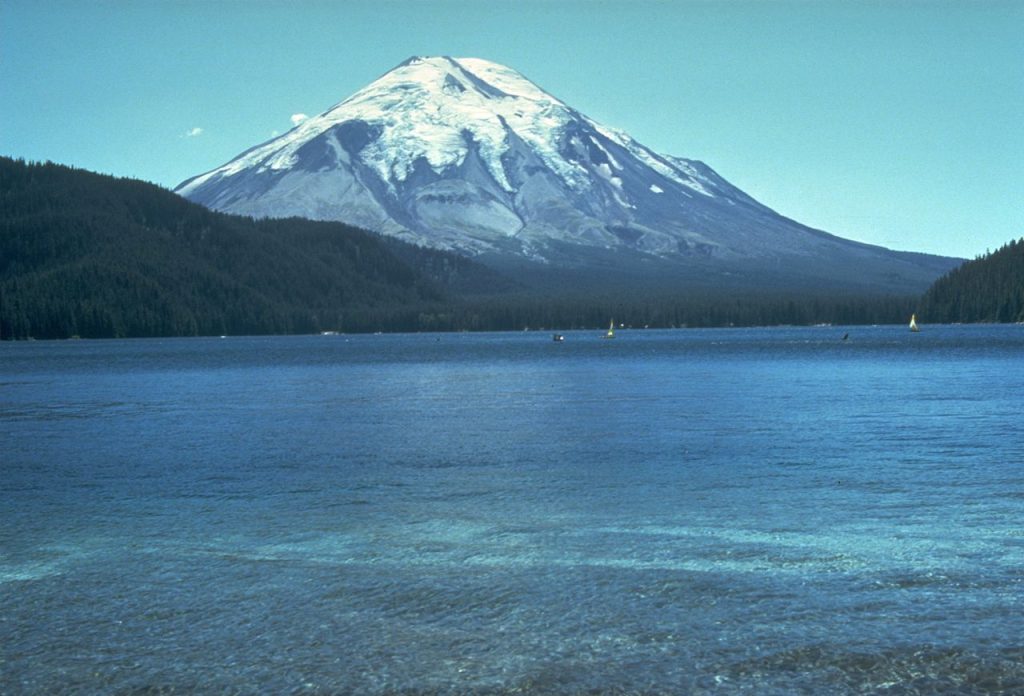
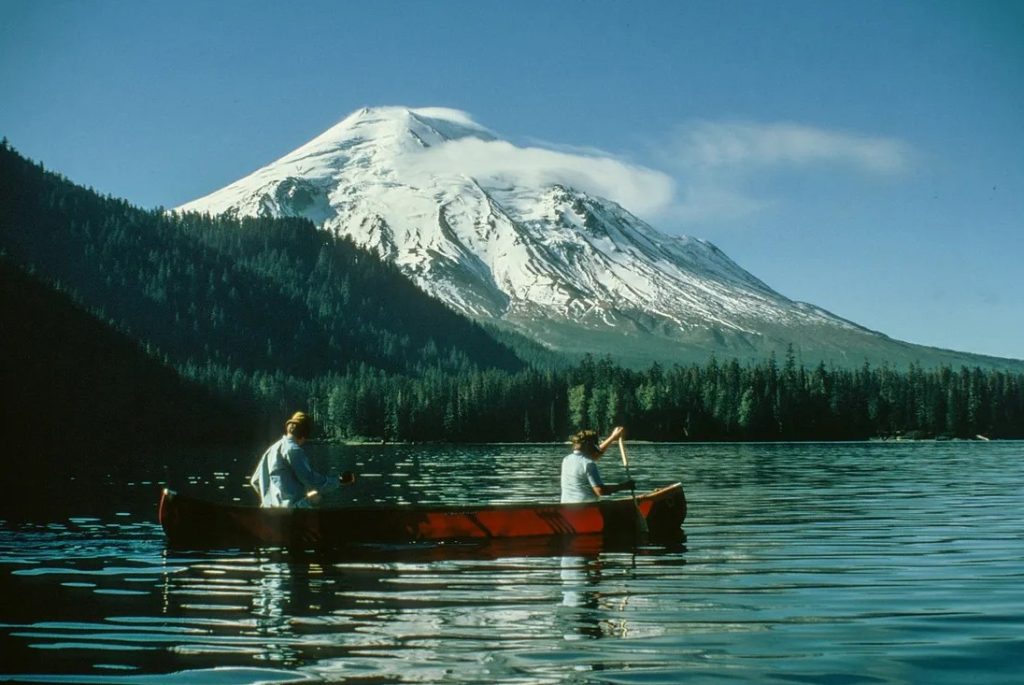
Campers, hikers, anglers, photographers, and families from across the Pacific Northwest flocked to the area every year. Spirit Lake reflected the mountain like a mirror. Thick evergreen forests surrounded alpine meadows bursting with wildflowers. To many Oregonians and Washingtonians, the mountain felt timeless.
But beneath the beauty, pressure was building.
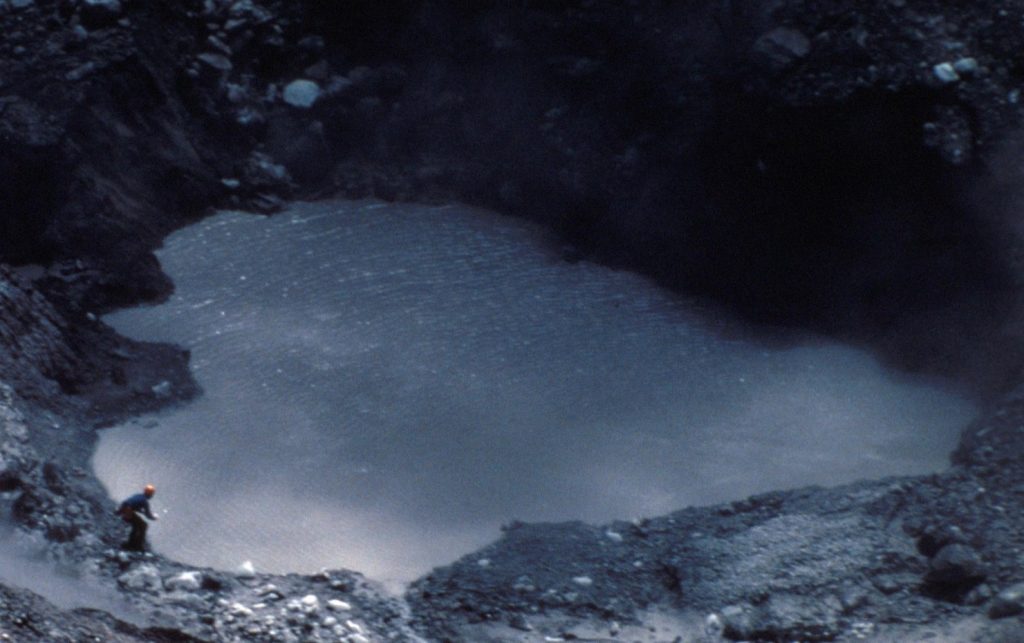
Beginning in March of 1980, earthquakes started rattling the volcano. Steam explosions blasted craters into the summit. Scientists rushed into the area to monitor conditions while reporters and photographers arrived hoping to capture a once-in-a-lifetime event.
Most expected a vertical eruption.
Almost nobody predicted the mountain would explode sideways.
The Morning Everything Changed
At 8:32 a.m., a magnitude 5.1 earthquake triggered the collapse of the volcano’s north flank.
What happened next stunned scientists.
A lateral blast moving at terrifying speed erupted from the side of the mountain, instantly flattening everything in its path. Entire forests were snapped like toothpicks. Superheated gas and ash surged across the landscape. Massive mudflows swallowed roads and bridges. Darkness covered towns in the middle of the day.
The eruption released energy comparable to dozens of atomic bombs. It was force of 24 megatons of thermal energy, 1,600 times the size of the atomic bomb dropped on Hiroshima. 229 square miles of land was destroyed. The full blast reached 12 miles out, knocking over nearly all standing trees.
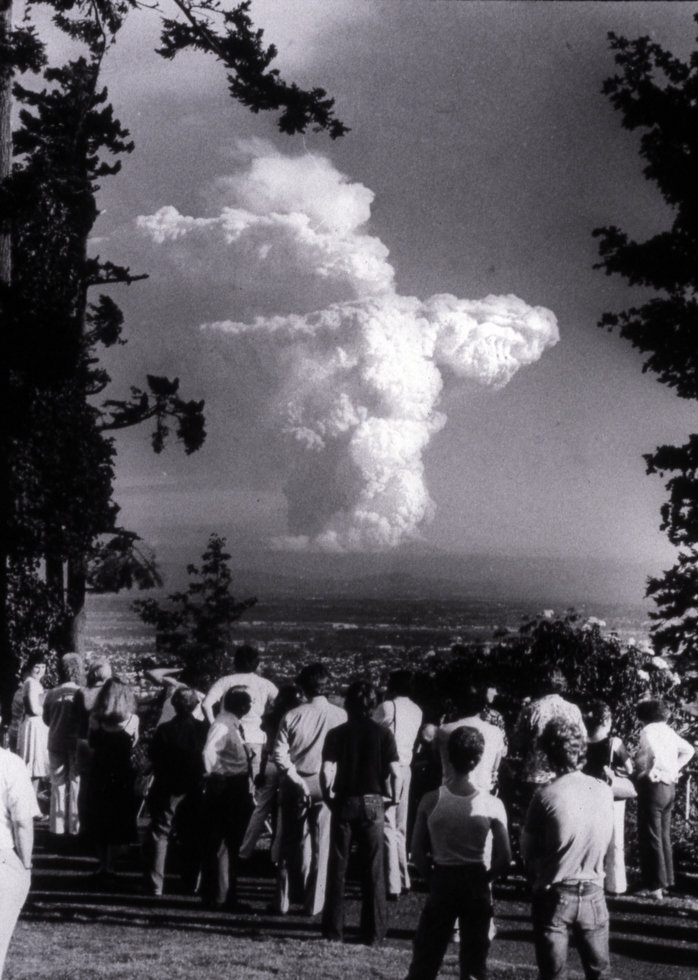
Ash eventually spread across multiple states, including Oregon, turning daylight into an eerie gray twilight in some communities.
For the people closest to the mountain, there was little chance of escape.
David Johnston and Harry R. Truman are two of the St. Helens deaths most commonly known to the public. Johnston was a volcanologist and geologist stationed just five miles from the St. Helens summit who departed this world with the now-famous words, “Vancouver! Vancouver! This is it.”
Johnston was never found, but his warning helped scientists and emergency officials understand immediately that the catastrophic eruption they had feared was underway.
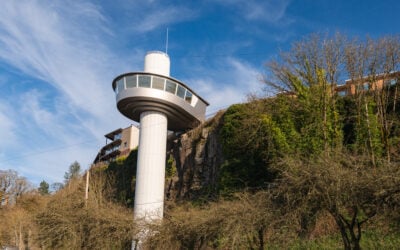
Today, Johnston Ridge Observatory stands as a tribute to his work and sacrifice, offering visitors one of the most sobering and breathtaking views of the blast zone.
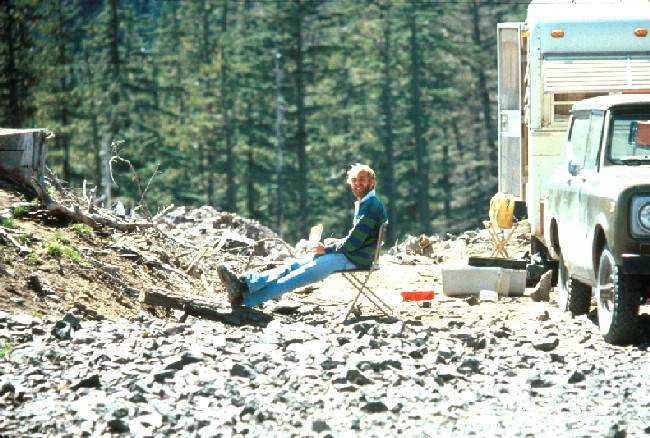
Truman was a longtime resident of the slumbering mountain, who in his 80s declared that he’d ‘go down with the ship’. “You couldn’t pull me out with a mule team“, he famously stated in a interview.
The eruption overtook his beloved lodge at Spirit Lake and buried the site under 150 ft. of volcanic debris.
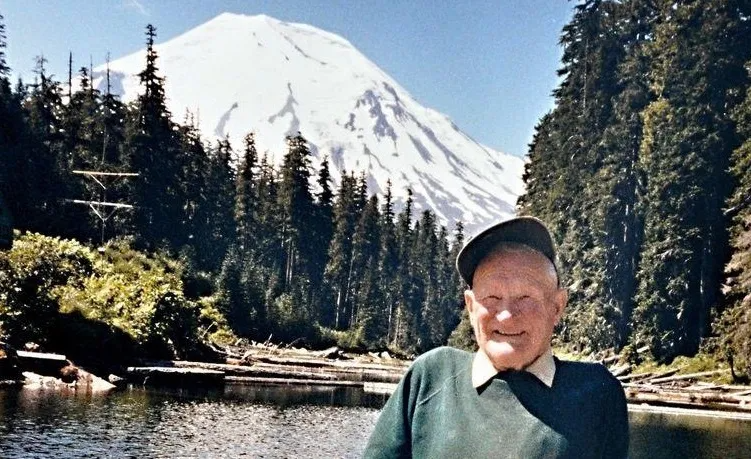
Robert Landsburg’s Final Decision
On the morning of May 18th, 48-year-old Portland-resident Robert Landsburg was seven miles from the mountain’s summit. St. Helens had been oddly silent for the past four days. This was prime time for a photographer to set out to do what comes naturally: document. Hiking through the forest would have been peaceful albeit with a sense of urgency wrought by deep rumblings of seismic activity.
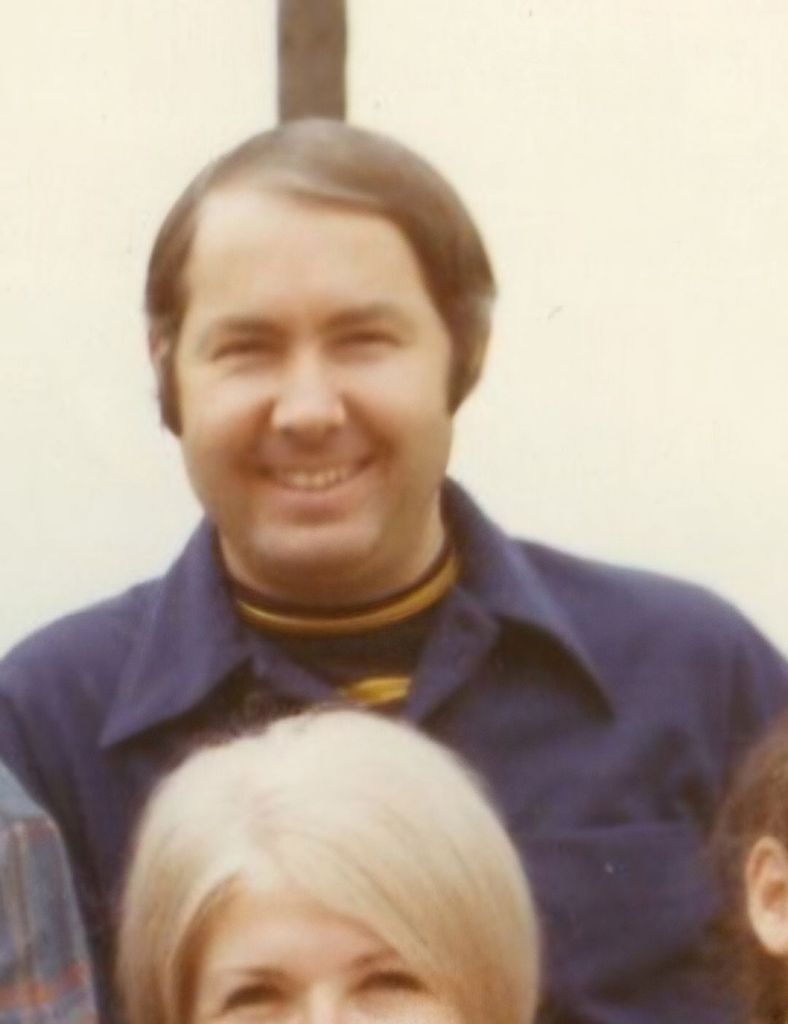
Landsburg had positioned himself near Mount St. Helens to photograph the increasingly active volcano. When the eruption began, he reportedly realized almost immediately that he would not survive. He would have witnessed the bulge begin to slide as the pressure cooker inside the mountain released.
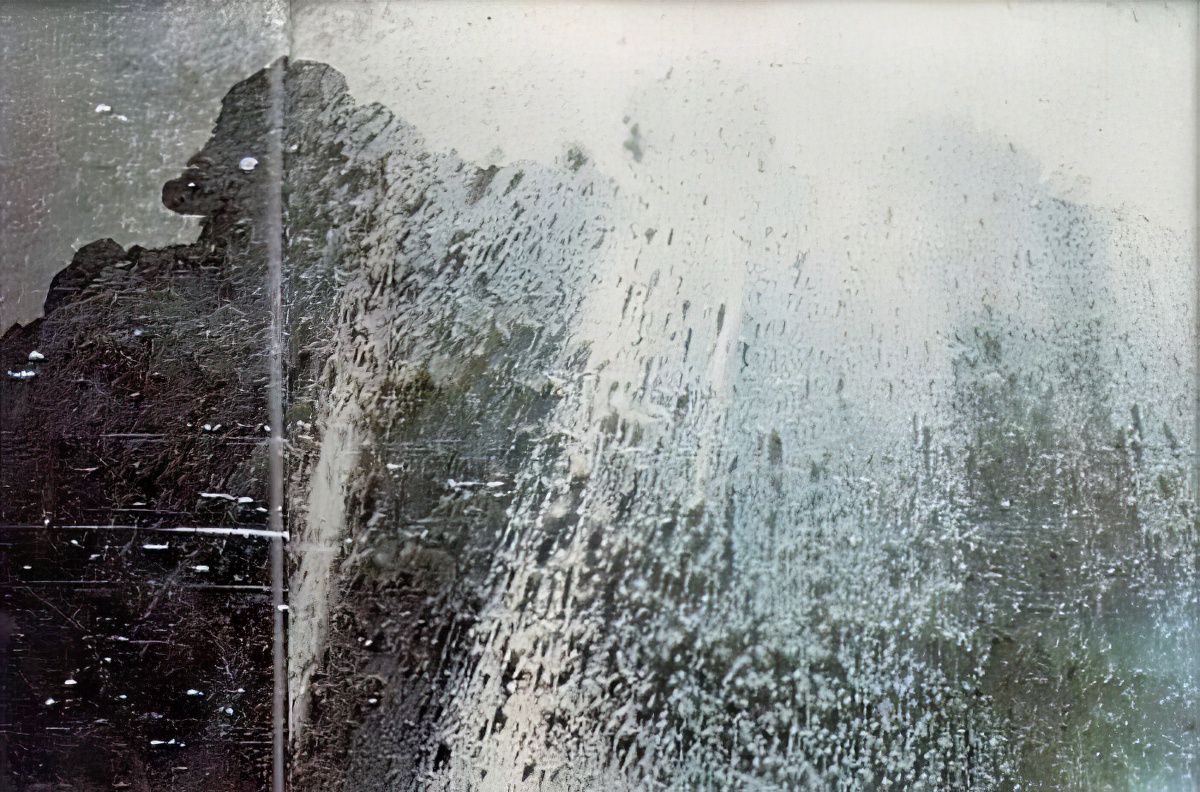
Although no video evidence exists, time-lapse photos show that the rocky slope would have appeared to onlookers to liquify like melting Jell-O just before searing-hot ash tore from the crater exposed by the avalanche. The flow ripped away from the peak at speeds of up to 400 mph.
But instead of panicking, he just kept taking pictures.
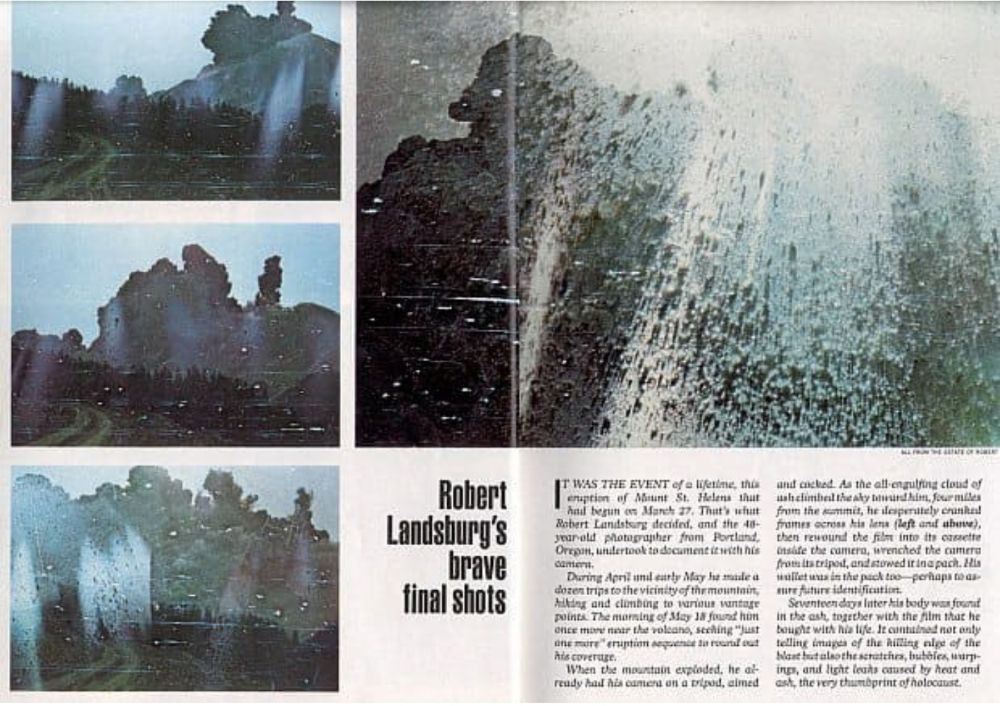
Again and again, Landsburg documented the advancing ash cloud and destruction unfolding before him. According to reports later reconstructed from the scene, he eventually understood there was no way out.
What goes through one’s mind in a moment like that? All we really know is that Landsburg made a hasty retreat to his vehicle, snapping images along the way.
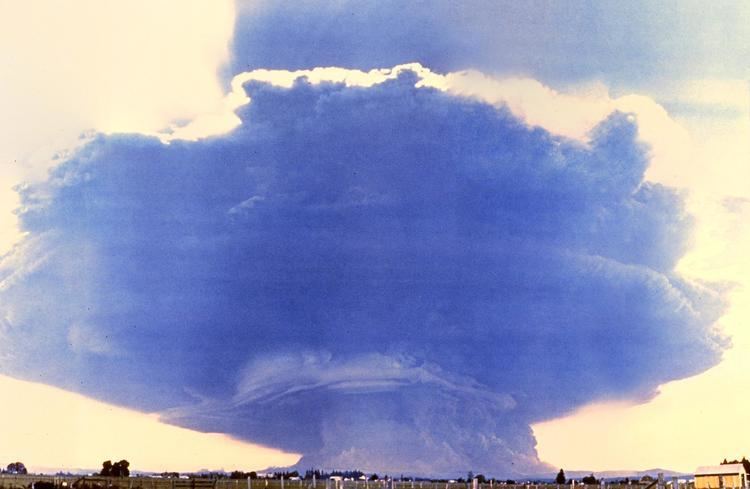
He made one final decision to continue shooting from his car window as the pyroclastic wall of ash approached the vehicle.
Using up his final roll of film, he rewound the reel, placed the canisters carefully into his backpack, laid down over the bag, and used his own body to shield the photographs from the heat and devastation rushing toward him.
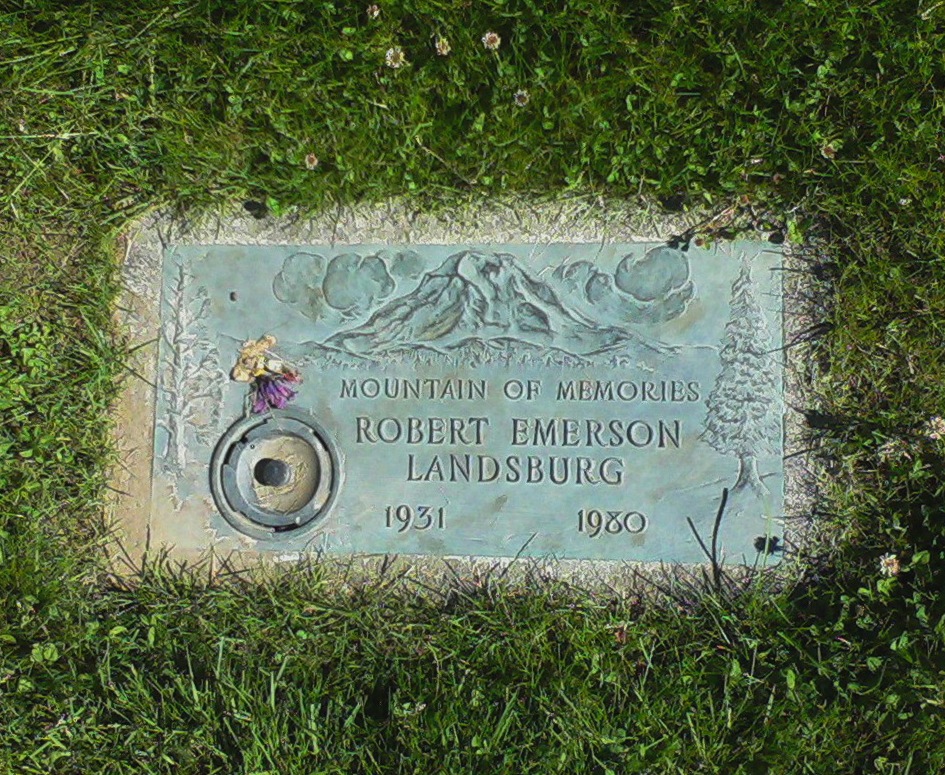
Seventeen days later, rescue crews recovered Landsburg’s body, still within his car.
The film survived.
Those recovered images became some of the most important photographic records of the eruption ever captured. Today, they remain part of the permanent historical documentation of one of the deadliest volcanic disasters in American history.
It is difficult not to feel emotional looking at those photographs knowing the man behind the camera spent his final moments making sure the world would someday see them.
Reid Blackburn Stayed Behind to Document History
Simultaneously that morning, The Columbian photojournalist Reid Blackburn was eight miles away from the Mt. St. Helens summit, on assignment for his newspaper as well as National Geographic.
Friends and colleagues later described him as passionate, adventurous, and deeply committed to photography.
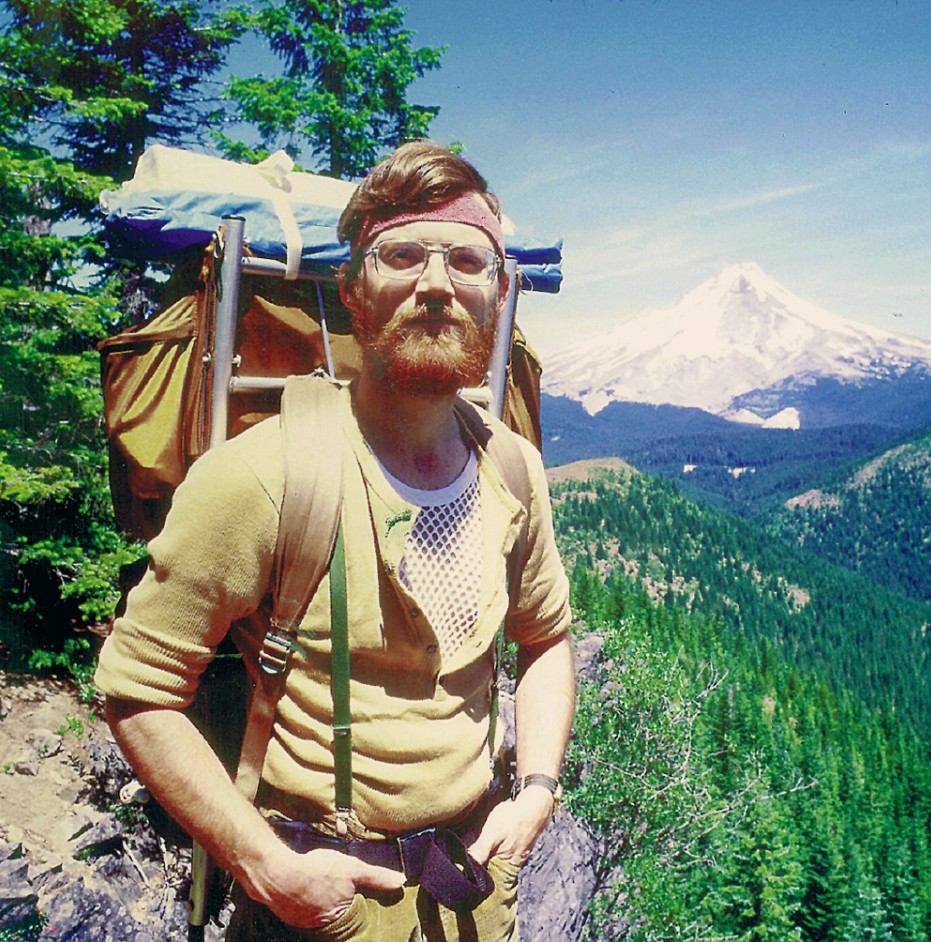
Like many others, he underestimated the unimaginable scale and speed of what was coming.
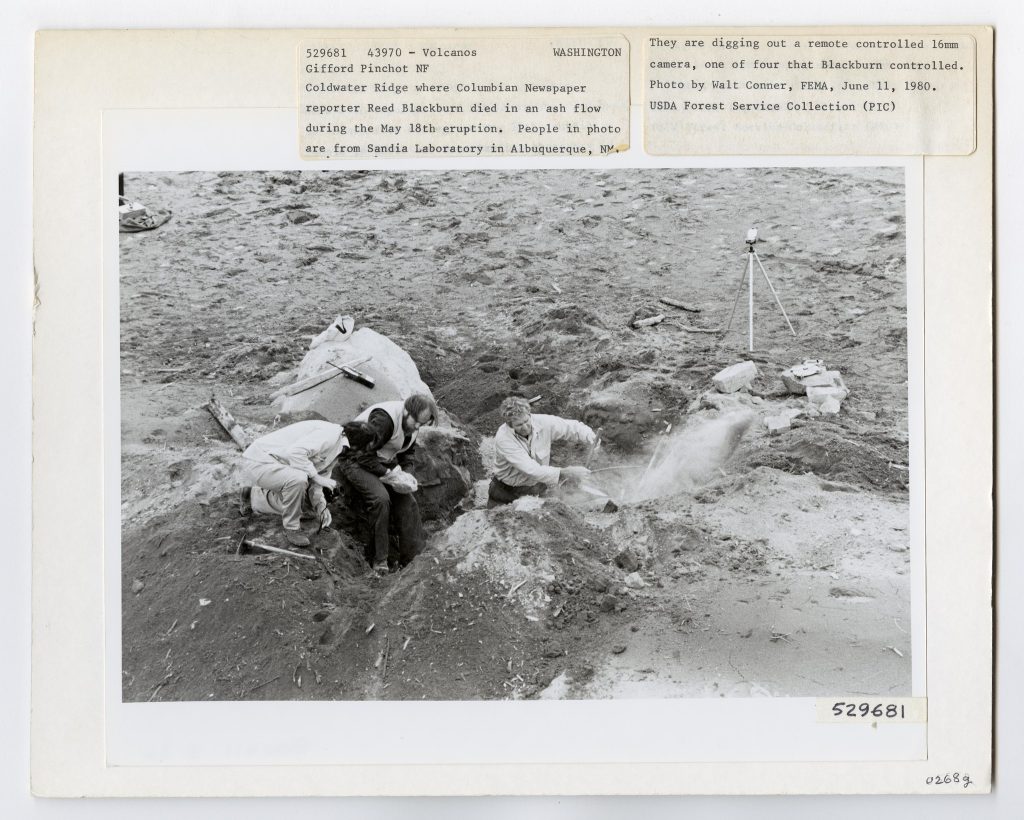
The 27-year-old had intended on leaving the area on May 17th but decided rather last minute to stick around for a few more days to see what transpired on the mountain. His campsite was situated near Coldwater Creek, and like Landsburg, his vehicle was the only option for shelter from the blast.
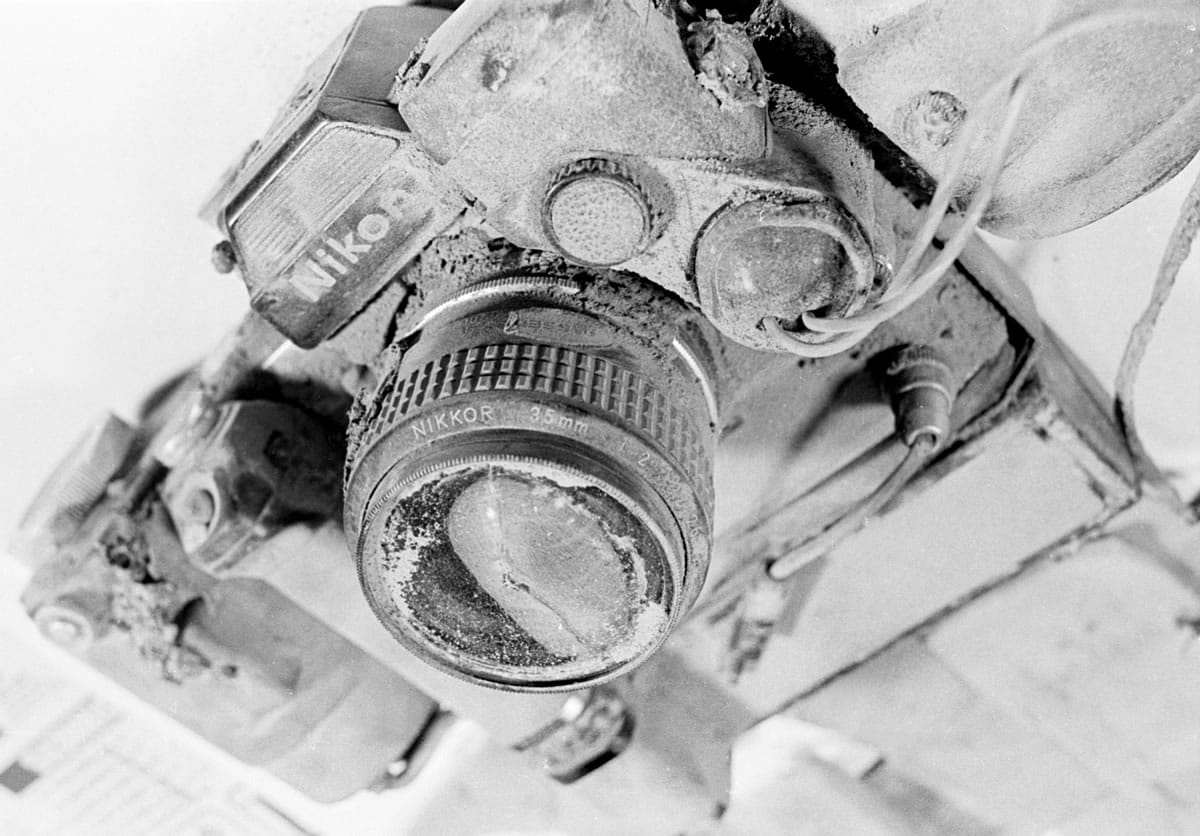
Blackburn was killed in the eruption while still carrying his camera equipment.
Today, his photographs remain an enduring part of the visual history of Mount St. Helens. They’re not just news images anymore. They are pieces of legacy.
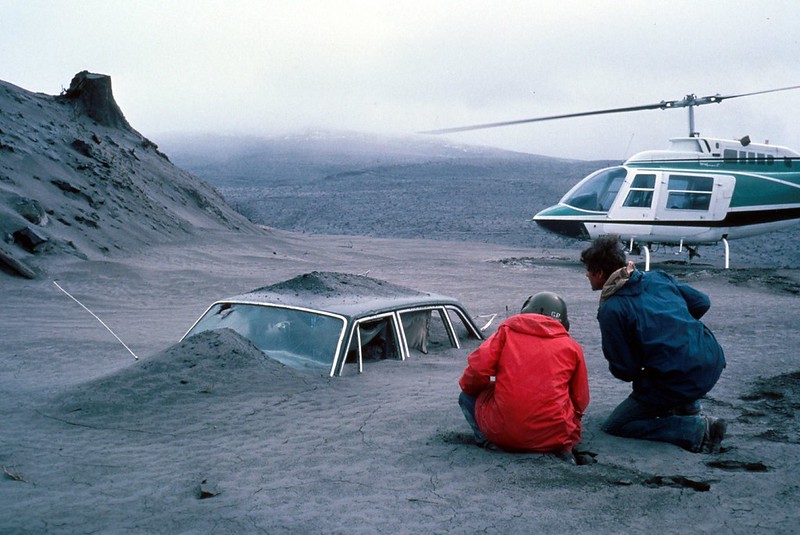
Seven days after the eruption, Blackburn’s body was found inside his partially buried vehicle.
Ten days later, Landsburg’s was discovered in much the same way.
The Photographers’ Legacy: Why These Images Still Matter Today
Although the final film roll shot by Reid Blackburn was destroyed in the blast, previously unknown images made by him from a helicopter over St. Helens were discovered years later. The undeveloped roll of film contained pre-eruption shots of the mountain and was discovered in Blackburn’s archives at The Columbian. The photos were successfully developed over 30 years after Blackburn’s death, and remain highly important as a record of the pre-eruption volcanic landscape.
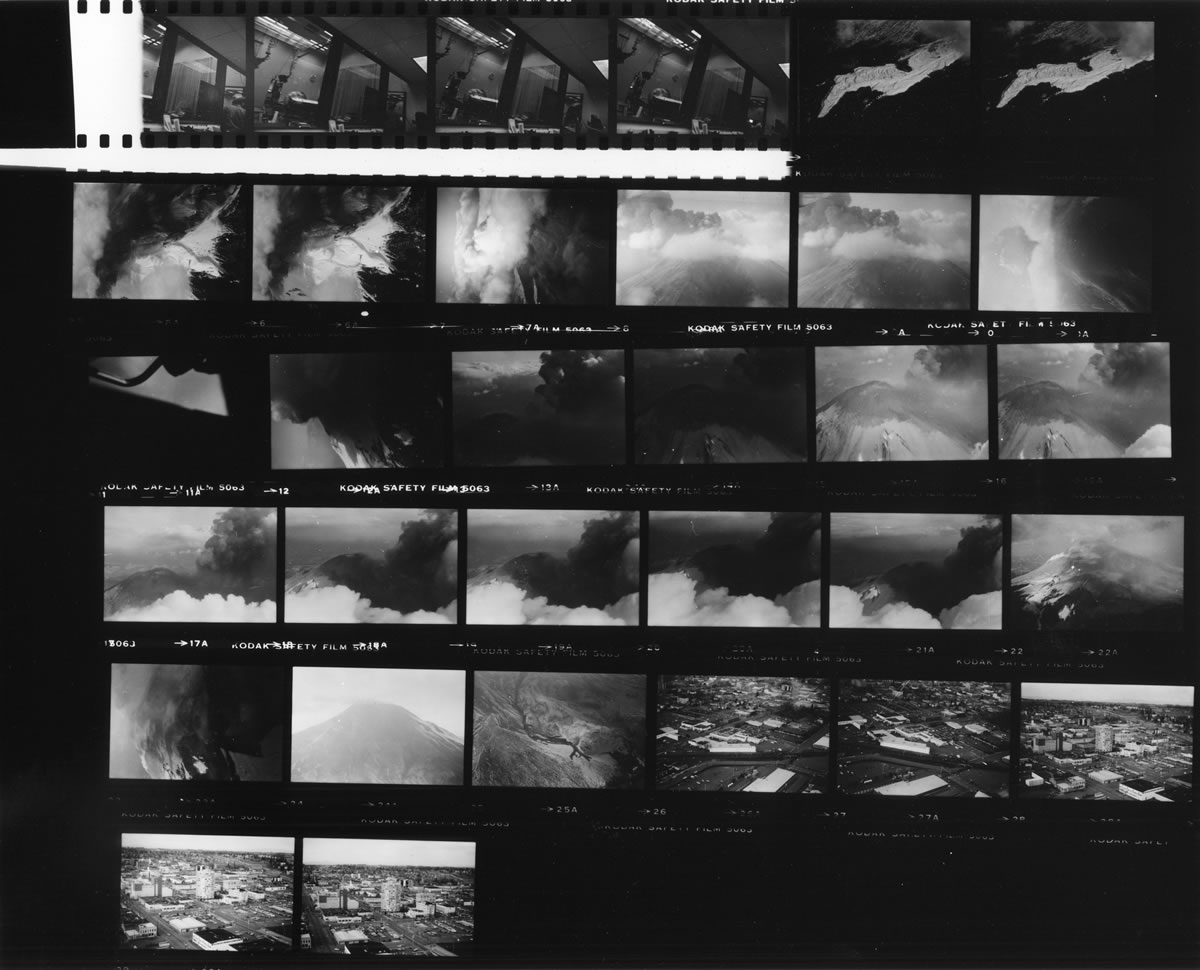
Robert Landsburg’s actions in the final moments of his life were monumental in hindsight. His images show the starkly frightening scene of an all-enveloping cloud racing to engulf all in its path.
In an age where billions of photos are uploaded every day, the photographs from Mount St. Helens still feel different.
Maybe it’s because they were captured at enormous personal risk.
Maybe it’s because many were taken by people who knew danger was close and kept documenting anyway.
Or maybe it’s because the images froze a moment that changed the Pacific Northwest forever.
These photographs are more than historical records. They are deeply human documents.
They show curiosity. Courage. Dedication. Sacrifice.
And behind every famous eruption image was a person standing there with a camera, trying to preserve a moment they knew mattered.
Remembering the People Behind the Lens
When people talk about Mount St. Helens, they often focus on the eruption itself. The ash cloud. The destruction. The science.
But behind some of the most unforgettable images ever captured in the Pacific Northwest were men who gave everything to document history.
Robert Landsburg’s final act ensured the world would see what happened.
Reid Blackburn chased the story because he believed it mattered.
Others risked their lives to photograph, study, and understand a force of nature beyond comprehension.
Their work lives on nearly half a century later.
And every time we look at those haunting images of Mount St. Helens erupting against the gray Northwest sky, we are not just witnessing a disaster.
We are witnessing the legacy of the people brave enough to stand before history with a camera in their hands for the sake of documenting history.
The official That Oregon Life store
The Oregon you bring home.
Start the day with Oregon-roasted coffee, then find original gear inspired by the places, stories, and oddities that make this state ours.
Shop Oregon gear