
If you’ve ever stood at the base of Mt. Hood and thought, there has to be an easier way to get up there, you’re not alone.
In fact, back in the early 1950s, a group of Oregonians looked at that same mountain and came up with a solution so bold, so strange, and so completely over-the-top… it almost sounds made up.
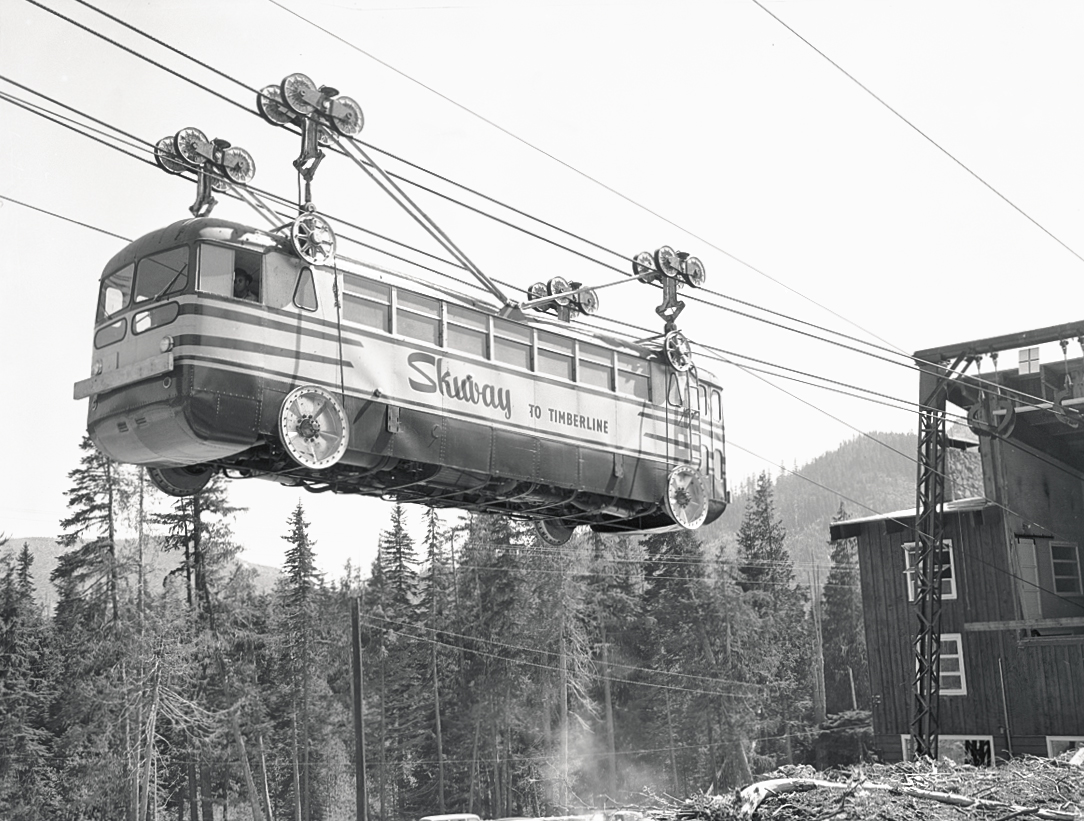
They decided to hang a full-sized city bus from a cable and haul it up the mountain.
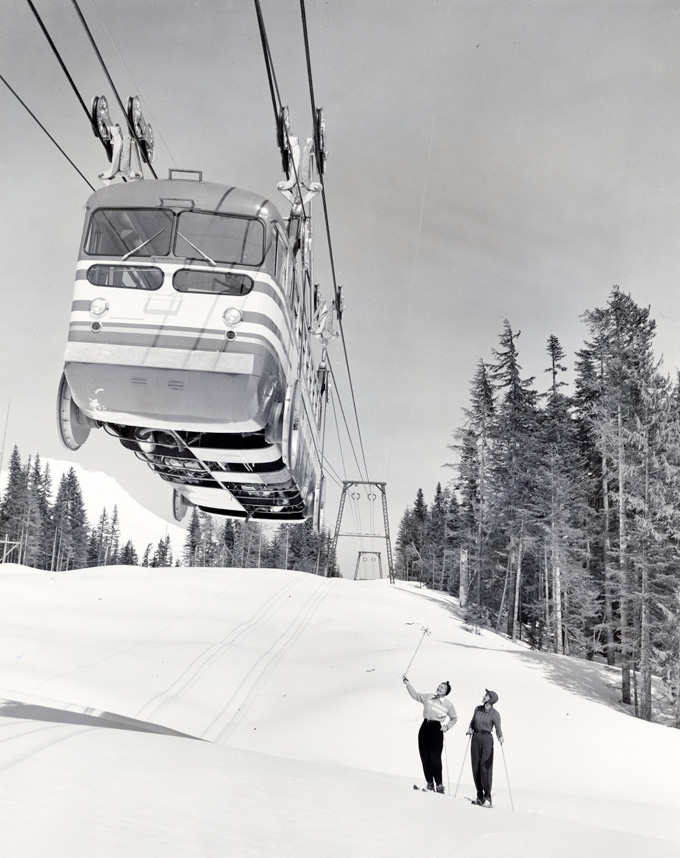
And somehow, it actually operated.
The “Flying Bus” Nobody Asked For
Mount Hood Skiway was the brainchild of Dr. J. Otto George, who saw an opportunity as skiing exploded in popularity after World War II.
The idea was simple on paper. Move people from Government Camp up to Timberline Lodge quickly, efficiently, and with a bit of flair.
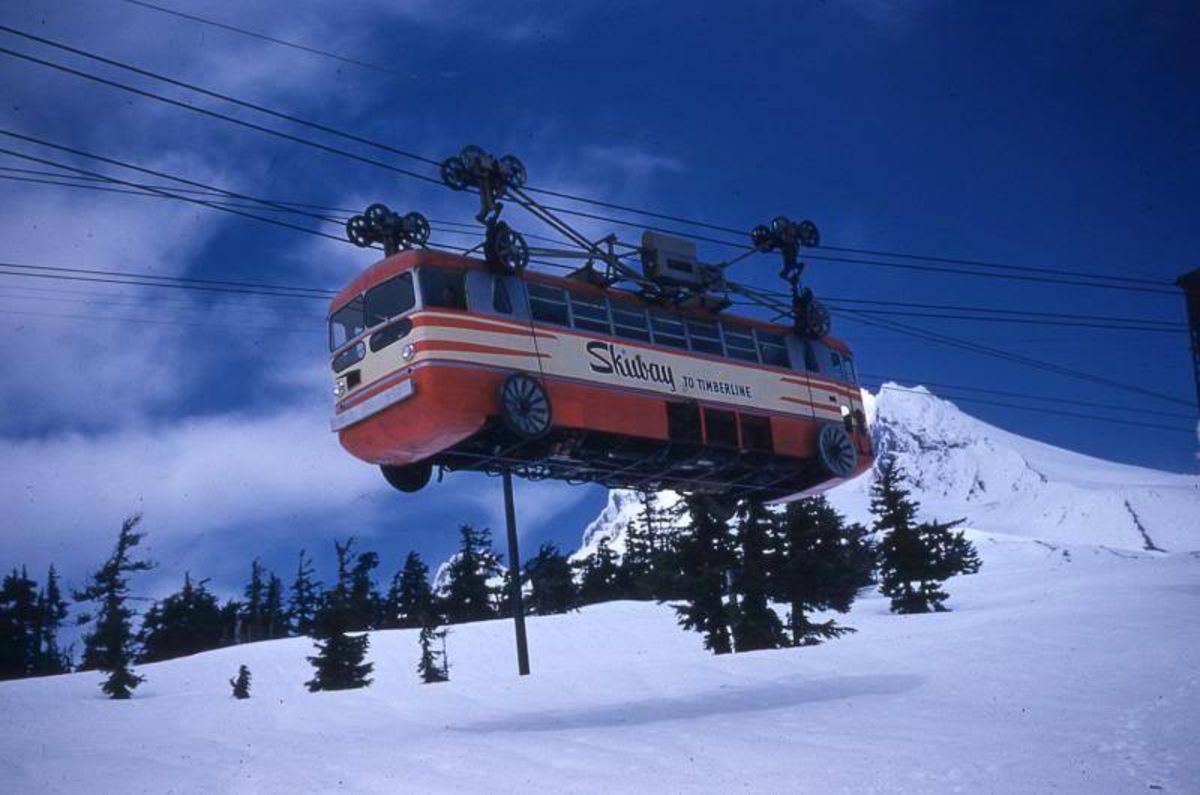
But instead of building a traditional gondola or lift, the team leaned into something far more… ambitious.
They took actual city buses.
Not small cabins. Not lightweight cars.
Full buses.
Then they modified them to grip a thick overhead cable and pull themselves up the mountain using onboard engines.
Yes, engines. Plural.
A Ride Powered By Noise, Gravity, And Nerves
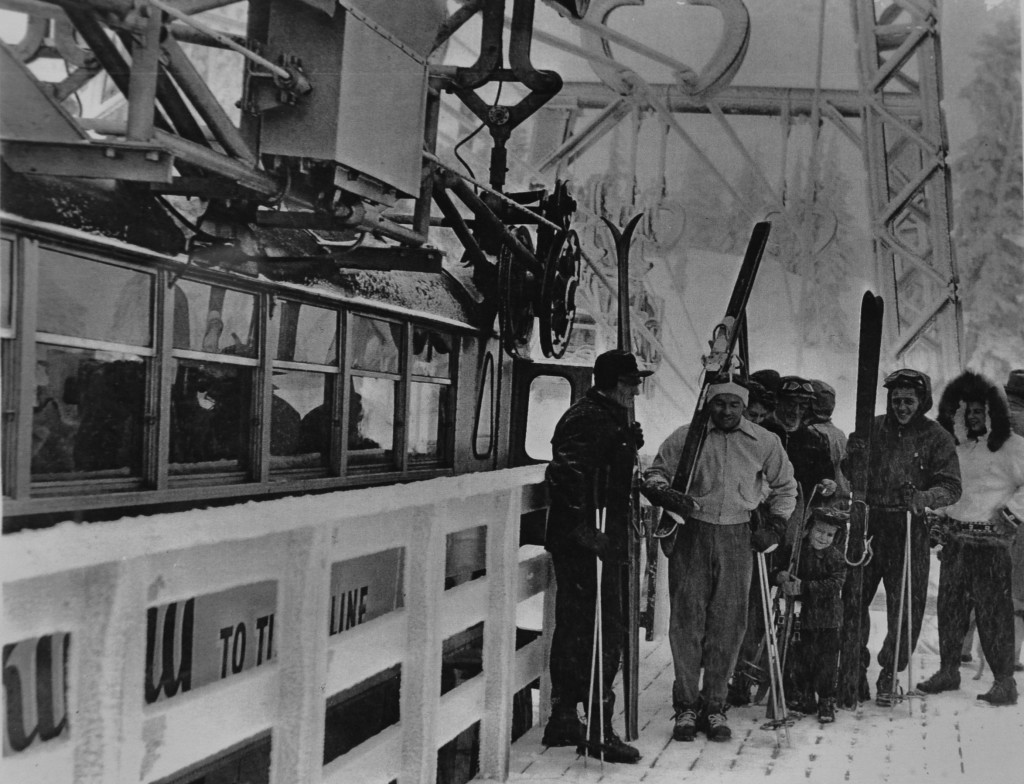
Each bus was outfitted with two gasoline engines, working hard to drag the vehicle along a 1.5-inch cable stretched across the mountainside.
If that sounds intense, that’s because it was.
The buses didn’t glide smoothly like modern gondolas. As they moved from one tower to the next, the heavy weight caused the cable to sag. Riders would feel the bus climb, crest a support tower, and then drop into the next span.
Again and again.
Picture a slow, creaking roller coaster… except you’re in a bus… hanging in midair.
Passengers reported loud engines, constant jolts, and a ride that made it nearly impossible to carry on a conversation. For some, it was thrilling. For others, it was something they only needed to experience once.
A Good Idea… At The Worst Possible Time
Here’s the twist.
Right as the Skiway opened in 1951 with plenty of excitement and national attention, the road to Timberline Lodge was improved.
Suddenly, you could just drive there. Faster. Cheaper. And without dangling hundreds of feet in the air.
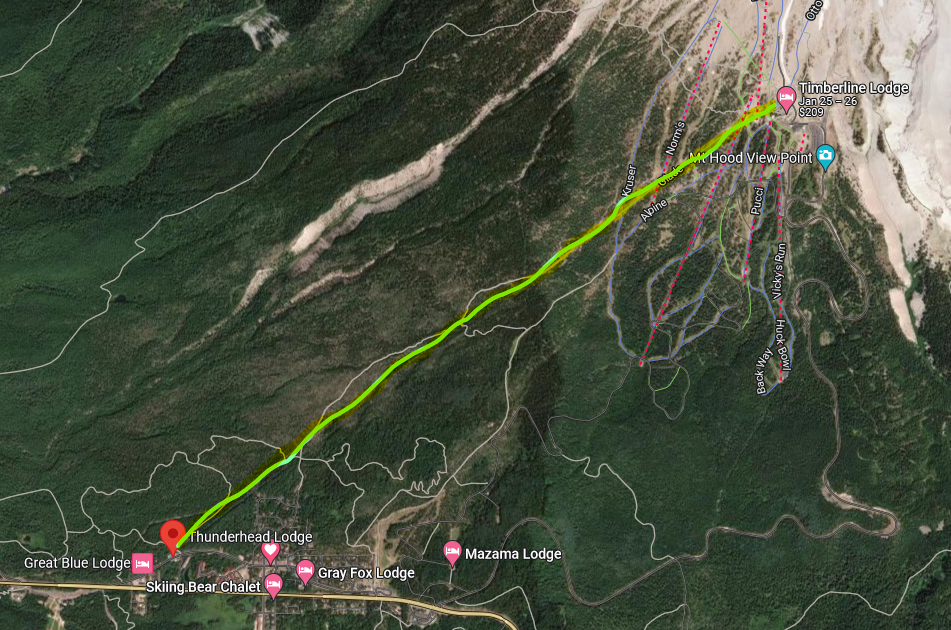
The Skiway charged about 75 cents one way. Ground transportation cost less and got you there quicker.
It didn’t take long for the novelty to wear off.
Once Was Enough
At first, people lined up just to say they had done it.
But ridership dropped fast.
Most passengers rode the Skiway exactly one time. That was enough.
By the mid-1950s, usage had declined so sharply that the system sat idle for long stretches. Investors debated redesigns, smaller cars, and other improvements, but the cost was too high and the confidence was gone.
By 1956, operations shut down.
Within a few years, the entire system was dismantled and sold off for parts.
A Strange Chapter That Still Lives On
Today, the lower terminal still stands, though you’d never guess what it once was.
And while the flying buses are long gone, their legacy lingers in one unexpected place: the name of Skyway Bar & Grill, a popular roadside stop just west of Government Camp.
It’s a quiet nod to one of the most unusual transportation experiments in Oregon history.
Oregon’s History Is Full Of Wild Ideas
The Mt. Hood Skiway wasn’t just a failure. It was a reflection of a time when people were willing to try just about anything to make something work.
Even if that meant putting a bus on a cable and sending it up a mountain.
And honestly? That’s part of what makes Oregon… Oregon.
Frequently Asked Questions About The Mt. Hood Skiway
Did Oregon really have a “flying bus” on Mt. Hood?
Yes. In the early 1950s, the Mt. Hood Skiway used modified city buses suspended from a cable to carry passengers up the mountain.
What was the Mt. Hood Skiway?
The Mt. Hood Skiway was an experimental aerial transportation system that connected Government Camp to Timberline Lodge using bus-sized cable cars powered by onboard engines.
When did the Mt. Hood Skiway operate?
The Skiway opened in 1951 but shut down by the mid-1950s after only a few years due to low ridership and operational issues.
Why did the Mt. Hood Skiway fail?
The system was loud, slow, and uncomfortable, and it quickly became unnecessary once road access to Timberline Lodge improved.
How much did it cost to ride the Skiway?
A one-way ride cost about 75 cents, which was more expensive than ground transportation at the time.
Was the Skiway dangerous?
While it did operate successfully, many passengers described the ride as intense and unsettling due to the height, noise, and sudden drops between support towers.
Can you still see the Mt. Hood Skiway today?
The tram system is gone, but the lower terminal building still exists and has been repurposed over the years.
What is the Skyway Bar & Grill named after?
Skyway Bar & Grill takes its name from the original Skiway (sometimes called “Skyway”), honoring this unusual piece of Oregon history.
🔍 Quick Facts About The Mt. Hood Skiway
- 📍 Location: Mt. Hood, Oregon
- 🚌 Opened: 1951
- 🛑 Closed: Mid-1950s
- 🚡 Type: Cable system using modified city buses
- 💵 Cost: About $0.75 per ride
- ⚙️ Powered by: Gasoline engines inside the buses
- 📉 Outcome: Shut down due to low demand and better road access
🧭 Why People Still Talk About It Today
The Mt. Hood Skiway stands out as one of the most unusual transportation experiments in Oregon history. While it didn’t last long, it captured a moment when bold ideas and rapid innovation pushed boundaries in ways you’d never see today.